

Embarking on a home renovation journey can be an exhilarating experience, filled with dreams of transformed spaces and enhanced living. However, it’s also widely acknowledged as one of life’s significant stressors. From intricate kitchen overhauls to complete bathroom transformations, these projects often stretch across weeks or even months, interrupting daily life and demanding considerable financial and emotional investment. It’s not uncommon for budgets to swell, timelines to unravel, and for dust to become an unwelcome omnipresent guest, settling into every nook and cranny. Having navigated the complexities of renovating seven houses over the past seventeen years, we’ve gathered a wealth of insights. Today, we’re eager to share our most effective strategies for not only preparing for these challenges but also significantly minimizing the inherent stress of renovation.

When you’re meticulously planning a renovation project, it’s natural to meticulously focus on the tangible aspects: the physical alterations, the financial outlay, and the logistical coordination of contractors and materials. Yet, an often-overlooked but equally critical component is the mental and emotional landscape of the DIYer or homeowner. Our discussion today will delve deeply into mindset, psychological resilience, and other non-tangible aspects of undertaking such significant home projects. Imagine a scenario where the process of renovation is as enjoyable and fulfilling as the final outcome. While this ideal state isn’t always easy to achieve, there are proactive steps you can take to maintain your composure and inner peace, even when a project hits unexpected snags, your budget starts to feel stretched, or the timeline begins to boil over.
The Indispensable Value of Managing Renovation Stress
You might consider the question “Why manage renovation stress?” to be self-evident. After all, who wouldn’t prefer a less stressful renovation experience? However, in the whirlwind of planning, we often neglect to consciously factor in the ‘stress-factor.’ We meticulously calculate expenses, consult calendars for scheduling, and create inspiring mood boards and detailed floor plans. But how frequently do we intentionally dedicate time to identifying, anticipating, and strategically planning to minimize potential stress points throughout the renovation journey? The truth is, it’s an aspect that often takes a backseat until you’re deep in the throes of a project and feeling overwhelmed.

For us, this conscious shift towards prioritizing stress management in renovations was a gradual evolution, taking many years and numerous projects to crystalize. A pivotal moment where this approach became paramount was during the complete transformation of the main bathroom in our previous home (pictured above). This ambitious full-gut renovation, commencing in late 2019, followed an intense three-year period of successive beach house and duplex projects. While we deeply cherished those homes and the work we put into them, the continuous renovation cycle had taken a toll. We found ourselves more fatigued and physically drained than we had been in our twenties and early thirties.
Even as seasoned, perpetual renovators, we recognized we were entering this new bathroom project before our physical and mental reserves had fully replenished. We understood instinctively that if we failed to integrate specific stress management strategies into our planning, we were essentially setting ourselves up for an exceptionally turbulent ride. This self-awareness was crucial. It wasn’t about avoiding the renovation entirely, but about making it sustainable and, dare we say, enjoyable, even through the inevitable challenges. We wanted to savor the journey, not just cross the finish line.

Of course, we could have postponed the bathroom project further – we had already waited six years! However, the allure of working on our own primary residence again, coupled with a finally crystal-clear vision for our personal bathroom oasis, was too strong to resist. So, we made a deliberate choice: to approach stress management with the same strategic planning and commitment as we would any other core element of the renovation. We crafted a dedicated “game plan” for mitigating stress, treating it as an integral part of the overall project blueprint. Here’s a detailed look at how we implemented this strategy and what we learned along the way.
#1: Proactively Identify Your Unique Renovation Stressors
Once we established the overarching goal of minimizing our renovation stress, the crucial next step was to engage in honest self-reflection about the specific sources of that stress. It’s important to recognize that these stressors are deeply personal, varying significantly from one individual to another and even from one project to the next. Naturally, some universal stressors exist – moments like a pipe unexpectedly bursting, a contractor inexplicably disappearing mid-project, or the sudden, frustrating realization that a crucial material is on an indefinite backorder. These unforeseen events fall under the category of “things you cannot plan for or control,” and it’s perfectly normal to experience intense stress when they occur.
As we embarked on our bathroom renovation, we consciously acknowledged that striving for a 100% stress-free experience was an unrealistic and naive expectation. We weren’t aiming for absolute perfection in stress avoidance. Instead, our resolve was to confront these stressful moments with grace and resilience, particularly those beyond our direct control. Our commitment was not to allow these inevitable hiccups to derail the entire project or to perceive them as a failure of our carefully constructed mindset mission. It was about adapting, learning, and moving forward.

Beyond those unavoidable, out-of-our-control occurrences, we identified three specific areas that consistently triggered stress for us. These were highly personal but resonate with many homeowners:
- Second-guessing design choices after they’ve been made or implemented.
- Exceeding the allocated budget, leading to financial strain and guilt.
- Experiencing timeline disruptions or a renovation that extends significantly beyond initial projections.
These are likely familiar anxieties for many embarking on home improvement projects. By proactively listing these potential pitfalls, we were better positioned to conceptualize and implement targeted strategies to address them. While many of our solutions were rooted in mental reframing and mindset shifts, some also subtly influenced our practical, physical decisions during the renovation process. This intentional foresight allowed us to convert abstract worries into actionable plans, providing a sense of control amidst the inherent unpredictability of renovation.
Let’s now delve deeper into the first stressor on our list: the tendency to second-guess design choices.
#2: Embrace the Reality of Many Good Options – Not Just One Perfect Choice
The inclination to second-guess decisions, whether it’s doubting a material selection or questioning a layout option, is a common source of renovation anxiety. This particular struggle often weighs more heavily on those with a highly analytical brain, like myself. My mind instinctively feels the compulsive need to have explored, compared, and systematically evaluated every conceivable outcome and alternative before I can achieve a 100% unwavering confidence in a final choice. It’s an exhaustive process that often delays progress.

While there are clear advantages to such a thorough, analytical approach in certain contexts, in the boundless world of renovation—where an infinite array of tile designs, showerhead styles, and countertop materials awaits—it can feel utterly impossible to trust any final decision. The pervasive internal questions constantly churn: “What if there was a superior option at that store we neglected to visit, or on a search page we simply didn’t click deep enough into?” “What if we dedicate all this precious time and substantial money, only to discover we don’t truly love the outcome in the end?” “The most terrifying thought: What if we stumble upon the ‘perfect’ item only after it’s far too late to change our minds?” This phenomenon, often called the “paradox of choice,” can paralyze progress and amplify stress to an uncomfortable degree.
This gnawing doubt about design choices isn’t just mentally taxing; it can significantly compound other renovation stressors. Indecision itself can waste invaluable time, directly impacting your project’s timeline and causing frustrating delays. Furthermore, this internal struggle can subtly, or sometimes overtly, convince you that the more expensive option must inherently be the better one, leading to unnecessary budget overruns. It’s a vicious cycle where mental anguish directly translates into tangible setbacks.

Just before we kicked off this particular bathroom project, we had a profoundly insightful conversation with Miranda Anderson on our podcast, where we discussed cultivating joy and patience during the renovation process. She perfectly articulated and addressed this very issue of choice paralysis. Her invaluable advice resonated deeply: “Don’t let the mere possibility of discovering something you might love more diminish your appreciation and love for the excellent choice that stands right in front of you.” This simple reframing can be incredibly liberating, shifting your perspective from endless searching to contented acceptance.
Armed with Miranda’s wisdom, I made a conscious effort to internalize the liberating thought that there are, in fact, an abundance of tile designs, fixtures, and finishes out there that we would undoubtedly be delighted with. The critical question became: shouldn’t we feel immense gratitude and contentment for having stumbled upon at least one (or several) of these wonderful options? Can’t that realization be sufficient to instill confidence and satisfaction in our decision-making process? To illustrate this point, a true story: we have never loved a tile more than the stunning herringbone marble we chose for our last house’s ensuite bathroom (pictured below). But even if it had only been one of our top five or ten favorites (and believe me, having renovated a total of 14 bathrooms, we’ve seen a lot of tile!), that would still constitute a significant win. The profound comfort in this perspective is recognizing that in renovation, there are invariably multiple “right” answers and many paths to a beautiful outcome.

But how do you discern when you genuinely “love” something amidst all the options? For Sherry, this comes effortlessly; her emotional gut reactions are immediate and strong, often accompanied by an almost palpable physical affection for a rug or light fixture. For me, however, my inherent analytical nature can sometimes create a barrier, preventing me from fully trusting those initial emotional responses. While I might intellectually want to love something, my mind inevitably begins cross-referencing a multitude of technical considerations: Is the price point reasonable and within budget? Will it exhibit sufficient durability over time? How on earth will we manage to get this oversized item home?
These are undeniably important and practical questions that absolutely demand answers. However, they should never be allowed to overshadow or completely eclipse the initial spark of excitement and genuine enthusiasm for a particular selection. As cliché as it might sound, learning to listen to that subtle, intuitive pull – that little whisper of “ooh, this is nice” – and allowing it to take precedence over the incessant analytical voice in your head can significantly contribute to making decisions more swiftly and with greater confidence. This shift towards trusting your instincts, even a little, directly translates into less self-doubt, which, in turn, can dramatically reduce overall renovation stress.
It’s crucial not to misinterpret this advice as advocating for “settling” or rushing into speedy decisions merely for the sake of efficiency. The core message is far more nuanced: I’ve learned through extensive experience that dedicating excessive time and endlessly spinning your wheels in deliberation doesn’t automatically guarantee a more “perfect” or superior result. Often, overthinking becomes an unproductive exercise in itself, failing to advance the project in any truly meaningful way. Sometimes, recognizing when a decision is “good enough” allows you to conserve energy, maintain momentum, and allocate your precious mental resources to other, more impactful aspects of your renovation.
#3: Hone In On The “Big Win” That Defines Your Project’s Success
Part of embracing the idea that “there are many good choices” also involves acknowledging the inherent give-and-take nature of almost every renovation project. It’s a rare luxury to be able to splurge on every single category and every single item within that category. Consequently, there will be instances where choosing a classic, aesthetically pleasing faucet, though perhaps not the one that utterly takes your breath away (and its price tag along with it), represents a smart “win.” If the faucet is destined to be the singular focal point of your newly renovated room, then, by all means, it makes perfect sense to invest heavily there and strategically cut costs elsewhere. However, if your vision places the tile, the freestanding tub, or an exquisite chandelier as the undisputed star of the room, then sometimes a faucet is simply a functional faucet, serving its purpose elegantly without needing to be an extravagant statement piece. Understanding this nuanced prioritization is key to making balanced decisions.
It’s also profoundly normal to gain new insights or discover preferences only after a project is completed. Take our experience, for example: after the kitchen renovation in our previous house, where we opted for a gas range and oven, we were genuinely surprised to find ourselves deeply missing our electric oven – and not just for a fleeting adjustment period, but continuously throughout our time in that home. This wasn’t a minor oversight; it highlighted a significant, previously unknown preference.
This kind of realization is absolutely not something to beat yourself up over or to label the entire renovation a “failure.” Instead, it’s a valuable learning moment. Remind yourself that “perfect is the enemy of good,” and that the entirety of your upgraded kitchen is, without a doubt, a significant improvement over its former state. Down the line, should the need arise for a new oven, you’ll know precisely what to choose. In the interim, you can easily find gas oven cooking tips online and continue to savor delicious meals at your new quartz island, perched on your stylish new stools, admiring your beautiful backsplash – which is precisely what we did. This adaptability and reframing are crucial for maintaining morale.

From the very outset of any project, grant yourself explicit permission for minor missteps or less-than-perfect decisions on certain small details, provided that your overarching “big win” remains intact and successfully achieved. (As a relevant update: we’re happily back to a fully electric stove in the kitchen of our current house, confirming our learned preference with absolute satisfaction).

To really put this strategy into practice, it’s immensely helpful to define your “big win” even before you break ground on a renovation. For the bathroom in our previous house, our unequivocal “big win” was achieving a significantly improved layout (more details here). At one point, we even verbalized it to each other: “We would be genuinely happy if absolutely nothing else changed in here except for taking down these walls to create a larger, more open bathroom.” Were there other desired changes? Absolutely! But the realization that the layout improvement was our undisputed number one goal was incredibly liberating and stress-reducing.

Knowing our top priority from the start allowed us to strategically focus our time, energy, and resources on that paramount objective first and foremost. Once that critical part of the plan was finalized and secured, every other decision felt like an added bonus, a delicious layer of “icing on the cake.” We weren’t just getting a better layout; we were also getting new tile, a superior shower head, and a prettier toilet! This mentality transforms peripheral decisions from sources of anxiety into opportunities for delight.
By clearly defining our “big win” ahead of time, we effectively released the immense pressure associated with expecting dozens of smaller decisions within that room to achieve absolute perfection. It’s an impossible and emotionally draining goal to demand that every single choice be “the best” possible option. So, what if we happened to see ten fancier and far more expensive tubs that we might have “loved” more? The tub we ultimately chose was “well-rated, clean-lined, and perfectly fine!” – and, critically, we still achieved our paramount goal of a better layout. And you know what? Our simple, budget-friendly tub turned out to be absolutely great, proving that sometimes practicality and contentment outweigh perceived “perfection.”

To reiterate, this doesn’t imply that all the myriad renovation and material decisions shouldn’t be approached seriously or that it won’t be frustrating if something doesn’t work out as planned. However, maintaining a clear focus on the broader picture and consistently returning to your defined “big win” can serve as a powerful anchor. This perspective is invaluable for sustaining higher levels of excitement and morale throughout the inevitable highs and lows, the unexpected twists and turns, that characterize any significant home renovation project. It keeps you grounded in your core objectives.
#4: Decouple Higher Costs from Better Outcomes – A Budgeting Revelation
Without a doubt, financial concerns are consistently ranked as the number one stressor during any home renovation. This straightforward truth demands serious consideration and a proactive approach if you’re venturing into a renovation project: the more expensive option isn’t inherently or automatically the superior one. Simply taking a deep breath and consciously acknowledging this fundamental principle at every decision point and throughout every stage of your project can be your most potent defense against blowing your budget. By doing so, you prevent money from escalating into a pervasive, overwhelming source of stress, transforming a potential nightmare into a manageable, even empowering, aspect of your renovation. That’s a major win, wouldn’t you agree?

In the lead-up to our bathroom renovation, our initial inclination would have been to declare our intention to “go all out.” After all, we had patiently waited and diligently saved for six entire years to finally embark on it, leading us to believe it deserved to be one of those quintessential “treat yo’self” projects. We naturally assumed we’d be constantly tempted to splurge in countless areas, ensuring every conceivable luxury and high-end detail was considered. Our underlying fear was that we might regret “cheaping out” or, worse, not truly loving the final result due to perceived compromises.
However, when the time actually came to commence the project, a surprising shift occurred: we found ourselves genuinely unenthusiastic about spending extravagantly. It’s a nuanced feeling that’s challenging to articulate, as it wasn’t about intentionally pinching pennies or having failed to budget for potential splurges. Rather, we both felt a deep, intrinsic conviction that we didn’t need to automatically gravitate towards the most expensive options at every turn. For example, instead of a custom-built vanity, we selected a beautiful, off-the-shelf option that we absolutely adored. Similarly, after years of pining for luxurious heated floors, we discovered the cost would exceed $1000, and both of us, quite instinctively, felt in our gut that the investment simply wasn’t worth it for our personal use. So, we confidently bypassed it. Heated floors were an indulgence we had always assumed we’d spring for when the moment arrived, but ultimately, we weren’t convinced they would genuinely enhance our happiness or daily satisfaction in any significant way.

It’s difficult to overstate the profound sense of peace and tranquility this approach brought to our project. Knowing we weren’t maxing out our budget, but instead operating with a comfortable financial cushion, drastically reduced stress. This padding was invaluable for addressing any unforeseen issues or accommodating a truly irresistible splurge we might encounter. It also effectively alleviated the immense pressure on every single choice needing to be absolutely perfect. For instance, the thought, “if that chandelier’s brass finish isn’t quite right, at least I didn’t blow my entire budget on it, and it’s easily returnable unlike a custom piece,” became a powerful stress-reliever. This mental freedom allowed for more confident and less agonizing decision-making.
My core message here is crucial: if adhering to a specific budget represents one of your most significant stress points, then it’s imperative to actively find ways to mentally decouple the act of “spending more” from the expectation of achieving “a better outcome.” This isn’t an argument against splurging or treating yourself when it’s genuinely affordable and you deeply desire something specific. However, remember the sheer volume of choices involved in a renovation – often dozens, potentially even hundreds! Feeling constant pressure to select the most fantastic (and consequently, most expensive) item at every single turn can quickly transform your budgeting into an unmanageable nightmare. A far smarter and immensely helpful strategy is to become exceptionally intentional about what truly matters most to you (perhaps that’s where you choose to splurge on custom tile) and what doesn’t (where simple, elegant glass pendants can be both beautiful and budget-friendly). This selective approach to spending is key to maintaining financial peace of mind throughout your renovation.
#5: Effectively Halt the Ticking Clock – Conquering Timeline Stress
Beyond budget concerns, an exceedingly common and significant source of stress in any renovation is the inevitable disruption and extension of timelines. Unfortunately, this is a recurring phenomenon in the world of home improvement. Materials get delayed, contractors might not show up as scheduled, and tasks simply take longer than initially anticipated. You would imagine that after nearly two decades of continuous renovations, we would be entirely accustomed to such delays. Yet, it remains incredibly challenging not to feel the relentless “ticking clock” in your head, especially when your primary bathroom or kitchen is rendered utterly unusable, turning daily routines into logistical puzzles.
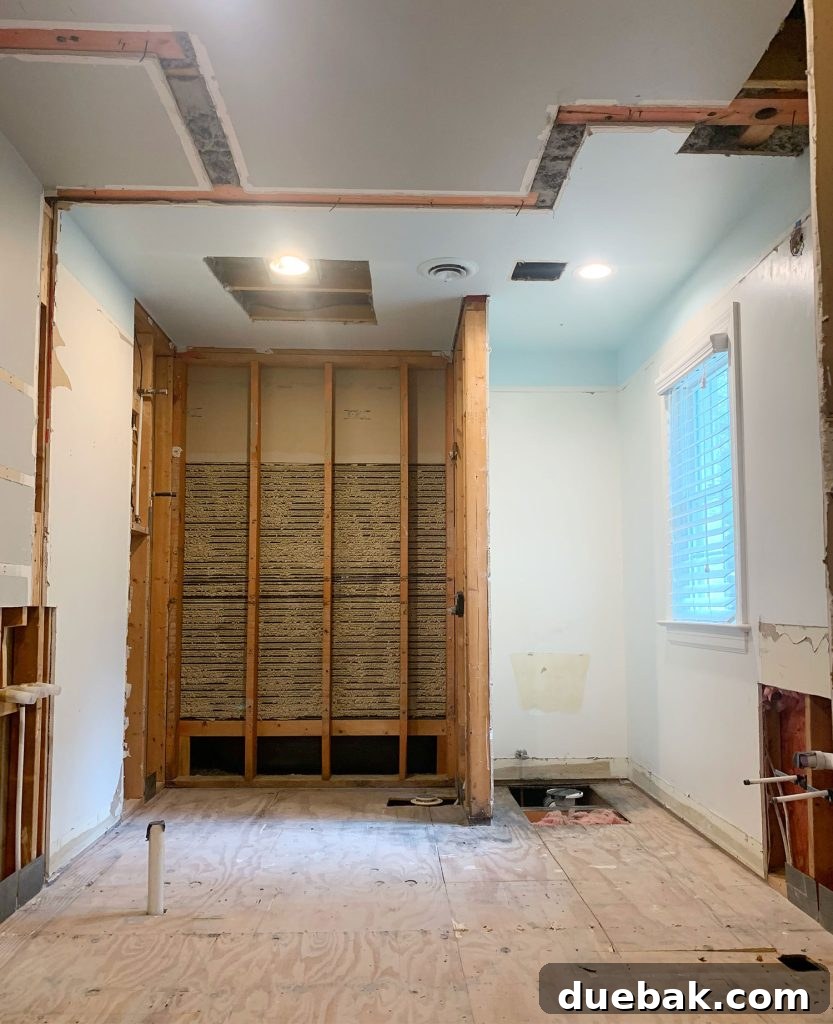
Let’s revisit the bathroom renovation in our previous house to illustrate how we tackled a significant timeline issue. The project began auspiciously: a highly productive week of demolition, followed by seamless, back-to-back visits from plumbers and electricians. However, we then encountered an unexpected scheduling problem with our drywall specialist – a task, ironically, we had outsourced as a “treat” to ourselves to expedite things. The result? Nearly ten days of absolute inactivity. This situation had the full potential to trigger immense frustration, but instead, we consciously chose to pause and reframe the entire situation. Here was our internal thought process:
Did we have a hard deadline for this project? Upon honest reflection, no, not really. While we certainly desired its completion sooner rather than later, there was no critical, unmovable date we absolutely needed to hit (like hosting family for a holiday).
What was the underlying urgency for a speedy completion? Primarily, our eagerness stemmed from wanting to reclaim a fully functional (and mercifully dust-free) bathroom connected to our bedroom. However, we had a perfectly serviceable hall bathroom just a few steps away that we could easily use, making the inconvenience minimal. This realization was especially potent when we took a moment to recall our very first house’s bathroom renovation, during which our ONLY full bathroom was completely gutted. That meant several weeks without any shower in our home, necessitating regular trips to the gym. Making that direct comparison instantly reminded us that our current circumstance, while annoying, was significantly less urgent or disruptive.
What proactive steps could we take to accelerate progress? We quickly recognized that merely hiring out tasks didn’t automatically guarantee faster results, as our drywall delay vividly demonstrated. The next best solution would have been to dive in ourselves, working faster and pushing harder. But that path invariably meant more late nights, sacrificing personal time, and potentially falling behind on other professional and life commitments.
Did we truly want to endure more late nights and risk neglecting other commitments for the sake of an earlier bathroom completion? The answer was a resounding “No!” That alternative sounded like a far more stressful and exhausting trajectory. As we had established upfront, our primary goal was to genuinely enjoy the process of this renovation, not merely tolerate it for the sake of the outcome. This re-evaluation solidified our commitment to managing stress over blindly chasing speed.
Taking this deliberate pause to question ourselves in such a thoughtful and intentional manner was incredibly illuminating. It helped us realize that the bathroom delays, while unwelcome, weren’t actually catastrophic. We weren’t missing a critical deadline. We weren’t hemorrhaging money due to the pause. We were, understandably, weary of a dusty, unusable room and the lack of progress for ten consecutive days – but it truly was not the end of the world. Suddenly, the relentless ticking clock of the timeline dissolved into an unnecessary source of anxiety. This strategic mental shift allowed us to navigate the delay with newfound calm and perspective.
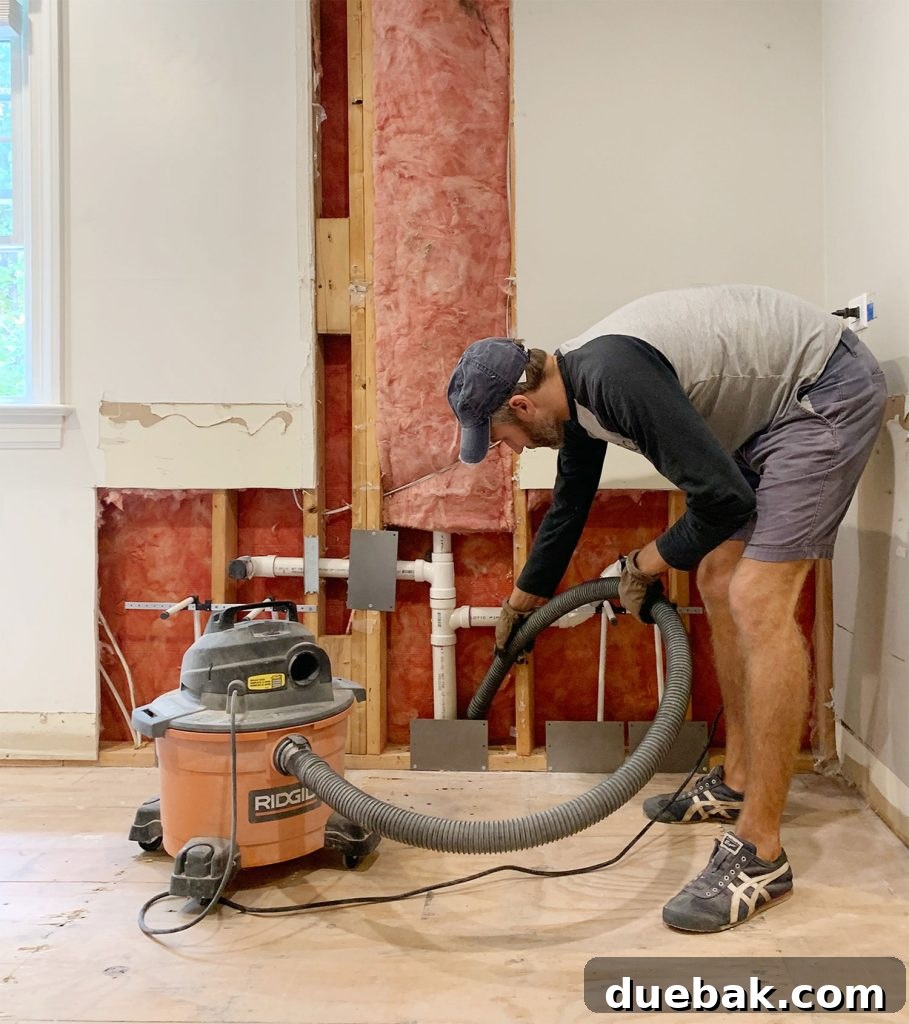
Of course, it’s important to acknowledge that it’s not always so straightforward to simply brush off timeline issues. Some renovations indeed come with very firm and absolutely crucial deadlines, making delays genuinely problematic. Financial penalties can accrue with extended timelines, and the sheer mental and emotional drain of a project feeling perpetually unfinished can be immense. However, if you can exercise whatever power you possess to proactively avoid imposing a rigid “ticking clock” on your project, it often provides a remarkable psychological relief. You might even consider strategically delaying the start of a project that has an inherently tight or immovable deadline, such as when family is scheduled to stay for an upcoming holiday. Starting after they leave, when there’s no external pressure, can be infinitely easier – after all, they’re coming to see you, not to inspect your new toilet!
Furthermore, intentionally letting go of certain elements that could predictably cause delays can be a wise decision. For example, if adding heated floors means an extra $1000 and an additional week to the project, seriously consider if this is a non-negotiable feature or something you might not even use extensively. Always double-checking and confirming contractor timelines (both in your own planning and directly with them) can also provide invaluable peace of mind. Ultimately, timeline disruption is arguably the most unavoidable stressor in any renovation. Therefore, sometimes the simplest yet most effective strategy is to acknowledge upfront that delays are highly probable, preparing yourself mentally so you’re less caught off guard and can adapt gracefully when (not if) they occur.
Managing Renovation Stress: Key Takeaways for a Smoother Journey

It’s crucial to remember that every renovation project, and indeed every renovator, is unique. Consequently, there isn’t a single, foolproof formula that guarantees the complete elimination of stress during a home improvement endeavor. However, based on our extensive experience and lessons learned, here’s a concise recap of the strategies and mindsets we’ve found to be most effective in making the process more manageable and enjoyable:
- Proactively Identify Your Potential Stressors: Before you even begin, take the time to honestly assess what aspects of renovation are most likely to cause you anxiety. Develop a plan upfront to account for and mitigate these specific points.
- Embrace Multiple Good Options: Release the pressure of finding “the one perfect choice.” Recognize that there are often many excellent solutions for materials, layouts, and finishes that will make you happy. This mindset reduces analysis paralysis and decision fatigue.
- Don’t Let Perfection Be the Enemy of Good: Striving for absolute perfection can lead to endless delays, budget overruns, and immense frustration. Accept that “good enough” is often truly exceptional and allows you to celebrate progress.
- Focus on Your Project’s “Big Win”: Clearly define the primary goal or most significant improvement you seek from the renovation. This core objective will help keep minor hiccups and less-than-perfect details in proper perspective, preventing them from derailing your overall satisfaction.
- Decouple Money from Outcomes: Challenge the notion that a higher price tag automatically equates to a better or more satisfying result. Be strategic about your splurges and find joy in budget-friendly alternatives where appropriate. Having financial padding significantly reduces stress.
- Remove Time Constraints Where Possible: Understand that delays are an almost inevitable part of renovation. Cushion yourself against these by building in extra time or, ideally, by removing firm deadlines entirely when feasible. This mental freedom can dramatically reduce anxiety surrounding unforeseen setbacks.
Finally, and perhaps most importantly, extend grace to yourself when a project inevitably becomes stressful. Every major undertaking, particularly one as complex and personal as a home renovation, will have its share of ups and downs. It’s only natural to experience a wide range of intense emotions – from excitement and joy to frustration and overwhelm – no matter how meticulously you try to plan for them ahead of time. Acknowledge these feelings, learn from them, and keep moving forward. The journey itself, with all its imperfections, contributes to the unique story of your home.
NOTE: For a deeper dive into these strategies and to hear us discuss this topic further, tune into Episode #156 of our podcast.