
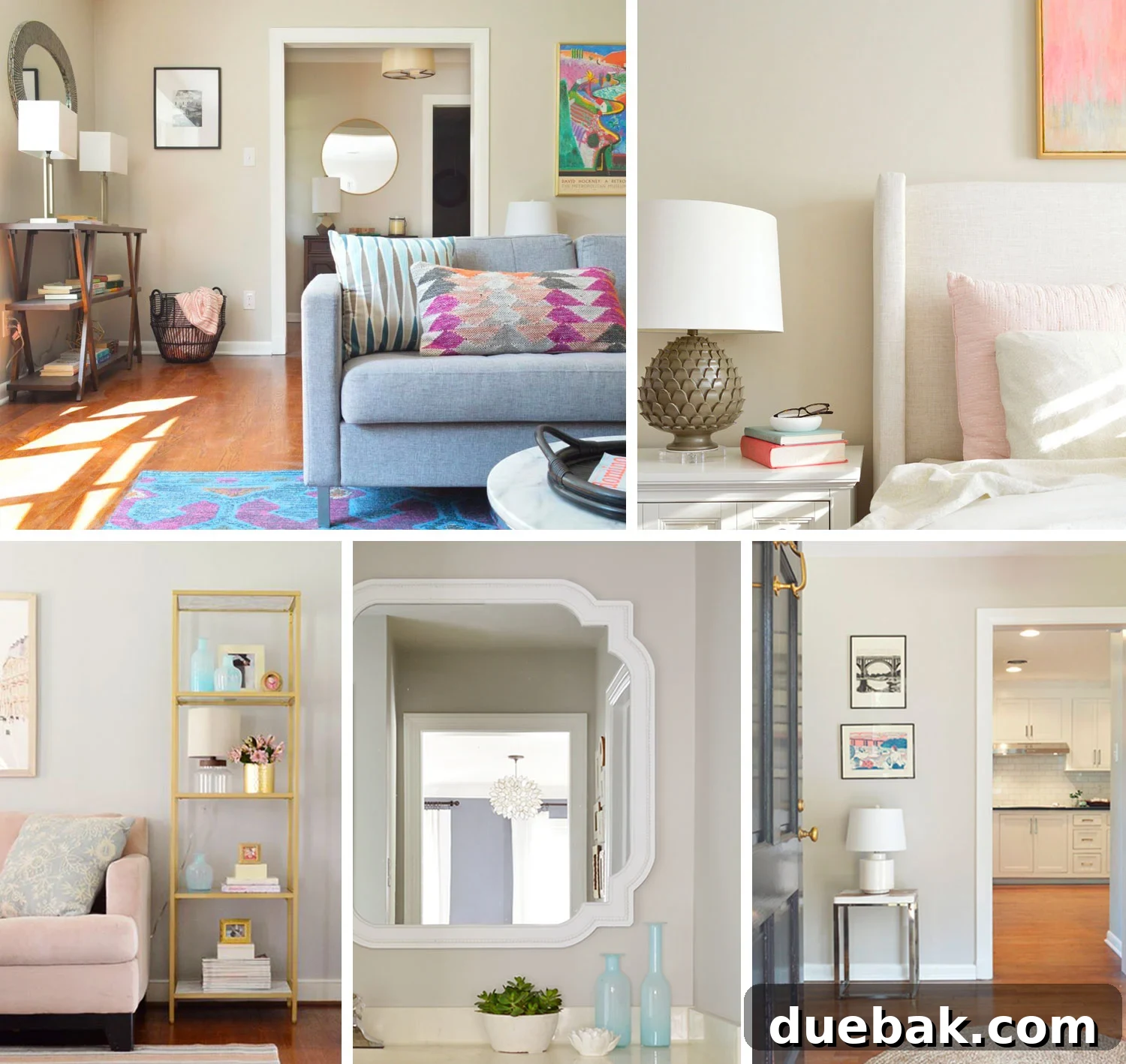
Discover the Perfect Greige: Your Ultimate Guide to Timeless Neutral Paint Colors
Welcome to the captivating world of “greige,” the ultimate hybrid paint color that gracefully balances the sophistication of gray with the inviting warmth of beige. This versatile hue has earned its place as both a trendy and enduring choice in interior design, offering a unique blend that pure grays and beiges often miss. Our fascination with greige began nearly two decades ago, long before the term itself became a household name. However, navigating the vast array of neutral paint colors to find that one perfect greige can feel overwhelming.
To simplify your search, we embarked on a meticulous quest, sifting through dozens of expert recommendations and design industry round-ups. Our rigorous analysis involved compiling a detailed spreadsheet (yes, we truly enjoy this kind of research!) to identify which greige colors consistently receive the highest praise and appear repeatedly on top lists. While we expected to find our long-time favorite greige paint among the contenders, the color that ultimately claimed the #1 spot was quite a revelation, even for us seasoned greige enthusiasts!
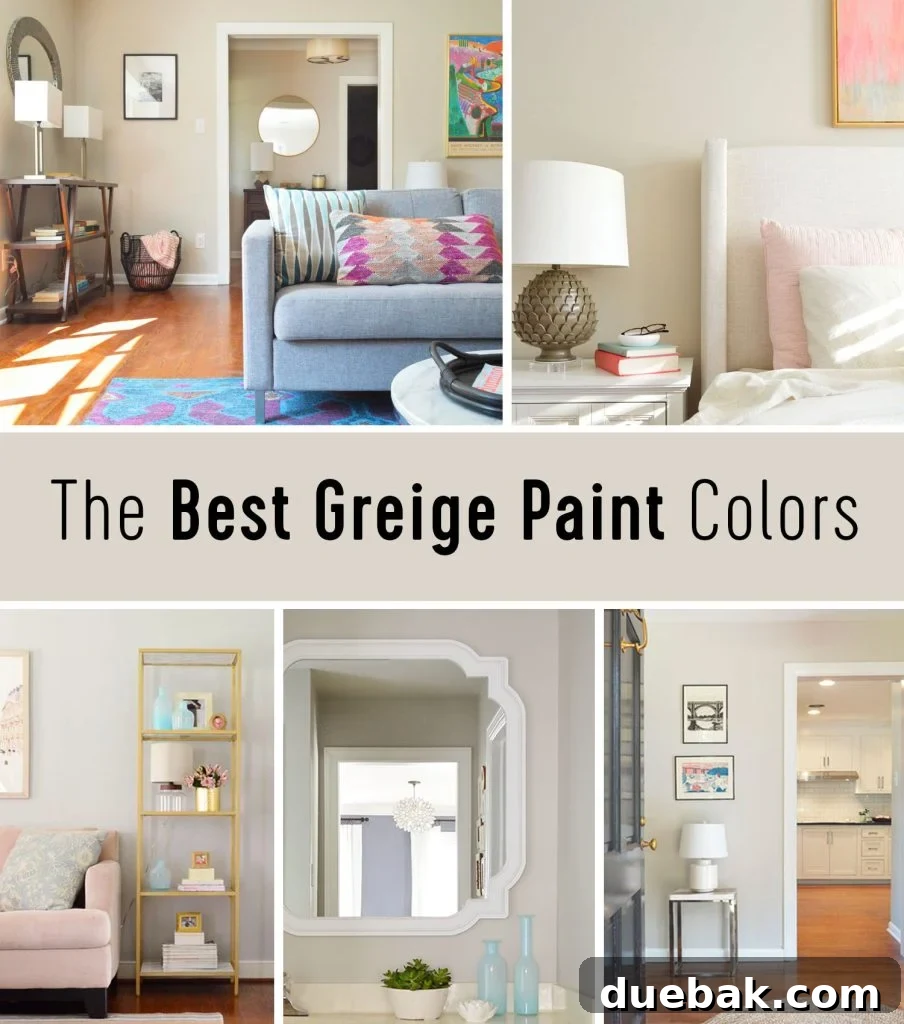
Join us as we unveil the most highly-rated greige paint colors, delve into their unique characteristics, and provide you with all the insights you need to confidently choose the ideal shade for your home. Get ready to embrace the subtle elegance and adaptability that only greige can offer.
What Is Greige?
At its core, “greige” is a portmanteau, a delightful blend of “gray” and “beige.” It serves as an encompassing term for any paint color that skillfully navigates the visual space between these two foundational neutrals. You might also hear these versatile hues described as “warm grays” or “cool beiges.” For many homeowners, greige strikes an ideal balance, appearing less dated or overtly traditional than some pure beiges, yet offering more warmth and inviting comfort than the often-perceived sterility of cool grays. Essentially, greige delivers the best attributes of both worlds, providing a sophisticated backdrop that complements a wide range of decor styles.
The recent shift in interior design has seen a decline in the popularity of traditional, cool gray paint colors, which can sometimes render a space feeling cold or uninviting. Similarly, certain beige tones can lean too heavily into yellow or feel somewhat antiquated for contemporary tastes. Greige paint colors expertly circumvent both these common pitfalls, which largely explains their sustained and immense popularity. They offer an adaptable foundation for almost any area of your home, making them excellent choices for walls, ceilings, kitchen cabinets, and even as a cohesive whole-house color scheme. In fact, once we discovered a greige we truly adored, we enthusiastically (and gradually!) repainted nearly every room in our previous home in that very shade. It’s a testament to greige’s ability to unify and enhance a living space without feeling monotonous.
Why Choose Greige Paint? (Pros)
Greige paints are an exceptional choice for anyone seeking a profoundly versatile and elegantly neutral color palette. Their inherent flexibility and appealing characteristics make them a go-to for designers and homeowners alike. Here are some compelling reasons why greige might be the perfect paint solution for your next project:
- A Stepping Stone to Color: If you find pure white walls too stark but aren’t quite ready to commit to a bold or vibrant color, greige offers a gentle, sophisticated transition. It provides a subtle hint of color without dominating the space.
- Enhanced Architectural Details: Greige excels at creating a soft, appealing contrast with white trim and architectural moldings. This subtle differentiation highlights the detailing of your home, adding depth and visual interest without harsh lines.
- Timeless Appeal: Unlike fleeting trends, greige possesses a classic and enduring quality. It’s a color that consistently looks chic and sophisticated, ensuring your interiors remain stylish and inviting for years to come, truly making it a timeless choice.
- Harmonious Neutrality: Greige is genuinely neutral, meaning it gracefully complements both warm-toned and cool-toned decor elements. This unique ability allows for effortless integration with existing furniture, artwork, and textiles, providing a cohesive look.
- Cultivating Serenity: The muted, balanced nature of greige makes it an excellent choice for fostering a calming and relaxing atmosphere. It creates a tranquil backdrop that promotes peace and comfort in any room, from bedrooms to living areas.
- Avoiding Coolness and Sterility: If you’ve considered gray walls but are concerned they might feel too cold or sterile in your particular lighting conditions, greige offers the perfect remedy. Its underlying warmth mitigates the cool tendencies of gray, resulting in a more welcoming ambiance.
- Flexible Decor Backdrop: For those who love to frequently update their decor, switch out accessories, or evolve their design style, greige provides an incredibly adaptable foundation. It ensures your walls will always harmonize with your changing tastes, making future redecorating efforts much simpler.
- The Trusted Solution for Indecision: Faced with countless paint chips and paralyzed by choice? Greige often serves as a reliable, widely approved option. Its proven popularity and consistent beauty make it a safe yet stylish bet when you need a dependable decision.
Considerations Before Painting Greige (Cons)
While our admiration for greige runs deep, it’s important to acknowledge that it isn’t the ideal choice for every individual or every space. Before you commit to this popular neutral, here are a few potential drawbacks and considerations to keep in mind:
- Desire for Bold Statements: If your heart is set on a paint color that makes an immediate, dramatic statement or serves as a vibrant focal point, greige might not fulfill that desire. Its strength lies in its subtlety and ability to blend rather than command attention.
- Rooms Lacking Natural Light: In spaces with minimal natural light, greige can sometimes transform into a darker, more saturated beige. The lack of bright illumination can pull out the warmer undertones, making it appear heavier than intended and potentially losing its characteristic balance.
- Aversion to “Safe” Choices: For those who fear being accused of “boring” design choices or who actively seek riskier, avant-garde aesthetics, greige’s widespread appeal might feel too conventional. Its popularity as a crowd-pleaser can, for some, detract from its perceived uniqueness.
- Monochromatic Risk: If your existing furniture, textiles, and decor elements are already predominantly greige or similar neutral tones, painting your walls greige could result in a flat, uninspired, or overly monochromatic look. While a cohesive monochromatic scheme can be stunning, it requires careful layering of textures and varying shades to avoid a dull outcome.
The criticism regarding greige being “generic” or “boring” is perhaps the most common one, often aimed at any highly popular neutral wall color. Greiges have indeed become a favored choice among home builders, realtors, and even Airbnb hosts precisely because they appeal to a broad audience and simplify decision-making. However, this widespread adoption doesn’t diminish its inherent beauty or versatility. Our personal philosophy is simple: don’t let external perceptions deter you if greige genuinely resonates with your aesthetic preferences! Ultimately, your home will feel most authentic, comfortable, and welcoming when you trust your own instincts and choose colors that genuinely speak to you. As you’ll discover throughout this guide, there are abundant reasons why greige remains a smart, sophisticated, and undeniably stylish choice for countless interiors.
The Best Greige Paint Colors Revealed
After extensive research and careful compilation, we are excited to present the nine greige paint colors that consistently rise to the top of expert lists and homeowner recommendations. These are the shades that are celebrated time and again for their impeccable balance and widespread appeal. Much like our detailed analysis of the best white paints, meticulous organization (with the help of a spreadsheet, of course!) was key to identifying these standout hues. The color we’ve listed first appeared on nearly every professional and crowd-sourced list we reviewed. It’s a color we’ve personally used and loved, yet its consistent dominance at the very top of our rankings was genuinely surprising!
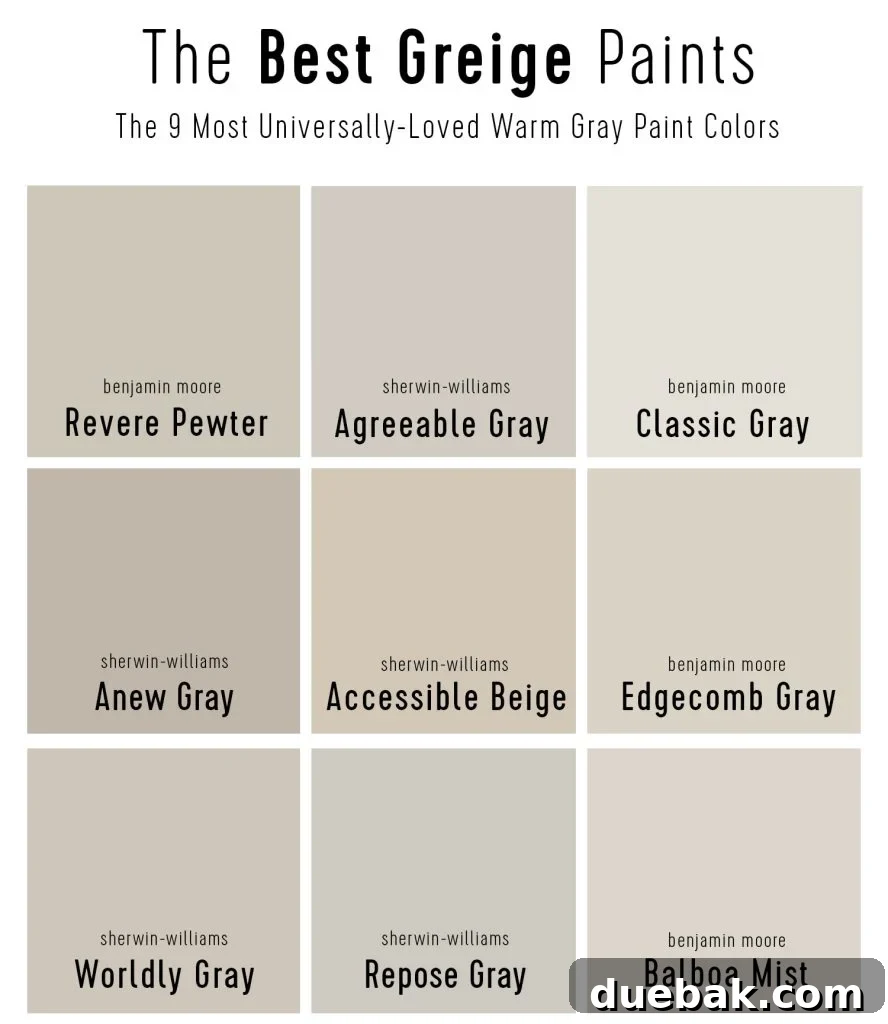
Important Note: The paint swatches displayed within this article are digital representations sourced directly from each manufacturer’s official website. While these serve as the best available “apples-to-apples” comparison for online discussions, it is crucial to understand that they are imperfect approximations of the actual paint colors. We strongly advocate for viewing physical paint swatches in your own space and lighting conditions before making any final color decisions.
- Benjamin Moore Revere Pewter (HC-172)
- Sherwin-Williams Agreeable Gray (SW 7092)
- Benjamin Moore Classic Gray(OC-23)
- Sherwin-Williams Anew Gray (SW 7030)
- Sherwin-Williams Accessible Beige (SW 7036)
- Benjamin Moore Edgecomb Gray (HC-173)
- Sherwin-Williams Worldly Gray (SW 7043)
- Sherwin-Williams Repose Gray (SW 7015)
- Benjamin Moore Balboa Mist (OC-27)
We’ll delve into the specific nuances and characteristics of each of these highly-regarded greige paints in a dedicated section shortly. Furthermore, for those who wish to explore beyond this definitive top 9, we’ve also compiled a list of excellent “runner-up” greige paint colors at the bottom of this post, offering even more sampling opportunities for your consideration.
Mastering Greige: How To Pick The Perfect Shade
Even with a carefully curated list of top-performing greige paints, the task of selecting the absolute perfect shade for your specific space can remain surprisingly challenging. The distinctions between seemingly similar colors are often incredibly subtle, yet these nuances can significantly impact how the color reads in your home. To help you decipher these fine differences and make an informed decision, we’ll extensively discuss two critical concepts: brightness (quantified by LRV) and undertones. These are invaluable terms to familiarize yourself with when choosing any paint color, but they become especially crucial when navigating the delicate spectrum of greys and greiges.
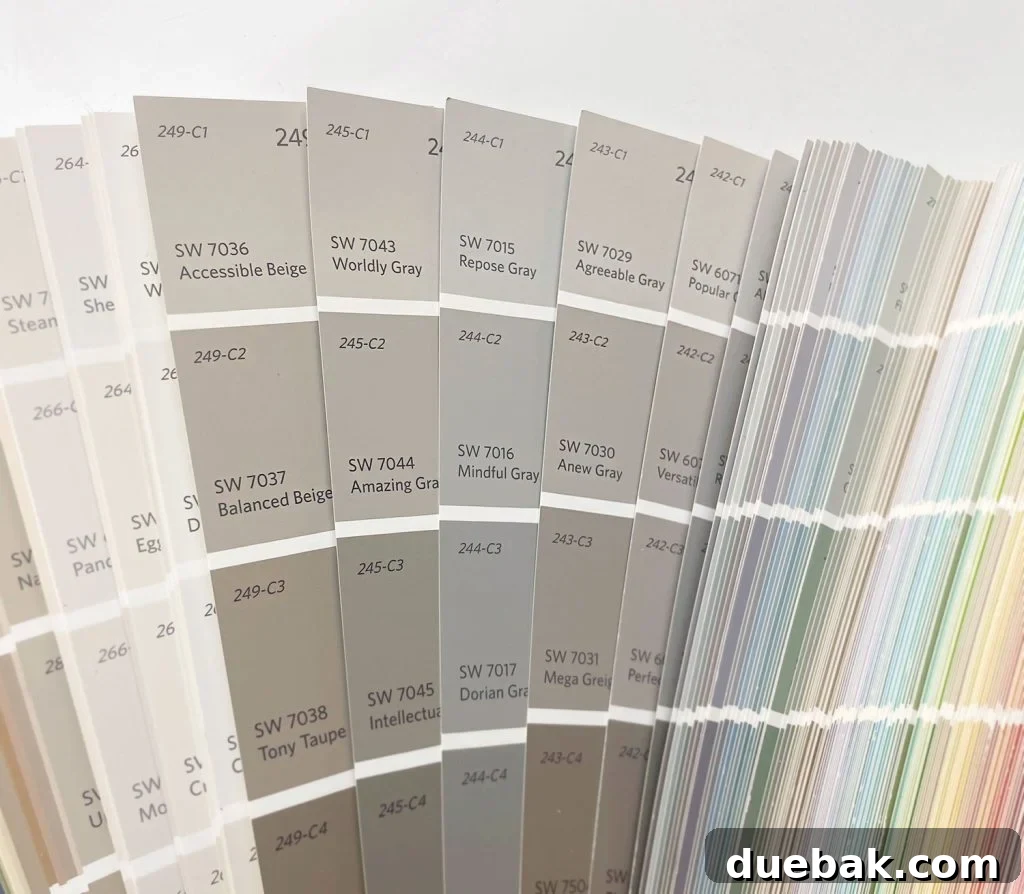
Beyond understanding these technical aspects, we cannot emphasize enough the importance of physically viewing and testing paint colors in your own environment before finalizing your selection. Digital representations, no matter how accurate they strive to be, can never truly replicate how a color will appear under your specific lighting conditions and alongside your existing furnishings. To facilitate this crucial testing phase, we’ve provided direct links to convenient, pre-painted removable stickers for each of our top greige picks (you’ll find these listed further down in the “How to Test” section). These large, peel-and-stick color swatches offer an excellent, mess-free alternative to traditional paint samples, allowing you to evaluate the true color without the commitment or cleanup of a paintbrush. You can easily reposition them on different walls and observe them at various times throughout the day to fully understand how the color interacts with changing light.
Understanding LRV (Light Reflectance Value)
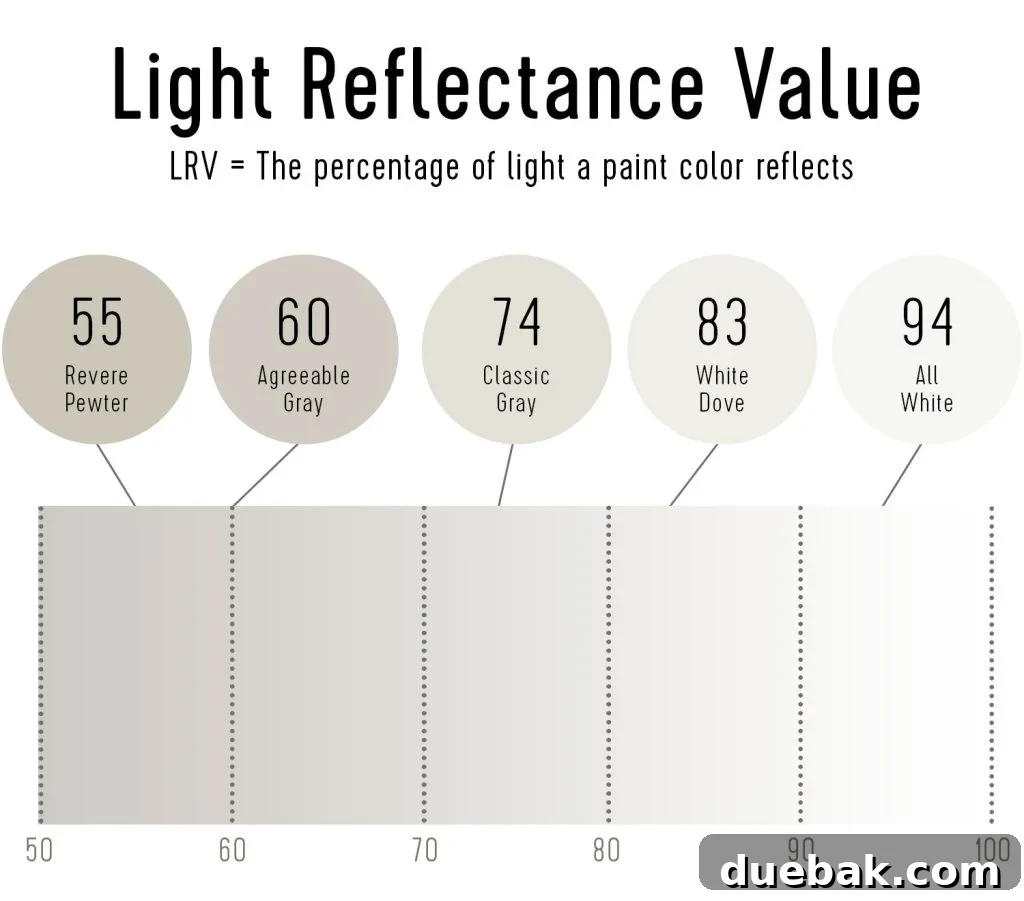
LRV, or Light Reflectance Value, is a standardized and quantitative metric used to measure how much light a paint color reflects from its surface. It’s expressed as a numerical value ranging from 0 to 100. A paint color with an LRV of 0 represents absolute black, absorbing all light, while an LRV of 100 signifies pure white, reflecting all light. Essentially, the higher the LRV number, the brighter and more reflective the paint color will be in a room. This objective measure is incredibly useful for comparing the inherent brightness of different hues, particularly within the subtle realm of neutrals.
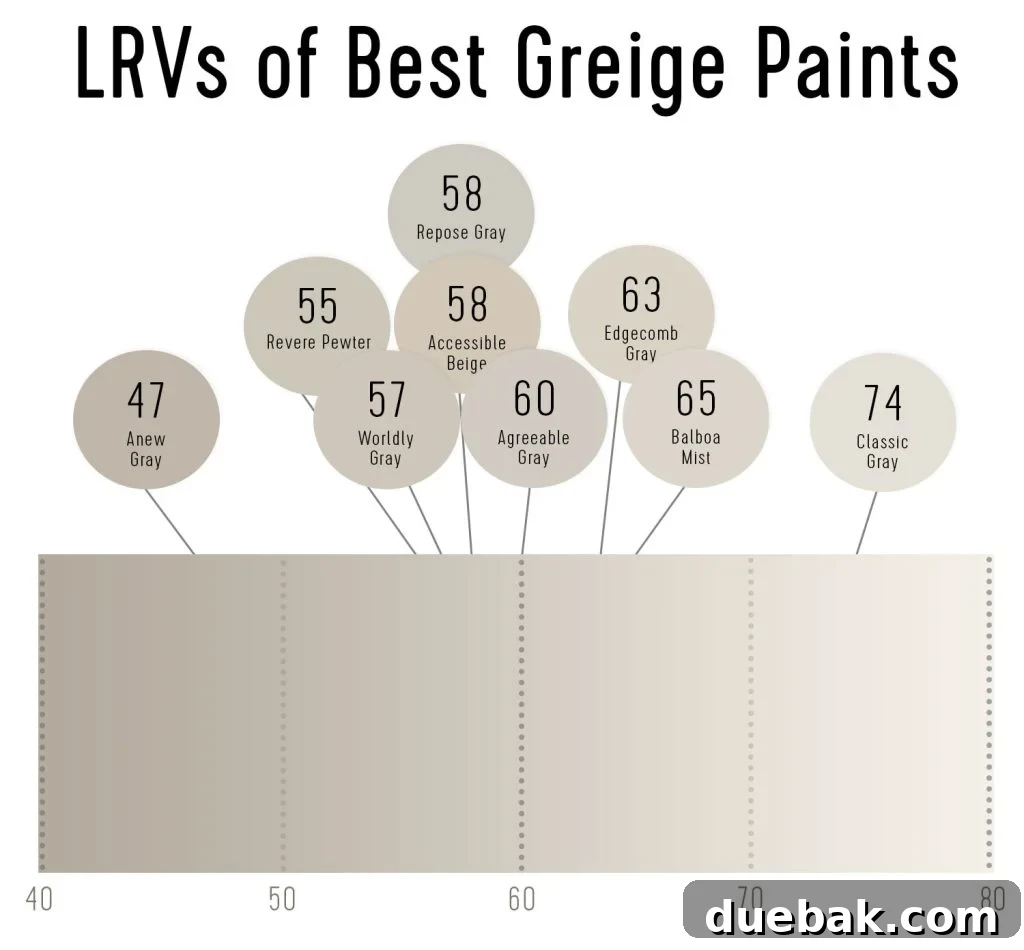
Now, let’s apply this understanding to our top nine greige paint colors and see where they stand on the LRV scale. You’ll observe a significant range among these popular selections: Sherwin-Williams Anew Gray registers as the darkest on our list, with an LRV of 47, indicating it absorbs more light and will appear deeper. Conversely, Benjamin Moore’s Classic Gray is the lightest, boasting an LRV of 74, making it a highly reflective and airy option. The majority of the greige colors on our list, however, tend to cluster comfortably around an LRV of approximately 60, striking a popular balance between light and depth.
You can typically locate a paint color’s LRV on the manufacturer’s official website or on the back of a physical paint chip. Knowing the LRV is immensely helpful when you’re comparing two seemingly similar colors, as it provides an objective benchmark for their brightness. It’s also invaluable when you’re searching for alternative options that maintain a similar level of brightness. Furthermore, understanding LRV is particularly advantageous when dealing with white and gray tones, as these swatches are not always organized by brightness within a paint deck, unlike other color families. This knowledge empowers you to confidently pair colors and achieve your desired aesthetic.
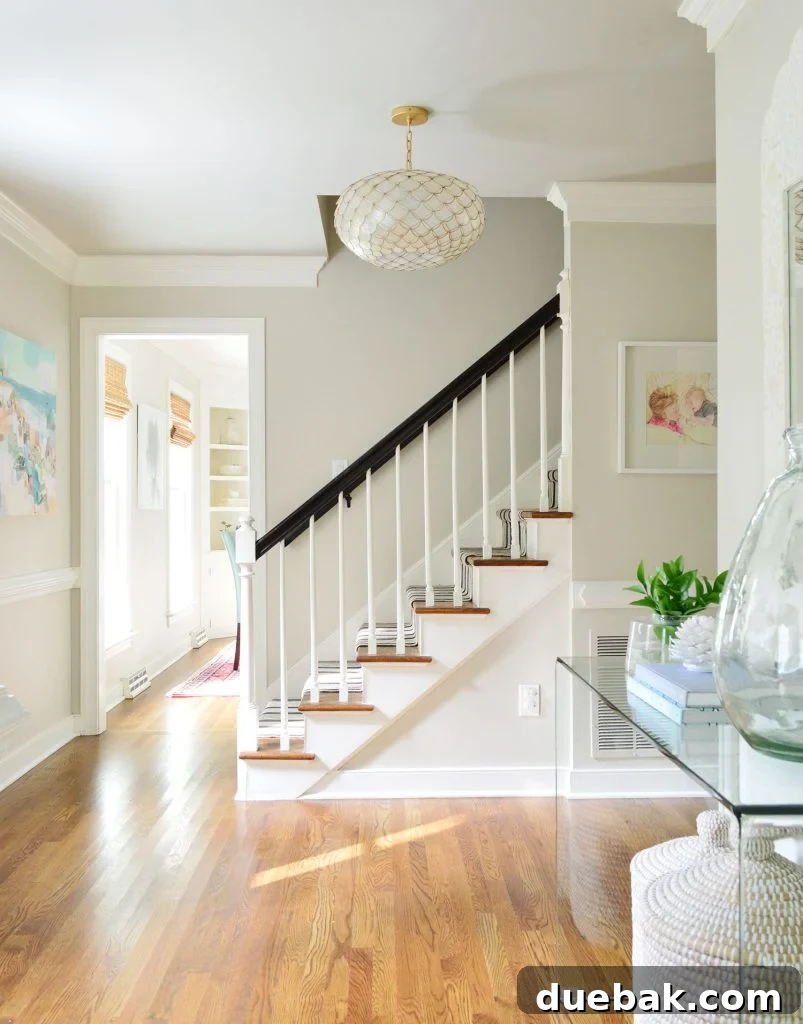
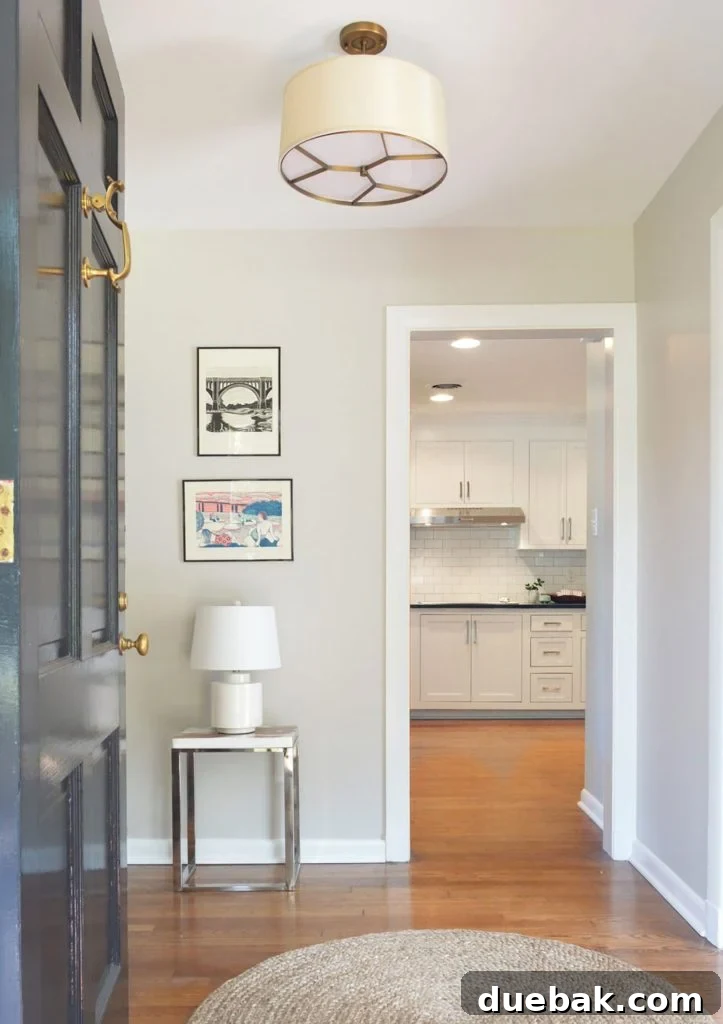
LRV can also be a strategic tool for combining two different greige shades within a single space, as demonstrated in our own home. For instance, we desired a complementary yet perceptibly deeper greige for the ceiling of our foyer. With the walls already painted in the bright and airy Benjamin Moore Edgecomb Gray (which has an LRV of 63), we deliberately chose Benjamin Moore Revere Pewter for the ceiling (with a lower LRV of 55). In person, the difference was clear and impactful: the ceiling provided a slightly darker, more nuanced, and subtly moody contrast, creating a layered and sophisticated look without introducing a completely different color.
Demystifying Paint Undertones
Undertones are the subtle secondary colors that exist within most paint hues. They are often the reason why a seemingly straightforward color can shift its appearance under different lighting conditions or next to other colors. These elusive hints of color are typically categorized as either warm or cool. For example, a warm gray might subtly reveal hints of yellow, red, or even pink, giving it a cozier feel. Conversely, a cool gray could lean towards blue or purple, imbuing the space with a crisper, more serene ambiance. These undertones are frequently challenging to detect, especially when viewing small paint swatches in isolation. Their perception is also inherently subjective and is heavily influenced by a multitude of factors within a room, including the amount and type of natural and artificial lighting, the colors of adjacent walls or furnishings, and the natural tones of wood elements.
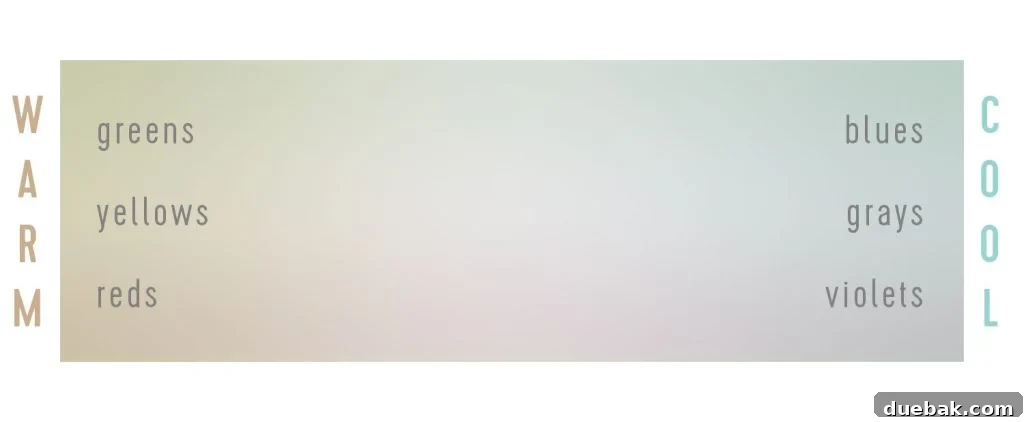
By their very definition, “greiges” occupy the warmer segment of the undertone spectrum, carefully avoiding leaning so far warm that they transform into distinct cream, ivory, beige, or tan shades. The greige colors that have achieved widespread popularity, including those featured on our top list, are particularly celebrated because their undertones are exceptionally subtle. This delicate balance is precisely what allows them to truly walk the fine line between gray and beige, making them incredibly adaptable. Despite their subtlety, understanding these underlying tints is paramount. It ensures that you’re not caught off guard or disappointed when the paint is applied to your walls, as even a faint undertone can greatly influence the overall feel and perception of your newly painted space.
Smart Ways To Test Greige Paint Colors
Regardless of how highly acclaimed or universally loved a paint color may be, the ultimate decision rests on how it appears to YOUR eyes within YOUR unique space. Therefore, the practice of testing paint colors before making your final selection is not just wise—it’s absolutely essential to ensure satisfaction and avoid costly mistakes.
Gather an Abundance of Swatches. We understand the eagerness to quickly narrow down your options. However, we strongly advise collecting a generous array of swatches, including colors that are slightly darker, lighter, warmer, or cooler than your initial preferences. This seemingly excessive collection serves a crucial purpose: having a broader spectrum of shades side-by-side will significantly enhance your ability to discern the subtle differences in brightness and, most importantly, identify the nuanced undertones of each color. You might even surprise yourself during this process, realizing that your ideal greige leans a bit warmer, cooler, darker, or brighter than you originally envisioned.
Opt for Stick-On Samples Over Painting. Once you’ve successfully narrowed down your potential choices to a select few, we highly recommend utilizing services like Samplize to order large, pre-painted peel-and-stick samples of your favorites. These innovative samples offer remarkable value; they are typically comparable in price to traditional liquid paint samples but eliminate the need for any actual painting (or the subsequent repainting when you’re done testing!). Their adhesive backing allows for effortless application and removal, making them incredibly convenient. This feature also makes them ideal for easily moving around your room, allowing you to observe the color on different walls, next to various furnishings, and under diverse lighting scenarios. Here are direct links to purchase Samplize samples for the nine greige colors featured on our list:
- Benjamin Moore Revere Pewter sample sticker
- Sherwin-Williams Agreeable Gray sample sticker
- Benjamin Moore Classic Gray sample sticker
- Sherwin-Williams Anew Gray sample sticker
- Sherwin-Williams Accessible Beige sample sticker
- Benjamin Moore Edgecomb Gray sample sticker
- Sherwin-Williams Worldly Gray sample sticker
- Sherwin-Williams Repose Gray sample sticker
- Benjamin Moore Balboa Mist sample sticker
Allocate Sufficient Time for Observation. Once your samples are in place, make it a point to observe them diligently throughout different times of the day. Pay close attention to how the brightness and undertones of each greige shift from morning to afternoon, into the evening, and under both natural daylight and artificial indoor lighting. Experiment by sticking them to various walls within a room, and consider placing them against cabinets, existing trim, or any other surfaces you are contemplating painting. This comprehensive observation period will provide invaluable insights, ensuring that the greige you select truly enhances your space in all conditions.
The 9 Leading Greige Paints In Detail
With a foundational understanding of how to evaluate greige paint colors—considering factors like LRV and subtle undertones—it’s time to dive into a more detailed examination of each of the top nine greige paints that have earned their place on this definitive list. Our selection process was thorough, involving a review of numerous authoritative sources, including color experts from prestigious publications like Southern Living, House Beautiful, and Elle Decor, as well as renowned home improvement platforms like Bob Vila. We also cross-referenced insights from popular design bloggers and engaged with crowd-sourced forums such as Houzz and Reddit to capture a comprehensive consensus. We’ll begin our in-depth look with the greige color that emerged as the most consistently cited and highly recommended across all our research:
#1. Benjamin Moore Revere Pewter (HC-172)
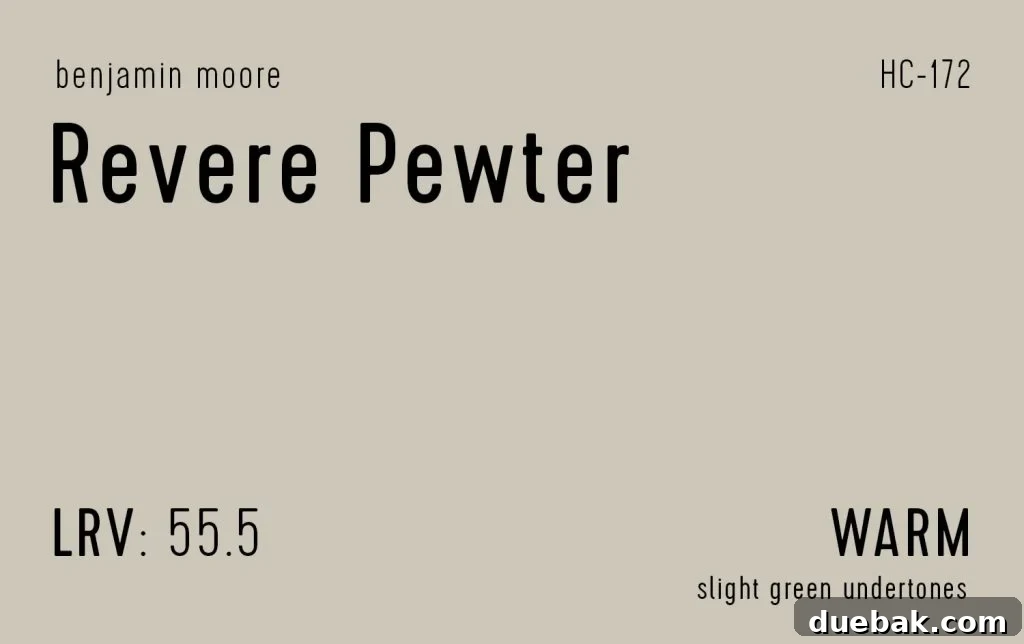
Benjamin Moore’s Revere Pewter (HC-172) holds a special place in our hearts, having graced the walls of our own homes on multiple occasions. Its surprising #1 ranking on our comprehensive list, given that it’s one of the darker greiges with an LRV of 55, speaks volumes about its enduring appeal. As one of Benjamin Moore’s perennial best-selling colors, its popularity is easy to understand. Revere Pewter masterfully achieves that coveted equilibrium between beige and gray, making it an exceptionally versatile choice suitable for virtually any space and design aesthetic.
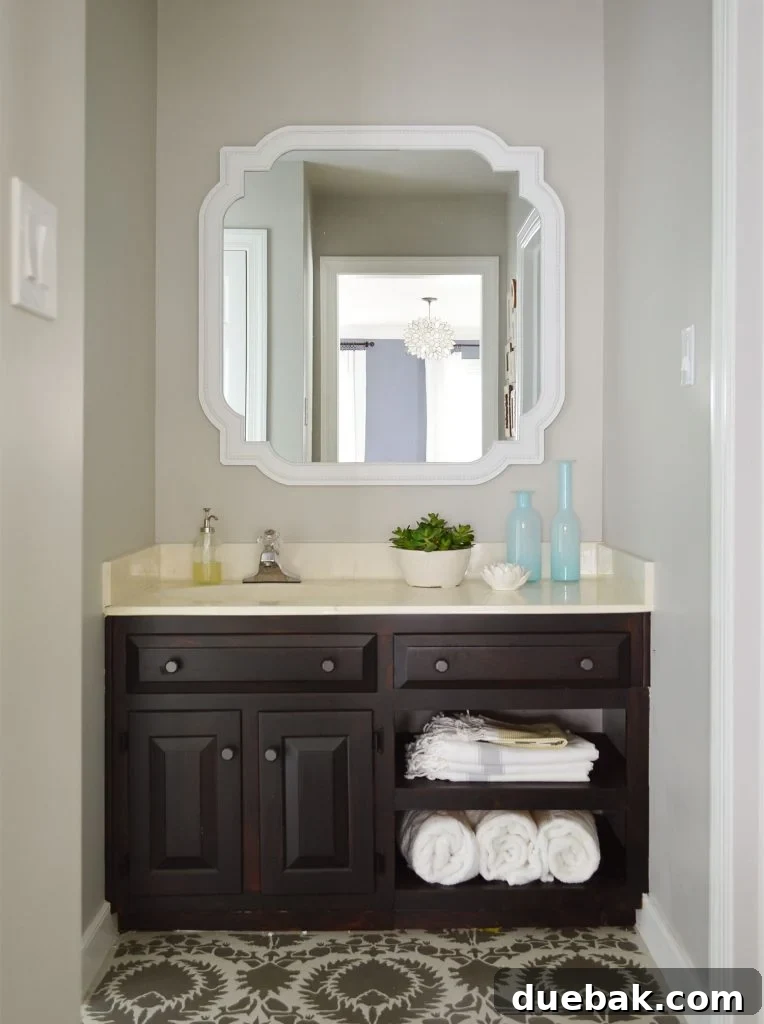
We first introduced Revere Pewter into our old bathroom (pictured above) during a quick renovation. While it offered beautiful depth, it proved a bit dark for that windowless space. However, we absolutely adored its appearance in our sun-drenched foyer (shown below), where we creatively painted it on the ceiling. This personal experience perfectly illustrates Revere Pewter’s chameleon-like quality; its perception can subtly shift depending on the specific lighting and surrounding elements within a room, always adapting to create a harmonious feel.
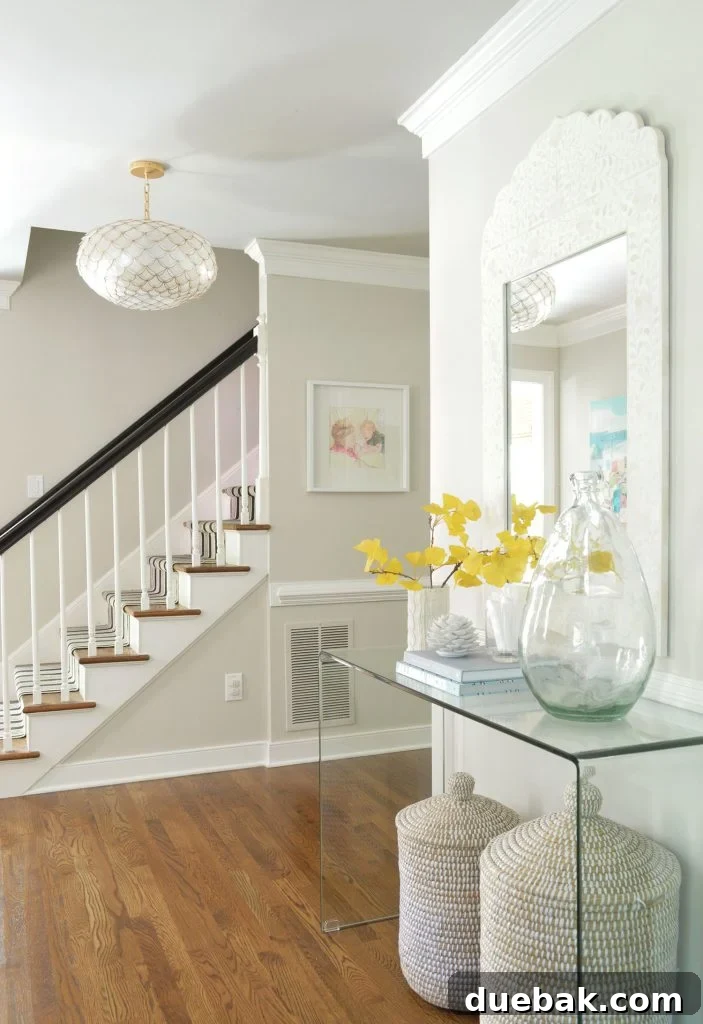
Regarding its undertones, Revere Pewter possesses very subtle green hints. While the mention of green might initially cause apprehension, there’s no need for concern. Many of the most beloved greige colors, including several on this list, exhibit these faint green undertones. It is precisely this delicate infusion of green that contributes to their perfectly balanced mix of warm and cool tones, preventing them from leaning too heavily into either pure gray or pure beige and solidifying their status as true greiges.
#2. Sherwin-Williams Agreeable Gray (SW 7092)
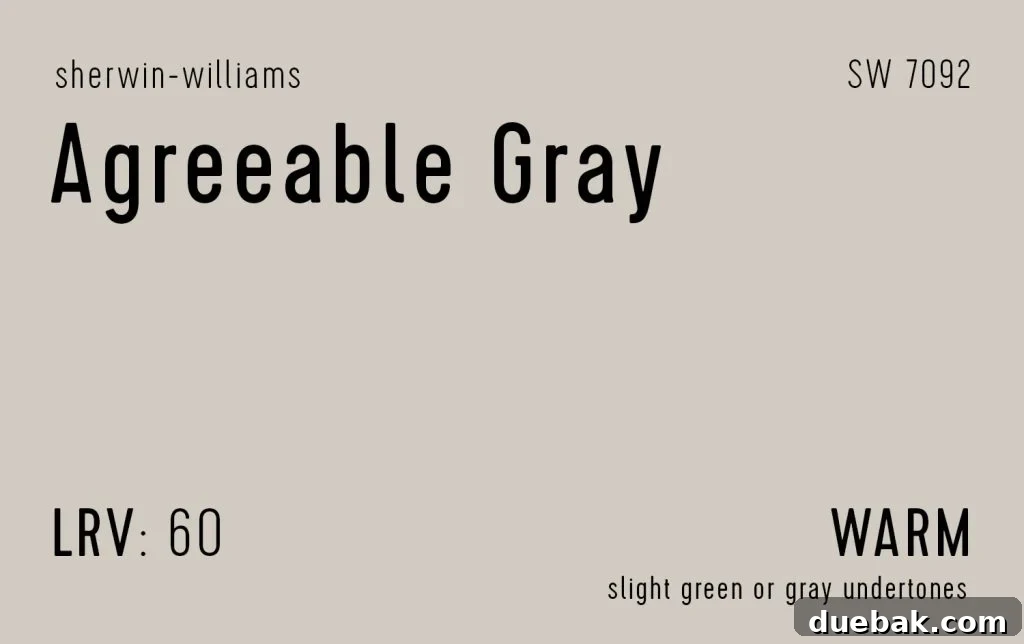
Agreeable Gray (SW 7092) consistently ranks as one of Sherwin-Williams’ all-time best-selling colors, a testament to its broad appeal and exceptional versatility, much like Benjamin Moore’s Revere Pewter. With an LRV of 60, it is noticeably lighter than Revere Pewter’s 55, making it a brighter choice for many spaces. It also leans slightly cooler, which means that in certain lighting conditions, it might appear a touch more gray than a pure greige. However, as beautifully illustrated in the room below, Agreeable Gray never comes across as a stark, cool gray; it always retains a crucial undertone of warmth that maintains its inviting, balanced character.
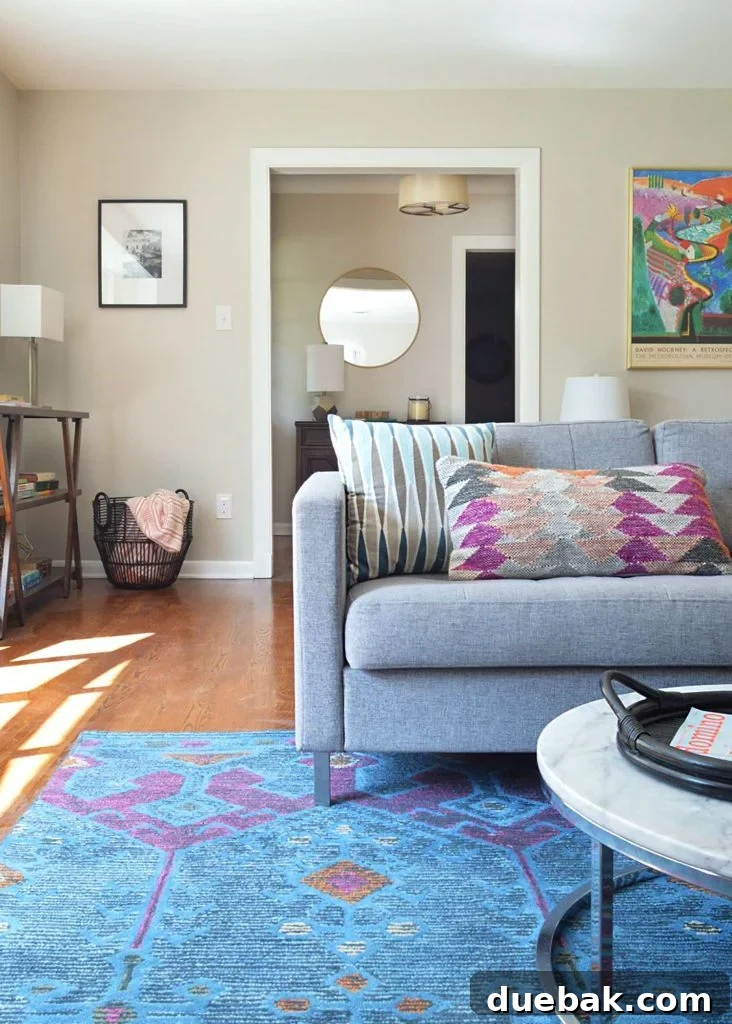
True to its name, Agreeable Gray is an incredibly amiable color that harmonizes effortlessly with a diverse array of design styles and color schemes. Our friends, for example, wisely chose this shade when renovating their rental property (pictured above). They found it to be the perfect classic and flexible backdrop, allowing their vibrant furnishings and eclectic accessories to truly shine without clashing or feeling overwhelmed by the wall color. Its ability to play well with others makes it a reliable and attractive option for a myriad of interior applications.
#3. Benjamin Moore Classic Gray (OC-23)
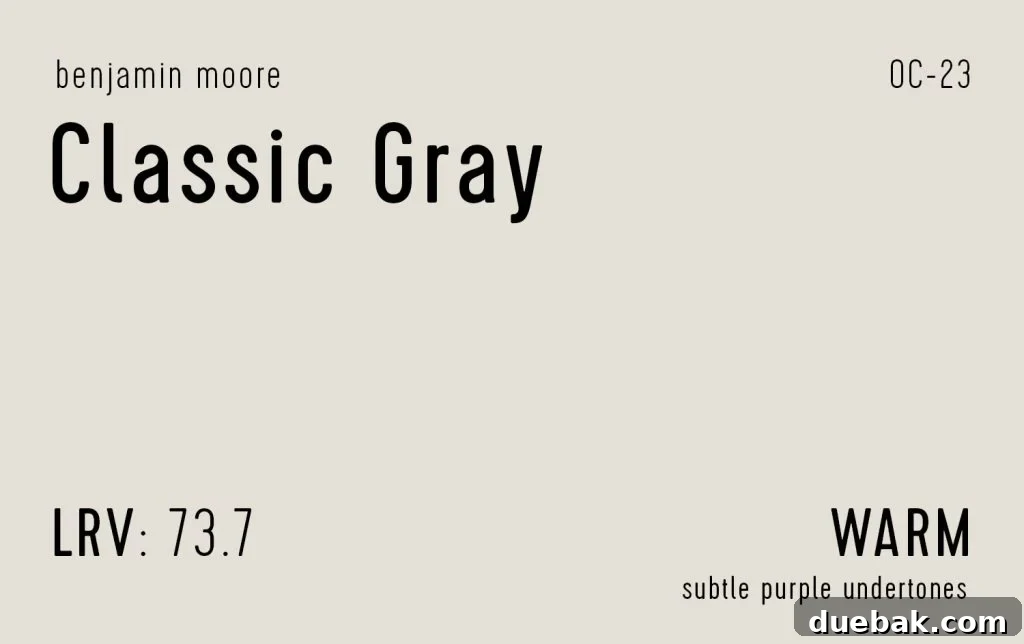
Benjamin Moore’s Classic Gray (OC-23) distinguishes itself as the lightest greige on our curated list, making it an outstanding choice for rooms that receive less natural light or for spaces where you desire a minimal contrast with crisp white trim. With an impressive LRV of 74, it comes very close to true white on the reflectivity scale. Consequently, without a distinctly lighter color adjacent to it, Classic Gray can appear almost white itself. However, its barely-there undertones—which are sometimes described as a very faint purple or green—are what imbue it with exceptional versatility. These subtle hints of color prevent it from being a flat white, instead creating a warm, ethereal gray that breathes lightness and airiness into any room.
#4. Sherwin-Williams Anew Gray (SW 7030)
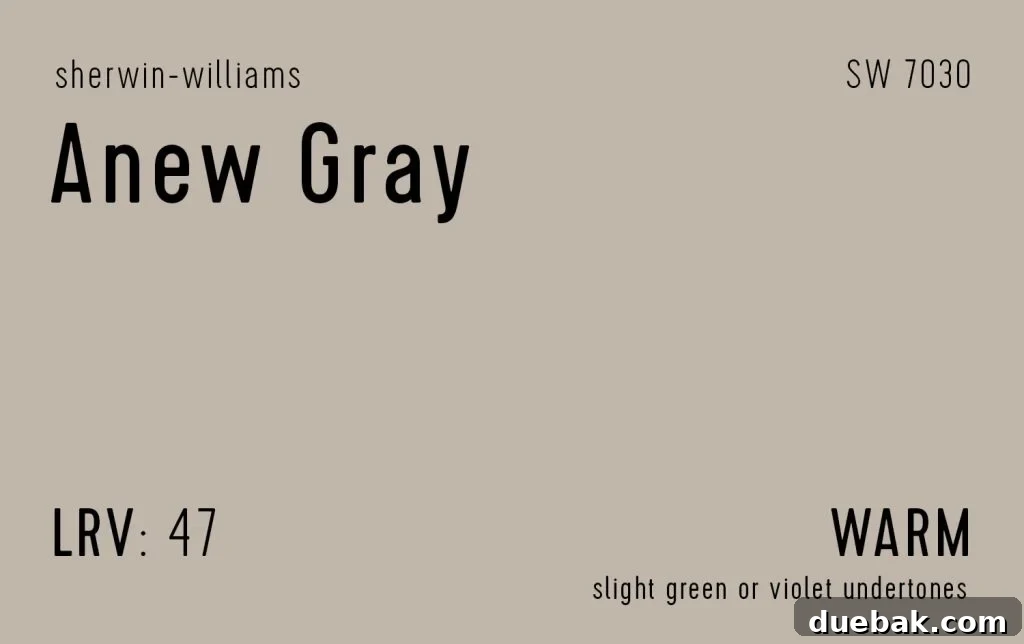
Moving to the opposite end of the brightness spectrum, Sherwin-Williams’ Anew Gray (SW 7030) emerges as the darkest greige featured on our list, boasting an LRV of 47. Interestingly, it resides on the very same paint swatch as its lighter counterpart, Agreeable Gray (#2 on our list), positioned just one shade deeper. Like many of the sophisticated greiges, Anew Gray’s subtle undertones often manifest as faint green or purple hints. This characteristic imparts a warm, almost organic or stone-like appearance, giving it a rich and grounding presence. Consider Anew Gray as an excellent option for rooms that are flooded with natural light, where lighter greiges might otherwise appear washed out. Alternatively, it can be brilliantly employed in darker spaces where the goal is to cultivate a wonderfully cozy, inviting, and den-like ambiance, wrapping the room in a comforting embrace of color.
#5. Sherwin-Williams Accessible Beige (SW 7036)
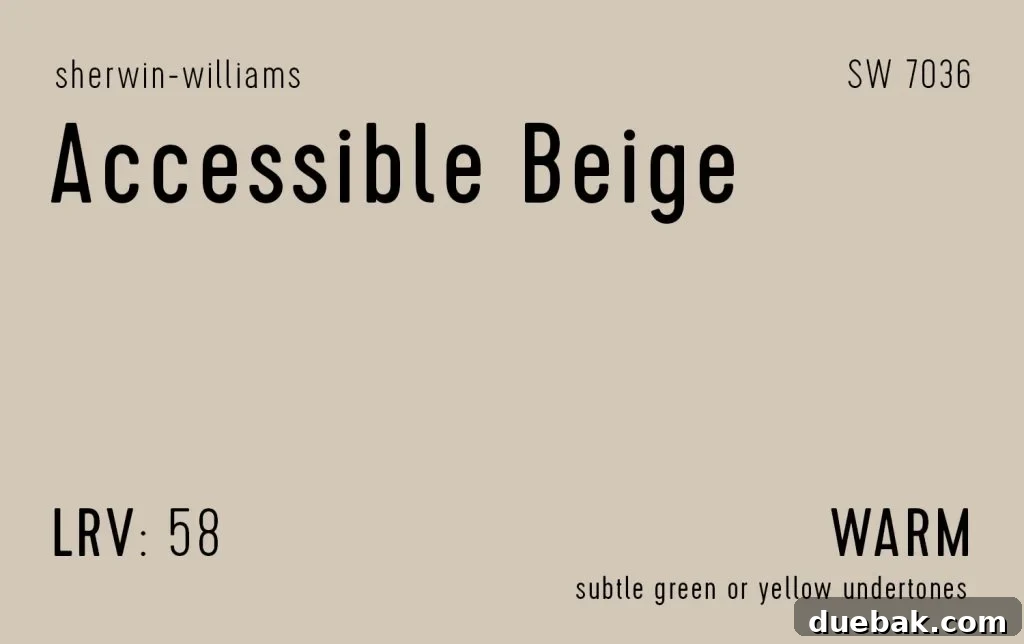
Similar to Agreeable Gray, Accessible Beige (SW 7036) consistently ranks as another one of Sherwin-Williams’ top-selling colors, a testament to its universal appeal. With an LRV of 58, it comfortably settles into that “60-ish” sweet spot where many of the most popular greige colors reside. As its name subtly suggests, this particular greige tends to skew a little closer to beige in certain lighting conditions and environments. It is arguably the warmest color on our list, and in rooms that don’t receive abundant natural light, it’s likely to appear even darker and cozier, leaning more distinctly into its beige roots. Therefore, if you’ve found other greiges to be too cool or too gray for your preferences, or if your aim is to achieve a wonderfully warm, sunny, and inviting look, Accessible Beige could be the perfect harmonious neutral you’ve been searching for.
#6. Benjamin Moore Edgecomb Gray (HC-173)
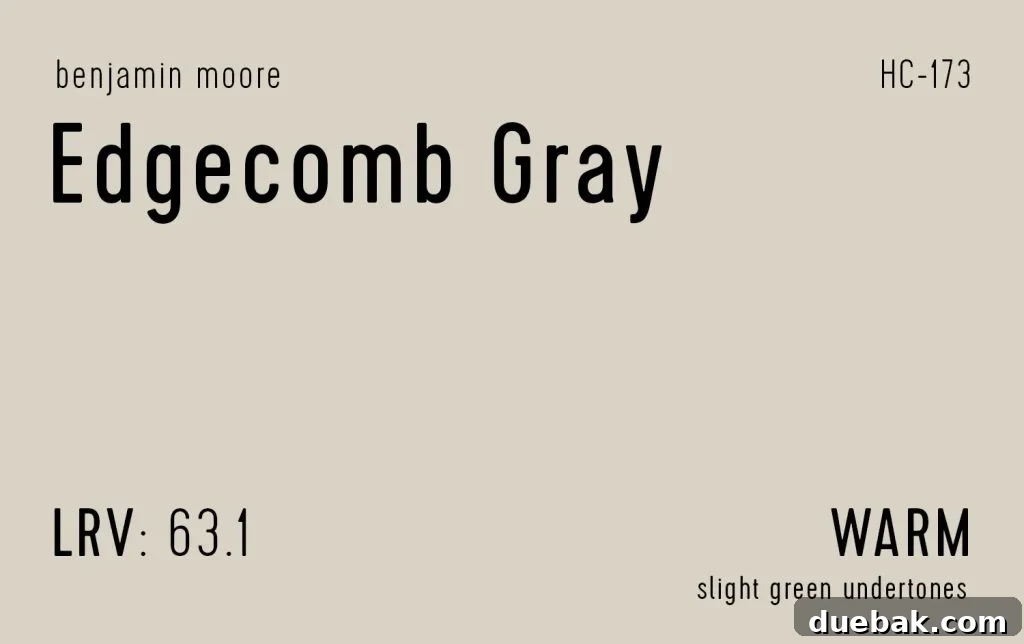
Benjamin Moore’s Edgecomb Gray (HC-173) holds a special distinction as our hands-down, all-time favorite go-to greige. Our admiration runs so deep that we even dedicated an entire deep-dive article to explore its nuances and why it consistently wins us over! It proudly stands as another one of Benjamin Moore’s consistently best-selling paint colors and is conveniently located on the same paint swatch as Revere Pewter, positioned one shade lighter. With an LRV of 63 (compared to Revere Pewter’s 55), it offers a brighter, airier feel while maintaining that perfect greige balance.
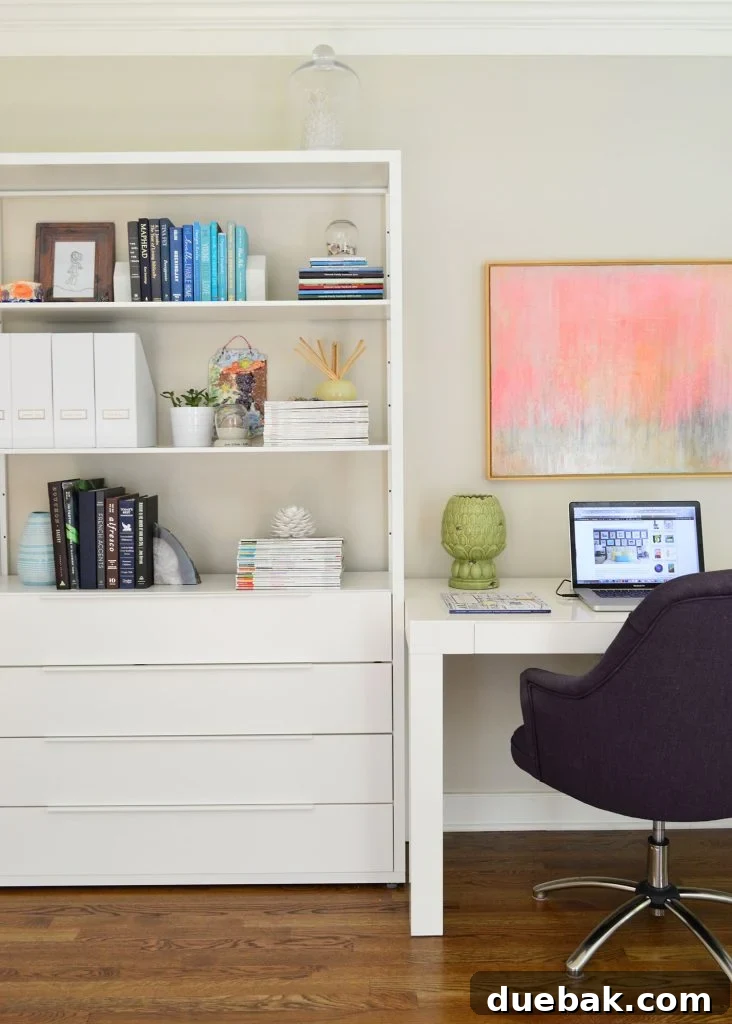
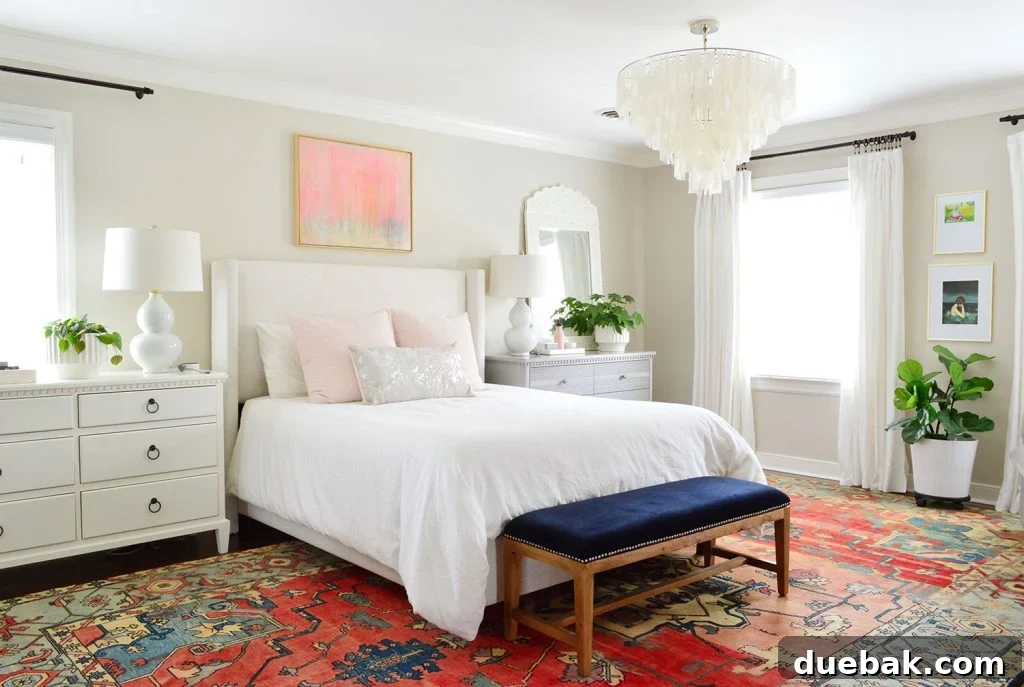
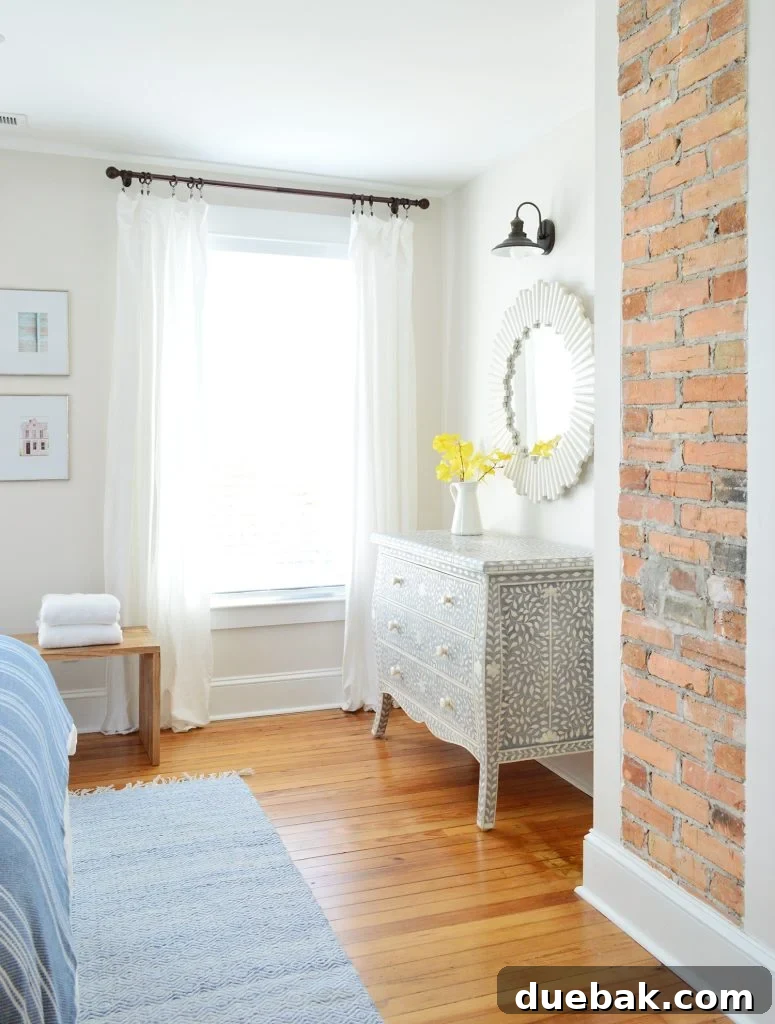
Our journey with Edgecomb Gray began in our old bedroom (the serene space pictured at the very top of this post). We were so utterly smitten with its subtle charm that we embarked on a mission to slowly repaint nearly half of our previous house in this singular, magnificent shade. Our dining room, home office, hallway, foyer, and powder room all became beautiful canvases for Edgecomb Gray. You can explore a broader collection of photos showcasing its versatility in our dedicated Edgecomb Gray review. What we particularly adore about this color is its impeccable ability to perfectly straddle the gray/beige divide, offering a slightly lighter and brighter alternative to the deeper tones of Revere Pewter, without losing an ounce of its sophisticated warmth.
#7. Sherwin-Williams Worldly Gray (SW 7043)
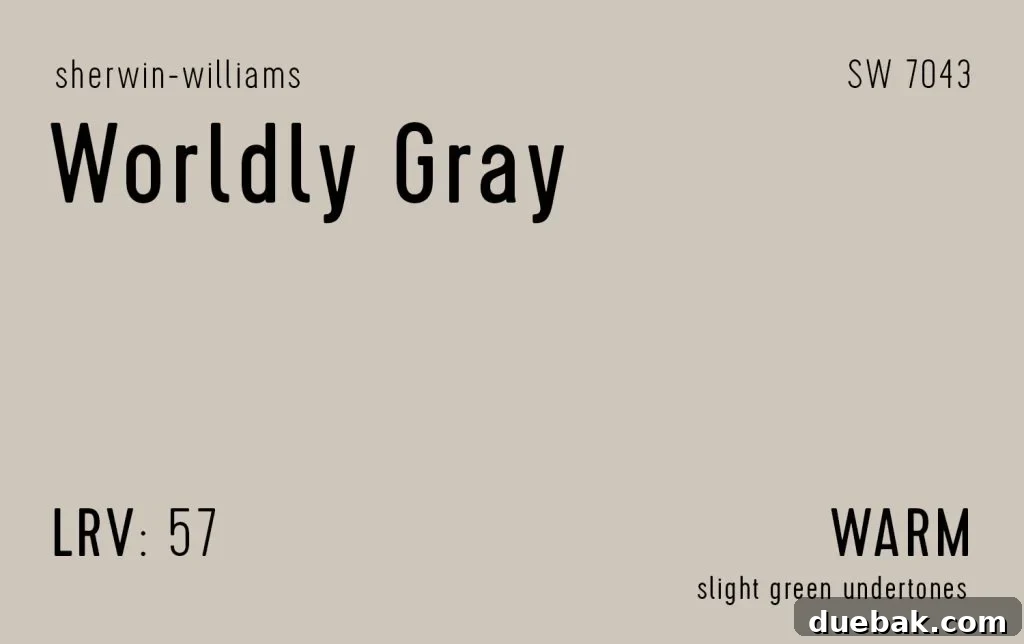
Worldly Gray (SW 7043) shares a striking resemblance to Benjamin Moore’s Revere Pewter, yet it distinguishes itself by being just a whisper lighter and slightly cooler. When these two colors are viewed side-by-side, Revere Pewter tends to reveal a subtle brownish cast, making Worldly Gray an excellent alternative for those who prefer to remain more firmly on the “gray” side of the greige spectrum. While we haven’t personally used Worldly Gray inside our homes, we did utilize a darker color from the same paint swatch—specifically Anonymous (SW 7046)—on the exterior siding of our previous home. The result was a stunning, deep putty color that perfectly showcased the sophisticated potential of this color family.
#8. Sherwin-Williams Repose Gray (SW 7105)
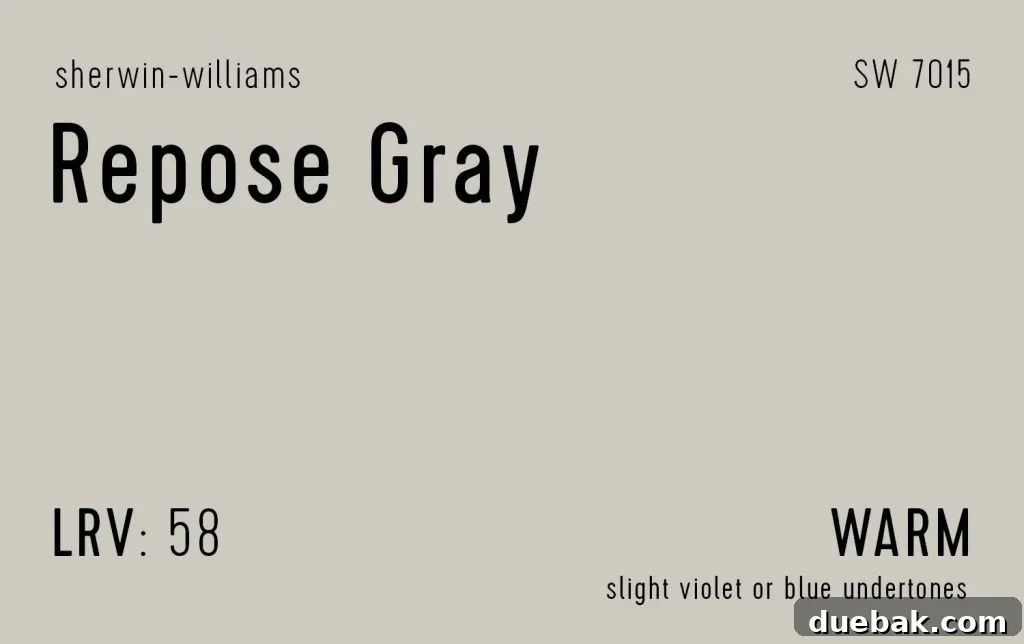
Sherwin-Williams Repose Gray (SW 7105) stands out as the coolest among the greige colors on this list. Despite its cooler lean, it still retains enough warmth to comfortably classify as a true greige in the majority of spaces. We had the pleasure of assisting some friends in selecting Repose Gray for the entire first floor of their home a few years ago, and our observations confirmed its dynamic nature. In our experience, Repose Gray’s appearance can change quite significantly depending on the room’s lighting conditions and the surrounding trim color. In their sunnier, south-facing rooms, it presented as a definite greige, showcasing its balanced character. However, in their north-facing rooms, such as their living room pictured below, it visibly skewed grayer, leaning more towards a pure gray appearance. Regardless of the subtle shifts, it consistently looked beautiful and effortlessly complemented every piece of furniture they owned, highlighting its remarkable adaptability.
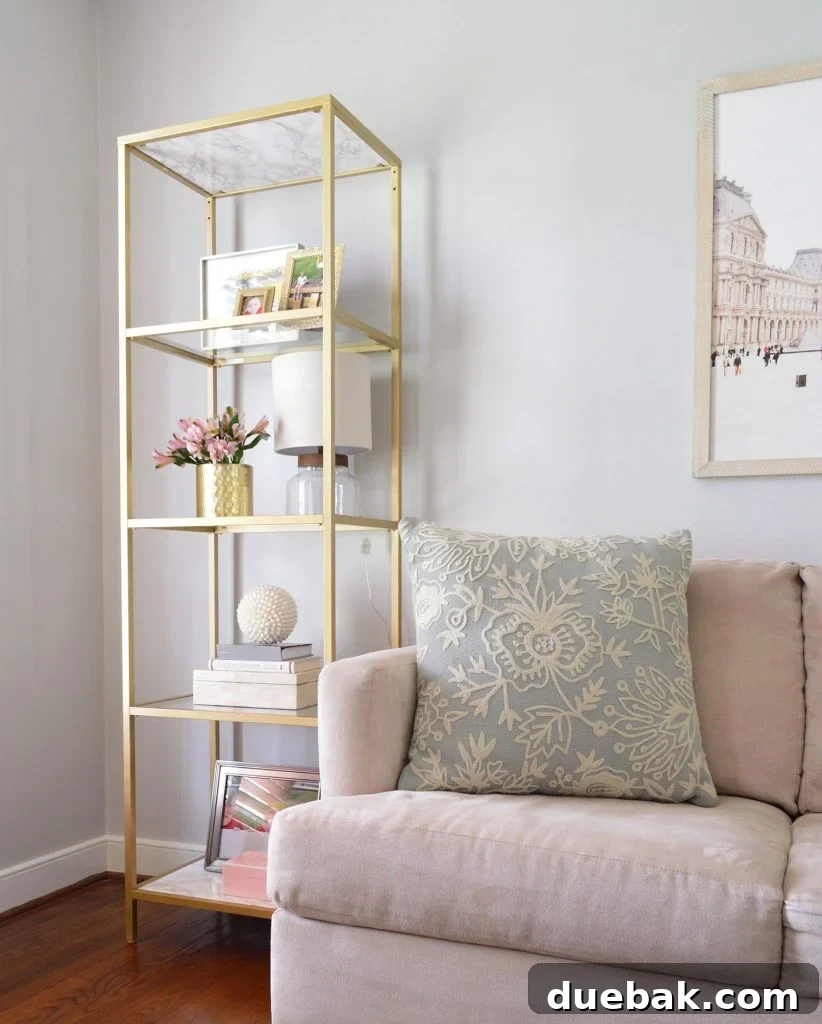
You can also observe Repose Gray in their kids’ homework room. Being another north-facing space, and with the presence of numerous cool white and blue accessories, the color in this room also tended to look less greige and more purely gray. This further emphasizes the importance of testing any paint color in your specific environment to fully understand its nuanced interaction with light and surrounding elements.
#9. Benjamin Moore Balboa Mist (OC-27)
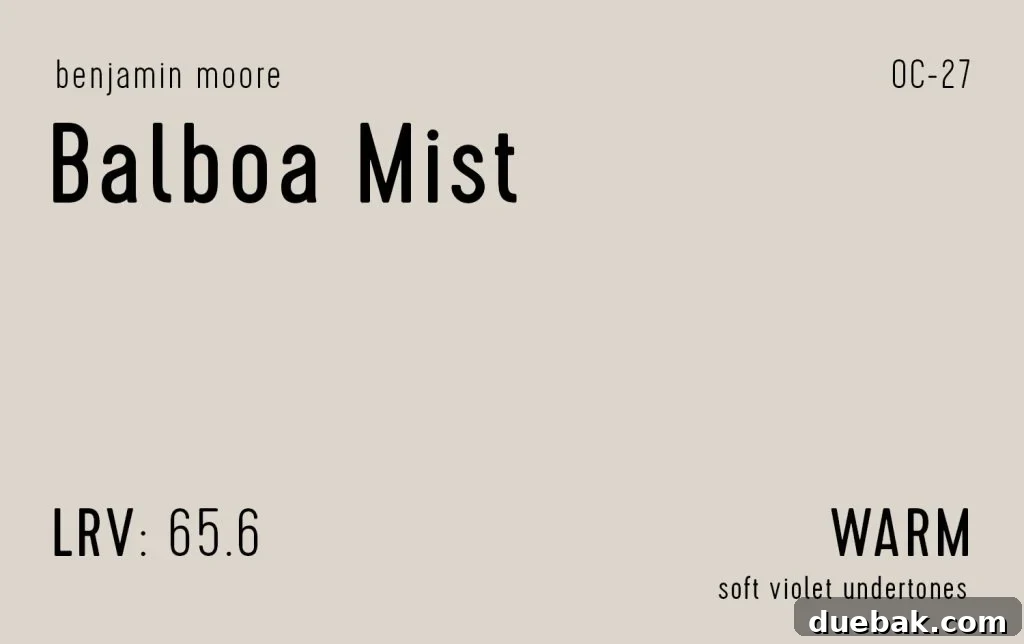
Benjamin Moore’s Balboa Mist (OC-27) distinguishes itself as the second lightest greige on our carefully curated list, boasting an LRV of 65 (only surpassed by Classic Gray’s impressive LRV of 74). During our own home renovation, Balboa Mist was a strong contender alongside Edgecomb Gray, and we firmly believe we would have been exceptionally pleased with either choice. Balboa Mist presents as a touch cooler than Edgecomb Gray, offering a nuanced alternative. This makes it a particularly excellent option if you are slightly concerned that Edgecomb Gray might lean too much towards beige for your personal preference, providing that desirable subtle cool edge while remaining firmly within the beautiful greige family.
Runner-Up Greige Paint Colors
Beyond our definitive top nine, there exists a broader collection of highly popular greige paint colors that consistently appeared across numerous expert lists we reviewed. While these didn’t quite make the cut for the primary list, many designers and homeowners continue to swear by their beauty and versatility. As you’ll observe from the grid below, this selection of runner-up shades offers an even wider spectrum of brightness and undertones, providing ample additional options for your consideration and sampling process.
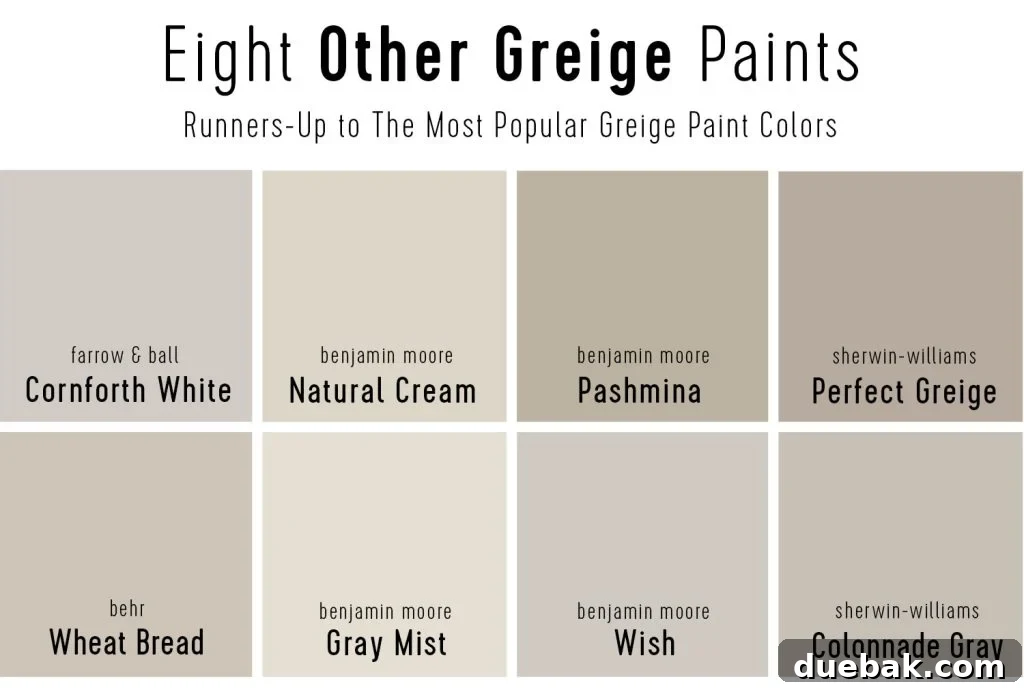
- Farrow & Ball Cornfroth White (No. 228)
- Benjamin Moore Natural Cream (OC-14)
- Benjamin Moore Pashmina (AF-100)
- Sherwin-Williams Perfect Greige (SW 6073)
- Behr Wheat Bread (720C-3)
- Benjamin Moore Gray Mist (OC-30)
- Benjamin Moore Wish (AF-680)
- Sherwin-Williams Colonnade Gray (SW 7641)
In addition to these, we’ve personally experienced great success with Sherwin-Williams White Heron (SW 7627), a lesser-known yet equally beautiful hue that bears a striking resemblance to Benjamin Moore’s Gray Mist. Its very subtle, light, and wonderfully ethereal quality made it the perfect choice for every wall of our beloved beach house, creating an atmosphere of calm and brightness.
Frequently Asked Questions About Greige Paint
What trim color goes best with greige walls?
When pairing with greige walls, classic white trim remains an eternally popular and highly effective choice. The crisp contrast of white trim helps to prevent the greige from leaning too heavily towards either beige or gray, ensuring its balanced character truly shines. While it is possible to paint your trim in the same greige as your walls for a monochromatic, tone-on-tone effect, be aware that this can sometimes diminish the inherent beauty of the greige color by reducing the visual contrast. For pristine white trim that beautifully complements greige, some of our top recommendations include Benjamin Moore Simply White, Sherwin-Williams Pure White, and Sherwin-Williams Extra White. These whites offer clean, vibrant backdrops that highlight the subtlety of greige.
What ceiling color goes best with greige walls?
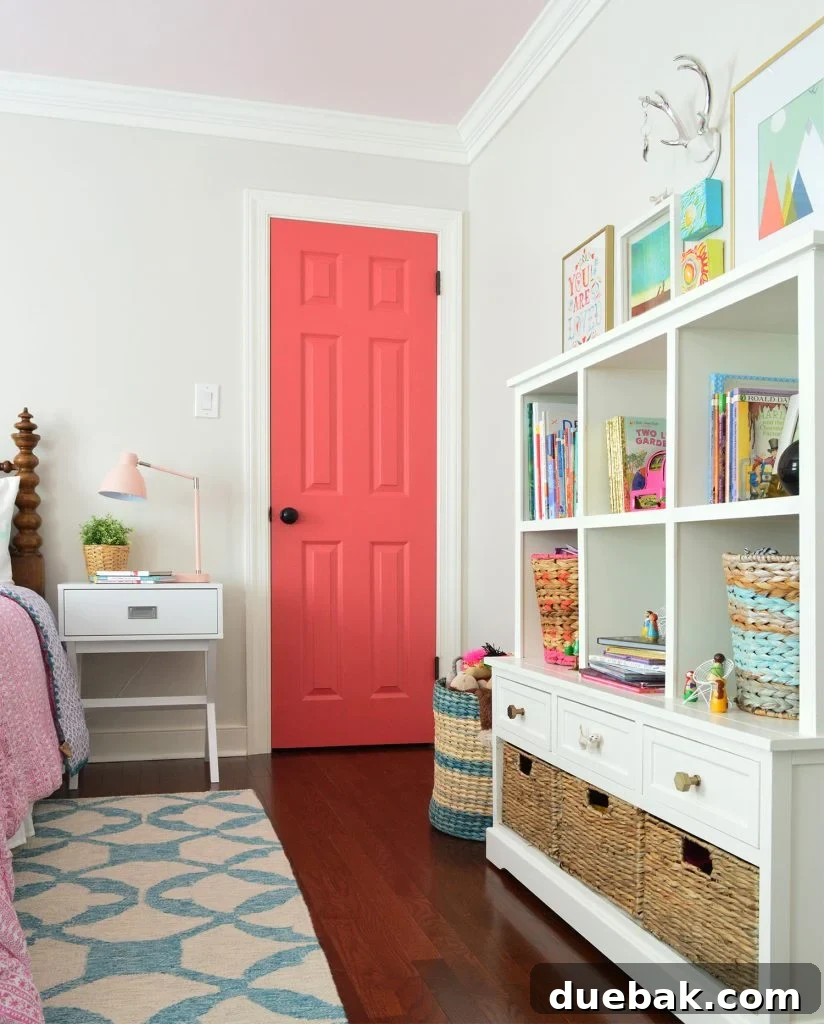
Greige walls pair beautifully with traditional white ceilings, creating a fresh and timeless look. However, their versatility extends beyond white, allowing for other creative pairings, including using the same greige shade you’ve applied to your walls. In our old foyer, for example, we cleverly paired Benjamin Moore Edgecomb Gray walls with Benjamin Moore Revere Pewter ceilings. These colors are from the same paint swatch, ensuring their undertones harmonize perfectly, with the ceiling offering a subtly deeper nuance. For a more playful and personalized touch, as seen in our daughter’s old room, we opted for a vibrant pink ceiling. The key to successful ceiling color choices with greige is always to test the colors together first, ensuring that their undertones do not clash, but rather complement each other beautifully.
Is greige still popular in 2024?
Absolutely! Greige paints are far from a passing fad; they represent a timeless and enduring choice that shows no signs of going out of style anytime soon. Their ability to adapt and harmonize with various design trends ensures their sustained popularity. In fact, one prominent paint brand even highlighted “Rustic Greige” as their 2023 Color of the Year, underscoring its continued relevance and appeal. While greiges have enjoyed immense popularity for a considerable period, meaning they might not feel as “trendy” or cutting-edge as certain colors currently having their moment in the spotlight, their classic elegance and versatility cement their status as a perpetually fashionable neutral.
What color is replacing greige?
In 2024, many design experts are anticipating a gentle shift and a subtle return to warmer, more saturated neutrals such as classic beiges, sunny yellows, and creamy off-whites. This inclination is exemplified by brands like Glidden, which selected a warm, inviting hue for their 2024 Color of the Year. This trend is largely seen as a natural continuation of the movement away from the cooler, often stark grays that dominated interior design throughout the early 2010s. However, greiges are uniquely positioned to gracefully outlast these cyclical fluctuations between warm and cool neutrals. By definition, greige occupies a firm middle ground, expertly blending the best attributes of both, thus ensuring its continued relevance and adaptability regardless of prevailing trends.
What’s the difference between greige and taupe?
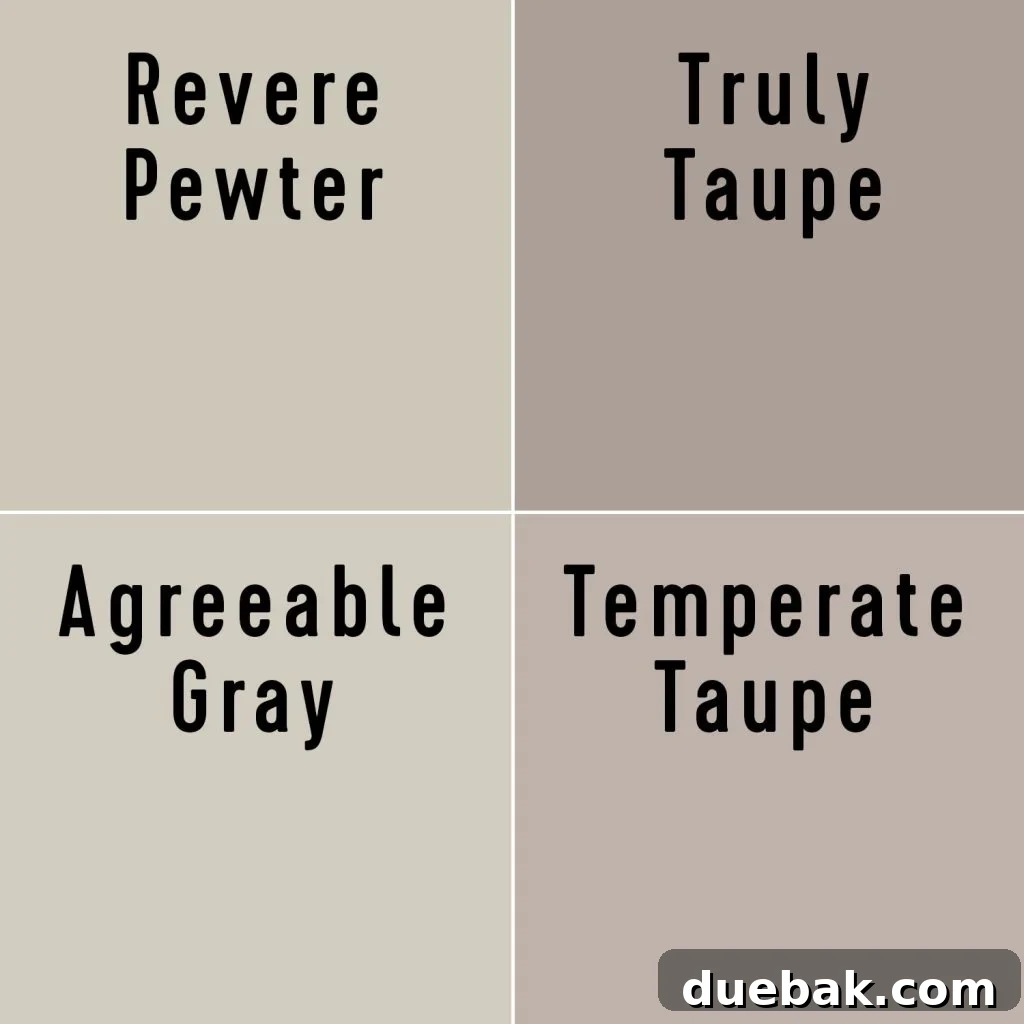
Both greige and taupe refer to paint colors that are a nuanced blend of gray and beige, and as such, the terms are often used interchangeably in casual conversation. However, from a technical perspective, there’s a subtle yet important distinction. Greiges typically favor and exhibit underlying green undertones, which contribute to their balanced warmth. In contrast, taupes often possess more noticeable pink or purple undertones, giving them a distinct character. A prime example of this differentiation is Sherwin-Williams’ 2017 Color of the Year, Poised Taupe (SW 6039), which the brand itself classifies as a purple within its official color database, underscoring its inherent pinkish-purple leanings.
Where should I use greige?
The remarkable versatility of greige paints means they can be successfully applied to nearly every surface within and outside your home, offering a cohesive and sophisticated aesthetic. They are excellent choices for interior walls, lending a calm and inviting backdrop. Beyond walls, consider greige for kitchen cabinets, where it can provide a modern yet timeless feel, or even for ceilings, adding subtle depth. Greige can also be a chic option for trim and doors, especially if you desire a softer, less contrasting look than traditional white. Furthermore, greige paints are fantastic selections for exterior siding, offering a refined curb appeal. However, when choosing a greige for outdoor use, it is crucial to select a shade that is significantly darker than what you would use indoors. This is because exterior colors tend to appear considerably lighter and more washed out under direct, bright sunlight. A medium greige that looks perfect inside could literally appear almost white on your home’s exterior, so always factor in the intensity of natural light when making your selection for outdoor applications.
Discover More Favorite Paint Colors We Love
If you’re eager to explore a wider spectrum of our most cherished and go-to paint colors, we invite you to tour our homes via the menu at the top of our blog. For even more in-depth inspiration and detailed reviews, be sure to check out these comprehensive articles dedicated to our favorite paint colors:
- The 12 Best White Paint Colors
- Benjamin Moore Edgecomb Gray: A Full Review
- Benjamin Moore Simply White: Our Top White Pick
- Sherwin-Williams Pure White (SW 7005) Review
- Sherwin-Williams Extra White: A Bright & Clean Option
- The 12 Best “Haint Blue” Paint Colors for Southern Charm
- Every 2024 Color of the Year: A Comprehensive Guide
- Every 2025 Color of the Year: Predictions and Trends
- Every 2026 Color of the Year: Future-Forward Hues
*This post contains affiliate links, meaning we may earn a small commission when you make a purchase through links on our site, at no additional cost to you. We only recommend products and services we genuinely trust and use.