
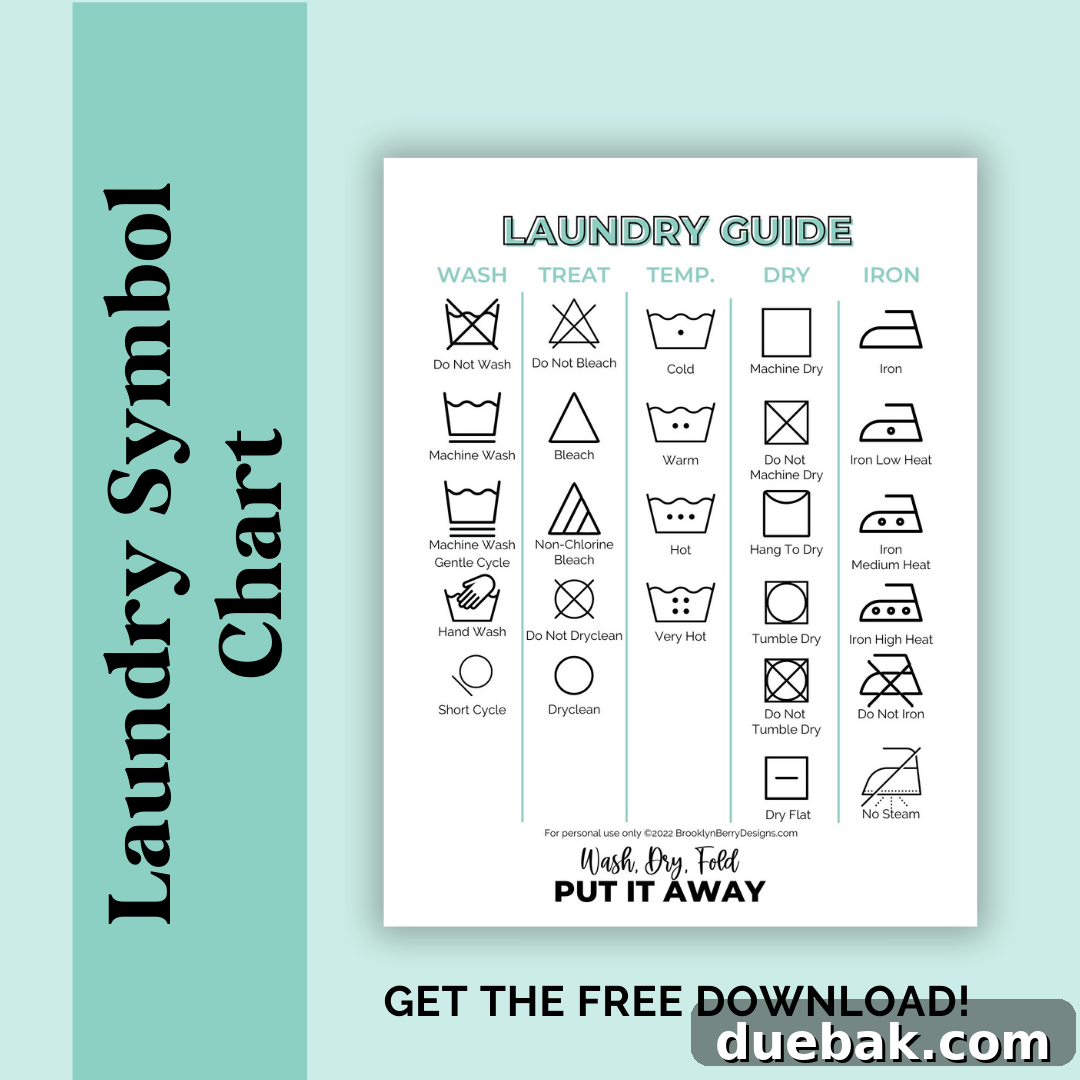
Unlock the secrets to pristine laundry care! Confused by clothing labels? This comprehensive guide and a free printable laundry symbols chart will save your favorite garments from shrinkage, fading, and damage. Learn to hand wash, choose the right bleach, and master fabric care like a pro!
In a world of fast fashion and endless clothing options, making your garments last longer is not just economical, but also a sustainable choice. The key to preserving the life and look of your clothes lies in understanding proper laundry care. And the most effective way to achieve this is by learning how to decipher those cryptic laundry symbols found on every clothing tag.
You might think those tiny icons are a foreign language, or perhaps a secret code designed to trick you into ruining your favorite sweater. But fear not! You don’t need to be an archaeologist to understand these essential clothing care instructions. This guide will walk you through each symbol, turning you into a laundry expert. To make things even easier, simply download and print my free laundry symbols chart. Pin it up in your laundry room, stick it inside a cabinet, or laminate it for easy, waterproof reference. Say goodbye to laundry day guesswork and hello to perfectly cared-for clothes!
How To Read Laundry Symbols: Your Ultimate Fabric Care Guide
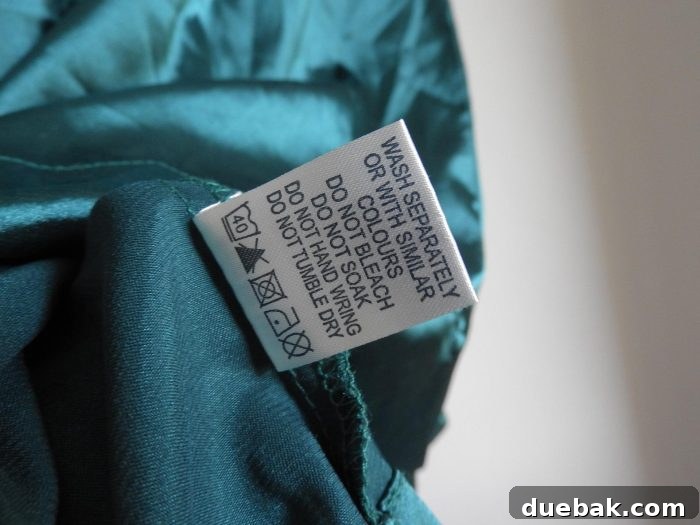
Every single item of clothing you purchase, from a delicate silk scarf to a rugged pair of jeans, comes equipped with a small label detailing its specific care instructions. Instead of lengthy written directions that might not be universally understood, these labels utilize a standardized set of symbols. These laundry care symbols serve as a universal language for garment care, ensuring that you can properly wash, dry, and iron your clothes no matter where they were manufactured.
While there are general international standards for laundry symbols, some minor regional variations may exist. However, the symbols used in countries like the United States and Canada are typically consistent, making it easier for North American consumers to understand. Learning these symbols is crucial for anyone who wants to avoid common laundry mishaps.
Have you ever accidentally shrunk a wool sweater, faded a vibrant shirt, or ruined a delicate blouse? These unfortunate incidents are often preventable simply by knowing how to interpret your clothing labels. Understanding dry cleaning symbols can save you money by preventing unnecessary trips to the professional cleaner for items you could wash at home. Similarly, identifying a “Do Not Wash” symbol can prevent irreparable damage to fragile garments or those with intricate embellishments.
By taking a few moments to understand these universal pictograms, you empower yourself to make informed decisions about your laundry routine, ensuring your clothes retain their shape, color, and quality for years to come. This guide aims to demystify each symbol, transforming you from a laundry novice into a confident garment caretaker.
Comprehensive Guide To Laundry Symbols: Decode Your Clothing Tags
There are five primary categories of laundry symbols you’ll encounter on clothing labels. These symbols are always presented in a consistent order, from left to right, providing a logical sequence for your garment care process: Washing, Bleaching, Drying, Ironing, and Dry Cleaning. Each category is represented by a unique base shape, making them easy to identify at a glance:
- Washing Symbol: A tub or bucket of water.
- Bleaching Symbol: A triangle.
- Drying Symbol: A square.
- Ironing Symbol: An iron.
- Dry Cleaning Symbol: A circle.
Beyond these basic shapes, additional markings within or around the symbols provide more specific instructions:
- Dots: The number of dots inside a symbol typically indicates temperature settings. More dots signify a higher temperature. For instance, in a washing symbol, one dot means cold water, two dots indicate warm water, and three dots suggest hot water. The same principle applies to ironing symbols.
- Lines: Horizontal lines underneath a symbol provide additional information about the cycle or process. One line usually suggests a gentle or permanent press cycle, while two lines indicate a very delicate cycle.
- Cross (X): A cross over any symbol universally means “Do Not” – for example, a crossed-out wash tub means “Do Not Wash.”
Curious about other cleaning codes? Do you know what fabric cleaning code S means? It’s essential for upholstery care!
Washing Instruction Symbols: The Foundation of Garment Care
The washing symbols are arguably the most crucial symbols to understand, as they dictate the fundamental method for cleaning your clothes. Ignoring these can lead to irreversible damage, such as shrinkage, stretching, or color bleeding. The primary washing symbol is a stylized tub filled with water.
Washing Methods Explained
Beyond the basic tub, various modifications indicate specific washing requirements:
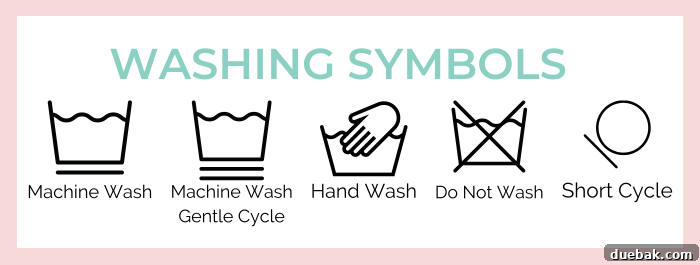
- Machine Washable: A simple tub of water, often with temperature dots. This is the most common symbol, indicating the item can be safely washed in a washing machine.
- Hand Washing: A tub with a hand dipping into it. This means the garment requires a gentle approach, usually in cool water with mild detergent. Hand washing is ideal for delicate fabrics like lace, silk, or heavily embellished items that could be damaged by a machine’s agitation.
- Do Not Wash: A crossed-out tub. This is a critical symbol to heed! It means the item should not be washed with water at all. Such garments typically require dry cleaning or professional spot cleaning.
- Dry Clean Only / Professional Cleaner: A circle (often without any internal letters, though sometimes with an ‘A’, ‘P’, or ‘F’ for professional use). This indicates the garment should only be cleaned by a professional dry cleaner. Attempting to wash these items at home will likely ruin them.
- Do Not Dry Clean: A crossed-out circle. This means the item is not suitable for dry cleaning, often due to materials that react poorly to dry cleaning solvents.
Washing Temperatures: Hot, Warm, or Cold?
The dots within the wash tub symbol specify the maximum water temperature for washing:
- Wash Cold Water (One Dot): Typically around 30°C (85°F). Ideal for dark colors, delicate fabrics, and items prone to shrinking. Cold water also saves energy.
- Wash Warm Water (Two Dots): Around 40°C (105°F). Suitable for most everyday garments, synthetic fabrics, and light-colored items.
- Wash Hot Water (Three Dots): Around 60°C (140°F) or higher. Best for whites, heavily soiled items, towels, and bedding, as high temperatures help to sanitize and remove stubborn stains.
What difference does temperature make when washing clothes? Higher temperatures are effective at killing germs and bacteria, which can help eliminate strong odors and deeply clean items like athletic wear or bedding. They are also superior for breaking down grease and oil stains. However, excessive heat can cause fabrics to shrink, colors to fade, and delicate materials to degrade. Always use the warmest temperature recommended on the label that your clothing items can withstand without damage.
Washing Cycles: Normal, Permanent Press, or Delicate?
Lines underneath the wash tub symbol indicate the recommended agitation level or spin speed:
- Normal Cycle (No Line): Standard agitation and spin. Suitable for durable fabrics like cotton, linen, and most everyday clothing.
- Permanent Press Cycle (One Line Underneath): Moderate agitation and a slower spin to reduce wrinkles. This cycle is excellent for synthetic blends, wrinkle-resistant fabrics, and colored items that are prone to creasing. Using a permanent press cycle can significantly reduce the amount of ironing needed after drying.
- Delicate/Gentle Cycle (Two Lines Underneath): Minimum agitation and a very slow spin. Reserved for very delicate items such as lingerie, silk, lace, or loosely woven fabrics to prevent stretching, tearing, or snagging.
Ready for a fresh start? Get a jump start on spring cleaning with this free printable home decluttering checklist!
Drying Symbols: Keeping Your Clothes in Shape
The drying symbols, represented by a square, are essential for preventing shrinkage, stretching, or damage from excessive heat. Incorrect drying can be just as detrimental as incorrect washing.
Drying Methods
The square symbol can have various internal markings:
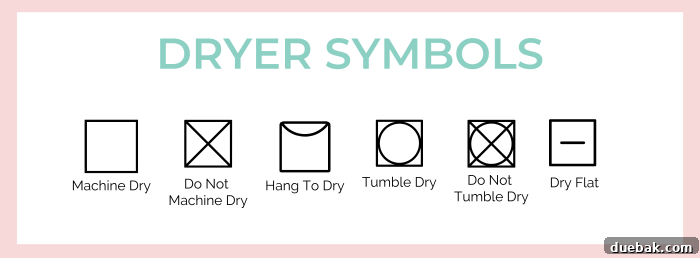
- Tumble Drying Allowed: A square with a circle inside. This indicates the item can be machine dried in a tumble dryer.
- Do Not Tumble Dry: A crossed-out square with a circle. This is crucial for delicate items or those prone to shrinking.
- Hang To Dry: A square with a curved line at the top (like a clothesline). Garments should be hung on a hanger or clothesline to air dry, preserving their shape and preventing heat damage.
- Dry Flat: A square with a horizontal line in the middle. Items like delicate sweaters or knits should be laid flat on a clean surface or drying rack to prevent stretching and maintain their form.
- Do Not Wring: A twisted fabric icon with a cross over it. This applies to very delicate fabrics that could be damaged by twisting to remove water.
Drying Temperatures (Tumble Dry)
Similar to washing, dots inside the tumble dry symbol (circle within a square) indicate heat settings:
- Any Heat (Empty Circle): Often implied if no specific dots are present, allowing for standard tumble drying.
- High Heat (Three Dots): For durable fabrics like towels and denim.
- Medium Heat (Two Dots): Suitable for most cottons and mixed loads.
- Low Heat (One Dot): Best for permanent press items, synthetics, and delicate garments to prevent shrinkage and damage.
- No Heat/Air (Solid Black Circle): Tumble dry with no heat, often using just ambient air to fluff or dry items.
Drying Cycles (Tumble Dry)
Lines underneath the tumble dry symbol adjust the cycle intensity:
- Normal Cycle (No Line): Standard tumble dry cycle.
- Permanent Press Cycle (One Line): Reduces wrinkles by combining medium heat with a cool-down period.
- Delicate/Gentle Cycle (Two Lines): Uses very low heat and a gentle tumbling action for fragile items.
Bleaching Laundry Symbols: Brighten or Protect Colors
Bleaching symbols, represented by a triangle, indicate whether you can use bleach and what type. Using the wrong bleach can permanently damage or discolor your clothing.
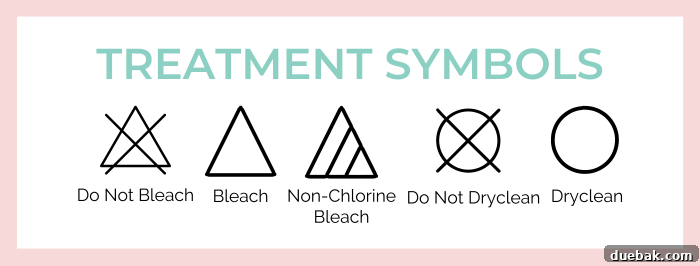
- Bleaching Allowed (Empty Triangle): Any type of bleach, including chlorine bleach, can be used. Typically for pure white cottons and linens.
- Do Not Bleach (Crossed-Out Triangle): Absolutely no bleach should be used. This is common for colored garments and delicate fabrics.
- Use Non-Chlorine Bleach (Triangle with Two Diagonal Lines): Only oxygen-based or “color-safe” bleach should be used. Chlorine bleach will damage the fabric or strip its color. This is frequently seen on colored items and synthetic fabrics.
Understanding these symbols is key to maintaining vibrant colors and preventing unsightly stains or faded patches on your garments. Chlorine bleach is a powerful agent and should be used sparingly and only when explicitly permitted.
Ironing Symbols: Smooth Out Wrinkles Safely
Ironing symbols, depicted by an iron, guide you on the appropriate temperature settings to prevent scorching, melting, or damaging fabrics. Different materials require vastly different heat levels.
- Iron Low (One Dot): Cool iron. Suitable for delicate fabrics like silk, nylon, and acrylics.
- Iron Medium (Two Dots): Warm iron. Best for synthetics, polyester, and wool blends.
- Iron High (Three Dots): Hot iron. Ideal for cotton and linen, which can withstand higher temperatures.
- Do Not Iron (Crossed-Out Iron): The garment should not be ironed. This is common for certain synthetic fabrics, embellished items, or materials that can melt or be permanently damaged by heat.
- No Steam Added To Iron (Crossed-Out Steam Burst Below Iron): Ironing is allowed, but without steam. This is crucial for fabrics like wool and silk, where steam can cause irreversible damage or stretching.
I learned the hard way that synthetic fabrics can melt under a higher temperature iron! Always check your iron’s settings, as most household irons have temperature guides listed for common fabric types. Ironing on the wrong setting can create shiny spots, burn holes, or warp the fabric, so always proceed with caution and test on an inconspicuous area if unsure.
Dry Cleaning Symbols: When to Call the Professionals
Dry cleaning symbols, represented by a circle, indicate whether a garment requires professional cleaning services. This is especially important for structured garments, delicate materials, or items with complex embellishments that cannot tolerate water.
- Dry Clean Only (Empty Circle): The garment must be dry cleaned by a professional. This is common for wool suits, silk dresses, rayon, and other sensitive materials.
- Do Not Dry Clean (Crossed-Out Circle): The item is not suitable for dry cleaning, possibly because the solvents could damage the fabric or dyes.
Sometimes, letters (A, P, F) or lines within the circle are added for the dry cleaner’s information, specifying the type of solvent to use. As a consumer, if you see an empty circle, it simply means “Dry Clean Only.”
Laundry Detergent: The Unsung Hero
While there aren’t specific care tags with basic symbols or instructions solely for detergents, choosing the right one plays a significant role in fabric care. Modern detergents are increasingly formulated for cold water options, which is a fantastic development for most clothing types. Using cold water detergents not only protects colors and delicate fabrics but also contributes to energy savings. For heavily soiled items, enzyme-based detergents can be highly effective, while mild, pH-neutral detergents are best for wool and silk.
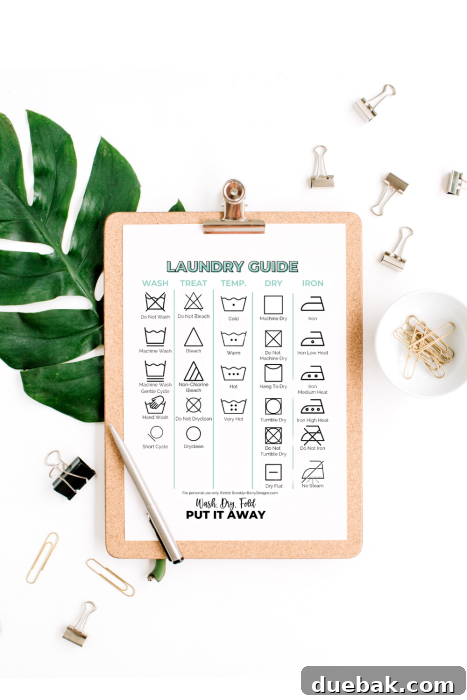
FREE LAUNDRY ROOM DECOR & Essential Tool
This handy laundry symbol guide is not just incredibly helpful for extending the life of your wardrobe, but it can also double as charming laundry room art! Imagine it framed elegantly on the wall, clipped to a stylish clipboard, or laminated and conveniently taped inside a cupboard door for quick reference. It adds a touch of functional decor to an often-overlooked space, making your laundry routine more efficient and visually appealing.
Download Your Free Printable Laundry Symbols Chart Here!
Don’t miss out on this invaluable tool for effortless laundry care! This practical and aesthetically pleasing laundry symbols chart is Printable File P31 in our exclusive Freebie Library! Gain instant access to the Freebie Library and all its treasures by signing up for our email list below. If you’re already a subscriber and have the password, simply head over to the Freebie Library to download your chart now and start mastering your laundry routine!
Sign up here to get your free printable:
[Please insert your email signup form here to gain access to the Freebie Library.]
All free downloads from Brooklyn Berry Designs are intended for PERSONAL and CLASSROOM USE ONLY. You MAY NOT share, distribute, sell, or utilize these files for commercial purposes, including print-on-demand services. Commercial licenses for SVG and PNG crafting files, where applicable, may be purchased separately.
More Home & Design Inspiration
Boys Shared Bedroom Makeover – Feature Wall Ideas
Transforming a shared bedroom for boys can be a fun and creative challenge. Discover how a striking feature wall can tie the room together.
25 DIY Makeup Vanity Ideas to Inspire You
Create your dream beauty space without breaking the bank. Explore these creative DIY makeup vanity ideas for every style and budget.
Chic Boho Christmas Decor Ideas for a Festive Home
Infuse your holiday season with warmth and unique style. Discover charming Boho Christmas decor ideas that will make your home shine.
Inspiring Peloton Home Gym Ideas for Your Workout Space
Create a dedicated and motivating workout area. Explore these innovative Peloton home gym ideas to maximize your fitness journey.
HOUSE PLANTS YOU CAN’T KILL: Beginner-Friendly Greenery
Bring nature indoors effortlessly. Discover a list of resilient house plants that are perfect for beginners and those with a less-than-green thumb.
Great Places For Affordable Wall Art That Elevate Your Home
Adorn your walls with beautiful pieces without breaking the bank. Find inspiration and resources for affordable wall art that suits any decor style.
Free Printable Farmhouse Christmas Art for Rustic Charm
Deck your halls with cozy, country-inspired artwork. Download free printable farmhouse Christmas art to add a touch of rustic elegance to your festive decor.
DIY Vinyl Monogram Pumpkins: A Creative Fall Craft
Personalize your autumn decor with these fun and easy DIY vinyl monogram pumpkins. Perfect for adding a custom touch to your fall festivities.
BEGINNERS FURNITURE PAINTING: A Complete Guide to Upcycling
Ready to give your old furniture a new lease on life? This beginner’s guide to furniture painting covers everything you need to know to get started.