
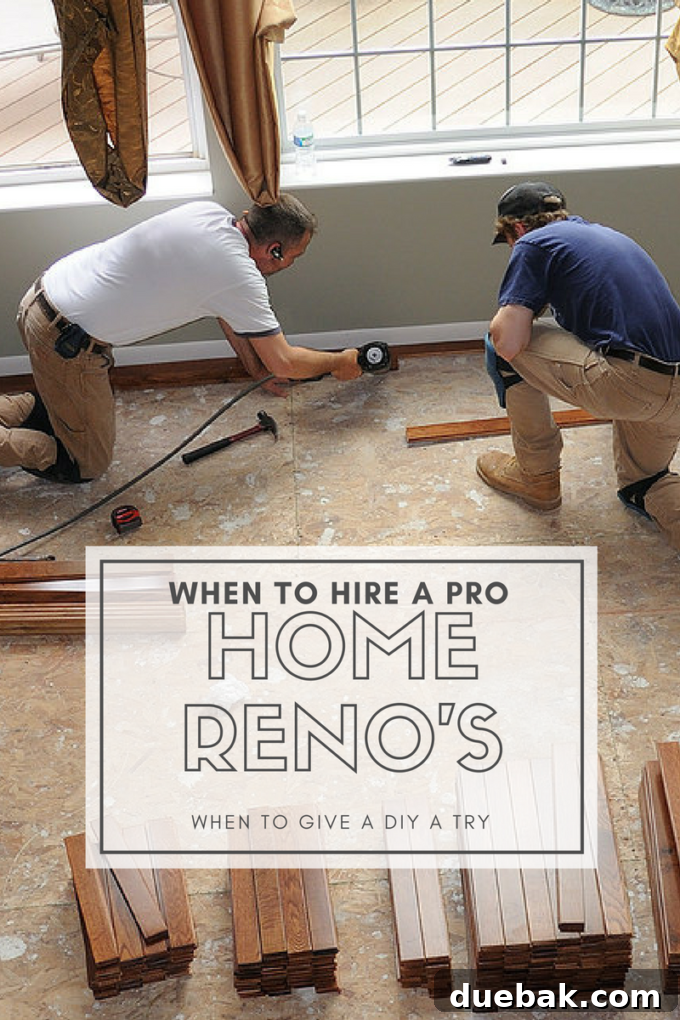
The Ultimate Guide: DIY vs. Hiring a Pro for Your Home Projects
Every homeowner, whether residing in a charming older house with its unique quirks or a brand-new build ready for personalization, eventually faces the exciting yet daunting prospect of home improvement projects. These endeavors can range from minor cosmetic updates to major structural overhauls, each promising to enhance comfort, functionality, or property value. However, a critical decision often emerges early in the planning stage: should you roll up your sleeves and tackle the project yourself, or is it wiser to enlist the expertise of a professional? This isn’t always a straightforward choice, and understanding where to draw the line between DIY and professional assistance is key to a successful, stress-free, and budget-friendly renovation journey.
Understanding Your Home Project Needs
Embarking on a home project is often driven by a variety of motivations. Perhaps you’re looking to boost your property’s resale value, improve energy efficiency, or simply create a living space that better reflects your style and needs. Regardless of the impetus, every project requires careful consideration of several factors: the scope of work, the necessary skills, the time commitment, and, crucially, the budget. Before diving into specifics, a thorough assessment of these elements will lay a solid foundation for deciding the best path forward.
Why Undertake Home Projects?
Home projects are more than just tasks; they are investments in your lifestyle and property. They can address pressing maintenance issues in an older home, add modern conveniences to an outdated space, or infuse personality into a new build. From updating a tired kitchen or bathroom to converting an unused basement into a vibrant living area, each project holds the potential to significantly enhance your daily life and the long-term value of your home. Understanding your core motivation will help you prioritize and allocate resources effectively, leading to more satisfying outcomes.
The Core Question: DIY or Pro?
The “DIY or Pro” dilemma is central to almost every home improvement discussion. While the allure of saving money through do-it-yourself efforts is strong, it must be balanced against the potential risks, the complexity of the task, and the value of your own time. This guide aims to equip you with the knowledge to make informed decisions, ensuring your home projects are completed safely, efficiently, and to a high standard, whether you opt for a hands-on approach or enlist expert help.
When to ALWAYS Hire a Professional
Certain home renovation tasks are simply not suitable for even the most enthusiastic amateur. These projects involve critical systems and structural elements of your home where mistakes can have severe, dangerous, and costly consequences. For these areas, the decision is clear: always bring in a licensed, insured, and experienced professional. Attempting to DIY these tasks can jeopardize your safety, invalidate insurance policies, and potentially create more expensive problems down the line.
Electrical Work: Safety First
Electricity is fundamental to modern living, but it’s also incredibly dangerous when mishandled. Any project involving wiring, fuse boxes, new outlets, or lighting fixtures beyond a simple bulb change should be entrusted to a certified electrician. Improper electrical work can lead to fires, electrocution, and damage to appliances. Licensed electricians understand local building codes, safety regulations, and the intricacies of electrical systems, ensuring everything is installed correctly and safely. Skimping on this can literally put your home and family at risk.
Plumbing: Avoiding Water Woes
Water leaks can cause extensive damage to your home’s structure, finishes, and personal belongings, fostering mold growth and compromising air quality. Projects that involve altering existing plumbing lines, installing new fixtures requiring new pipe runs, or repairing significant leaks should always be handled by a licensed plumber. Plumbers possess the specialized tools and knowledge to work with water pressure, drainage systems, and complex pipe configurations, ensuring leak-free and code-compliant installations. A DIY plumbing job gone wrong can quickly turn a small issue into a catastrophic flood.
Structural Changes: The Foundation of Safety
Your home’s structure is its backbone. Removing a load-bearing wall, adding an extension, modifying foundations, or altering roof trusses are all projects that demand the expertise of structural engineers and experienced contractors. Incorrect structural changes can compromise the integrity of your entire home, leading to cracks, sagging, or even collapse. These projects almost always require permits and inspections, which professionals are adept at navigating, guaranteeing the work meets stringent safety standards and local building codes.
Gas Lines and HVAC Systems
Working with gas lines, whether for a new stove, fireplace, or furnace, carries inherent risks of gas leaks, explosions, and carbon monoxide poisoning. Similarly, complex HVAC system installations or repairs require specialized knowledge to ensure efficient operation and proper ventilation. Always hire certified gas technicians and HVAC professionals for these critical tasks. Their expertise ensures safe connections, proper venting, and optimal system performance, safeguarding your home and health.
Permits, Codes, and Regulations
Many significant home projects require permits from your local municipality. These permits ensure that the work complies with local building codes, safety standards, and zoning laws. Professionals are experienced in obtaining the necessary permits and scheduling inspections throughout the project lifecycle. Attempting to bypass these regulations can lead to fines, forced demolition, or issues when selling your home. Licensed contractors not only ensure the work is done right but also that it’s done legally, providing you with peace of mind.
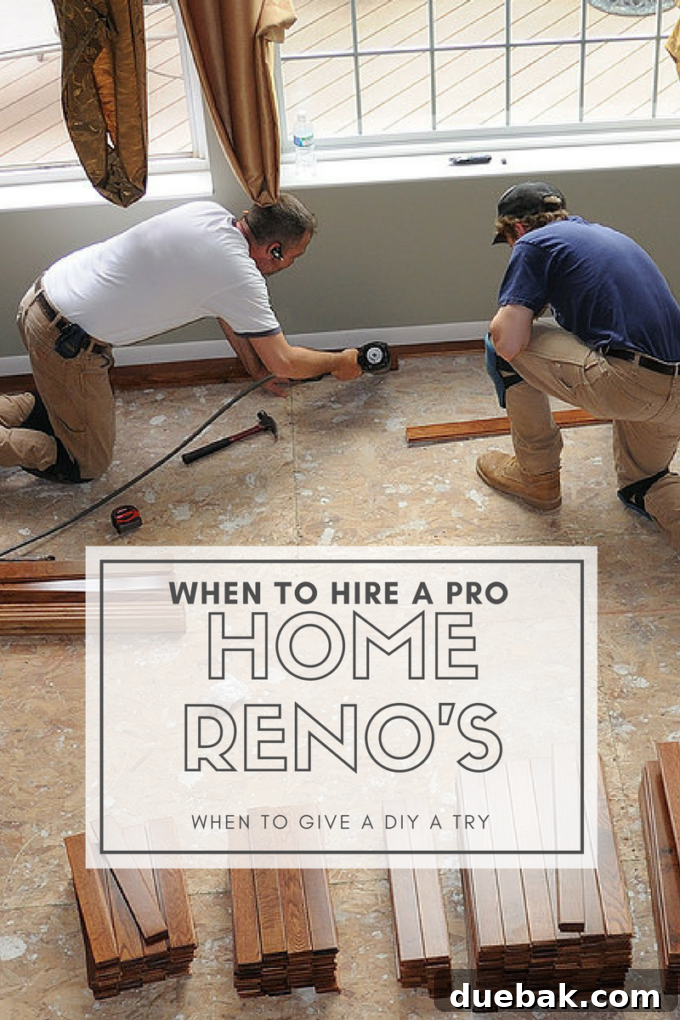
Embracing the DIY Spirit: Where You Can Save
While some projects are strictly for the pros, there’s a vast realm of home improvement where the DIY enthusiast can shine, saving a substantial amount of money on labor costs. These projects typically involve more time and elbow grease than specialized technical skills. If you possess patience, a willingness to learn, and a good set of tools, tackling these tasks yourself can be incredibly rewarding.
The Time vs. Money Equation
The core of any DIY decision often boils down to a simple equation: do you have more time or more money? Professional contractors charge for their expertise, labor, and often a markup on materials. By taking on the labor yourself, you directly cut down on these costs. However, be realistic about your time commitment. DIY projects, especially for novices, almost always take longer than anticipated. If you have flexible evenings and weekends and don’t mind a longer project timeline, DIY can be highly economical. If your free time is precious and the project needs to be completed quickly, hiring a professional might be the better investment.
Demolition and Cleanup: The Dirty Work
Demolition is often the first, and arguably the dirtiest, step in many renovation projects. While it requires physical exertion and safety precautions (gloves, eye protection, dust masks), it generally doesn’t demand highly specialized skills. Removing old cabinets, tearing up flooring, or gutting a bathroom can be a great way to save money. Similarly, post-project cleanup and debris removal, including hauling away old materials to a dumpster or recycling center, can be handled by the homeowner. Contractors will charge for these tasks, so offering to do them yourself can significantly reduce your overall project costs. Just remember to research proper waste disposal methods for different materials.
Drywall Installation and Finishing: Patience is Key
Installing drywall and achieving a smooth, paint-ready finish is a skill that takes practice and patience. While contractors can complete this quickly, a DIY approach can save a significant amount. This involves cutting and hanging the drywall sheets, then applying multiple layers of joint compound (mudding) and tape, followed by sanding. The process is repetitive and dusty but highly learnable. Online tutorials, proper tools (taping knives, sanding poles), and a willingness to accept minor imperfections on your first try can lead to successful results and substantial savings, particularly in larger areas.
Tile Installation: Precision and Practice
Tile work, whether for floors, backsplashes, or shower surrounds, requires precision and attention to detail. It involves preparing the surface, applying adhesive (thin-set), laying tiles evenly, cutting tiles to fit, and finally grouting. While it can be intricate, many homeowners successfully tackle tiling projects. The key is thorough planning, careful measurements, using the right tools (tile cutter, trowel, level, spacers), and allowing adequate drying time between steps. Like drywall, it’s a skill that improves with practice, and the labor savings can be considerable.
Painting and Finishing Touches
Perhaps the most common and accessible DIY project, painting can dramatically transform a space. It requires meticulous preparation (cleaning, patching, priming), careful taping, and a steady hand. While it’s labor-intensive, the skills involved are relatively easy to acquire. Similarly, installing trim, baseboards, or crown molding, while requiring some carpentry finesse, can also be a satisfying DIY endeavor, saving on professional carpentry costs.
Landscaping and Outdoor Projects
Beyond the interior, many outdoor projects lend themselves perfectly to DIY. Building a simple deck or patio, installing garden beds, laying pavers, or undertaking general yard maintenance and planting can save a fortune in labor costs. These projects often require more physical effort than specialized technical skills, making them ideal for homeowners who enjoy being outdoors and getting their hands dirty.
Assessing Your Skills and Commitment
Before committing to a DIY project, honestly assess your skill level, your available time, and your motivation. Are you genuinely interested in learning new skills, or will the novelty wear off when the work gets hard? Many homeowners start a DIY project with enthusiasm only to lose momentum when faced with unexpected challenges or the sheer amount of work involved. Speaking from experience, a project that sits “almost finished” for months can become a source of stress rather than satisfaction. If you’re someone who thrives on checking items off a to-do list and can commit to seeing a project through to completion in a reasonable timeframe, then DIY is definitely for you.
The Smart Middle Ground: A Hybrid Approach
Sometimes the best solution lies in combining the benefits of professional expertise with your own DIY efforts. This “hybrid” approach allows you to leverage a contractor’s specialized skills for critical tasks while saving money by handling simpler, more labor-intensive aspects yourself. It’s about smart delegation and clear communication.
Itemized Quotes: Your Best Tool
When considering a hybrid approach, the most crucial step is to request an itemized quote from your contractor. Instead of a single lump sum, ask them to break down the costs for each component of the project, specifically separating labor costs for tasks you might be able to do yourself, such as demolition, material hauling, or basic cleanup. Seeing these costs individually will clearly show you how much you can save by taking on certain responsibilities. For example, a contractor might charge a significant amount for debris removal, which could be a simple weekend task for you with a rented dumpster or trailer.
Collaborative Projects: Working with Contractors
Don’t be afraid to discuss your DIY intentions with potential contractors upfront. Many professionals are open to working collaboratively, where they handle the complex installations (e.g., plumbing for a new vanity, electrical for new lighting) and you manage the preparatory work or finishing touches (e.g., painting the room, assembling flat-pack cabinets, removing old flooring). This approach requires clear communication about who is responsible for what, established timelines, and a mutual understanding of expectations. By taking on the “dirty work” or the more time-consuming finishing tasks, you reduce the contractor’s labor hours, directly translating into savings for you without compromising the quality of the core technical work.
Protecting Your Investment: Home Insurance After Renovations
Completing a home renovation project, whether big or small, is a significant achievement. However, your responsibilities don’t end when the last nail is hammered. One of the most critical steps after any home improvement is to reassess and update your home insurance policy. Failing to do so can leave you underinsured or without coverage in the event of an incident, jeopardizing your financial security.
Why Update Your Policy?
Renovations often increase the value of your home, either through adding new features, improving existing ones, or increasing the overall square footage. An outdated insurance policy might not cover the full replacement cost of your newly upgraded home in case of damage, fire, or other perils. Furthermore, certain renovations, like adding a pool, building a deck, or installing new electrical systems, can alter your home’s risk profile. Your insurer needs to be aware of these changes to ensure your coverage remains adequate and valid. It’s always best practice to communicate any significant changes to your insurance provider to avoid future complications.
Introducing Esurance: A Reliable Partner
When it comes to protecting your most valuable asset, choosing the right insurance provider is paramount. Esurance has made a name for itself by combining modern convenience with robust coverage options. They focus on making insurance accessible and manageable for today’s homeowners, understanding the need for efficiency and transparency in policy management and claims processing.
Esurance in Alberta: Backed by Allstate
For homeowners in Alberta, Esurance recently launched its homeowners insurance services, offering tailored protection for the unique needs of the province. A significant advantage for Esurance policyholders in Alberta is that their coverage is backed by Allstate, a name synonymous with reliability and trust in the insurance industry for decades. Allstate boasts over 60 years of experience in Canada and 85 years in the US, providing a deep well of expertise and financial stability. This backing offers immense peace of mind, knowing your policy is supported by a long-standing leader in the field.
Streamlined Management and Claims
One of Esurance’s standout features is its commitment to leveraging technology for a seamless customer experience. Homeowners can manage their policies and submit claims online, providing a fast and efficient process. This digital approach means less paperwork, quicker responses, and the ability to handle your insurance needs on your schedule, saving you valuable time and effort. We personally experienced the convenience and satisfaction with Allstate for both our homeowners and car insurance when we owned our first home in Idaho, and found their services to be highly commendable.
Leveraging Technology: Esurance’s DIY Home Inspection App
For the proactive homeowner, Esurance offers an innovative DIY Home Inspection app. This tool is a game-changer for those who like to stay on top of their home’s condition and potentially save money. By downloading the app, you can complete your own comprehensive home inspection by following its clear, step-by-step instructions. The best part? You conduct the inspection at your convenience, allowing you to thoroughly assess your home’s needs without the scheduling constraints and costs associated with a professional inspection. This app empowers homeowners to identify potential issues early, contributing to better maintenance and more informed renovation planning.
Exclusive Opportunity for Canadian Homeowners
Are you a Canadian homeowner currently planning your next big project and could use a financial boost to make your house truly feel like home? Esurance is making it easier for you to achieve your renovation dreams! As part of their commitment to supporting homeowners, they are offering an incredible opportunity.
Win a $200 Esurance Gift Card!
If you are reading this and are a Canadian resident, you are eligible to enter a special draw to win a $200 cash gift card from Esurance. This gift card can be put directly towards materials, tools, or any aspect of your upcoming home project, helping you ease the financial burden. As an additional bonus, for those who enter, I will include a free email design consultation to help kickstart your project planning with expert advice.
Enter To Win Here:
Esurance $200 giveaway
In conclusion, the journey of home improvement is a blend of vision, skill, and smart decision-making. By carefully weighing the pros and cons of DIY versus hiring a professional, and by proactively managing your home insurance, you can navigate your projects with confidence, achieve stunning results, and truly create the home of your dreams.