
Transform Your Home: From Stark to Stylish – Crafting Welcoming Spaces
In a world often captivated by the allure of excess and accumulation, my partner John and I have always found ourselves marching to the beat of a different drum. We are, to put it simply, the antithesis of hoarders – preferring clean lines and uncluttered spaces over overflowing shelves. Yet, there exists a delicate equilibrium between a meticulously organized home and one that feels cold, impersonal, or even stark. Navigating this fine line can be incredibly challenging, especially when attempting to assess your own living environment with an objective eye. Our breakthrough came through a simple, yet remarkably effective, strategy: I photographed each room in our house from various angles and then critically compared these images to the inspiring layouts found in top interior decorating magazines and beloved furniture catalogs like Pottery Barn, Crate & Barrel, and Ballard Designs.
The Subtle Art of Objective Home Assessment
This process of visual comparison was a revelation. It quickly became clear that while our rooms were undeniably clean, tidy, and minimalist, they were severely lacking in a crucial element: design personality and warmth. They had the bones, but not the soul. This honest evaluation, facilitated by external sources of inspiration, spurred me into immediate action. Armed with new insights, I enthusiastically began the arduous, yet exhilarating, task of rearranging furniture and reassessing every decorative element.
When the initial flurry of activity settled, a clear picture emerged. I could discern what aspects of our existing setup were successful and, more importantly, what crucial elements needed to be added to our evolving wish list. The most significant and impactful transformation occurred in our den – a room that had long presented a design conundrum due to its challenging long and narrow layout. This common architectural feature can often make a room feel less inviting and harder to furnish effectively, leading to awkward empty spaces or cramped arrangements.
From Design Dilemma to Dream Den: A Case Study
Overcoming the Narrow Room Challenge
Long, narrow rooms are notorious for posing decorating challenges. They often feel like hallways, lacking a defined center or comfortable conversational areas. Our den was no exception. Before its makeover, it struggled to achieve that coveted balance of functionality and aesthetic appeal. It was functional, yes, but far from inspiring. Here’s what it looked like in its more uninspired state:
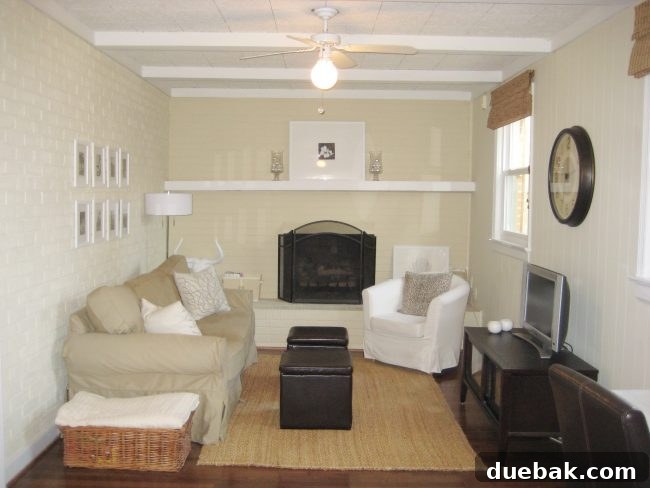
The transformation was nothing short of remarkable. The introduction of another comfortable chair, strategically placed, immediately broke up the linearity of the room and created a more intimate seating arrangement. A new end table provided much-needed functionality, offering a spot for drinks, books, or decorative accents. Beyond major furniture pieces, a careful rotation and thoughtful placement of existing accessories, combined with the addition of a few new ones, truly worked wonders. These seemingly small adjustments collectively made a profound difference, injecting life and warmth into the space.
The Art of Strategic Accessorizing
Accessories are the unsung heroes of interior design. They are the elements that layer a room with personality, texture, and color, preventing it from feeling sterile. In our den, this meant carefully selecting items that complemented the existing palette while introducing new visual interest. Think about how a soft throw draped over a chair, a strategically placed lamp emitting warm light, or a collection of personal photographs can instantly elevate a room’s ambiance. These elements don’t just fill space; they tell a story and invite interaction. They create focal points and guide the eye, making the room feel more cohesive and intentionally designed.
The result was a den that felt significantly less bare and decidedly more welcoming. It transitioned from a utilitarian space to a true living area, full of character and comfort:
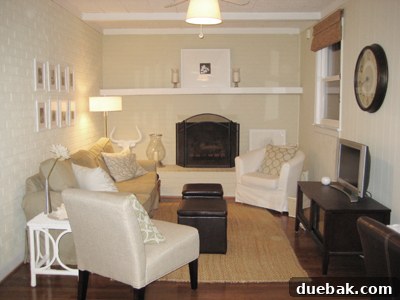
The visual difference speaks volumes, doesn’t it? The room now feels balanced, inviting, and truly lived-in. Moreover, the practical benefits were immediate and undeniable. That additional chair didn’t just add visual appeal; it provided one more comfortable place to sit and relax. The end table offered a convenient surface for resting a drink, holding a remote, or displaying a small decorative object. These small functional enhancements significantly improved the room’s usability and comfort, turning it into a truly versatile space.
Beyond the Den: Finding Treasures and Maximizing Value
The Unexpected Power of Repurposing
One of the most gratifying aspects of this transformation was the discovery of the side table. The crazy part? It was salvaged directly from our basement’s “garage sale pile.” This experience underscored a valuable lesson: often, the perfect piece for a refresh is not found in a high-end store, but rather hidden in plain sight within your own home or through a little creative repurposing. Having a sort of “store” in our basement, filled with items deemed ready for donation or sale, proved to be an unexpected treasure trove for these extra pieces, saving us both time and money.
This approach to decorating emphasizes sustainability and smart budgeting. Before rushing out to buy new items, take a thorough inventory of what you already own. Old pieces can be reimagined with a fresh coat of paint, new hardware, or a change of function. This not only adds character but also reduces waste and allows you to invest your budget in key pieces that truly elevate your space.
Your Journey to a More Inviting Home: Practical Tips
Inspired by our experience, here are some actionable tips to help you transform your own home from merely clean to truly captivating:
- Start with an Objective Assessment: Just like we did, photograph your rooms. Step back and analyze them with fresh eyes. What feels missing? What feels cluttered?
- Seek Diverse Inspiration: Don’t limit yourself to one style. Browse magazines, Pinterest, Instagram, and visit stores like Pottery Barn, Crate & Barrel, and Ballard Designs for ideas on layouts, color palettes, and accessory styling. Pay attention to how professional designers layer different elements.
- Don’t Fear the Experiment: Interior design is not an exact science. Be willing to move furniture around, try different arrangements, and experiment with accessories. Sometimes, the most unexpected pairings create the most dynamic results.
- Focus on Both Form and Function: A beautiful room is also a functional room. Ensure that every piece of furniture serves a purpose and contributes to the overall comfort and usability of the space. Consider traffic flow, seating arrangements for conversation, and convenient surfaces.
- Layer Textures and Lighting: These are critical for adding warmth. Incorporate soft textiles like throws, pillows, and rugs. Experiment with different light sources – overhead, task, and accent lighting – to create a layered and inviting glow.
- Embrace Your “Basement Store”: Before buying new, raid your own home! You might be surprised by the hidden gems you already possess that simply need a new location or a minor update to shine.
- Take Your Time: Home transformation is a journey, not a race. Allow your style to evolve naturally. Add pieces gradually, live with changes for a while, and continually refine your vision.
Crafting Spaces That Speak to You
Our journey from a functional but stark home to one filled with warmth and inviting design elements proves that thoughtful attention to detail can make all the difference. It’s about more than just keeping things clean; it’s about curating spaces that reflect your personality, promote comfort, and invite connection. By applying objective assessment, strategic planning, and a touch of creative repurposing, anyone can transform their living environment into a truly inspiring sanctuary. Embrace the process, trust your instincts, and enjoy the profound satisfaction of crafting a home that feels uniquely and beautifully yours.