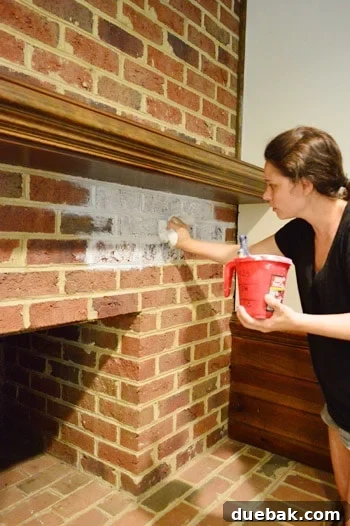
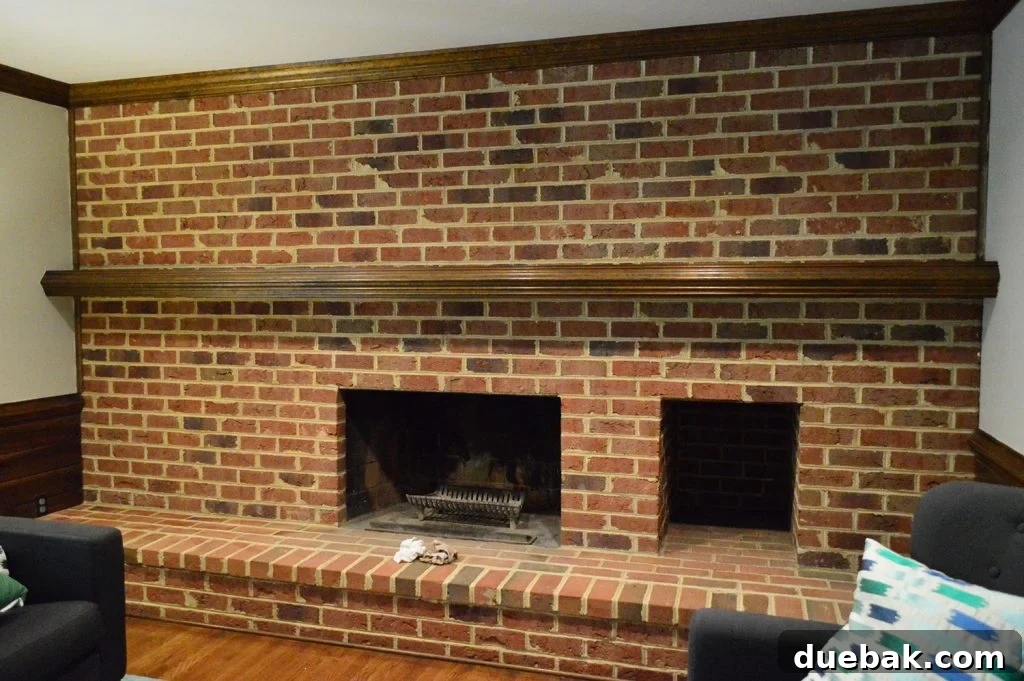
Are you looking to revitalize an old, unappealing brick fireplace without a major renovation budget? Believe it or not, you can give your brick fireplace a stunning whitewash makeover using simple paint you likely already have on hand! We successfully transformed our fireplace wall in less than a day, spending absolutely no money, and the results were truly remarkable. This guide will walk you through the entire process, empowering you to achieve a fresh, modern aesthetic for your home.
While exposed brick can be charming, many homes feature an orangey-brown variety that often feels dated and unattractive, rather than the coveted rustic red brick found in classic New York apartments. In our past homes, we’ve opted for a full paint job on these walls, as we adore the clean look and subtle texture of painted brick. However, after discovering numerous inspiring whitewashed brick walls on Pinterest and delving into various online tutorials, we decided to explore the whitewashing technique for our current fireplace. The beauty of this method lies in its flexibility: if the outcome wasn’t exactly what we envisioned, we always had the option to simply paint over it later.
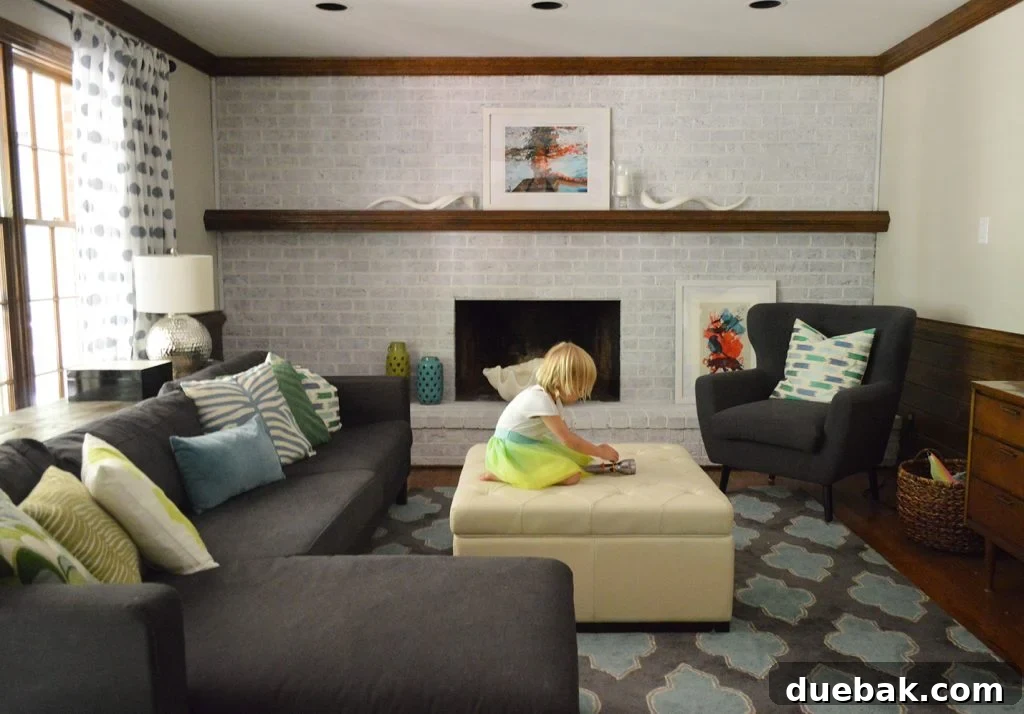
Fortunately, the results exceeded our expectations! The room itself is still a work in progress, and this whitewash might not be a permanent fixture, but for a single day’s effort and a total cost of $0, we couldn’t be happier with the immediate transformation. It breathed new life into the space, making it feel brighter and more contemporary.
Why Choose Whitewash for Your Brick Fireplace?
Whitewashing offers a unique aesthetic that sets it apart from a solid coat of paint. It’s an excellent choice for those who appreciate the texture and character of brick but desire a lighter, refreshed look. Unlike full paint, which completely conceals the brick, whitewashing allows some of the original brick color and variation to peek through. This creates a soft, aged, and weathered appearance, adding depth and a touch of rustic charm without overpowering the room. It’s a perfect compromise for preserving architectural detail while modernizing your interior design. Furthermore, it’s often a less intimidating project for DIYers, as the imperfect, organic finish is part of its appeal.
Materials Needed For Your DIY Brick Whitewash Project
The beauty of this project lies in its simplicity and affordability. The supply list is wonderfully short and likely includes many items you’ve already accumulated from previous painting endeavors. This makes it an incredibly budget-friendly way to update your home.
- Regular White Latex Paint: Any interior white latex paint will do. We used an eggshell finish, but flat or satin can also work depending on your desired sheen. Leftover paint is perfect for this!
- Paint Pail or Other Container: Essential for mixing your paint and water solution. An old plastic container or even a sturdy bowl will suffice.
- Paint Stir Stick, Spoon, or Other Mixing Device: To ensure your paint and water are thoroughly combined for a consistent mixture.
- Paint Brush: A standard paintbrush (2-3 inches wide) is ideal for applying the whitewash solution to the brick and mortar lines.
- Water: The key ingredient for diluting your paint and achieving the whitewash effect.
- Rags or Old T-shirts: Crucial for dabbing away excess paint, blending, and controlling the opacity of your whitewash. Have plenty on hand!
- Drop Cloth and/or Rosin Paper: Protect your floors and surrounding areas from drips and spills. Rosin paper is particularly effective due to its waterproof properties.
- Scrub Brush or Wire Brush (Optional, but Recommended): Useful for thoroughly cleaning older, heavily soiled, or uneven brick surfaces before painting.
While specialized whitewash paints and more durable limewash applications are available, especially for exterior use (similar to the paint we utilized when painting our home’s brick exterior white), for a straightforward interior project like a fireplace, saving your money and repurposing regular wall paint is perfectly acceptable and yields fantastic results. Once you have your supplies, you’ll find the steps are just as easy to follow.
Step 1: Clean Your Brick Fireplace Thoroughly
Proper preparation is paramount for any painting project, and whitewashing brick is no exception. Begin by thoroughly cleaning the brick surface. For us, a simple wipe-down with an old rag was sufficient to remove dust, cobwebs, and light soot. However, depending on the age and condition of your brick fireplace, you may need a more vigorous cleaning. If your brick has stubborn grime, heavy soot, or loose mortar, grab a scrub brush or a wire brush. Gently scrub the surface with warm soapy water (using a mild detergent) to dislodge any accumulated dirt or loose material. Rinse the area with clean water and allow it to dry completely before moving on. This ensures your whitewash adheres properly and creates a smooth, even finish.
Step 2: Create Your Perfect Whitewash Mixture
This is where the magic happens! In your paint pail, mix one part water with one part white latex paint. We used Simply White by Benjamin Moore in an eggshell finish, as it was leftover from a previous project. However, any of the best white paint colors would work beautifully. The consistency of this 1:1 mixture should be quite drippy and watery—imagine pouring out half a gallon of paint and refilling that half with water. It’s crucial to stir thoroughly until the mixture is completely uniform. For a less opaque, more translucent effect, you can start with a ratio of 1 part paint to 2 parts water. For a slightly more solid look on the first coat, you might go with 2 parts paint to 1 part water. It’s always best to start thinner, as you can always add more coats or a thicker mixture later. Test a small, inconspicuous area first to ensure you’re happy with the translucency.
Step 3: Apply The Whitewash Using The Brush & Rag Technique
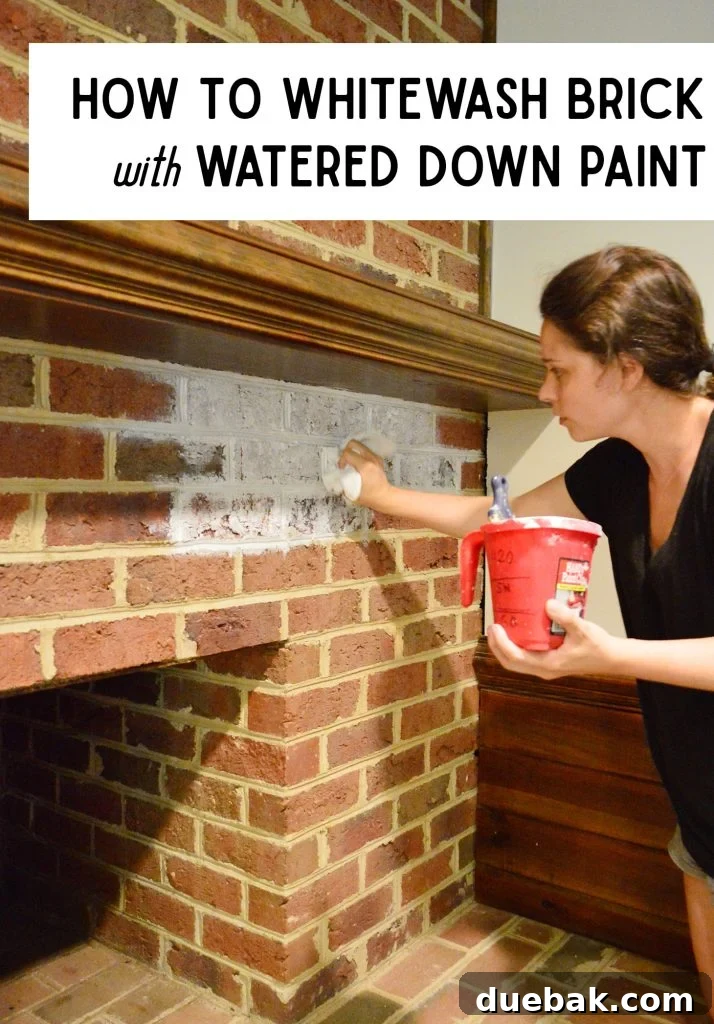
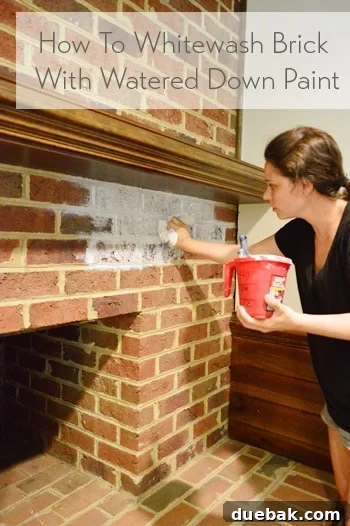
Now for the application! Dip your paintbrush into your watery whitewash mixture. Working in small sections, quickly “wash” a thin layer of the solution over the entire brick surface, making sure to cover both the bricks and the mortar lines. The key here is speed and control. Instead of aiming for perfect coverage, think of it as spreading the wash thinly across each brick. Immediately after applying the wash to a small section (about 1-2 square feet), take a clean rag and gently dab or wipe over the wet paint. This crucial step removes any excess paint, absorbs drips (which are common with such a runny mixture), and allows the underlying brick color and texture to show through, creating that desirable translucent effect. The dabbing motion also helps to blend the paint seamlessly, preventing harsh lines. Move quickly from one brick to the next, maintaining a consistent rhythm of brushing and dabbing. This ensures a uniform look across your fireplace.
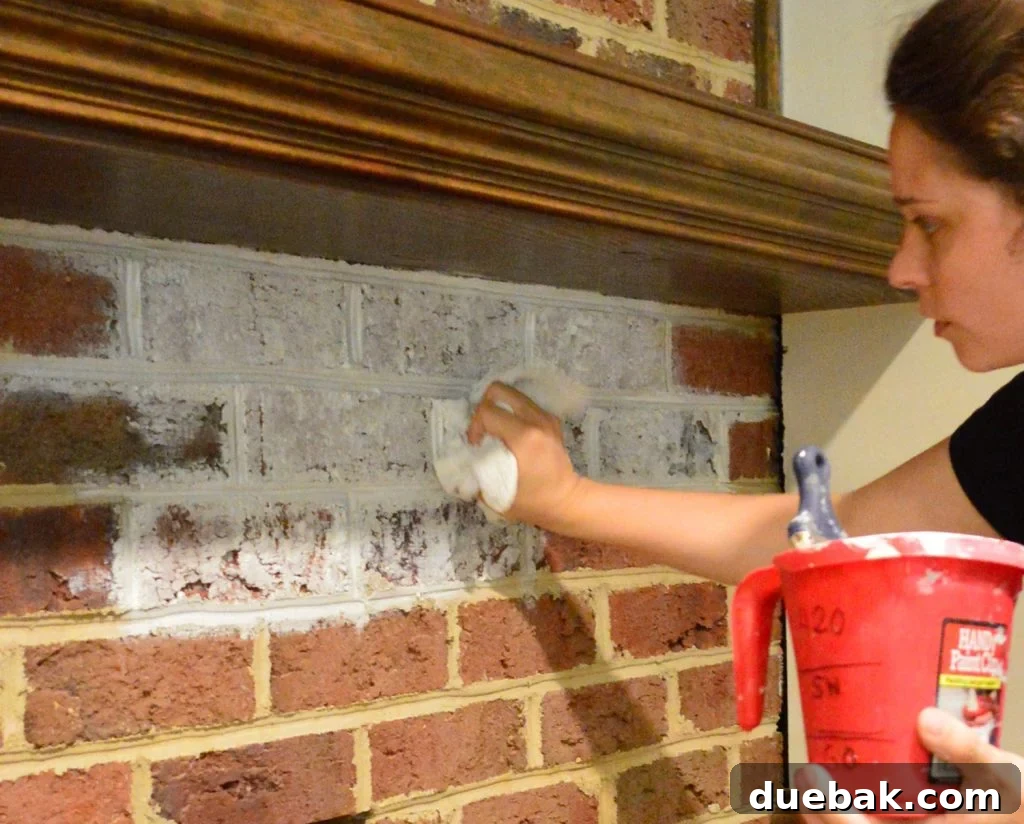
I found that the dabbing portion required more arm strength and focus than the initial brushing, and I tried to work as efficiently as possible. This rapid application and blending process is essential because the bricks absorb the wash quite quickly. When you first brush it on, it might appear as if you’ve applied solid white paint. However, as you dab and the paint begins to soak in, the beautiful, natural coloring of the brick starts to emerge, creating that soft, diffused look. This immediate transformation is incredibly satisfying and motivates you to keep going.
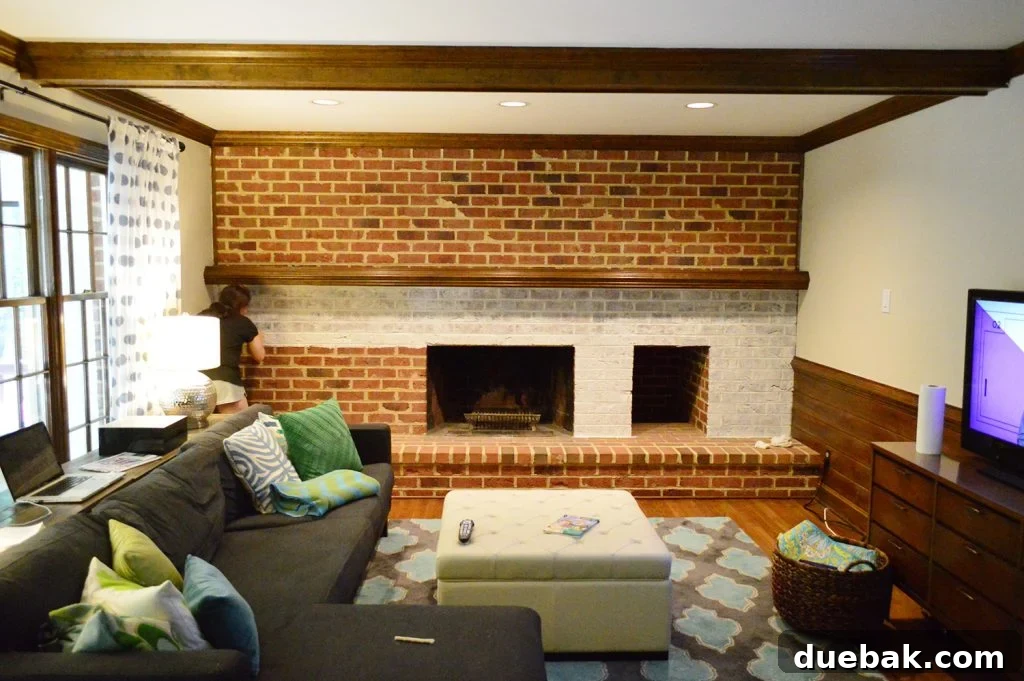
For a visual demonstration of this process, here’s a helpful video:
Note: You can also watch this video on YouTube for a more detailed look at the application technique.
As I completed the main wall, I moved to the hearth and quickly realized the potential for drips on our beautiful wood floors. A quick pause to tape off the floor with rosin paper proved to be a smart move. Its waterproof quality gave me peace of mind, knowing that any stray drips wouldn’t soak through and damage the flooring underneath. Always remember to properly protect your surrounding surfaces!
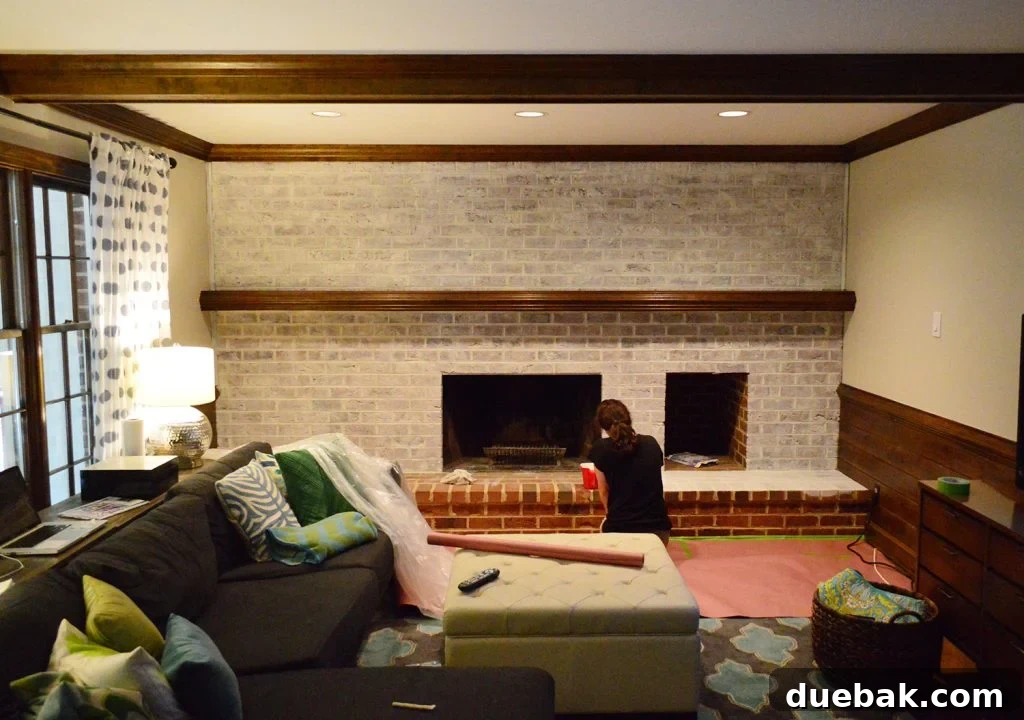
Step 4: Let Dry & Evaluate Your Whitewash Results
After approximately two hours, my first coat of whitewash had largely soaked in and dried. This is a critical point in the process. It’s time to step back, observe, and honestly ask yourself: should I leave it as is, or apply another pass? This flexibility is one of the greatest advantages of the whitewashing technique. You have complete control over the final opacity. If you desire a more solid, opaque whitewash that covers more of the brick’s original color, additional coats are easily applied. If you prefer a more subtle, transparent effect, one coat might be all you need. Lighting conditions can also affect how the whitewash appears, so observe it at different times of the day.
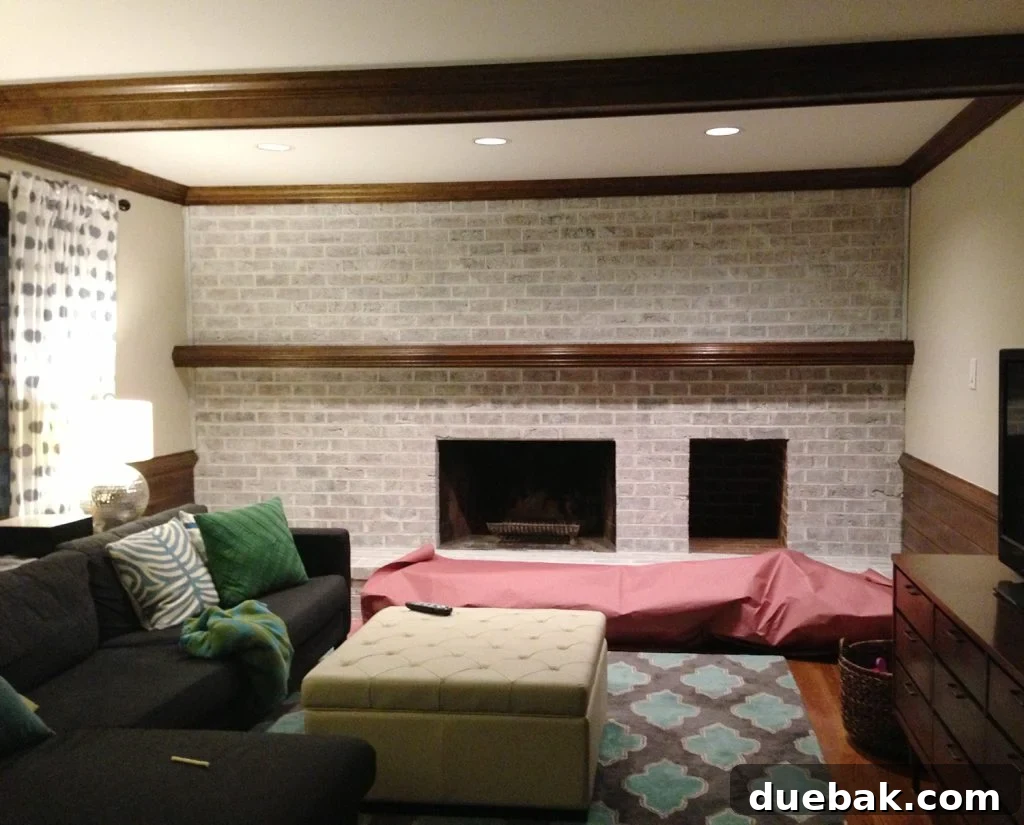
In my case, I decided that in person, too much of the original dark red and brown brick was still visible in certain areas (though it’s often harder to discern these nuances in photographs). I wanted a slightly hazier, brighter effect, so I opted for a second coat to achieve the desired level of coverage and lightness.
Step 5: Apply Additional Coats As Needed
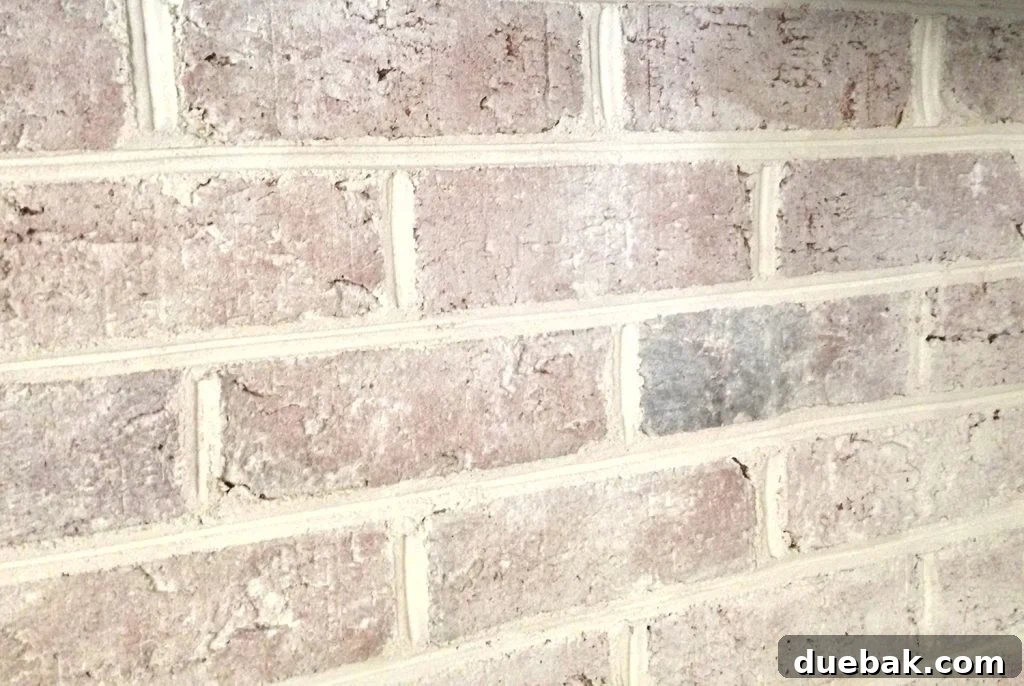
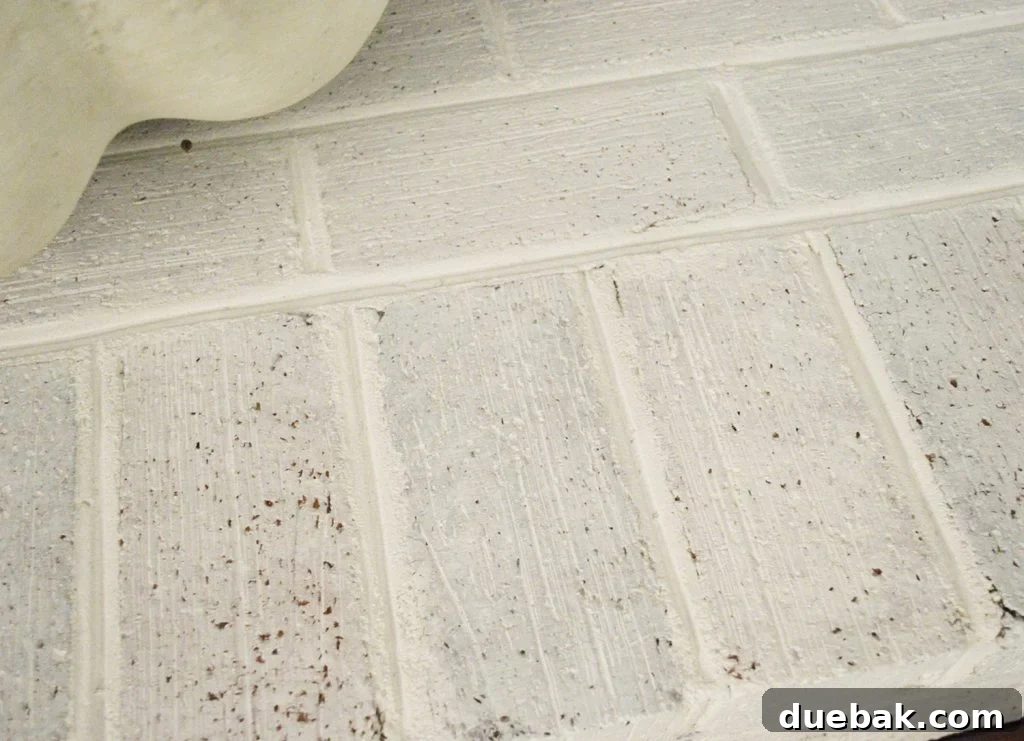
For the second coat, I adjusted my mixture to be even waterier. If my first whitewash was an equal mix of paint and water, this second batch was closer to one-third paint to two-thirds water. This thinner consistency was perfect for adding just a bit more haze without making the brick look completely painted. The application of this second coat was much quicker, taking perhaps an hour at most. After this second pass, I was incredibly pleased with the outcome. The room instantly felt less dark and cavernous, yet the brick retained much of its inherent texture and intricate detail (though, unfortunately, photos don’t always capture this as well as seeing it in person). I adore the weathered, almost antique effect it provides, without veering into an overly “faux finished” or theatrical “Medieval Times” look (though I certainly enjoyed that place as a kid!).
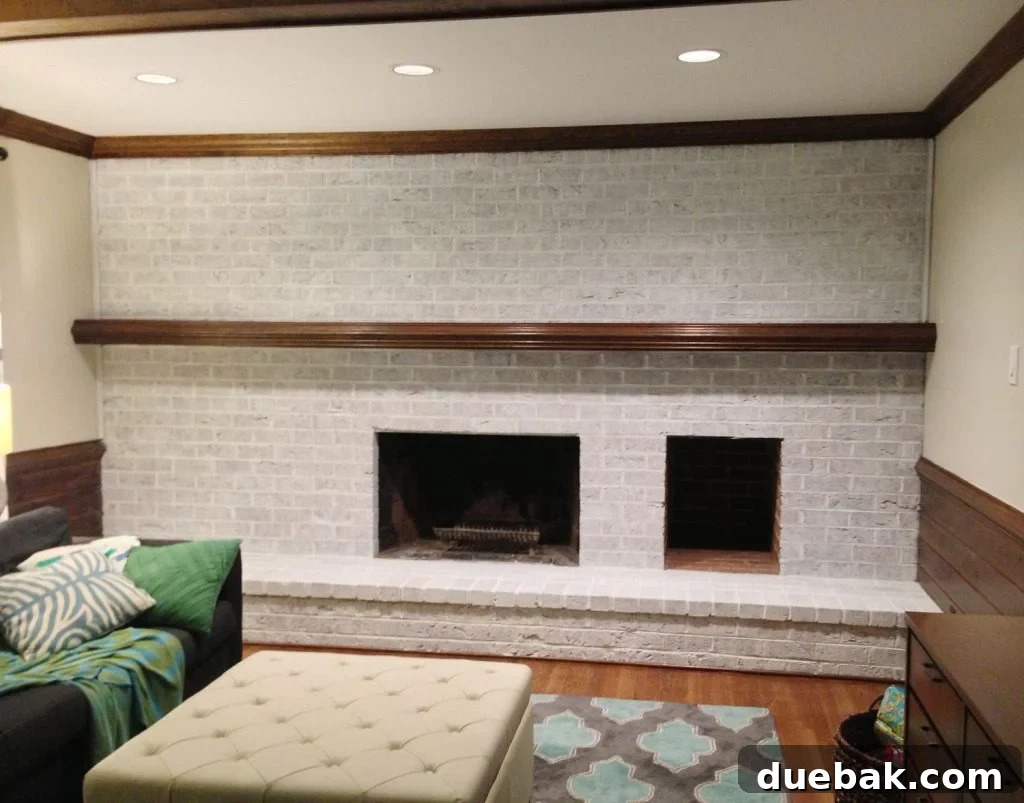
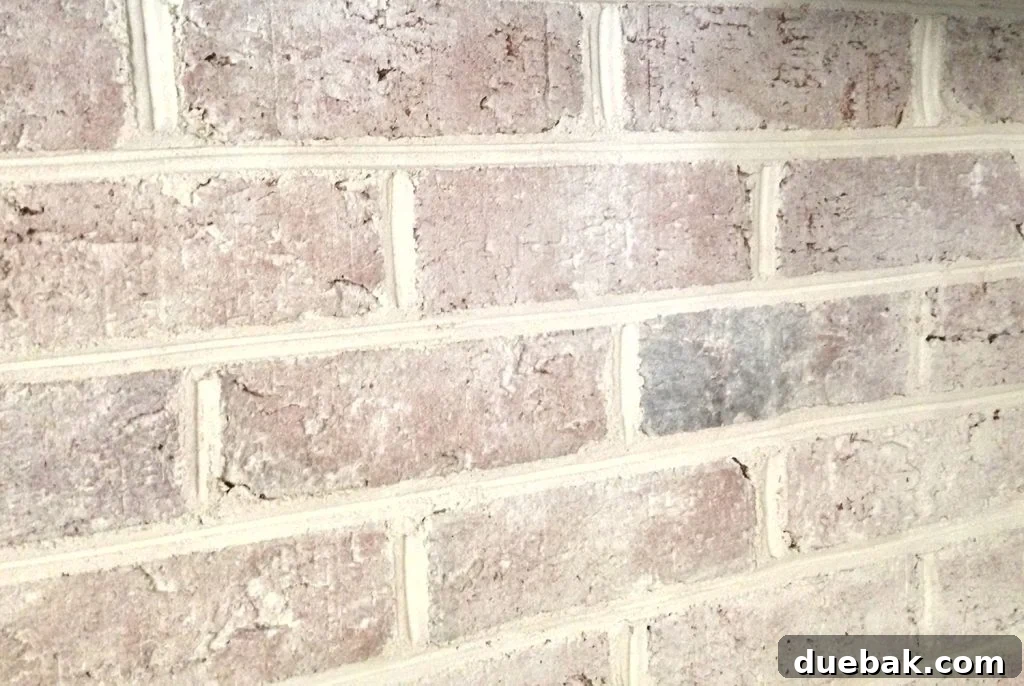
From a distance, the wall exudes a chalky, textured, and subtly varied appearance, a striking contrast to the glossy, uniform white finish that a standard paint job would have yielded. As you approach, more of the charming details of each individual brick come into view. Some bricks appear slightly lighter, others retain more of their original darker tones, and some showcase their craggy, imperfect surfaces. It’s this beautiful mix of transparency and coverage that makes whitewashing such a dynamic and appealing finish.
Although this room still has a long journey ahead in terms of complete decor and furnishing, whitewashing this once-dark brick wall was an immense step forward. It significantly helped to make the space feel brighter, more open, and decidedly less cavernous – a particularly challenging feat given that this room receives the least natural light of any area in our entire house. The transformation was immediate and impactful, shifting the entire ambiance.
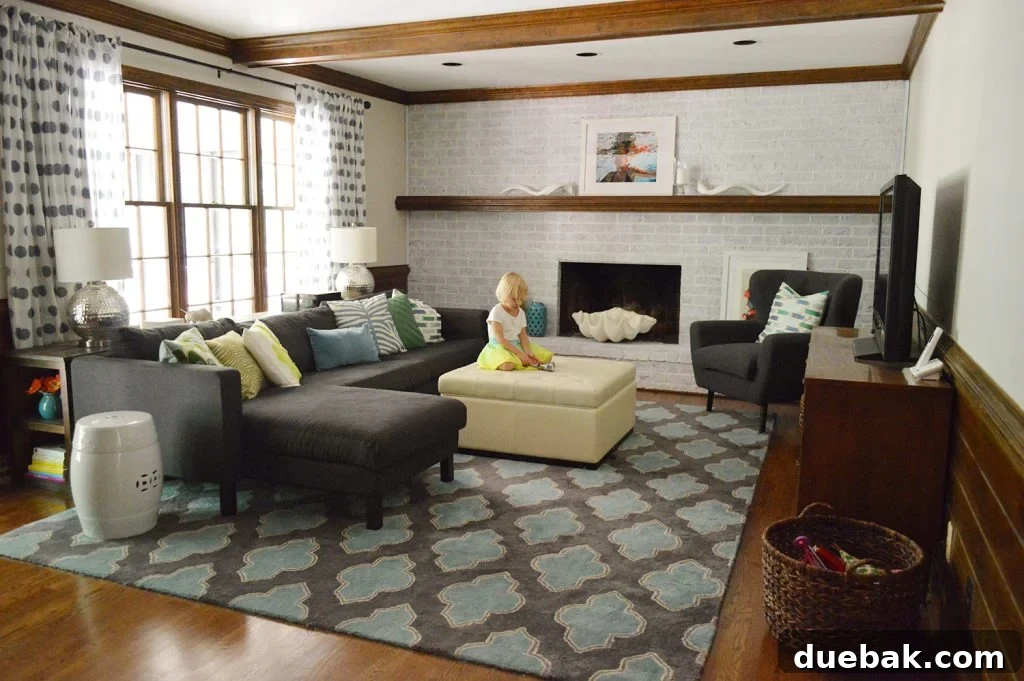
Regardless of future plans, I’m thrilled that the room now looks decidedly less “salmon” than its original state. The original, dated color scheme has been replaced with a fresh, versatile backdrop that allows other decor elements to shine.
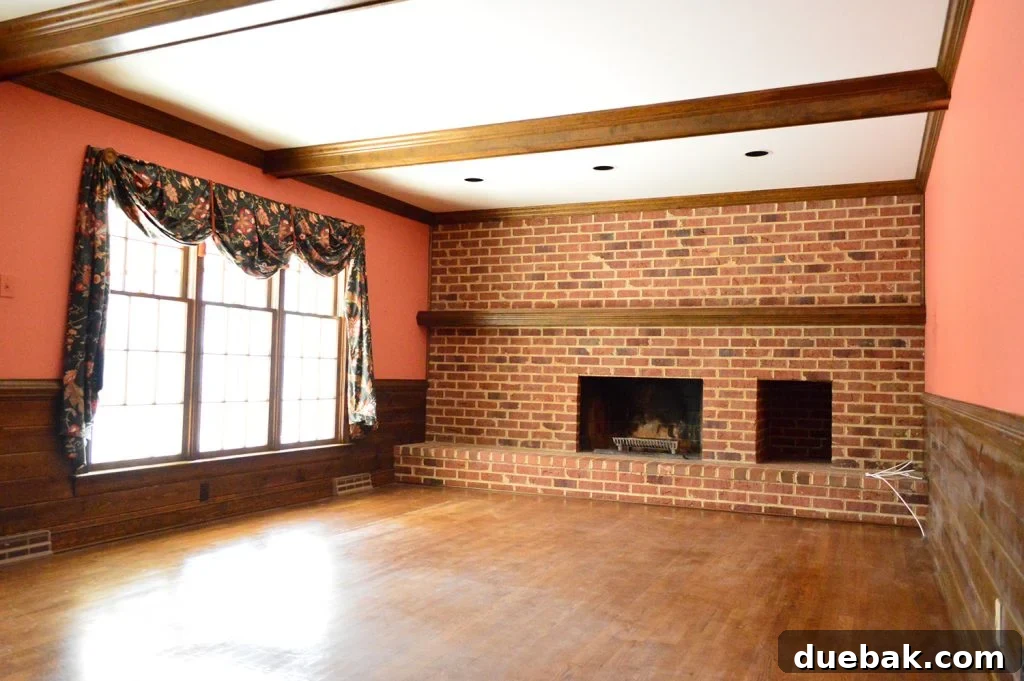
Pondering the ‘Paint or Not to Paint’ Dilemma
Many people have inquired if we’ve considered painting the adjacent wood beams, wainscoting, and the fireplace mantle. We are definitely leaning in that direction, as it would further lighten and unify the space, but we are committed to not rushing into such a significant decision. My steadfast advice has always been: never paint brick or wood unless you are 100% certain of your choice, as it is incredibly difficult to undo. These are permanent alterations. Essentially, wait until the desire to paint becomes so overwhelming that you can no longer stand to wait another second. Only at that point, with absolute conviction, should you pick up that paintbrush. This cautious approach ensures that any major aesthetic changes align perfectly with your long-term vision for your home.
Update: The Ultimate Transformation – We Painted It All White!
After several years of living with the beautifully whitewashed brick, our desire to significantly brighten the living room grew even stronger. We ultimately decided to take the plunge and painted not only the brick but also the wood beams, wainscoting, and mantle in Benjamin Moore Simply White using a paint sprayer. This full paint job did absolute wonders for the room, creating an incredibly airy, expansive, and cohesive feel that exceeded even our whitewash expectations.
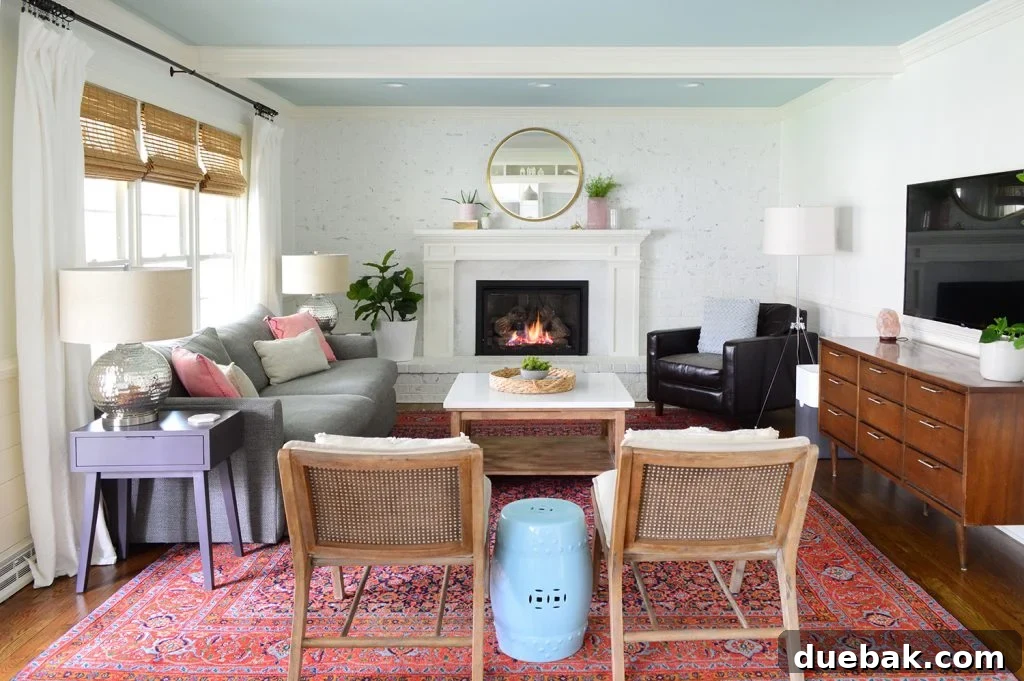
A myriad of other design elements and furnishings evolved in the room over the seven years between the initial whitewashing project and when the above photograph was taken. We constructed a new mantle, updated various furniture pieces, and refined our overall aesthetic. However, we are incredibly grateful that the initial whitewashing project gave us the confidence and vision to undertake such major, transformative changes to this beloved space. It proved to be a valuable stepping stone in our journey to create the bright, inviting living room we always envisioned.
Update: We have recently launched our dedicated Shop Our House page, designed to assist you in locating any furniture, accessories, or specific paint colors you might have seen featured in our home. Explore our curated selections to find inspiration for your own living spaces!