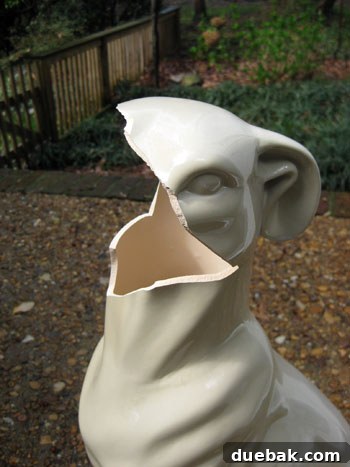
The devastating moment arrived. All the king’s horses and all the king’s men, indeed, couldn’t put my beloved ceramic pooch together again. This wasn’t just any decorative piece; it was a cherished part of our home, a silent, adorable guardian that brought a touch of whimsical charm to our everyday lives. Finding it in pieces was a genuine heartbreak, a miniature domestic tragedy that left a surprising void. The once proud and perfectly formed ceramic dog, a symbol of quirky elegance, lay shattered, its distinctive face, the very essence of its appeal, fragmented beyond immediate recognition. It was a stark reminder of how fragile our most treasured inanimate objects can be, and how deeply we can become attached to them, transforming simple decor into a source of comfort and personality within our living spaces. This isn’t merely about a broken item; it’s about the sentimental value we embed in objects, the memories they hold, and the challenge of facing their irreparable damage.
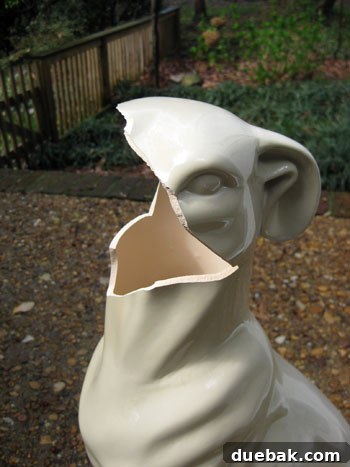
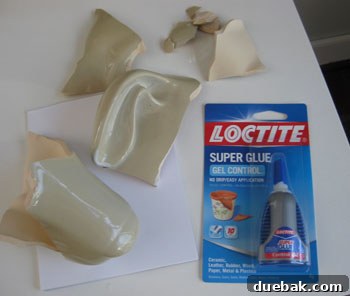
While the legendary efforts of royal cavalry and infantry might have been out of reach, my resolve to mend this cherished ceramic dog was far from it. Armed with a hopeful spirit, a steady hand, and a tube of super glue, I embarked on a personal mission to resurrect my fallen friend. It wasn’t just about restoring an object; it was about honoring the emotional connection I had with this unique piece of home decor. The thought of discarding it without a fight was simply out of the question. Every broken shard represented a memory, a story, and a feature that I desperately wanted to salvage. This wasn’t merely a repair job; it was an act of devotion, fueled by the unwavering love only a ‘mother’ could have for her favorite, albeit ceramic, ‘pup’. The simple act of piecing together fragments felt like a noble quest, a test of patience and precision, hoping to defy the odds and prove that some things truly can be put back together again.
Prioritizing safety, especially with potent adhesives, is paramount in any DIY project. As someone particularly sensitive to strong chemical odors, performing the repair indoors was out of the question. The solution presented itself in the tranquil setting of our back patio. With the sun gently warming the air and my little one, Clara, peacefully napping indoors – her safety monitored by a trusty baby monitor clutched firmly in my hand – I set up my makeshift restoration station. This outdoor setup wasn’t just for ventilation; it provided a quiet, focused environment, allowing me to concentrate fully on the intricate task of ceramic repair. Each piece was handled with care, my fingers delicately tracing the edges, mentally mapping out where each fragment belonged. It was a meditative process, a delicate dance between hope and meticulous effort, all undertaken with the utmost attention to detail and personal well-being, ensuring no toxic fumes lingered near my sleeping child.
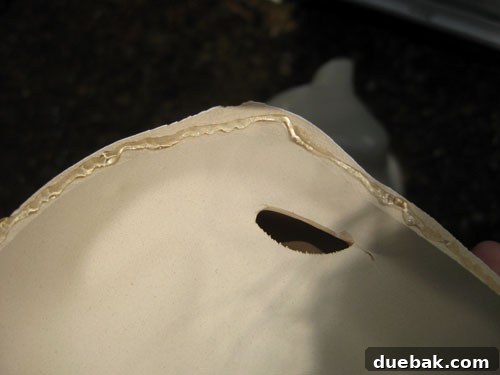
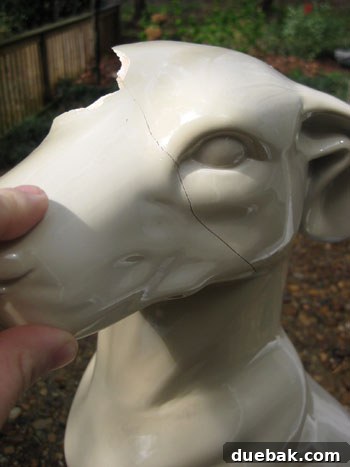
Despite my initial optimism and careful preparations, the reality of ceramic repair quickly proved to be a far more formidable challenge than anticipated. Almost immediately, the ambitious project began to veer off course. The precision required for seamless mending, particularly with irregularly shaped shards, became evident as pieces stubbornly refused to align perfectly. It was a disheartening realization as the clean breaks I had envisioned turned into jagged edges that fought against every attempt at a smooth reunion. The once clear vision of a perfectly restored figurine began to blur, replaced by the growing evidence of an imperfect, struggling reconstruction. Each attempt to fit a piece correctly was met with a slight misalignment, creating an unwanted gap or an uneven surface. This wasn’t just a matter of applying glue; it was a complex puzzle where the pieces seemed to have subtly warped or shrunk, making a true restoration increasingly difficult.
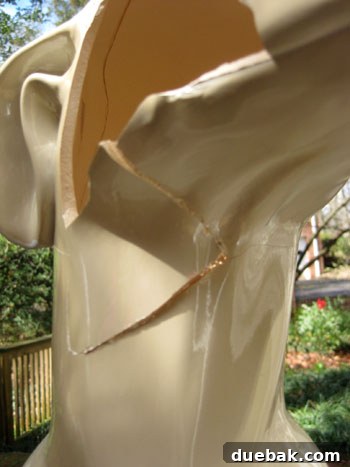
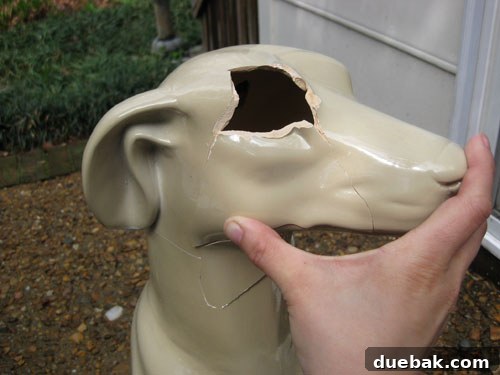
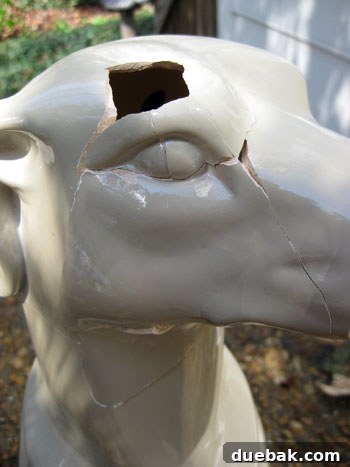
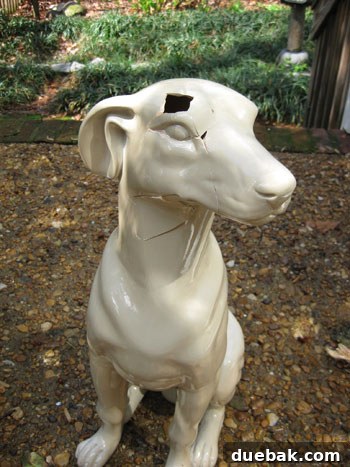
The outcome was, undeniably, a “womp-womp” moment. The hopeful vision I had for a seamless repair evaporated with each misaligned shard. No matter how meticulously I tried to fit them, nothing seemed to truly match up, leaving my beloved ceramic dog looking crazy and jagged, a patchwork of failed attempts. It was a stark contrast to its former elegant self, now a fractured representation of what once was. The aesthetic appeal that made it so special was irrevocably compromised, replaced by an unsettling, almost Frankenstein-esque appearance. This visual discord was not just disappointing; it was a clear signal that the initial break had rendered a perfect restoration virtually impossible, leaving visible scars that detracted significantly from its original charm and grace. The project had transformed from a hopeful repair into a poignant lesson in the limitations of DIY restoration for truly delicate items.
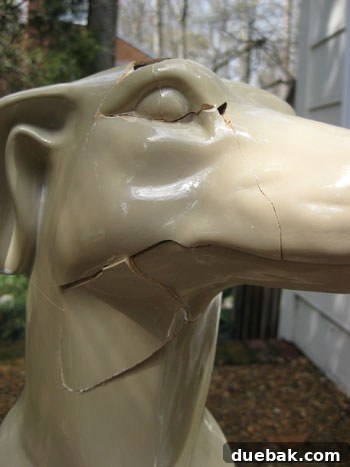
The primary culprit behind the wonky outcome was undoubtedly the sheer quantity of minuscule shards, too small and delicate to properly handle and re-glue. These tiny fragments created insurmountable gaps and imbalances, throwing off the entire structural integrity of the repair. To further complicate matters, a significant chunk from the very top of my beloved pup’s head had mysteriously vanished during the initial incident, leaving an undeniable void that super glue simply couldn’t conjure away. Without this critical piece, the sculpture’s head, and by extension, its entire character, was permanently disfigured. I considered alternative solutions: perhaps using plaster or putty to meticulously fill in the gaps, attempting to smooth out the jagged edges, and then spray painting the entire piece to create a uniform, if somewhat altered, finish. This would transform it from a delicate ceramic into a painted sculpture, losing its original material charm but gaining a new, cohesive look. Another, more radical suggestion from our online community, which we discussed when we initially shared this tragedy here, involved purposefully shattering the remaining parts of his face to repurpose him entirely – perhaps as a headless lamp base, a quirky umbrella stand, or even a unique planter. These were creative and resourceful ideas, reflecting the ingenuity often born from breakage. However, my deep affection for ceramic animals, particularly this one, hinges entirely on their expressive faces. It’s the face that imbues them with personality, making them undeniably cute, sweet, and charming. Without it, the essence of the creature is lost; it becomes merely an inanimate object, devoid of the spirit I once admired. It’s a sentiment akin to our human connections – heads, or rather, the facial expressions they convey, are profoundly important to how we perceive and relate to others. For me, that applies to my decorative companions too; a faceless dog, no matter how functional as a planter, just wouldn’t hold the same magic.
Ultimately, despite the less-than-perfect outcome, I find a surprising sense of peace in having given the repair my absolute best effort, the old college try, as they say. There’s a certain closure in knowing I tried to mend what was broken, even if complete restoration proved impossible. Perhaps, in retrospect, a giant ceramic dog perched precariously in the hallway wasn’t the most practical or safest decor choice, especially with Clara’s inevitable foray into toddling and exploring every nook and cranny of our home. Her safety, after all, far outweighs the aesthetic appeal of any statue. So, with a deep breath and a quiet resolve, I think I’m – dare I say it – finally ready to let go of my much-loved ceramic pooch. It’s a feeling not unlike Rose’s declaration in Titanic, where she famously vows never to let go, only to almost immediately release the dashing Leo into the icy depths of the sea, ensuring her own survival (though perhaps a less dramatic, albeit equally poignant, letting go here). This wasn’t a choice born of insensitivity or callousness, but rather a mature acceptance of what cannot be, coupled with a practical consideration for a growing family and evolving home environment. It’s about understanding that while some things are irreplaceable, their memory can live on even without their physical presence, and sometimes, letting go is an act of self-care and forward momentum, allowing space for new joys and discoveries in our lives and our homes.
Moreover, without meaning to sound unsentimental or quickly dismissive of the loss, I must admit that the void left by my dear ceramic dog isn’t entirely empty. I am fortunate to still have my equally gorgeous and much sturdier concrete greyhound, a magnificent piece that continues to grace our living space with its enduring presence. This robust sculpture, unlike its delicate ceramic counterpart, stands as a testament to durability and timeless style, filling the decorative and sentimental space in our home with unwavering charm. It’s a comforting thought, knowing that while one chapter of home decor has gracefully closed, another beautiful and resilient one continues. This highlights a broader truth in home styling and life itself: while we grieve the loss of beloved items, there is always room for new favorites, new perspectives, and new ways to infuse our living environments with personality and comfort. The concrete greyhound isn’t a replacement, but rather a continuation of my passion for unique animal sculptures, a reminder that beauty and sentiment can be found in many forms, even after experiencing a small, ceramic-related heartbreak.