Conquering the Needle: My Humorous Journey into Beginner Sewing with the Brother XL2600I
For as long as I can remember, sewing has been a mystical, almost mythical skill in my family. My aunt and mother were true virtuosos with a needle and thread, effortlessly crafting everything from elaborate Halloween costumes to my mom’s exquisite wedding dress. They made it look so easy, so intuitive. Naturally, I yearned to join their ranks, to wield the sewing machine with the same grace and precision. However, every attempt to learn on my mom’s machine ended in catastrophic failure. We’re not talking about a simple jam or a minor tangle; I possessed a unique talent for irreparably damaging it. Six separate incidents, at least, concluded with my mom hauling the machine off to the repair shop, incurring significant costs, and a subtle, yet firm, discouragement from future endeavors. I genuinely believed I was cursed, a sartorial black hole incapable of harmonious coexistence with any mechanical stitcher.
A Childhood Sewing Saga: From Broken Machines to Renewed Hope
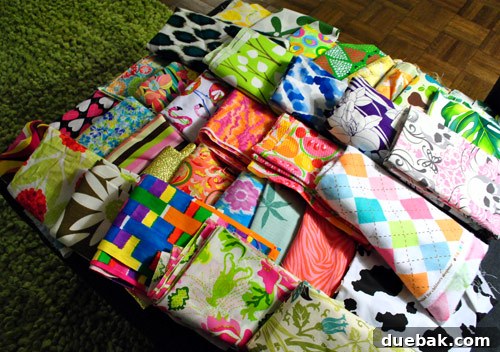
Despite my checkered past with sewing machines, a flicker of hope ignited recently. Driven by a desire to craft meaningful, handmade items for my daughter Clara’s first birthday, I decided it was time for a fresh start. My ambitious vision included a DIY quilt and a charming fabric flag banner, both to be created using a vibrant collection of fabrics we had lovingly gathered throughout her weekly photo project. I also envisioned the machine being a valuable asset for future home decor projects, such as custom throw pillows and curtains. This time, however, I was determined to approach it differently.
Selecting My First Sewing Machine: Why the Brother XL2600I Stood Out
The Quest for Beginner-Friendly Features
My quest for a sewing machine began with a clear set of criteria. Given my history of mechanical destruction and absolute lack of “natural ability,” I needed a model that was explicitly designed for beginners. Simplicity, durability, and a forgiving nature were paramount. I scoured online reviews, paying close attention to machines praised for their ease of use, intuitive controls, and robust performance, even in the hands of a novice.
Affordability Meets Amazon Reviews
After considerable research, one machine consistently rose to the top: the Brother XL2600I. It boasted an impressive 4.5-star rating from over 150 customer reviews on Amazon.com, with countless users lauding its beginner-friendly design and reliable operation. This machine seemed to be the perfect antidote to my long-held sewing phobia. The fact that it was significantly more affordable than many of the fancier, high-end models was an undeniable bonus. Priced at just $89 – a remarkable discount from its original $149, complete with free shipping – it offered an attractive entry point into the world of sewing without a major financial commitment. This “I’m-not-going-to-splurge-for-anything-great-just-yet” approach felt prudent, especially considering my self-proclaimed curse. It offered a buffer, a comforting thought that if I did, against all odds, manage to irreparably maim this one within a week, the financial sting wouldn’t be quite as sharp. That prospect, I must admit, wouldn’t have entirely surprised me.
The Unfiltered Reality of Learning to Sew: Tears, Tangles, and Text Messages
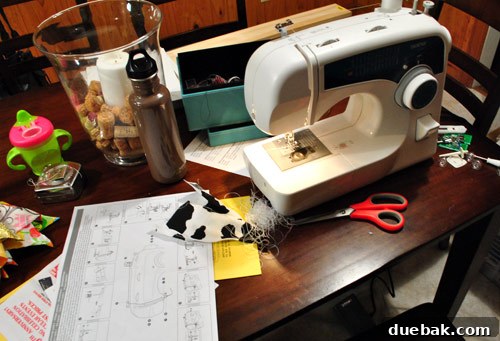
The Brother XL2600I arrived a few weeks later, brimming with promise. What followed, however, was a baptism by fire. This machine wasn’t just challenging me; it was actively testing the limits of my patience, my sanity, and my vocal cords. There were moments when the only viable option was to calmly walk into the bedroom and scream into a pillow, muffling an outpouring of pure frustration.
Battling Bobbins and Tension Terrors
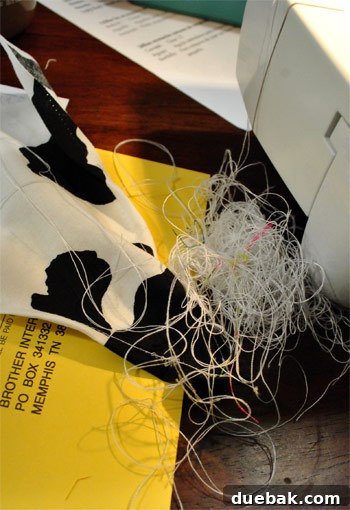
The initial days were a blur of broken needles, tangled threads, and stitches that resembled abstract art rather than neat seams. My primary nemesis was what I perceived as inexplicable “tension problems.” The underside of my fabric would emerge a chaotic mess of loopy, snarled thread, while the top looked perfectly fine. I rethreaded the needle countless times, painstakingly followed the manual, and frantically searched online forums for solutions. Each failed attempt chipped away at my resolve, leaving me on the verge of surrender. In a moment of absolute despair, I even engaged in a hilariously miserable text message exchange with my friend Katie B. I vividly recall pleading with her to come over, peel me off the floor, wipe away my tears, and perhaps administer a stern lecture to my “disobedient” machine. While she didn’t come to my rescue physically, her witty comparison of me to Martha Stewart (which I quickly countered by suggesting I was Martha’s uncoordinated, lesser-known sister, Bertha) ultimately brought a much-needed smile to my face. Her comic relief was invaluable amidst the ugliness of my sewing struggle.
The Moment of Truth: A Tiny Bobbin, A Huge Problem
After two nights consumed by despair and at least five solid hours of sheer misery, the truth, in all its pathetic simplicity, finally dawned on me. The actual issue wasn’t the machine’s tension or my fundamental incompetence; it was a single, tiny, unsanctioned bobbin. Yes, you read that right. Five hundred attempts at rethreading, countless rereads of the manual, endless Google searches, and numerous distressed texts to my patient friends (who undoubtedly had better things to do than listen to my whining) all culminated in the discovery that a bobbin, barely one-tenth of an inch too tall, was sabotaging my every effort. The relief was immense, swiftly followed by a wave of embarrassment so potent it made me want to laugh and cry simultaneously. It was a “you-laugh-but-kind-of-cry-at-the-same-time-because-it’s-so-pathetic-and-embarrassing” kind of moment. But at least, at that lowest point in my fledgling sewing career, I knew things could only get better.
My First Sewing Challenge: Crafting Clara’s Birthday Banner
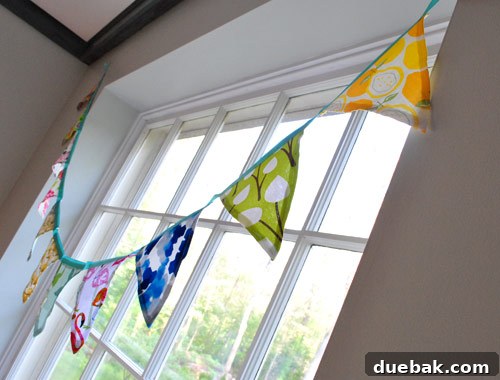
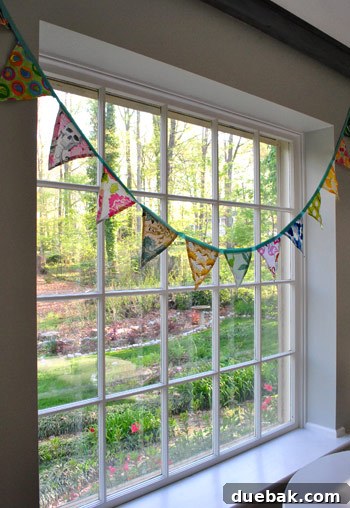
With the bobbin mystery solved, I persevered. Slowly but surely, I began to form a tentative relationship with “Oh Brother,” my sarcastically pessimistic nickname for the machine that had, for a time, been the bane of my existence. And against all odds, I started making tangible progress in the world of novice sewing. My first major project: a charming fabric flag banner for my daughter’s first birthday party, crafted from the small triangles cut from the diverse weekly fabrics collected for her photos.
The Vision: A Meaningful Birthday Keepsake
My goal for the banner was not just a festive decoration but a lasting keepsake. Using the fabrics from Clara’s weekly photo project added a deeply personal touch, turning each flag into a tiny memory. I envisioned a colorful, durable banner that could be brought out for every birthday, hopefully for years to come, long after Clara outgrew the need for such childhood indulgences. This aspiration fueled my determination, pushing me through the numerous frustrating moments.
The Reality: A Grueling (But Rewarding) Process
Let me be clear: this project was anything but easy. I frequently joked that it was harder and more annoying than a celebrity’s perfectly chiseled abs, dubbing the entire ordeal “The Real Situation.” I legitimately cried at least ten times – not the whiny, fake kind, but hot, frustrated tears that I quickly swiped away before anyone could witness my “sew-crying” and question my sanity. Give me a sledgehammer or a paintbrush, and I’m fearless. But place a robot with a motorized needle in my hands, and you witness the very definition of misery. It’s simply not something I can even remotely pretend to be naturally good at. But, as they say, I’ll learn. Or I won’t, and I’ll find another hobby. Haha.
Cutting the Flags: Precision and Patience
The first step involved meticulously cutting out each flag. I created a cardstock template and used it to trace and cut the triangles from the pre-washed (and thus pre-shrunk) fabric. This process alone took approximately forty minutes, most of which I spent in front of the TV, trying to make it feel less like a chore and more like a relaxed crafting session.
Hemming Hurdles: The Five-Hour Ordeal
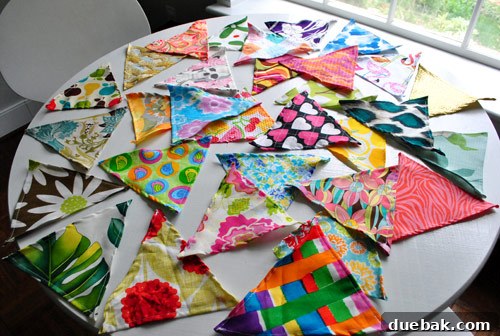
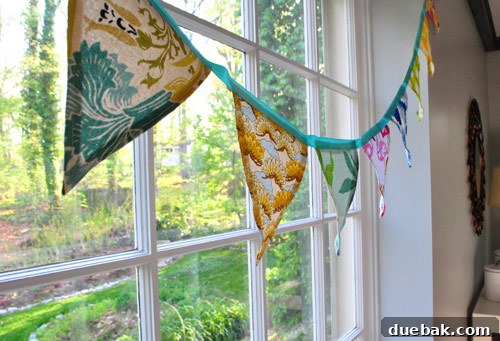
Next came the task of hemming the three sides of each triangle using “Oh Brother.” This seemingly simple step stretched into an epic five-hour ordeal, and that’s a conservative estimate. Yes, you read that right: five hours for hemming small fabric triangles. There were countless do-overs, endless sessions of seam ripping, and a fresh resurgence of tension issues that tested my newfound patience. Many flags were sacrificed to the “rag pile” gods, deemed unworthy of Clara’s gaze. Ultimately, I was left with about a dozen “perfect enough” triangles – enough to form a beautiful banner that wouldn’t cause embarrassment if a teenage Clara scrutinized it years down the line. While you might see about 27 flags scattered on the table in one of the photos, many of them were, frankly, garbage upon closer inspection. So, I lovingly selected my favorite dozen and unceremoniously tossed the rest.
The Iron-On Hem Tape Revelation: A Shortcut to Sanity
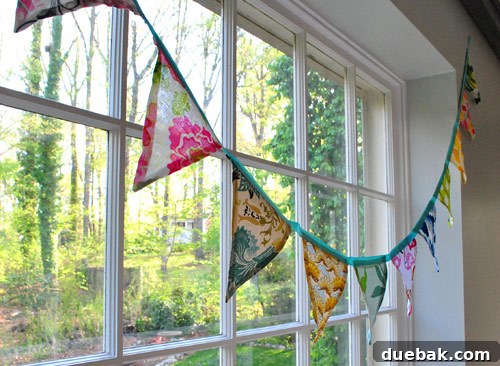
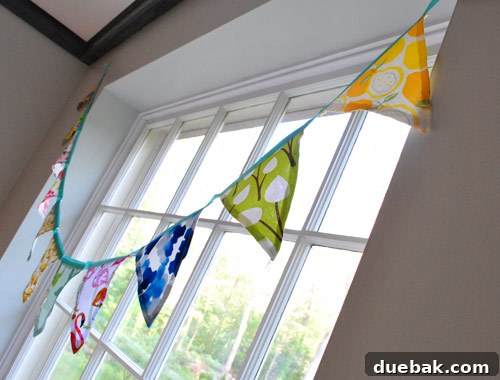
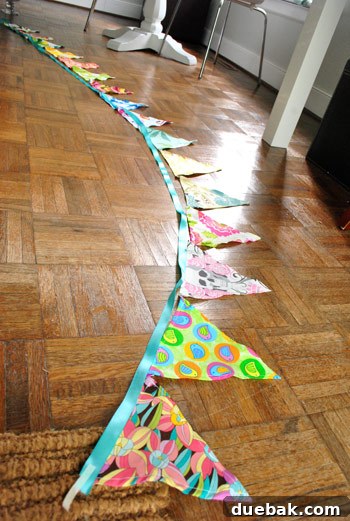
Then, in a stroke of what I can only describe as either sheer desperation or absolute genius, I remembered my trusty iron-on hem tape. This revelation transformed the final assembly. Laying out the surviving flags on the floor, I meticulously arranged them until the order and aesthetic pleased me. Then, it was a simple matter of firing up the iron and using the hem tape to securely attach each flag to a blue ribbon I already had lying around. This ingenious shortcut completed the project in about another half hour, bringing the total time spent to a respectable (or perhaps still ridiculous) 5.5+ hours.
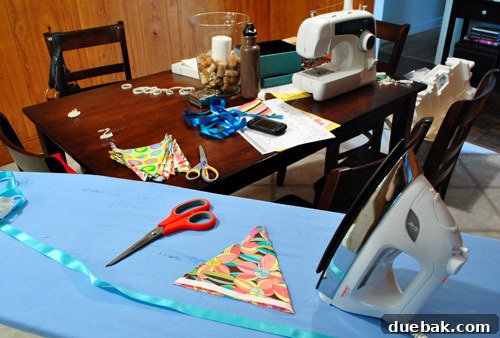
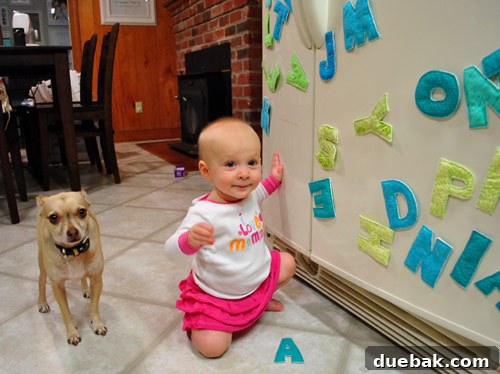
I’m confident that had I attempted to sew each flag directly onto the blue ribbon, the project would have easily extended beyond 10 hours. But I’m starting slow, celebrating small victories. The immense satisfaction of successfully sewing those flags, rather than tossing “Oh Brother” out the sunroom slider (ranch houses, unfortunately, lack the dramatic second-story window drop for hated objects), was immeasurable. And the beauty of iron-on hem tape is that it’s washable, so the banner’s longevity is assured. Throughout this challenging endeavor, my two little helpers – my adorable children – occasionally kept me company in the kitchen, providing much-needed sweetness amidst my personal test of not-cursing-or-throwing-anything limits.
Lessons Learned and the Path Forward: Embracing the Imperfect Seamstress
Celebrating Small Victories (and Smart Shortcuts)
The finished banner is vibrant, festive, and exactly what I envisioned. It’s washable, durable, and I genuinely hope it becomes a cherished family tradition for at least a decade or two. The best part? Aside from the initial cost of “Oh Brother,” the entire project was essentially free! All the fabrics were clearance finds collected throughout the year for Clara’s weekly pics, and I already owned the iron-on hem tape and blue ribbon. It was a testament to resourcefulness and a gentle reminder that not every stitch needs to be perfect to create something beautiful and meaningful.
Looking Ahead: Future DIY Projects and a Budding Relationship with “Oh Brother”
Despite the initial struggles and the occasional “sew-crying” incident, I remain optimistic that my investment in the Brother XL2600I will ultimately prove worthwhile. The flag banner, though a challenging first step, has ignited a cautious enthusiasm for future projects. My aspirations include a very, very simplified quilt for Clara and other house-related items like throw pillows and perhaps even some simple curtains. I am committed to starting slow, taking on manageable projects, and celebrating every small victory, no matter how minor. This journey is far from over.
From “Sew-Crying” to Smiling: My Unconventional Journey Continues
So, there it is: the unvarnished truth. I am no Martha Stewart. My initial encounters with sewing have been fraught with frustration, leading to moments where I’ve cursed, sobbed, and screamed into my pillow. Yet, through perseverance and a healthy dose of self-deprecating humor, I’ve completed my first DIY sewing project. Who knows, this tumultuous beginning might just be the foundation for a beautiful, albeit unconventional, relationship with that terrifying mechanical needle. Stranger things have certainly happened in the world of DIY.