
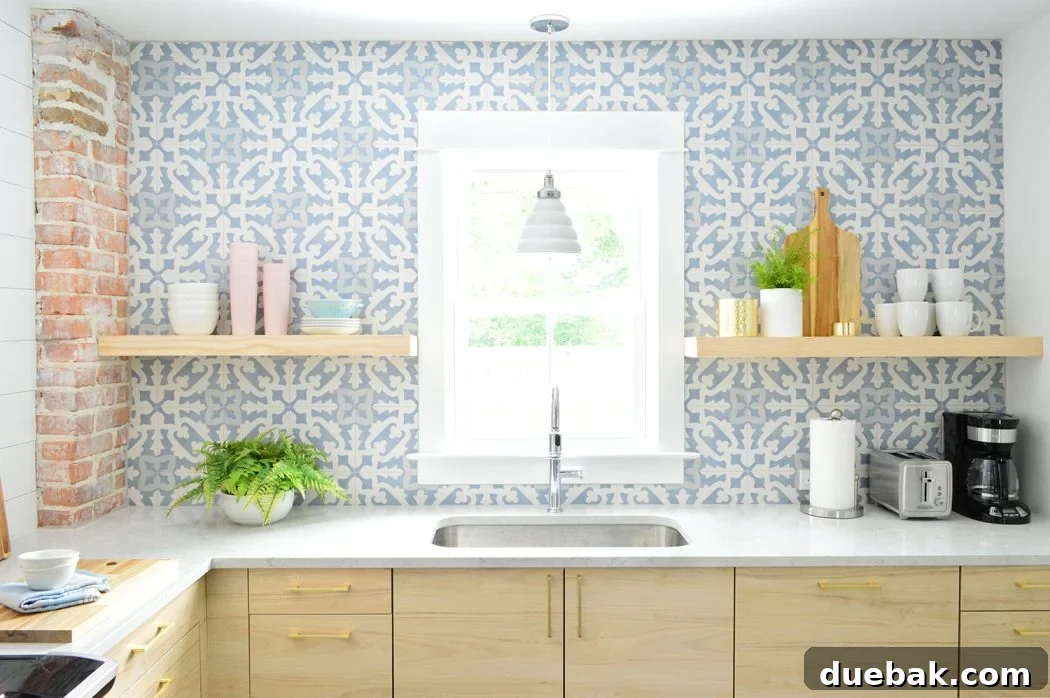
Transforming your kitchen space with stylish and functional storage is a rewarding home improvement project, and few solutions offer the blend of aesthetic appeal and practical utility quite like DIY floating shelves. At our duplex kitchens, floating shelves have become a signature element, providing essential storage while creating an open, airy feel that beautifully complements surrounding cabinetry. While store-bought options exist, the satisfaction and custom fit of building your own are unmatched. This comprehensive guide will walk you through the process of constructing custom floating shelves, ensuring they perfectly integrate into your kitchen’s design and meet your specific needs.
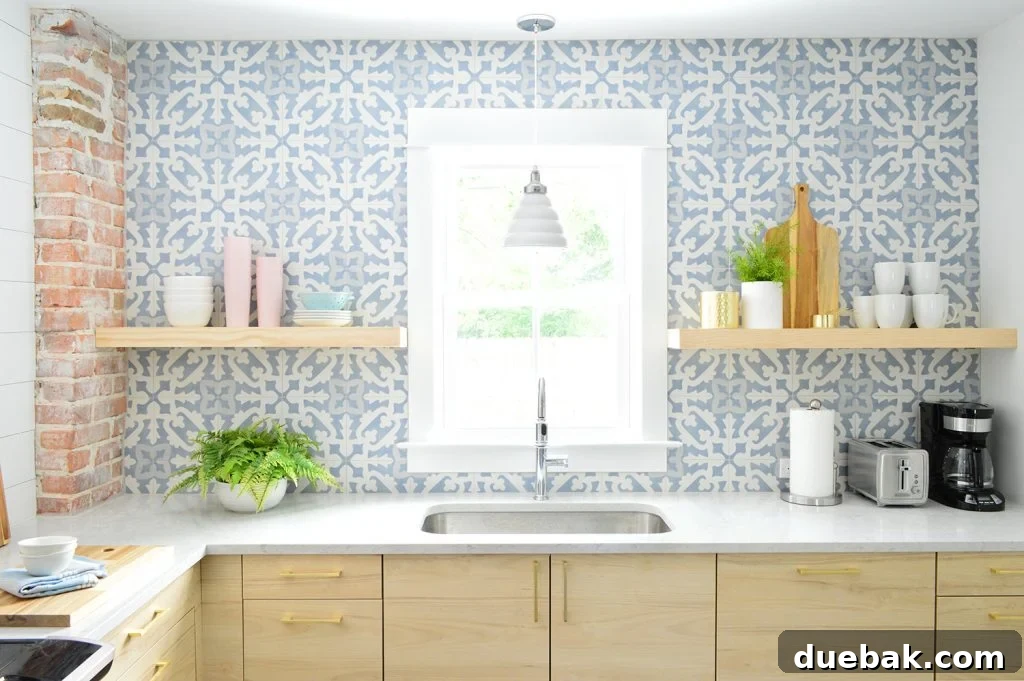
Crafting your own floating shelves offers unparalleled advantages over pre-fabricated options. Not only can you tailor the dimensions to precisely fit any nook or expanse in your kitchen, but you also have complete control over the finish – whether you envision a rich wood stain, a crisp painted surface, or a natural sealed look. We’ve experimented with various shelving solutions, from chunky Ikea shelves to rustic Pottery Barn designs, but none have achieved the integrated, high-end custom appearance of our handcrafted DIY floating shelves. They blend seamlessly with the existing cabinetry and backsplash, enhancing the overall aesthetic of the space.
Tools & Materials for Floating Kitchen Shelves
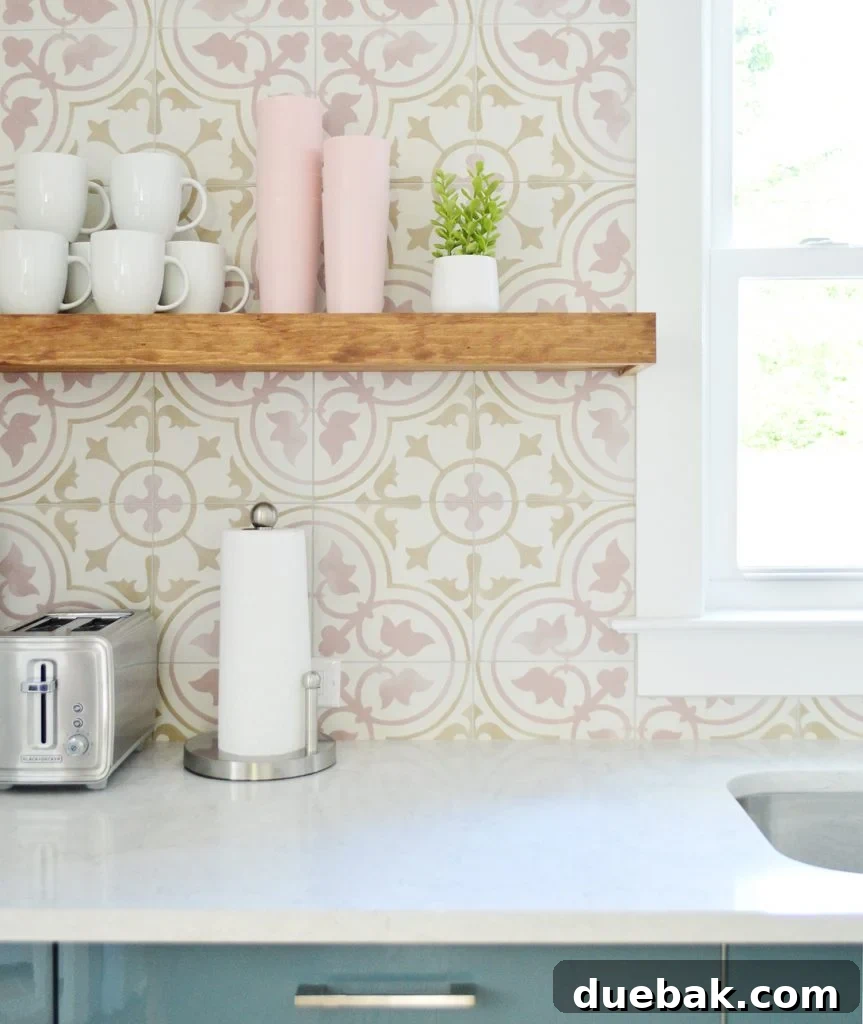
This project builds upon the foundational techniques we developed for our white floating shelves in a bonus room, adapting them for the unique demands of a kitchen environment. These kitchen versions are designed to be slightly more substantial and feature a beautiful wood-toned stain rather than paint. While we’ll cover all the specifics here, that previous tutorial can offer additional context for some steps. Here’s a detailed list of what you’ll need to gather for this DIY floating shelf project:
- 1×2″ Pine Boards: These will form the core of your robust support bracket, ensuring your shelves can hold significant weight.
- 1×3″ Pine Boards: Used for the exterior facing, these boards give your shelves their desired finished thickness and aesthetic appeal.
- 1/2″ Plywood: This forms the sturdy top surface of each shelf, providing a solid base for your kitchen items.
- 1/4″ Plywood: Used for the underside of each shelf, this thinner plywood contributes to the finished look without adding unnecessary bulk or weight.
- Miter Saw: Essential for making precise, clean crosscuts and angled cuts for your facing pieces.
- Table Saw or Circular Saw: Crucial for cutting your plywood sheets to the exact depth and length of your shelves. A circular saw with a guide can work well for this.
- Power Drill/Driver: Necessary for drilling pilot holes, securing screws, and attaching components.
- Nail Gun: Speeds up the process of attaching plywood and face pieces, creating a clean finish with minimal visible fasteners.
- Long Level: Absolutely critical for ensuring your shelves are perfectly horizontal and visually appealing.
- Measuring Tape: For accurate measurements throughout the entire project.
- Stud Finder: An indispensable tool for locating wall studs, which are essential for secure shelf installation.
- Wood Clamps: Helpful for holding pieces in place while glue dries or during nailing, ensuring tight joints.
- 2 1/2″ Structural Screws: These heavy-duty screws are vital for firmly anchoring your support bracket into wall studs.
- Wood Glue: For strong, lasting bonds between wood components, complementing nail and screw fasteners.
- Pocket Hole Jig (optional): Provides a strong, concealed way to join wood pieces, especially useful for the support bracket.
- Diamond Tile Drill Bit: Essential if your kitchen features a tiled backsplash where your shelves will be installed.
The precise quantities of wood will naturally vary depending on the specific number and dimensions of the floating shelves you plan to build. Always measure your space carefully before purchasing materials.
Step 1: Build Your Support Bracket
The foundation of any sturdy floating shelf lies in its robust support bracket. This hidden structure, constructed from 1×2″ pine boards, is securely fastened to your wall studs and then encased by plywood and decorative facing. This design creates the illusion of a shelf magically floating in air, while providing exceptional strength to hold your dishes, cookbooks, and decor.
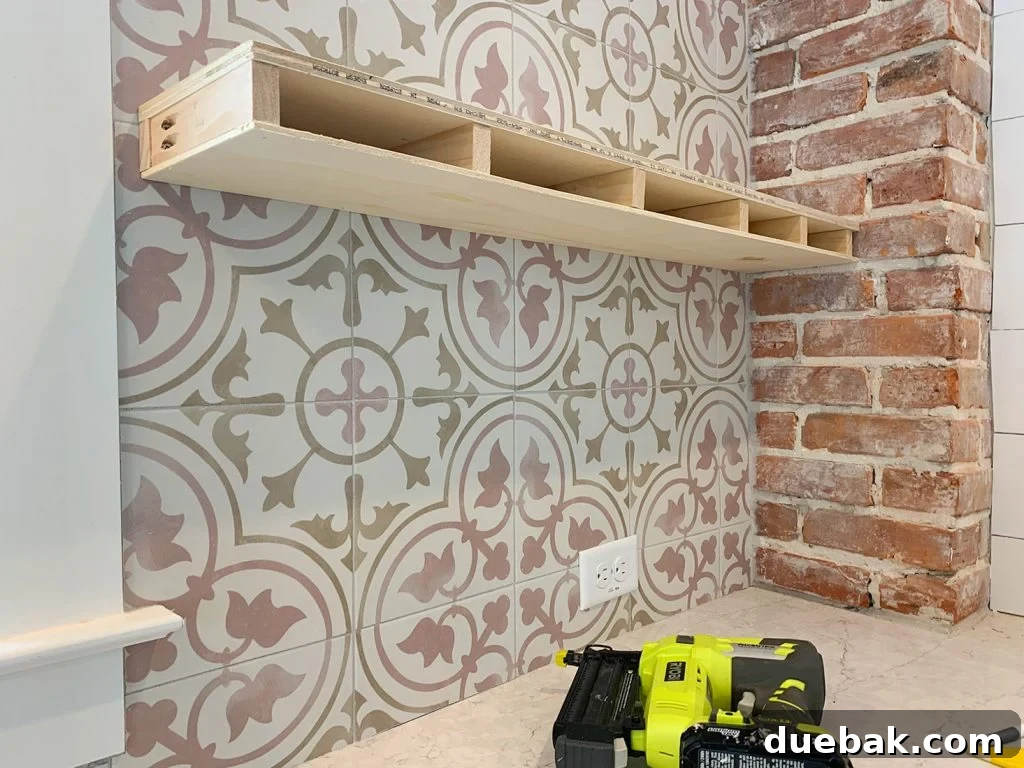
Begin by cutting one long piece of 1×2″ pine to serve as the back spine of your bracket. This piece will run along the wall. Next, cut several shorter pieces, which we refer to as “spokes,” that will project straight out from the wall to support the shelf’s depth. We recommend placing a spoke at each end of the bracket and then spacing additional spokes approximately every 8 to 12 inches in between for optimal support. When planning your spoke placement, be mindful to avoid locations where you will need to drill through the bracket to screw into your wall studs.
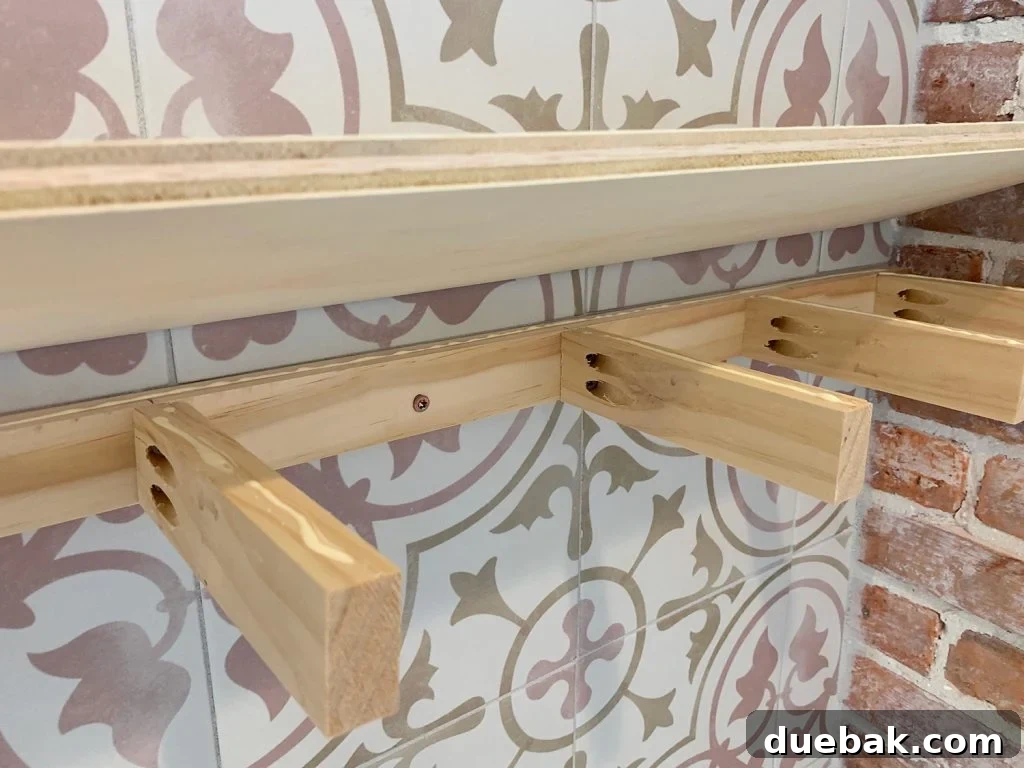
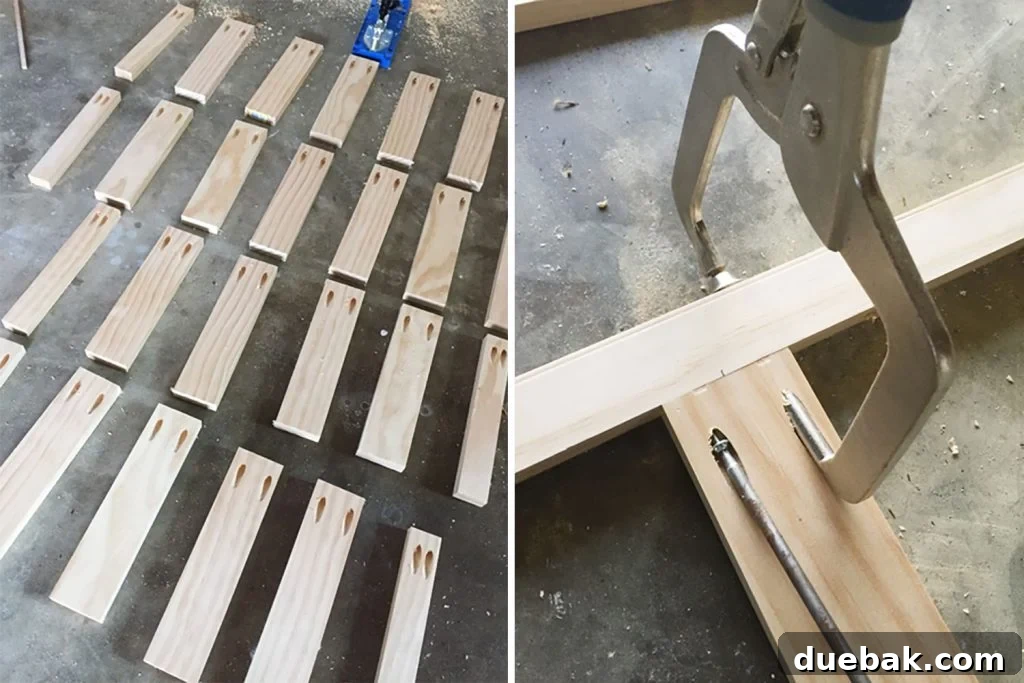
The spokes should be cut to a length that is equal to your desired final shelf depth minus 1.5 inches. This accounts for the thickness of the 1×2″ board along the back of the support and the 1×3″ decorative face board you’ll add to the front later. For instance, if you want a 10-inch deep shelf, your spokes should be 8.5 inches long. We typically use pocket holes created with a Kreg jig to attach the spokes to the back piece, as this creates a very strong and hidden joint. Alternatively, you can screw them in directly from the back of the main board. For efficiency, it’s often best to make all your cuts and pocket holes for every bracket at once. The assembly technique shown in some of our reference photos, where spokes are installed flat, was for a skinnier floating shelf project, but for kitchen use, the orientation shown here provides greater strength and thickness.
The choice of pine board thickness for your support bracket directly impacts the finished thickness of your floating shelves. Using a 1×2″ pine support bracket, as detailed here, results in a final shelf thickness of approximately 2.75 inches once the 1/2″ and 1/4″ plywood layers are added. If you desire a chunkier shelf, you could opt for 1×3″ pine boards for your support bracket, which would yield a shelf around 3.75 inches thick. Consider the scale of your kitchen and personal preference when deciding on shelf thickness.
Step 2: Find Your Studs
Attaching your floating shelves directly into wall studs is paramount for ensuring their strength, stability, and safety. This method guarantees that your shelves can safely bear the weight of kitchenware like plates, glasses, and ceramic items, which can accumulate surprising heft. Relying solely on wall anchors, while sometimes necessary, will significantly limit the weight capacity of your shelves.
A reliable stud finder is your best friend for this step. However, it’s important to note that many standard stud finders can be less accurate or even ineffective when trying to locate studs through a tiled backsplash. Ideally, the stud locations would have been marked and recorded before any tile installation, as was our fortunate situation. If your wall is already tiled, you might need to invest in a heavier-duty, deep-scanning stud finder specifically designed for this challenge.
In the absence of a high-tech stud finder or pre-recorded stud locations, you can employ a few detective techniques to locate them:
- Electrical Outlets: Electrical boxes are often secured to the side of a wall stud. Look for outlets in the vicinity of where you plan to install your shelves.
- Cabinet Mounting Screws: If you have upper cabinets, inspect their interiors. The screws used to mount them to the wall are almost certainly driven into studs.
- Baseboards: Sometimes, you can find the nail heads in baseboards, which often correspond to stud locations.
- Construction Photos: If you have any “mid-renovation” photos, review them for visible drywall screws or marked stud lines before the drywall was installed. This can be a treasure trove of information.
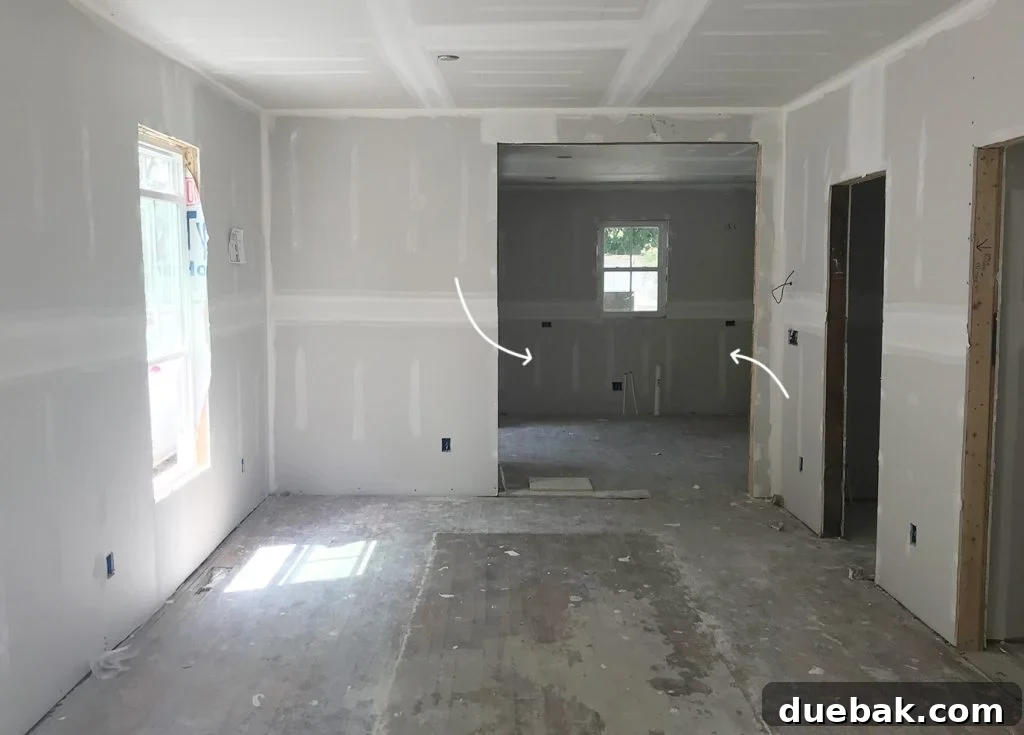
As a last resort, you can carefully drill small pilot holes until you hit a stud. However, this approach is more challenging and carries a higher risk of damaging your tile if you have a tiled backsplash, making prior stud location paramount.
Step 3: Mark Your Drilling Locations
Precision at this stage is crucial, especially when working with a tile backsplash. Drilling through tile is a meticulous process, so taking ample time to accurately mark your drilling locations will save you considerable effort and potential frustration later. This involves not only pinpointing the exact stud locations but also confirming your desired shelf height and ensuring everything is perfectly level. A standard and ergonomically comfortable shelf height above the countertop is typically around 18 inches, but feel free to adjust this based on your personal preference and kitchen layout.
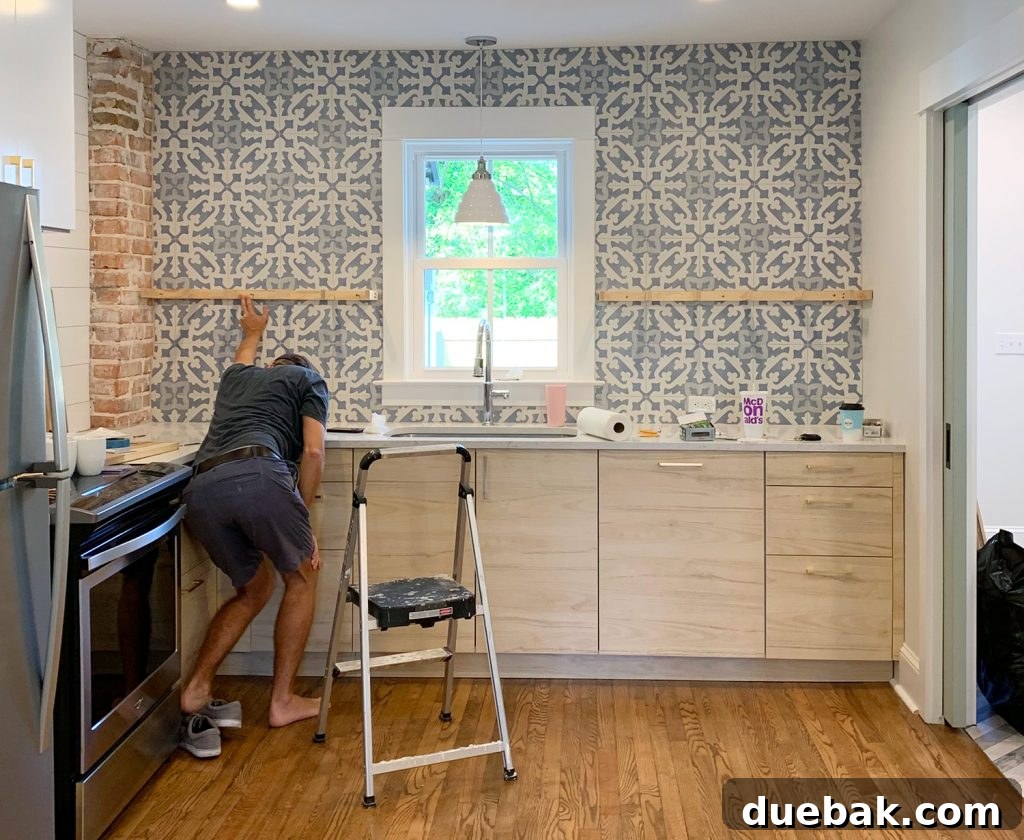
Once you’ve identified and marked your stud locations (using painter’s tape is an excellent method for easy visibility and removal), hold your assembled support bracket firmly against the wall at your chosen height. Use your long level to ensure the bracket is perfectly horizontal. With the bracket held steady and level, slowly and carefully drill through the 1×2″ wood of the bracket using a small, regular drill bit. Continue drilling until the bit just barely touches and marks the tile surface underneath. This leaves a faint but precise indentation on the painter’s tape covering the tile, indicating exactly where your diamond tile drill bit will need to go.
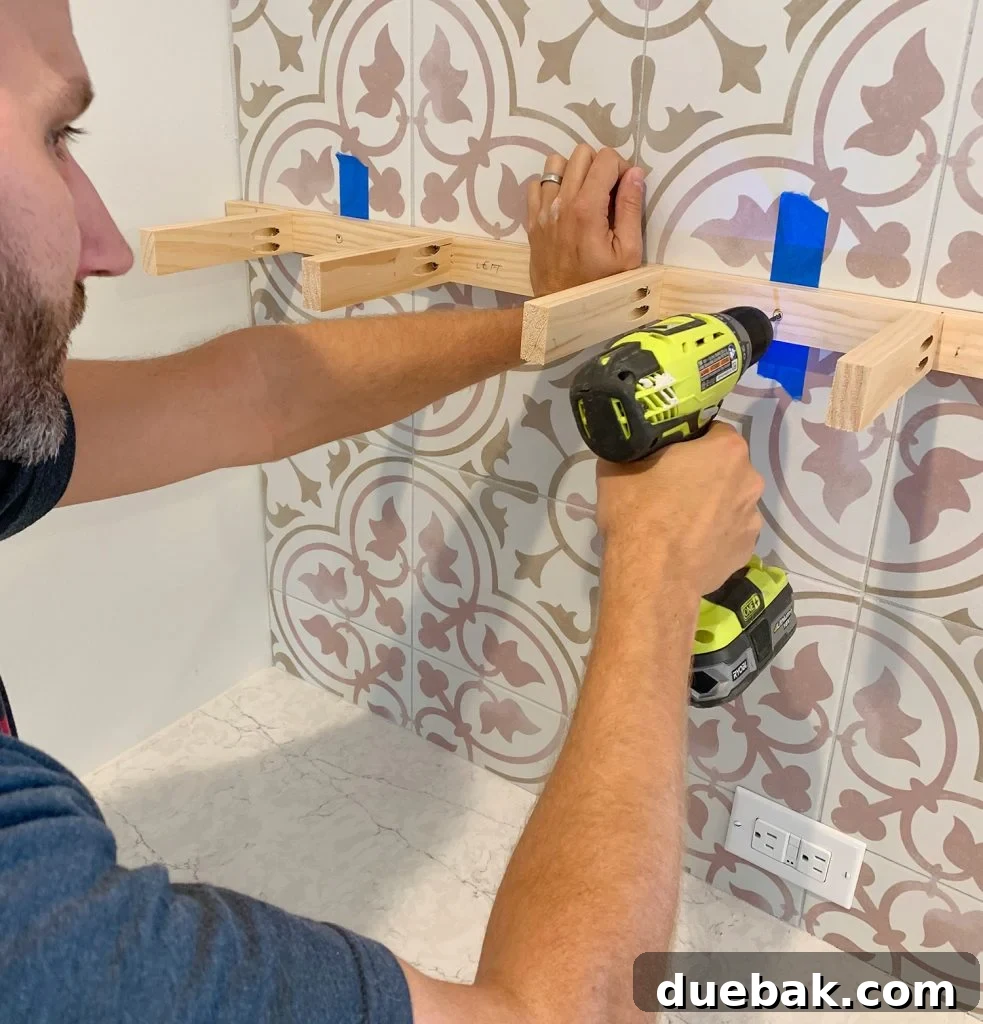
After marking all your drilling spots, set the support bracket aside. The next step is specifically for kitchens with tile backsplashes. If your wall is drywall or another material that doesn’t require specialized drilling, you can skip directly to Step 5.
Step 4: Drill Through Your Tile Backsplash
Drilling through a tile backsplash demands a slow, steady, and patient approach to prevent cracking or chipping the tile. This is arguably the most delicate part of the installation process. We have a dedicated, in-depth tutorial on drilling through a tile backsplash that covers the technique in full detail. However, we can summarize the key points here.
You will absolutely need specialized diamond tile drill bits. Regular wood or metal bits will dull quickly and are likely to damage your tile. Additionally, maintaining a cool drilling surface is critical. This often involves using a continuous stream of water, which can be achieved with a simple spray bottle or a specialized water delivery system guide that holds the bit and channels water to the cutting edge. This cooling prevents the tile from overheating and fracturing, and it also prolongs the life of your diamond bit.
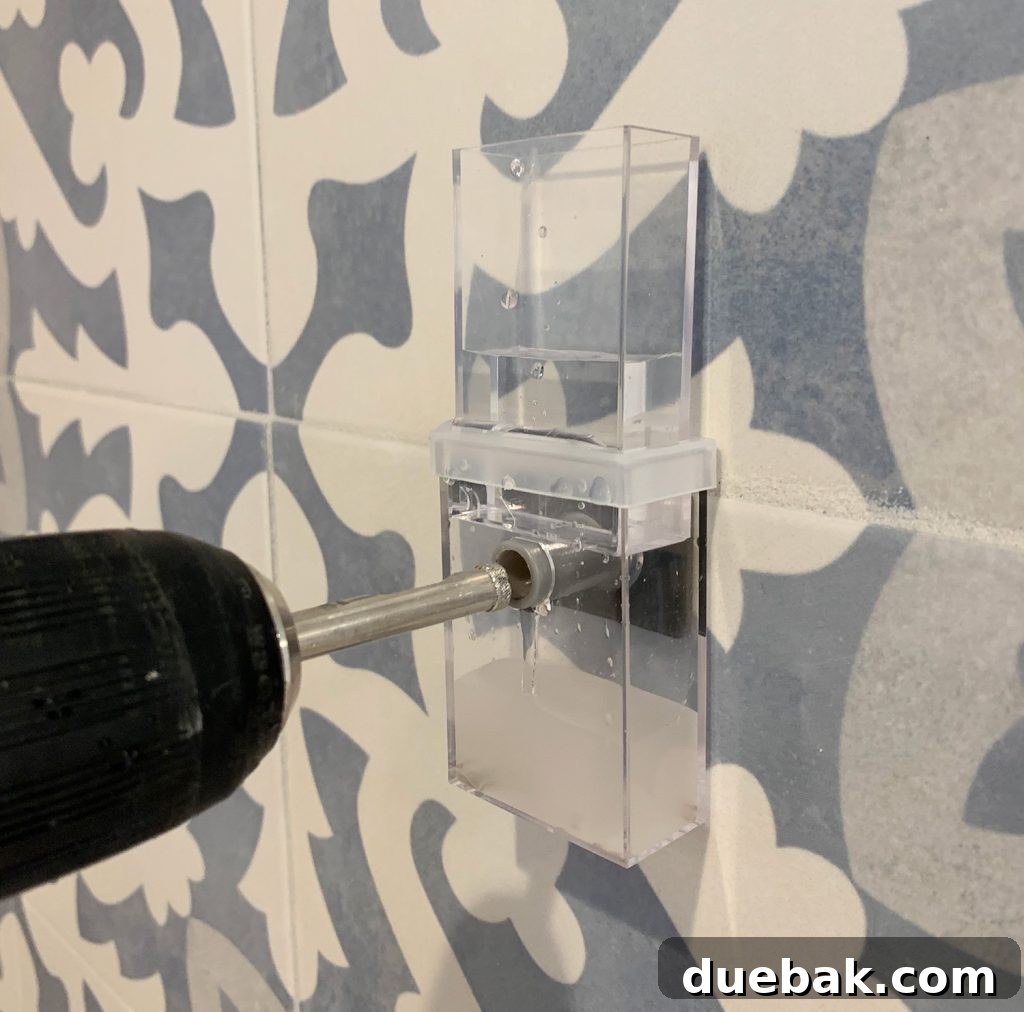
The main takeaway for this step is to take your time. Do not apply excessive pressure; let the diamond bit do the work. Start with a slow speed and gradually increase it once the bit has created a stable groove. Drilling a pilot hole in tile is much slower than drilling through wood or drywall. Your careful preparation in marking the exact drilling locations in Step 3 will pay dividends here, ensuring you only make the necessary holes and avoid unnecessary damage to your beautiful backsplash.
Step 5: Secure Your Support Bracket to the Wall
With all the pilot holes accurately drilled through your tile (if applicable), it’s time to firmly secure the wooden support bracket to the wall studs. This is a critical step for the structural integrity of your floating shelves. We highly recommend using heavy-duty structural screws for this purpose. These screws are designed to provide superior holding power, ensuring a tight and exceptionally strong attachment to the studs.
To facilitate alignment and ease of installation, it’s a good practice to pre-drill the structural screws partway through the wooden bracket itself before positioning it on the wall. This allows the screw tips to protrude slightly, making it much easier to guide them into the previously drilled pilot holes in the tile and wall studs. Carefully align the pre-drilled screws with your pilot holes, then use your power drill/driver to slowly and steadily drive the screws into the studs until the bracket is flush and securely mounted.
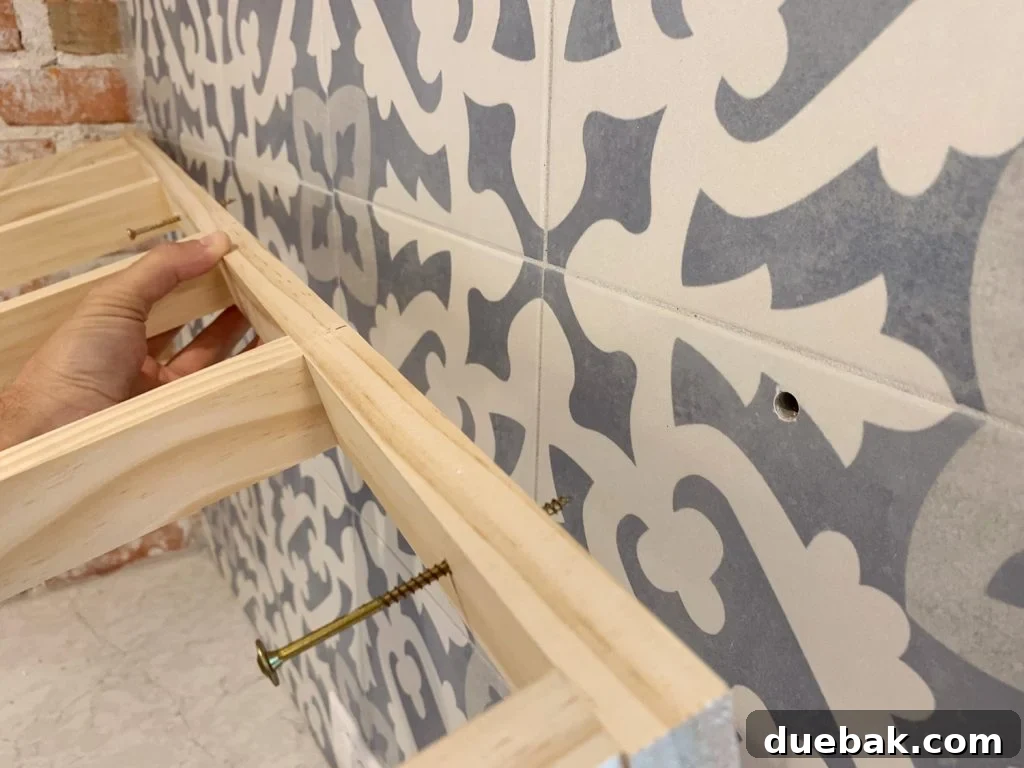
Throughout this entire process, continuously use your long level. Even if you checked for levelness during the marking stage, it’s vital to double-check as you drive in each screw. Slight adjustments can be made by carefully tightening or loosening screws as needed to achieve a perfectly level bracket. A level bracket is not only aesthetically pleasing but also ensures that items placed on your finished shelf won’t slide off or appear crooked.
Step 6: Attach the Shelf Top & Bottom Plywood
With your robust support bracket now securely affixed to the wall, it’s time to begin giving your floating shelf its solid form and finished surfaces. The first layer to go on is the 1/2″ plywood piece that will form the top surface of your shelf. Using a table saw or circular saw, carefully cut this plywood to precisely match the full width and depth of your installed support bracket. Accuracy here is important for a seamless final appearance.
To attach the top plywood, apply a generous amount of wood glue to the top edges of all the 1×2″ pieces of your support bracket. Then, carefully lower the cut 1/2″ plywood piece into place, ensuring it aligns perfectly with the bracket edges. Secure it further using finish nails, driven with your nail gun, along the perimeter and into the spokes of the support bracket. The combination of glue and nails provides a strong, durable bond.
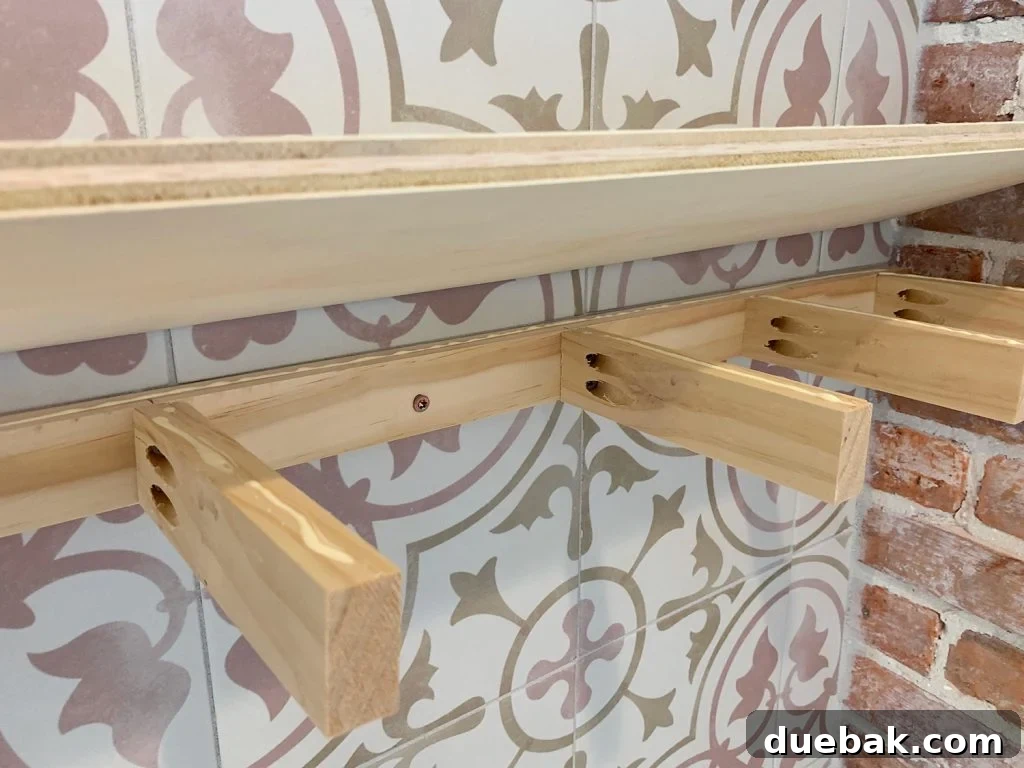
Next, you will attach the 1/4″ plywood piece to the bottom of the support bracket. This thinner plywood is sufficient for the underside as it doesn’t need to bear any weight; its primary purpose is aesthetic, concealing the bracket and providing a smooth bottom surface. Apply wood glue to the bottom edges of the support bracket, just as you did for the top. Carefully position the 1/4″ plywood, cut to the same dimensions, and secure it with finish nails. It can be helpful to use clamps to hold the bottom plywood firmly in place while you nail it, preventing any sagging or misalignment before the glue sets.
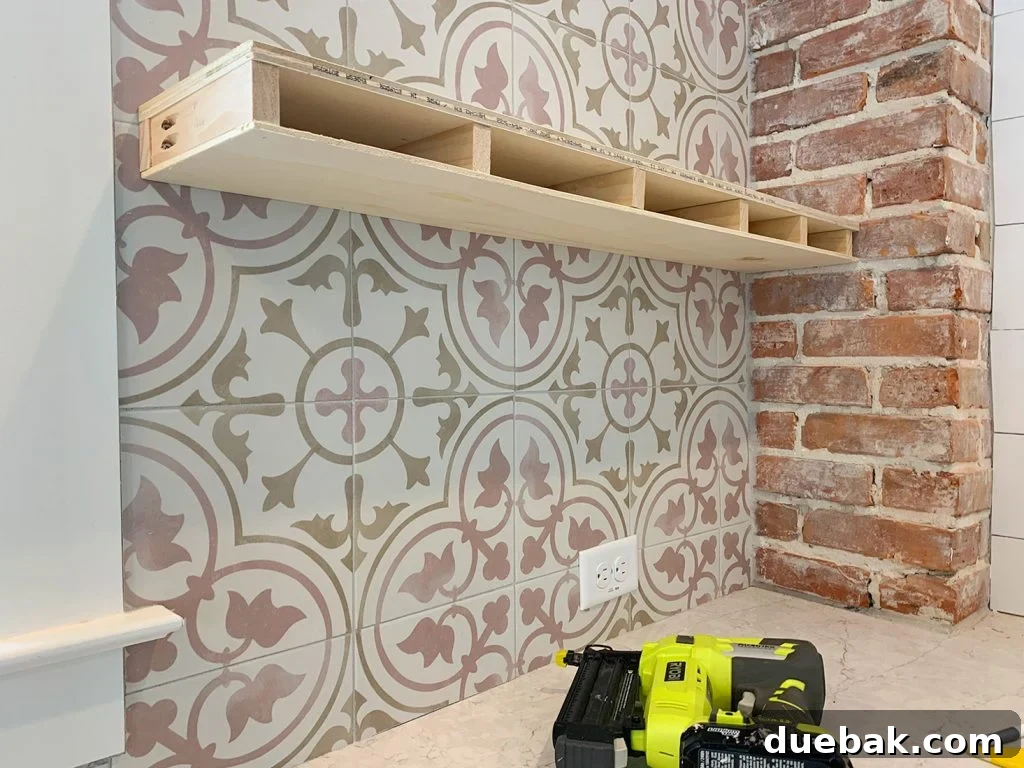
The strategic use of 1/2″ plywood for the top and 1/4″ plywood for the bottom serves a practical purpose beyond just strength. This combination helps to create a total shelf thickness that closely matches the width of a 1×3″ board, which will be the next component you add. This ensures a cohesive and professionally finished look once the final face pieces are installed.
Step 7: Install the Shelf Face Pieces
The final step in constructing the physical shell of your floating shelf involves adding the decorative face pieces. These 1×3″ pine boards will effectively “wrap” the exposed edges of your plywood and support bracket, transforming the structural components into a beautifully finished shelf. Begin by cutting the front face piece to the full width of your shelf. Then, cut the side face pieces to cover the exposed depth.
For a truly polished and seamless appearance, we recommend using miter cuts (45-degree angles) where the front and side face pieces meet at the corners. This creates clean, sharp edges that look professionally crafted. Apply wood glue generously to the edges of the plywood and the support bracket where the face pieces will attach. Then, using your nail gun, secure the 1×3″ pine boards into place. Ensure they are flush and tightly fitted, using clamps if necessary to hold them while you nail.
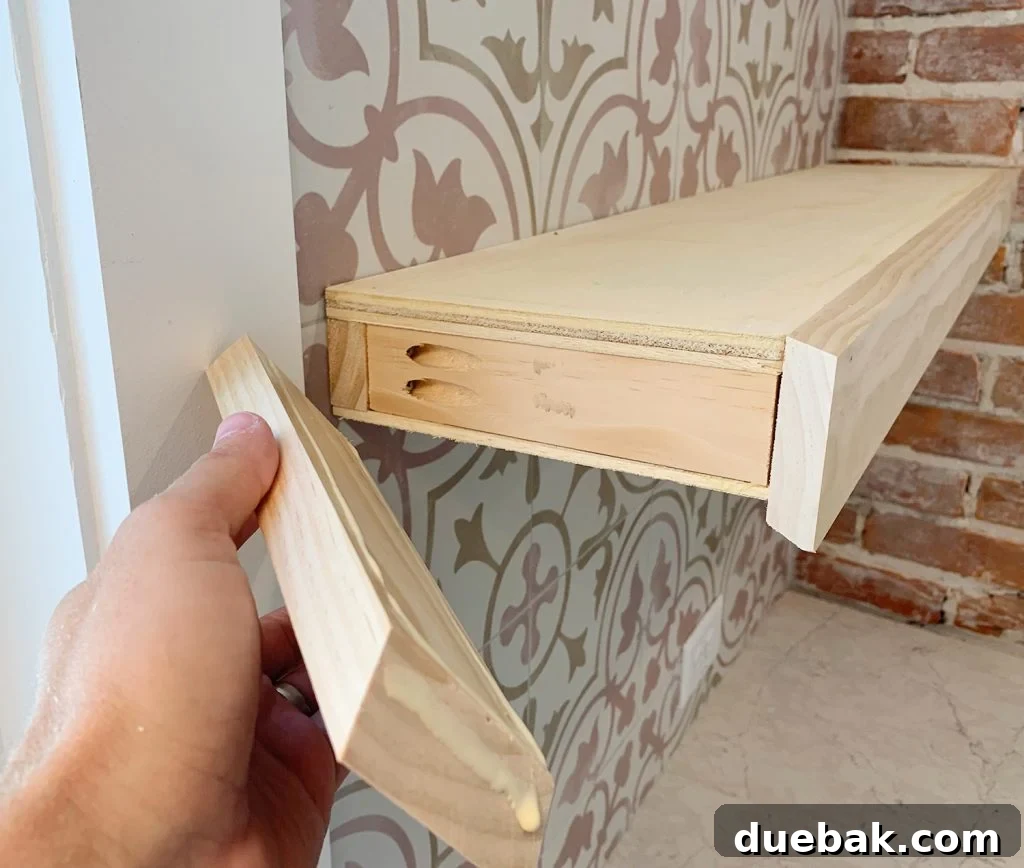
If you have access to a table saw, you have the option to “rip” these 1×3″ face pieces slightly shorter to perfectly match the exact combined thickness of your 1/2″ and 1/4″ plywood. This would result in an absolutely flush top and bottom edge. However, if you don’t have a table saw, or prefer not to use it, a slight overhang (a tiny lip) on either the top or bottom side of your shelf is perfectly acceptable and often goes unnoticed. For our kitchen shelves, we found this minor detail didn’t detract from the overall aesthetic, so we often skipped the extra step of ripping the boards. The choice is yours based on your tools and desired level of perfection.
Step 8: Apply Paint, Stain, or Sealer
With the construction of your floating shelves complete, the final step is to apply the perfect finish that complements your kitchen’s style. This is where your custom vision truly comes to life, whether you prefer the warmth of natural wood, a vibrant painted look, or a protective clear coat.
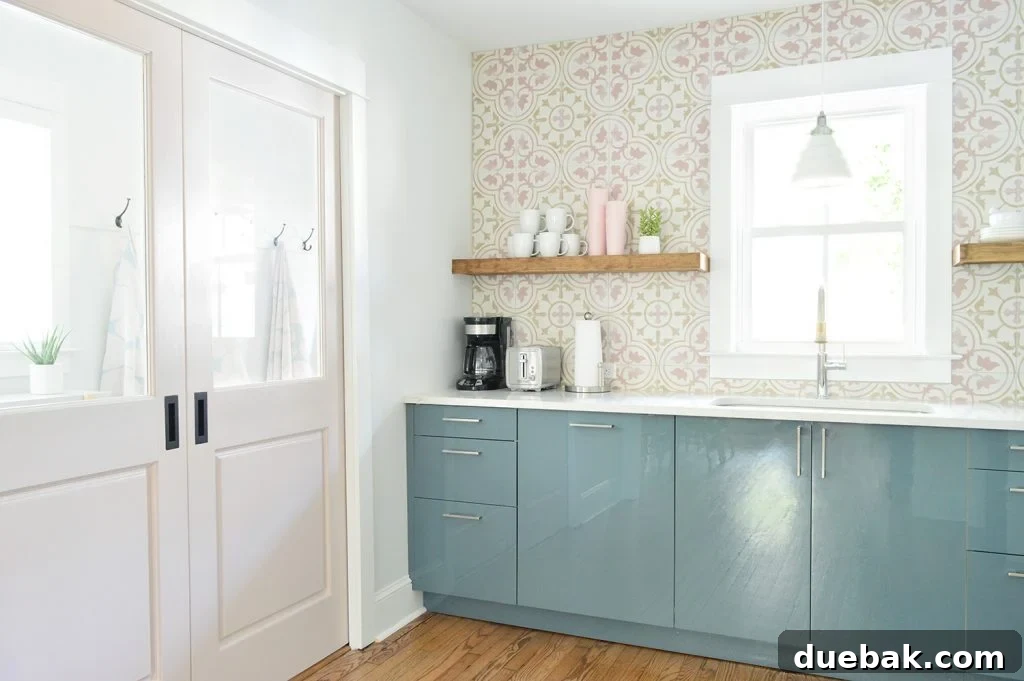
For one of our duplex kitchens, we opted for a beautiful medium oak stain, carefully chosen to harmonize with the existing flooring on that side of the house. Staining highlights the natural grain of the pine, adding depth and character, as beautifully illustrated in the image below. When staining, ensure the wood is clean and sanded smooth. Apply the stain evenly with a brush or rag, wiping off excess according to the product’s instructions. Always follow with a protective topcoat, such as polyurethane, for durability in a high-traffic kitchen environment.
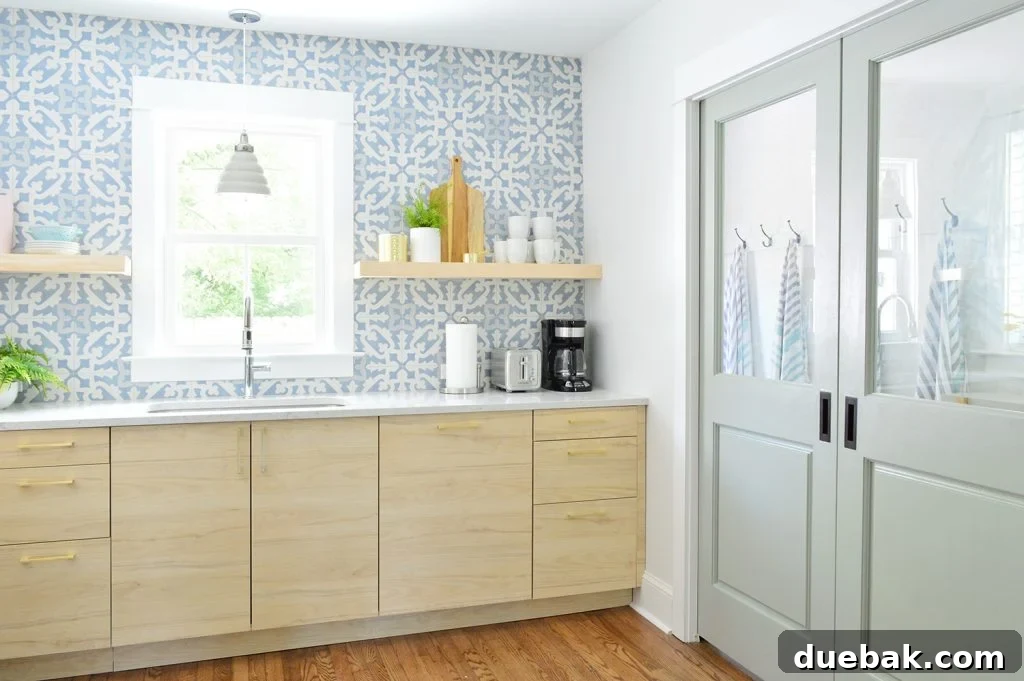
In the other duplex kitchen, we chose to preserve the natural beauty of the wood, applying only a clear, water-based sealer. This approach allowed the inherent warmth and texture of the pine to shine through, creating a lovely contrast with the blue backsplash and complementing the existing wood cabinets. A clear sealer is an excellent choice for protecting the wood from moisture, spills, and everyday wear and tear without altering its color. Apply multiple thin coats, sanding lightly between coats for a super smooth finish.
Should you decide to paint your floating kitchen shelves, consider using pre-primed pine boards for the 1×3″ face pieces. This saves you a step and ensures better paint adhesion. For the plywood surfaces, using MDF (medium-density fiberboard) instead of standard plywood can yield an even smoother, paint-ready finish due to its consistent surface. Regardless of your chosen finish, proper preparation—sanding, cleaning, and priming if painting—is key to a long-lasting and beautiful result that truly elevates your kitchen’s design.
More DIY Shelf Ideas for Your Home
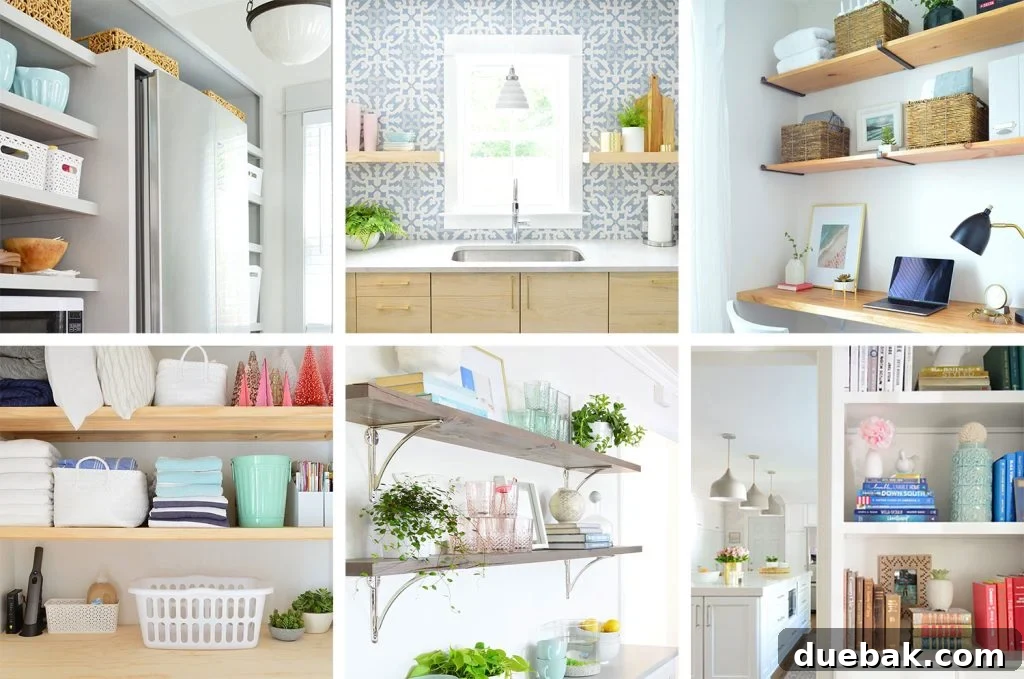
Congratulations on building your stunning new DIY floating kitchen shelves! This project not only enhances the functionality and aesthetics of your kitchen but also empowers you with valuable woodworking and home improvement skills. If you’re inspired to tackle more storage solutions and creative projects around your home, we’ve got you covered. This extensive post features 16 ingenious DIY shelving ideas designed to help you organize and beautify every room in your house. From built-ins to decorative displays, discover your next favorite project.
P.S. For those curious about the broader kitchen transformations that feature these floating shelves, we have several related posts. You can find a full reveal of our duplex kitchens here, offering a complete look at their design and layout. Learn about the affordable yet impactful $31 horizontal planking upgrade on the stove wall. And if you’re interested in the financial side of things, we’ve put together a full budget breakdown for both kitchens. Lastly, for personal insights into our big duplex news, you can either listen to our podcast episode here or read the full transcript here.
*This post contains affiliate links, so we may earn a small commission when you make a purchase through links on our site at no additional cost to you.