
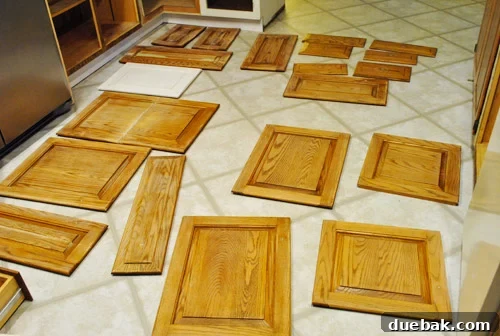
Embarking on a kitchen cabinet transformation is an exciting endeavor that promises to refresh your home’s aesthetic and increase its value. However, the secret to a truly stunning and long-lasting finish lies not in the final coats of paint, but in the meticulous preparation that precedes them. This comprehensive guide will walk you through the essential steps we took to prep our cabinets for primer, ensuring a flawless foundation for a durable paint job. From filling imperfections with wood filler to achieving the perfect surface with sanding and deglossing, we’ll cover every detail necessary to achieve professional-grade results.
The Crucial First Step: Flawless Cabinet Preparation
Proper cabinet preparation is the cornerstone of any successful cabinet painting project. It’s a stage that many are tempted to rush or even skip, but doing so invariably leads to disappointing, short-lived results. Our approach focuses on thoroughness, ensuring every surface is perfectly primed for adhesion. Here’s a quick overview of our meticulous preparation process:
- Precision Puttying: Filling all cabinet frames, drawer fronts, and door surfaces with high-quality wood filler.
- Strategic Sanding: Smoothing out filled areas and roughing up all surfaces to create an optimal texture for primer adhesion.
- Thorough Deglossing: Applying a deglosser to remove any lingering grime, grease, and original sheen, further enhancing primer grip.
- Organized Layout: Arranging all doors and drawers in our sunroom on custom lifts, ready for the priming stage.
Mastering Wood Filler Application for a Seamless Surface
When it comes to cabinet refinishing, wood filler is your best friend for achieving an impeccable, factory-like finish. We meticulously used Elmer’s ProBond Professional Strength Wood Filler – a product highly recommended by our trusted contractor friends – to address every crack, ding, and, most importantly, old hardware holes. Since our vision for new door and drawer handles required two holes instead of the original single-hole design, it was paramount to seamlessly conceal the old openings. This step ensures that once primed and painted, these former imperfections will become completely invisible, contributing to a truly pristine look.
The application of wood filler demands precision and patience. Using a sturdy spackle knife, we firmly pressed and scraped the filler into every hole and crack. This technique ensures the filler fully penetrates and bonds with the wood, creating a strong, stable repair. For the old hardware holes, the goal was to overfill slightly, allowing for shrinkage as the filler dries and providing enough material to sand down perfectly flush with the surrounding wood.
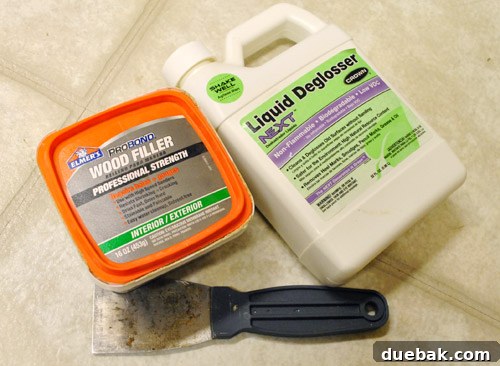
After careful application, the filled areas, particularly the old hardware holes, resembled this image. Notice how the filler completely obscures the previous openings, setting the stage for a smooth, unblemished surface:

The Art and Science of Sanding for Durability
Once the wood filler had ample time to dry according to the manufacturer’s instructions, it was time for sanding – a step that is as much an art as it is a science. This isn’t just about smoothing out the putty; it’s about preparing the entire surface for optimal primer adhesion. A perfectly sanded surface ensures that the primer and subsequent paint layers will grip firmly, preventing future chipping, peeling, or bubbling.
We approached sanding with a hand sander, beginning with 60-grit sandpaper to aggressively smooth down the puttied areas and to create an initial “tooth” on the existing cabinet finish. This coarser grit efficiently removes any raised filler and provides a good base for adhesion. Following this, we transitioned to 200-grit sandpaper. This finer grit refines the surface, eliminating any sanding marks from the 60-grit paper and leaving the cabinets incredibly smooth to the touch, yet still adequately textured for primer to cling to. While some might be tempted to cut corners on steps like sanding or deglossing, we firmly believe in the “Team Super Thorough” philosophy. Taking an extra day or two for prep work translates into years, if not decades, of enhanced durability and a professional finish that stands the test of time.

The meticulous process of sanding not only smooths the filled areas but also creates a micro-scratched surface across the entire cabinet, which is crucial for the primer’s mechanical bond. This ensures that every inch of your cabinet will hold paint beautifully for the long haul.

Seamless Integration: The Retrofitted Cabinet Doors
Among our cabinet components, some doors required a special touch: retrofitting. These were cabinets we creatively adapted using a professional method involving pocket holes, strong wood glue, and robust hidden steel screws. This technique ensures that these retrofitted doors are just as durable and sturdy as any other original door in the kitchen. After puttying and sanding these specific doors, their seams felt remarkably smooth, leaving us optimistic that primer and paint would render this “door surgery” completely undetectable – always the most desirable outcome in any home renovation project.
Our commitment to reusing these solid oak doors stemmed from our belief in resourcefulness and saving money where possible. This allows us to allocate funds to other impactful upgrades for the room, such as new countertops, flooring, or a stunning backsplash. Should our efforts not result in the perfectly matched doors we envision, we are prepared to invest in custom-made doors from a skilled carpenter, as the half-sunk style we possess is notoriously difficult to find in the precise custom sizes required.

Here’s another example of a retrofitted door undergoing the same meticulous preparation:

The Golden Rule: Smoothness Over Color
As you can observe in the images, the wood filler appears lighter than the natural wood tone of the doors. This color variation is perfectly acceptable and will be fully concealed by primer and paint. However, what is absolutely critical is the feel of the surface: when you run your hand over the seams, they should be perfectly flush and smooth. This tactile consistency is the ultimate indicator of a truly seamless finish.
It’s a common misconception that primer and paint can magically fill minor gaps, dings, and hide flaws. In our extensive experience, the opposite is often true: primer and paint tend to settle into fine lines, dents, and cracks, thereby accentuating them rather than concealing them. Our most crucial piece of advice for any DIYer or professional alike is to achieve the smoothest, most seamless possible surface *before* you even think about opening a can of primer or paint. While color inconsistencies, like the lighter putty, are easily covered, any imperfections in smoothness or texture will almost certainly remain visible, and may even become more pronounced once the natural wood tones are replaced by a uniform solid color.
Deglossing: The Adhesion Insurance Policy
Once all the retrofitted doors were puttied and sanded, and the remaining doors received their sanding treatment (including a small dab of putty for old knob holes), it was time for the final adhesion booster: liquid deglosser. This vital step is often overlooked but plays an immense role in the longevity of your painted cabinets.

We specifically chose Next Liquid Deglosser for its effective performance combined with its low-VOC and biodegradable properties, making it a more environmentally conscious choice without compromising results. Deglosser works by effectively removing any residual oils, grease, or dirt that might prevent primer from bonding properly. It also subtly dulls the existing finish, creating microscopic etches on the surface that primer can truly grab onto. While our thorough sanding session already significantly reduced the doors’ original sheen, we always opt for this extra measure of thoroughness. Especially in a grease-prone environment like a kitchen, deglossing is indispensable. As an added bonus, the wipe-down process with the deglosser also serves to remove any lingering sawdust particles after sanding, leaving a truly clean surface.

Attending to the Cabinet Frames: The Unsung Heroes
Our meticulous preparation wasn’t limited to the doors and drawers; the cabinet frames received equal attention. Whenever necessary, we applied wood filler to the frames to address various imperfections such as dings, cracks, or exposed screw holes. For instance, a particular screw hole on the edge of our pantry cabinet, previously hidden by an attached cabinet, became visible after we reconfigured the layout. Filling and sanding this hole ensured it would completely disappear once primed and painted, maintaining the integrity of the overall kitchen design.

After carefully puttying any areas of the cabinet frames that required attention, we allowed them to dry completely before sanding everything down. This again served the dual purpose of smoothing any filled areas and roughing up the entire surface for the best possible adhesion. Following sanding, we proceeded to degloss all the cabinet frames, providing that critical “adhesion insurance” that we so strongly advocate for. Are you noticing a recurring theme? Our ultimate goal is for that primer and paint to bond flawlessly and endure for many, many years to come.
This comprehensive cabinet painting method has proven its exceptional durability and longevity across multiple projects. We successfully employed it in our first house’s kitchen, on John’s sister’s cabinets (which remained strong for years until she moved), and even on the cabinets we repurposed for our built-in office desk. These experiences solidify our belief in the lasting quality achieved through diligent preparation. While the extensive prep work can feel like a marathon, especially when you’re eager to pick up a paintbrush, the satisfaction of a truly durable finish makes every painstaking step worthwhile. And now, after all that hard work, we’re finally at the exciting threshold of priming!

The Visual Transformation: A Glimpse of Progress
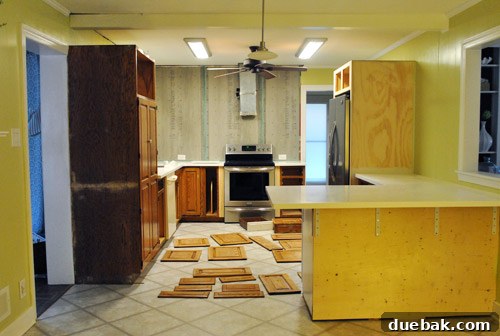
At this stage, the kitchen doesn’t boast its final, glamorous appearance, but it radiates the beauty of progress. Every filled hole, every sanded surface, and every deglossed frame is a testament to the meticulous work invested, laying a solid foundation for the stunning transformation to come. The current state, though not yet ‘finished,’ is a crucial stepping stone towards our dream kitchen.
Setting the Stage for Priming: The Sunroom Setup
With all the extensive preparation complete, the cabinet doors and drawers were carefully transported back to the sunroom. This dedicated space provides ample light and ventilation, creating an ideal environment for the upcoming priming and painting phases. Each piece was strategically laid out, ensuring easy access for uniform application.

A key element of our setup includes custom-made “risers” for each cabinet door and drawer. John ingeniously repurposed various scrap wood pieces from our basement to create these small lifts. These risers elevate the cabinet components slightly off the ground, allowing us to easily paint not only the upward-facing surface but also all the edges and sides without worrying about drips, adhesion to the work surface, or the pieces sitting in puddles of primer or paint. This simple yet effective solution is invaluable for achieving a truly professional, uniform finish on all sides.

Next Steps: Priming, Painting, and the Big Reveal!
The groundwork is laid, and the anticipation is building! Our next phase involves applying the primer, which we’ll share a sneak peek of later this week. Following that, once everything is perfectly dry and fully cured, we’ll dive into the painting process. The grand finale – a full reveal with a plethora of photos, intricate details, and even a video tutorial covering the entire priming and painting process – will be shared for anyone inspired to tackle this rewarding project. We’re aiming for this exciting reveal sometime next week, assuming optimal curing and drying times. What a journey it has been so far!
We’re eager to hear about your home improvement adventures. Have you recently tackled a significant DIY project? Were you as dedicated to thorough prep work as we were? Share your experiences and tips below – because in the world of DIY, we’re all in this together!