

Our DIY Deck Dream Hits a Snag: Navigating Inspection Failure and Finding a Freestanding Solution
The journey of building your own deck is often pictured as a seamless progression from groundbreaking to grand unveiling. However, for many DIY enthusiasts, reality often interjects with a dose of unforeseen challenges. Our recent deck project, initially filled with excitement and meticulous planning, quickly turned into a lesson in building code intricacies and the resilience required for large-scale home improvements. What started as a straightforward footing inspection transformed into a pivotal moment, forcing us to re-evaluate our entire approach. This is the story of our #FAIL, a setback that ultimately paved the way for a stronger, more compliant, freestanding deck design.
The Footing Inspection: Anticipation Meets Reality
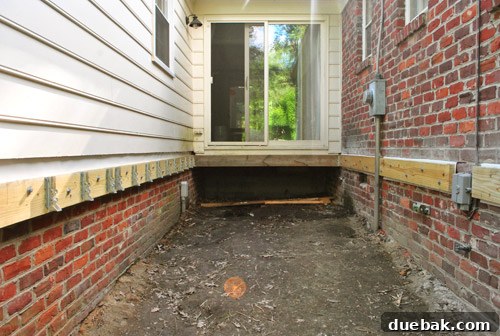
With six precisely dug holes for our deck footings, we confidently scheduled the inspector. Our understanding was simple: he would verify the placement, width, and depth of each hole, ensuring they met local code requirements. We felt prepared, having diligently followed our approved plans. Yet, in an effort to be proactive and catch potential issues early, we decided to go an extra step. We had already attached some of the critical ledger boards, hoping the inspector could provide feedback on these structural components simultaneously, well before we committed to finishing the entire structure. This decision, though well-intentioned, proved to be a double-edged sword, bringing to light errors we hadn’t anticipated.
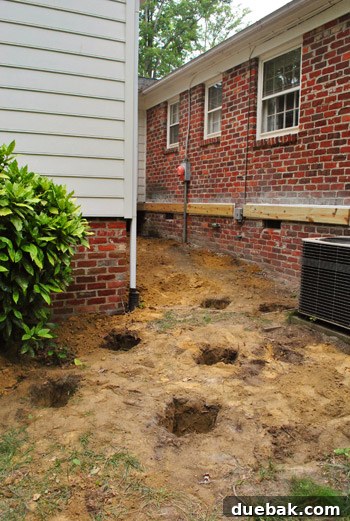
Our county’s inspection process typically involves an initial check of the footings and a final inspection once the entire deck is completed. By having the ledger boards in place, our aim was to pre-empt any major structural issues that might arise later, saving ourselves the significant time and effort of dismantling a completed deck. Little did we know, this foresight would indeed highlight critical flaws, albeit in a rather dramatic fashion.
Immediate Red Flags: An Inspector’s First Impression
The moment the inspector arrived and rounded the corner to our job site, the atmosphere shifted. His actions spoke volumes, sending a clear message even before he uttered a word. My heart sank as I witnessed these three disheartening signs:
- He shook his head slowly, a universal gesture of disapproval.
- He then stated, with a tone that brooked no argument, “We’ve got some problems here.”
- And finally, without further explanation, he quietly began writing in his notebook, leaving me to stew in anxious silence.
During this tense moment, Sherry, who was strategically positioned inside the house to capture some candid shots of the inspection, managed to snap a picture from the guest room window. The image, depicting my less-than-enthusiastic demeanor, perfectly encapsulates the shock and disappointment I felt as the reality of our situation began to sink in.

Unpacking the Problems: Ledger Board Attachment Failures
After what felt like an eternity of silent note-taking, the inspector, despite bearing bad news, proved to be remarkably helpful in articulating the issues at hand. He pinpointed two critical errors related to our ledger board attachments, each requiring significant revision to our plans.
Problem 1: The Non-Pressure-Treated Rim Board
The first oversight stemmed from two seemingly innocuous letters, “P.T.,” on one of the diagrams within the county’s deck building guide. These letters, which stand for “Pressure Treated,” indicated that the house’s rim board – the structural element to which our ledger board was attached on the siding side of the alley – absolutely needed to be constructed from pressure-treated lumber. Unfortunately, our existing rim board was not. This detail, tiny yet profoundly critical, had completely escaped my notice during countless hours of planning and research.
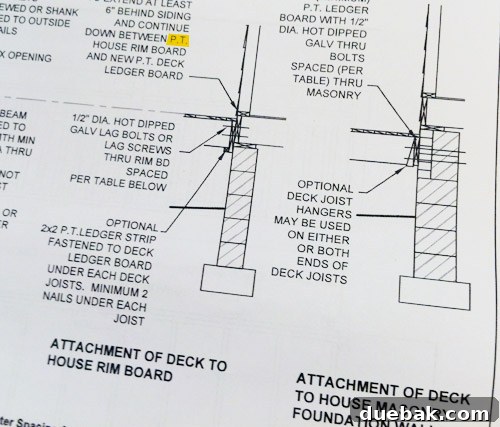
While we had correctly installed waterproof flashing behind our ledger board, a crucial step for moisture protection, the non-pressure-treated rim board rendered the attachment non-compliant. The inspector presented two viable, albeit challenging, solutions if we insisted on maintaining a ledger board connection on that side. The first involved replacing the house’s rim board with a pressure-treated equivalent, a daunting task that would involve interfering with the house’s existing structural integrity. The second, and equally impactful, option was to lower the entire deck by approximately two feet, allowing us to bolt directly into the robust masonry foundation instead. Both options presented considerable difficulties, forcing us to weigh the structural implications and aesthetic compromises.
Problem 2: Attaching to Brick Veneer
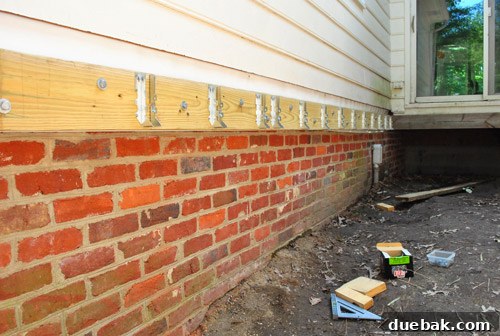
The first issue was significant, but it was only half of our failing grade. Moving to the other side of the house, the inspector delivered another blow: we were not permitted to attach our ledger board directly to the brick veneer. I had researched this extensively online prior to starting the project, finding numerous DIY forums and articles suggesting that long screws, extending through the brick and into the house’s rim board, could provide sufficient stability. Based on this, I had purchased extra-long screws, believing I had cleverly bypassed this potential hurdle.
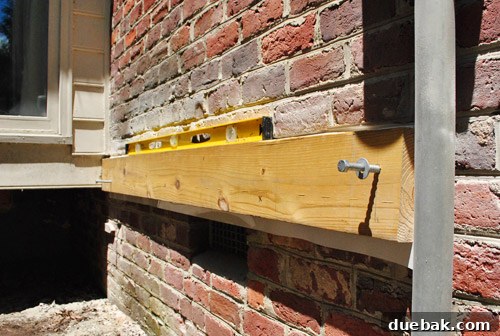
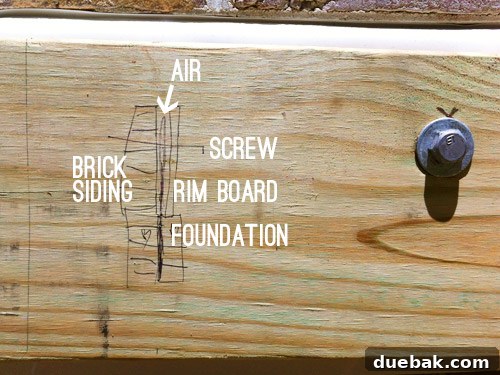
However, the inspector quickly debunked this online “wisdom.” He explained that in our county, attaching a ledger directly to brick veneer is unacceptable. To illustrate his point, he drew a clear diagram directly on my ledger board, highlighting the critical flaw. The problem lies in the inherent air gap between the brick veneer and the structural sheathing of the house. While I was aware of this air gap, I hadn’t realized its profound implications for load transfer. Brick veneer is designed primarily for aesthetics and to bear its own vertical weight, not to support the lateral or vertical loads of an attached structure like a deck. The air gap prevents the deck’s weight from being effectively transferred to the house’s main framing, rendering the connection unstable and unsafe. Again, the only approved solution presented was to lower the ledger by approximately two feet, thereby allowing for attachment directly into the solid masonry foundation.
The Pivotal Decision: Embracing a Freestanding Deck
Faced with two equally unappealing options – either undertaking complex structural modifications to the house or significantly lowering our deck – the inspector offered a third, and ultimately, far more practical alternative: building a free-standing deck. A freestanding deck is entirely supported by its own posts and footings, completely independent of the house’s structure. This meant no more reliance on ledger boards, eliminating both the pressure-treated wood and brick attachment issues.
For Sherry and me, the decision was clear. Our vision for the deck was a seamless extension of our living space, allowing us to walk directly out from our doorway onto a level surface for dining and relaxation, without navigating stairs or worrying about tripping hazards. Lowering the deck by two feet would have negated this primary objective. Therefore, converting to a freestanding design quickly emerged as our best and most sensible option. This pivotal decision, however, came with a new set of tasks: revising our entire plan, digging additional holes for new footings, and preparing for a subsequent inspection, now with a completely re-engineered approach.
In that moment, the weight of the failed inspection was immense. It felt like starting back at square one, and the frustration was almost overwhelming. Yet, I managed to compose myself long enough to ask the inspector a few more clarifying questions, express my gratitude for his time and explanations, and see him on his way. But not before I allowed myself a fleeting moment of self-pity, punctuated by a pout directed at Sherry as she captured my dejected expression through the window.

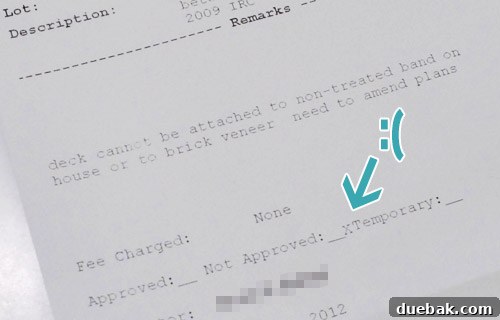
To add insult to injury, the inspector then handed me the official rejection receipt, a stark and undeniable symbol of our immediate failure. It was a tangible reminder that despite our efforts, we had fallen short of the required standards.
Coping with Disappointment and Finding a Positive Outlook
Walking back into the house, I found Sherry, who confessed to having heard every detail of the inspection from within. I admitted to needing a few moments to process the disappointment. While not a drinker, I certainly felt the urge for a comforting beverage. Instead, I indulged in a brief period of self-loathing. I was frustrated with myself for wasting my dad’s valuable time, for delaying our project progress, and for ignoring my initial instincts to build a freestanding deck from the outset. The thought of telling him we had more holes to dig was disheartening. Despite hours of meticulous research and planning, it was clear I hadn’t been thorough enough.
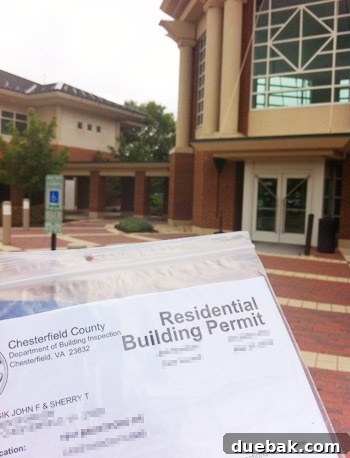
I’m admittedly adept at self-criticism. However, a small part of me harbored frustration towards the permit office, which had initially approved my plans. I had been prepared to answer any questions on the day I submitted them, eager to clarify details before embarking on days of execution for an approved design! In their defense, they lacked information regarding the specific type of house structure I was attaching to. Still, I wished they had at least inquired. As I recall, I was even dressed in my “permit-getting” outfit, ready for a grilling (more on that here), expecting a detailed cross-examination of my blueprints.
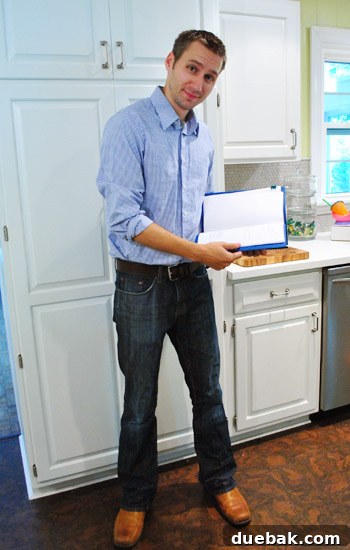
Instead, they didn’t ask a single question, sending me off with a confidently stamped “approved” permit to display prominently.
It wasn’t long before Sherry, with her characteristic optimism, swept in to offer a positive perspective. Firstly, she wasn’t upset at all; in fact, she admitted to having anticipated at least one failed inspection. Our county has a reputation for strict building codes, and stories abound of professional builders facing multiple rejections. It’s almost considered a minor miracle to pass both inspections without needing to revise something unless you’re a seasoned pro with extensive experience working within the county’s specific regulations. She pointed out the immense fortune of catching these errors early. Had we waited until after our initial footing inspection to tackle the ledger board, we might have completed the entire deck, only to discover at the final inspection that it wouldn’t pass, necessitating the dismantling of the entire structure. Her point was incredibly valid, and the situation immediately began to feel less like a catastrophic failure and more like a manageable setback. I even found myself mentally concocting punny titles for this very post, like “The Petersiks: We Put The ‘F’ In Footing Inspection,” a sure sign my spirits were lifting.
Sherry also highlighted the value of the inspector’s helpful suggestions, providing a clear roadmap for moving forward. Furthermore, she recognized the inherent “learning experience” that would undoubtedly make for compelling blog content. She hugged me, reassuringly saying, “This will be a funny story someday – and it’s just another example of how DIY isn’t always easy, but in the end, it’s always worth it.” Bolstered by her encouragement, I swiftly emerged from my funk and was soon on the phone with the county’s building inspection department, scheduling an appointment to formalize our new approach.
The Revised Plan: A Robust Freestanding Deck
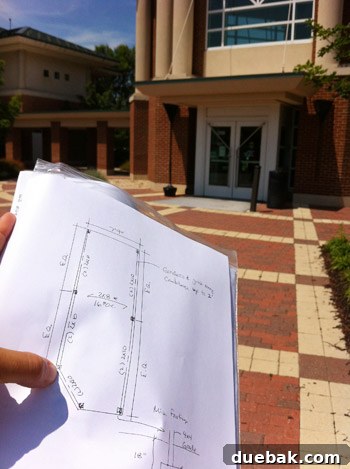
Our new strategy involved meeting with the same reviewer who had initially approved our first plan. The inspector wisely suggested this, and to our relief, the reviewer offered to draw up a brand-new plan specifically for a freestanding deck. A small part of me wondered why this option hadn’t been presented during the initial permit application – it certainly would have saved everyone a considerable amount of time and effort! However, my overriding emotion was one of gratitude; having the very individuals responsible for approving our plans also involved in drafting them offered a significant sense of reassurance and streamlined the process.
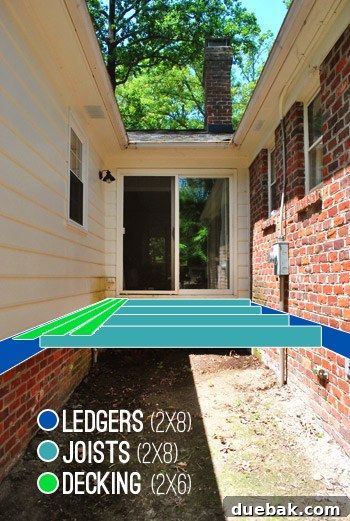
The reviewer was remarkably considerate, minimizing the number of new post holes required (just seven) and working diligently to incorporate as many of our already purchased materials as possible. While we’ll still need to acquire some new components, the overall material waste was significantly reduced from what it could have been. The most encouraging news was that our original ledger boards, though not approved to bear the full weight of the deck, could still be repurposed as rim boards. These would be installed with flashing, as we had always intended, around the perimeter of the deck. While the seven new footing holes will now bear the primary load, the existing ledger boards can still serve their crucial function as stabilizing rim boards, a required element for most deck constructions anyway. This creative reuse of materials not only saved us money but also validated some of our initial efforts.
The only fundamental alteration from our original illustrated plan is the addition of these seven posts, transforming it into a freestanding deck complete with girders. Girders are substantial beams that will run in the same direction as our original ledger boards but will be securely attached to the new posts, ensuring that absolutely no weight is transferred to the house’s structure.
Overall, the meeting was productive and efficient. More importantly, it established a valuable line of communication between us and the building department – a connection I’ve already utilized for subsequent follow-up questions. Perhaps my more casual, yet approachable, attire for this revised plan meeting contributed to a more open dialogue!

Onward and Upward: Lessons Learned and Future Hopes
So, here we stand. We have more holes to dig (and my dad, thankfully, took the news surprisingly well!) and a few more materials to acquire. However, we’re holding off on those purchases until our revised footing inspection is successfully passed. Fingers crossed that by this time next week, I’ll be joyfully singing “The hills are alive with the sound of an approved footing inspection!”
We promise to keep you updated on this roller-coaster of real-life DIY tribulations. But now, we’d love to hear your own stories of failed inspections, or indeed, any general life failures that ultimately led to a positive outcome. Let’s commiserate and share our experiences, especially if your story boasts a happy ending. I constantly remind myself that Sherry is absolutely right: DIY isn’t always easy, but the satisfaction and pride derived from overcoming challenges and seeing major projects through to completion make it undeniably worth it. Reflecting on the significant accomplishments of the past five years – a complete bathroom gut job, two comprehensive kitchen overhauls, custom built-in laundry cubbies, a bespoke built-in double desk, an impressive 12-foot-long console table, and our expansive patio project – reinforces this belief. My gaze remains fixed on the prize: a beautiful, functional new deck where we’ll create countless family memories. And even with all these unexpected snafus, the total cost will undoubtedly be significantly less than hiring professionals to build it. At least, that’s my fervent hope. Time to go knock on some wood!