
Last week, my lawn had me feeling like the neighborhood pariah. With a demanding newborn at home, finding time for yard work was a luxury I rarely afforded. While I had a perfectly valid excuse for the shaggy state of our grass, I knew the daily drivers passing our house weren’t privy to my airtight alibi. So, in an effort to quell my guilt and restore some order, I finally carved out an evening for my long-overdue mowing routine. I confidently fired up our trusty (or so I thought) lawn mower, and began tackling the overgrown blades. But my aspirations for a pristine lawn were abruptly cut short when the mower began spewing white smoke, sputtering dramatically, and ultimately grinding to a halt. I was left with a deceased lawn mower, an undeniable whiff of burnt oil, and two perfectly buzzed stripes mocking me in the middle of our yard. It was, in a word, spectacular.
The Immediate Aftermath: Repair or Replace?
To be completely honest, my initial frustration wasn’t primarily directed at the busted equipment itself. Instead, it was the infuriating sight of my unfinished mow job that truly got under my skin. The sudden interruption left our lawn looking even more disheveled than before, a stark reminder of my failed attempt at neighborly redemption. In fact, some of you who follow us on Twitter and Facebook might have even witnessed our immediate plea for lawn mower recommendations mere moments after the incident. My mind, still reeling from the smoky demise of the old one, was already fantasizing about a shiny new replacement.
A Hand-Me-Down with a History
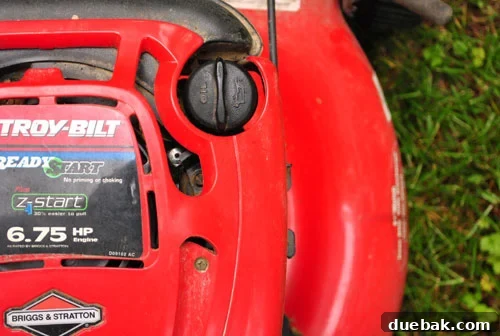
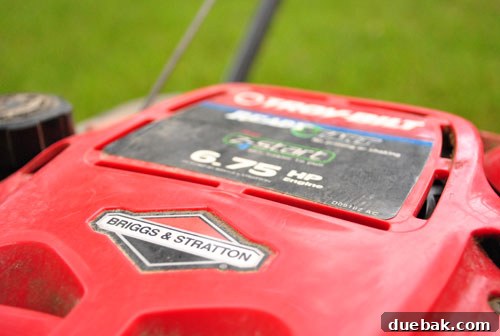
Why such a swift inclination to abandon our current clipper? Well, for starters, it wasn’t exactly a prized possession we’d nurtured and cherished over the years. This particular lawn mower was a super old hand-me-down from a friend, acquired under rather serendipitous circumstances. They were in the process of moving, and by sheer coincidence, we were closing on our new house during the very same week. It proved far easier for them to offload the mower on us for a few bucks than to contend with transporting it to their new casa. Thus began our four-year ownership of a Troy-Bilt that was always affectionately, or perhaps dismissively, referred to as the “mower to tide us over until we buy our own.”
During its tenure with us, this mower served its purpose dutifully, if not spectacularly. But in the back of our minds, we harbored grander dreams—visions of upgrading to something significantly “greener” and more environmentally friendly when the time finally came. In a strange, almost subconscious way, we had been quietly hoping it would eventually kick the bucket. This unspoken desire stemmed from a genuine aspiration to embrace a more sustainable approach to lawn care, prompting us to consider electric or reel mowers that align better with our eco-conscious values. Perhaps this underlying longing is why I inadvertently, or perhaps subconsciously, neglected any semblance of care or maintenance for our trusty hand-me-down. After all, in my mind, it had been “on its last mow” for what felt like an eternity.
The Shocking Truth: A Decade of Neglect
And when I say neglected, I truly mean neglected. Prepare to gasp: there were no oil changes, no filter cleanings, and certainly no blade replacements. From the moment it entered our lives in 2006, its maintenance routine consisted of nothing more than a casual dusting off of grass clippings. I know, I know – it’s entirely uncharacteristic of us, especially considering our usual approach to home maintenance and DIY projects. This admission highlights a common pitfall: when an item is perceived as temporary, its proper care often falls by the wayside, leading to premature failure and costly replacements. The white smoke billowing from the engine was a stark, undeniable consequence of this oversight, a clear signal that the engine had been struggling to breathe and lubricate itself for far too long. This experience served as a potent, albeit dramatic, reminder of the critical importance of basic preventative maintenance for any piece of machinery, especially something as hardworking as a lawn mower.
Embracing the DIY Challenge: From Dream Mower to Mr. Fix-It
Despite going to bed Friday night filled with dreams of what shiny new (electric? reel?) mower might be coming home with me on Saturday morning, something shifted overnight. I woke up the next day with an unexpected surge of “Mr. Fix-It” attitude. A new determination had taken root, compelling me to put in one last-ditch effort to repair “ol’ Smokey.” This wasn’t just about saving money, though that was certainly a factor. It was also about embracing the spirit of working with what we have, preventing a perfectly workable machine from ending up in a landfill, and perhaps, proving to myself that I could tackle a mechanical challenge. This newfound motivation felt incredibly empowering. With a renewed sense of purpose, I gathered a motley collection of tools – since I had absolutely no idea what the heck I would actually need. A hammer might come in handy for changing oil, right? (Spoiler alert: it did not). Alongside my questionable tool selection, I armed myself with my computer, crossing my fingers that Google would somehow magically transform me into a seasoned lawnmower mechanic.
The First Step: A Successful Oil Change
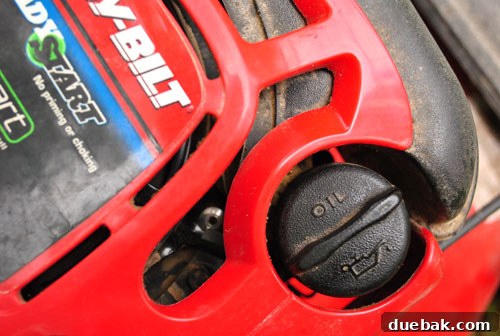
Well, Google didn’t quite deliver instant mechanical prowess. But YouTube came incredibly close! Thanks to this incredibly helpful video from Lowe’s, I actually managed to successfully change my mower’s oil. This felt like a sweet, sweet victory indeed, especially considering my complete lack of experience in engine maintenance. The video guided me through the process with surprising clarity, demonstrating how to locate the drain plug, tilt the mower safely, and ensure proper oil drainage. I didn’t end up needing my hammer, as anticipated, but I did manage to improvise some essential equipment. An old piece of cardboard served admirably as a makeshift drop cloth, protecting my driveway from stray oil drips, and an empty paint can became the perfect receptacle for the used engine oil, ensuring responsible disposal later. This initial success, though only solving part of the problem, injected a significant boost of confidence into my DIY endeavor.
My first-ever oil change definitely breathed some new life back into the mower. The engine sounded a little healthier, and there was a noticeable improvement in its overall rumble. However, unfortunately, that breath of life was still unmistakably white and smoky. The engine continued to sputter, albeit with a bit more vigor, and the tell-tale plume of white smoke persisted, indicating that the core issue hadn’t been fully resolved. It was a partial victory, a step in the right direction, but certainly not the complete fix I had hoped for. Boo!
The Real Culprit: A Clogged Air Filter
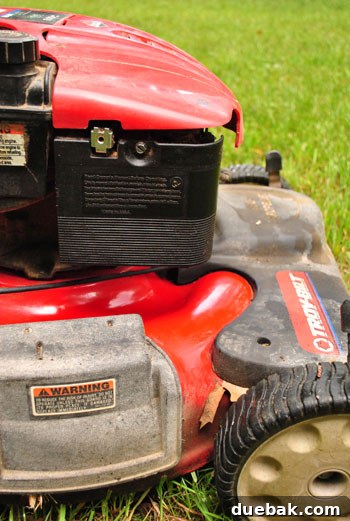
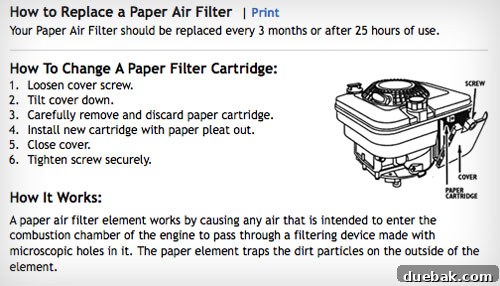
This persistent smoking led me to turn to another tactic, wisely suggested by our ever-friendly and incredibly helpful community on Facebook and Twitter: cleaning the air filter. This sounded plausible, but it presented a new, immediate challenge: simply finding the air filter! Yes, I truly was that helpless, a testament to my past maintenance neglect. Fortunately, the Briggs & Stratton website came to my rescue. As the makers of our lawn mower’s engine, their site proved to be an invaluable resource. With a clear and concise diagram, I was able to pinpoint the exact location of my air filter (eureka!). Carefully, I unscrewed it, revealing a component that was far beyond mere dirty. It was absolutely caked with years of accumulated grime, grass clippings, and what looked like solidified oil. It desperately needed a new filter, but that wasn’t something I had on hand. So, I did my darndest to clean it by hand, scraping away the thickest layers of muck and tapping out as much dirt as possible, hoping to restore some semblance of airflow.
You’ll notice I’m not showing you any pictures of this particular stage. Not just because I didn’t think to document the process in my focused state of DIY desperation, but also because I believe I’ve embarrassed myself quite enough without you seeing the truly abominable state of my old, oil-clogged air filter. Trust me when I say it was a sight that would make even the most seasoned mechanic wince. However, my embarrassment ends here because, quite shockingly, my efforts paid off tremendously. After carefully reassembling everything, I tentatively pulled the starter cord. Within a couple of minutes, after a few initial coughs, my mower was running smoothly, smoke-free, and sputter-free. The transformation was instant and undeniable. Victory! It turned out that the clogged air filter was the primary culprit, starving the engine of clean air and causing the poor combustion that led to the white smoke and rough running.
Victory, Lessons Learned, and a Sustainable Future
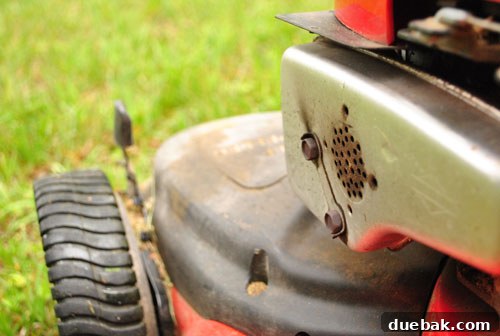
I celebrated my new status as an amateur lawn mower mechanic by immediately completing my previously aborted mow job. The satisfaction of seeing the entire lawn neatly trimmed, propelled by a mower I had personally revived, was immense. For the time being, my dreams of a brand-new, eco-friendly mower were happily shelved. While we still have our eye on some fantastic non-gas options for the future – acknowledging the environmental benefits of electric or reel mowers – this experience taught me the value of making existing resources last. This DIY repair wasn’t just about fixing a machine; it was about gaining confidence, understanding the mechanics, and learning the importance of regular maintenance. Now that I’ve learned a bit about basic lawn mower care by experimenting on this old guy, I feel significantly better equipped and more confident to maintain the next one that comes home with us, whether it’s another hand-me-down or a brand-new green machine.
Share Your Wisdom: Lawn Care Equipment Maintenance Tips
This journey from frustration to triumph has been a valuable learning experience, reinforcing the idea that often, a little research and elbow grease can save you significant money and keep useful items out of the landfill. It’s also highlighted how crucial community knowledge can be when tackling unexpected home repairs. Have any of you found yourselves in a similar lawn mower pinch? Perhaps your trusty trimmer suddenly gave up the ghost, or your leaf blower decided to take an unscheduled break? What were your troubleshooting steps, and what ingenious solutions did you come up with? We’d love to hear your stories and, more importantly, any other lawn care equipment maintenance tips you might have to pass along. Your insights could hopefully help us and a slew of other readers avoid similar stressful situations in the future. Here’s to all of us moving one small step closer to being confident, capable mower mechanics, ready to tackle whatever mechanical challenges our lawns throw our way!