
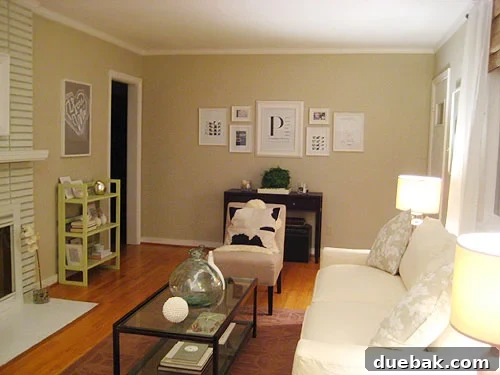
There are certain home improvement tasks that homeowners dread, and painting ceilings almost universally tops that list. The sheer thought of craning your neck, battling drips, and ensuring an even finish can be enough to make anyone postpone the task indefinitely. So, you can undoubtedly imagine the collective groan and my personal disappointment when “Repaint The Living Room Ceiling” unexpectedly reappeared on our seemingly never-ending home maintenance agenda. It felt like a cruel twist of fate, a familiar nemesis resurfacing just when we thought we had overcome it.
However, despite the initial reluctance and the physical demands associated with it, one undeniable truth remains: a fresh, clean coat of paint can work absolute wonders for a ceiling, especially one that has accumulated its fair share of imperfections and issues over time, much like ours had. The transformation is often dramatic, brightening the entire room and giving it a renewed sense of spaciousness and cleanliness. This project, while challenging, ultimately proved to be an invaluable investment in our home’s aesthetic and our peace of mind.
The Genesis of Our Ceiling Woes: A Tale of DIY Missteps
When we first moved into our home, we inherited a few less-than-perfect ceiling issues. Some were subtle, blending into the general wear and tear of an older house, but others were glaringly obvious. One particular problem arose during a previous renovation phase when we decided to remove a rather large and unsightly divider situated prominently by the door. This divider, which had been a visual barrier, left behind a long, unpainted stripe on the ceiling where it had once met the plaster. It was an immediate eyesore, disrupting the ceiling’s continuity and drawing attention to itself.
In our youthful enthusiasm and perhaps a touch of DIY naiveté, we swiftly attempted a quick fix. We grabbed the nearest can of white paint we had on hand – which, to our later regret, turned out to be semi-gloss trim paint – and hastily applied it to the exposed stripe. Our reasoning at the time was simple: it was white paint, it would cover the raw patch, and it would get the job done quickly. We slapped it up, stepped back, and in our ignorance, declared the task complete. Oh, how wrong we were.
The fundamental issue, which became painfully evident over time, is that semi-gloss paint and flat paint do not, under any circumstances, blend seamlessly, especially on a large, expansive surface like a ceiling. The clue is in the name itself: semi-gloss, by its very nature, possesses a noticeable sheen, reflecting light differently than the surrounding matte finish of the original ceiling paint. This disparity in reflectivity created a shimmering, shiny stripe that stood out like a beacon, announcing our hurried repair job to anyone who dared to look up. It was a constant, subtle reminder of a DIY project gone awry, patiently waiting for its eventual reckoning.

The Inevitable Repaint: Conquering Ceiling Stains and Sheen Discrepancies
For two entire years, we lived with those shimmering, glossy patches, a silent testament to our earlier, less-informed painting decisions. They were minor irritations, but persistent ones, detracting from the overall crispness of our living room. Finally, the accumulated frustration and the desire for a truly polished space pushed us to confront the problem head-on. This meant dedicating a weekend, working up the energy, and methodically moving every piece of furniture out of the living room, clearing the space for the extensive work ahead. It was a significant undertaking, but one we knew was essential for a lasting solution.
Why Flat Paint Reigns Supreme for Ceilings
Our goal was clear: achieve a uniform, flawless finish. This necessitated repainting the entire ceiling, not just the problematic stripes, and crucially, doing so with a proper flat ceiling paint. Why flat paint, you might ask? The answer lies in its unique properties. Flat paint has very little to no sheen, making it excellent at concealing minor surface imperfections such as small cracks, dings, and uneven textures. Its non-reflective nature also helps to absorb light rather than reflect it, which minimizes glare and creates a softer, more uniform look across the ceiling. This is particularly important for large, overhead surfaces where light can hit at various angles, highlighting any inconsistencies in the finish.
Conversely, paints with higher sheens (like semi-gloss or satin) tend to magnify imperfections. Every bump, every slight roller mark, and every subtle inconsistency becomes glaringly obvious. For ceilings, where direct light exposure and shadows can play tricks on the eye, flat paint is almost always the superior choice for achieving that clean, pristine backdrop every room deserves. Utilizing a specialized ceiling paint, often formulated to minimize splatter, further enhances the application process and the final outcome, ensuring a truly smooth and professional appearance.
The “No Patching” Imperative: Why a Full Repaint is Key
Initially, the thought of simply touching up the glossy stripe crossed our minds. However, we were fortunate enough to consult with a seasoned painter friend, whose invaluable advice steered us clear of what would have been another costly mistake. He unequivocally advised against attempting to patch up a ceiling paint job, especially on a white ceiling. His rationale was sound and based on years of professional experience: patching almost invariably leads to a patchy outcome. Even with the exact same paint and application technique, slight variations in texture, sheen, or color absorption will likely make the patched area visible.
For a seamless and truly even look, repainting the entire plane of the ceiling was the only viable solution. This ensures consistent coverage, uniform texture, and a perfectly matched color across the entire surface, eliminating any visible lines, blotches, or discrepancies. While it certainly added to the project’s scope and duration, this critical piece of advice ensured that “Repaint The Living Room Ceiling AGAIN” wouldn’t be appearing on our to-do list any time soon. It was an investment in long-term satisfaction and a truly professional finish.
The Ceiling Painting Process: From Preparation to Pristine Finish
Embarking on a ceiling painting project requires meticulous planning and execution. While it might not be the quickest home improvement project in the world, the effort invested in preparation and proper technique pays dividends in the final, flawless result.
Step 1: Thorough Room Preparation
The foundation of any successful painting project lies in preparation. For a ceiling, this is especially critical:
- Clear the Room: Remove all furniture. If large items cannot be removed, move them to the center of the room and cover them completely with plastic sheeting.
- Protect Floors and Walls: Lay down drop cloths (canvas or plastic) generously across the entire floor. Use painter’s tape to secure the edges of the drop cloths and to create clean lines where the ceiling meets the walls. Consider using masking paper or plastic sheeting to cover the upper parts of your walls if you’re concerned about splatter.
- Clean the Ceiling: Dust, grime, and cobwebs can prevent paint from adhering properly. Use a damp cloth or a mop with a mild cleaner (like TSP substitute) to wipe down the entire ceiling. Allow it to dry completely.
- Address Imperfections: Fill any small cracks or holes with spackle or joint compound, sand smooth once dry, and then wipe away dust. For stubborn stains (water stains, smoke stains), apply a stain-blocking primer.
Step 2: Gathering the Right Tools and Materials
Having the correct equipment makes the job significantly easier and the results more professional:
- High-Quality Flat Ceiling Paint: Opt for a paint specifically formulated for ceilings, often labelled as “ceiling white” or having anti-splatter properties.
- Paint Rollers and Roller Covers: Use a high-quality roller cover with a nap appropriate for your ceiling’s texture (e.g., 1/2-inch nap for smooth ceilings, 3/4-inch for textured).
- Extension Pole: Absolutely essential for reaching the ceiling without constant ladder adjustments and reducing neck strain.
- Paint Brushes: A 2-2.5 inch angled sash brush is ideal for “cutting in” around the edges and light fixtures.
- Paint Tray and Liner: For easy paint loading and cleanup.
- Painter’s Tape: For masking off walls and fixtures.
- Drop Cloths/Plastic Sheeting: For protection.
- Stepladder or Scaffolding: For safe access to edges and corners.
- Safety Gear: Goggles, hat, and old clothes to protect yourself from drips.
Step 3: Mastering the Application Technique
Applying the paint correctly ensures a smooth, even, and streak-free finish:
- Start with Cutting In: Using your angled brush, carefully paint a strip (about 2-3 inches wide) around the perimeter of the ceiling where it meets the walls, and around any light fixtures or vents. Work in manageable sections.
- Load the Roller Properly: Don’t overload the roller; roll it back and forth in the paint tray until it’s evenly saturated but not dripping.
- Work in Sections: Paint the main ceiling area in manageable sections (e.g., 4×4 feet). Apply the paint in a “W” or “M” pattern, then fill in the pattern with parallel strokes, overlapping slightly to ensure even coverage.
- Maintain a Wet Edge: The key to avoiding lap marks is to always paint into a “wet edge.” This means starting your new roller stroke slightly into the previously painted wet section. This helps the paint blend seamlessly as it dries.
- Apply Two Coats (If Necessary): Most ceiling paints benefit from two thin, even coats, especially if you’re covering stains or making a significant color change. Allow the first coat to dry completely according to the manufacturer’s instructions before applying the second.
- Remove Tape: Carefully remove painter’s tape while the final coat is still slightly wet (but not tacky) to get the cleanest lines.
The Profound Impact: Beyond Just a Fresh Coat of Paint
The immediate satisfaction derived from a freshly painted ceiling is profound. The once-distracting glossy stripe was gone, replaced by a smooth, uniform expanse of clean, crisp white. But the benefits extend far beyond merely fixing a past mistake.
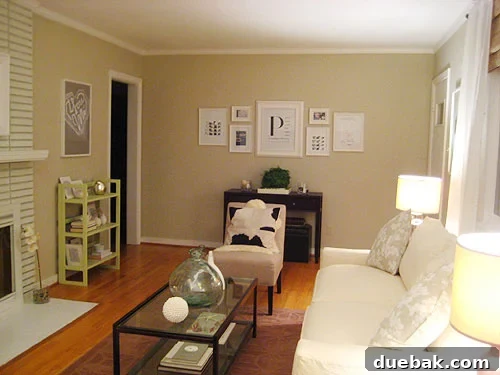
A properly painted ceiling instantly brightens the entire room. White ceilings, in particular, reflect ambient light more effectively, making the space feel larger, airier, and more inviting. It acts as a blank canvas, allowing other design elements of the room – the wall color, furniture, and decor – to truly shine without competition from a dingy or poorly maintained overhead surface. It elevates the overall aesthetic, making the room feel more intentional and cared for. This often overlooked surface is a critical element in interior design, capable of dramatically influencing a room’s mood and perceived dimensions. The result was a living room that felt renewed, refreshed, and genuinely complete, assuring us that our efforts had been well worth it.
Addressing Common Challenges in Ceiling Painting
While the rewards are significant, ceiling painting does come with its unique set of challenges. Knowing these ahead of time can help you prepare and mitigate potential issues:
- Neck Strain: Constantly looking up can quickly lead to a sore neck and shoulders. Solution: Use a long extension pole for your roller, take frequent breaks, and stretch your neck muscles.
- Dripping Paint: Paint dripping onto your face, hair, or floors is a common frustration. Solution: Don’t overload your roller or brush. Use paint specifically designed for ceilings, which often has anti-splatter properties. Wear a hat and safety goggles.
- Uneven Coverage/Lap Marks: Visible lines where roller strokes overlap can spoil the finish. Solution: Maintain a “wet edge” by working quickly and overlapping each new stroke slightly into the previous wet one. Use good lighting to spot missed areas.
- Time Consumption: Ceiling painting, especially with proper preparation and multiple coats, can be time-consuming. Solution: Break the project down into smaller, manageable chunks. Don’t rush; quality takes time.
- Achieving Crisp Edges: Getting a clean line where the ceiling meets the wall can be tricky. Solution: Use high-quality painter’s tape and press it down firmly. Remove the tape while the paint is still slightly wet for the sharpest lines.
Choosing the Right Ceiling Paint for Your Home
Selecting the appropriate paint is crucial for a successful ceiling project. While “ceiling white” is a popular and safe choice, there are nuances:
- Flat Finish is King: As discussed, a flat finish is almost always recommended for ceilings due to its ability to hide imperfections and minimize glare.
- Specialized Ceiling Paints: Many paint manufacturers offer specific “ceiling paint” products. These are often formulated with higher solids content for better coverage in fewer coats, and with additives to reduce splattering – a huge bonus when painting overhead.
- Tinted Ceilings: While white is classic, consider a very light tint (e.g., 10-20% of your wall color) for a subtle, cohesive look in certain rooms. This can add warmth or a sense of envelopment. However, for most standard applications, a bright white ceiling remains the gold standard for maximizing light and space.
- Primer: If your ceiling has significant stains, repairs, or is a very dark color, a quality stain-blocking primer is a must before applying your finish coats.
Conclusion: The Enduring Value of a Perfect Ceiling
The journey from a patchwork, semi-gloss mistake to a uniformly pristine ceiling was one of effort, learning, and ultimately, immense satisfaction. It wasn’t the quickest or easiest home improvement project we’ve ever tackled, requiring significant preparation, careful application, and adherence to professional advice. However, the transformation it brought to our living room was undeniable and well worth every bit of energy expended.
By investing the time to do the job right – by choosing the correct paint, preparing thoroughly, and following best practices – we ensured that our living room ceiling now serves as a clean, bright, and harmonious backdrop for our home. It’s a testament to the fact that sometimes, the most challenging tasks yield the most rewarding and long-lasting results. More importantly, it ensured that the dreaded phrase “Repaint The Living Room Ceiling AGAIN” wouldn’t be making an unwelcome appearance on our to-do list for many, many years to come.