
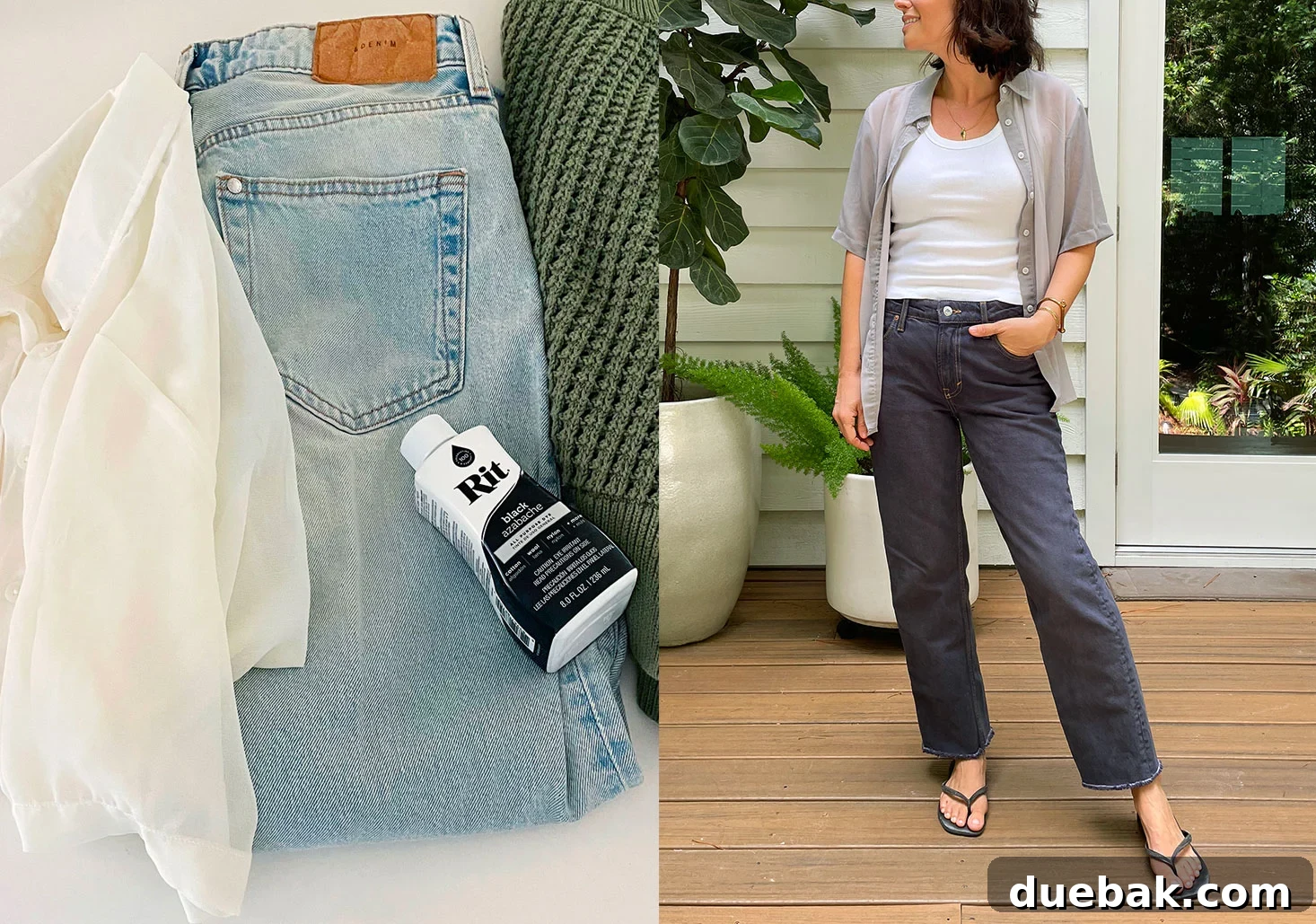
Transforming your wardrobe with a splash of color might sound like a daunting task, fraught with potential mess and complicated procedures. However, the reality of dyeing clothes at home is far from it! As someone who even took the plunge to dye her wedding dress for a second life, I can confidently say that anyone can master the art of fabric dyeing from the comfort of their home. It’s an incredibly easy, straightforward, and refreshingly affordable way to breathe new life into garments you no longer reach for. Instead of letting those forgotten pieces gather dust or take up valuable closet space because their color simply doesn’t spark joy, you can give them a vibrant makeover and make them truly wearable again.
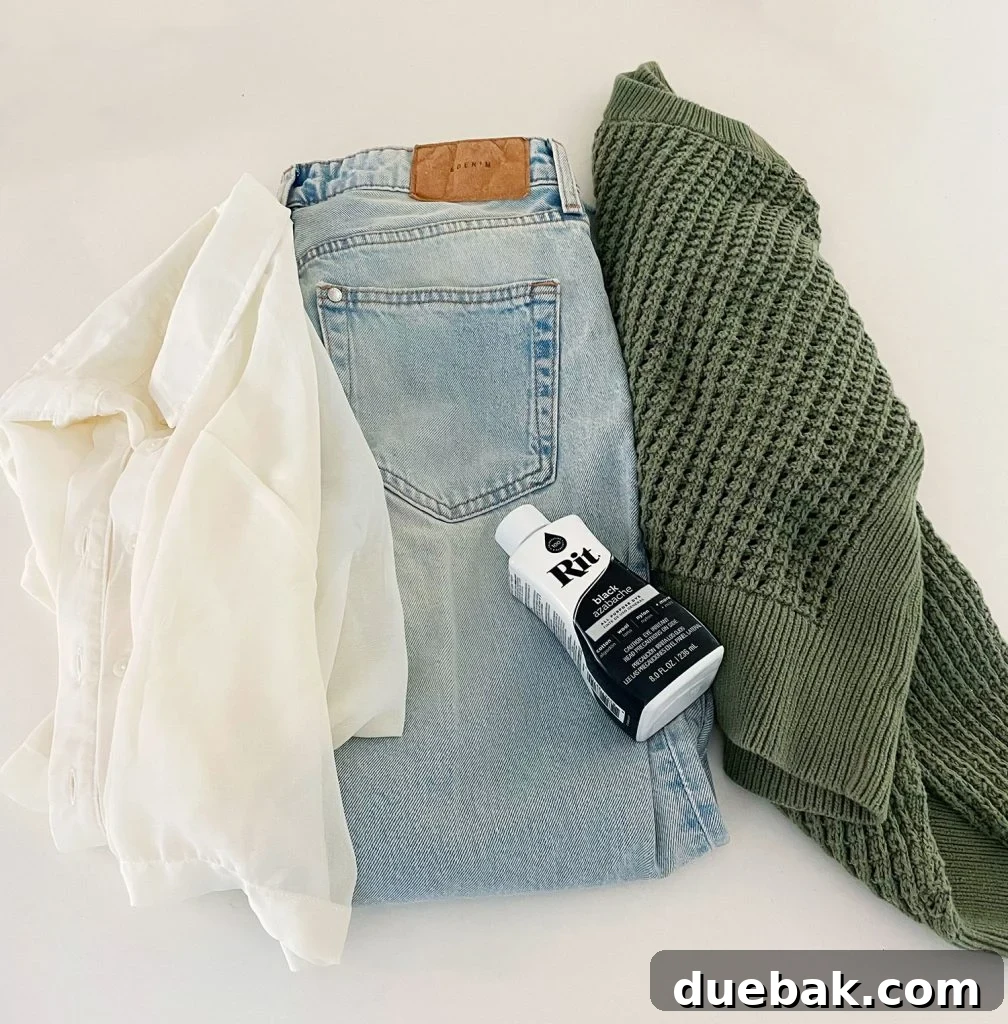
The beauty of DIY fabric dyeing lies in its power to customize, alter, or reinvigorate your clothing with a fresh, captivating hue. Take my recent project, for instance: I had a white shirt, a pair of jeans, and a green sweater that rarely saw the light of day. The white shirt and jeans had developed an unfortunate yellowish tint, making them appear somewhat dingy, while the green sweater was old and noticeably faded. They were prime candidates for the donation bin. But then, a lightbulb moment! I realized I could dye them my absolute favorite color – black, of course! This simple transformation would make them incredibly versatile and much easier to integrate into my everyday wardrobe. The best part? From a single $4 bottle of dye, I effectively gained three “new” pieces of clothing, saving money and reducing textile waste.
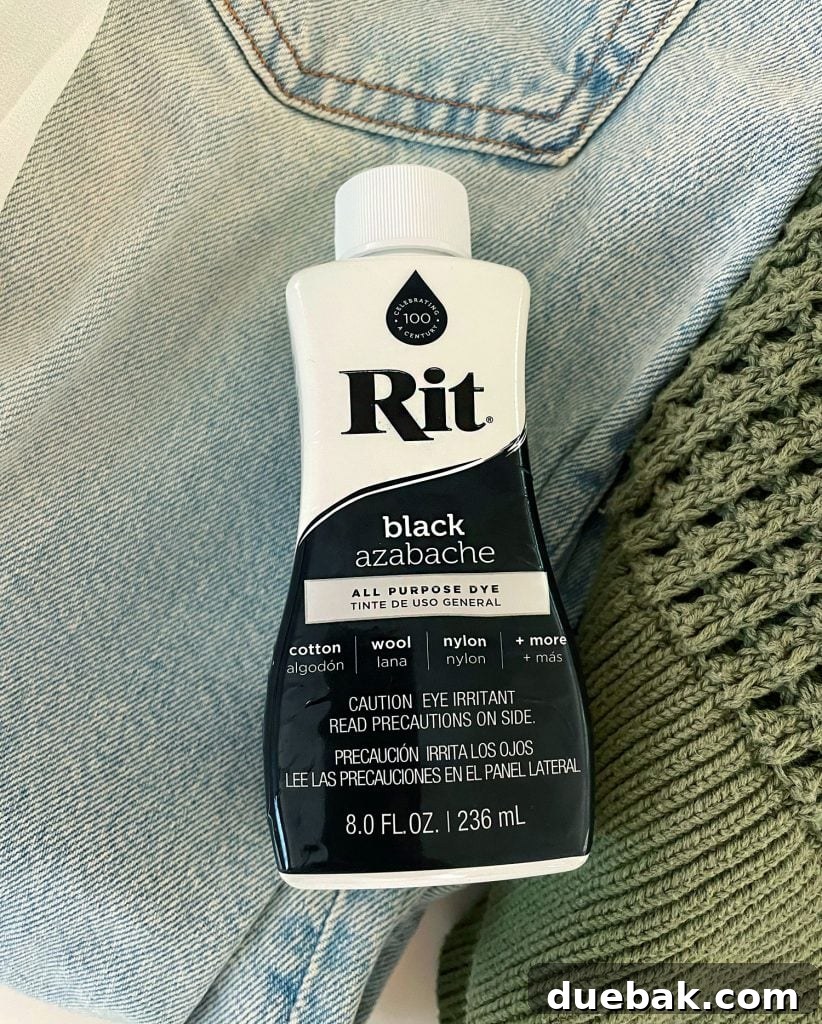
Quick Note: This comprehensive guide to home fabric dyeing is not sponsored by Rit. Our recommendation stems purely from personal experience with their products, which are remarkably easy to find – even at our local grocery store! Over the years, we’ve experimented with other brands and achieved equally successful results. The key is finding a reliable dye that works best for your specific project and fabric type.
Mastering Fabric Dyeing: Essential Tips for Success
The most crucial piece of advice I offer to anyone embarking on their first fabric dyeing adventure is to embrace an open mind regarding the final outcome. Achieving a perfectly precise color match is notoriously difficult, even for seasoned professionals. This complexity arises because numerous factors subtly influence the end result. These include the intricate fabric blend, the garment’s original color, the specific dye concentration used, the total soaking time, and even the water quality in your area. Therefore, it’s more productive to view this process as nudging your clothes *towards* a desired color (e.g., darker, greener, pinker, or a richer hue) rather than aiming for an exact, unyielding target.
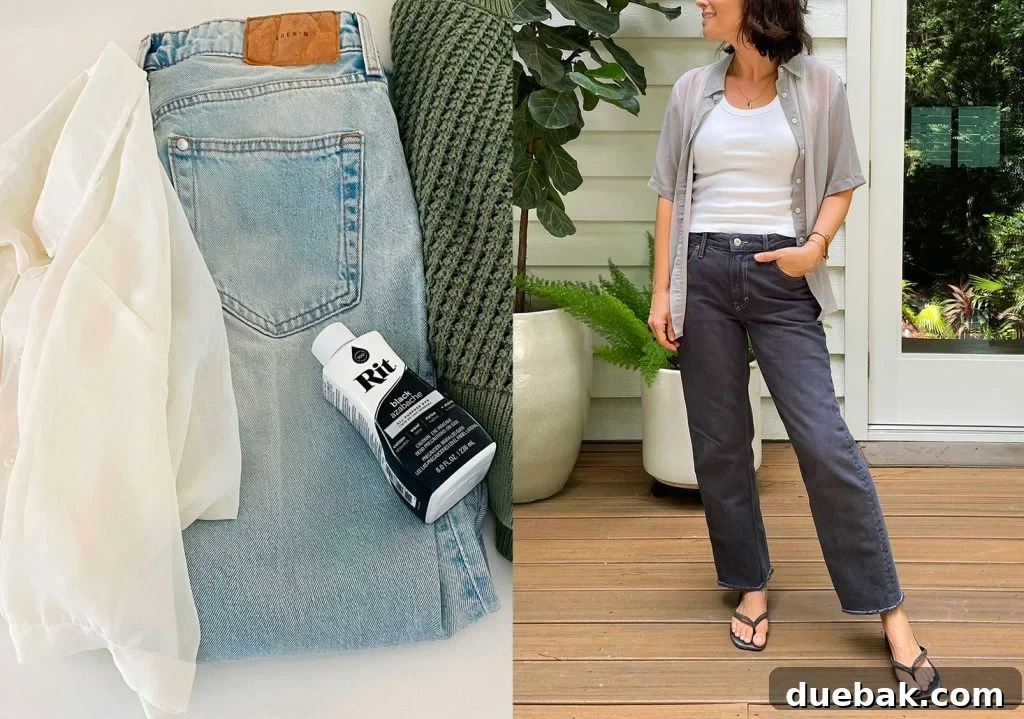
For example, when I used black dye on my button-down shirt and jeans, they became significantly darker and closer to black, but neither achieved a true, deep, jet black. The silver lining? I also adore gray, and this process completely eliminated the unwanted yellow tint they previously had. Ultimately, I was far more pleased with the improved, transformed versions than their original, uninspiring states. This element of delightful unpredictability is, in my opinion, a significant part of the joy and creativity inherent in this DIY project. You never know precisely how things will unfold, and often, the unexpected results are even better than planned! In the case of these clothes, and indeed my wedding dress, any transformation would have been a marked improvement over their former versions, which simply weren’t being worn.
Essential Supplies for Dyeing Clothes at Home
Before you dive into the exciting world of fabric dyeing, it’s essential to gather all the necessary materials. For most home projects, we highly recommend the “bucket method,” which is versatile and can also be adapted for use in a utility sink or bathtub. If you’re planning to tackle larger items like bedding, curtains, or even slipcovers, you might find it more convenient to utilize your washing machine, following specific instructions provided by the dye manufacturer.
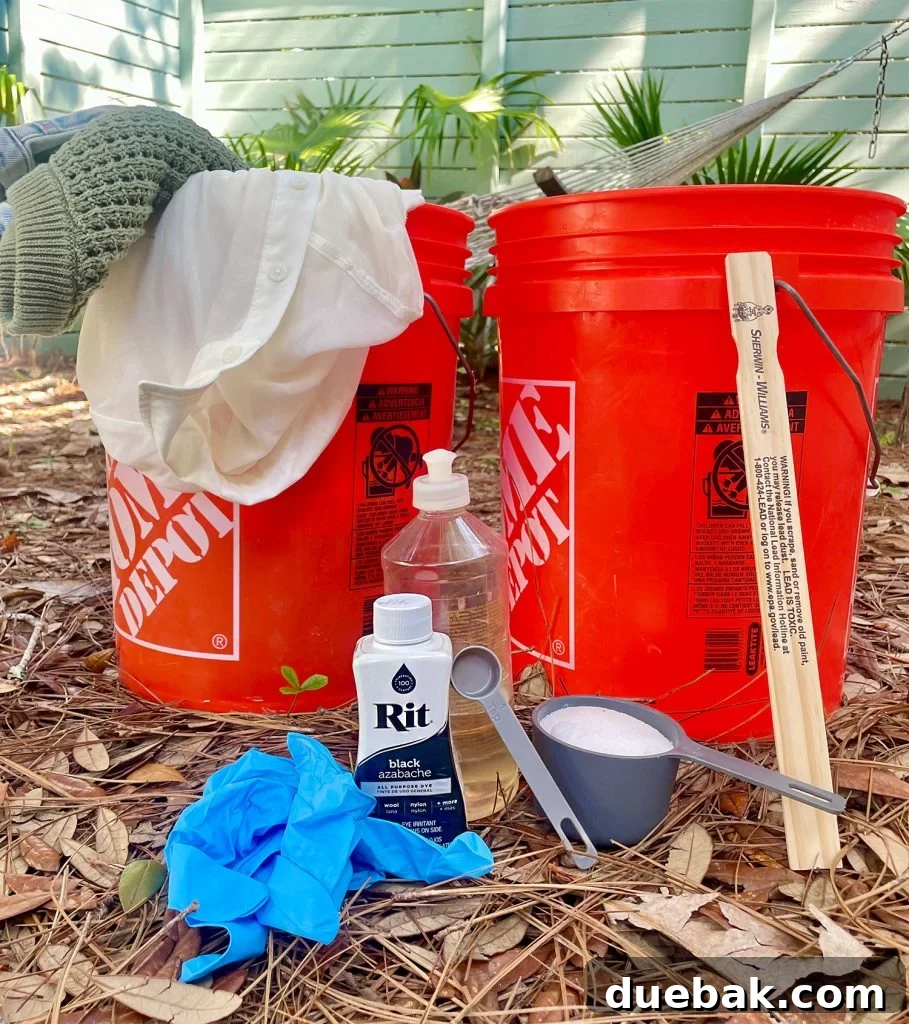
- 1 bottle of Rit All-Purpose Liquid Dye (choose your desired color)
- 5-gallon buckets (having two is incredibly helpful for pre-wetting and rinsing)
- Access to boiling water (kettle or stovetop pots)
- 1 cup of non-iodized salt (essential for enhancing color on natural fibers like cotton, rayon, ramie, and linen)
- 1 cup of white vinegar (recommended for synthetic fibers such as nylon, silk, or wool to improve dye uptake)
- 1 teaspoon of mild dish soap (promotes even dye absorption and prevents blotchiness)
- A large, dedicated stick or spoon for stirring (ensure it’s something you don’t mind getting stained or keep it solely for dyeing projects)
- Rubber gloves (crucial for protecting your hands from dye stains)
- A hose or shower sprayer for thorough rinsing
- Washing machine (for the final wash cycle)
We often opt to work outdoors when dyeing to minimize concerns about accidental spills or splashes, which inevitably happen. If you’re working inside, it’s absolutely vital to protect your work area. Lay down a dropcloth, an old plastic tablecloth, or several layers of old towels to cover surfaces. While dye doesn’t typically stain permanently if wiped up immediately, a little protection goes a long way in preventing headaches and ensuring a clean workspace.
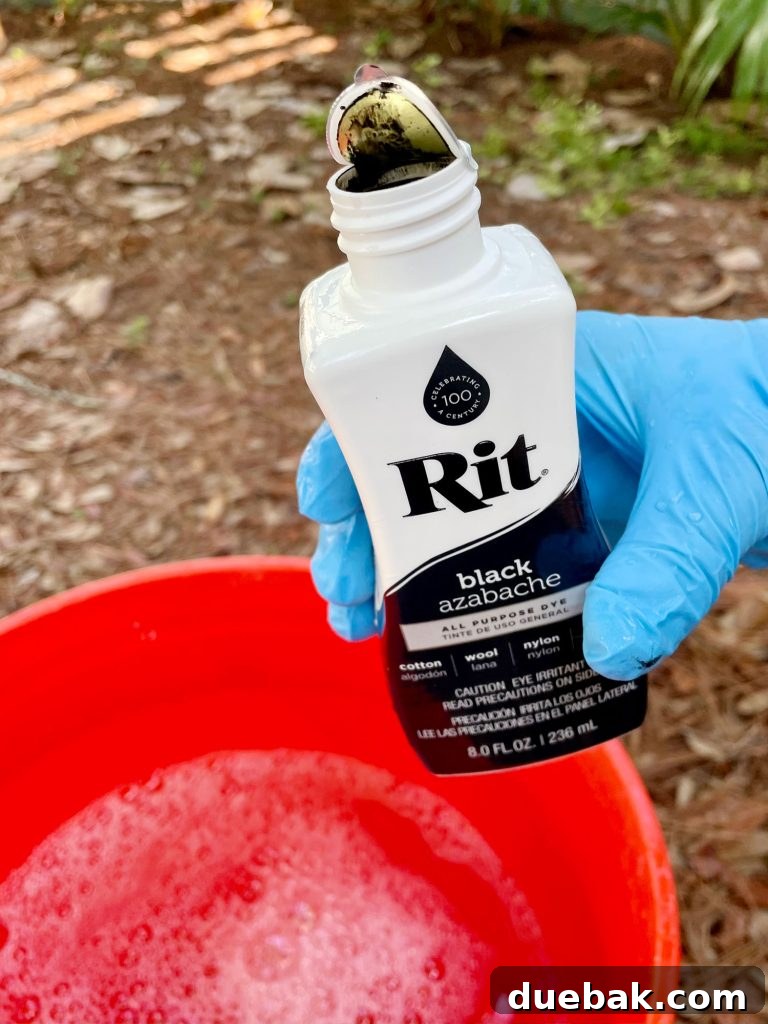
And speaking of protection, wearing rubber gloves is highly recommended throughout the entire dyeing process. This simple step prevents your skin from becoming temporarily discolored by the dye, making cleanup much easier.
Choosing the Right Fabric and Dye
Understanding your fabric type is key to a successful dyeing project. Rit All-Purpose Dye is specifically formulated and works exceptionally well on a broad spectrum of fabrics, particularly natural fibers such as cotton, linen, ramie, wool, and silk. It also yields good results on certain synthetics like rayon and nylon. However, if your garment contains more than 35% polyester, acrylic, or acetate, Rit recommends using their specialized Synthetic Fabrics Dye (DyeMore). It’s crucial to note that the DyeMore product requires a different dyeing method, typically involving a stovetop, as it needs sustained high heat to properly bond with synthetic fibers, making the bucket method unsuitable. Always double-check your clothing labels before you begin to ensure you’re selecting the correct dye product and the appropriate dyeing technique for your fabric composition.
Step-by-Step Instructions for Dyeing Clothes at Home
The entire dyeing process, from preparation to final rinse (excluding the washing machine cycles), typically takes about an hour. Gather your supplies, prepare your workspace, and let’s transform those fabrics! Here’s a clear overview of the steps you’ll follow:
- Pre-Wash Your Clothes
- Prepare The Dye Solution (Dye Bath)
- Add Clothing to the Dye Bath
- Stir Continuously
- Rinse Thoroughly
- Wash Again in Machine
1. Pre-Wash Your Clothes
This initial step is critical for ensuring even dye absorption. Fabrics must be perfectly clean and free of any stains, sizing, or finishes that could act as a barrier to the dye. Run all items through a standard washing machine cycle before you begin, and be sure to pre-treat any visible stains. Avoid using fabric softener, as its residue can significantly interfere with the dye’s ability to penetrate the fibers evenly. After washing, skip the dryer. The fabric needs to remain thoroughly wet for the dyeing process to work correctly. If your clothes have already dried, simply soak them in plain water until saturated before moving on. This is where having a second bucket really comes in handy, allowing you to easily pre-wet items while you prepare the dye bath!
2. Prepare The Dye Bath
The heart of your dyeing project is the dye bath. Choose a container large enough to allow your clothes to move freely without being cramped. This could be a spacious sink, a bathtub, a dedicated 5-gallon bucket, or a large bowl. As mentioned, we often work outdoors for ease of cleanup, but placing a bucket or bowl within your sink or tub works perfectly well indoors.
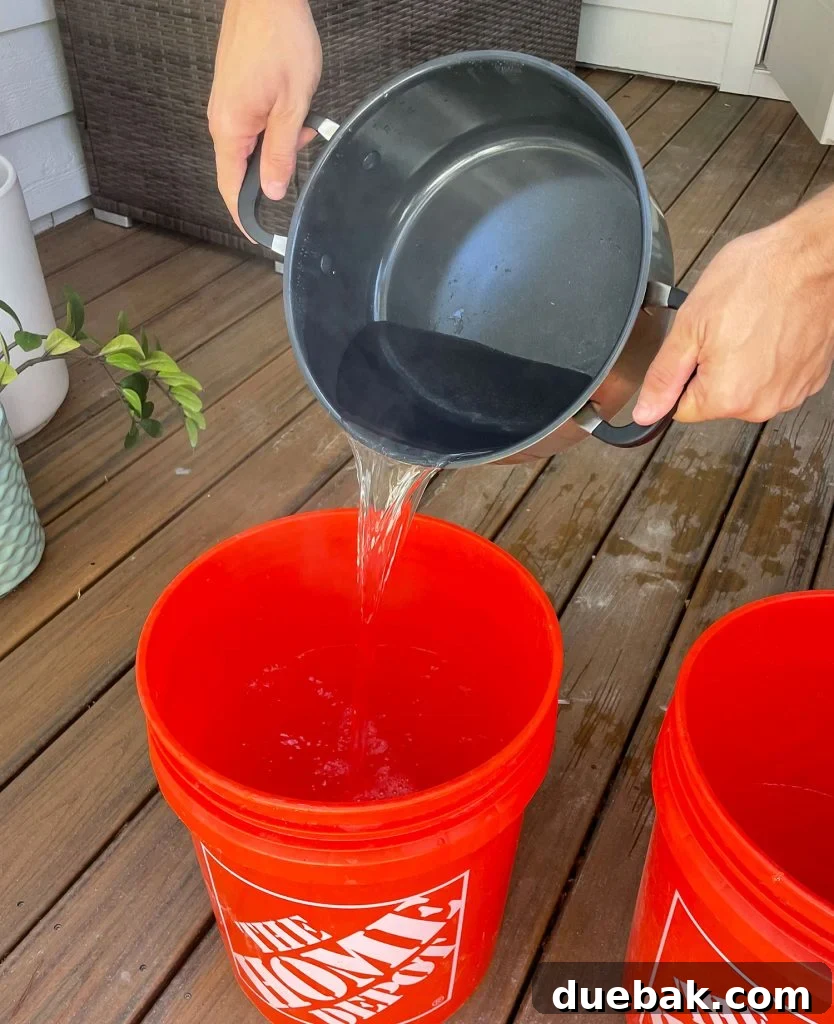
To prepare your potent dye solution, follow these steps meticulously:
Begin with Hot Water
Heat is essential for activating the dye and ensuring it properly bonds with the fabric fibers. Rit typically recommends using approximately 3 gallons of very hot water for every 1 pound of fabric you intend to dye. The water should ideally be at a minimum temperature of 140ºF (60ºC). We achieve this by combining very hot tap water with a few pots of boiling water from the stovetop. While using a kitchen thermometer can help, absolute precision isn’t strictly necessary. Just aim for water that is as hot as your tap allows, supplemented with boiling water. Remember to leave ample room in your container for the fabrics to be added later without overflowing.
Add Salt or Vinegar (Fixatives)
These common household items act as dye fixatives, significantly enhancing the color intensity and longevity. Using a measuring cup, add 1 cup of non-iodized table salt if you are dyeing fabrics primarily composed of cotton, rayon, ramie, or linen. If your fabrics are nylon, silk, or wool, incorporate 1 cup of white vinegar instead. For blends, you might use both, depending on the predominant fiber type. Stir thoroughly until dissolved.
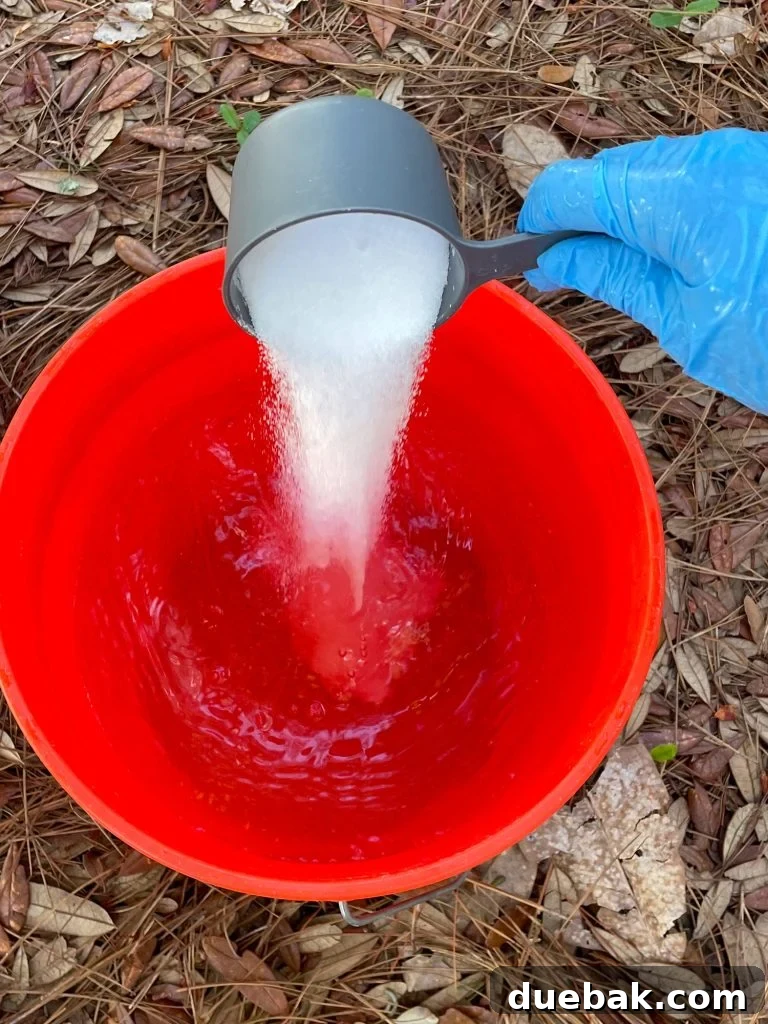
Introduce Mild Dish Soap
Next, add just 1 teaspoon of mild liquid dish soap to your solution. This acts as a wetting agent, or surfactant, helping the dye to spread more evenly across the fabric fibers. This crucial step minimizes the chances of splotchy or uneven dyeing, ensuring a more consistent and professional-looking finish.
Pour in the Liquid Dye
Now, it’s time to add your chosen Rit Liquid Dye to the prepared water. As a general guideline, Rit suggests using approximately half a bottle of dye for every 1 pound of dry fabric. However, you can adjust this amount to achieve a bolder, darker, or more saturated color result. For our project, we opted to use a full bottle to ensure a rich, deep hue for our black garments. Mix all the ingredients well with your stirring stick until the dye is fully dispersed in the water.
A quick note on dye types: Rit also offers concentrated powder dye. While it might be slightly cheaper per package ($2.50 vs $3.50), it typically yields half the amount of dyed fabric compared to the liquid version. For convenience and consistent results, we generally lean towards the pre-mixed liquid dye.
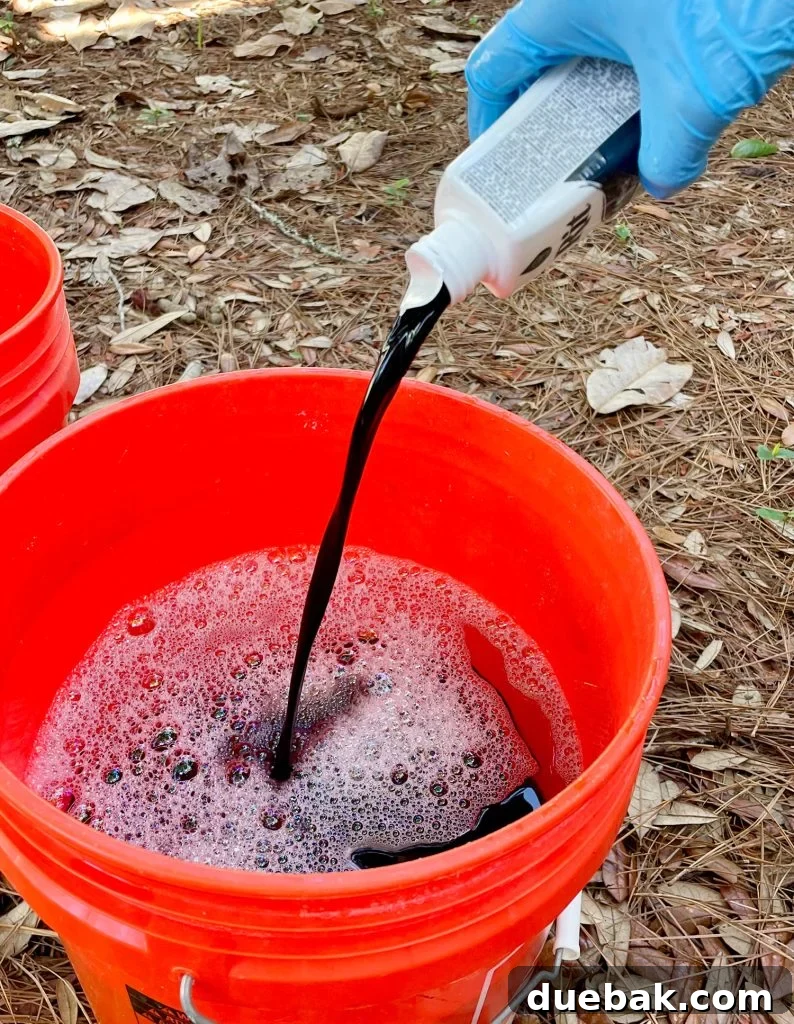
If you’re feeling meticulous or have blended multiple dye colors for a custom shade, you can perform a quick color test. Dip a paper towel into the dye mixture to get a rough idea of the color. While this isn’t an exact representation (wet fabric always looks darker), it can give you a preliminary indication and help you decide if you need to add more dye or dilute the solution with additional water before adding your garments.
3. Add Clothing
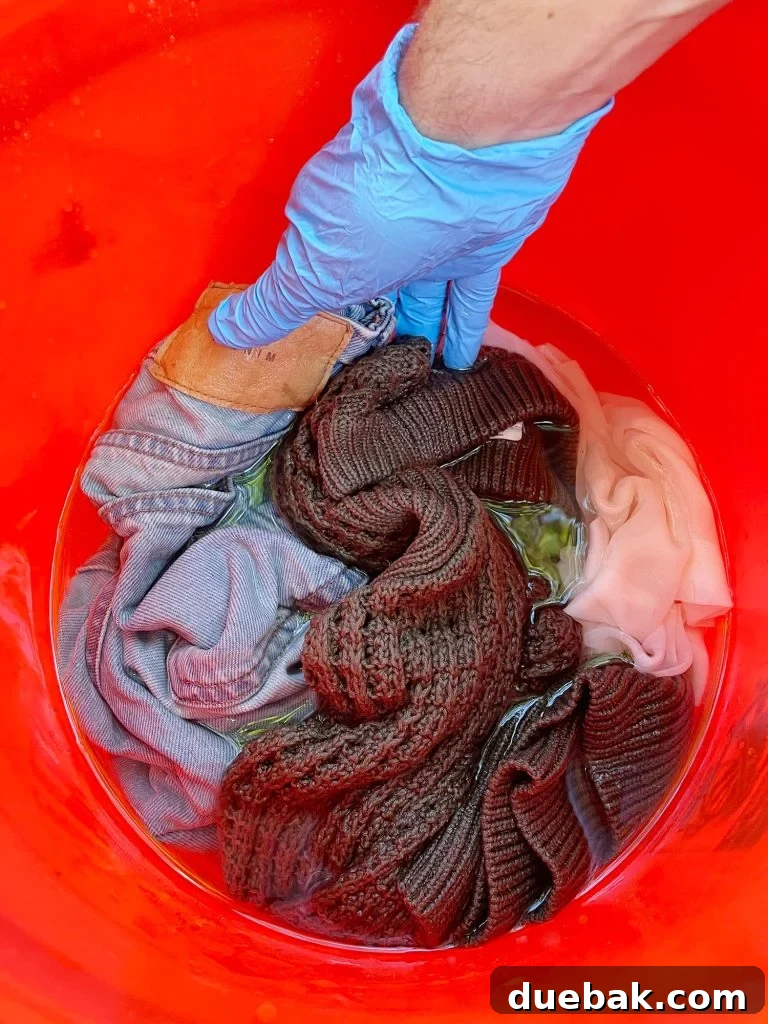
Before introducing your garments to the dye bath, gently wring them out by hand. They should be thoroughly wet but not dripping excessively. Carefully place your pre-wet fabrics into the prepared dye solution. Use your stirring stick to ensure that all items are fully submerged and freely moving within the liquid. Avoid overcrowding the container, as this can lead to uneven dye absorption and splotchy results. For this project, we successfully dyed all three pieces of clothing simultaneously, ensuring they had enough room to move.
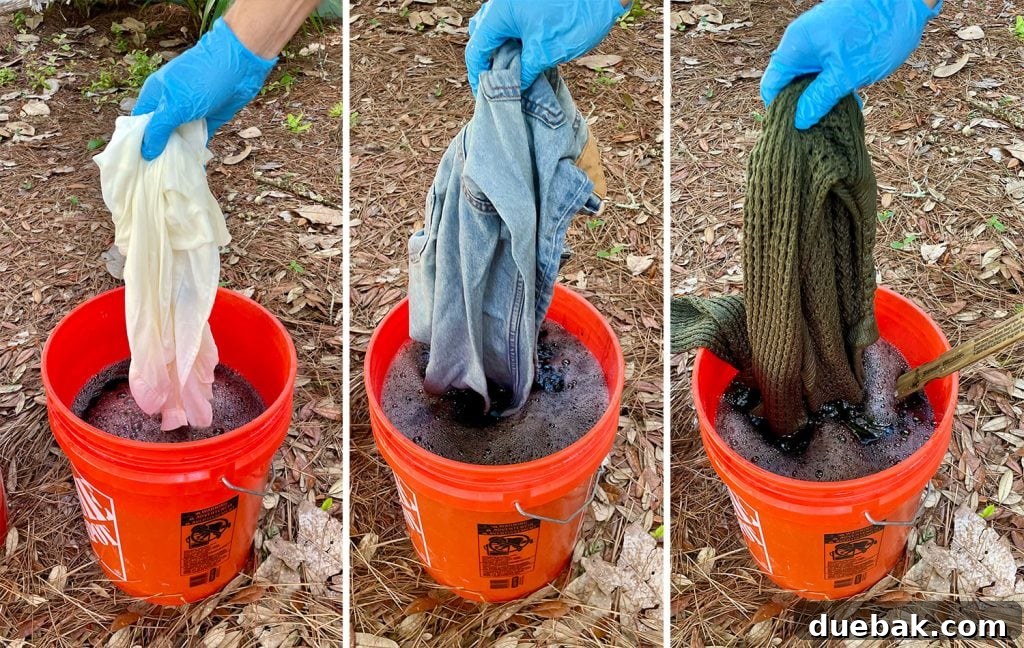
4. Stir, Stir, Stir (The Key to Even Color)
This step is arguably the most crucial for achieving a smooth, even, and consistent color across your fabric. Slow and continuous stirring helps the dye penetrate every fiber uniformly and prevents dye from settling in certain areas, which can cause streaks or blotches. As a minimum, stir continuously for the first 10 minutes of the dyeing process. You can then continue this gentle agitation for up to an hour, depending on the desired color intensity. Some fabrics, like nylon, tend to absorb dye more quickly and may require less time, while others, such as some polyesters (if using DyeMore), need a longer soak. For our batch, we stirred slowly and continuously for a full 30 minutes, ensuring constant movement of the garments within the bath.
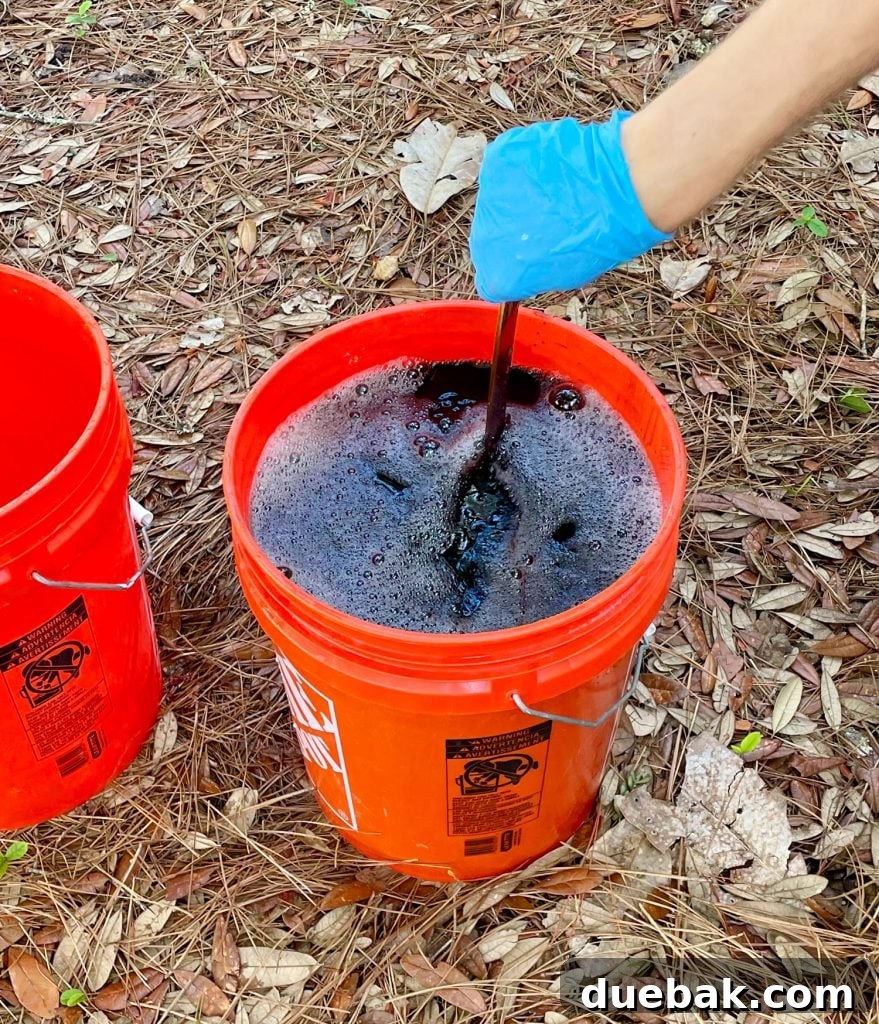
Having an extra set of hands for this stage can be helpful, but it’s entirely manageable to do solo – I’ve done it many times on my own. While John handled the continuous stirring (and caught up on an episode of Survivor on his phone for entertainment!), I managed other tasks like picking up one of our kids from school. The point is, this project isn’t overly demanding; it’s generally quite enjoyable and a great way to unleash some creativity. If you wish, you can periodically check the color of your fabric during this soaking period, but always remember that wet fabrics will appear significantly darker than their final dry shade. Be patient and trust the process!
5. Rinse Thoroughly
Once your garments have achieved their desired color depth, it’s time for the critical rinsing phase. Before removing the clothes from the dye bath, prepare a dedicated rinsing area. We typically begin by using our spare bucket outdoors to remove the majority of the excess dye, which prevents staining our indoor tub. First, carefully lift each clothing item and wring out as much excess dye solution as possible back into the dye bath.
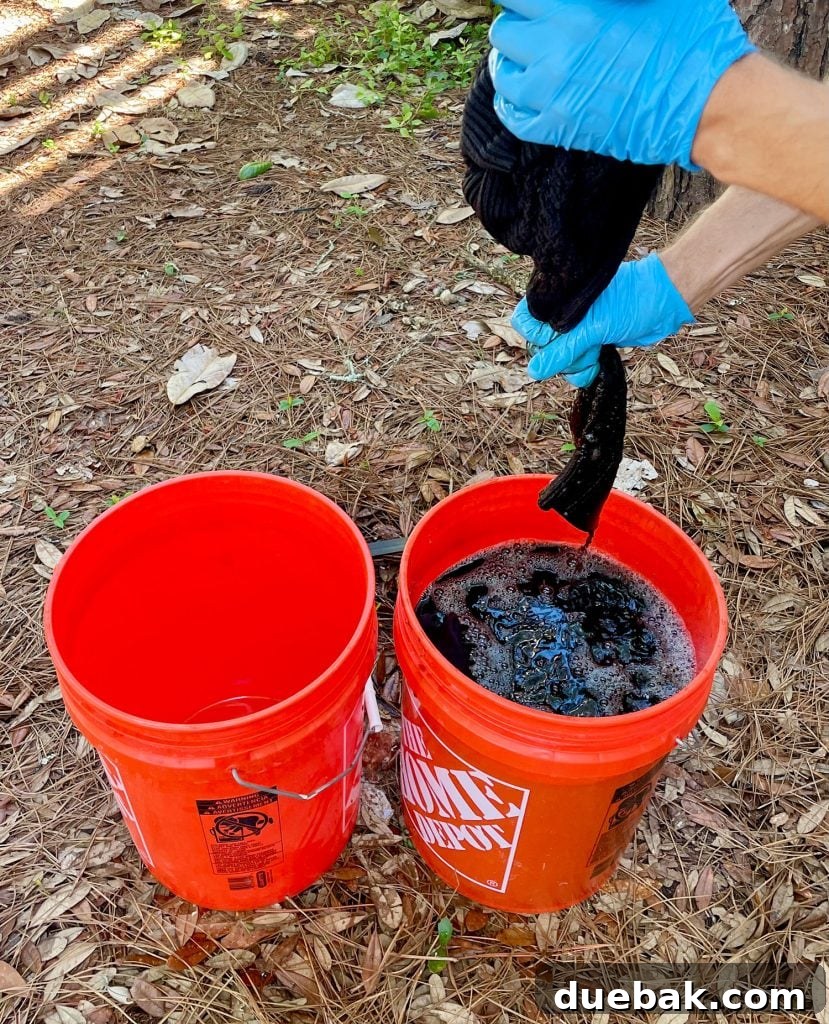
Then, using a garden hose, we spray off the initial heavy flush of excess dye. This stage often highlights the fascinating differences in how various fabrics absorb the same dye solution!
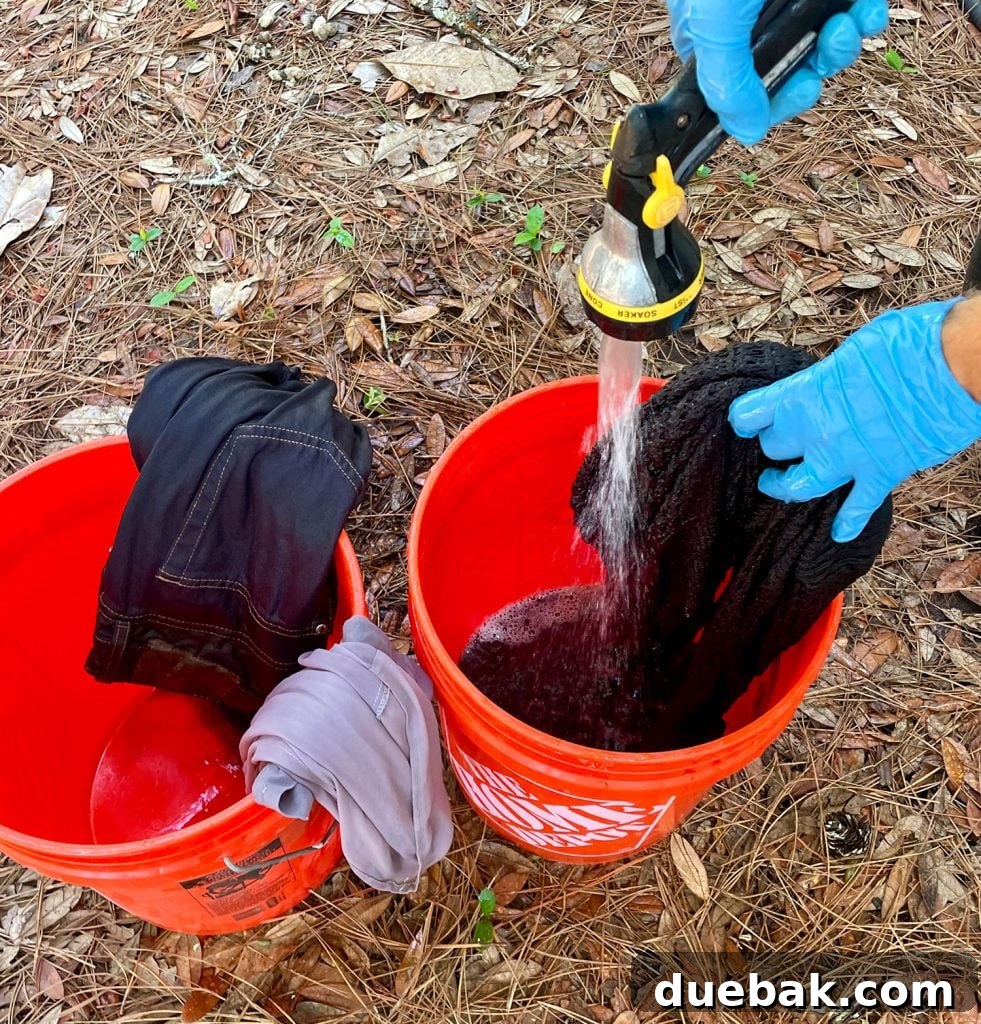
The ultimate goal is to rinse your fabric continuously under cool running water until the water coming off the fabric runs completely clear. This requires patience and can often take 10 to 15 minutes or even longer. After the initial outdoor rinse, we moved indoors to the bathtub, using our shower sprayer for a more controlled and thorough rinse with cool water.
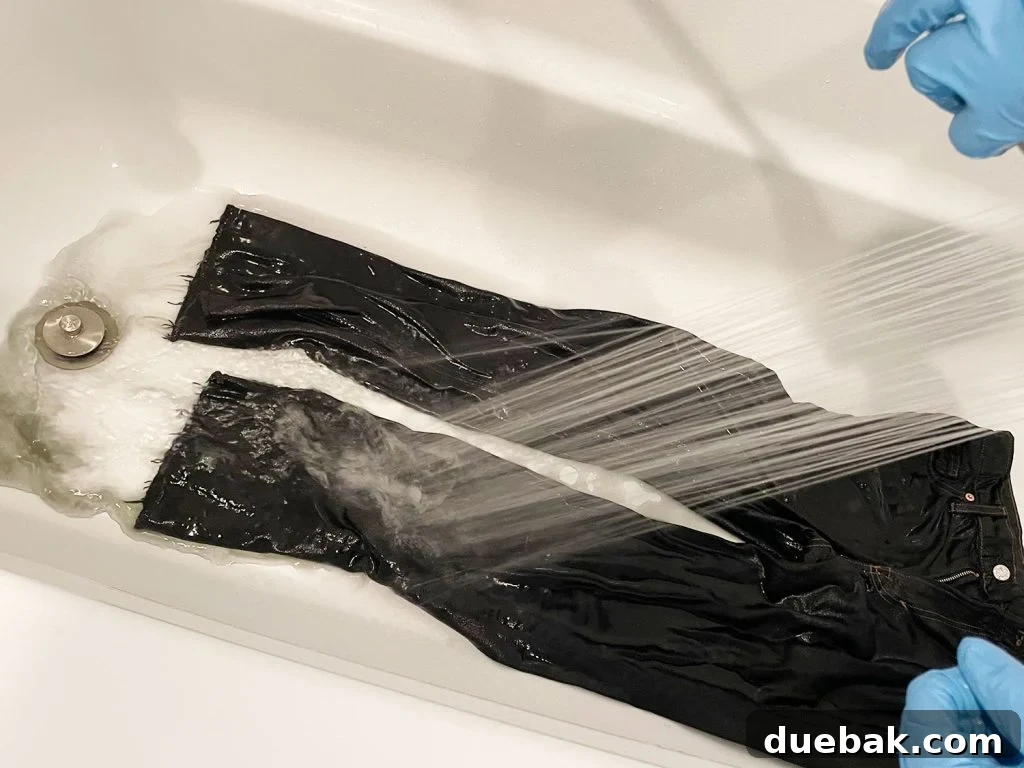
While rinsing in two separate locations isn’t strictly necessary, the white surface of the bathtub made it incredibly easy to visually confirm when the water was truly running clear from the fabric, indicating that most of the unbound dye had been washed away.
6. Wash Again (The Final Color Set)
As the final step in the dyeing process, transfer all your freshly rinsed items to your washing machine. Wash them again using warm water and a mild detergent. Crucially, throw in an old towel with your dyed clothes to act as a “color catcher.” This final wash cycle removes any last traces of excess dye that might still be clinging to the fibers and helps to fully set the color within the fabric. Once the wash cycle is complete, you can dry your items as you normally would in your dryer.
To be extra cautious and ensure maximum colorfastness, we often repeat this washing machine process twice. If your washing machine features an “extra rinse” setting, utilizing it can further aid in eliminating residual dye, which is vital for preventing color bleeding during future, regular washings. Do not skip the color catcher towel – it’s a lifesaver! In our experience, these towels consistently capture a significant amount of residual dye, preventing it from transferring to other garments in future laundry loads.
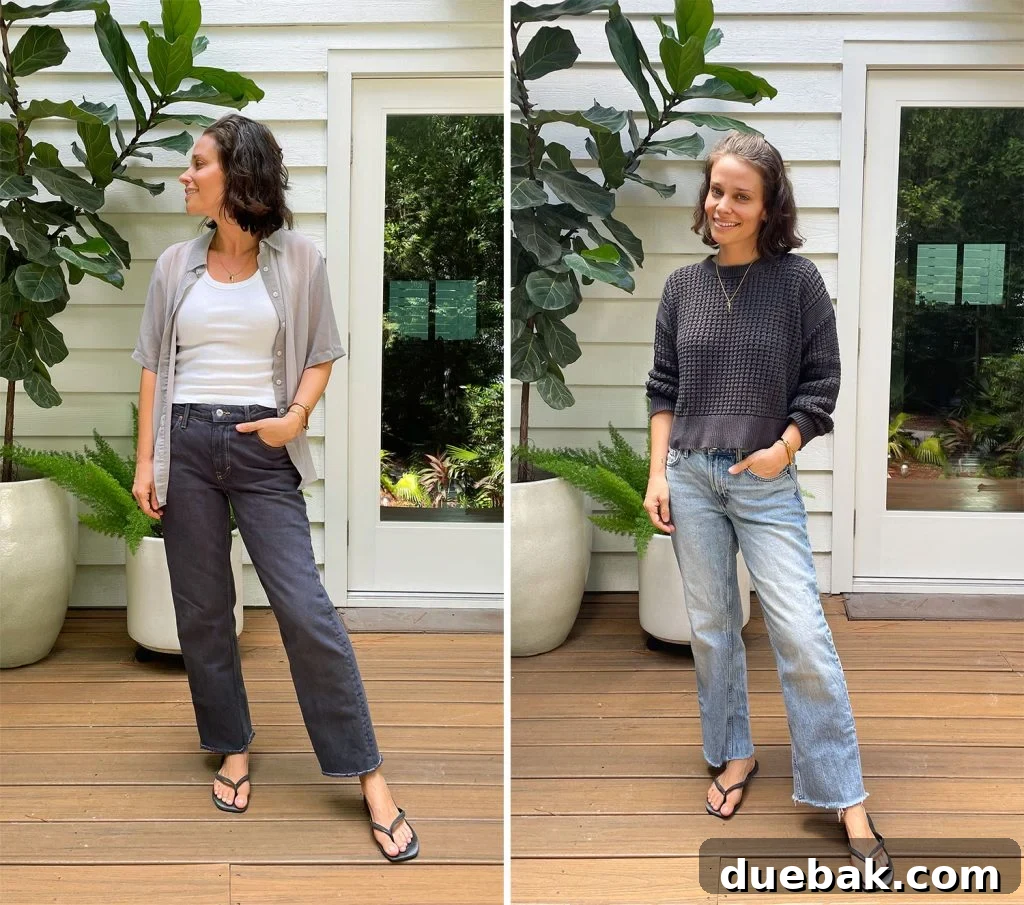
The Transformed Wardrobe: The Final Result
As I emphasized from the outset, a significant part of the enjoyment in dyeing your own clothes is the anticipation and revelation of the final result. In this particular project, the three pieces of clothing emerged with a beautiful spectrum of shades, ranging from a soft, light gray to a rich, deep charcoal. While none of them achieved what I would call a “true jet black,” the outcome was unequivocally successful in achieving my primary goal: making these garments far more wearable and integrated into my personal style. It’s a testament to how a simple, affordable DIY project can completely revitalize forgotten clothing and bring fresh excitement to your wardrobe.
Explore More Fabric & Wardrobe Transformation Projects
Inspired to embark on more creative projects with fabric, dye, or wardrobe optimization? Here are some additional resources and ideas to fuel your DIY spirit:
- How I Dyed My Wedding Dress (giving it a beautiful second life post-wedding)
- Expert Tips for Organizing a Small Closet (maximizing every inch of space)
- Curating a Functional & Minimalist Wardrobe (streamlining your style)
- Discover How to Print Custom Fabric Designs (unleash your inner textile designer)
- Innovative Ways to Turn Fabric Into Wallpaper (a unique home decor idea)
- Mastering Fabric Dyeing Using a Washing Machine (for larger items and convenience)

*This post contains affiliate links, meaning we may earn a small commission when you make a purchase through links on our site at no additional cost to you. We only recommend products we genuinely use and believe in.