
Our Kitchen’s Phase 1 Makeover: From Junk Drawer to Jaw-Dropping Doorway
What began with a seemingly simple junk drawer switcheroo quickly blossomed into something much larger: the ambitious first phase of our kitchen makeover journey. After patiently enduring our self-imposed six-month waiting period, which allows us to truly live with a space before committing to drastic changes, we finally put our plans into motion. This strategic pause ensures that every decision, every removal, and every alteration is made with careful consideration, preventing any impulsive renovations we might later regret. Our initial objective, dubbed “Phase 1,” focuses on working creatively with the existing elements of our kitchen. This means preserving the cabinets, countertops, vinyl flooring, paneling, and ceiling beams for now. The grander “Phase 2,” involving a more invasive and comprehensive renovation, will follow down the line once we’ve diligently saved our pennies and meticulously planned every detail. For the moment, we are thoroughly enjoying riding this Phase 1 wave, eager to see how our refreshed kitchen space will meet our evolving needs before diving headfirst into the larger-scale overhaul.
Glimpses of the Past: Our Kitchen Before the Transformation
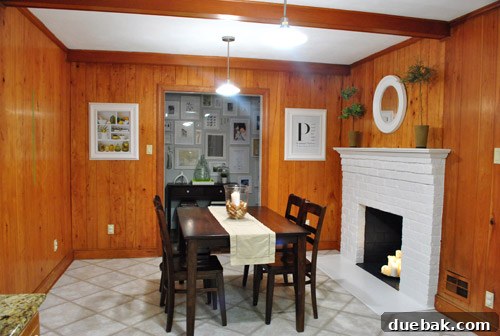
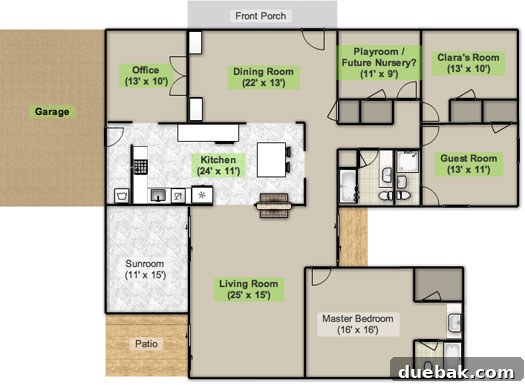
To truly appreciate the impending changes, it’s essential to remember the kitchen’s “before” state. Here’s a recent snapshot, providing a clear reference point for the starting line of our renovation adventure. This view captures the current layout and overall aesthetic that we are keen to update and personalize.
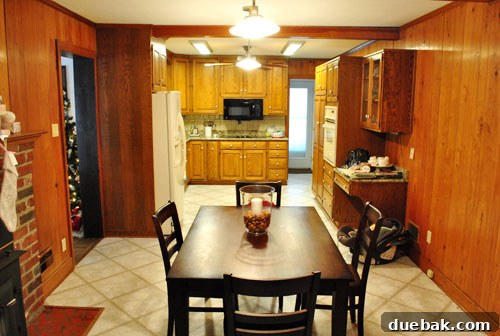
And to truly jog your memory, here’s a charming, albeit much older, shot from the opposite direction. You might even spot some festive stockings and a Christmas tree, a testament to how long it’s been since we captured this particular angle of the room. It seems we don’t often photograph from this vantage point, making this historical image all the more valuable for contrasting with our future vision.
Charting the Course: Our Phase 1 Kitchen Makeover Checklist
Even for a “Phase 1” approach, our list of tasks is quite extensive, promising a transformative, albeit not instantaneous, evolution of the space. We anticipate tackling these projects incrementally, balancing our available funds and energy to ensure a sustainable and enjoyable renovation process. While the order of completion might shift, here’s a comprehensive rundown of our ambitious goals for this initial stage, designed to maximize impact without structural overhauls:
- Remove woodstove insert from fireplace: This was one of our earliest achievements, creating a cleaner, more streamlined fireplace aesthetic. You can see how we tackled this here.
- Prime and paint fireplace: Following the removal of the woodstove, giving the fireplace a fresh coat of primer and paint dramatically brightened that corner of the room. Details of this transformation can be found here.
- Remove the existing desk area to the right of the oven: This removal is crucial for creating a spacious, inviting double-wide doorway that will connect the kitchen directly to the dining room. With plans to incorporate a substantial island, the current desk space is no longer a necessary or efficient use of valuable real estate.
- Prime and paint all the dark paneling: The existing dark paneling, while perhaps having a historical charm, significantly darkens the kitchen. A fresh coat of light-colored paint will instantly brighten and modernize the entire space, making it feel more expansive and airy.
- Open the aforementioned double-wide doorway between the kitchen & dining room: This significant structural change will dramatically improve the flow and connectivity between these two central living areas. Strategically aligned with the large dining room window, it will create visual balance and an illusion that the doorway has always been a part of the home’s original design. This particular undertaking will necessitate professional assistance and the acquisition of a building permit to ensure safety and compliance.
- Swap the too-low-hanging microwave over the cooktop for a proper ventilation hood: The current microwave, positioned improperly and failing to vent effectively, poses both a safety concern and a functional deficiency. Replacing it with a dedicated range hood will ensure proper steam extraction and improve the overall cooking environment.
- Replace the existing wall oven with a modern wall oven/microwave combo unit: Upgrading to a combined unit will optimize space and bring contemporary functionality to our cooking appliances, streamlining meal preparation.
- Prime and paint the existing cabinets: Rather than a full replacement, giving the cabinets a fresh coat of primer and paint will provide a dramatic aesthetic uplift, transforming the kitchen’s look at a fraction of the cost of new cabinetry.
- Completely redo the kitchen backsplash: The current backsplash will be replaced with a new design, offering an opportunity to introduce fresh textures, colors, and a contemporary feel to the kitchen’s focal point.
- Overhaul and update the kitchen lighting: Saying “buh-bye” to the outdated fluorescent lights is a high priority. Modern, energy-efficient lighting solutions will dramatically improve the ambiance, functionality, and aesthetic appeal of the kitchen.
- Add a functional island replete with ample storage and comfortable seating space: This new island will become the heart of the kitchen, replacing the current kitchen table. Its strategic placement will complement the new wide doorway to the dining room, facilitating large gatherings and making our big round dining room table even more convenient for entertaining. The island will serve as a versatile hub for food prep, casual dining, and additional storage.
The Doorway Dream: Making Space for Open Concept Living
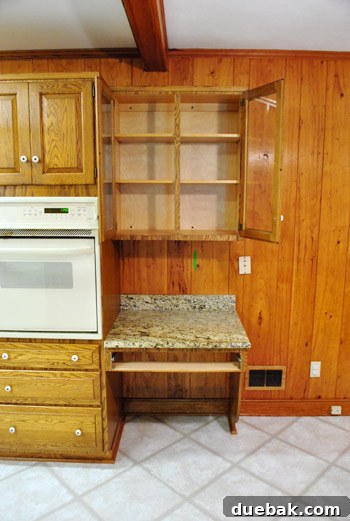
As you might have inferred, Sherry’s initial junk drawer organization antics were far more than just tidying; they were a foundational step in preparation for the complete removal of that desk area and the cabinet directly above it. The rationale is simple yet impactful: our future, expansive doorway, designed to foster a seamless connection between the kitchen and dining room, will precisely occupy this space. Without their removal, these existing fixtures would obstruct the grand opening we envision.
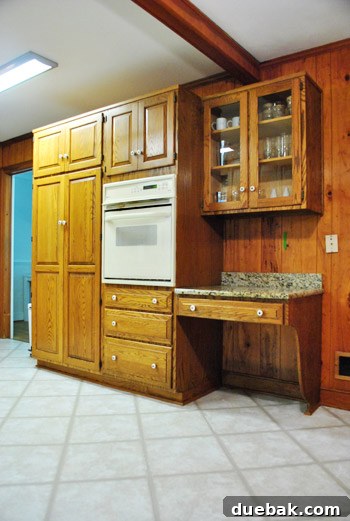
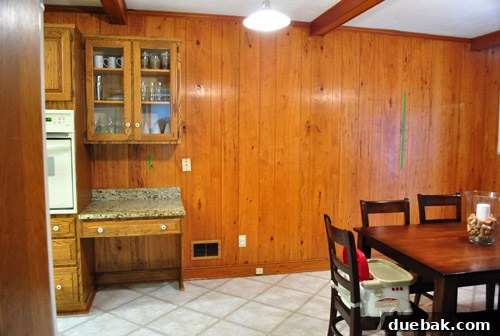
If you look closely, you can already discern the green painter’s tape outlining the future opening on the wall. These pieces of tape have been strategically in place for months, serving a crucial purpose: allowing us to “live with” the proposed doorway and assess its impact on the space. This period of consideration, spanning over 60 days, has led us to a firm conclusion: this is indeed the perfect location. The new doorway will not only magnificently open up the kitchen to the dining room but will also beautifully mirror the width of the main window in the dining room, creating an exquisite sense of balance and architectural harmony. We wholeheartedly embrace the decision to sacrifice that single upper cabinet and the desk area, knowing the immense gain in an open, flowing kitchen and dining room, complemented by a significantly larger island that will offer abundant storage and even serve as an impromptu “desk-ish” spot when inspiration strikes.
Sacrificing a Desk for Greater Functionality
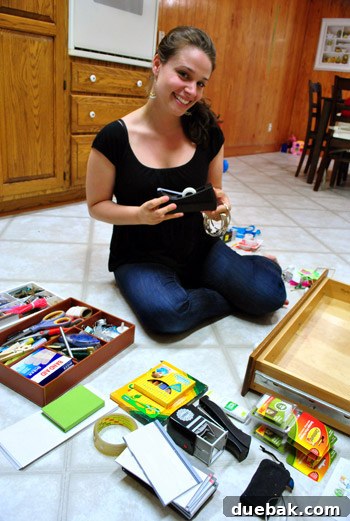
While we certainly could have devised ways to integrate or relocate this particular cabinet, the truth is that the desk has primarily functioned as a magnet for clutter – much like our current kitchen table, which we constantly strive to keep clear. Furthermore, we are fortunate to have ample upper cabinet storage elsewhere in the kitchen, meaning that relocating items from this specific cabinet posed no challenge. In fact, as you may recall, we had several empty bottom drawers ready and waiting for use, as demonstrated here, ensuring a smooth transition for all displaced items.
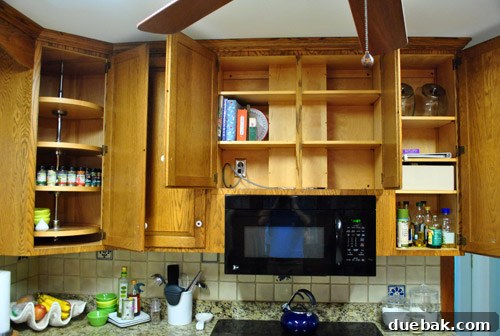
Indeed, transplanting all the contents of that glass upper cabinet – which Sherry affectionately refers to as housing her “obedient items” – into our mostly bare lazy Susan cabinet was remarkably straightforward. Every item found its new home snugly within the bottom tier, leaving ample upper space still available for future additions. This confirmed our belief that losing this particular cabinet would not compromise our kitchen’s storage capacity. With the junk drawer cleared and the upper cabinet emptied, we felt an undeniable readiness to dismantle this section of our kitchen. The time for action was yesterday.

Moreover, once our planned, expansive island is installed, the kitchen will boast an even greater abundance of stash space. The anticipation of this enhanced functionality further solidified our decision. With the junk drawer and its accompanying upper cabinet entirely cleared, we were more than ready for this small but significant slice of our kitchen to come down. The momentum was palpable, and the desire to move forward was immediate.
Demolition Day: Tackling the Upper Cabinet and Desk
Removing the Upper Cabinet: A Smooth Start
The upper cabinet proved to be surprisingly easy to remove. Our first step, driven by safety, was to carefully detach the doors, preventing any risk of shattering glass or potential injury during the process. We are hopeful about finding a new purpose for these glass-fronted doors, as we adore the aesthetic of such cabinets. Unfortunately, they don’t fit any of our other kitchen cabinets for a quick swap, which is a bit of a disappointment. However, we’re considering re-hanging the entire unit in another room of the house, perhaps a laundry room or a craft space, where its charm can still be appreciated. We’ll certainly keep you updated on its future!
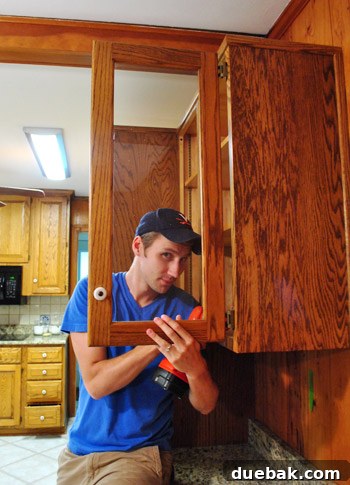
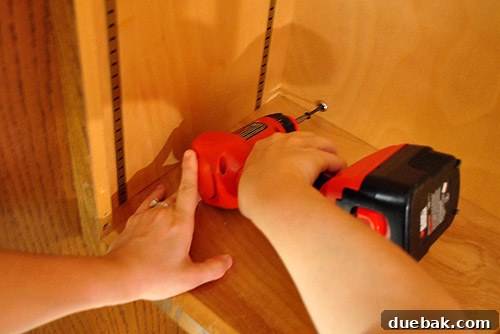
With the doors safely stowed, the next step involved a coordinated effort. I provided crucial support, bearing the weight of the cabinet, while Sherry expertly unscrewed it from both the wall and the adjacent cabinet. This teamwork ensured a controlled and safe removal, preventing any sudden drops or damage.
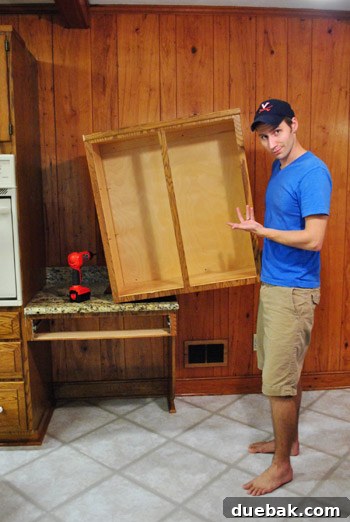
And just like that, the upper cabinet came down in a single, remarkably light piece. The ease of the task left me entirely unfazed, prompting me to break out my best smirky Vanna White impression. Just look at that slightly creepy, lopsided half-grin – it instantly reminded me of the distinctive facial expression of Mystery, the notorious “Pick Up Artist” from that reality show. Anyone else remember that memorable program?
Tackling the Desk Area: A Heavier Challenge
While the upper cabinet was a cinch, the small desk area below presented a slightly different, more formidable challenge. Sherry, drawing upon her previous experience, approached it with the same methodical technique she employed when removing the granite backsplash from our bathroom (a process detailed here). Her first move was to meticulously slice through the silicone caulk that firmly held everything in place using a sharp razor blade.
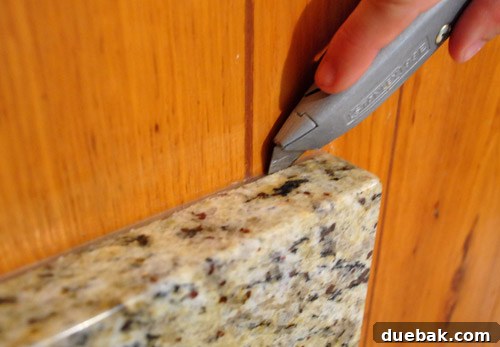
The backsplash section of the desk came off relatively easily. With a bit of strategic prying using a screwdriver and a hammer employed chisel-style to get behind it, it separated without too much fuss. This initial success gave us a false sense of security about the rest of the desk.
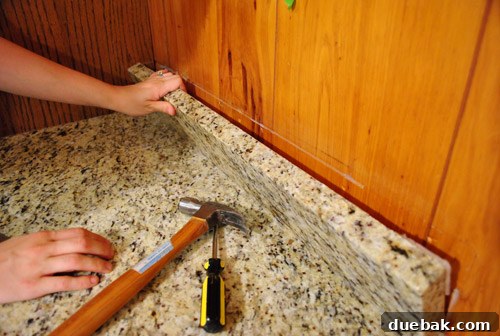
Next, Sherry proceeded to carefully slice through the clear caulk that adhered the counter to the wall, as well as to the adjacent cabinet and the drawer unit beneath it. We initially assumed that once the caulk was severed, the entire assembly would simply lift right off, a testament to our ongoing optimism in DIY projects.
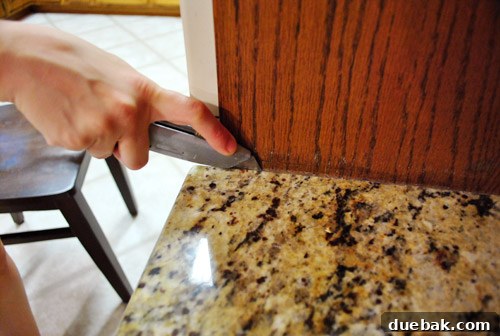
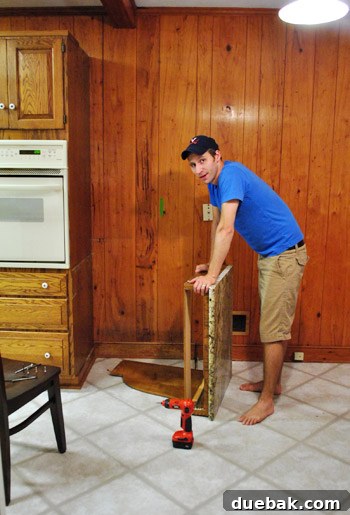
No such luck. Despite our initial assumptions, the desk refused to budge. We tugged, we shimmied, and we applied all our collective might. We re-sliced the caulk again and again, ensuring every last adhesion point was severed. We shimmied a few more times, just for good measure, hoping to coax it free. Finally, with one mighty, coordinated tug, the entire assembly – comprising the heavy granite countertop and the drawer unit – tipped over onto the floor. The sheer weight nearly pulled us down with it as we wrestled to prevent it from slamming uncontrollably to the ground. Let me tell you, granite is incredibly, deceptively heavy! The exhaustion on my face in the photo below is a genuine reflection of that struggle. A crucial lesson learned (and a stern reminder to ourselves and others): Always wear appropriate footwear when undertaking demolition work. Going barefoot, as we did, is incredibly foolish and strongly discouraged. Shame on us for that oversight.
The Aftermath and Unexpected Discoveries
Despite the strenuous effort and near-disaster, everything was finally gone, and thankfully, all our toes remained intact! The removal inevitably left some residual damage in its wake, including missing trim pieces and stubborn glue residue on the adjacent cabinet. Both of these issues are relatively straightforward to address. We’ll meticulously scrape off the dried glue, use wood putty to fill any holes, and then sand and stain the affected areas to seamlessly match the surrounding cabinetry. The missing trim at the top will also be replaced, restoring a finished look.
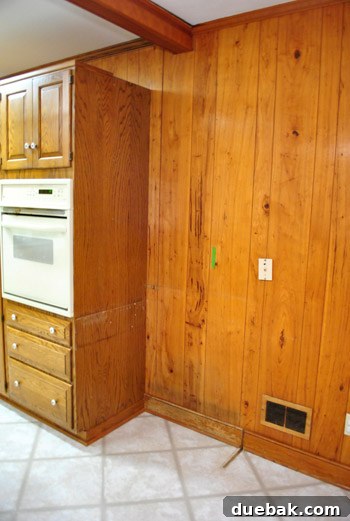
Given our ultimate plan to prime and paint all the kitchen cabinets during Phase 1, we may opt to forgo the extensive sanding and staining, as the new paint will cover these minor imperfections. However, addressing the trim is non-negotiable for a polished finish, even if temporary.
The Hidden Hardwood Revelation: A Glimpse into Phase 2
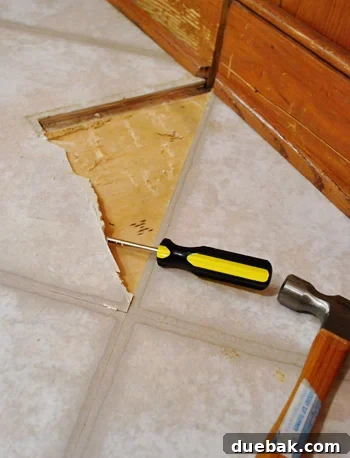
The most notable “damage” or, more accurately, the most exciting discovery, was the hole in the floor where the desk’s support leg once sat. We had optimistically hoped that the existing flooring extended underneath this area, but alas, it did not. What we found, however, was far more interesting:
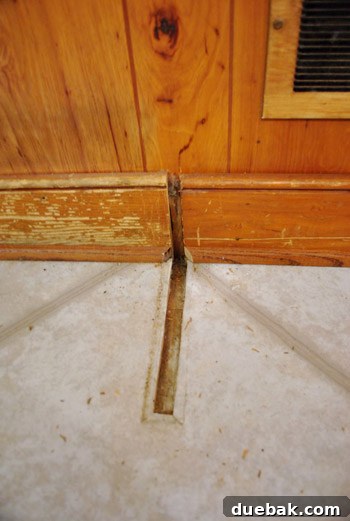
Fortunately, the previous owners had thoughtfully left behind a stash of spare vinyl floor tiles, a homeowner’s treasure! So, my immediate task was to carefully scrape up the old, damaged tile from this spot, which, I must note, was surprisingly thick and firmly adhered.
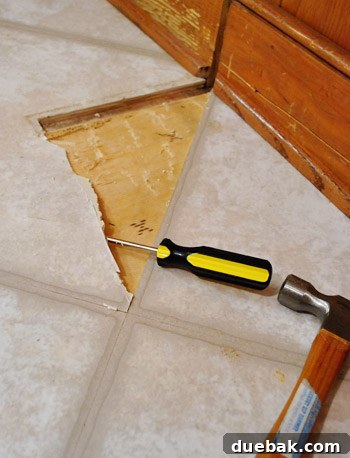
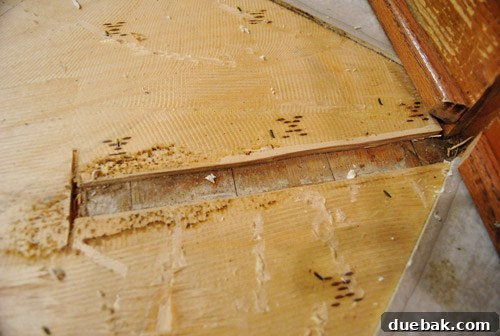
…and what it revealed was truly remarkable and incredibly exciting: original hardwood flooring! Wahoooooooo! Picture me doing flips, cartwheels, and enthusiastically clicking my heels in the air! This beautiful surprise lay hidden beneath a thick layer of plywood. This discovery naturally sparked an internal debate: should “restore old hardwood floors” be added to our kitchen to-do list? For now, the answer is a resolute “nah.” This is unequivocally a Phase 2 project, as it would necessitate the removal of all lower cabinets and appliances, which currently rest atop both the vinyl and plywood layers. Moreover, we are not yet certain if this magnificent hardwood extends throughout the entire kitchen. This particular section of the room historically served as a family room, making it plausible that the main kitchen area, which likely had a different flooring history, might not share this same hardwood foundation. Only time and further demolition in Phase 2 will tell the full story.
Temporary Fixes and Future Plans for Flooring and Trim
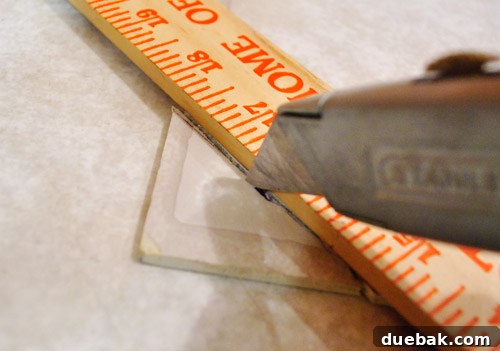
But back to the immediate task: replacing the floor tile. After the exciting hardwood discovery and a moment of internal celebration, I measured precisely how much of the replacement tile I needed to trim. Then, with a sharp razor, I made the clean, accurate cut.
This particular vinyl tile wasn’t the peel-and-stick variety, so instead of applying new adhesive, I relied on the generous amount of leftover glue residue already present on the plywood subfloor. I carefully slid the new tile into its designated spot, ensuring a snug and secure fit.
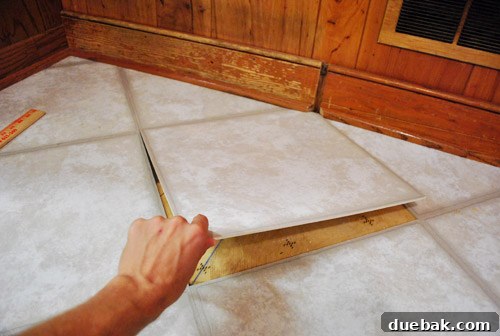
To ensure proper adhesion and a perfectly level surface, we then placed Clara’s car seat directly onto the newly laid tile for an extended period, allowing its weight to firmly hold the tile in place while the residual glue cured. The result? The tile is now wonderfully secure and looks as good as new, seamlessly blending with the surrounding floor.
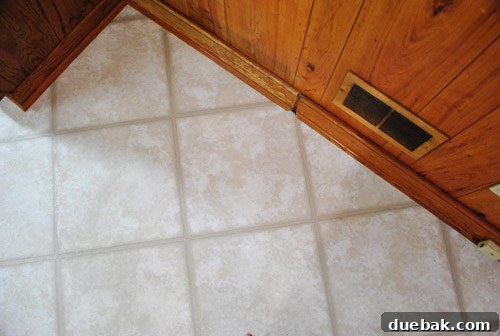
Well, almost new, except for that small gap in the molding. But fortunately, a perfectly sized piece of quarter round, originally nailed to the front of the desk, was salvaged and repurposed for this spot. Sherry then demonstrated her impressive spackling skills, expertly bridging the gap in the baseboard and addressing several other minor cracks and holes in the paneling, ensuring a smooth, unified surface in preparation for painting.
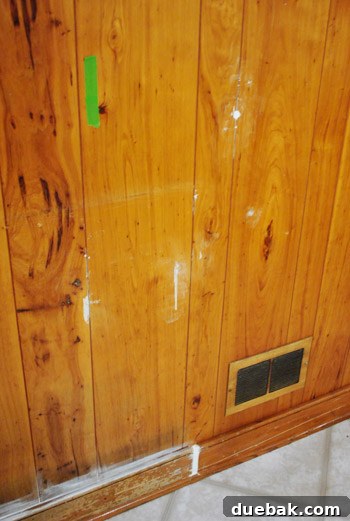
Of course, had this section of the baseboard not been slated for complete removal with the upcoming doorway to the dining room, we would have undoubtedly pursued a more professional, permanent solution – purchasing new baseboard, precisely cutting it to fit, and securely nailing it in place rather than relying on a temporary spackle patch. However, given that this entire area will soon be “gone-zo” when we open up the doorway, this quick and effective fix serves its purpose perfectly for now, allowing us to proceed with the next steps of our Phase 1 transformation without delay.
What’s Next: Brightening Our Kitchen with Paint
Now that the cabinet is gone and those unsightly caulk spots on the wall have been addressed, it signals the definitive start of our priming and painting phase. We’ve learned that opening up the wall for the new doorway requires a permit, a process that might take some time. In the interim, we are more than happy to brighten up that dark paneling, which has long contributed to a somewhat dim atmosphere in the kitchen. So, it’s sayonara to the dark paneling! We’ll have more details on this exciting development soon – in fact, sooner rather than later if all goes according to plan. As you read this, we are very likely already hard at work, applying that crucial first coat of primer, ushering in a brighter, fresher chapter for our kitchen.
Sherry’s junk drawer switcheroo was actually just the beginning… the beginning of our kitchen makeover. At least the first phase of it.
With our self-imposed six month waiting period running out earlier this month, we finally started putting some plans into action last week (we like to force ourselves to live with things for a while before doing anything drastic – you know, so we’re sure to remove/demo/open the right things after some thought). The plan: to do sort of a “Phase 1” kitchen makeover where we work with as much of the existing kitchen as possible first (aka, keep the cabinets, the countertops, the vinyl floor, the paneling, the beams, etc). Then down the road we’ll enter “Phase 2” (where we do a more invasive reno after saving our pennies and really thinking about what we want/need and what we can keep/work with). But for now we’re happy to ride the Phase 1 wave (and see where it goes and how much our “refreshed” kitchen will meet our needs before jumping the gun on Phase 2 down the line).
Here’s a taken-recently shot of the kitchen as it looks now for reference.
And here’s a taken-a-long-time ago shot from the other direction (see the stockings and the tree?) to refresh your memory. Apparently we don’t take many photos of the room from that direction, so this one is the most recent:
And now here’s the Phase 1 breakdown. Even this first phase has a lot of steps to it, so it won’t necessarily be a quick task (we plan to tackle it on and off as we have the funds/energy). But here’s a quick rundown of what we want to eventually accomplish (not necessarily in this order):
- Remove woodstove insert from fireplace <– done here
- Prime and paint fireplace <– done here
- Remove the desk area to the right of the oven to make room for a nice wide doorway into the dining room (we’ll be adding an island so a desk is redundant)
- Prime and paint all that dark paneling
- Open the aforementioned double-wide doorway between the kitchen & dining room (which will line up with the big dining room window for balance – so it looks like it has always been there) <– we’ll need a pro and a permit for this
- Swap the too-low-hanging microwave over the cooktop for a proper hood (the current microwave isn’t to code and causes steam to go everywhere but into the vent)
- Replace the wall oven with a wall oven/microwave combo
- Prime and paint the cabinets
- Completely redo the backsplash
- Overhaul and update the lighting (buh-bye florescent lights)
- Add an island full of storage and seating space where the current kitchen table resides (since the wide doorway to the dining room will make large gatherings at our big round table in there nice and convenient)
So as you may have guessed, Sherry’s junk drawer shenanigans were all in preparation for removing that desk area and the cabinet above it. Why? Because our future mega-doorway will slice right through it otherwise.
Can you see below where we’ve begun to tape off the future opening with green painter’s tape? We actually have had those pieces of tape up for months- just to live with them and see if we like that placement. And after 60+ days of consideration we’ve come to the conclusion that it’s the perfect location for the doorway, since it’ll open up the kitchen to the dining room while mirroring the width of the front window in the dining room on the other side for some nice balance. We don’t mind losing that one upper cabinet and desk area for the sake of a nice open kitchen and dining room along with a much larger island full of storage (and desk-ish usage if the mood strikes).
Obviously we could have worked around this cabinet if we wanted to, but so far that desk has only served as a junk magnet (kind of like the kitchen table that we’re desperately trying to keep clear). And we’re not short on upper cabinet storage at the moment so there’s lots of room for stuff to relocate (and you already saw that we had a few empty bottom drawers to put to use here):
In fact, we had no problem transplanting all of the things in that glass upper cabinet (full of obedient items according to the wife) into our mostly bare lazy susan’d cabinet. Here they are all packed into the bottom tier (with upper space to spare):
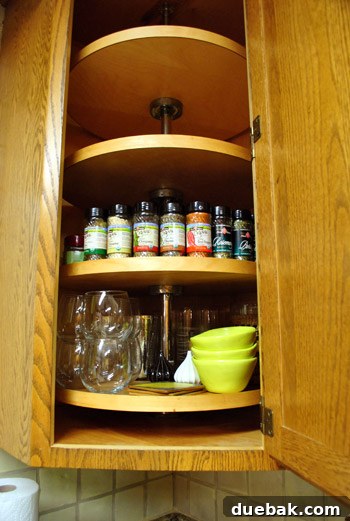
Not to mention that once we add a nice big island we’ll have tons more when it comes to stash space in this room. So with the junk drawer and upper cabinet all clear, we were ready for this little slice of our kitchen to come down. Like yesterday.
The upper cabinet was a cinch. First we removed the doors so there was no shattering of glass or slicing of body parts in the process. We’d like to find a use for these (we love a glass-fronted cabinet) – though they unfortunately don’t fit any of our other kitchen cabinets for a quick switch. Boo. Might rehang the whole thing in another room though. We’ll keep you posted.
Then I supported the weight of the cabinet while Sherry unscrewed it from the wall and the cabinet next to it.
And just like that, the cabinet came down in one remarkably light piece. I was so unphased by the task that I even broke out my smirky Vana White impression. Look at that creepy lopsided half-grin. It reminds me of a face that Mystery (aka: The Pick Up Artist) would make. Anyone remember that show?
So the top cabinet was a cinch. But the little desk area below was a slightly different story. Sherry approached it the same way that she removed the granite backsplash from our bathroom (seen here). First she used a razor to slice through the silicone caulk holding it in place.
The backsplash part came off pretty easily (with a little prying with a screwdriver and a hammer used chisel-style to get behind it).
Then Sherry sliced the clear caulk holding the counter to the wall as well as to the other cabinet and the drawer below it – assuming it would just lift right off.
No dice. We tugged and shimmied that sucker with all of our might. We sliced the caulk again and again. We shimmied a few more times (just for good measure). And finally, in one strong tug, the whole thing (granite and drawer) tipped over onto the floor – nearly pulling us down with it as we struggled to keep it from slamming to the ground. Man, granite is HEAVY. This is my tired face. Note: Wear shoes when demo-ing. Barefoot = stupid and not recommended. Shame on us.
But at least everything was gone (and we still had all of our toes). There was some residual damage left in its wake – like some missing trim and some glue on the remaining cabinet. Both are semi straightforward fixes (we just have to scrape off the glue, use wood putty to fill holes, sand and stain things to match, and add back the missing trim up top).
Since we eventually plan to paint the cabinets we may not even bother with all the sanding and staining, but we’ll definitely tend to the trim.
The most notable “damage” was the hole in the floor where the leg support once sat. We had hoped that the flooring went under the desk’s leg, but nope:
Lucky for us, the previous owners had left some spare vinyl floor tiles behind. So all I had to do was scrape up this old damaged tile (which was VERY thick, by the way)…
… to reveal something very interesting indeed: original hardwood flooring (wahoooooooo! picture me doing flips and cartwheels and clicking my heels in the air) underneath a thick layer of plywood. Perhaps I should add “restore old hardwood floors” to our kitchen to do list? Nah… that’s more of a Phase 2 project since it’ll necessitate removing all the lower cabinets and appliances which sit on top of the vinyl and plywood layers. Plus we’re not certain it runs all the way through the kitchen (this part of the room used to be a family room, so it stands to reason that there’s not any hardwood under the main part of the kitchen – I guess time will tell).
But back to the floor tile replacement task at hand. After I removed that tile and went crazy over the hardwoods, I just measured how much of the tip I needed to cut off of my replacement tile, and then used a razor to make my cut:
This isn’t the type of vinyl tile with a peel-n-stick base, so I just relied on the leftover glue residue on the plywood below (of which there was plenty) and slid the new tile into place.
Then we sat Clara’s carset on that tile for a while to hold it down while the glue took hold. Now it’s nice and secure. And it looks like new, right?
Well, except for that gap in the molding. But luckily I was able to reuse a perfectly sized piece of quarter round (that had been nailed to the front of the desk) and Sherry broke out her mad spackling skills to bridge the gap in the baseboard (along with some other cracks and holes in the paneling).
Of course, had this part of the baseboard not been on the “to be removed” area of the wall (our doorway to the dining room will be right here), we probably would’ve gone the more professional route (buying some baseboard, cutting it to fit, and nailing it in instead of caulking the gap). But this works for now since it’ll all be gone-zo when we open up the doorway to the dining room anyway.
And now that we’ve got this cabinet gone and those ugly caulk spots all over the wall, I guess that means it’s time to prime and paint (we learned that opening up the wall calls for a permit – which might take a while – so we’re happy to brighten up that dark paneling in the meantime). Sayonara dark paneling. But more on that later… well, sooner rather than later if all goes well. In fact, we’re probably priming as you read this.