
Houston, we have liftoff! Our ambitious kitchen renovation journey has officially reached a pivotal stage with a major flooring decision. While the thrill of transforming our kitchen is palpable, our path hasn’t been without its twists and turns. Initially, our hopes were set on discovering beautiful, original hardwood floors concealed beneath the existing linoleum. This dream was fueled by a previous uncovering of hardwoods extending under the fireplace side of the room, sparking optimism that this treasure might stretch throughout the entire kitchen. However, as is often the case with home renovations, reality had a different plan for us.
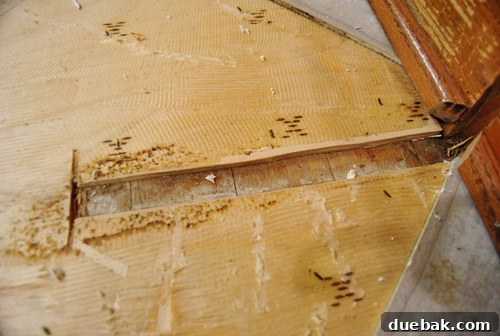
Our initial optimism was quickly tempered when we removed the transition strip between the kitchen and the adjoining office. Instead of the gleaming hardwood we longed for, we were met with a less inspiring sight: raw plywood. This discovery instantly signaled an end to our dreams of simple refinishing and necessitated a complete re-evaluation of our kitchen flooring strategy. We had to start from scratch, embarking on a quest to find a new floor that would not only meet our aesthetic preferences but also navigate a unique set of structural limitations.
The previous owners had shared crucial information that guided our choices from the outset. We learned that the kitchen floors were not robust enough to support heavy tile without significant, costly structural reinforcement and leveling from underneath. This immediately ruled out tile, a popular and durable option for kitchens, saving us from a potentially budget-busting endeavor. Even laying new hardwood planks presented concerns. Hardwood, being thick and heavy, might have added excessive weight to a subfloor that was already less than ideal, potentially leading to future issues or requiring further, expensive modifications. Therefore, our search quickly focused on lighter, more flexible, and installation-friendly options. Based on these practical constraints, we began to hone in on three primary contenders, each offering the promise of a successful DIY installation:
- Cork flooring: Known for its natural properties and lightweight nature.
- Floating wood laminate: Brands like Pergo offered a wood-look aesthetic without the weight of solid hardwood.
- Vinyl or linoleum/marmoleum: Versatile and often more forgiving materials.
Our journey through flooring options began with an exciting, albeit ultimately unfulfilled, idea. We were captivated by the concept of installing sleek, eco-friendly linoleum in a chic, tone-on-tone striped pattern. We had seen designer Candice Olsen implement this unique style beautifully, creating sophisticated spaces that felt both modern and inviting. While the idea of striped linoleum might sound unconventional or even “tacky” to some, in the right hands, it exuded an undeniable elegance. We reasoned that if a designer known for high-end aesthetics and uncompromising quality, who would easily spend thousands on decorative sconces, chose such a design, it certainly had merit. However, despite diligent searching through countless local showrooms and online stores, we simply couldn’t find a linoleum product that captured the specific aesthetic we envisioned. We worried about the “upgraded kitchen but forgotten floors” effect – a common renovation pitfall where a new kitchen is installed, but the flooring feels like an afterthought. It’s a subtle yet impactful detail that can diminish the overall impression of a well-designed space. Ultimately, we concluded that this particular vision, while appealing, was not going to materialize with readily available options.
Happily, we moved on from the striped linoleum concept, realizing that sometimes a design idea, however charming, just isn’t the right fit. This pivot also led to an important realization about our overall design philosophy: we generally prefer our floors to serve as a supportive backdrop, allowing other elements in the room to take center stage. This includes vibrant wall paint, carefully selected textiles on chairs and windows, distinctive light fixtures, and curated art and accessories. With this clarified vision, our focus narrowed to two strong possibilities: 1) a floating, click-lock, wood-look floor, similar to Pergo, or 2) cork flooring. Cork emerged as a particularly attractive option due to its significantly lighter weight compared to traditional hardwood or even bamboo, aligning perfectly with our structural limitations. We then explored numerous samples in both categories, eventually singling out two options that resonated most with our evolving aesthetic.
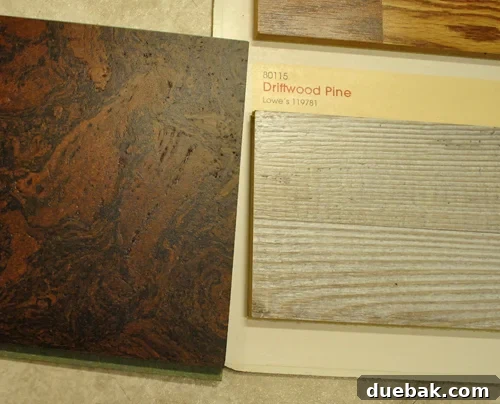
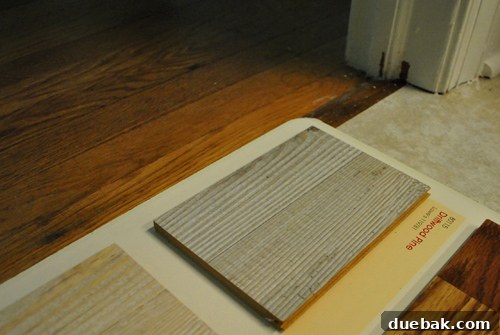
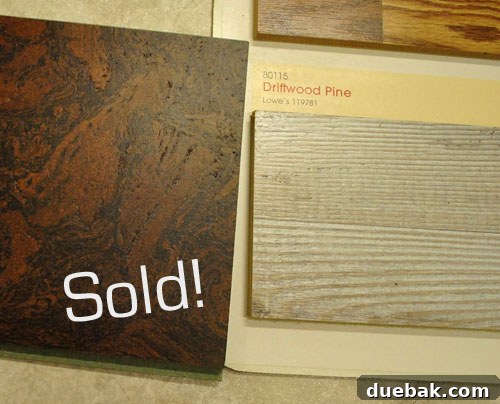
One of our top contenders was a striking whitewashed Pergo laminate flooring, sourced from Lowe’s, priced at an attractive $3 per square foot. This particular product, aptly named “Driftwood Pine,” had an undeniable charm. What truly drew us to it was its remarkable resemblance to the existing hardwood floors found throughout the rest of our house, with the distinct and fresh addition of a whitewashed finish. The planks were designed to mimic the exact size of our current hardwoods, and beneath the lighter wash, the warm wood tones were still visible. This meant that installing it in the kitchen would create a cohesive flow, almost as if we had simply chosen to whitewash the original hardwoods in this particular space, while maintaining the same style that ran through our office, dining room, and bedrooms. It offered a bright, airy aesthetic that initially felt like a perfect fit for a modern kitchen update.
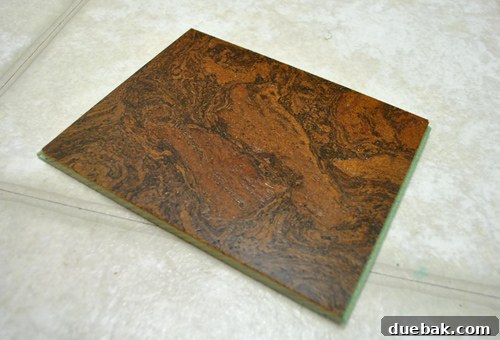
The alternative, and ultimately victorious, option was a rich mocha cork floor. This exquisite “Porto” design, from the Libson Cork collection at Lumber Liquidators, was a find we couldn’t ignore. It was on a “super sale” at just $3.26 per square foot, an exceptionally compelling price point. Cork flooring typically commands a higher price, often starting around $4 or $5 per square foot and easily reaching upwards of $10 or more, especially for premium varieties. This significant discount made an already appealing material even more attractive, solidifying its position as a serious contender for our kitchen transformation. The deep, warm tones of the mocha cork offered a stark contrast to the whitewashed laminate, presenting a different but equally compelling design direction.
Our decision-making process took an interesting turn when we critically re-evaluated our initial attraction to the whitewashed Pergo. We realized that its light tone was similar to the existing vinyl flooring in our kitchen, meaning our eyes were simply accustomed to seeing that particular hue underfoot. However, as we envisioned the broader scope of our kitchen renovation – painting the cabinets a crisp white, integrating sleek stainless steel appliances, and making numerous other contemporary upgrades – a crucial insight emerged. We concluded that a warmer-toned floor would provide a much-needed balance to the potentially cool palette of white cabinets and stainless steel. Opting for a floor with rich, warm undertones would prevent the entire room from feeling overly stark or monochromatic with an abundance of white and gray elements. This realization was a ‘boom’ moment; it instantly eliminated the whitewashed Pergo from consideration. Buh-bye, gray-washed Pergo, your time in the spotlight was brief but informative.
The final confirmation of our choice came from an unexpected, yet utterly logical, source: our Pinterest inspiration boards. It was amusing to discover that nearly every kitchen image I had pinned, consciously or unconsciously, shared a striking commonality: rich, dark floors. This revelation about subliminal messages in design preferences was quite profound; it’s incredible how long we can overlook such consistent patterns in our own curated tastes. These inspiring floors were, in fact, remarkably similar in tone to the mocha hardwood floors we had installed in our first kitchen, a design choice we still reminisce about fondly to this day. It also bears mentioning that while some homeowners prefer lighter wood floors for their perceived ability to conceal dust, we never experienced such issues with our previous mocha floors. They weren’t excessively dark, nor were they an ebony shade; their “mocha” depth proved easy to keep clean and never highlighted dust or debris, striking a perfect balance between elegance and practicality.
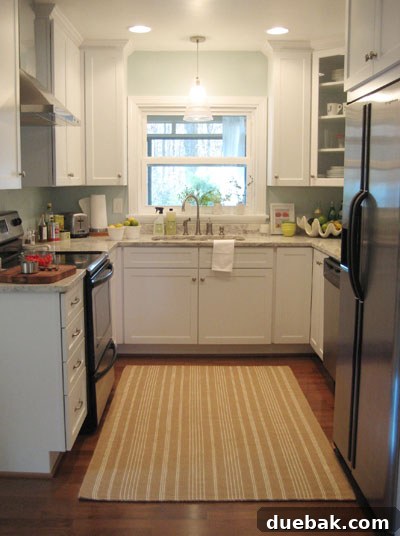
Decision made, and the path ahead was clear: mocha cork it is! This choice not only aligned with our newfound aesthetic clarity but also offered a strategic advantage. Our long-term plan includes refinishing the existing hardwoods throughout the rest of the house in a similar warm, mocha tone, ensuring an even more seamless, cohesive flow and a ‘whole-house’ feeling down the line. However, before fully committing to the cork, we embarked on thorough research, delving into the pros and cons of cork flooring to ensure it was truly the best fit for our high-traffic kitchen environment. We discovered an impressive list of benefits that make cork an exceptionally practical and desirable kitchen flooring material.
Cork is inherently warm underfoot, providing natural insulation that contributes to a comfortable kitchen. Its cellular structure also makes it incredibly quiet, absorbing sound rather than reflecting it, which is a significant advantage in a busy hub like a kitchen. Beyond comfort, cork boasts natural resistance to fire, water, and bacteria, making it a hygienic and safe choice for food preparation areas. One of its most celebrated features is its softness underfoot; this resilience is a game-changer for a kitchen. It means less strain on knees and backs from prolonged standing and, delightfully, a higher chance of dropped dishes surviving impact without shattering. Furthermore, cork is an eco-friendly choice, harvested sustainably from the bark of cork oak trees without harming the tree itself, a detail that resonated deeply with our desire for sustainable home improvements. These numerous advantages painted a compelling picture for cork.
Of course, no material is without its drawbacks, and cork is no exception. We learned that the finish on cork floors, much like traditional hardwoods, can be susceptible to scratches, particularly from pet claws or abrasive debris. Additionally, heavy appliances or furniture, if not properly protected, could potentially dent the surface over time. This is where vigilance and simple preventative measures, such as applying felt pads to furniture legs, become crucial. However, the reassuring news was that, like hardwoods, scratched or dented cork floors are not irrevocably damaged. They can be sanded down, re-stained, and re-sealed, effectively renewing their appearance and extending their lifespan. This reparability made us feel much more comfortable with our choice, as we are certainly not strangers to the maintenance of oak flooring, which shares similar characteristics and care requirements. The overall maintenance seemed well within our capabilities, aligning perfectly with our DIY approach.
But because we consider ourselves thorough, bordering on neurotic, we took our research one step further. We reached out to four trusted friends and acquaintances who had personal experience with cork flooring. We asked them to be brutally honest, to share everything they loved, hated, what they would change, and whether they would recommend it. To our immense relief, there wasn’t a single complaint among them. Every individual enthusiastically reported loving their cork floors and unequivocally stated that they would make the same choice again. This real-world validation was the final seal of approval we needed. Whew! With all doubts assuaged, we finally went for it.
With our decision firmly made and research complete, we placed an order for 265 square feet of the beautiful mocha cork. This quantity was carefully calculated to cover the entire 25-foot kitchen and the adjoining laundry room, with an essential allowance for approximately 10% extra. This buffer is standard practice in flooring installations, accounting for cuts, mistakes, and potential future repairs – we call it our “cork-tastrophe” contingency! Ever the savvy shoppers, I managed to haggle with the Lumber Liquidators representative, securing a $15 discount off our $863 cork order, bringing the total down to a more pleasing $848. Every penny saved contributes significantly to a renovation budget, no matter how large the project. While this purchase isn’t a mere drop in the bucket, we are incredibly excited about the prospect of installing it ourselves. The click-and-lock system promises a relatively straightforward DIY process, as it doesn’t require any messy adhesives, further reducing labor costs and simplifying the installation. This hands-on approach adds to the satisfaction of the project.
The truly awesome thing about this purchase is the incredible value it represents. In our area, refinishing existing hardwoods typically costs around $3-$4 per square foot. Our new cork floors, priced at $3.26 per square foot, fall squarely within that range. This means we’re getting brand new, beautiful, and highly functional cork floors for roughly the same price as merely refinishing the old, elusive hardwoods we had hoped to find under that ancient linoleum. It’s a win-win situation, transforming a renovation challenge into a smart, cost-effective solution. In the enthusiastic words of our daughter Clara: “yoi!” (which is her charming way of saying “yay!”).
There’s a touch of irony in our excitement: installing the floor is one of the very last tasks on our extensive kitchen renovation checklist. Floors typically go in after all major demolition, painting, and appliance installations are complete to protect them from potential damage. However, the incredible sale price on the cork was simply too good to pass up, prompting us to pounce on the opportunity even if it means storing the planks for a while. For anyone wondering about the remaining mountain of work we need to conquer before we can finally “cork things up” and lay our beautiful new floor, here’s a brief rundown of the ambitious tasks ahead:
- Cabinetry Transformation: We’ll be switching out, altering, and relocating some of the existing cabinets to optimize the layout and functionality of the kitchen.
- Appliance Upgrade: Ordering and installing new appliances is crucial, as our current kitchen is a mix of bisque and black, which needs to be unified with modern stainless steel.
- Doorway Expansion: A significant structural change involves opening the doorway between the dining room and kitchen, a project that requires careful planning, permits, and professional contractors.
- Peninsula Creation: We plan to create a functional and stylish peninsula, potentially from secondhand finds, custom-built elements, or newly purchased cabinetry, to enhance counter space and seating.
- Countertop Renewal: Upgrading the counters is next on the list, and we’re even considering a DIY approach with concrete countertops if the floor can adequately support their weight and we can ensure structural integrity.
- Backsplash Redo: A complete overhaul of the backsplash is planned, and we have something pretty fun and unique in mind – more details on that will be shared later!
- Cabinet Painting: To achieve a seamless and fresh look, both the old and new cabinets will be painted a crisp white, creating a cohesive and bright aesthetic.
- Open Shelving Integration: Adding open shelving will not only provide storage but also tie in with our exciting, to-be-announced backsplash idea, adding visual interest and character.
- Lighting Modernization: A complete upgrade of the lighting system is essential, bidding a final goodbye to the old fluorescent tube lights in favor of more efficient and aesthetically pleasing fixtures.
So, yes… you might not see our “after” kitchen pictures until well into 2013! Just kidding. Or maybe not entirely. Renovations, especially ambitious ones, often take longer than anticipated. Have any of you recently embarked on a flooring purchase journey? Did you go crazy for cork, like us, or perhaps opt for whitewashed wood (or faux wood) in your own spaces? Or have you, like us, experienced that amusing ‘aha!’ moment, realizing there’s a subliminal common thread among all the design inspirations you’ve been pinning on Pinterest? It was genuinely hilarious when we discovered that all our dream kitchens virtually had identical floors.