
Update: For an even deeper dive into cabinet painting with updated tips, more photos, detailed insights, and a helpful video, be sure to visit our newest guide here.
Transform Your Kitchen: The Ultimate DIY Guide to Painting Cabinets
Dreaming of a kitchen refresh but intimidated by the cost of a full renovation? You’re in luck! Painting your kitchen cabinets is one of the most impactful and budget-friendly DIY projects you can undertake. With a little patience and the right techniques, even a novice can achieve a professional-looking finish that breathes new life into their home. If you can confidently paint a wall, you absolutely have what it takes to tackle this project. Even if your painting experience is limited, by following these simple, tried-and-true rules, you’ll find it remarkably difficult to go wrong.
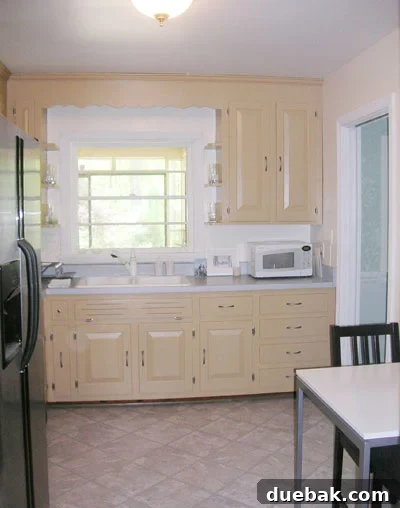
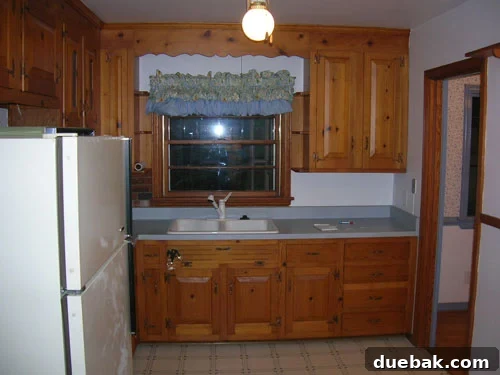
We’ve personally experienced the magic of painted cabinets. Before our current newly renovated kitchen, we transformed our previous home’s original 50-year-old knotty pine cabinets. This quick makeover served as a perfect interim solution, allowing us to enjoy a fresh space while saving up for a complete replacement. Take a look at the drastic change from the dark, dated kitchen we first inherited:
And behold the refreshing “after” – a bright, inviting space achieved with just a few hours of dedicated prepping and painting:
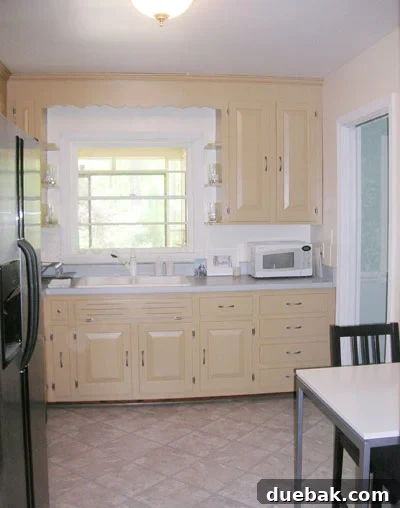
Ready to discover how we achieved this incredible transformation? It’s easier than you think. Let’s dive into the steps!
Step 1: Vision, Selection, and Deep Cleaning
Before you even think about brushes and rollers, the first crucial step is to define your vision. What kind of look do you want for your kitchen? Bring home various paint swatches and consider how different colors will interact with your existing countertops, flooring, and natural light. Do you envision a crisp white, a sophisticated gray, or a bold pop of color? This is also the perfect time to choose new hardware if you’re planning an upgrade. Why now? Because the spacing of holes for new pulls or knobs often differs from older hardware. Knowing this upfront will save you time and potential headaches later. Once your aesthetic choices are made, give all cabinet doors, drawer fronts, and cabinet frames a thorough cleaning with a degreasing cleaner and water. Kitchens accumulate years of grease, grime, and spills, and proper cleaning is absolutely essential for paint adhesion. Think of it as preparing a clean canvas for your masterpiece – a pristine surface ensures your paint adheres beautifully and lasts longer.
Step 2: Disassembly and Workspace Setup
Now it’s time to get hands-on. Carefully remove all cabinet doors, drawer fronts, and all existing hardware, including hinges. Even if you plan to reuse hardware, removing it is vital for a seamless paint job. A clever trick to make reassembly a breeze is to label each door, drawer, and its corresponding hinges with a numbering system (e.g., “U1” for upper cabinet 1, “D1” for drawer 1, etc.) using painter’s tape on the inside surface. Store all hardware (screws, hinges, pulls) in clearly labeled Ziploc bags, one for each door/drawer, to prevent lost pieces. Next, prepare your painting area. You’ll need a large, flat space, ideally a garage or spare room, where you can lay out all your cabinet components. Lay down a large fabric or plastic drop cloth (readily available for just a few dollars at any hardware store) to protect your floors and provide a clean working surface. This setup allows you to paint all removable parts simultaneously, ensuring consistent coats and giving you full, unobstructed access to the cabinet frames still in your kitchen.
Step 3: Repair and Fill Existing Holes
If your new hardware requires different hole spacing than your old hardware, or if your cabinets have any minor dings or imperfections, this is your moment to make them disappear. Purchase a good quality wood filler – a single tube, usually around $6, should be more than sufficient. Apply the wood filler to all unwanted holes or blemishes, ensuring it’s slightly overfilled. Don’t worry about matching the exact wood tone since you’ll be painting over it. Allow the filler to dry completely according to the manufacturer’s instructions. Once dry, gently sand the filled areas flush with the surface of the cabinet, creating a smooth, unblemished base for painting. This step is crucial for achieving a factory-like finish that looks professional and clean.
Step 4: The Importance of Sanding (and Safety First!)
Sanding is a step that some people are tempted to skip, but it’s often critical for optimal paint adhesion, especially on glossy surfaces. If your cabinets have a matte finish that feels slightly absorbent, like a raw cutting board, you might be able to bypass this step. However, if your cabinets feel smooth, shiny, or coated with polyurethane – akin to a laminated piece of paper or a credit card – then sanding is your best friend. A light sanding with fine-grit sandpaper (120-180 grit is typically sufficient) will gently scuff the surface, creating microscopic etches that allow the primer and paint to grip much more effectively. You can use an electric sander for larger, flat surfaces to speed things up, or hand-sand intricate areas. After sanding, meticulously wipe down all surfaces with a tack cloth or a damp cloth to remove all dust particles. Leaving dust behind can lead to a bumpy, uneven paint finish.
A Critical Safety Note: If your home is older and your cabinets have been painted decades ago, there’s a serious risk of lead paint. Sanding lead paint can release hazardous dust into the air. Before sanding, it is absolutely essential to test for lead using an inexpensive lead test kit (available for around $6 at hardware stores). If lead paint is detected, consult a professional for safe removal or take extreme precautions, including proper respirators, containment, and cleanup protocols. Your health and safety are paramount!
Step 5: Prime Time with Oil-Based Excellence
This is arguably the most critical step for a durable and long-lasting cabinet paint job. Due to the inherent grease, food splatters, and natural wood tannins that kitchen cabinets endure, an oil-based primer is non-negotiable. While water-based primers often claim to work on cabinet surfaces, our experience has shown that wood stains and grease can seep right through them, leading to discoloration over time. Oil-based primer acts as an impenetrable barrier, effectively blocking stains and creating an incredibly strong bonding surface for your paint. Apply one even coat of oil-based primer using a good quality roller – we highly recommend wool or polyester rollers (brands like Purdy are excellent) over foam, as foam rollers can create bubbles and an uneven finish. Use an angled brush to reach into tighter spaces, corners, and any decorative grooves on your doors. Don’t be concerned if you can still see some of the original wood tone peeking through after one coat; the primer’s primary role is adhesion, not complete coverage. You’ll want to dedicate a separate brush and roller for priming, especially with oil-based products, as cleaning them thoroughly can be challenging. Many DIYers opt to simply dispose of or designate these tools for future priming projects, starting fresh with new tools for the paint coats to ensure the smoothest possible finish.
Step 6: Laying Down the Color – The Painting Phase
You’re in the home stretch! With your cabinets properly primed, it’s time for the color. For kitchen cabinets, a high-quality latex paint with a semi-gloss or satin enamel finish is ideal. These finishes offer excellent durability, resist moisture, and are incredibly easy to wipe clean – perfect for a busy kitchen. You’ll need at least two thin, even coats for a rich, uniform color. While most experts advise waiting a few hours after primer, and then between paint coats, some durable paints and primers allow for quicker recoat times. Always check the manufacturer’s recommendations for drying and recoat times. For application, continue to use a high-quality wool or polyester roller for large, flat surfaces. For smaller areas and intricate details, a mini foam roller can offer excellent control, while an angle-tipped brush is indispensable for “cutting in” edges, reaching crevices, and navigating any raised panels with precision. The angled bristles make it significantly easier to maintain clean lines compared to a flat-tipped brush. Remember, thin, even coats are always better than one thick coat, which can lead to drips, uneven drying, and a less durable finish. If you opt to paint the inside of your cabinet doors, a common approach is to prime and paint them first. After they are thoroughly dry and cured (we recommend waiting at least five days), flip them over and then prime and paint the exterior. This method ensures that any minor imperfections from being flipped face down are hidden on the inside of the cabinet, where they are less noticeable.
Step 7: The Art of Patience – Curing Time
This is arguably the hardest step for eager DIYers: waiting. After applying your two coats of latex paint, your cabinets might feel dry to the touch within a few hours, but they are far from fully cured. Paint needs time to harden and achieve its maximum durability. Most experts recommend waiting at least three days before rehanging doors or placing items back into drawers. This waiting period allows the paint to cure sufficiently, preventing unsightly fingerprints, scratches, and chips during reassembly and initial use. For optimal results, especially in humid conditions, we strongly advise extending this waiting period to five full days. Rushing this stage is the quickest way to compromise your beautiful new finish, potentially forcing you to redo areas. Patience now guarantees a truly seamless and long-lasting result.
Step 8: Reassembly and the Perfect Finish
The moment of truth! With your cabinets fully cured, it’s time to bring your kitchen back to life. Carefully rehang all cabinet doors, using either your existing hinges or new ones. Slip your drawers back into their frames. If you’re installing new hardware, this step requires meticulous attention to detail. “Measure twice, drill once” is the golden rule here. Take your time to precisely mark the placement of each new knob or pull, ensuring perfect alignment across all doors and drawers. John, from our team, dedicated almost two hours to meticulously drilling holes for our new hardware, and it was time well spent. The assurance that everything was perfectly centered and aligned was invaluable. Any errors at this stage (misplaced holes) would necessitate patching and repainting, which rarely looks as flawless as the original finish. Slow and steady truly wins the race when it comes to the final touches that define a professional-looking cabinet makeover.
Special Considerations for Non-Solid Wood Cabinets
It’s important to note that if your cabinets are made from anything other than solid wood – such as laminate, veneered particleboard, or thermofoil – you should take extra precautions and consult a professional at your local hardware store. It’s best to remove one of your doors or drawer fronts and bring it with you. Explain your project, and they can recommend specific bonding primers (like shellac-based or advanced adhesion primers) and enamel paints designed for these challenging surfaces. The key for non-solid wood is exceptional surface preparation, including very thorough degreasing and often a more aggressive scuff-sanding to create maximum adhesion. While it is possible to achieve a semi-durable finish on these materials, understand that it may not offer the same longevity and resilience as paint applied to solid wood. Always allow these types of finishes ample time to cure fully, as this greatly contributes to their overall durability.
And there you have it – our comprehensive tutorial for painting and refinishing your kitchen cabinets! Step 9, of course, is to invite all your friends over for celebratory margaritas or simply revel in the joy of doing a happy dance every time you walk into your amazing new space. We truly hope this guide empowers you to completely transform your kitchen on a dime and in a flash. The visual impact of a fresh coat of paint is truly astounding, and we’re confident you’ll love the results.
Still need a little more convincing? Here are a few more inspiring before & after transformations from clients we’ve helped:
Client Transformation 1: Kim’s Kitchen Makeover
Here’s Kim’s vibrant blue kitchen, an inherited feature that was definitely ready for a change:
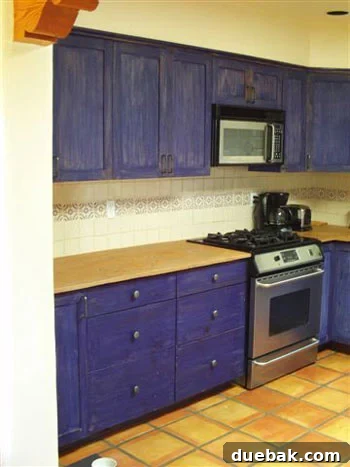
And here’s her stunning two-tone masterpiece after a quick paint makeover. We suggested a sophisticated palette with slightly different, complementary colors for her upper and lower cabinets, creating depth and modern elegance:
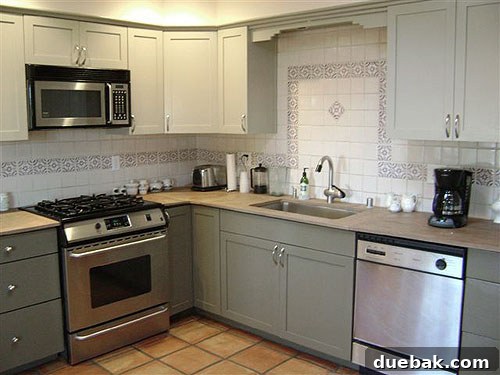
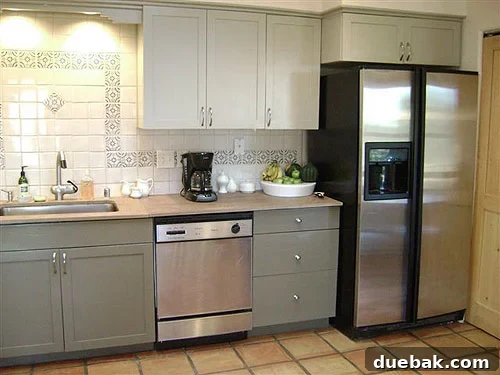
Client Transformation 2: Carla’s Bright New Kitchen
And here’s Carla’s kitchen, a space that felt a bit dark and closed off before she sought our design advice:
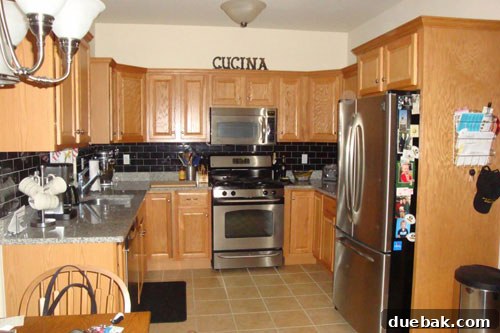
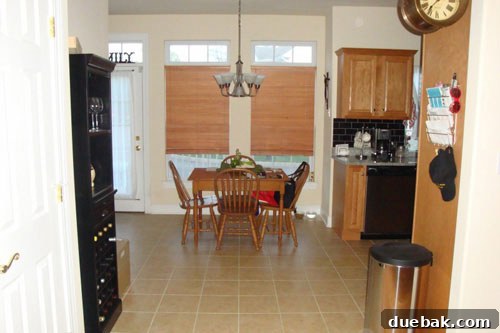
And here it is after we encouraged her to embrace a crisp, glossy white for her cabinets, extending the fresh feel to her dining room chairs. The dining table was painted black to create a striking contrast and mimic the dark tones of her backsplash, achieving a cohesive and dramatically updated look:
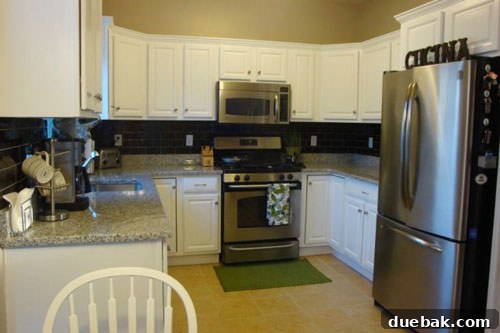
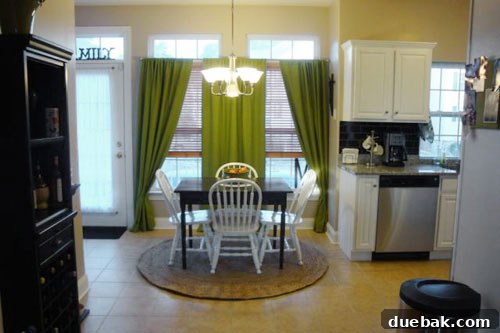
It’s truly amazing what a little paint, combined with careful planning and execution, can achieve, isn’t it? If they can do it, you absolutely can too! So, if you have a spare weekend or even a few dedicated evenings, you’re well on your way to a totally new and improved kitchen. Happy painting, and enjoy your beautiful transformation!
In need of a furniture painting tutorial? Don’t fret, we’ve got you covered there too.
Update: For even more comprehensive details, additional photos, and a step-by-step video on cabinet painting, check out our latest guide here.