
DIY Custom Range Hood Cover: Elevate Your Kitchen with a Handcrafted Design
Tired of the industrial aesthetic of an exposed range hood dominating your kitchen space? While some might embrace the “unfinished chic” look, we were eager to transform our kitchen’s focal point. This comprehensive guide details our journey to building a custom wooden range hood cover, turning a utilitarian appliance into a stylish, integrated design element. Not only did this DIY project dramatically enhance our kitchen’s appeal, but it also offered substantial savings compared to professional custom installations. Follow along as we walk you through the design, construction, and finishing touches of creating a sturdy, lightweight, and beautiful range hood cover tailored to your home.
Designing Your Dream Range Hood Cover: From Inspiration to Blueprint
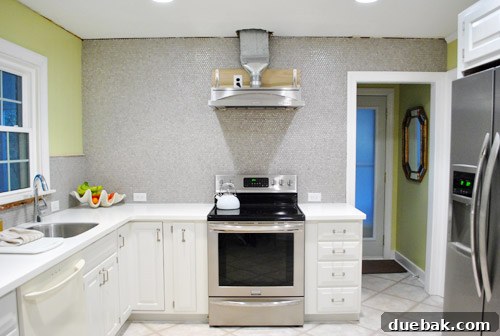
The first step in any successful home improvement project is thorough planning and design. Our JennAir range hood, mounted at a precise 34 inches above the counter (following manufacturer recommendations to strike the perfect balance between effectiveness and accessibility), was the canvas for our creative vision. We knew we wanted a custom cover, but pinning down the exact aesthetic required some digital experimentation.
Visualizing the Possibilities with Digital Mock-ups
To avoid costly mistakes and ensure we achieved the desired look, we turned to Photoshop to mock up two distinct design options. Our initial concept, heavily inspired by the elegant range hoods we admired in various kitchen inspiration pictures, featured a clean, rectangular shape with decorative trim panels on the front. We envisioned these squares as crafted details that would add character and depth to the cover.
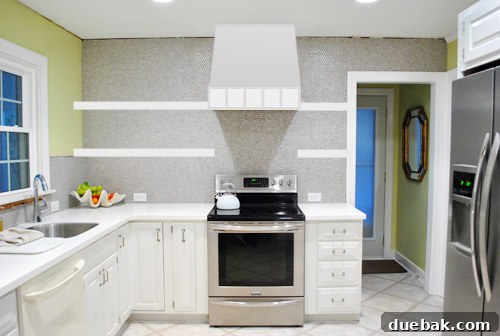
However, upon reviewing this design, we felt it looked a bit “top-heavy” and overly boxy for our kitchen’s evolving aesthetic. It didn’t quite achieve the streamlined elegance we were aiming for.
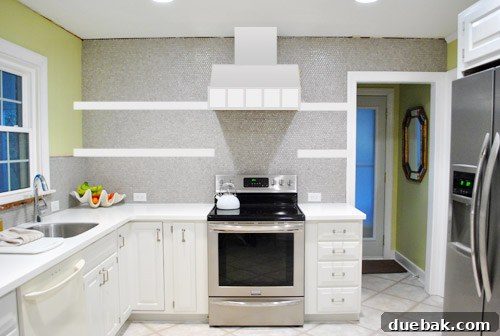
So, we iterated. Our second design proposal featured a more dynamic, tiered structure with a gently sloped upper section, creating a more balanced and visually appealing silhouette. This version immediately resonated with us, offering a sophisticated yet simple profile that would complement our cabinetry and overall kitchen design. This iterative process of visual mock-ups proved invaluable, saving us time and materials by clarifying our preferences before any wood was cut.
From Concept to Construction: Detailed Technical Drawings
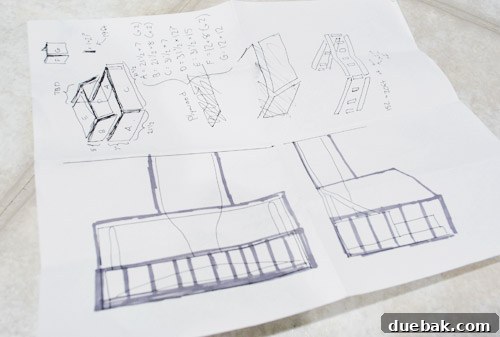
With the preferred design solidified, the next step was to translate our vision into a practical plan. I meticulously took measurements of the existing range hood and sketched a “technical” drawing. Using graph paper beneath a white sheet, I roughly drew the hood to scale with a pen, then used a thicker marker to outline the precise dimensions and form of the custom cover around it. This detailed drawing served as our blueprint for the entire build.
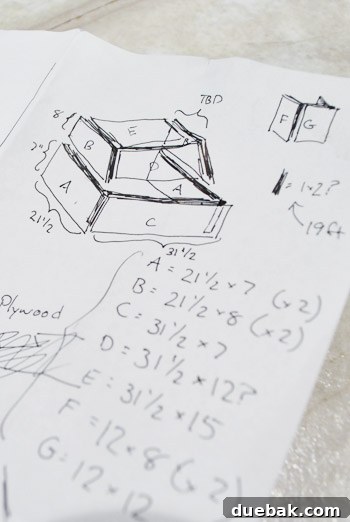
Part of this planning phase also involved calculating the necessary lumber. While the specifics of these early material calculations might seem cryptic at first glance, they were essential for minimizing waste and ensuring we had all the right components. My primary objectives for this DIY range hood cover were clear from the outset:
- Durability and Longevity: It had to be sturdy enough for everyday kitchen use and resilient against moisture, steam, and grease. We opted for moisture/steam/grease-resistant plywood to guarantee its lifespan.
- Lightweight Construction: Minimizing weight was crucial to ensure easy installation and prevent any concerns about it securely attaching to the wall. Nobody wants a heavy structure falling down!
- Aesthetic Appeal: Above all, it needed to be beautiful and seamlessly integrate into our kitchen’s design.
Building the Custom Range Hood Cover: A Step-by-Step Guide
Armed with plywood panels and 1×2-inch boards, the construction phase began. We decided to build the cover from the bottom up, creating a modular structure that would gradually encompass the existing range hood.
Constructing the Base Frame and First Tier
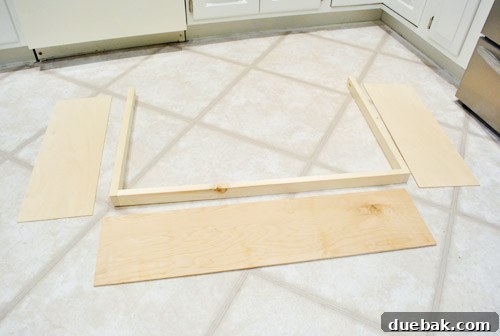
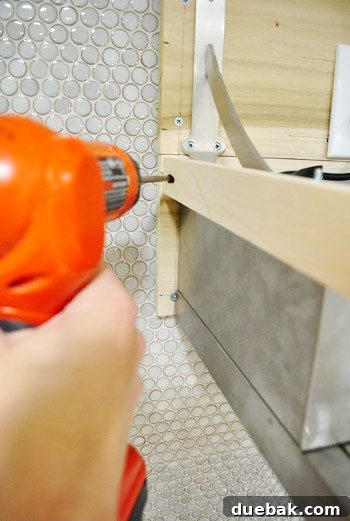
The foundation of our range hood cover started with a robust base frame. This frame was meticulously crafted from three pieces of 1×2-inch lumber, joined together in a sturdy U-shape using a Kreg Jig. The Kreg Jig allowed for strong, concealed joints, crucial for the structural integrity of the cover. To securely attach this frame to the wall, we drilled additional holes with the Kreg Jig, allowing us to screw it directly into the robust wood plank previously used to mount the range hood itself. This clever connection ensured the cover would be firmly anchored, leveraging the existing support structure.
An important design consideration was ensuring the wooden cover did not directly touch the range hood. Our design features the cover “floating” around the entire appliance, creating a small air gap. This setup is not only aesthetically pleasing but also functional. Our high-efficiency range hood is designed to effectively direct moisture and steam up through the vent, and the wood surround, similar to those built by professional cabinetmakers, is built to withstand everyday kitchen conditions without issue. We’ve received feedback from numerous DIYers and professionals who’ve implemented similar wood covers, all reporting excellent experiences with no moisture or steam-related problems. This makes perfect sense, as traditional kitchens often feature wood cabinets directly adjacent to or above range hoods, which rarely encounter such issues.
Note: The initial photos might show duct tape on the vent joints. We quickly realized the importance of using metal foil tape for proper sealing and have since made the swap. We’ll share an update on this and other minor finishing details, like patching ceiling holes, in a future post.
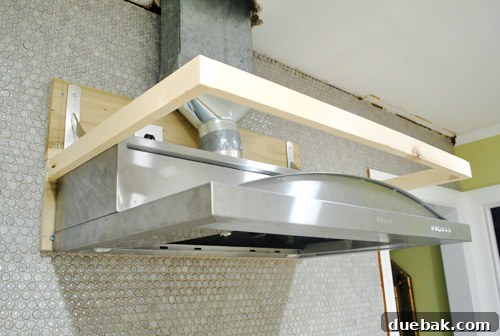
With the base frame securely mounted, we began nailing the thin plywood panels into place, forming the lower section of the cover.
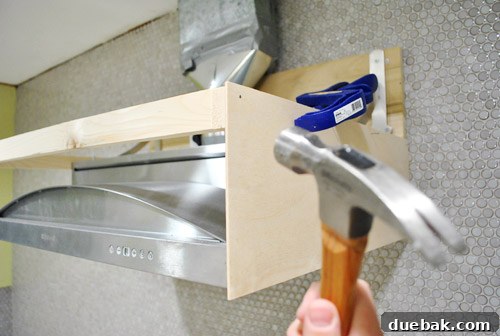
After completing the first three sides, the structure was already taking shape, hinting at the final form.
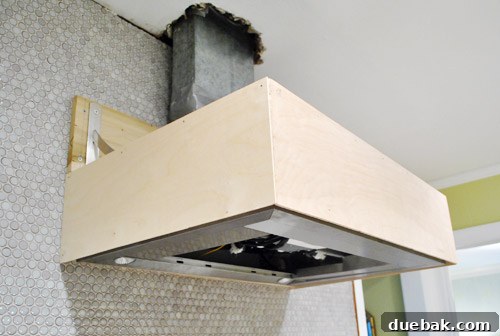
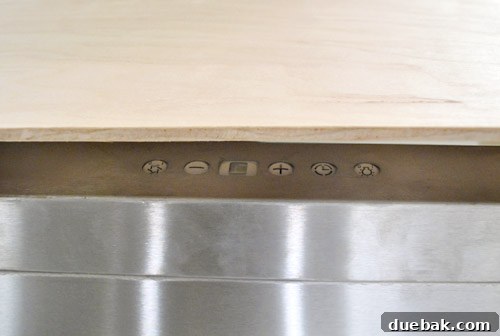
A crucial design detail incorporated into this tier was the small, intentional gap left around the outside edge. This gap provides essential access to the control buttons on the front of the range hood. It’s wide enough for fingers to comfortably slip in and operate the controls, yet discreet enough to avoid looking like an unfinished opening.
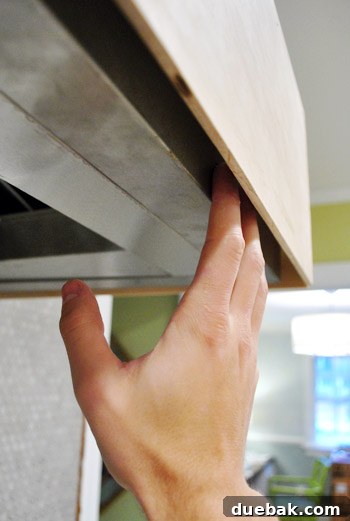
For those of average height, or with a slight duck, the buttons are easily visible and accessible. This thoughtful integration means you don’t have to guess which button you’re pressing, making the hidden controls just as user-friendly as those on an exposed hood.
Building the Sloped Second Tier
To create the distinctive sloped profile of our chosen design, we moved on to the second tier. This involved constructing a slightly smaller 1×2-inch frame than the base. This frame would serve as the anchor for the angled plywood panels. To facilitate a seamless fit for the sloped pieces, I ran the top edge of this new frame through my table saw at an angle. This wasn’t a precisely measured cut, but rather an “educated guess” to provide a better surface for the angled panels, vastly improving upon a flat, square edge.
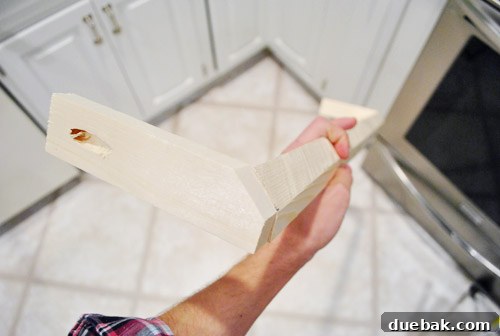
Here is the smaller, angled frame securely attached to the upper portion of the range hood structure.
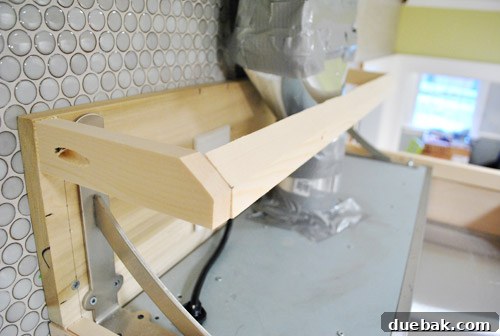
While the next set of plywood panels would naturally rest on the top edge of the previous tier, I added a small piece of 1×2-inch lumber for extra support, giving me a solid surface to nail the panels. This piece also received an angled cut, further optimizing the fit for the sloped plywood panels.
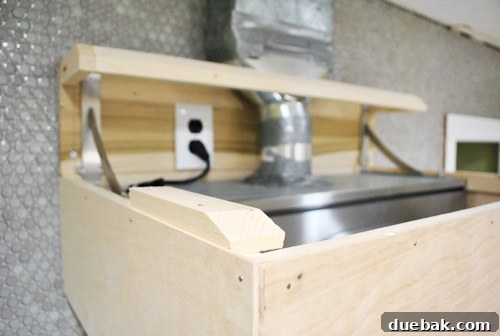
This image illustrates how the sloped plywood panel fits perfectly into place, creating the elegant angle we desired.
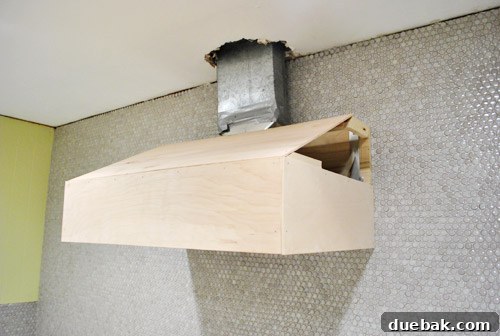
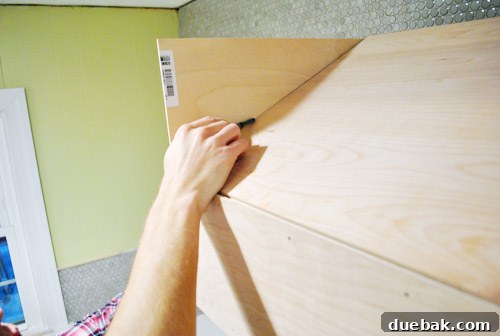
The side panels for this sloped tier were particularly challenging, as they required non-rectangular, exact angled cuts. To ensure precision, I held each plywood piece in its final position and carefully marked the exact cutting lines.
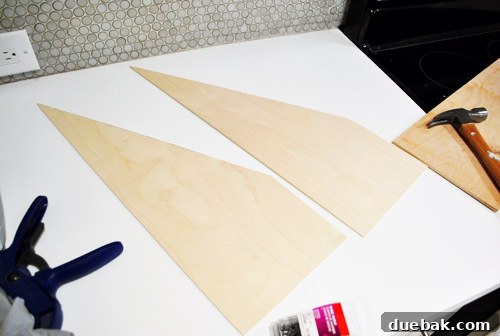
These marked pieces were then precisely cut on the table saw, resulting in perfectly shaped quadrilaterals. It felt like a blast from the past, harkening back to Mrs. Miller’s 9th-grade geometry class! This step, while requiring careful attention, was critical to achieving the clean, custom look.
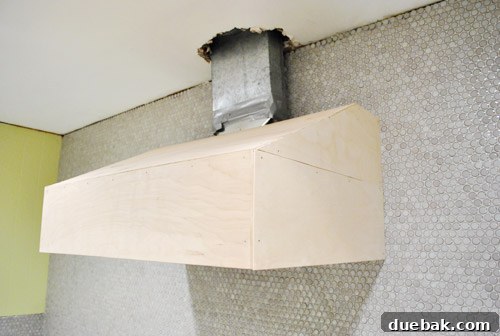
With these two side panels attached, the custom range hood cover truly began to take on its intended form. Though still appearing somewhat unfinished without trim, the core structure was solid and impressive.
Constructing the “Chimney” Section
The third and final tier of our cover involved creating what we affectionately called “the chimney” – the section that encases the vent pipe. This required building the smallest 1×2-inch frame yet.
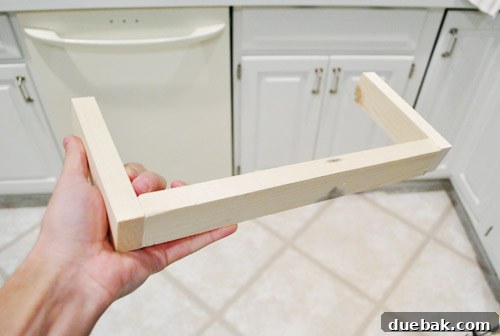
This small frame was then screwed directly into the ceiling, ensuring it hit solid wood for a snug and secure fit – always avoid drilling into hollow spaces! A minor hiccup revealed a gargantuan hole for the vent pipe that needed patching (a task for our spackling queen!). Ultimately, crown molding will be installed around this entire section, providing a polished and finished look.
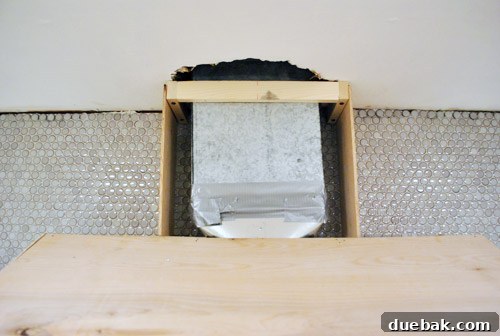
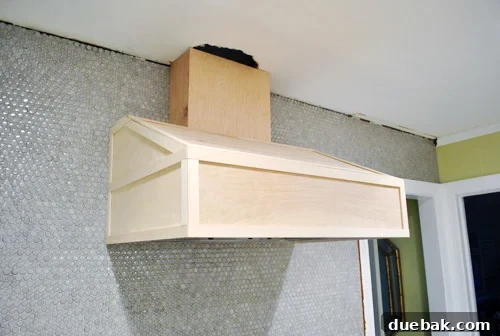
With the plywood panel covering the chimney, the major construction phase of this ambitious DIY project was complete.
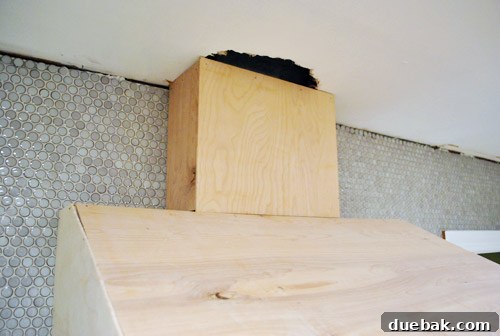
At this stage, the range hood was fully covered, access to the controls was maintained, the structure was secure, and we were delighted with its shape. The only thing left was to address its admittedly unfinished appearance – a small detail that makes all the difference!
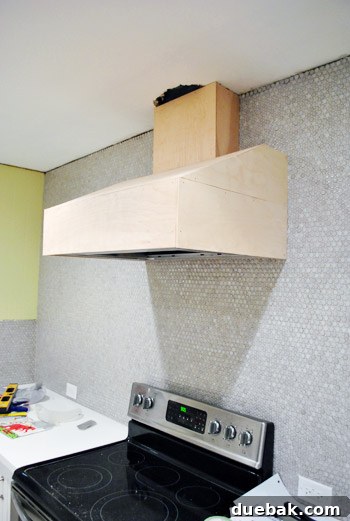
The Finishing Touches: Adding Trim for a Polished Look
This is where the magic truly happens: the addition of trim. It’s often said that “details make the difference,” and nowhere is this more evident than in transforming a functional wooden box into an elegant kitchen feature. To maintain the project’s lightweight goal, I opted for super lightweight plywood for the trim. And to minimize nail holes and the logistical challenge of hammering against the installed cover, I chose to glue all the trim pieces into place. This method, especially once primed and painted with durable Benjamin Moore Advance paint (the same high-quality finish used on our cabinets), will undoubtedly stand up to the heat, moisture, and grease of a working kitchen. We’ll be sure to provide updates on its long-term performance.
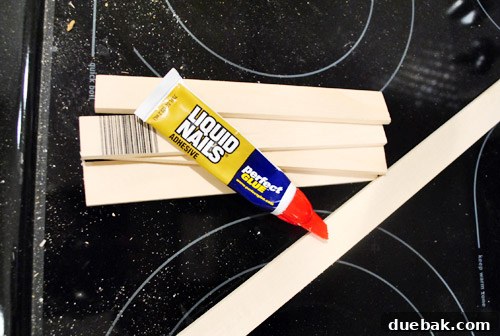
During this phase, we also decided against incorporating the decorative panels on the front and sides that we initially envisioned in our mock-ups. The clean, unadorned look of the smooth plywood resonated more with us, and we worried that smaller, boxy panels might clash with our existing cabinetry. This design simplification also made the trimming process quicker, allowing me to cut and glue the first row of trim in no time.
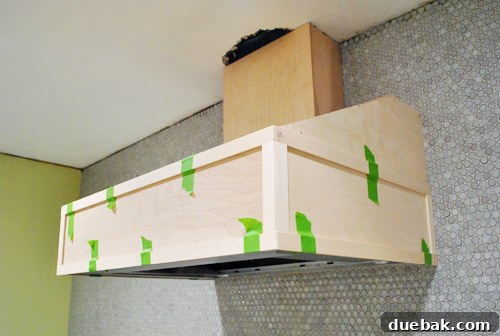
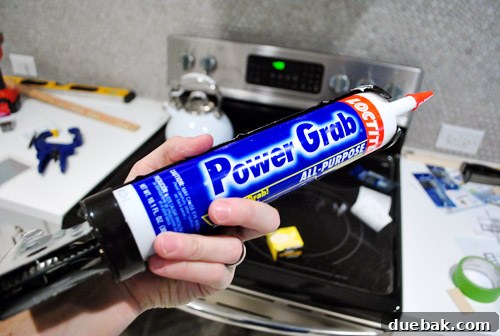
I initially worked with LiquidNails, which offered a generous 10-minute window for adjustments (hence the green tape to hold pieces in place once playtime was over). However, I ran out halfway through the process and switched to a leftover tube of Loctite. In retrospect, I almost wished I had used Loctite from the start. While it allowed less wiggle room for repositioning (requiring peeling and re-sticking if adjustments were needed), its immediate strong hold meant no tape was required to keep the trim in place. Both adhesives proved effective, but each had its distinct characteristics.
The top portion of the trim, especially with its angled cuts, took a bit longer to complete, partly due to an unexpected trip to the store for more wood. However, by the end of the day, the hood cover sported a significantly more finished appearance.
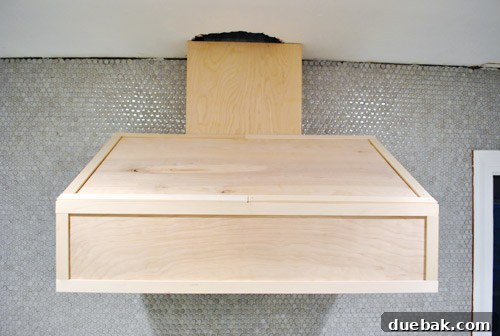
The precise angled cuts on the sides demanded careful attention and time. We consciously chose not to add trim to the “chimney” section, as it’s intended to be a more structural, less decorative element of the hood. Furthermore, there were no visible seams between the plywood panels in that area that required “finishing.” Once we patch the ceiling hole and install crown molding around the entire wall (and hood), we are confident it will achieve a truly elegant and integrated look.
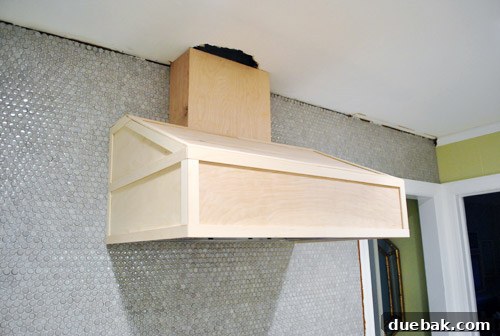
The Grand Reveal: A Cost-Effective Custom Kitchen Upgrade
While not 100% finished – it still requires priming, painting (which we’ll tackle alongside our upcoming open shelf project), and a bit of caulk for truly seamless edges – I couldn’t be prouder of having achieved my three core goals. This custom range hood cover is undeniably sturdy and durable, it’s remarkably lightweight, and, if I do say so myself, it looks absolutely beautiful.
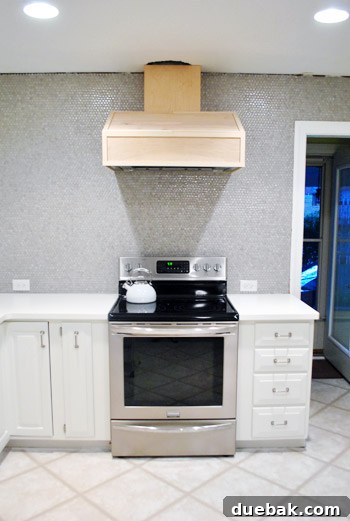
Of course, it may not boast all the advanced features of a high-end professional hood, but once primed and painted, it will perform just as well as any custom painted cabinet integrated next to or above a range hood. More importantly, it offered an incredible cost saving. Professional custom hood covers can easily run anywhere from $3,000 to $4,000 (a price tag that once made Sherry spit her drink at her laptop, as detailed in this post). Our DIY version, however, came in at a fraction of that cost. The wood and trim alone amounted to about $90 (I initially underestimated the material quantity). Coupled with the $60 JennAir hood we scored on Craigslist and an additional $25 for brackets and mounting wood, our total investment for this stunning custom range hood cover came to approximately $175. This is an astounding value, especially considering we paid $250 for a standard stainless steel hood in our previous kitchen, and it certainly wasn’t an industrial-strength JennAir like the gem we found this time.
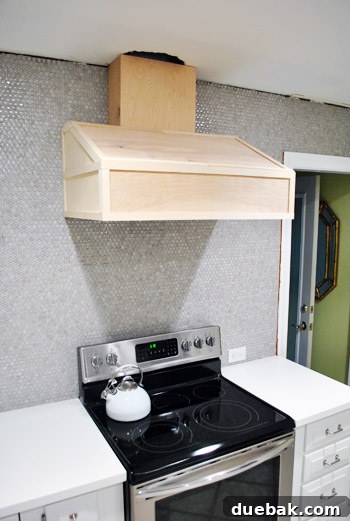
Looking Ahead: The Evolving Kitchen Transformation
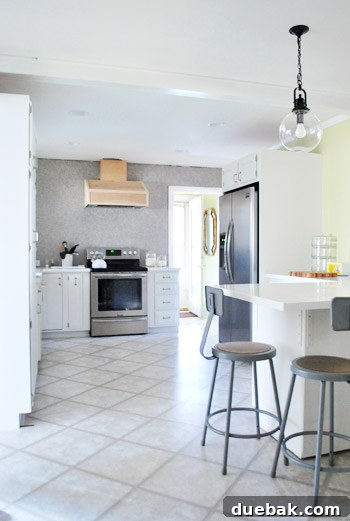
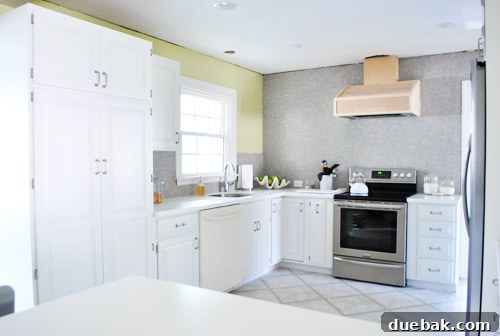
Even as a large, tan-colored box on the wall, the impact of the custom range hood cover on our kitchen’s aesthetic is undeniable. With book photoshoots scheduled for our house this week, I seized the opportunity to capture some “after” shots of the kitchen in its current, relatively clean state. The space is still very much a work in progress – awaiting crown molding, open shelving, a vibrant infusion of color from art and accessories (Sherry’s eagerly anticipating this!), new flooring, a plumbed dishwasher, and proper lighting over the sink – but we are steadily making progress.
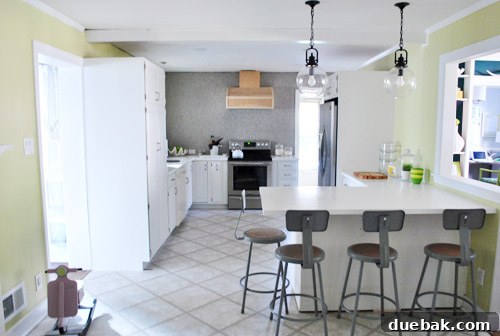
After two months of staring at an empty wall, it’s a pleasant change to see something substantial hanging there. The hood cover beautifully breaks up the expanse of tile, drawing the eye and adding a focal point that invites admiration. Not that we stand there drooling, much.
This project has only fueled our excitement to get the hood painted, the ceiling patches sanded and painted, and those open shelves hung. It sounds like a fantastic project to delve into next, wouldn’t you agree?
In the meantime, let’s talk about range hoods. Have you ever considered building one yourself? If not, know that I hadn’t either until a few days ago. The world of DIY is full of unexpected challenges and rewarding accomplishments, proving that you never know what incredible projects you might find yourself tackling down the road. Embrace the challenge, and transform your home one custom piece at a time!