
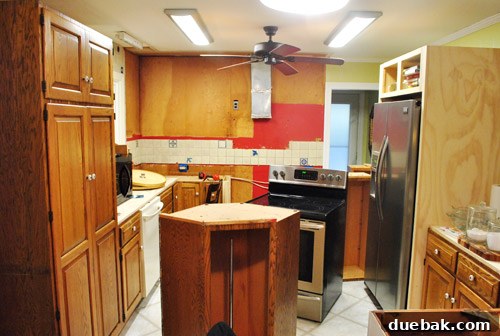
Our journey to a brighter, more open kitchen officially began not with a bang, but with the careful dismantling of its most dominant feature: the old cabinets. Much like a classic song about getting knocked down and getting up again, our kitchen cabinets faced their own transformation, though thankfully, ours was a meticulously planned removal rather than an accidental tumble. Upon moving into our home last December, the kitchen presented a rather formidable picture. It was, to put it mildly, quite “wood-riddled” – an overwhelming expanse of dark cabinetry that, while functional, decidedly lacked the fresh, contemporary feel we envisioned for our family’s central gathering space. This omnipresent woody aesthetic made the room feel heavy and somewhat dated, a stark contrast to the light and airy ambiance we hoped to cultivate.
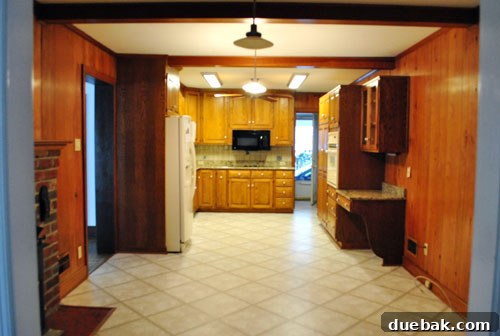
The decision to “un-wood-riddle” the space was met with immense excitement. We knew this initial demolition phase was critical in paving the way for a complete kitchen overhaul that would not only enhance its aesthetics but also dramatically improve its functionality. Our plan for the old cabinets was multi-faceted and sustainable; rather than simply discarding them, we carefully removed specific components, such as the doors, which are earmarked for repurposing on the new peninsula cabinets. The remaining structures, still in good condition, are destined for donation, ensuring they find a new life and serve another household.
The Great Kitchen Cabinet Demolition: Unveiling Our Vision for a Modern Space
Embracing a Fresh Aesthetic: Penny Tile and Purposeful Open Shelving
With the old, bulky cabinetry out of the way, the canvas for our dream kitchen began to reveal itself. Our design vision centers around creating a space that feels expansive, contemporary, and incredibly inviting. As we’ve previously hinted here and here, a significant design feature will be a stunning wall of counter-to-ceiling penny tile. This choice isn’t just about aesthetics; penny tile brings a unique texture and subtle shimmer that will reflect light beautifully, adding depth and character to the room without overwhelming it. Its classic yet playful appeal perfectly aligns with the modern, clean look we’re aiming for, creating a truly distinctive backdrop for our culinary adventures.
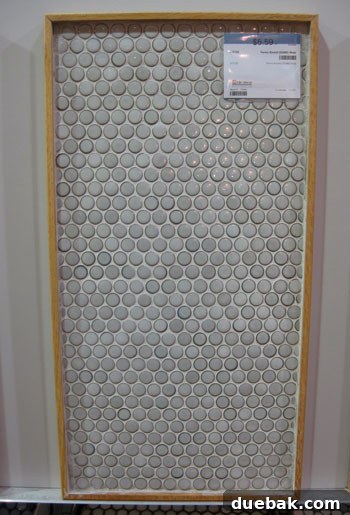
Complementing this beautiful tile wall will be a strategic implementation of open shelving. These shelves will flank the range hood, which we’ll be custom-building into the design, creating a focal point that is both stylish and highly functional. The decision to incorporate open shelving, a topic that often sparks lively debate among renovators, was not made lightly. For anyone concerned about the practicalities of open shelving, particularly regarding dust and grease, we highly recommend revisiting this in-depth post, where we shared our extensive research and rationale behind this design choice. We understand the common reservations, but for our lifestyle and the way we intend to use these specific shelves, the benefits far outweigh any potential drawbacks.
It’s important to clarify that our kitchen won’t be entirely open-shelved. We’re talking about a carefully considered few feet on either side of the new vent hood, providing a perfect spot for frequently used items and decorative accents. This balanced approach means we’ll still retain ample enclosed upper cabinetry in other areas – specifically above the pantry, fridge, and dishwasher. This thoughtful blend of open and closed storage ensures we have the best of both worlds: the visual lightness and accessibility of open shelves, coupled with the practical discretion of traditional cabinets. We were confident that this adjustment in upper cabinet quantity wouldn’t leave us “flummoxed” for storage, a challenge we were keen to navigate successfully.
Mastering Kitchen Storage: A Strategic Approach to Relocation
The true test of our confidence in reduced upper cabinet storage came during the critical phase of emptying everything out before demolition. This wasn’t merely about clearing space; it was a comprehensive exercise in evaluating our existing storage needs and meticulously planning the relocation of every single item. We knew that the open shelves would primarily house our everyday dishes – items used and washed so frequently that dust accumulation wouldn’t be an issue. Alongside these, we planned for a curated selection of decorative or always-out items: a vase or two, a few pieces of art, lidded jars for staples like sugar and flour, a collection of cookbooks, and perhaps a potted plant to add a touch of greenery. Everything else, from occasional bakeware to less frequently used gadgets, would need a new home within our remaining or newly installed enclosed cabinets.
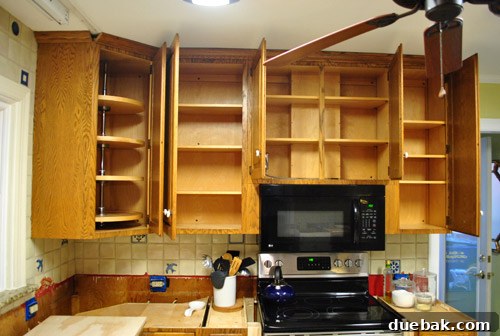
Stepping into this relocation phase, a slight apprehension lingered. Would we genuinely be able to accommodate all the displaced items without our kitchen descending into disarray? The answer, to our great relief, was a resounding yes – and surprisingly well! This success wasn’t due to haphazard stuffing; it was the result of a deliberate and collaborative brainstorming session that lasted at least thirty minutes. We systematically tackled categories of items that had previously occupied those half-full shelves: phone books, light bulbs, cookie cutters, various small appliances, and all sorts of miscellaneous kitchen paraphernalia. Instead of impulsively shoving things into the nearest empty space, which would have taken mere minutes, we prioritized thoughtful placement. This intentional approach, discussing where each item would be most logically and conveniently stored, eliminated the need for countless rearrangements down the line.
The outcome was truly thrilling. Once everything had found its permanent place in our newly configured storage plan, we were astonished to discover we had room to spare! The entire corner cabinet of our new peninsula, a spacious unit that still awaits a lazy susan and its door, is currently 100% empty. This unforeseen surplus of space is a testament to efficient planning and the significant increase in usable storage volume provided by the new peninsula. Furthermore, our everyday dishes, which currently reside in another corner cabinet near the stove, will soon migrate to their designated open shelves. This move will free up yet another substantial cabinet space, further enhancing our storage capacity.
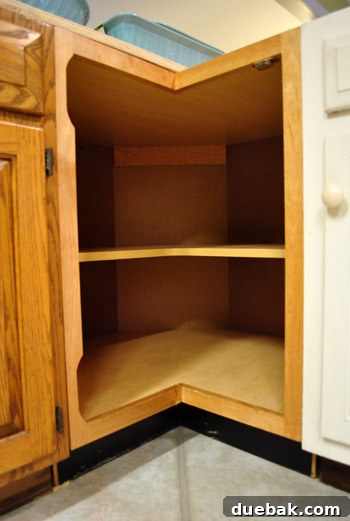
Adding to our storage triumphs, we also have a completely empty upper cabinet next to our pantry. This particular cabinet is slated to be cut down to the appropriate size and rehung, with a new microwave cleverly built in beneath it. Considering these gains, it’s abundantly clear that the addition of the peninsula, along with other strategic reconfigurations, has more than compensated for the few upper cabinets we traded for the aesthetic and functional benefits of open shelving. What a relief!
The Demolition in Action: Immediate Transformations and Surprising Revelations
The actual process of taking down the old cabinets proved to be remarkably straightforward. It primarily involved unscrewing a multitude of super-long screws that securely anchored them to the wall, the ceiling, and to each other. This was a two-person job, with one person carefully maneuvering the drill while the other stood underneath, providing crucial support to ensure the heavy units didn’t come crashing down. Safety and precision were paramount during this stage to prevent damage and ensure a smooth removal.
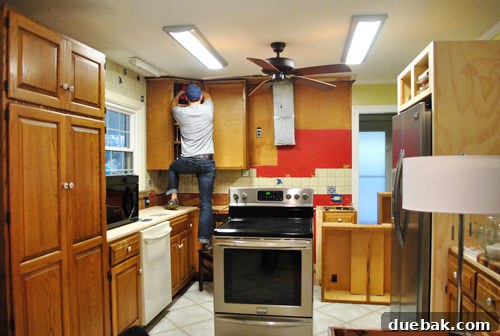
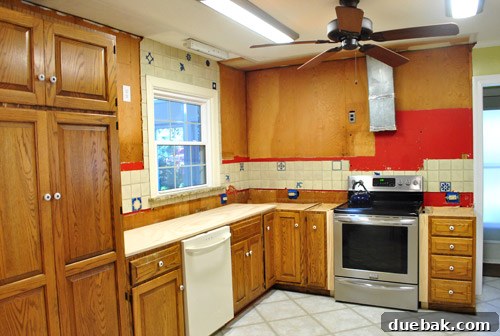
We hadn’t fully anticipated the dramatic visual impact that simply removing these bulky structures would have on the space. The room immediately felt incredibly more open, a sensation that photos, unfortunately, might struggle to convey fully – it truly was a “you-had-to-be-here” kind of transformation. Initially, the immediate aftermath of the demolition felt a bit chaotic and even a little crazy, as is often the case in these early stages of renovation.
Here’s how it was looking immediately after we finished the initial removal:
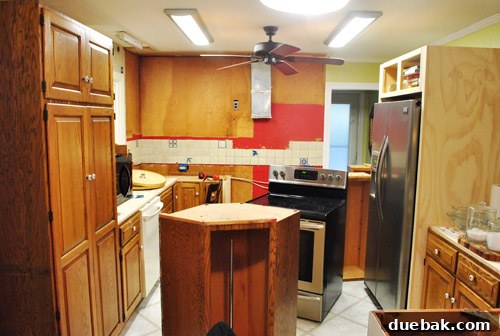
However, once we tidied up a bit – which involved carefully relocating the removed cabinets to our sunroom for temporary storage and pushing the stove back into its approximate position – the kitchen instantly took on a much lighter and airier ambiance. The sheer volume of visual clutter that had been removed made an astonishing difference, making the space feel considerably larger and far less confined. This immediate sense of expansion was incredibly motivating, reaffirming our design choices.
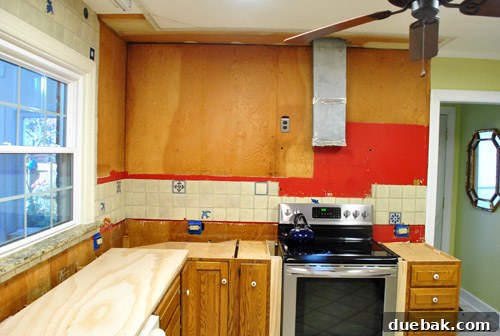
Of course, this lighter feeling required a bit of imagination, as one had to squint past the currently unpainted ceiling and the rather startling revelation of an insane, fire-engine-red paint peeking out from behind where the old cabinets once stood. Can you even begin to imagine that vibrant red paired with all those dark wood cabinets and heavy paneling? It was a truly baffling historical design choice, highlighting just how much the room needed a modern intervention.
The Messy Middle: Navigating the “Worse Before Better” Stage
So yes, this is undeniably one of those classic “things-have-to-get-worse-to-get-better” stages of renovation. The kitchen currently has that somewhat “strip-searched” look, raw and exposed, but we absolutely revel in the fact that change is so profoundly in the air. Even this temporary ugliness, soon to be meticulously reassembled into something beautiful, excites us. The transformation is already palpable; the kitchen simply breathes a lot more freely without that hulking, too-low, and decidedly not-to-code black microwave that used to hover precariously close to the stove. Its removal alone has made a significant difference, not just aesthetically but also in terms of perceived safety and openness above the cooking zone.
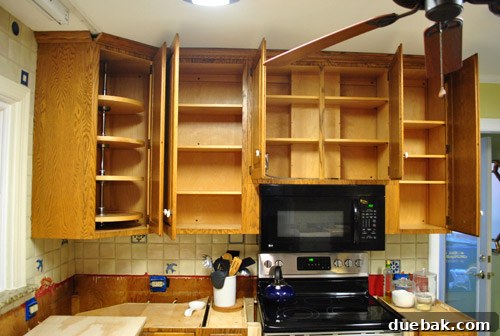
The prospect of replacing that outdated microwave with a sleek wall full of beautiful tile and functional open shelves, all anchored by a giant, actually-works-well range hood, promises to be an extraordinary upgrade. This new configuration will not only elevate the kitchen’s aesthetic appeal but also drastically improve its ventilation and overall usability, transforming a previously cramped and somewhat inefficient cooking area into a true culinary centerpiece. We’re eager to see this vision come to life, knowing the current disarray is a necessary step towards a dramatically improved space.
What’s Next: A Glimpse into the Renovation Roadmap
Our renovation journey is far from over, with several exciting stages still ahead. The immediate next steps include removing the existing backsplash, bidding farewell to the somewhat dated “googly-eyed” cabinet hardware, and preparing all the salvaged cabinet doors for their fresh coat of primer and paint. We are eagerly awaiting the installation of our new countertops, which will serve as the foundation for the next wave of installations. Following the countertops, we’ll install our chosen backsplash tile, seamlessly integrate our new stainless steel dishwasher and microwave (which will be custom-built into the cabinetry), completely redo the lighting scheme to brighten and modernize the space, and finally, lay down the gorgeous mocha cork flooring we acquired on clearance. It’s a comprehensive list, but we’re tackling it with determination, taking it one productive day at a time, celebrating each small victory along the way.
Living Through Renovation: Adapting to Temporary Challenges
Living without a fully functional kitchen during renovation is certainly an adjustment, but we’ve found surprisingly effective ways to adapt. So far, the absence of a microwave hasn’t been a deal-breaker. While soup is a household favorite, heating it on the stovetop has become a rather charming, almost quaint ritual – a small return to traditional cooking methods. We definitely miss the convenience of a primary sink, but thanks to having our dishwasher hooked up and fully operational, the impact has been significantly softened. We’re managing surprisingly well with our kitchen currently “in shambles,” a testament to our adaptability and the excitement for the finished product. This progress update fills us with renewed energy and anticipation.
What exciting projects or adventures filled your weekend? Did anyone else brave a cabinet rearranging or removal? Or perhaps you found yourselves singing along to some Chumbawumba? Come on, someone out there must have had that tune echoing through their heads as cabinets were coming down! Share your stories with us!
Psst- This post’s title cleverly nods to some of our very early-blogging kitchen posts from four years ago, playfully titled “Our Cabinets Are Like Mariah Carey” and “Our Cabinets Are Like Brangelina” – a delightful full circle moment in our blogging journey.