Transform Your Space: The Ultimate DIY Floating Frame Hack for Budget-Friendly Art Displays
Are you captivated by the sleek, modern elegance of a floating glass frame but deterred by the often steep price tag? Imagine achieving that gallery-worthy look without spending a fortune. This comprehensive guide reveals a clever, budget-friendly frame hack that allows you to transform an ordinary old picture frame into a stunning floating display. Whether you’re an experienced DIY enthusiast or a crafting novice, you’ll find this project incredibly satisfying, easy to execute, and virtually free if you have a few common items on hand.
Floating frames create an illusion where your artwork appears to hover between two panes of glass, offering a minimalist aesthetic that enhances the art itself. This visual effect is particularly striking with unique prints, delicate botanicals, or cherished photographs, adding depth and sophistication to any wall. While store-bought versions can set you back twenty dollars or more, our hack leverages items you likely already possess, turning a potential expense into a creative, rewarding endeavor.
Ready to elevate your home decor with custom, handmade floating frames? Let’s dive into the details and discover just how simple it is to craft your own.
Step-by-Step Guide: Crafting Your Floating Frame
1. Prepare Your Artwork for Its Grand Debut
Our journey begins with the star of the show: your artwork. For this project, I chose a captivating printable, which I sourced online and printed on sturdy card stock right from the comfort of my home. The beauty of a printable lies in its versatility and low cost – perfect for experimentation! I then brought it to life with vibrant colors using regular colored pencils. This initial step allows for immense personalization; you can choose any printable that resonates with your style, experiment with watercolors, markers, or even leave it black and white for a striking contrast.
The key here is to select a piece that you don’t mind handling and potentially taping. Since we’re creating a budget-friendly display, a free or inexpensive printable is ideal, removing any pressure associated with irreplaceable art.
2. The “Aha!” Moment: Envisioning the Float
Initially, I considered a traditional approach – running to the store for large paper to serve as a backing or mat. However, a spark of inspiration ignited: what if the art simply floated behind the glass, without any backing at all? This concept immediately reminded me of a store-bought floating frame I admired in a nursery, where the art magically suspended within the frame (visible in the bottom-left of an older photograph). The minimalist aesthetic of art seemingly suspended in air truly captivates.
Instead of embarking on a quest for another elusive store-bought floating frame, I decided to deconstruct a regular old frame I already owned. Upon examining its components, a brilliant realization struck me: by removing the original backing, adding a simple hanging mechanism, and securely attaching both the glass and the art, I could achieve the coveted floating effect. This moment of ingenuity is the heart of our frame hack – transforming the ordinary into the extraordinary with minimal effort and materials.
3. Gathering Your Essential (and Minimal) Materials
One of the most appealing aspects of this DIY project is the incredibly short materials list. You won’t need an arsenal of tools or expensive supplies. Just a few basic items will suffice:
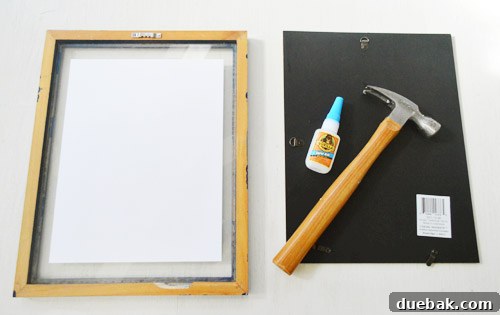
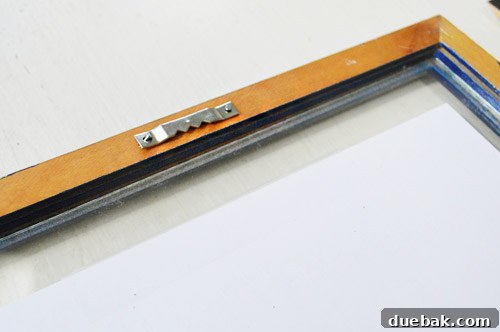
Material #1: A Sawtooth Hanging Attachment. This small but mighty piece is crucial for ensuring your frame hangs perfectly straight. I simply nailed mine into the very top center of the wood frame. Precision is key here; take a moment to measure and mark the center point to guarantee a balanced display. These handy hangers are incredibly affordable, often available in multi-packs for less than a dollar at craft stores like Michael’s, making them a true budget-friendly hero.
Material #2: Super Glue. This powerful adhesive is what binds our glass to the frame, creating the sturdy front structure of our floating display. Now, confession time: I got so absorbed in the excitement of gluing the glass that I completely forgot to snap a picture of the actual process! So, you’ll have to use your imagination for a moment. Picture this: the cap is off the glue, and the glass is carefully lifted out of the frame. I ran a thin, continuous bead of super glue around the entire outside lip of the wooden frame – the very edge where the glass rests. Then, with steady hands, I gently dropped the glass back onto this glue-lined lip, pressing it firmly into place. The goal is a secure, permanent bond.
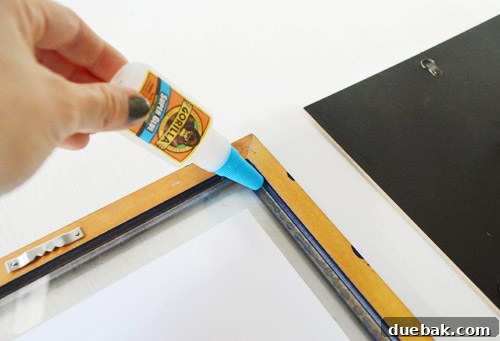
If you examine the image closely, you might even spot the subtle line of dried glue along that lip. Don’t worry, this subtle line is completely invisible from the front of the frame once assembled, thanks to the concealing lip. A common question often arises: “Will this make it impossible to clean the glass?” Absolutely not! You can easily lift the frame off the wall and gently wipe down the back of the glass whenever needed, ensuring your artwork always looks pristine. Allow ample time for the super glue to fully cure and create a strong, lasting bond.
Material #3: Nada. That’s right, you’re essentially done with the core structure! The simplicity is truly astounding.
4. Attaching Your Art: The “Invisible” Tape Method
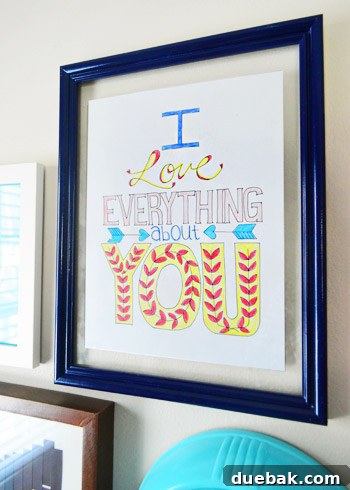
Once the frame’s glue was completely dry and set, the moment of truth arrived: attaching the artwork. My chosen method was surprisingly straightforward and effective: regular clear Scotch tape. I carefully applied a single piece of tape to the very top back edge of my printable, overlapping it ever so slightly. This tiny top edge then met the glass, aligning perfectly with the top of the printout. I repeated this process with another piece of tape along the very bottom back edge of the printable, securing it to the glass. To my delight, this simple technique worked flawlessly!
Because the tape is so thin and strategically placed, it becomes virtually unnoticeable from the front, even upon close inspection. I was genuinely surprised by how effectively the tape disappeared, creating that desired “floating” illusion without any visible distractions. Furthermore, only one piece of tape at the top and one at the bottom were sufficient to hold the artwork securely and smoothly in place, preventing any unwanted buckling or movement.
Alternative Art Attachment Method: Spray Adhesive. Had the tape method proved awkward or conspicuous, my backup plan involved spray adhesive. The idea was to lightly spray the front of the printout (the side that faces the glass) and carefully stick it to the back of the glass in a perfectly centered position. This method can create an even more seamless bond, but it comes with a significant caveat: I would only ever use spray adhesive on artwork that is not valuable or one-of-a-kind. A free printable, like the one I used, is an excellent candidate for this more permanent (and irreversible) approach.
Important Considerations for Your DIY Floating Frame
While this frame hack is undeniably brilliant for most casual art pieces, it’s crucial to understand its limitations, especially concerning valuable or irreplaceable artwork. There are two key differences that set this DIY floating frame apart from professionally framed pieces designed for preservation:
- Lack of Rear Protection: Unlike traditional frames where art is sandwiched between glass and a sturdy backing (like cardboard or another pane of glass), our floating frame is backless. The artwork, once attached to the front glass, is essentially exposed to the rear. While the frame itself touches the solid wall behind it, creating a somewhat enclosed space, there’s no direct barrier protecting the back of your art from potential dust, environmental fluctuations, or incidental contact. For a free printable, this is rarely an issue, but for priceless heirlooms or sensitive photographic prints, this lack of protection could be problematic over time.
- Direct Tape Application: The use of clear Scotch tape directly on the back of the artwork, while effective and visually discreet, is not an archival method. Standard adhesive tapes can degrade over time, yellowing, becoming brittle, or even causing damage to the paper. While I confess to using tape in some traditional framing scenarios for non-valuable items, it is universally discouraged by conservationists when dealing with anything of significant monetary or sentimental value. For archival-quality framing, specialized acid-free tapes or reversible mounting techniques are paramount.
Therefore, my strong suggestion for this clever frame hack is to reserve it for displaying items that are not particularly valuable or irreplaceable. For that charming free printable you colored at home, perhaps a souvenir postcard, or a child’s drawing, this method is absolutely perfect and wonderfully satisfying. Given that many of us likely have an abundance of traditional frames lying around, adding a couple of these stylish DIY floating glass frames offers a refreshing and fun twist to your wall decor.
Embrace Your Creativity: Beyond the Basic Hack
This floating frame hack is just the beginning! Think of it as a canvas for your creativity. Why stop at printables? Consider framing:
- Pressed Flowers or Leaves: Delicate botanicals can look absolutely stunning floating in glass, creating a natural, ethereal display.
- Sheet Music or Vintage Maps: These items often have beautiful textures and designs that are enhanced by a minimalist floating presentation.
- Small Fabric Swatches or Embroidery: For textile lovers, a floating frame can beautifully showcase intricate patterns or needlework.
- Handwritten Letters or Quotes: Personal touches become elevated when presented in such a unique way.
You can also personalize the frame itself. Consider painting the wooden frame a bold color, distressing it for a shabby-chic look, or even adding subtle metallic accents to complement your artwork. The possibilities are endless when you approach DIY with an open mind and a dash of imagination.
Conclusion: The Joy of DIY Art Display
In a world where customized home decor often comes with a hefty price tag, this DIY floating frame hack stands out as a beacon of budget-friendly ingenuity. It empowers you to take control of your art display, transforming ordinary items into extraordinary focal points. The satisfaction of stepping back and admiring your handmade floating frame, knowing you created it with your own two hands and saved money in the process, is truly unparalleled.
So, go forth and experiment! Dig out those old frames, gather your simple materials, and infuse your living space with personalized charm. Have you ever added anything (or subtracted anything) from a frame or other wall decor item to give it a fresh spin? Spill the frame-hacking beans – we’d love to hear your creative ideas and inspired transformations!
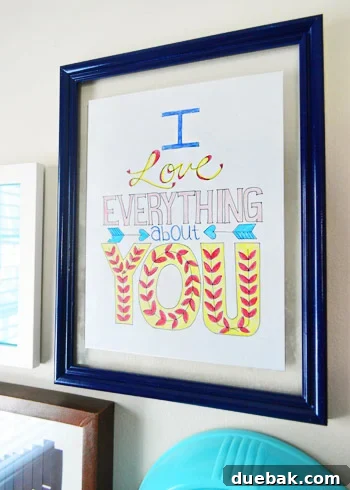
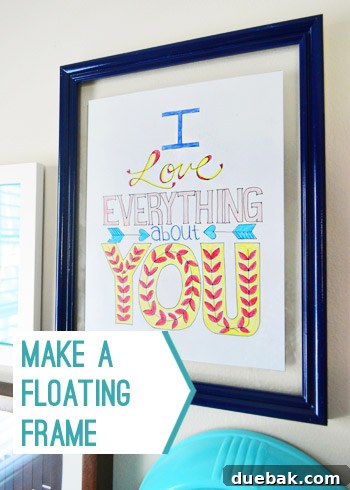
Let’s make a floating frame, shall we? I did a little frame hack that’s super easy and free if you have a few basic items on hand – or only a few bucks even if you don’t. So for anyone out there who likes the look of a floating glass frame but doesn’t want to pay around twenty bucks for one, you can probably use an old frame that you already have to whip one up.
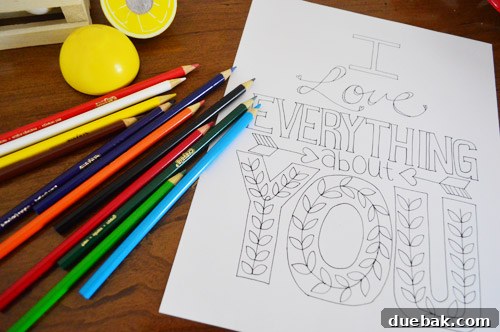
First, I colored this cool printable that I mentioned in that original art-hanging post (which I got here, printed on card stock at home, and colored with regular old colored pencils).
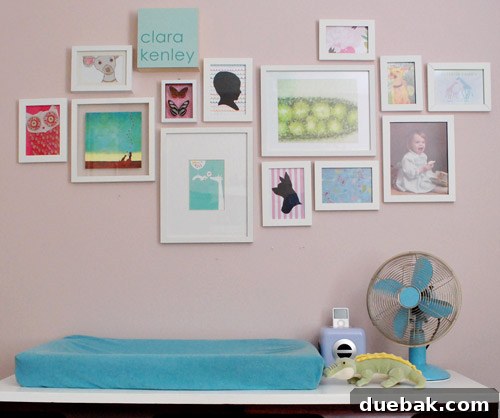
Then I was about to run out and buy some large paper to use as a backing or mat when I thought… what if I just let it float behind the glass? Sort of like the art in Clara’s nursery that floats in a store-bought frame from Target (it’s the frame on the bottom-left of this old pic).
But instead of changing gears and running out to Target in the hopes of finding another floating glass frame, I took apart the regular old frame that I had and looked at it. And I realized that if I removed the backing, added a hook to the top of the frame so it would hang, and secured the art to the glass and the glass to the frame, I’d be good to go. So I gathered just a few materials…
Material #1: A sawtooth hanging attachment, which I nailed into the top of the wood frame (make sure it’s centered so your frame hangs straight). These guys are usually four for 99 cents at Michael’s, by the way.
Material #2: Super glue, which I used to glue the glass to the front lip of the frame. This picture is like one of those “reenactments” on TV (you know the ones where the reenactor looks nothing like the original person being interviewed in one of those crime or ER stories). The reason it’s a bad reenactment is because I got too excited and glued the glass to the front lip of the frame and then realized I forgot to take a picture of the process…
So just imagine that the cap is off of the glue, and the glass is actually lifted out of the frame. Yup, I just ran a thin bead of glue around the entire outside lip of the wood frame so that when I dropped the glass back onto the lip it would be glued in place. If you look closely at this picture you can actually see the dried glue along that lip, which isn’t visible from the front of the frame since the lip is there. Note: this doesn’t change anything about being able to clean either side of the glass – you can just lift the frame off the wall and wipe the back of the glass if you’d like.
Material #3: Nada. You’re done.
The result? Well, once it was all dry, I had a floating glass frame. As for how I attached the art, I used regular old clear scotch tape applied to the back of the art. I just overlapped it ever so slightly so the very very tiny top edge would meet the glass along the top of the printout and the very tiny bottom edge would meet the glass along the bottom. Lo and behold, it actually worked. Since it’s such a thin sliver it’s not noticeable from the front – even when you get close (I was pleasantly surprised that the tape didn’t show). And I only needed that one piece on the top and one along the bottom, so it was held nice and smooth.
If the tape was all awkward and obvious, my next plan was going to be trying spray adhesive – lightly spraying the front of the printout and carefully sticking it to the back of the glass in a nice centered position. Although I would only do that to something that’s not valuable or one-of-a-kind (so a free printable is a good example of something I’d dare to spray right in the face).
Speaking of that, my suggestion for this little frame hack would be to avoid using it to hang anything super valuable or irreplaceable since there are two notable differences:
- there’s no back pane of glass or piece of cardboard protecting the art from the rear (instead of being sandwiched like the art in most frames, it’s backless like a Carmen Electra dress). I’m not sure how much of an issue this poses, since it’s essentially just sealed in a box made by the the frame that touches the solid wall behind it on all sides, but it’s a difference so I thought I’d mention it.
- you’re putting a bit of clear scotch tape on the back of the art (which is actually something I do a lot when I frame things the traditional way as well, but it’s not the recommended method whenever you’re framing anything that’s especially valuable or irreplaceable).
That being said, for hanging a free printable that you printed and colored at home, well, it’s pretty darn perfect. I figure since we’ve got approximately nine million and seventy eight traditional frames in the house, two floating glass ones are a fun little twist. Have you guys added anything (or subtracted anything) from a frame or some other item of wall decor to give it a fresh spin? Spill the frame-hacking beans.