Note: This post details our experience using a heavy-duty, gas-powered pressure washer rented for a significant outdoor cleaning project. For insights into operating a more common electric version we now own, please refer to our comprehensive guide: Getting Started With Pressure Washing.
Unleashing the Power: Our First Dive into Pressure Washing for Home Renewal
There’s a new obsession in my life, and no, it’s not another pint-sized plastic vehicle. It’s the sheer, unadulterated power of a pressure washer – a tool that has utterly transformed how I view spring cleaning and home maintenance.
Our spring cleaning efforts this year took an ambitious turn as we decided to tackle some serious outdoor grime. The weapon of choice? A robust 2000 PSI gas-powered pressure washer, rented for a mere $80 from the Home Depot tool rental department. Thanks to my dad’s trusty Kia for hauling this beast, it was ours for a full day of transformative cleaning. The excitement was palpable; I was happier than a hip hop hamster discovering a new beat.
Renting the Right Power Washer: Gas vs. Electric & PSI Explained
For those unfamiliar with pressure washers, they come in various forms, primarily gas or electric, and are rated by Pounds Per Square Inch (PSI) and Gallons Per Minute (GPM). Our choice, a 2000 PSI gas model, offered the raw power needed for stubborn outdoor stains, making it ideal for the scale of our project. Renting was a practical decision for us; as first-time users tackling a large job, it allowed us to access professional-grade equipment without the significant upfront investment of a purchase we might not use frequently enough to justify.
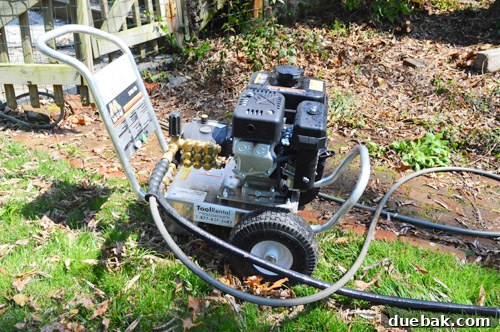
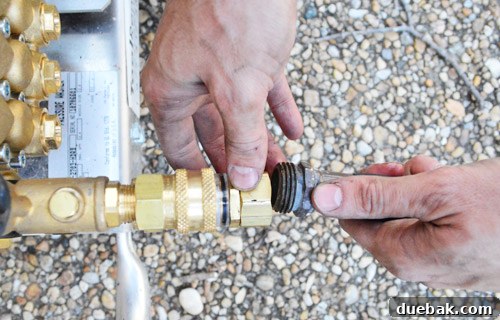
My initial apprehension was real. Handling such a powerful machine for the first time, especially one that wasn’t ours, brought a wave of “don’t break it” anxiety. However, the helpful staff at the rental store provided a quick, essential crash course. The setup, surprisingly, was straightforward: connect the spray gun to its hose, attach that hose to the machine, and finally, screw in the garden hose for the water supply. A pull of the crank (it runs on gasoline), and the motor roared to life, signaling the start of our deep-cleaning adventure.
Pressure Washer Setup and Safety for Beginners
Before you even think about pulling the trigger, understanding the basics of pressure washer setup and safety is paramount. Here’s a quick rundown of what I learned and what you should consider:
- Read the Manual: Always start with the manufacturer’s instructions for the specific model you’re using.
- Safety Gear: Eye protection is non-negotiable. Gloves and sturdy, closed-toe shoes are also highly recommended to protect against debris and the powerful water stream.
- Clear the Area: Remove any furniture, plants, or delicate items from the work zone.
- Water Connection: Ensure your garden hose is free of kinks and securely connected to the pressure washer’s inlet. A good water flow is essential.
- Fuel (for gas models): Check the fuel level and add fresh gasoline if needed. Never refuel a hot engine.
- Nozzle Selection: Pressure washers come with various nozzles (typically color-coded) that dictate the spray pattern and intensity. A wider spray (e.g., 25-degree green nozzle) is generally safer for beginners and larger areas, while a narrower, more powerful spray (e.g., 0-degree red nozzle) should be used with extreme caution, as it can damage surfaces.
- Start Safely: With the water supply on, squeeze the spray gun trigger to release any air in the system before starting the engine. This helps prevent damage to the pump.
- Engine Start: Follow the specific starting procedure for your machine (choke, pull cord, etc.).
- Test Spot: Always test on an inconspicuous area first to ensure the pressure setting and nozzle choice are appropriate for the surface you’re cleaning.
Deck Rejuvenation: From Winter Grime to Pristine Wood
Our primary motivation for renting the pressure washer was our deck. After enduring the harsh winter, it was far from its fresh, newly built appearance and desperately needed a thorough cleaning before we could apply a protective stain. There was a specific reason for this delay: we finished building the deck in late August, and we were advised to allow the pressure-treated wood 2-3 months to fully dry out. Sealing or staining pressure-treated (PT) wood too soon can trap moisture, leading to disastrous results like warping, cracking, or premature stain failure. By the time the wood was deemed dry enough for staining, the cold temperatures of late fall and winter arrived, making it unsuitable for stain application as per product directions.
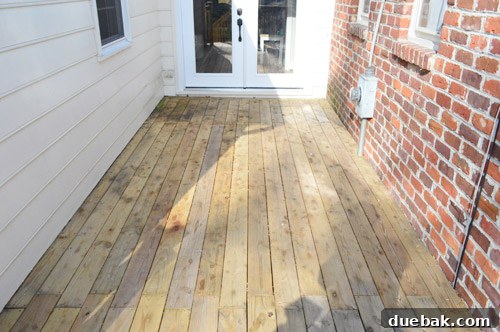
We felt a bit foolish for getting caught in this timing dilemma, but ultimately, the delay wasn’t without its silver lining. The deck had developed one particularly stubborn area where fallen leaves and acorns had accumulated longer than they should have, creating deep-seated stains and a noticeable discoloration. This spot, more than any other, cried out for the rejuvenating touch of the pressure washer as spring finally arrived.
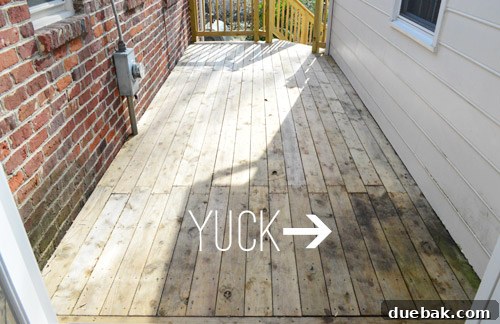
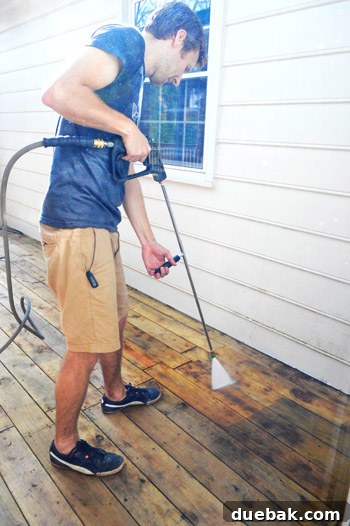
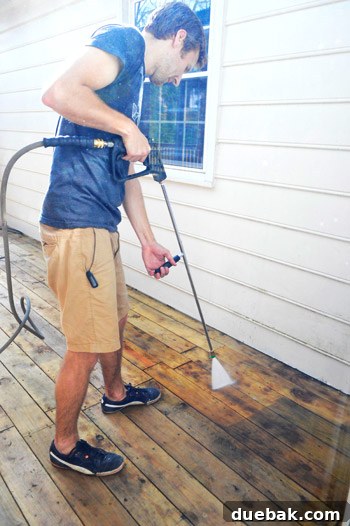
Using the pressure washer was remarkably captivating. It felt almost like painting, but in reverse. With each precise stroke of the powerful water jet, the dingy, weathered color of the wood gave way to a lighter, cleaner hue beneath. The transformation was instant and deeply satisfying. This close-up view of that particularly nasty area above truly illustrates the dramatic difference. Cleaning it board by board, patiently moving the spray gun in even, overlapping passes, made a significant impact, although some deep-set stains from acorn caps proved a bit more challenging to remove completely.
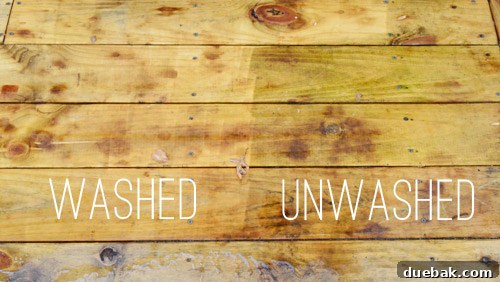
After giving the entire deck a thorough once-over, it looked remarkably closer to its just-built days. However, those stubborn acorn cap stains in one corner remained. It was at this point that I began to reconsider my initial decision not to use a dedicated cleaning solution. Many pressure washers offer the option to route a cleaning solution through the system, allowing you to combine the mechanical force of the water with the chemical action of a specialized cleaner. This combination is often far more effective for deep-seated organic stains and mildew.
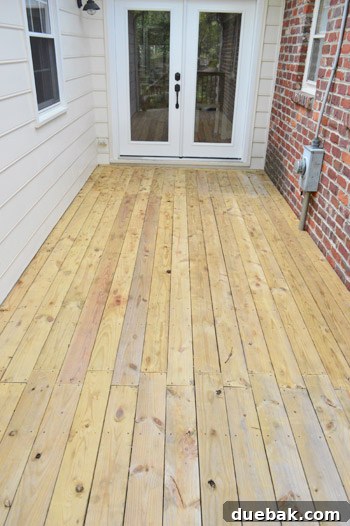
I did eventually go back with some cleaner, applied manually without the pressure washer, which seemed to do the trick for those persistent stains. But that’s a story for our upcoming deck staining and sealing post. For now, there was plenty more power washing action to embark upon!
Expanding the Cleaning Horizon: Fences, Railings, and the Revelation of Brick
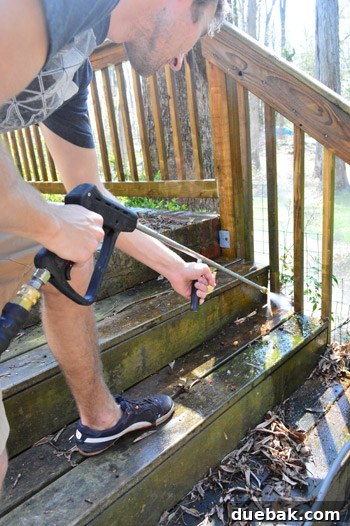
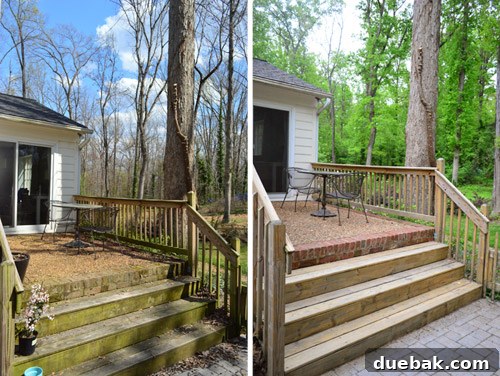
With the pressure washer rented for a full 24 hours, I decided to make the most of its incredible power. My enthusiasm knew no bounds as I aimed it at virtually every piece of wood around our house. Fences, railings, steps – you name it, it got blasted. The results were consistently impressive, revealing cleaner, brighter surfaces that I hadn’t realized were so dull before. It truly highlights how gradually grime accumulates, becoming almost invisible until it’s spectacularly removed.
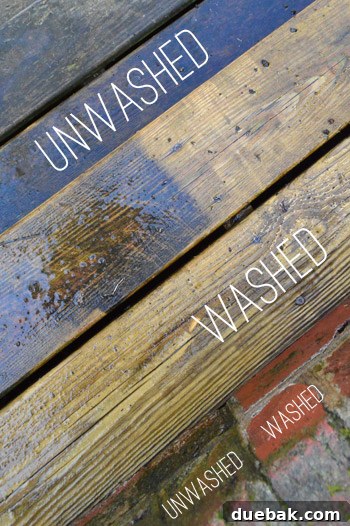
Then, somewhere around the patio, I made a truly surprising discovery: the pressure washer also made an enormous difference on our brickwork. I never fully realized just how green and dingy some of our brick had become until that moment of stark contrast. It’s important to note here, for anyone considering this for their own home, that while our rented unit was a powerful 2000 PSI, some brick types can be quite delicate. Stronger pressure washers (e.g., above 3000 PSI) or improper technique can potentially damage mortar or even the brick face itself. Always do a quick research check on your specific brick type and test a small, inconspicuous area first. This photo, taken from an earlier vine removal post, gives a glimpse of the brick’s “before” state, prior to all the greenery taking over.
New House, New Challenges: Conquering Ninja Turtle Green Brick
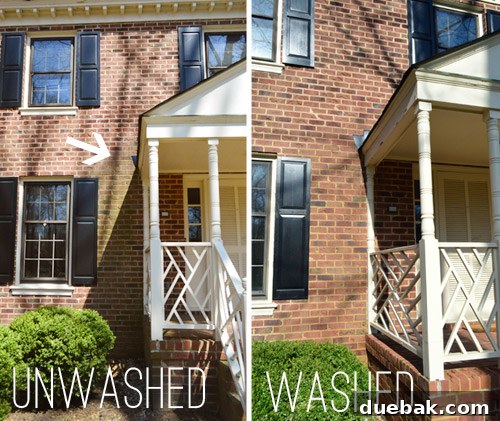
Just when I thought I had exhausted all possible surfaces to spray at our current house, I counted my lucky stars. We had recently acquired a new place, and it too boasted its fair share of dingy brick, presenting a fresh canvas for my newfound cleaning obsession. The thought of more immediate, satisfying transformations spurred me on.
As immensely satisfying as the pressure washing process was – almost therapeutic in its instant gratification – the moderate physical energy required to wrangle the spray gun for hours on end began to wear on me. My arms and back were feeling the burn, a testament to the powerful recoil and sustained effort. But in a true “get our money’s worth” spirit, the spray had to go on!
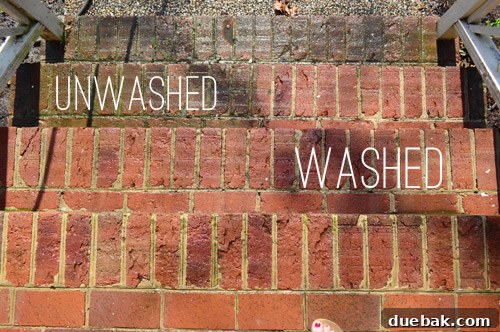
My partner, Sherry, was busy wrangling our daughter, Clara, and capturing these memorable moments on camera (if you look closely, you can spot her toe pulling a ‘Where’s Waldo’ above!). Meanwhile, I was already thoroughly soaked and splattered with dirt, so there was no turning back. I pressed on, or should I say, I “pressured on”? Har-har.
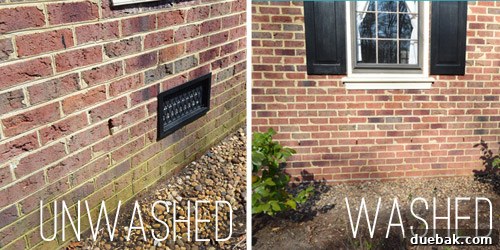
The new house presented its own unique challenge, particularly a section of brick on the back right, directly above the deck. Between consistent rain splashing and its perpetually shaded location, this area had developed a thick, vibrant layer of algae and mildew, a color I affectionately dubbed “Ninja Turtle Green.” It was a sight to behold, and a testament to nature’s relentless pursuit of colonization.
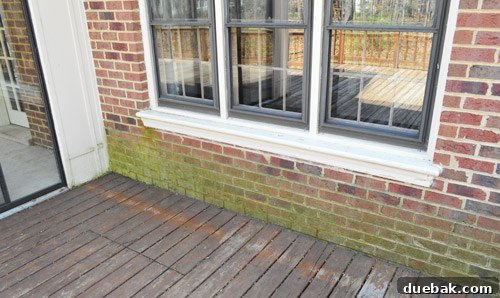
Sherry actually captured a fantastic video of this part of the cleaning process, allowing you to witness the utterly gratifying “de-greening” transformation firsthand. It’s a bit like watching things lighten up brick by brick, almost as if you’re painting with a bleach pen, but with the power of water. The instant visual feedback makes pressure washing incredibly addictive.
Wrapping Up: A Day of Transformation and a Newfound Appreciation
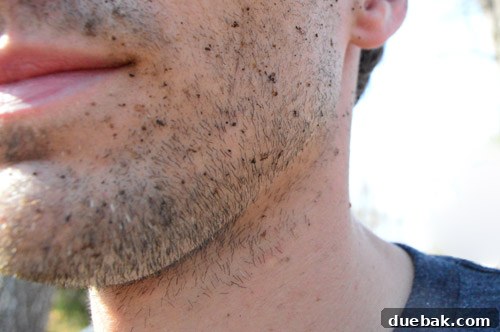
By approximately 5 PM, it was time to reluctantly call it a day and return my new favorite toy. I was thoroughly worn out, a delightful mess of dirt and backspray, but the sense of accomplishment was immense. I’ll spare you the visual of my grimy, dirt-coated leg. Instead, you get this flattering shot of my dirt-speckled face, captured by my ever-supportive (and slightly mischievous) camerawoman, $herdog.
So, in conclusion: dear pressure washer, I love you. You are an absolute beast of a machine, but the kind of beast that has irrevocably captured my heart with your immense power and transformative capabilities. This powerful tool truly stands out as a game-changer for anyone looking to revitalize their home’s exterior.
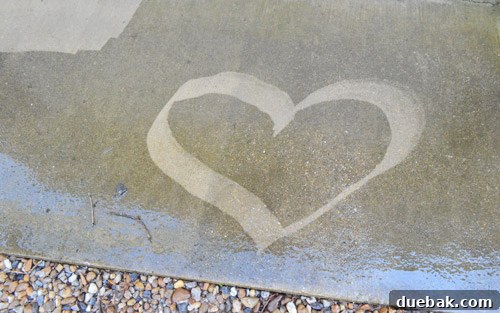
Oh, and that picture above? That’s concrete. I honestly wouldn’t have even thought it was particularly dirty to begin with had I not accidentally oversprayed it while tackling some nearby brickwork. The immediate contrast was astonishing. So, it got a little facelift too. This machine is truly amazing, I tell you. It’s right up there on my list of essential home maintenance tools, alongside practical solutions like pegboards for organization. The ability to restore surfaces to their original glory with just water pressure is nothing short of incredible, making it an invaluable asset for any serious DIYer or homeowner.
PS: Don’t forget, next Tuesday, May 7th at 7pm, we’ll be having a special chat with Kate Hall (aka: Richmond Mom) about various topics including parenting, decorating with your family in mind, and some thoughtful Mother’s Day gift ideas. This event will take place at the Barnes & Noble in Glen Allen (conveniently located near Virginia Center Commons). The discussion will be followed by a Q&A session and a book signing, so we’d absolutely love to connect with anyone who can make it!