
Embarking on a home renovation journey is always an adventure, and our latest project – a complete laundry room overhaul – has been no exception. What began with the simple idea of “knocking out a few walls and framing a few new ones” quickly transformed into a dynamic and rapid-fire sequence of events that left us both exhilarated and a little dizzy. For weeks, progress in our laundry area had been sluggish, marked by endless contemplation, revised plans, and the meticulous process of considering contractor bids. Then, seemingly overnight, everything accelerated, putting our project into a thrilling spin cycle.
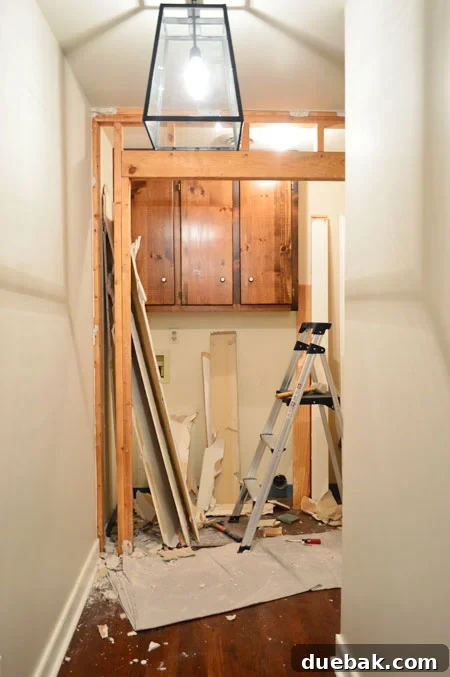
Just a few days ago, this is how our laundry space appeared, hinting at its former self:
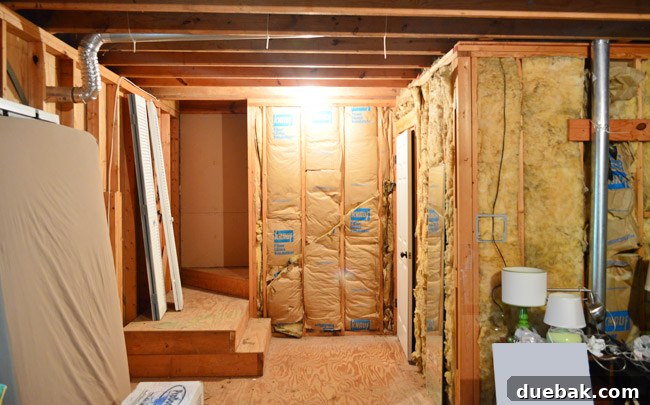
Today, the transformation is truly striking. The space has been dramatically opened up, beginning to take on the form of its future, highly functional design. Yowza indeed!
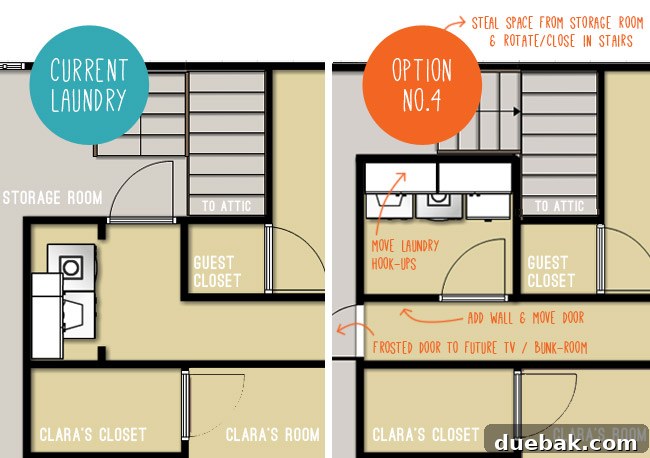
To fully appreciate the scope of this rapid change, let’s rewind to early last week. We had a pivotal realization: perhaps we could tackle more of the renovation ourselves and strategically sub-contract specialized jobs, rather than entrusting the entire project to a single contractor and their team. This hybrid approach promised more control, potential cost savings, and the satisfaction of significant DIY contributions. As some of you may recall from our previous discussions, our ultimate design goal aligns with “Option 4,” a blueprint that dramatically reconfigures the space for optimal efficiency and aesthetics.
With a clear vision in mind, we compiled an exhaustive to-do list encompassing every task required for this ambitious home improvement project. Our strategy was straightforward: execute everything within our capabilities, and for any line item that ventured beyond our comfort zone or expertise, we’d call in a professional. This approach allowed us to maximize our DIY efforts while ensuring critical tasks like structural changes, plumbing, and electrical work were handled safely and efficiently by certified tradespeople. Here’s a glimpse at our initial task list, with an asterisk denoting items we either hired out or are currently considering for professional assistance:
- Move washer & dryer and remove cabinetry
- Demo cased opening, side wall, back wall, part of the floor and the attic step
- Frame new walls & doorways*
- Move laundry plumbing hook-ups & drains*
- Move laundry electrical (plus other lights, switches, and outlets)*
- Move dryer vent
- Hang drywall
- Add insulation
- Mud, tape, and sand all the drywall seams in the new room*
- Rehang laundry door
- Add new frosted door to attic
- Prime & paint laundry room and hallway walls
- Tile & grout new laundry floor
- Add baseboard and door casings
- Add upper cabinetry and shelving
- Tile & grout laundry room backsplash
- Reinstall washer & dryer
- Add lower cabinet
- Add ceiling light fixture
- Hang art, ironing board, and bring in other laundry room items
- Finishing touches and repairs (drywall in garage, step in attic, etc)
As we previously shared in a quick update, the initial step of moving the appliances was already complete. Now, let’s dive into the exhilarating world of demolition, which officially commenced on Tuesday. Our first task was the careful removal of all baseboards and trim. The goal here was not just to clear the space, but to meticulously pry off these elements with the hope of reusing some of them, a small but significant step towards minimizing waste and saving on material costs.
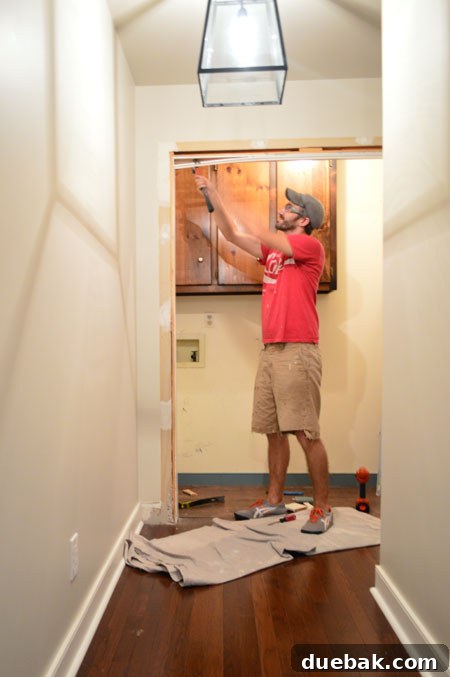
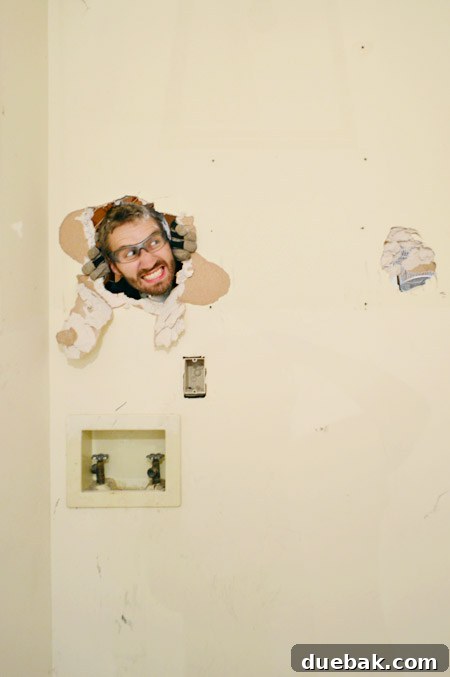
Following the trim, drywall demolition began, initially focusing on the cased opening. We strategically opted to leave the walls connecting to the storage room intact for as long as possible. This decision was crucial for maintaining the efficiency of our air conditioning system, preventing the already warm storage area from further taxing our AC unit. When it came to tools, simplicity reigned: a trusty rubber mallet proved effective for knocking out sections, while a robust crowbar was indispensable for prying off stubborn pieces of drywall and lumber. Safety, of course, was paramount throughout this process, with goggles and dust masks becoming essential companions.
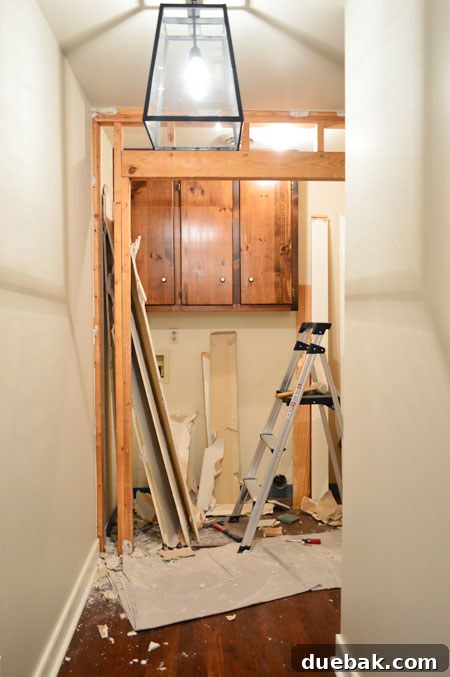
Cleanup is an integral, though often overlooked, part of any demolition project. I diligently swept smaller debris into heavy-duty garbage bags, while larger pieces were collected into a growing pile in the attic, awaiting proper disposal. At some point, we plan to either rent a small dumpster or utilize another Bagster. The thought of dramatically hurling debris from the storage room window into a trash bin below is a motivating vision! Importantly, we’re also salvaging reusable items, such as sound studs and trim, further contributing to our sustainable and cost-effective renovation goals.
The next challenge on our demolition agenda was removing the old cased opening framing. This task, perhaps more than any other, demanded sheer brute force and persistence. It involved a significant amount of hammering at tough 2x4s and meticulously prying apart embedded nails. The progress was slow but steady, a testament to the effort required to dismantle the old structure and make way for the new. Each creak and groan of the wood signaled a step closer to our vision.
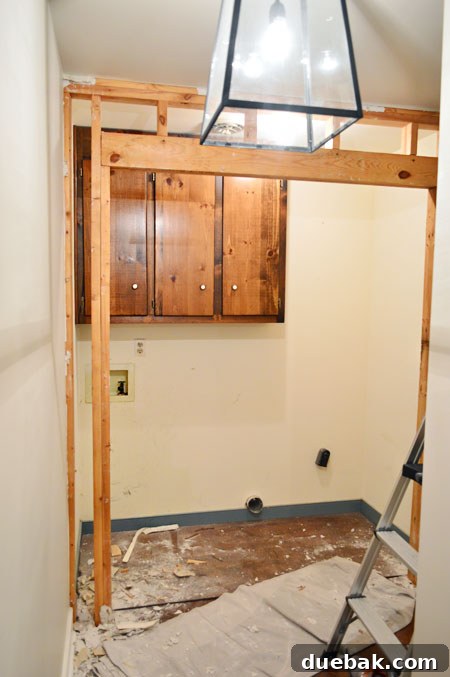
With persistent effort, the old framing finally yielded, leaving behind a starkly open space. This stage of demolition truly reveals the bones of the house and the potential for new layouts. The physical exertion and dusty environment are all part of the process, reminding us that transformation often requires a bit of grit.
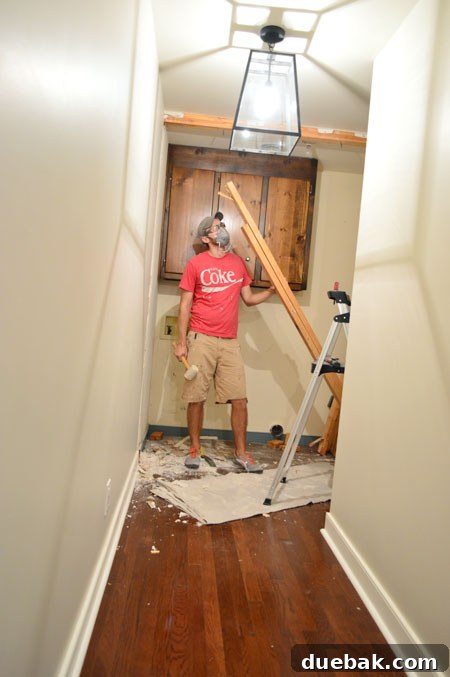
Once the bulk of the structural demolition was complete, we removed the remaining upper cabinet. This final step officially rendered the space empty, a blank canvas ready for its next incarnation. Seeing the area completely cleared out offered a profound sense of accomplishment and clarity for the construction phases ahead.
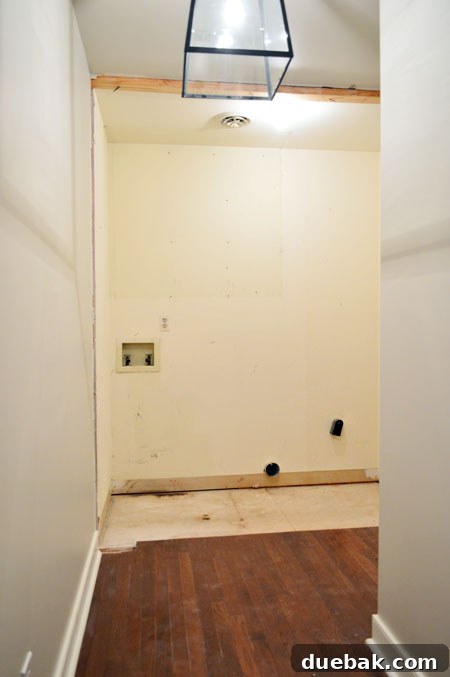
Demolition wasn’t solely confined to walls; it also extended to the flooring. A section of our beautiful hardwood flooring had to be meticulously removed, as the new laundry room wall framing required direct attachment to the subfloor for stability and structural integrity. It felt a little strange to tear out floors we had lovingly laid just last year, but such is the nature of comprehensive renovations – sometimes you have to break down to build better. This was a necessary step to ensure the long-term success of our new layout.
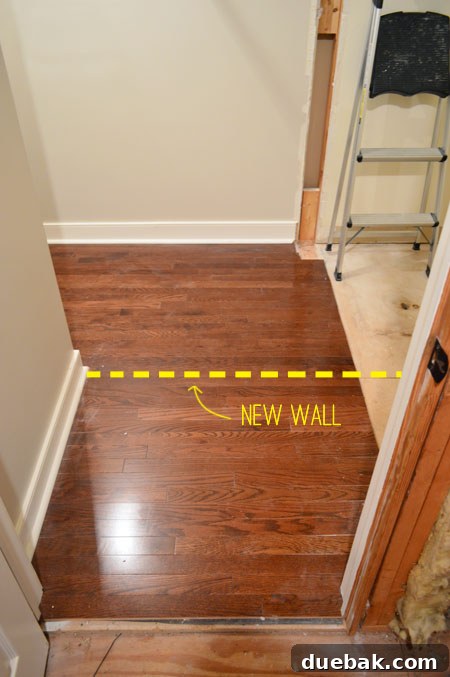
Our flooring, installed using the Elastilon system (essentially a large adhesive sheet), presented a unique challenge compared to traditional nailed planks. It wasn’t a matter of simply prying up boards. The Elastilon adhesive is incredibly tenacious, requiring a different approach. I initially managed to pry off the first few pieces with a flat-head screwdriver, repurposed as a chisel. Once a few planks were loose, the flooring began to lift in larger sheets, making the process slightly more manageable.
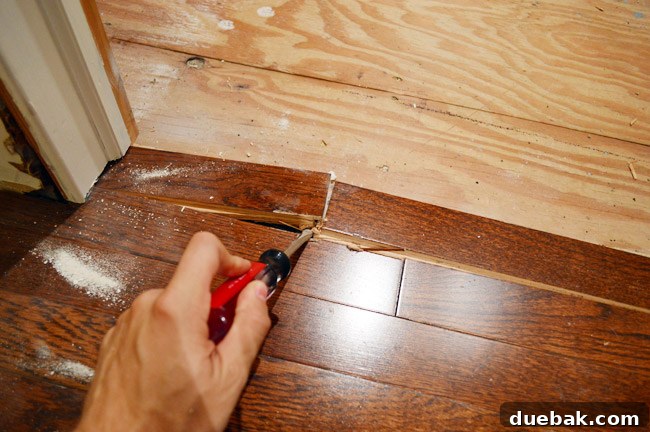
At this point, I could sufficiently separate the flooring to insert a utility knife and carefully slice through the incredibly sticky Elastilon layer underneath. This allowed me to precisely remove only the section of flooring required. Subsequently, I also removed the particle board subfloor to expose the plywood, providing a clean, stable base ready for the new wall framing. The exposed subfloor, while not aesthetically pleasing, represents significant progress and the foundation for our updated space. Looks awesome, right?
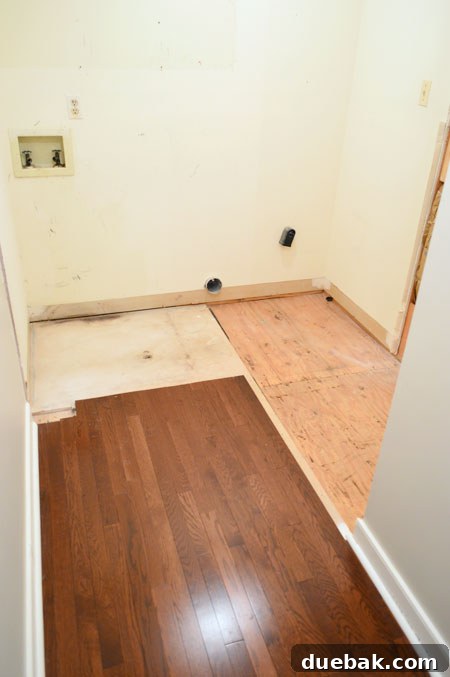
The process of removing the floor solidified a design modification we had been contemplating for days: subtly bumping the frosted door to the storage room (which will eventually become a bunk/TV room) forward a bit. Instead of residing in the existing back wall, this door will now be framed precisely where the hardwood floors terminate. This adjustment offers several compelling benefits. Firstly, it saves us the effort and expense of extending the hardwoods into the storage room, as we’re planning to install carpet there. Secondly, it cleverly shortens our already-quite-long hallway by a small but noticeable margin, improving flow. Thirdly, and perhaps most importantly, it creates a small vestibule at the entryway of the TV room, allowing the door to swing into this alcove rather than directly into the middle of the room. This thoughtful detail will significantly simplify future furniture placement, enhancing the room’s functionality and aesthetic appeal.
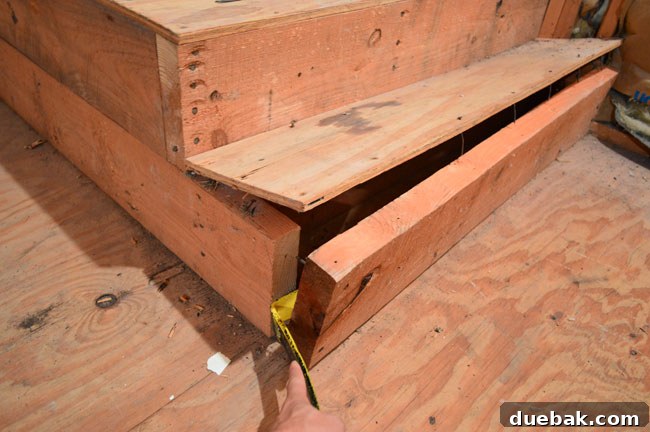
My final demolition task before the framing crew arrived was to remove a single attic step that was obstructing the new layout. This involved a combination of prying and cutting to safely detach it. The plan is to rebuild it on the other side of the platform later, ensuring attic access remains functional within the new design. Each element of the old structure had to be carefully considered and removed to pave the way for the envisioned space.
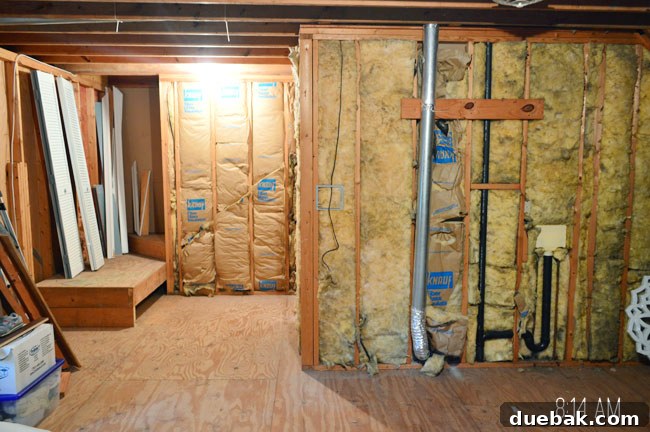
This marked the extent of the demolition our framing professional, David of Chicas Construction (who also assisted us with raising our sunroom ceiling last year), recommended before his arrival. While more walls ultimately needed to come down, we collectively decided to keep them intact for as long as possible. This was a strategic move, again, to prevent the warm storage room from overworking our AC system. Moreover, the latter half of the framing couldn’t proceed until the plumbing and electrical had been relocated, which in turn depended on the completion of the initial framing. This natural dependency dictated a two-part framing schedule, making a corresponding two-part demolition approach entirely logical and efficient for our renovation timeline.
On Wednesday morning, the space still looked like this, a raw stage awaiting its transformation:
However, less than three hours later, thanks to David’s incredible efficiency and expertise, two brand new walls proudly stood in place. His speed and precision were truly remarkable, showcasing the value of professional craftsmanship in home construction. Witnessing the rapid structural change was a testament to the power of skilled labor.
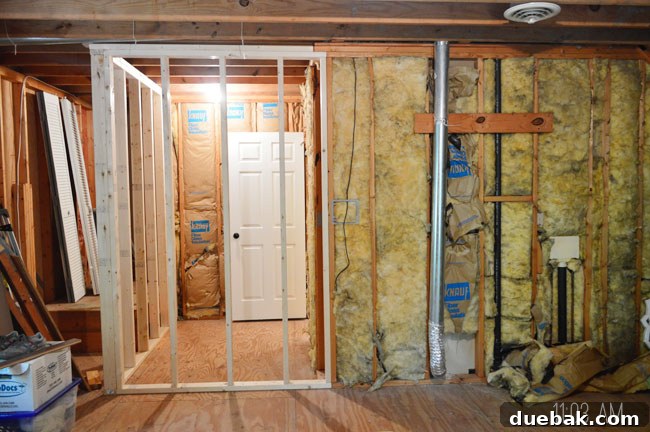
Observing David work his magic, I felt confident that framing is a task I *could* manage myself, given enough time and patience. However, it undoubtedly would have taken me significantly longer. The efficiency of a professional like David meant we could keep our renovation timeline moving swiftly. This rapid progress allowed us to bring in the plumbers, Scott & Mike’s Plumbing Services, just hours later. They expertly disconnected the old hook-ups and seamlessly installed the new ones, preparing the space for its updated laundry amenities.
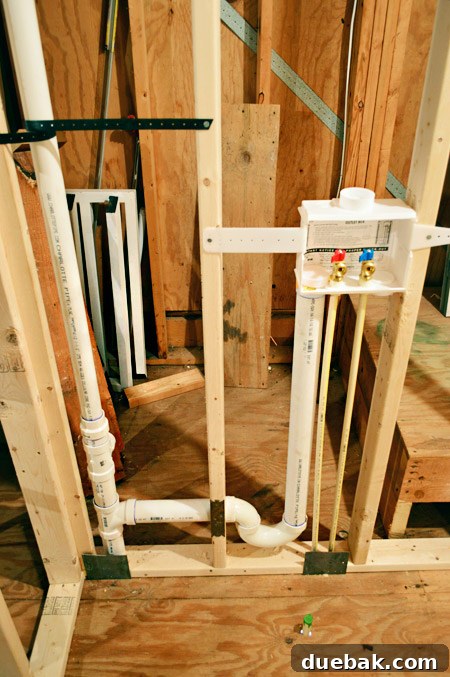
The plumbing relocation took Scott and Mike approximately three hours, a remarkably quick turnaround. This efficiency was largely due to the fact that all the plumbing infrastructure sits conveniently above our garage. This provided them with easy access to all pipes and connections, allowing them to work without creating a significant mess inside the main living areas of the house. Of course, this access did necessitate cutting a substantial section out of our garage ceiling. Repairing this opening is now on our to-do list, but we’ve been contemplating drywalling the entire garage (two large side walls are unfinished anyway), so we might consolidate efforts and tackle it all at once.
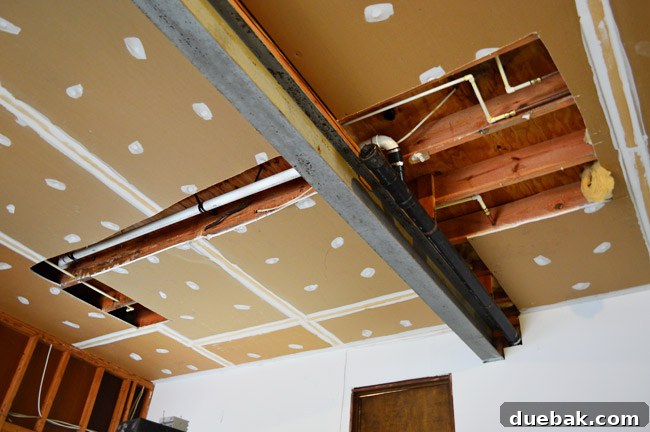
The newly opened section in the garage ceiling also greatly simplified the work for the electricians, S J Ryan Electric, who arrived the very next morning. They were able to relocate the laundry outlets in a flash, but their work extended far beyond that. There was still a considerable amount of electrical work to be done in terms of moving light fixtures, switches, and other outlets to accommodate the new layout and improved functionality.
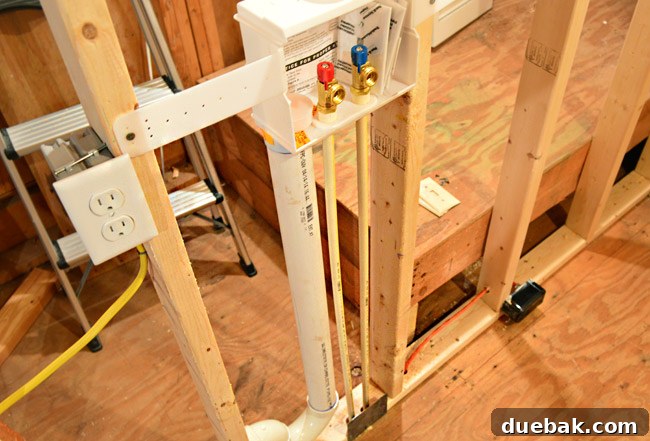
For instance, their tasks included installing a ceiling light in the future laundry room, controlled by a switch at the new laundry doorway, and relocating some of the existing storage room lighting and switches. Sherry and I meticulously brainstormed the optimal placement for every electrical element well in advance. This upfront planning was crucial, as “time is money” when working with hourly professionals. Our detailed plan ensured everything was relocated logically and efficiently. For example, we now have a dedicated light above the attic stairs, an outlet specifically placed in the future laundry room for plugging in an iron, and a fixture box in the laundry room ceiling that will be perfectly centered *after* the upper cabinets are installed. This foresight prevented a common design oversight where a ceiling light, initially centered in an empty room, would appear off-center once cabinets were hung, being closer to them than the opposing wall.
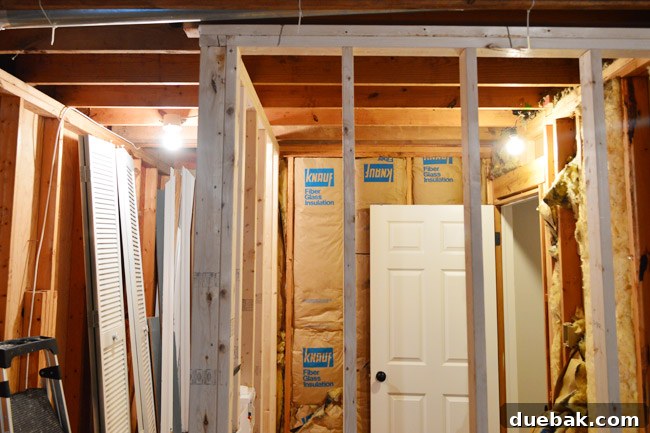
All this electrical work was completed by Thursday afternoon, and we eagerly called our framer to return on Friday to finish the remaining framing. However, fate had other plans: he was unfortunately battling food poisoning. David is truly the nicest guy, and he offered to come out on Saturday or Sunday if he felt better, but we insisted he prioritize his recovery. We wanted him to focus on feeling well, and frankly, we had plenty of other demolition messes to create over the weekend. The good news is he’s back this morning, feeling much better, to finish everything up so we can hopefully start hanging drywall very soon!
With the critical plumbing and electrical elements successfully relocated, it was time to move full steam ahead with the second phase of demolition. I thoroughly enjoyed tackling this over the weekend, embracing the satisfying chaos of tearing things down.
My first target was more drywall, which, fortunately, came down in reasonably large sheets for the most part. This contributed to my ever-growing pile of trash and reusable items near the window, a testament to the efficiency of the demo. Speaking of the window, this phase also offered us our very first glimpse of the glorious natural daylight that will now flood this end of the hallway. It’s truly amazing how removing a wall can completely transform the perception of light and space.
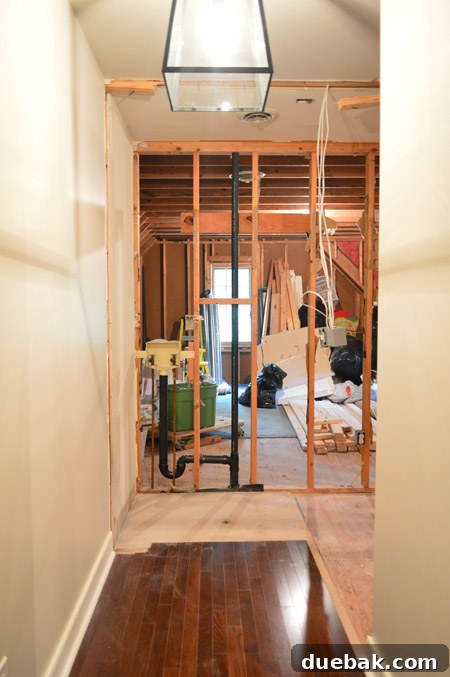
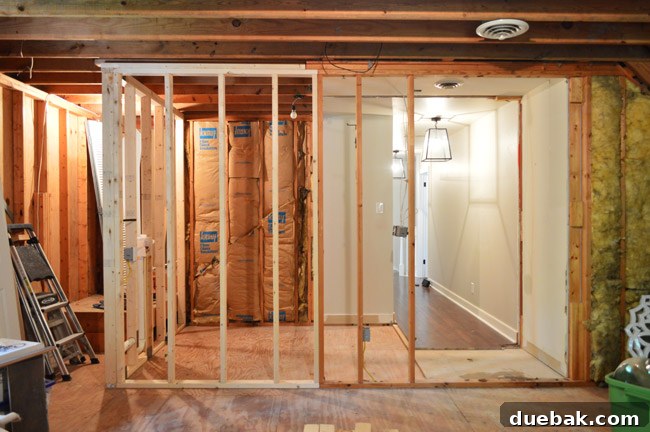
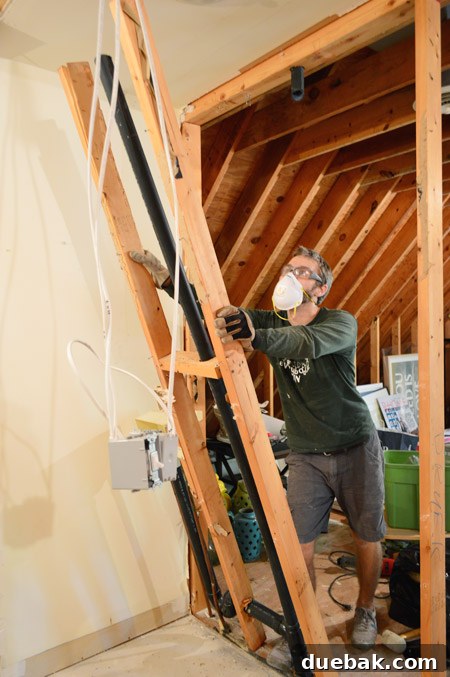
I also continued to take down more of the existing framing, specifically the old wall that housed the storage room door. This removal provided us with our first tangible sense of what the new laundry room will actually feel like, dramatically opening up the space. You might notice some dangling outlet boxes, but don’t fret; the electricians strategically positioned them to be easily set directly into the freshly framed wall that David is currently working on. This thoughtful planning ensures a seamless integration of utilities into the new structure.
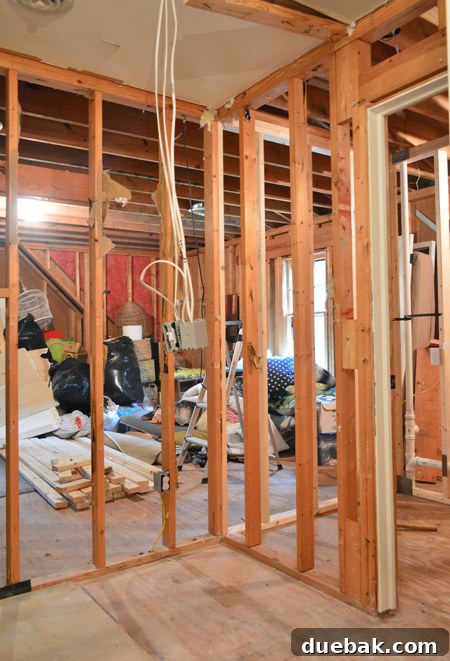
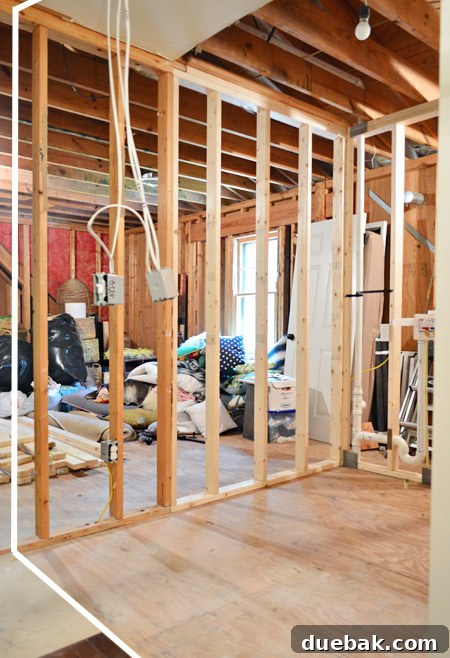
Here’s the same area with that section of framing completely down. I’ve added white lines to the image to visually remind you where the final wall will be framed in. With this significant structural change, the area is finally starting to feel ever-so-slightly like a distinct room, no longer just an open hallway. The potential for the new laundry room is now truly palpable.
My weekend demo also included taking out part of another wall, specifically the section with the old washer hook-ups. This area will now seamlessly open into the storage room, enhancing the overall flow and functionality between the spaces. While the plumbers had already disconnected all the plumbing, they strategically left the old pipes in the wall for me to remove during demolition. Armed with my trusty reciprocating saw, it was a straightforward process of cutting through the old pipes, and down they came, clearing the way for the new design.
And that, my friends, is how we arrived at the dramatic “after” picture you first saw at the very beginning of this post. The journey from a confined, outdated space to this open, promising canvas has been incredibly rewarding, showcasing the dramatic impact of strategic demolition and professional collaboration in a major home renovation project.
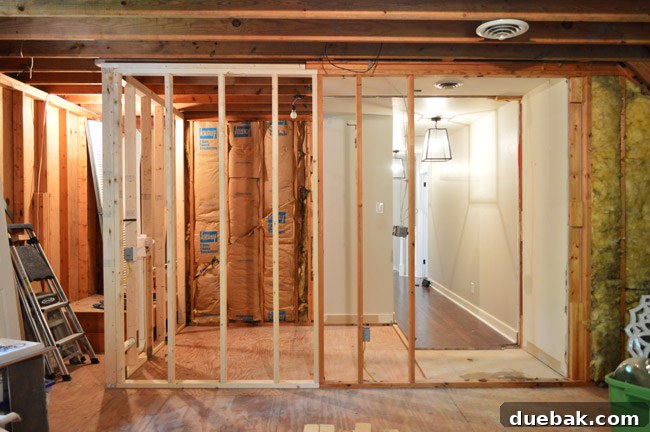
The next crucial construction step is currently underway: framing the remaining two walls. This includes the wall that will ultimately close off and define the new laundry room, as well as the framing for the new frosted door leading into the storage room. To help visualize this critical phase, I’ve whipped up a little GIF that illustrates the process (David, our framer, works almost this fast!). This framing is essential for creating the precise dimensions and structural integrity of the new spaces.
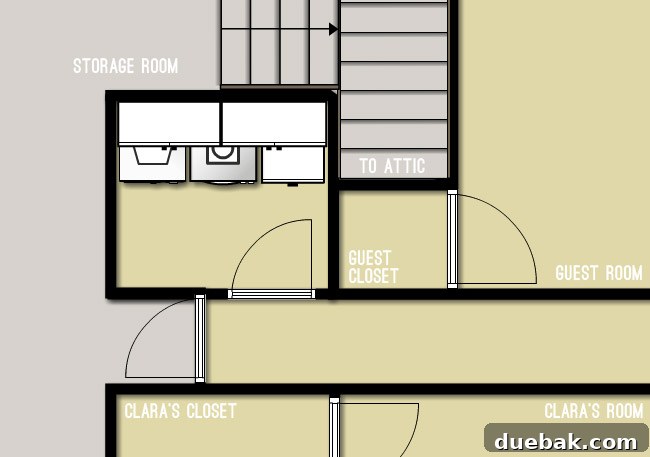
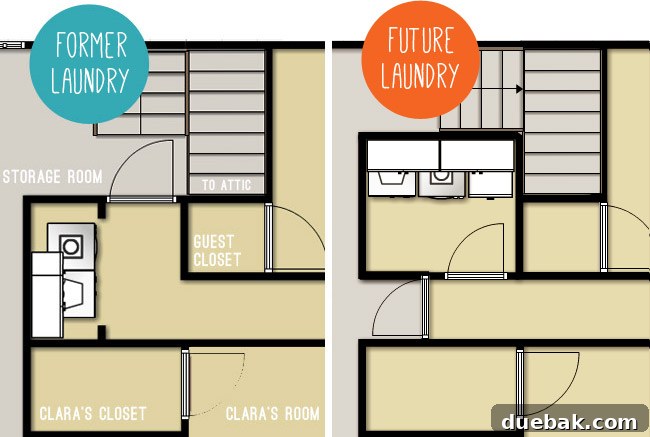
I realize that even with the GIF, visualizing the new layout can still be a bit abstract, so I’ll make one last attempt to provide clarity by showing you an updated version of our floor plan. This revised blueprint highlights the final configuration, making the spatial changes crystal clear. I can’t even begin to tell you how incredibly satisfying it was to change the “Current Laundry” label to “Former Laundry” on this plan. It truly symbolizes the progress and the complete transformation underway.
Once the framing is fully complete, our ambition is to dive straight into drywalling. This is a task we’re excited to tackle ourselves, though we readily admit our mudding and taping skills could certainly benefit from some practice! Before we can hang the first sheet, however, we need to cross off a few other smaller but essential items from our list, such as carefully rerouting the dryer vent to its new, optimal location. Every step, big or small, brings us closer to our dream laundry space.
Move washer & dryer and remove cabinetryDemo cased opening, side wall, back wall, part of the floor and the attic stepFrame new walls & doorways*Move laundry plumbing hook-ups & drains*Move laundry electrical (plus other lights, switches, and outlets)*- Move dryer vent
- Hang drywall
- Add insulation
- Mud, tape, and sand all the drywall seams in the new room*
- Rehang laundry door
- Add new frosted door to attic
- Prime & paint laundry room and hallway walls
- Tile & grout new laundry floor
- Add baseboard and door casings
- Bring washer & dryer back in and hook them up (and party like it’s 1999)
- Add upper cabinetry and shelving
- Tile & grout laundry room backsplash
- Reinstall washer & dryer
- Add lower cabinet
- Add ceiling light fixture
- Hang art, ironing board, and bring in other laundry room items
- Finishing touches and repairs (drywall in garage, step in attic, etc)
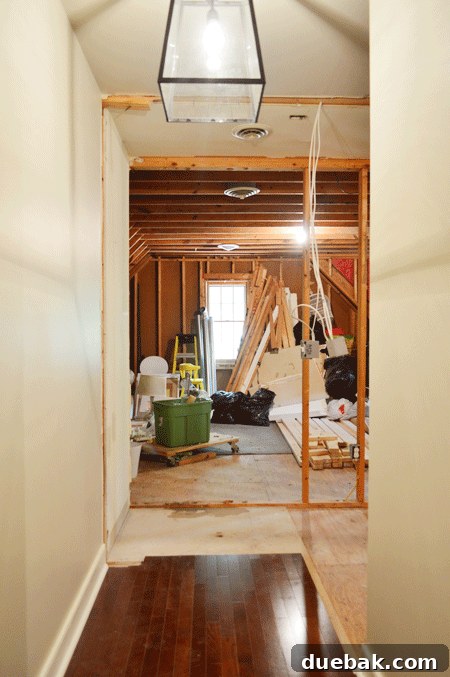
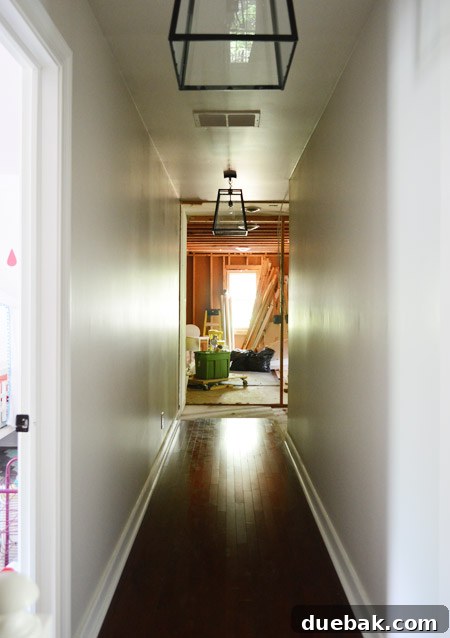
I’ll leave you with the very last shot I captured before carefully taping up a few large drop cloths. These were essential for keeping the hot attic air at bay and preventing excessive heat transfer into our living space. What this image truly highlights, however, is the glorious, glorious natural light that is now finally shining brightly into this previously dim end of the hallway. It’s a small change with a massive impact on the ambiance of our home, and we’re absolutely thrilled with it.
Oh, and we certainly owe you all a comprehensive cost update! That will likely be the focus of our next post, once we receive the final bill from our framer and can consolidate all the expenses. So far, the combined estimate from our framer, plus the totals for the plumbing and electrical assistance, are looking incredibly favorable when compared to the initial line items in the two full-service contractor estimates we received. This hybrid DIY/subcontracting approach is definitely proving to be a cost-effective strategy for our home renovation.
What exciting projects did you tackle this past weekend? Did anyone else unleash their inner demolition expert, wield a rubber mallet, and confidently tell some drywall who’s boss? We’d love to hear about your adventures!