
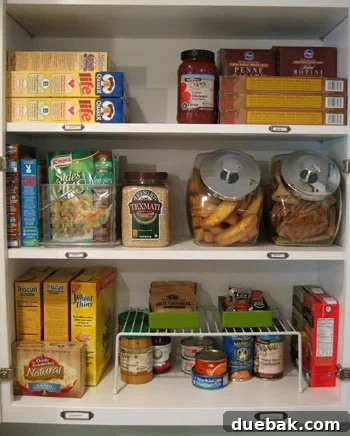
Transform Your Kitchen: The Ultimate Guide to an Organized Cabinet & Pantry Makeover
Every kitchen, at some point, faces the inevitable battle against clutter. Whether it’s those elusive spice jars, forgotten snacks, or an overwhelming collection of baking ingredients, chaotic cabinets can turn meal prep into a treasure hunt and cooking into a chore. If you’ve ever felt the frustration of overflowing shelves, struggling to find what you need, or even unknowingly buying duplicates, then you know the struggle is real. This past weekend, we finally decided to tackle our own kitchen cabinet dilemma head-on, embarking on a comprehensive clean-out and organization project that has dramatically transformed our kitchen’s functionality and aesthetic. We previously hinted at our desperate starting point, and for those who witnessed the disarray of our two main double cabinets – the sole storage for every edible item in our kitchen outside the refrigerator – it was a sight not easily forgotten:
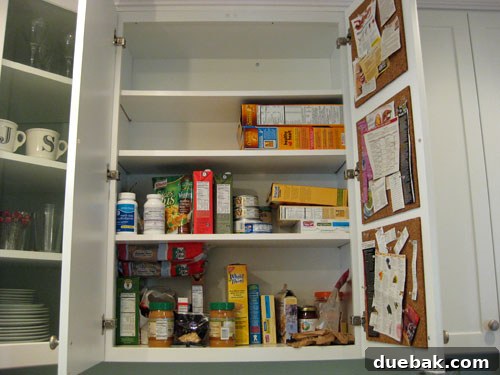
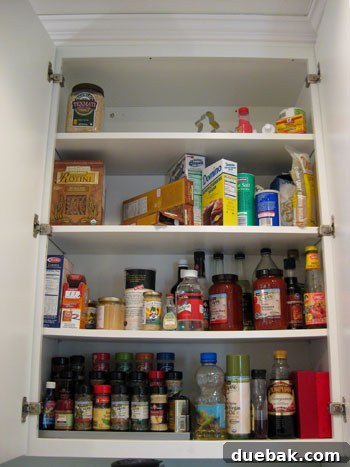
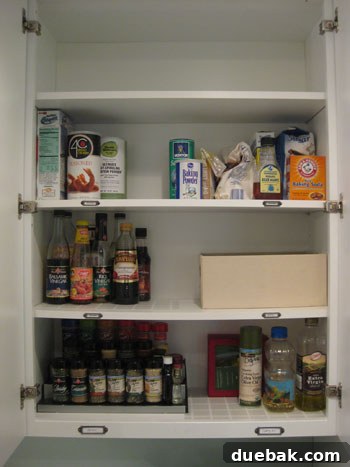
But fear not, for the transformation is complete! After just a few dedicated hours of weeding out, reorganizing, and implementing clever storage solutions, these once chaotic spaces are now a testament to the power of thoughtful kitchen cabinet organization. Prepare to be inspired by the “after” shots:
Phase 1: The Essential “100% Empty Rule” and Thoughtful Evaluation
The cornerstone of any successful kitchen organization project begins with what we call the “100% Empty Rule.” This isn’t just a suggestion; it’s a non-negotiable first step. We completely cleared out both cabinets, placing every single item onto our kitchen counter. This seemingly overwhelming act is crucial because it allows you to get a full, unbiased inventory of everything you own. You can’t truly organize what you can’t see.
As items were pulled out, we followed a simple but effective process:
- Evaluate: What do we actually have? Do we use this regularly?
- Pair Like with Like: Group similar items together (all cereals, all pastas, all snacks). This immediate grouping helps identify duplicates and the true volume of each category.
- Toss or Donate: Ruthlessly discard anything past its expiration date, stale, or items you haven’t used in months (or years!). If it’s still good but you don’t use it, consider donating it to a local food bank. Be honest with yourself about what you truly need and consume.
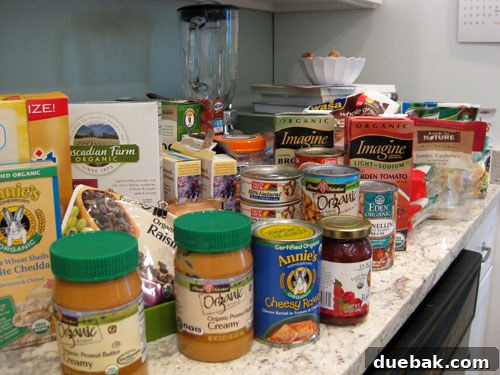
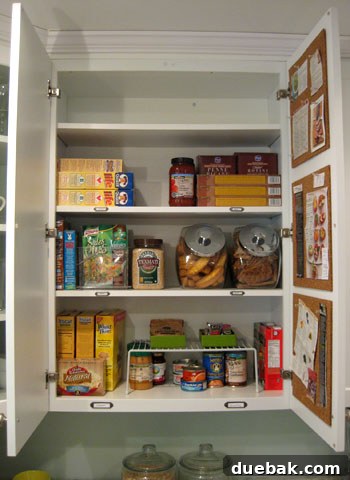
Seeing everything laid out en masse made it astonishingly clear: we had a few dominant categories. This realization was our “aha!” moment. If we could create dedicated homes for these recurring groups, our organization efforts would practically become automatic. For our first double cabinet, these essential categories emerged: cereal, pasta, sides, snacks, crackers, and cans & soups. Establishing these clear boundaries ensures that every item has a specific place, making both retrieval and tidying up effortlessly intuitive.
Strategic Categorization and Lasting Labels
With our categories firmly established, the next step was to visually delineate these areas within the cabinets. We headed to Michael’s and discovered a gem in the scrapbooking aisle: inexpensive metal labels. Unlike temporary self-adhesive stickers, these elegant metal frames offer a more polished look and, crucially, hold small pieces of paper. This means our categories are not set in stone; if our needs change or we decide to re-categorize down the line, we can simply swap out the paper inserts. At just $2.19 for a pack of four, stocking up for all our cabinets was incredibly budget-friendly.
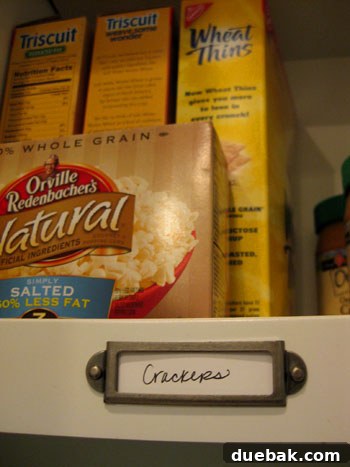
Attaching the labels was straightforward yet precise. We first measured carefully to ensure perfect alignment across the shelves. Using the metal frame as a template, we pre-drilled tiny pilot holes for the nails, then gently hammered them in. This method creates a secure, long-lasting fixture. For those seeking a less permanent solution, strong double-sided tape or even velcro could also work effectively. We chose the more permanent route, confident these labels would serve us well for years to come.
Maximizing Space and Containing Clutter: The First Cabinet’s Solutions
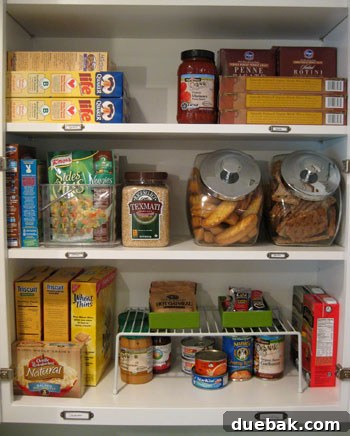
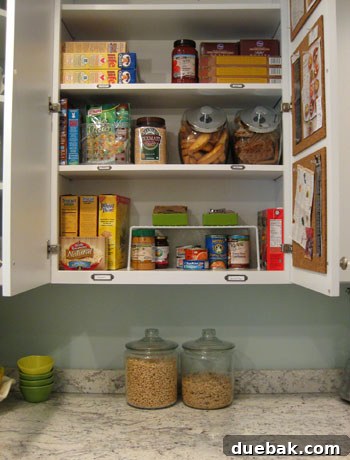
With categories defined and labels in place, we began refilling the first cabinet, implementing smart storage solutions along the way.
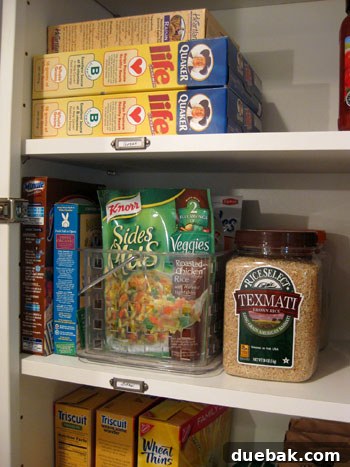
One common headache was our “sides” category, which contained numerous slippery envelopes of sauce mixes, rice packets, and seasoning sachets. Previously, they’d been a perpetually collapsing stack, constantly needing to be propped up or shoved between heavier items. A clear plastic caddy, which we already had on hand, proved to be the perfect solution. Now, these packets are neatly contained, upright, and incredibly easy to access – no more digging or accidental avalanches.
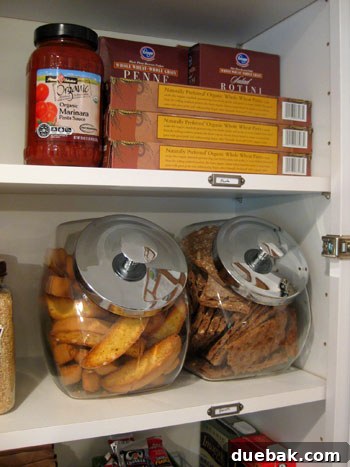
Another “no-brainer” realization was grouping pasta with its accompanying sauce. While seemingly obvious in retrospect, before this overhaul, everything was just randomly crammed in. Now, we have a dedicated, elegant section for our pasta supplies. To elevate this further, we invested in two lidded glass containers (a fantastic find at Target for just $5.29 each) for our regularly purchased bulk snacks, such as almond biscotti and Wasa crackers. Beyond the aesthetic appeal, these containers are practical: they keep contents much fresher than their original, often poorly re-sealable packaging, offering a double bonus of organization and preservation.
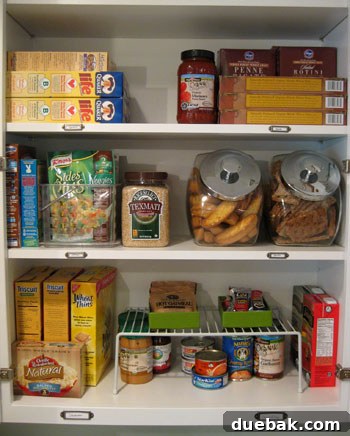
Looking at the bottom shelf, you’ll spot another invaluable organizational addition: a simple wire shelf we already owned. This immediately created more usable vertical space, preventing smaller items from getting lost or jumbled. Furthermore, we repurposed two green stationery boxes, left over from baby shower thank you notes, into ideal homes for random packets of oatmeal and granola bars. Decanting these items out of their bulky original packaging not only freed up significant space but also made grabbing a quick, on-the-go snack effortlessly convenient.
Streamlining Digital & Physical: Our In-Cabinet Cork Boards
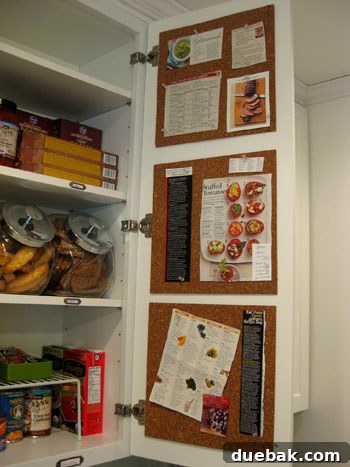
Our commitment to decluttering extended even to our DIY in-cabinet cork boards. These functional additions, originally detailed here, hold a collection of favorite recipes and nutritional articles. We took the opportunity to sort through them, paring down outdated information and eliminating unnecessary visual clutter. The result is a much cleaner, more focused resource that’s actually useful.
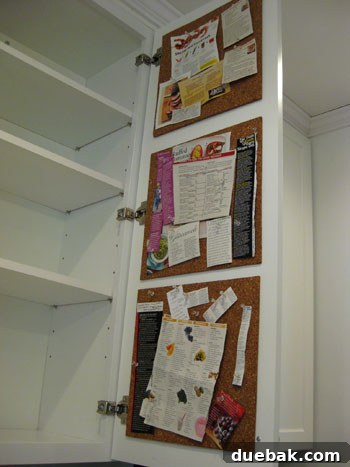
They cleaned up nicely, didn’t they?
The Second Cabinet: A Dedicated Space for Cooking & Baking Essentials
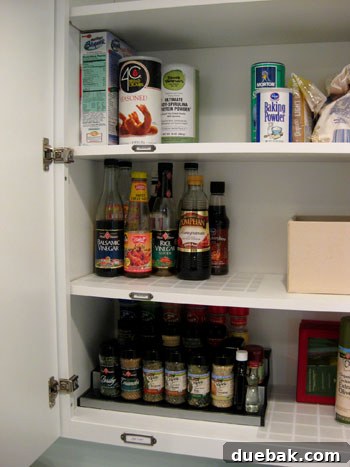
Next, we turned our attention to the second double cabinet, which had previously housed an indiscriminate mix of spaghetti, baking goods, oils, and spices. During our initial clear-out, we had a major breakthrough: it made far more sense to dedicate the first cabinet primarily to readily accessible edible items like snacks, pasta, sides, and canned goods, while reserving this second cabinet for cooking essentials – specifically, spices, cooking oils, sauces, and baking ingredients. This logical separation, while seemingly obvious now, had eluded us for years. With this new clarity, we defined its overarching categories: powdered mixes, baking ingredients, sauces, baking accessories, spices, and cooking oils. This distinction has drastically improved our cooking efficiency, as everything needed for a recipe is now intuitively grouped together.
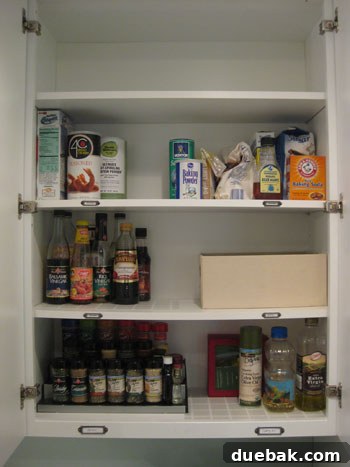
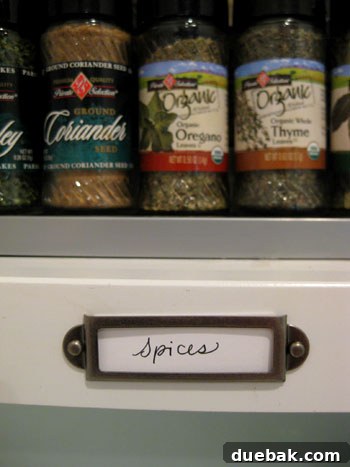
Again, the new labels instantly created a systematic approach, ensuring like items stayed together and making it simple to locate anything we needed. The flexibility to easily change these categories in the future is an ongoing benefit.
Solving the Greasy Ring Dilemma with Placemats
One specific challenge in this cabinet was dealing with “greasier-bottomed” items like cooking spray and canola oil. Over time, these left unsightly, sticky rings on the cabinet shelves, making them appear unkempt and requiring constant scrubbing.
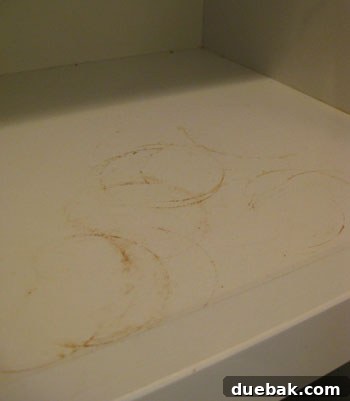
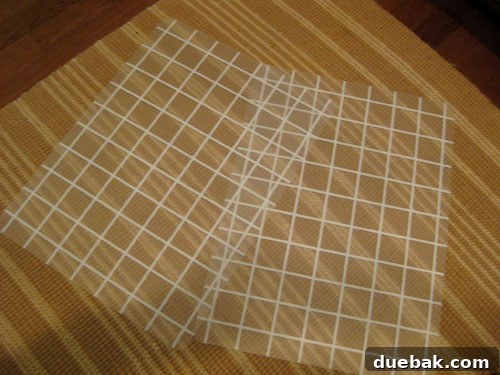
The solution was incredibly simple and budget-friendly: a few $1.99 placemats from Target. We cut one in half to create two perfectly sized, wipeable, and even dishwasher-safe protective mats. These now sit beneath our sticky sauces and cooking oils, safeguarding our shelves from future stains and making cleanup a breeze. No more fear of “nastifying” our freshly organized space!
A Dedicated Home for Baking Accessories
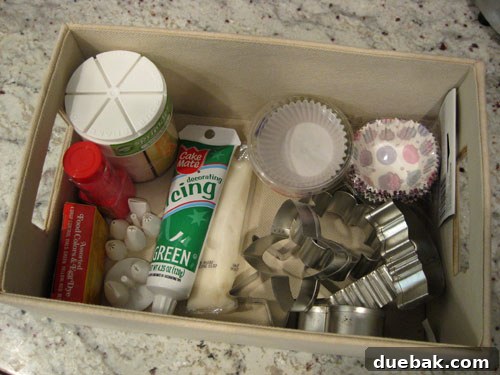
You might be curious about the “baking accessories” box mentioned in the categories. This repurposed container, already on hand, proved ideal for consolidating all our sprinkles, icing nozzles, cookie cutters, and cupcake liners. The beauty of this system is that when it’s time to bake, we can simply pull out the entire box. This eliminates the frustrating search for tiny nozzles or crinkled cupcake liners buried at the back of the cabinet, making the process of decorating much more enjoyable and efficient.
Extending Organization to Pots, Pans & Lids
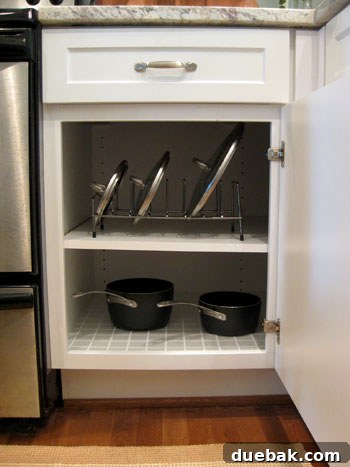
Our organizational spree didn’t stop at pantry items. We also tackled another kitchen cabinet that, while not overtly messy, felt decidedly lackluster. While most of our skillets and pans reside in the drawer under the stove, a few larger pots and all their lids had spilled over into a base cabinet on the right.
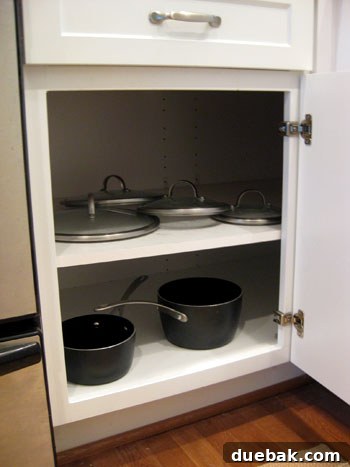
The main issue wasn’t clutter as much as a lack of defined order, compounded by the fact that sliding pots and lids in and out left tiny, unsightly marks on the shelves.
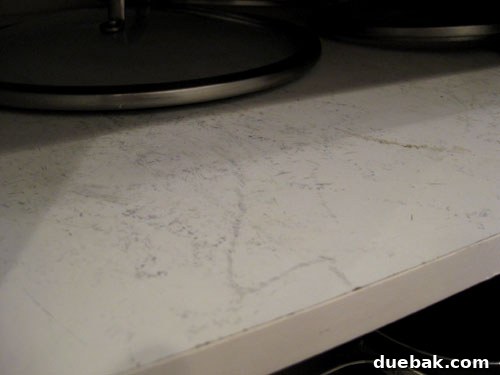
Thankfully, those marks were easily wiped away with a sponge. The solution involved two key additions: a pot lid rack (a sensible $9.39 from Target) and two more of those versatile $1.99 placemats. We taped the placemats together to create one large, protective, and wipeable surface under the pots on the bottom shelf. Now, not only are scrape marks a thing of the past, but our pot and lid storage looks significantly more organized and accessible. The lid rack ensures each lid has its own slot, preventing them from scattering or scratching the pots.
The Grand Reveal: A Functional, Beautiful, and Affordable Kitchen
And so, our ambitious kitchen cabinet clean-out reached its satisfying conclusion. The entire project, including all our brilliant storage-friendly additions – from the elegant metal label holders and protective placemats to the indispensable pot lid organizer and the freshness-preserving glass jars – cost us less than $30! This goes to show that a truly impactful kitchen organization makeover doesn’t require a hefty investment; rather, it demands thoughtful planning and clever solutions.
Our kitchen now feels lighter, more efficient, and incredibly inviting. Every item has a designated place, reducing stress, simplifying meal preparation, and making the cooking experience genuinely enjoyable. We’re no longer battling clutter; we’re embracing clarity and functionality.
But enough about our journey – how did your weekend fare? Did you take on your kitchen cabinets, or perhaps another organizational task around your home? We’d love to hear your success stories, your ingenious tips, and any tricks you implemented to keep things under control. Share your experiences in the comments below – whether it was in the garden, the garage, or even the basement! Do tell.
Psst- Curious about how we stash and store nearly everything else in our house? Click here for all the dirty deets on our whole-house organization strategies.