
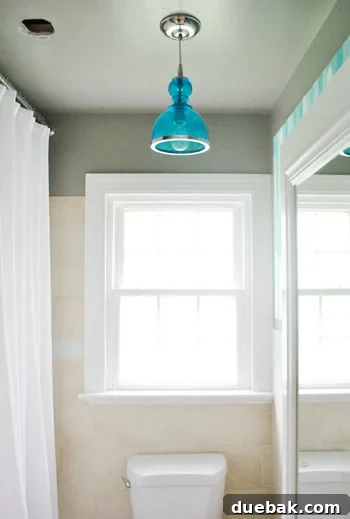
Every homeowner knows the subtle frustrations that can accumulate over time – those minor imperfections that silently nag until they can no longer be ignored. For us, one such nagging detail revolved around our bathroom light fixture. Ever since its initial update back in April, its awkward placement too close to the shower curtain created a visual imbalance that diminished the overall aesthetic of our newly refreshed space. What began as a minor oversight, driven by a lack of energy for a more complex relocation, eventually became a priority. After months of contemplation and rallying our DIY spirit, we were finally ready to tackle the task of repositioning the light fixture, ensuring it was perfectly centered and aesthetically pleasing.
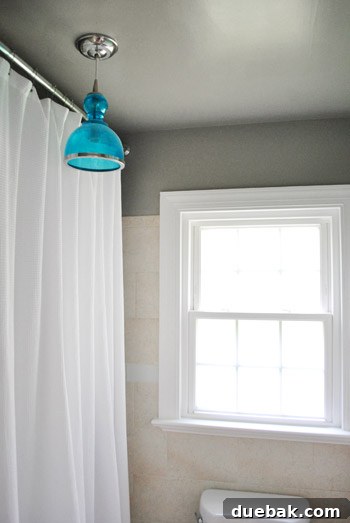
The Vision: Centering Our Bathroom Lighting for Optimal Appeal
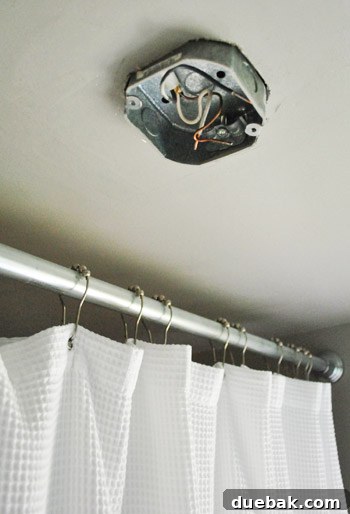
The journey to a perfectly illuminated bathroom began with a clear vision: to move the existing light fixture from its off-center, shower-curtain-hugging position to a spot that truly made sense. Our goal was to align it directly in front of the window, a strategic choice that would simultaneously center it with the bathroom door. This meticulous approach ensures the light appears as if it was always meant to be there, creating a harmonious and balanced look. The previous placement, centered merely within the room, resulted in it being uncomfortably close to the shower curtain – a design anomaly that was, quite frankly, unsettling and detracted from the room’s appeal. Precision in planning and measurement was paramount to achieving this seamless integration.
Safety First: Disconnecting the Power
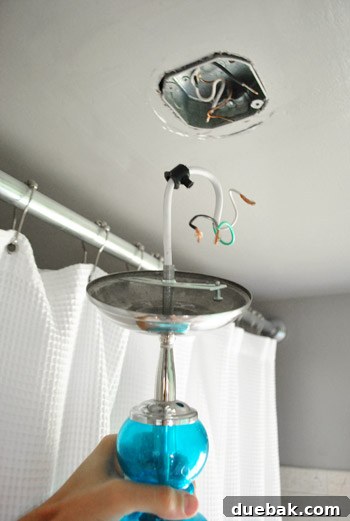
Before any tools touched the ceiling, safety was our absolute priority. We meticulously located and switched off the main power supply to the bathroom. This crucial step ensures that all electrical components are de-energized, preventing any risk of shock or injury during the relocation process. With the power safely off, we proceeded to carefully disconnect the light fixture from its existing electrical box, setting the stage for its eventual repositioning.
Navigating the Ceiling: Locating Beams and Creating Access
One of the initial hurdles in relocating a ceiling fixture is understanding the hidden structure above. We had a general idea of our ceiling beams but needed to pinpoint their exact locations to ensure our new fixture placement wouldn’t interfere with structural integrity. Our investigative process began with drilling a few small, exploratory holes. These tiny probes confirmed that our desired spot was free of beams – nothing but drywall and air, indicating a clear path forward. To further assess the space and potential obstacles, we then expanded one of these holes, using a Dremel Multimax (conveniently already on hand) to create an opening large enough to insert a hand and feel around the cavity. This tactile exploration provided invaluable information about the void above, ensuring our chosen location was indeed viable for the electrical box.
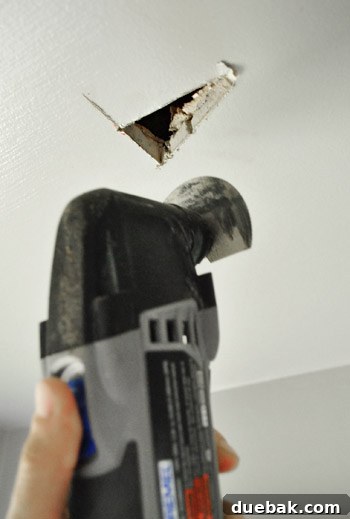
Precision Cutting: Crafting the New Fixture Opening
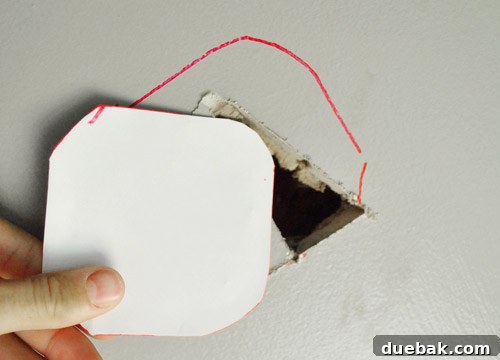
With our “feel-around” mission successfully confirming the absence of beams at the intended new location, the next step was to meticulously mark and cut the opening for the metal fixture box. Lacking a spare electrical box for tracing, we improvised a brilliant solution. We created a quick, accurate template by pressing a piece of cardstock against the hard edges of the existing fixture box still in the ceiling. This surprisingly effective method provided a clear impression of the exact dimensions required for the new opening, as beautifully demonstrated in the image below. This template proved indispensable for ensuring a precise fit.

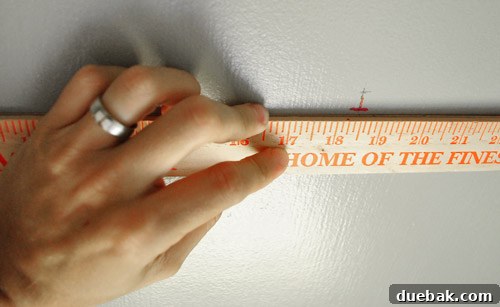
Once the cardstock template was cut, we carefully traced its outline onto the ceiling at our desired new location. This precise tracing served as our guide, ensuring we would cut an opening large enough to perfectly accommodate the entire fixture box, yet not so large that the fixture’s cover wouldn’t conceal the edges entirely. A small tip from our experience: while pencil marks are usually sufficient, our light gray ceiling paint made them nearly invisible. Opting for a red Sharpie allowed us (and you, our readers) to clearly see the cutting lines. Since the area would either be cut away or covered by the fixture, the color wouldn’t matter.
Armed with our clearly marked outline, it was time to make the final cut. While the Dremel Multimax was handy for smaller tasks, a dedicated drywall saw offered superior control and precision for creating the larger, fixture-box-sized hole, especially around the corners. After a quick search for the right tool, the drywall saw made clean work of the opening, preparing the ceiling for its new electrical heart.
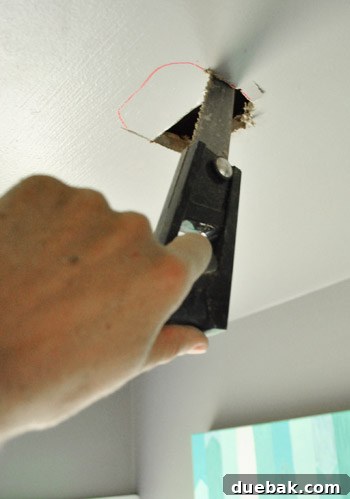
At this stage, the ceiling might not look conventionally “beautiful” – it’s a bit messy with fresh cuts and exposed drywall. However, for any DIY enthusiast, this sight is a testament to progress. Each cut, each measurement, brings us closer to the desired outcome. This, my friends, is the raw, exciting face of home improvement.
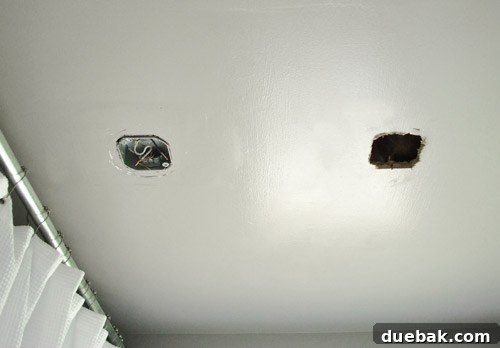
Preparing for the Attic Expedition: Loosening the Old Fixture Box
Before embarking on the dreaded attic journey, Sherry, with her keen eye, noticed a couple of screws holding the old electrical box in place that needed to be removed from below. Taking care of these from the bathroom side saved time and effort once I was in the cramped attic space. This small but significant step ensured the old box would be ready to be easily manipulated once accessed from above.
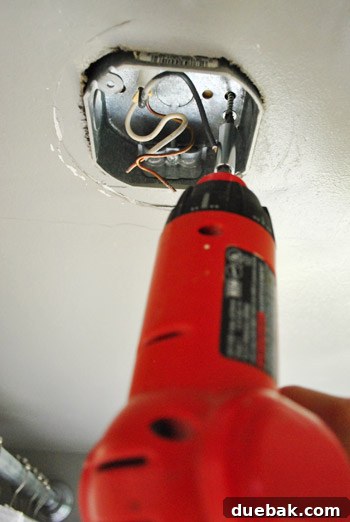
With those two crucial screws extracted, the old electrical box was free to hang loosely within its existing ceiling cavity. This confirmed that our pathway for relocating it from the attic was clear, simplifying the process once we got into the less-than-ideal conditions of the space above.
The Ultimate DIY Challenge: Conquering the Attic
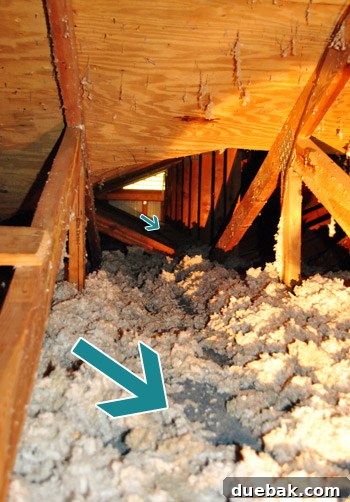
Now, for what truly made this project a test of endurance: the attic. Imagine this: a scorching 98-degree day, venturing into a hot, cramped, and un-air-conditioned space. It was not merely warm; it was an inferno, distinctly devoid of any cool breezes or the harmonious sounds of a “98 Degrees” boy band (yes, that pun was intended). Accessing our attic requires a delicate crawl on hands and knees across narrow beams, navigating through layers of nasty blown insulation that clings to everything. And for this particular task, the electrical box we needed to move was located in just about the furthest, most inaccessible nook of said attic. The big arrow in the image below indicates the general crawl path, while the smaller arrow points to the remote destination. It was an arduous trek, each foot a battle against heat and claustrophobia.
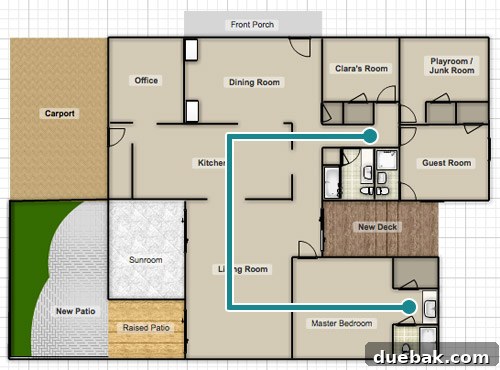
If my attempts to earn a few sympathy points haven’t fully registered, allow me to elaborate. The relocation of a single light fixture necessitated no less than FOUR separate trips back and forth to this sauna-like attic workspace. Each trip was spurred by various needs – a forgotten tool, or Clara’s enthusiastic singing drowning out my calls for assistance from Sherry below. Considering our attic access is located outside our hall bathroom, and the pathway to my destination was far from direct, the map below illustrates the approximate, grueling crawl I endured each of those four times. Picture crawling on hands and knees, encased in a sweltering, insulation-filled environment that literally mimicked a sauna. In a single word: it was utterly miserable. This wasn’t just a DIY project; it was an endurance trial.
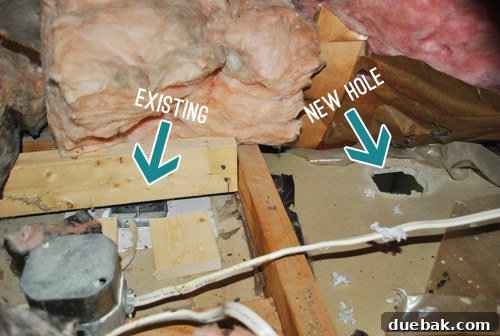
Having sufficiently detailed my less-than-ideal, shall we say, challenging working conditions, let’s refocus on the task at hand. Here’s a glimpse of the situation within the attic – a chaotic mix of insulation, beams, and wiring, all conspiring to make simple tasks complex.
The Electrical Box Relocation (from a Non-Electrician’s Perspective)
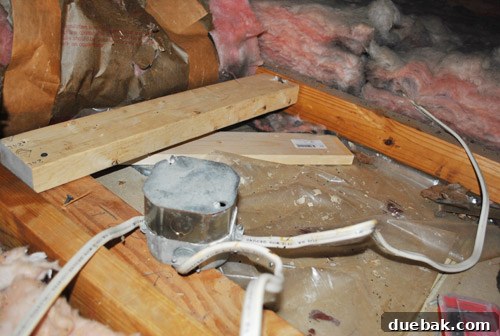
Let me preface this by reiterating: I am not an electrician. Furthermore, I’m not one to linger in a cramped, sweat-soaked space any longer than absolutely necessary. (At times, I was working in a fetal position due to the tightness, which made my occasional “I want my mommy” whimpers feel somewhat justified.) Consequently, I only managed to snap this “after” photo of the relocated fixture box securely in its new home. The process involved carefully unscrewing and then re-screwing the support board that spanned between two attic beams. Crucially, I also had to reposition the junction box (visible in the foreground) strategically. My aim was to avoid having to splice or extend any actual wire, a task best left to qualified electricians. With careful planning and a bit of nimble maneuvering in an unforgiving space, the electrical box was successfully repositioned, ready for the fixture below. Did I mention I’m not an electrician?
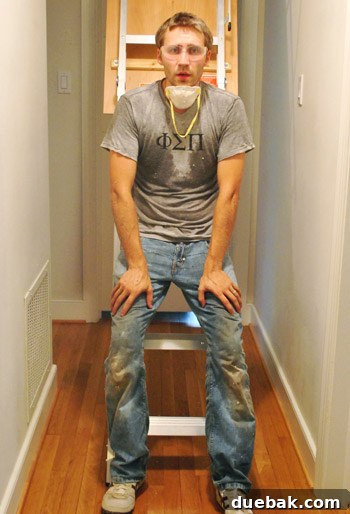
Upon my triumphant (and somewhat ragged) return from the attic, I asked Sherry to capture the full glory of the hot, sweaty, hyper-ventilating mess that was me. She pointed the camera, offered a cheerful “smile,” and this is the absolute best I could muster. Yes, that sheen on my shirt is indeed sweat – a badge of honor, perhaps, from the attic ordeal.
The Moment of Truth: Reassembly and a Perfect Finish
Once I had successfully cooled down, rehydrated, and (most importantly) indulged in a much-needed shower in the hall bathroom, Sherry and I returned to our main bathroom. It was time to admire the fruits of our labor and bring the project to its satisfying conclusion. The newly positioned electrical box was securely screwed into the support boards, mirroring the careful process of its removal from the original spot. With the box in place, the light fixture itself was ready for reinstallation.
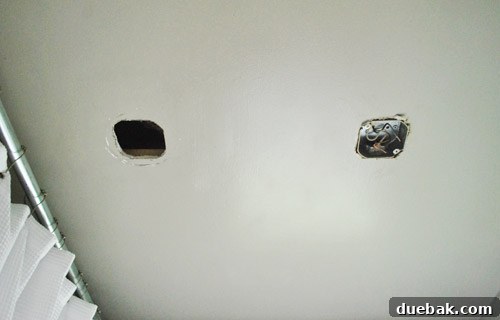
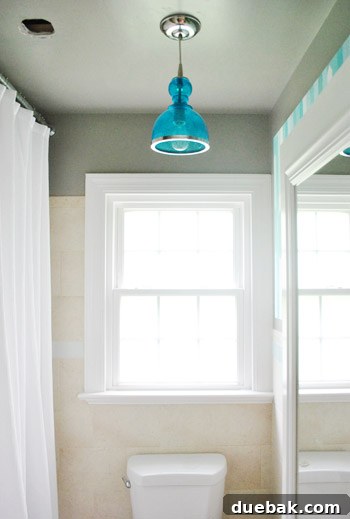
While we still need to patch the old hole in the ceiling – a task Sherry graciously agreed to handle (given how thoroughly I detailed the difficulties of my attic expedition) – the immediate visual impact of the repositioned light fixture is undeniable. Look at the significant improvement! The light is now beautifully centered on the window, the toilet, and the door, creating a cohesive and intentional design. It’s as if it was always destined to be in this precise spot. What a relief!
Reflections on a Challenging but Rewarding DIY Upgrade
In all honesty, if our attic hadn’t been a sweltering inferno that day, this entire project would have been relatively straightforward. The task of relocating a light fixture itself is quite manageable; it was the extreme conditions that elevated it to a significant challenge. Crawling multiple times into a crammed, suffocating corner of the attic on a freakishly hot day made it far more complex than it would be for someone with easy attic access on a mild day. Perhaps it was the universe’s way of subtly reminding us, “Yes, you really should have done this back in April when the weather was cooler.”
For anyone who pondered back in April why we didn’t just “quickly reposition the light fixture while we were switching it out” – this comprehensive account details precisely why. All that attic work is a genuine pain. Just accessing that specific part of our ceiling basically requires contorting yourself into a fetal position within a space so tight it might as well be a suitcase. Sometimes, the most effective approach for tackling larger home improvement projects is to break them down into smaller, more manageable phases that can be addressed over time. That, and a healthy dose of complaining once the particularly annoying parts are behind you. Haha!
Has anyone else had a recent “adventure” in their attic or another similarly cramped and hot space? If not, I highly recommend… or perhaps not. We’ll be sharing an update this afternoon featuring the patched ceiling, a series of shots of the entire room, and a detailed budget breakdown. We’re officially calling this little bathroom upgrade complete! Woot! And spoiler alert: despite all the sweat equity invested into this tiny rectangle of a room, we believe it was absolutely worth every drop. Just don’t ask me to crawl back into that attic corner for at least another week…
Continue Your Bathroom Renovation Journey: Related Projects
To follow the entire transformation of this bathroom, from initial concepts to final touches, explore our series of detailed posts:
- The Planning Post: Our Long-Ignored Master Bathroom
- The Painting Post: Rocking the Rockport Color
- The Light-Swapping Post: A Blue Light Special
- The Art and Trim-Painting Post: Look Who’s Hanging Out in Our Bathroom
- The Toilet-Updating Post: What’s the Commode-tion?
- The Window Frosting and Shampoo Wrangling Post
- The Door Trimming Post: Used Toilets and Door Trimmings
- The Border Tile Demo Post: Taking Down Some Trees
- The Border Retiling Post: Adding a New Room Border