
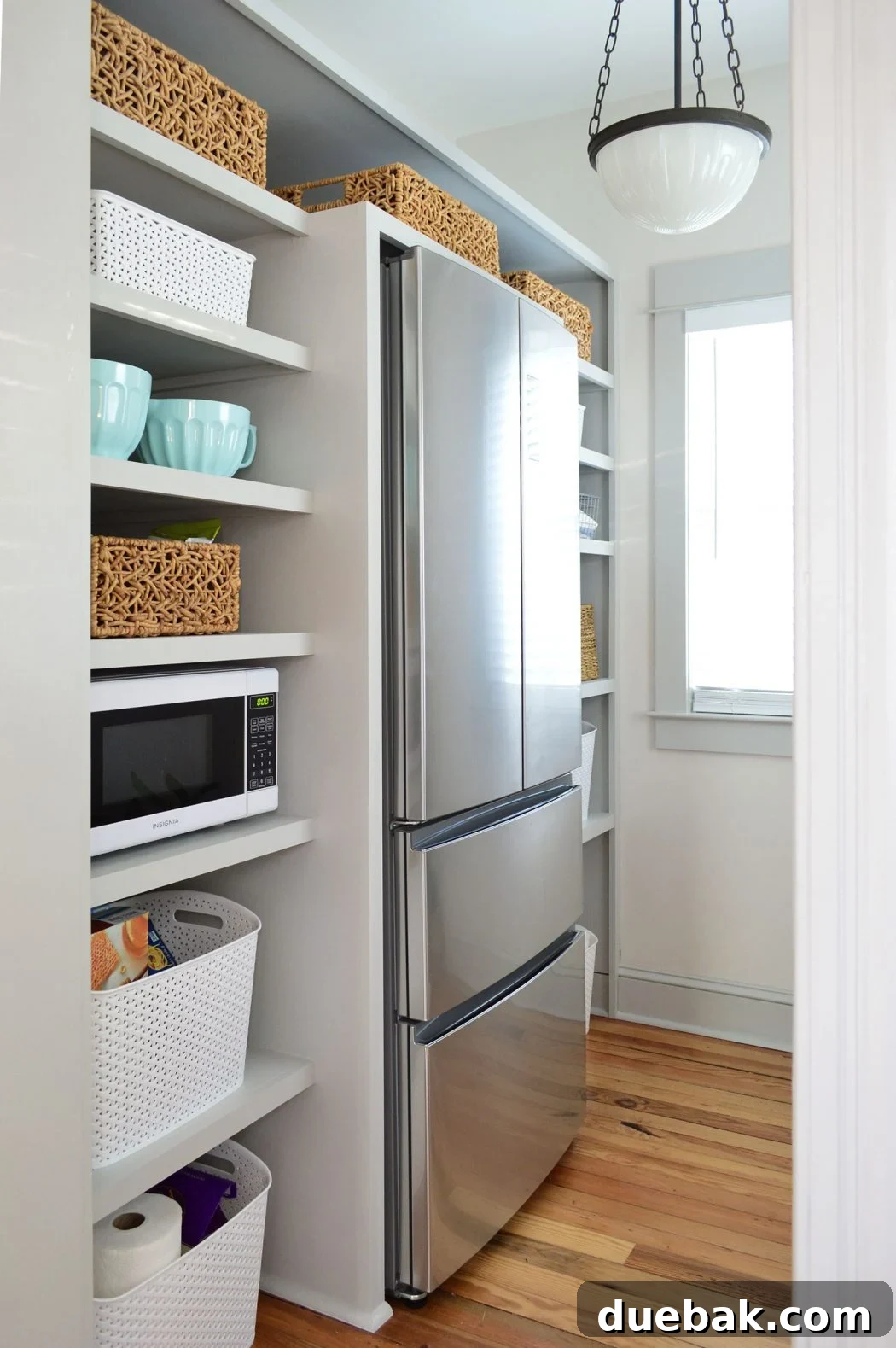
Transforming your home with custom storage solutions doesn’t have to break the bank or require professional expertise. Our DIY pantry shelves for our beach house are a testament to this, standing out as one of our most beloved and impactful projects. What makes them so special? They’re surprisingly straightforward to build, incredibly versatile, and can be customized to perfectly fit any pantry size or room layout. Whether you need bespoke shelving for bedrooms, living rooms, playrooms, or, like us, a functional walk-in pantry, this method delivers.
Constructed almost entirely from just two primary materials – MDF sheets and pine boards – along with some essential hardware like screws, nails, and paint, the total cost for this project was **less than $200!** This makes it an incredibly budget-friendly way to achieve high-end custom storage. Even if you’re a beginner in the world of DIY, you can absolutely tackle this project and create beautiful, durable built-in shelves. We’ll guide you through every step, ensuring a smooth and rewarding experience.
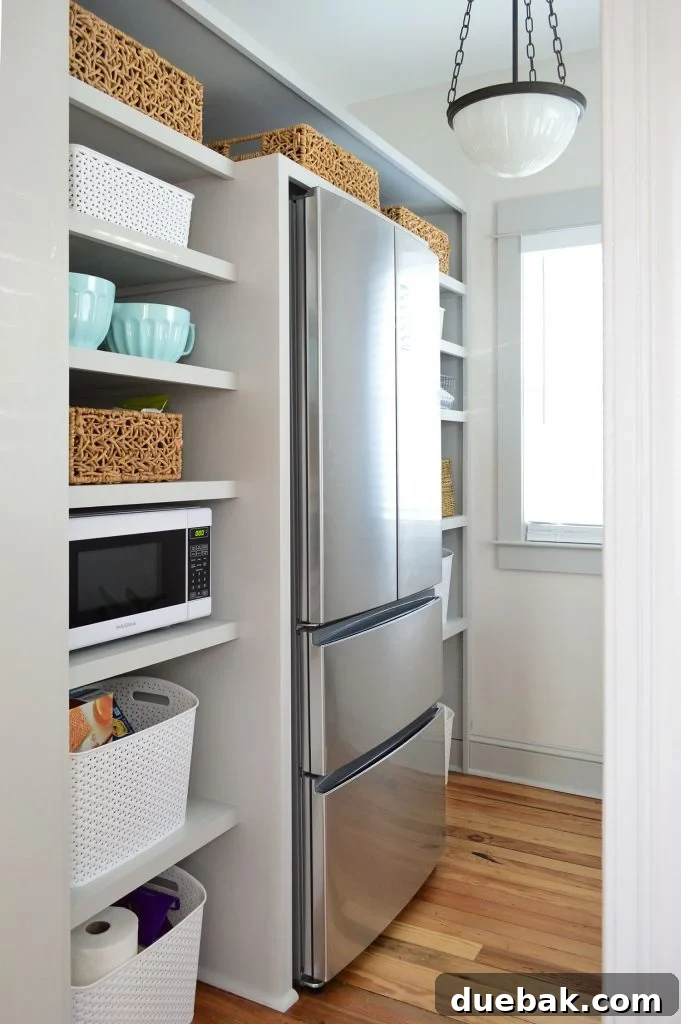
If you’re eager for more inspiring shelving ideas and DIY projects, we’ve curated an extensive collection. This comprehensive post features 16 diverse shelf DIY projects to explore. From robust garage storage solutions that can withstand heavy loads to elegant decorative display shelves and everything in between, you’ll find plenty of inspiration to suit your needs.
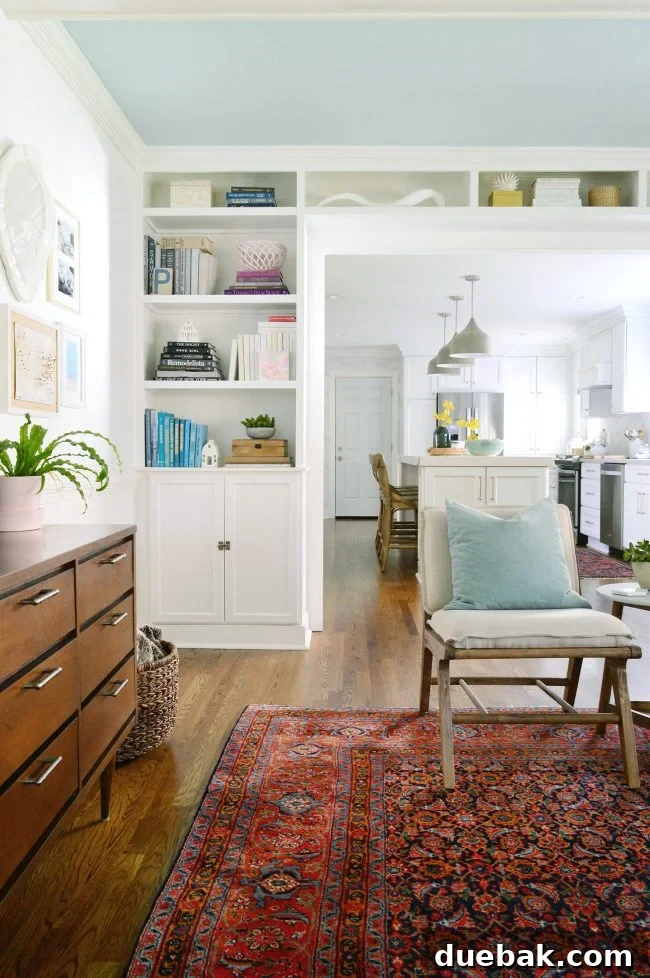
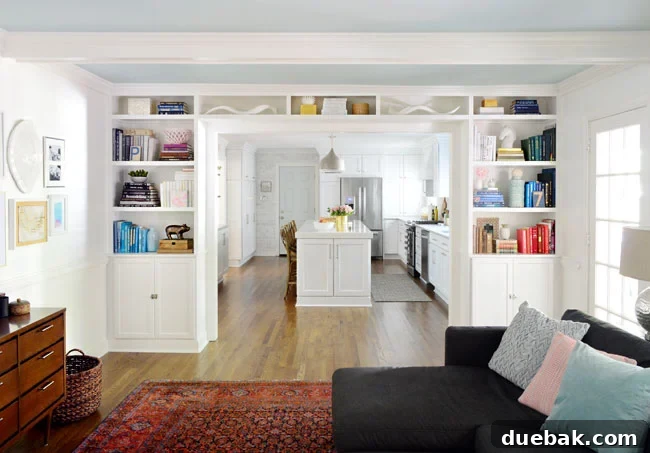
The construction technique we’re sharing for these custom pantry shelves is one that has proven its worth time and again. We’ve successfully employed this exact method twice before: first, to create charming and functional built-ins in our son’s room, and later, for the impressive built-in bookshelves in our living room (pictured above). This consistent reliance isn’t just a habit; it’s because this technique is incredibly easy to execute, yields a professional-looking finish, and consistently delivers results we adore. Its simplicity and effectiveness make it perfect for achieving durable and beautiful built-in storage anywhere in your home.
Watch Our Pantry Build: A Step-by-Step Video Guide
For those who learn best visually, we’ve captured the entire construction process of our DIY pantry shelves. Originally shared on Instagram Stories, we’ve compiled all the essential clips into a single, comprehensive video below. This video offers an invaluable perspective, allowing you to see many of these steps in action and gain insight into our design decisions and thought process for optimizing the finished shelves. It’s a fantastic complement to our detailed written tutorial, providing clarity on techniques and placement. Dive in to get a real-world look at building your own custom pantry solution!
Note: If you are viewing this article through a reader, you may need to click through to our main website to access and view the video directly. Alternatively, you can watch the video on YouTube here for your convenience.
Essential Tools & Materials for Your DIY Pantry Shelves
Before embarking on any DIY project, gathering the right tools and materials is crucial for efficiency and a successful outcome. For these custom pantry shelves, we’ve streamlined the list to include exactly what you need. Investing in quality tools, even if rented, will make the process smoother and the results more professional. Here’s everything you’ll need to create your own beautiful and functional built-in pantry:
- 3/4″ thick MDF panels*: MDF (Medium-Density Fiberboard) is our material of choice for its affordability, smooth finish, and stability, which makes it perfect for painting. We’ll show you how to accurately determine the number of sheets required during the planning phase.
- 1×2″ pine boards: These boards are essential for providing a clean, finished look to the front edges of your shelves, effectively concealing the raw MDF cuts and adding visual thickness.
- 3/4″ x 3/4″ wood boards for shelf supports: These small strips will be secured to the walls and vertical panels to provide robust support for each shelf. Alternatively, you can cut your 1×2″ pine boards in half lengthwise using a table saw, which can be a cost-effective way to get the exact dimensions needed.
- Circular saw: Indispensable for making long, straight cuts on your MDF panels and pine boards. Ensure you have a sharp blade for clean edges.
- Miter saw (optional but recommended): While a circular saw can handle most cuts, a miter saw offers precision for crosscuts and angles on your pine boards, especially for the face frames, making the job quicker and more accurate.
- Finish nail gun: Excellent for quickly and securely attaching the face frames and support pieces with minimal visible fasteners, which are easily filled later.
- Power drill: Necessary for drilling pilot holes and driving screws to securely fasten all the structural components of your shelving unit.
- Tape measure: For accurate measurements, critical for ensuring everything fits perfectly.
- Levels (large and small): A large level helps ensure vertical panels are plumb and long shelves are truly horizontal, while a small level is useful for tighter spaces.
- Stud finder: Essential for locating wall studs, which are vital for securely attaching your vertical panels and support pieces, ensuring maximum stability for your pantry shelving. Our personal favorite is this model for its reliability.
- Crowbar or hammer: For carefully prying off existing baseboards and molding without causing damage.
- Clamps (optional but highly recommended): Crucial for holding pieces securely while gluing or screwing, especially when cutting multiple boards at once for consistency.
- Wood screws: Various lengths will be needed for attaching panels to studs and shelves to supports.
- Wood glue: Provides additional strength and stability to all joints, creating a more robust and lasting structure.
- Pen/pencil: For marking all your cuts and measurements accurately.
*A note on materials: We prefer MDF for projects that will be painted because it offers a perfectly smooth finish that takes paint beautifully and is generally more cost-effective than plywood. However, if your vision for your custom shelves includes a stained wood look, plywood would be the appropriate choice, as MDF cannot be stained to achieve that aesthetic.
Steps to Build Your Dream DIY Pantry Shelves
Embarking on a custom built-in project might seem daunting, but by breaking it down into manageable steps, you’ll find it surprisingly achievable. This overview provides a clear roadmap for constructing your DIY pantry shelves, with each stage detailed further below. Follow these steps for a successful and rewarding transformation of your pantry space:
- Plan Your Shelves: Measure, sketch, and strategize for optimal layout.
- Purchase Materials: Gather all necessary wood, hardware, and tools.
- Remove Baseboards: Prepare the area for a seamless built-in look.
- Attach Vertical Panels: Establish the primary structure of your shelving.
- Add Top Panels: Secure the main horizontal elements.
- Cut & Add Shelves: Install all the individual shelf pieces.
- Finish The Shelf Fronts: Add aesthetic and structural trim.
- Caulk, Prime, and Paint: Complete the finishing touches for a professional look.
- Fill & Organize Shelves: Bring your pantry to life with smart organization.
And for that crucial final step of making your new shelves both functional and beautiful, we have an entire video dedicated to how to organize and decorate a bookshelf. Many of the principles apply perfectly to pantry styling too!
Step 1: Plan Your Pantry Shelves for Optimal Storage
As with any successful DIY endeavor, meticulous planning is the cornerstone of a flawless finish. This initial step involves accurately measuring your designated space, critically assessing your specific storage needs, identifying any practical constraints such as budget or existing structural elements, and then translating these insights into a detailed sketch. For our beach house pantry, this planning phase was crucial:
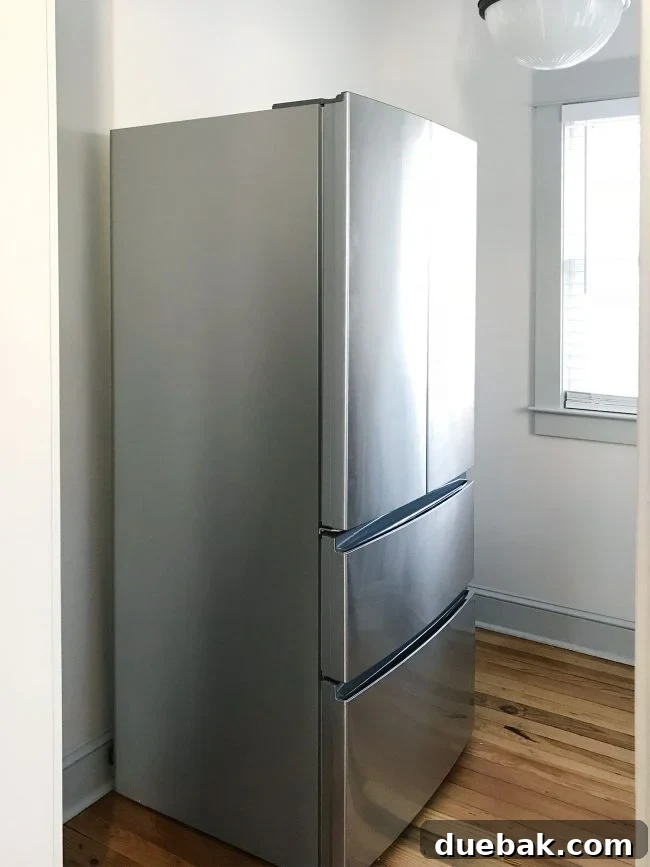
Our pantry area was originally conceptualized as a charming breakfast nook. However, after careful consideration, we realized its true potential lay in becoming a highly functional walk-in pantry, especially to accommodate our counter-depth refrigerator. This strategic shift in purpose dictated the entire design. Below is the starting point of our project, illustrating the raw space we aimed to transform:
With precise measurements of the room in hand, I embarked on what I playfully call my “Picasso phase”—sketching out our vision for the custom pantry shelves. Through this iterative process, we determined that our MDF shelves could comfortably extend 20 inches deep without obstructing the existing door molding. This depth also thoughtfully accounted for the 1×2-inch pine board we planned to attach to the front of each shelf, adding both aesthetic appeal and structural integrity. Knowing these dimensions was pivotal in calculating the exact number of MDF sheets required, minimizing waste and optimizing our budget.
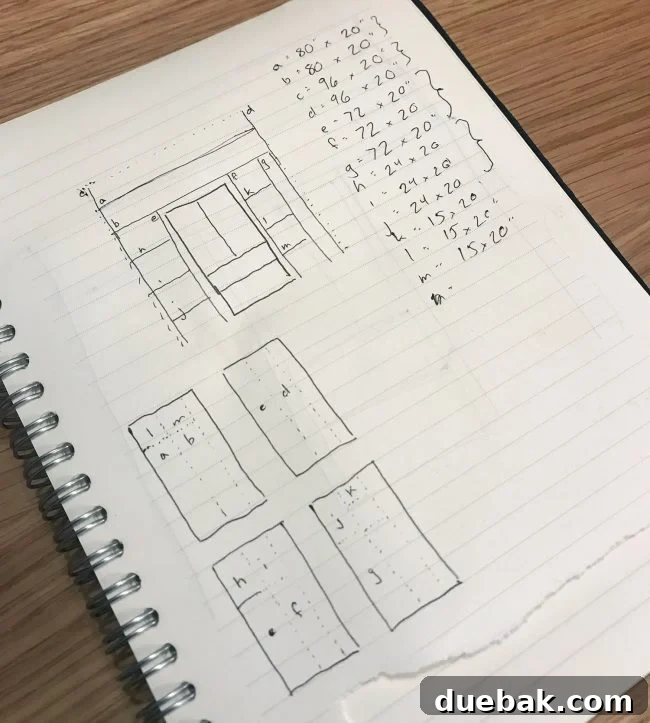
To further streamline the material procurement, I meticulously assigned a letter to each piece of the planned shelving unit and noted its accompanying dimensions. These detailed measurements then allowed me to efficiently map out how many 4-foot by 8-foot sheets of 3/4″ MDF we would need. The diagram at the bottom of the page clearly illustrates these optimized cuts. Initially, our plans included a narrow vertical cubby, labeled “G,” intended for storing a broom, mop, or vacuum. However, we later decided to omit this feature for a more open shelving concept. Therefore, you can disregard the long, skinny cubby “G” in the sketch above.
Step 2: Purchase Materials Smartly and Efficiently
Thorough planning in Step 1 pays significant dividends when it comes to material acquisition. Having a precise cut list and an accurate count of materials makes your shopping trip to the hardware store much smoother and prevents costly errors or multiple return trips. One of the greatest advantages of planning ahead is the ability to utilize the free cutting services offered at many major home improvement stores, like Home Depot.
For this project, I was able to have the large 4×8 MDF panels cut into 20-inch wide strips directly at the store. Their industrial-grade panel saw is not only significantly faster but also far more consistent and accurate than what can be achieved with a portable circular saw at home. This service saves a tremendous amount of time, effort, and ensures perfectly straight edges for your core shelving components.
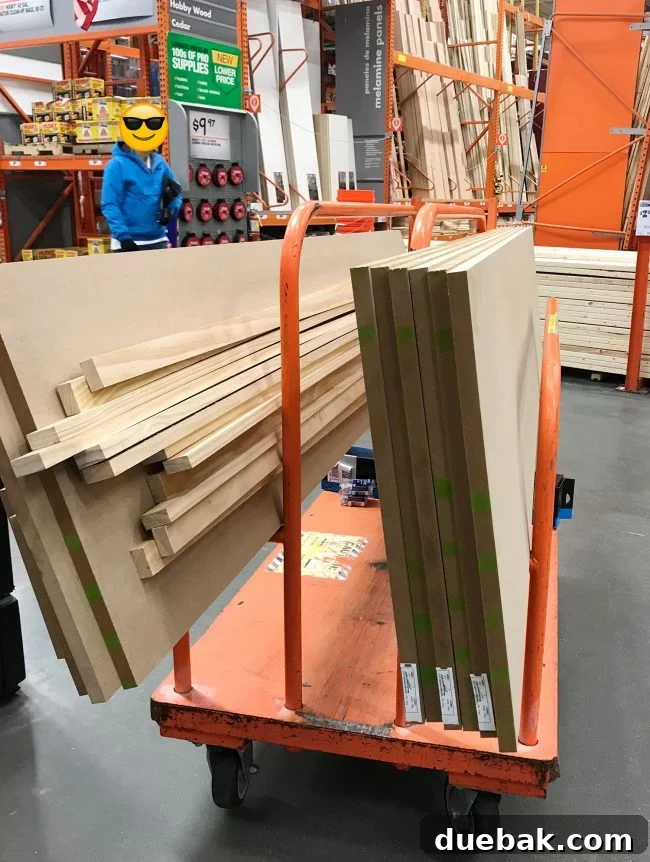
In addition to the MDF, we also stocked up on a substantial quantity of 1×2-inch pine boards. These boards serve a dual purpose: they are perfect for covering the exposed front edge of every shelf, providing a clean, finished appearance, and a portion will be cut in half to create the skinny “support pieces” that run along the back wall, crucial for robust shelf stability (more on this in subsequent steps). Despite purchasing all the necessary wood, MDF, an assortment of screws, and essential wood glue, our total material cost for this comprehensive pantry renovation remained remarkably under $200! This affordability underscores the value and efficiency of thoughtful planning and DIY execution.
Step 3: Remove Any Existing Baseboards or Molding
Before you begin any construction, preparing your space is paramount for achieving a professional, built-in look. This crucial preparatory step involves carefully prying off any existing baseboard or other decorative molding that may be present in the area where your new pantry shelves will be installed. The goal is to ensure that your shelves sit flush against the wall, creating a seamless and integrated appearance that truly looks like it was always meant to be there.
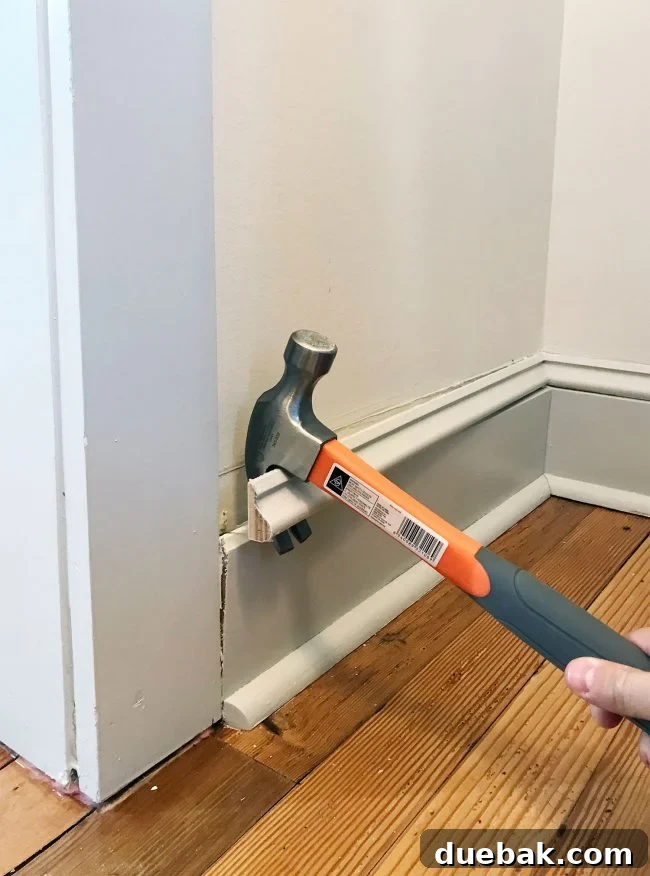
When removing these moldings, extreme care should be taken to avoid damage. Use a pry bar or a sturdy hammer with a wide, flat end, and ideally, place a thin piece of scrap wood behind the pry tool to protect the wall surface. The intention is to save these pieces so they can be reinstalled later, if needed, or repurposed elsewhere. This careful approach can be trickier than it sounds, especially if you, like us, occasionally forget your trusty crowbar! Patience and a gentle touch will preserve both your existing trim and your walls.
Step 4: Securely Attach the Vertical Panels
With the baseboards removed and the area prepped, we moved on to establishing the primary framework of our custom pantry shelving: installing the vertical panels. We began by cutting the four main vertical pieces to their appropriate height outside using our circular saw. These pieces consist of two panels that sit against the side walls of the pantry and two additional panels that will flank the refrigerator, creating its dedicated recess.
Initially, we temporarily leaned these panels in place to visualize the layout. Our preliminary design anticipated the refrigerator protruding slightly, which we thought would be acceptable. However, upon seeing it mocked up, we realized that the protrusion was more significant than desired. This is where the beauty of DIY and flexible planning comes in: we adjusted our plan to extend the center section forward a bit further, ensuring the shelving would more elegantly encase the fridge. Fortunately, we had some scrap MDF from another project that was perfectly wide enough to make this modification seamlessly.
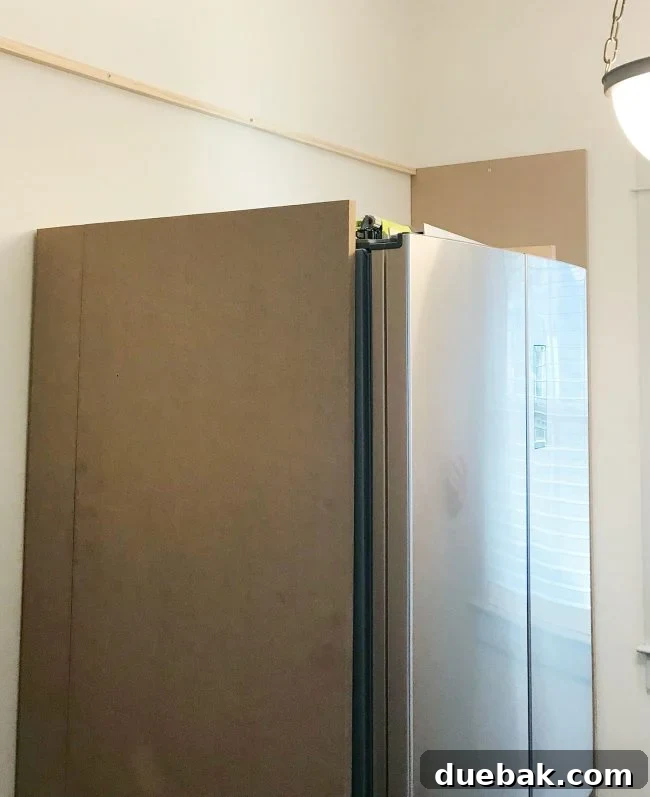
The two vertical panels positioned against the actual walls of the pantry were straightforward to install. We located the wall studs using our stud finder and securely screwed these panels directly into the studs at multiple points, ensuring maximum stability. The two panels designed to “float” alongside the refrigerator presented a unique challenge. You obviously cannot screw directly into the appliance itself, and it’s vital to maintain a sufficient gap for easy fridge removal, proper ventilation, and efficient heat dissipation. To achieve this secure yet flexible installation, we employed skinny “support pieces” of wood.
These support pieces were strategically screwed into the wall and the floor, creating a robust, hidden frame to which we could then firmly attach the MDF panels flanking the fridge. This method provides excellent stability without compromising the refrigerator’s functionality or accessibility.
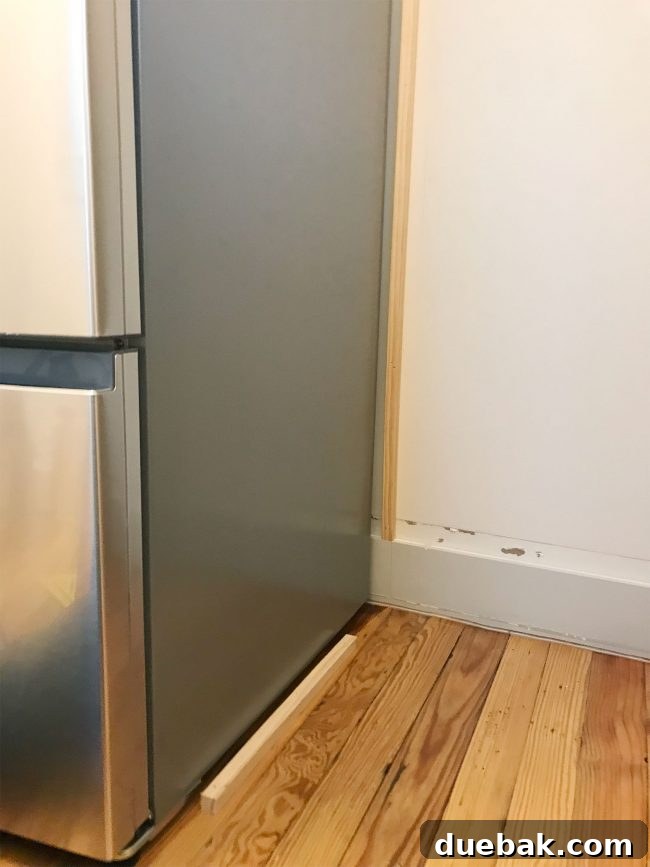
We created these crucial support pieces by ripping 1 x 2″ pine boards in half lengthwise using our table saw. While you could opt to use spare MDF strips or purchase pre-cut pieces, cutting our own was a more economical choice given the quantity required for this project (you can spot another long brace piece installed above my head in the image below). The effort of cutting our own was well worth the cost savings and ensured we had perfectly sized pieces. Remember, for the cleanest finish, always try to position the raw, cut edges of your MDF or wood pieces against the wall, leaving the factory or smoothly-sanded edges visible.
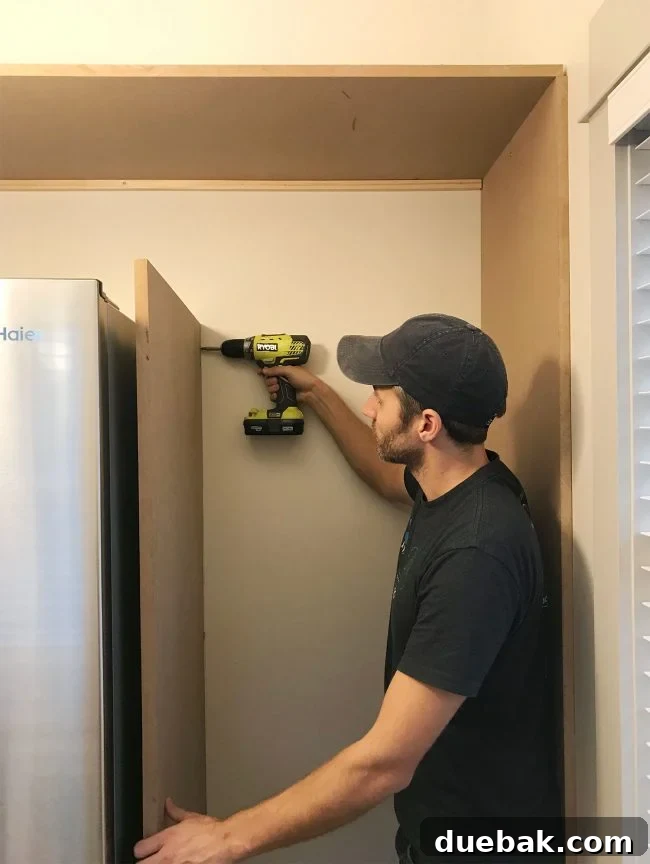
A useful tip for a professional look: always try to place the cut edge of any material against the wall, ensuring that only the smoother, factory-finished sides are visible in your completed shelving unit.
Step 5: Install the Top Horizontal Panels for Structure
With all four vertical support pieces firmly secured in place, the next critical step is to install the main horizontal elements that define the upper structure of your custom pantry shelves. This involves adding two long horizontal pieces across the top of our design. These include the overarching top shelf and the long shelf that spans across the top of the refrigerator recess.
Each of these top panels is supported by the vertical partitions installed in the previous step, along with additional skinny support pieces meticulously secured to the back wall. Throughout this process, maintaining a perfectly level surface is paramount for both aesthetics and functionality. We consistently used a long level to ensure everything was square and plumb before permanently screwing each piece into position. Pre-drilling pilot holes is highly recommended to prevent wood splitting, especially in the support pieces.
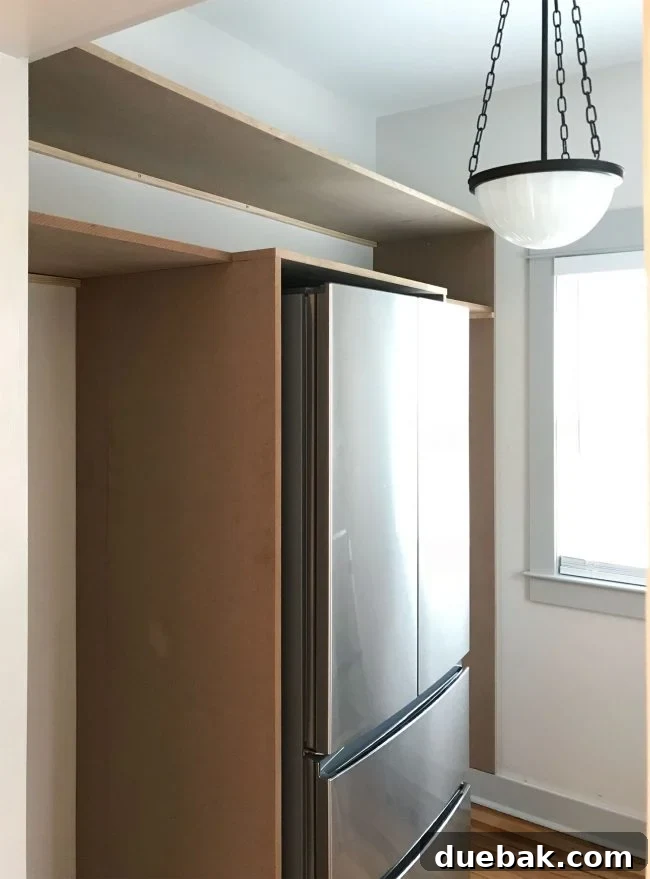
The angle in the image below provides a clearer view of these crucial support pieces. To install them efficiently, our method was to hold each piece in place, verify its levelness with a reliable level, and then temporarily secure it with one or two nails using our nail gun. This quick tacking held the support piece firmly while we proceeded to secure it more permanently with wood screws driven into the wall studs. Remember, drilling pilot holes before driving screws is always a good practice, especially into pine, to avoid unsightly splits in the wood and ensure a clean, strong attachment.
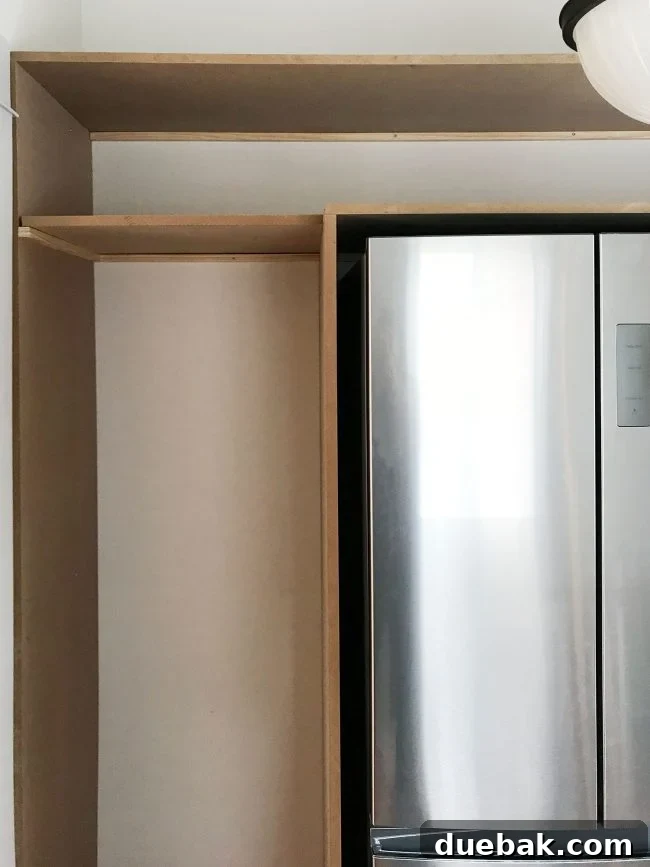
Step 6: Precisely Cut and Install All Shelves
Once the main vertical and top horizontal structures are firmly in place, the project shifts to cutting and installing all the individual shelves for each side of the pantry. We tackled all our shelf cutting simultaneously outside, utilizing our circular saw. A smart tip to maximize efficiency and ensure consistent sizing is to double up your MDF boards whenever possible. By clamping two pieces of MDF together firmly before making a cut, you can achieve two perfectly identical shelves with a single pass of the saw. Just ensure your clamps are strong and your boards don’t shift during the cut for optimal accuracy.
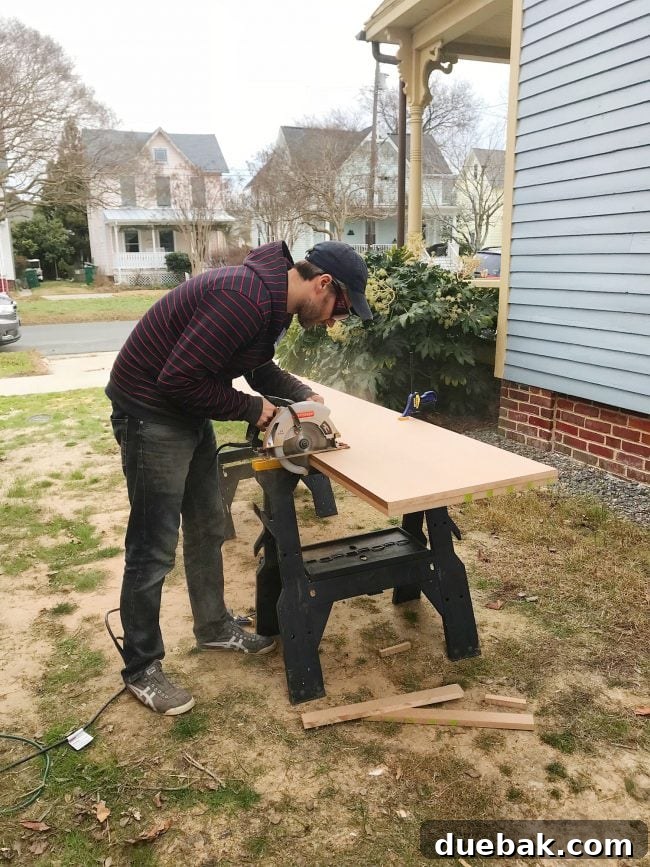
Determining the ideal shelf heights is a critical step for maximizing pantry functionality. Rather than guessing, we brought actual items we planned to store into the pantry – cans, storage bins, cereal boxes, small appliances, etc. – to physically test different configurations. This practical approach allowed us to identify the most efficient and user-friendly heights. We ultimately settled on a versatile combination of mostly 8-inch and 14-inch high shelves, reserving some larger spaces at the bottom to accommodate bulkier items like our beach cooler or large pet food containers. Once all desired shelf heights were measured and clearly marked on the vertical panels, we proceeded to meticulously level, nail, and screw all the brace pieces along each side of where the shelves would rest.
A crucial detail to remember during this stage is that your brace piece must be attached precisely 3/4-inch lower than the intended top of your final shelf height. This accounts for the thickness of the 3/4-inch MDF shelf piece itself, which will rest directly on top of each brace, resulting in a perfectly level and flush shelf surface.
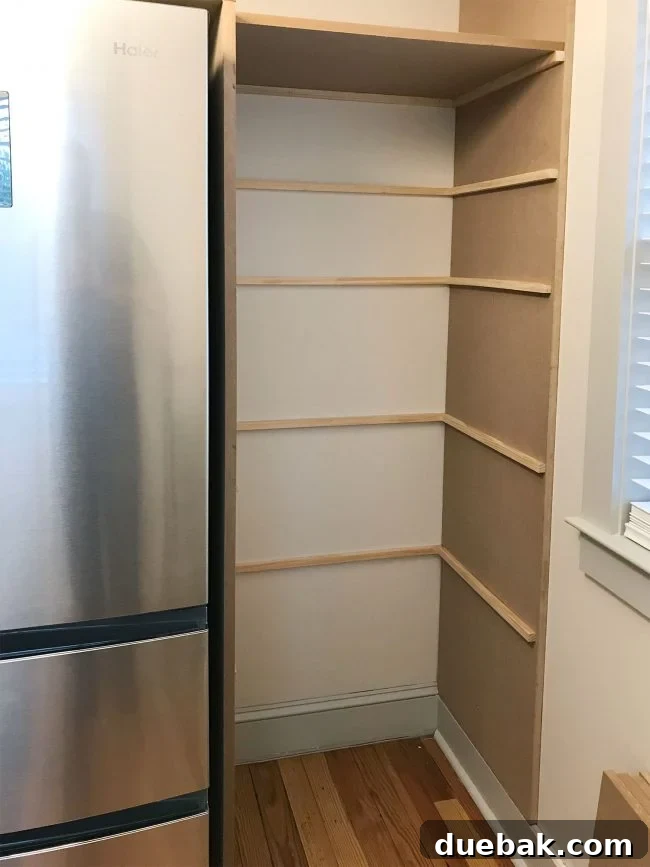
With all the support braces securely in place, the next satisfying step is to slide each of the precisely cut shelves into its designated position. Once seated, secure each shelf by driving short screws through the shelf and into the brace pieces at each corner. For added stability and a completely secure fit, you also have the option of using a finish nail gun or applying wood glue along the contact points before screwing, ensuring a robust and durable shelving unit.
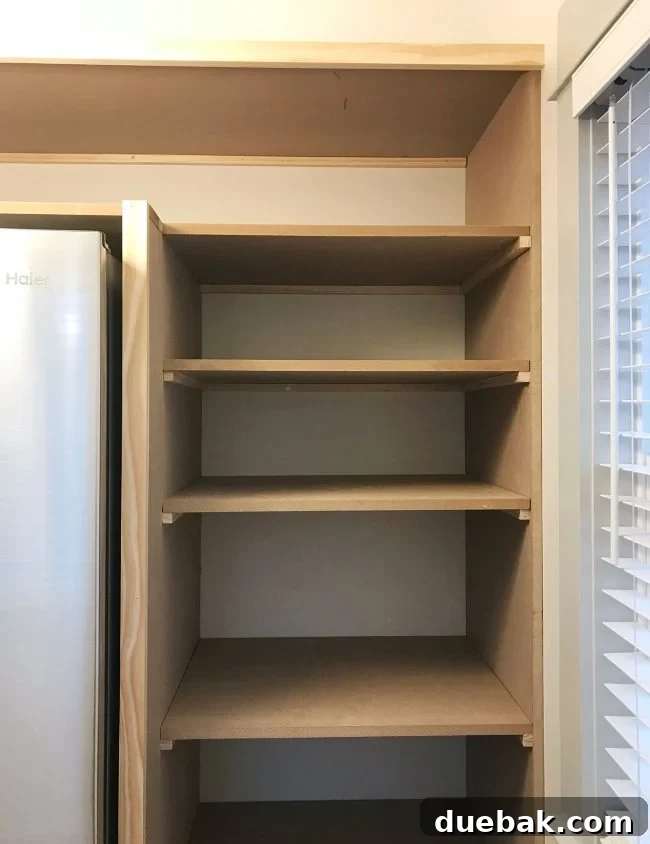
Step 7: Finish Off the Shelf Fronts with Pine Face Pieces
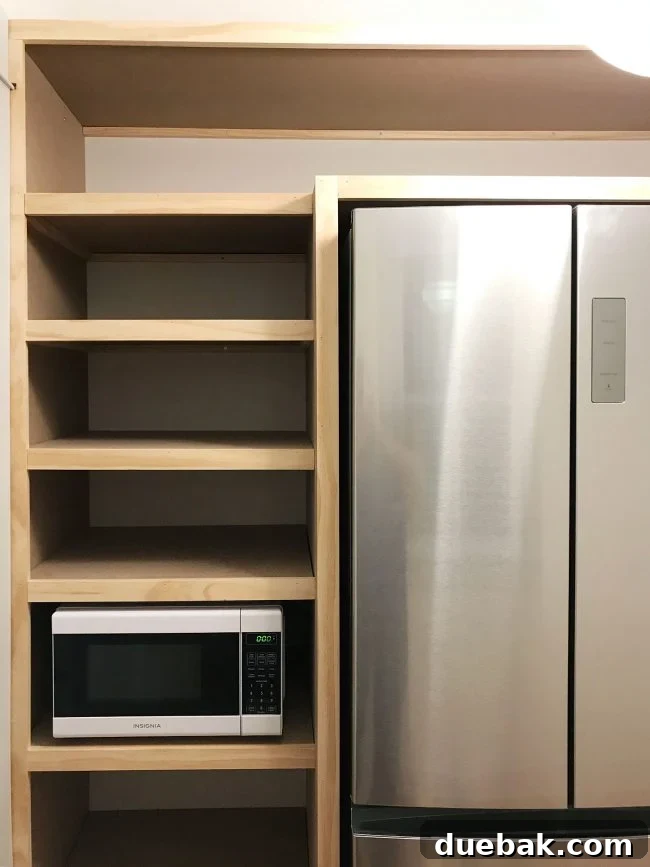
The final and perhaps most impactful construction step involves adding the 1×2-inch pine face pieces across each exposed front edge of your shelves. This seemingly small addition dramatically elevates the overall appearance and structural integrity of your built-in pantry. As you can observe in the image below, the transformation is striking; the shelves instantly look more refined and custom-made with the face pieces attached. These pine boards are truly a triple threat in terms of functionality and aesthetics:
- They effectively cover the raw, often rough, cut edge of the MDF, providing a smooth and professional finish.
- They cleverly conceal the skinny brace pieces that support the shelves, integrating them seamlessly into the design.
- Crucially, they make the shelves appear significantly thicker and more substantial, imparting a high-end, custom built-in feel. It’s a win-win-win!
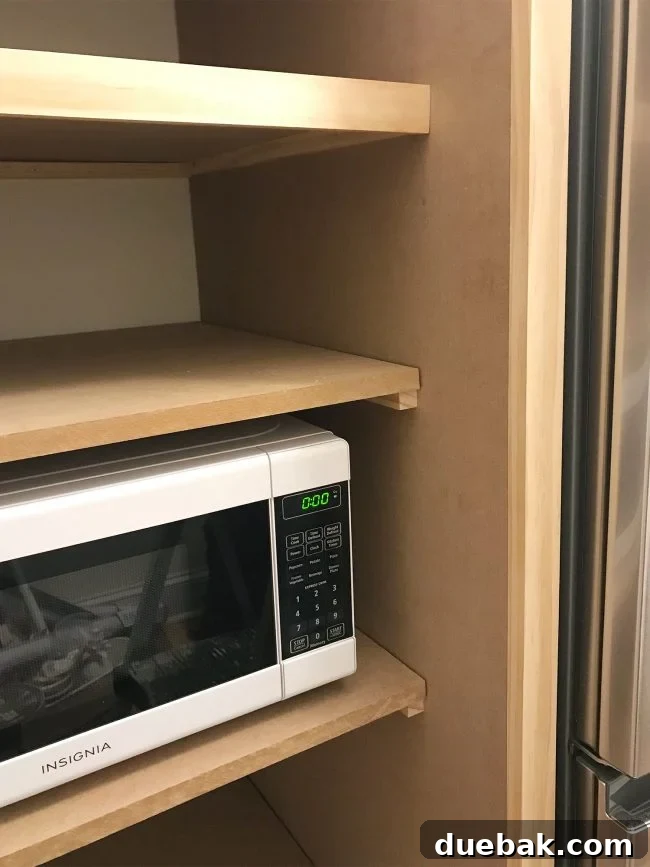
We attached these face pieces using a combination of wood glue applied to the back surface for a strong bond, followed by a couple of finish nails. The choice of finish nails over screws is intentional here, as it minimizes visible fasteners, contributing to a cleaner, more polished look. The small nail holes created will be easily filled with spackle during the finishing stages, disappearing completely under paint.
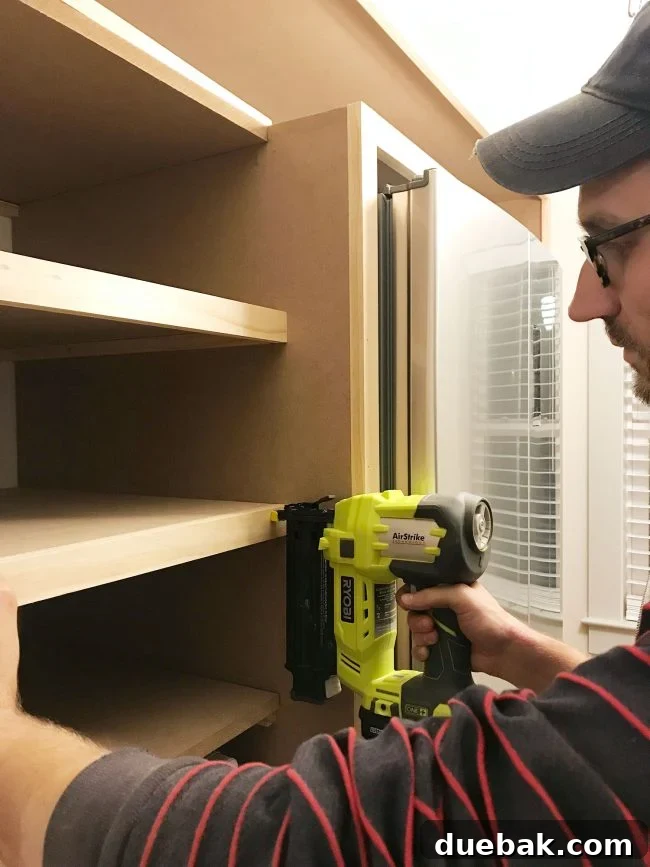
A practical consideration: Since our only electrical outlet on that particular wall was located behind the refrigerator, we proactively drilled a 1 1/4-inch hole in the side of the microwave shelf. This allowed us to neatly snake the appliance’s plug through the shelving, behind the fridge, and into the existing outlet, ensuring power without sacrificing the clean built-in aesthetic.
Step 8: Caulk, Spackle, Prime & Paint Your Custom Shelves
With all the structural components of your custom pantry shelves firmly in place, the final steps are all about achieving that flawless, professional finish. Just like any high-quality carpentry project, this involves meticulous attention to detail in the caulking, spackling, priming, and painting stages. These steps transform raw wood and MDF into a beautifully integrated, durable built-in feature.
Begin by caulking all seams where the shelves meet the wall and where vertical panels meet horizontal ones. Use a high-quality, paintable caulk to fill any small gaps or imperfections. This creates a smooth, continuous surface that will look seamless once painted. Next, address all nail holes and any minor dings or imperfections with wood spackle. Apply the spackle, let it dry thoroughly, and then sand it smooth with fine-grit sandpaper (around 220-grit). Repeat this process as needed until all blemishes are invisible to the touch.
Once your surfaces are smooth and clean, it’s time for priming. Since we planned to paint our pantry shelves a sophisticated gray to match the existing trim (SW Stone Isle), we had our primer tinted gray. Tinting your primer significantly improves paint coverage, especially when moving from a light surface to a darker topcoat, reducing the number of finish coats required.
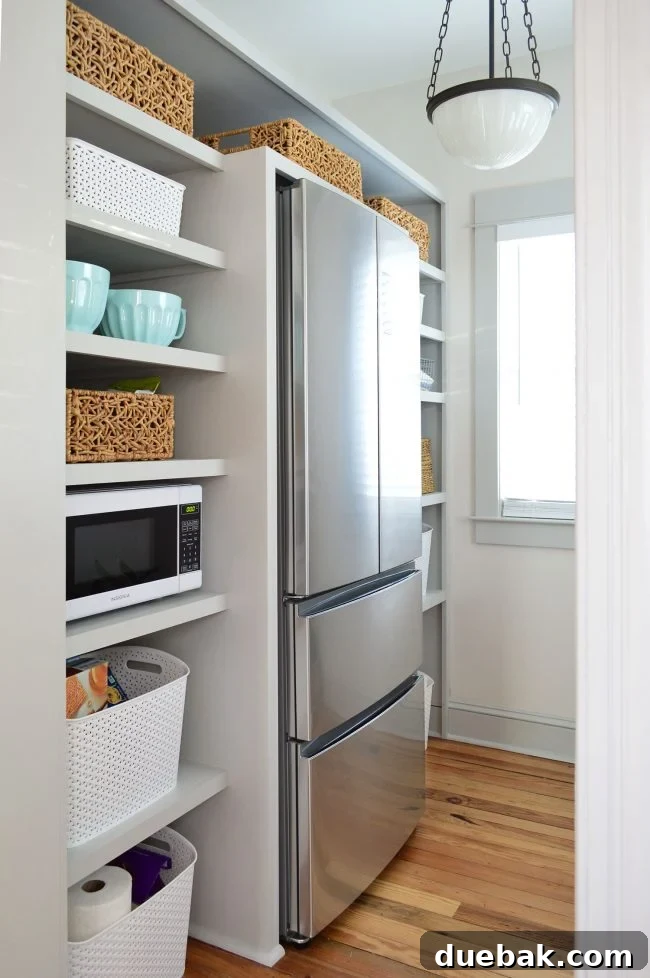
Alternatively, a highly recommended method, especially for complex shelving units, is to prime and apply one coat of paint to all your wood and MDF pieces before you assemble them. Painting flat pieces laid out on a drop cloth is often much easier and yields a smoother finish than trying to paint inside tight corners once the unit is built. Even if you pre-paint, you will likely still need to do touch-ups or a second full coat of paint at the very end. This final coat will cover any caulk, spackle, and minor scuffing that may have occurred during the assembly process, ensuring a perfectly uniform and durable finish for your new built-in pantry.
Step 9: Fill & Organize Your Custom Pantry Shelves
The construction is complete, the paint is dry, and now comes the truly satisfying part: filling and organizing your beautiful new custom pantry shelves! While open shelves offer incredible accessibility and a visually appealing display, they do require a thoughtful approach to organization to maintain a tidy and uncluttered appearance. For our pantry, we heavily relied on a variety of baskets and bins to neatly wrangle items and keep the open shelving looking impeccably clean and organized.
Beyond baskets, consider incorporating other effective storage accessories such as clear plastic containers for dry goods, glass jars for bulk items or spices, and stackable bins for small, miscellaneous objects. A proactive tip: if you purchase these storage containers before you begin building, you can actually use their dimensions to customize your shelf heights perfectly, ensuring every container fits without wasted space. This thoughtful planning maximizes every inch of your new storage system.
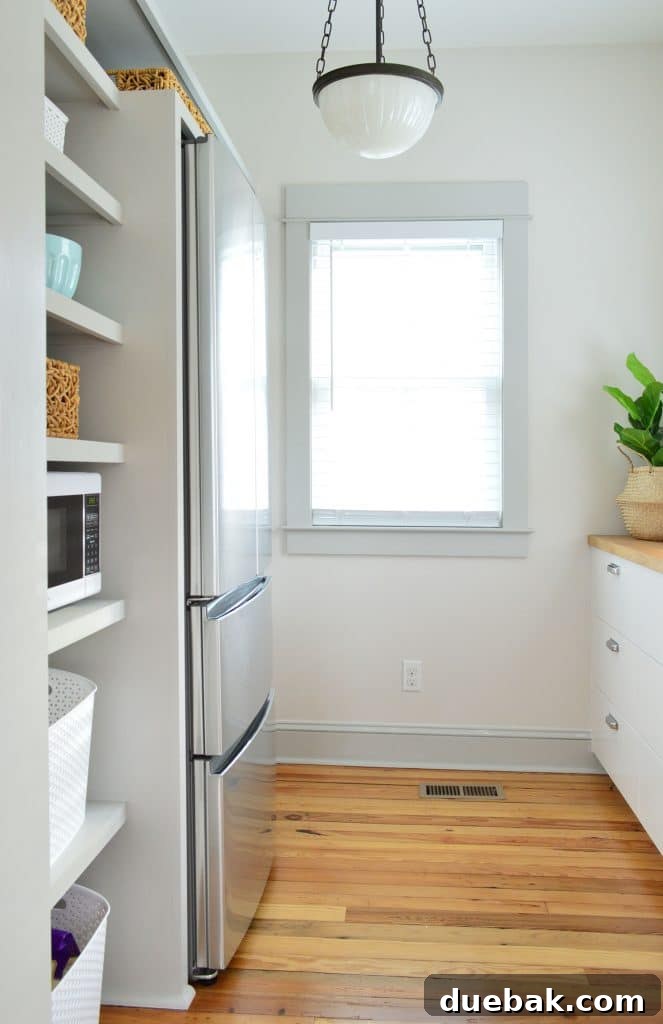
For a deeper dive into our specific organization strategies, you can explore how we meticulously arranged our built-in pantry as part of our beach house kitchen organization post. This comprehensive resource even includes a detailed video walk-through of the entire kitchen and pantry, where we open every cabinet and drawer to reveal our organizational secrets! You’ll also see how we maximized space on the opposite wall by adding shallow storage cabinets and a convenient counter space—perfect for setting down groceries or items pulled directly from the fridge.
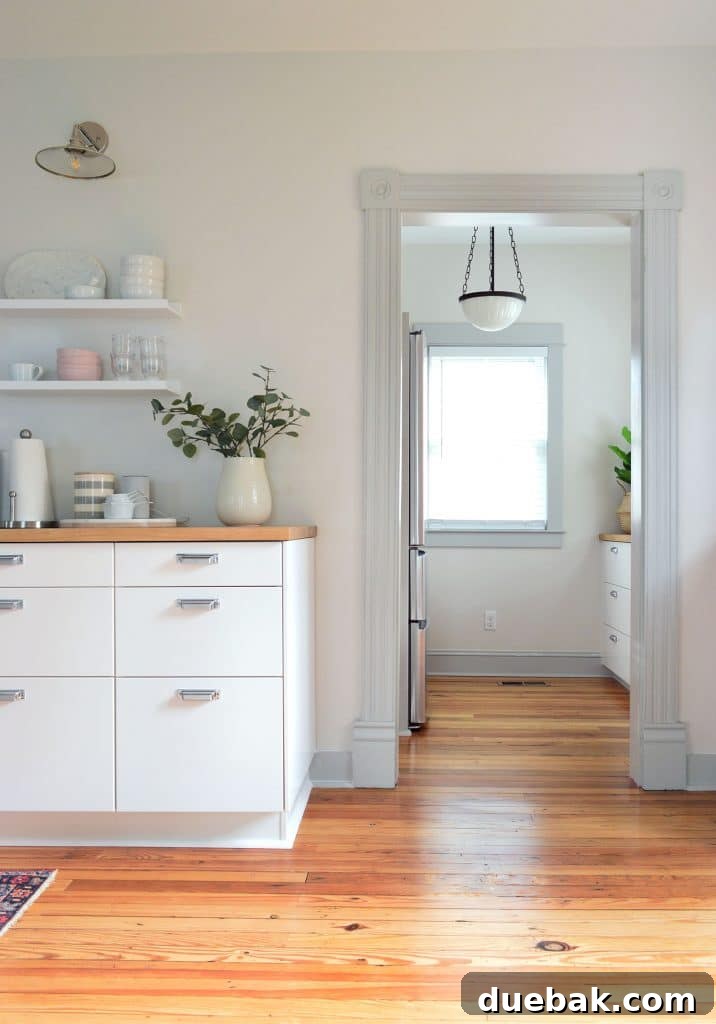
We are immensely grateful for the sheer volume of storage these custom shelves allowed us to integrate into this once underutilized room. Our pantry now comfortably accommodates everything from non-perishable food items and cleaning supplies to essential kitchen appliances like a toaster and blender, mixing bowls, dishtowels, and even that large beach cooler we planned for. If we were avid cookbook collectors, there would certainly be ample space for those too! This DIY project has truly transformed our pantry into a highly functional and organized hub for our beach house.
More Resources for Your Built-In Projects
If you’re seeking even more intricate details or additional inspiration for custom built-in solutions, we encourage you to explore our past projects that utilized the exact same reliable construction method. We constructed our son’s built-in shelves using this technique, and that post offers a closer look at some of the foundational steps with extra tips and tricks. Furthermore, in that article and the one detailing our living room built-ins, you’ll find examples of how we seamlessly incorporated closed drawer and cabinet storage into the overall designs. Both projects remain among our favorite DIY accomplishments to date, continuing to hold up exceptionally well and serving our family’s functional needs with great efficiency. And now, our new beach house pantry is proudly joining this club of beloved built-ins!
Should you be interested in another rewarding pantry makeover, we invite you to check out this project showcasing how we transformed an older kitchen pantry. This involved implementing smarter organization systems and, of course, a generous amount of fresh paint to completely revitalize the space, proving that even small pantries can achieve big functional gains.
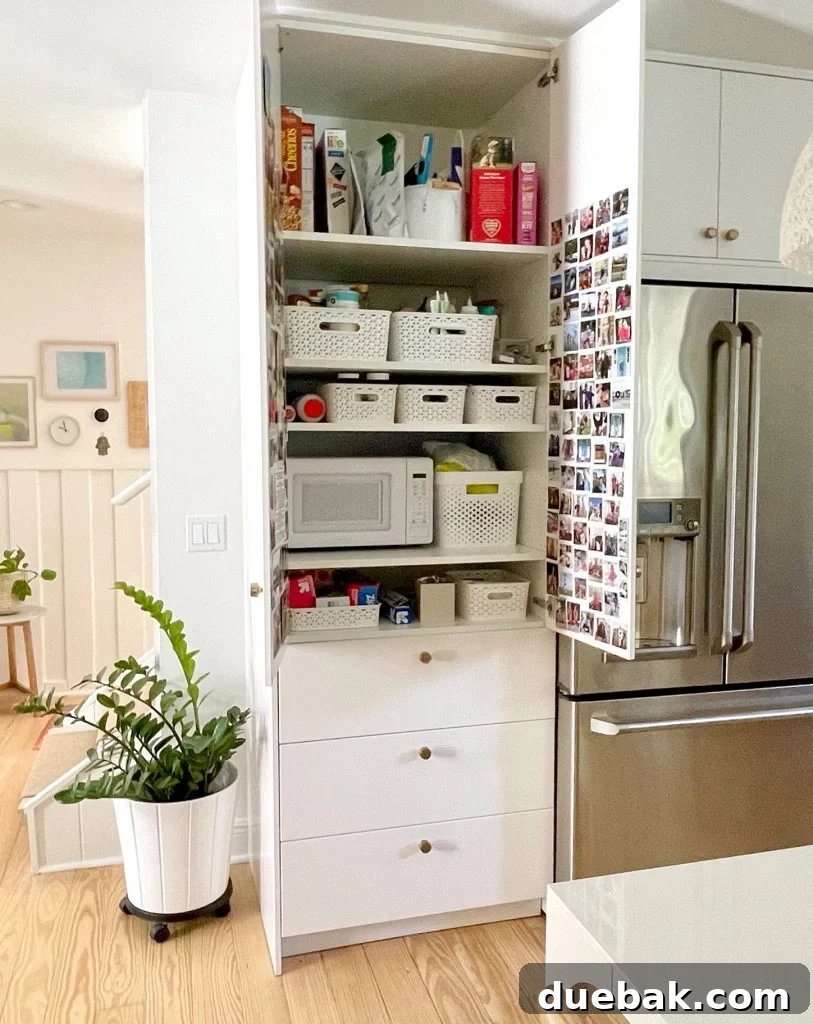
UPDATE: More recently, we also added a large pantry cabinet to the kitchen in our Florida home. This is an excellent alternative if you’re not looking to fully DIY a new pantry from scratch. In this post, we demonstrate how we achieved ample food storage using ready-to-assemble cabinets from Ikea, offering a different approach to creating functional and stylish kitchen storage solutions.
*This post contains affiliate links, meaning we may earn a small commission if you make a purchase through them, at no extra cost to you. We only recommend products we genuinely use and love.
Originally published January 2018. Updated for clarity, additional detail, and SEO in 2022.