
Redefining Kitchen Aesthetics: Our Journey to Perfecting Floating Shelf Brackets
Every homeowner embarking on a DIY journey knows the thrill of a new project. The excitement, the meticulous planning, the anticipation of a transformed space – it’s an exhilarating ride. Yet, even the most carefully considered plans can sometimes benefit from a little ‘tweakity-tweak-tweak’ – a course correction that ultimately leads to a more refined and beloved outcome. Our recent kitchen renovation, specifically the installation of our much-anticipated floating shelf brackets, became a testament to this very principle. What started with confident choices, backed by structural necessities and aesthetic aspirations, evolved into a valuable lesson in design flexibility and the art of ‘redo.’
Our kitchen transformation was a labor of love, a desire to pull a once dark and dated space into the light of modern functionality and style. The installation of floating shelves was a key element in this vision, promising open storage and a contemporary feel. After carefully taping off positions, even digitally photoshopping ideas, and finally, with a significant leap of faith, drilling directly into our pristine wall of tile, we installed our initial set of brackets. Our decisions were rooted in what seemed logical and sound at the time:
- Structural Integrity: The primary driving force was functionality. We aligned our brackets with the wall studs, ensuring maximum support and stability for whatever treasures our shelves would hold.
- Visual Symmetry: We aimed for balance. Our initial thought was that maintaining an equal distance between the brackets on either side of the range hood would create a harmonious and symmetrical look, even on what we knew was an inherently unbalanced wall layout.
We were utterly convinced of our spacing. The thrill of seeing the shelves up, the immediate visual impact, filled us with that unique adrenaline only DIY enthusiasts understand when a room begins its dramatic metamorphosis. But as often happens with design, the true test comes not in the initial reveal, but in the living. As our kitchen continued to evolve with new additions – a sleek new lighting fixture, a modern dishwasher, carefully curated art pieces, and a fresh set of floors – a subtle dissonance began to emerge.
The Evolving Vision: Recognizing When Design Needs a Second Look
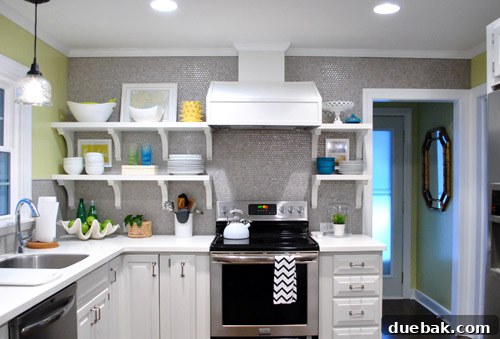
First, it was a whisper in photographs – that undeniable flattening effect that sometimes highlights design flaws better than real life. Then, it became glaringly obvious in person: the eight brackets adorning the left side of our range hood were, much to our dismay, looking distinctly crowded. It was a disheartening realization, especially considering a few eagle-eyed friends had subtly suggested that six brackets might have been a more ideal number on that side post-installation. At the time, fueled by the sheer exhilaration of progress, such advice barely registered. We were perhaps too immersed in the immediate satisfaction of transforming a space that had previously looked “crazy dark and dated” into something fresh and inviting.
This experience taught us a valuable lesson: sometimes, our eyes and minds need time to adjust. It’s a natural part of the creative process, especially in home design. A space needs to breathe, to be lived in, and to evolve alongside our own perceptions before certain truths become “unbelievably obvious.” And when that moment of clarity strikes, it’s often accompanied by a head-shaking “Oh, why did we go with eight brackets on this side when six would have looked soooooo much better?” It’s a feeling many can relate to – similar to that moment when a friend or family member offers well-intentioned but initially unheeded advice (like a less-than-stellar significant other or an ill-fitting pair of jeans), and later, with the gift of hindsight, you have that undeniable “what-was-I-thinking?” revelation.
Embracing the Iterative Process: Flexibility in Home Improvement
Thankfully, a core philosophy of our home improvement journey, both in our previous house and our current abode, has been the embrace of evolution and change. From the dynamic adjustments made to our living room layout to the myriad paint color iterations in our first home (where nearly every room, including the trim, was painted at least twice), we’ve learned that perfection is rarely achieved on the first attempt. This “live and learn” mantra is incredibly liberating in the world of DIY. The adage, “if at first you don’t succeed, try, try again,” holds immense truth when it comes to crafting a house into a truly personalized home.
The beauty of home design lies in its dynamic nature. Rooms are not static entities; they are living spaces that should grow and adapt with their inhabitants. This continuous journey, rather than a single destination, is what ultimately leads to spaces that feel authentic, comfortable, and perfectly aligned with our evolving tastes and needs. So, whether it takes one attempt, five, or even more, persistence and a willingness to refine are paramount. It’s about keeping your rooms “moving and growing” until they settle into their ideal state, creating an environment that resonates deeply with you.
Our Kitchen Bracket Redux: The Transformation Unveiled
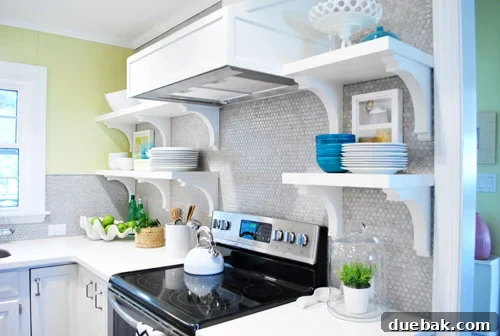
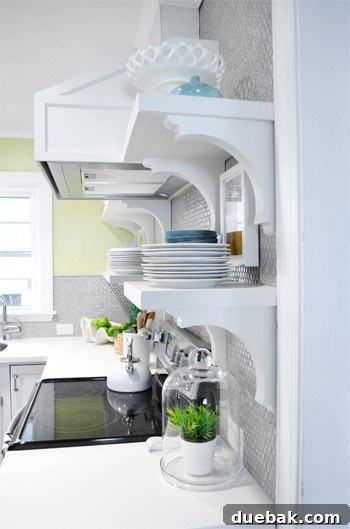
And so, we embarked on our little bracket redux. The result? A kitchen that feels instantly simpler, cleaner, and undeniably more balanced. We are absolutely thrilled with how the central bracket now aligns elegantly with the counter line, creating an intentional visual flow that was missing before. This subtle but significant adjustment has transformed the entire feel of the wall, moving from a crowded arrangement to one of serene purpose. Note: The middle bracket is precisely centered between the other two. If photographic angles make it appear slightly off, rest assured it’s perfectly aligned in reality.
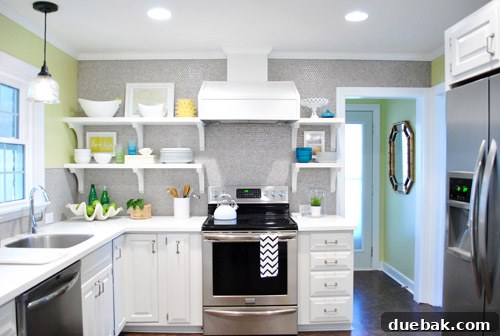
The immediate question many might ask is, “But you drilled through those tiles to hang the original eight brackets! How did you undo that particular snafu?” This is where the true DIY spirit, combined with a bit of ingenuity, comes into play. Correcting an initial installation, especially when tiles are involved, might seem daunting, but it proved to be a surprisingly straightforward and incredibly rewarding process.
Step-by-Step Guide to Correcting Installation Mistakes and Flawless Tile Repair
Our journey to perfecting the kitchen shelves involved several key steps, demonstrating that even significant structural changes can be seamlessly integrated:
1. Assessing the Situation and Initial Preparation
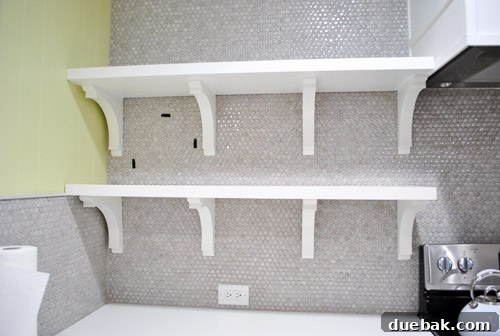
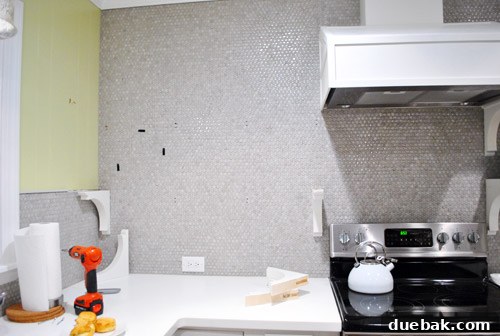
The first order of business was to completely clear the shelves. This allowed us to assess the situation properly and work unimpeded. The small black pieces you might spot are actually 3M removable Velcro, a handy trick we use to keep smaller decorative items, like my “Love Life” frame, securely in place on the shelves without slipping.
2. Careful Deconstruction: Removing the Old Brackets
Once the shelves were clear, we carefully detached them by unscrewing the connecting screws that secured them to the brackets. With the shelves removed, the brackets simply slipped off the wall screws they had been resting on. In the image below, you can vaguely discern these screws – appearing somewhat like colons, as each bracket was supported by two screws driven into the wall.
3. Precise New Placement: Drilling for the Refined Design
With the old brackets gone, it was time to establish the new, improved layout. We meticulously measured and marked the positions for our new middle bracket. For these holes, we employed a specialized drill bit designed for tile, ensuring a clean and precise bore. Unlike the initial installation where we hit studs, these new holes would not align with wall studs. This necessitated the use of heavy-duty anchors in each of the two holes to provide robust support for each of the new brackets (the top and bottom brackets of the new central pair). Thanks to the outer brackets still being securely fastened into studs and the exceptional strength of these heavy-duty anchors, each shelf is now incredibly stable – robust enough, in fact, to support a few impromptu pull-ups! They are undeniably “in there good.”
4. Seamless Tile Repair: Chiseling and Replacing
The next critical step was to address the old tiles that bore the marks of our previous installation. Removing them was surprisingly easy! Armed with a flat-head screwdriver and a hammer, I gently but firmly chiseled out the grout around each tile I wished to remove. By carefully tapping the screwdriver into the grout lines, I effectively created a makeshift chisel, which allowed me to isolate and loosen the tiles.
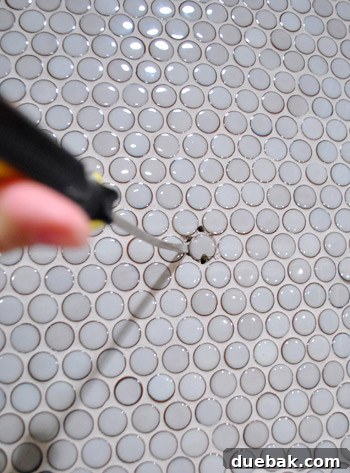
After just about four strategic chiselings around each tile, they popped right out. An interesting discovery during this process was that for each bracket, one hole typically went directly through the tile (which we removed), while the other was just in the surrounding grout. This was a bonus, as it meant we only had to replace one tile per bracket area, with the second hole simply requiring a fresh application of grout.
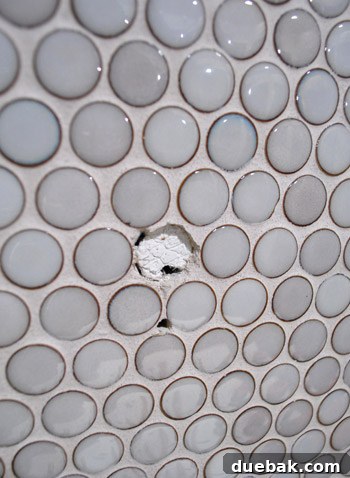
With the old tiles gone, I then used a strong tile adhesive to firmly secure new, matching tiles back into the vacant spots. This created a clean slate for the final finishing touches.
5. Flawless Grout Application: The Finishing Touch
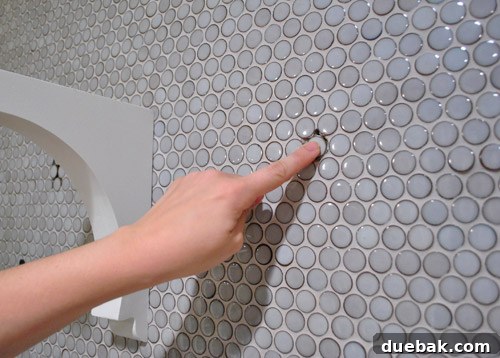
The final stage of the repair involved mixing up a small batch of grout. This was meticulously applied to fill in the surrounding gaps, including those areas where holes had been made directly into the grout, and to seal the edges of the newly installed tiles. The goal was to make the repair completely imperceptible, blending seamlessly with the existing tile work.
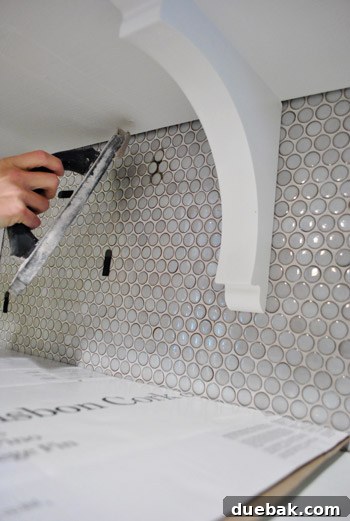
The Final Reveal and Key Takeaways
Ta-daaaa! The transformation was complete. It’s truly as if those extra two brackets were never there. The wall now boasts a refined elegance, perfectly complementing the kitchen’s overall aesthetic.
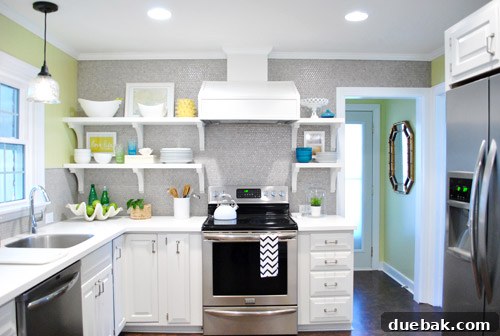
Admittedly, if you squint closely in these initial photos, you might just discern the subtle dampness of the drying grout. However, once fully cured, it became utterly impossible to distinguish where the original tiles had been replaced and the brackets relocated. This entire upgrade cost us precisely zero point zero dollars – a truly satisfying “hurrah!” for any DIY project.
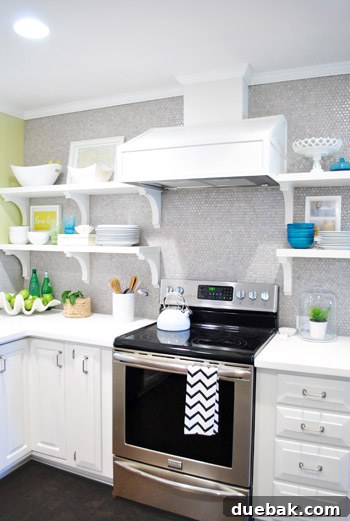
Here’s a glimpse of the shelves from a slight side angle, showcasing their renewed poise:
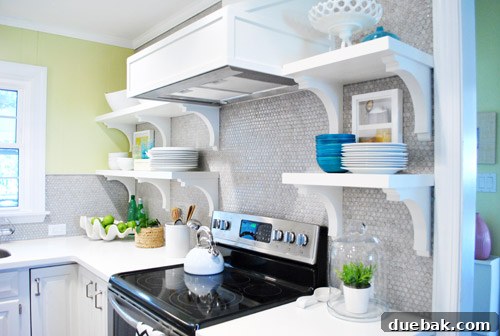
And finally, a full side view, a perspective I particularly cherish. I often find myself instinctively glancing to the right when entering from the laundry room, just to admire this beautifully resolved corner of our kitchen.
The Ever-Evolving Home: Enduring Lessons in DIY and Design
The overarching lesson gleaned from this kitchen bracket adventure is profound: even after diligent planning, visual simulations, and meticulous execution, the journey of home improvement often necessitates flexibility. You might meticulously map things out on the wall with painter’s tape, leverage powerful tools like Photoshop for conceptualization, and still find yourself needing to “tweak” things after the initial plunge. Living with a design, observing its interaction with the evolving dynamics of your home, and allowing your perceptions to mature are integral parts of creating truly harmonious spaces.
Thankfully, the world of DIY is incredibly forgiving. Most home improvement projects are not one-shot endeavors. They possess an inherent “re-DIYable” quality, much like a cat with its proverbial nine lives. Getting started, taking that initial leap, is often the most crucial step towards reaching that elusive “finish line,” even if it means several detours and adjustments along the way. Each “redo” is an opportunity for refinement, a chance to get closer to your ideal vision, and a valuable learning experience.
We’d love to hear from you! What projects have you recently tackled, only to find yourself going back to refine or completely redo? Has anything in your home, which you’ve lived with for a while, slowly started to nag at you, prompting its return to your to-do list? And on a more playful note, have you ever experienced the surprising satisfaction of chiseling tiles out? It’s genuinely become my new favorite thing to do. There’s something profoundly gratifying about the rhythmic bang of a hammer and the satisfying puff of dust as a tile yields to your effort.