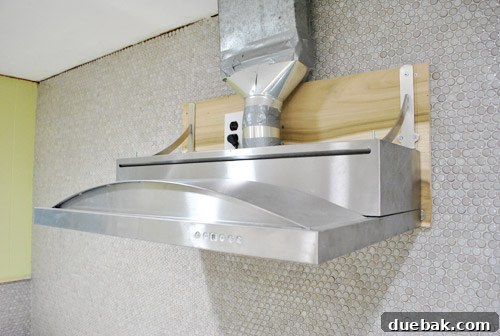
DIY Wall Mount Range Hood Installation: Converting an Under-Cabinet Hood with a Custom Wood Cover
Embarking on a kitchen renovation often brings unexpected challenges, and sometimes, the most exciting finds come with their own unique puzzles. Last week, our big question wasn’t about daily pleasantries, but a rather complex query: “How exactly do we hang this fantastic $60 range hood we scored on Craigslist?” It’s a classic DIY dilemma – incredible price, perfect vision, but a missing link in the installation process.
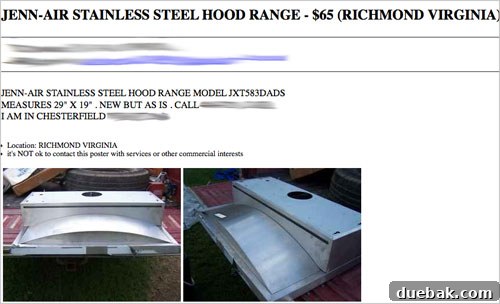
The Unexpected Challenge: Converting an Under-Cabinet Hood
As Sherry mentioned previously, our grand plan involved encasing this budget-friendly range hood in a custom-built wood cover, drawing inspiration from various designs (see our previous post for inspiration). We were thrilled about two things: the unbeatable price tag and the sophisticated final look we envisioned. However, in our excitement, we admittedly glossed over the crucial middle step: the actual installation. This wasn’t just a minor oversight; it was a significant planning gap that left us scratching our heads. Was this a classic #planningfail moment?
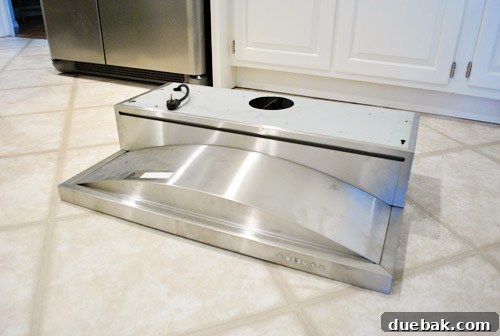
Our primary hurdle went beyond simply lacking installation materials or instructions. This was an under-cabinet hood designed to mount directly beneath existing cabinetry. The problem? Our kitchen design featured no upper cabinets above the stove where the hood was meant to go. Instinctively, I assumed the internet would be brimming with guides on how to convert an under-cabinet range hood to a wall-mounted unit. Yet, my enthusiastic Google searches yielded frustratingly few results. It was at this point that self-doubt began to creep in. Had we invested in a project that was simply impossible to execute?
Just as we considered rethinking our entire approach, a glimmer of hope appeared. I stumbled upon these specialized wall-mount kits.
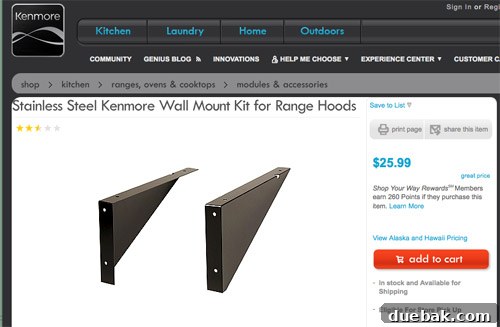
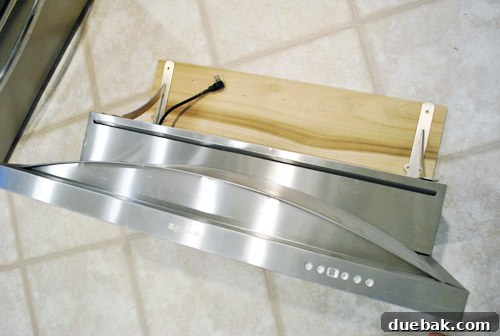
While our Jenn-Air hood wasn’t compatible with these specific Kenmore brackets, their mere existence was a revelation. The fact that a major brand sold “wall mount kits for range hoods when overhead cabinet is not used” was confirmation. Our idea of retrofitting an under-cabinet hood for wall mounting wasn’t crazy after all! Bolstered by this discovery, Sherry and I huddled, formulated a detailed plan, sourced the necessary components, and braced ourselves for the installation. We knew the possibility of a “hood hanging failure” was real – a common risk when navigating DIY projects without a clear blueprint – but we were ready to tackle it head-on. Our strategy involved sturdy wood pieces to create a makeshift mounting panel, supported by heavy-duty metal brackets acting as a stand-in for the absent cabinets. This image will make more sense as we delve into the details, but it captures the essence of our innovative approach.
Essential Preparations: Addressing Overlooked Details
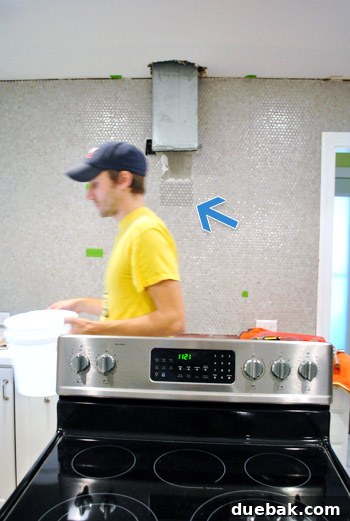
Before we could fully implement our hanging strategy, some critical preliminary steps needed attention. You know, those little “oh-by-the-way” details, like realizing we hadn’t tiled high enough under the vent pipe. Another classic example of insufficient foresight in our planning! While frustrating, this particular oversight took only about 20 minutes to remedy. We quickly mixed a small batch of thinset and filled in the gap with some spare tiles. It was slightly maddening to revisit the tiling phase, especially for just eight meager rows, but by this point in our renovation journey, we’ve learned to simply laugh off these minor setbacks. A brief wince, more laughter, and then, we get the job done.
With the tiling corrected, our next crucial step was meticulous measurement and marking. We mapped out all the essential reference points directly onto the wall to ensure precise placement of the hood and future shelving. It might look like a chaotic web of painter’s tape, but I assure you, every mark served a vital purpose and contributed to a perfectly aligned installation.
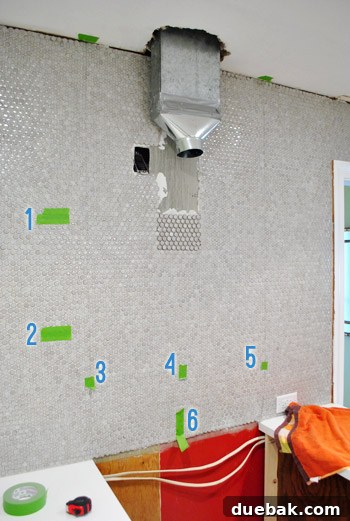
This seemingly random arrangement of painter’s tape delineated several critical reference points for our range hood and kitchen layout:
- 1 & 2: Floating Shelf Placement: These marks indicated where our future floating shelves would be installed. It was crucial to align the bottom edge of the range hood with the top shelf for a cohesive look. This height measured approximately 34 inches from the top of the counter, perfectly situated within the manufacturer’s recommended 30-36 inch distance from the stovetop.
- 3, 4, & 5: Stud Locations: Identifying the wall studs was paramount for securely attaching the range hood and our custom mounting panels. Anchoring directly into studs provides the strongest support for heavy objects.
- 6: Stove Center Point: This mark ensured that the range hood would be perfectly centered and symmetrical over our stove, vital for both aesthetics and optimal ventilation performance.
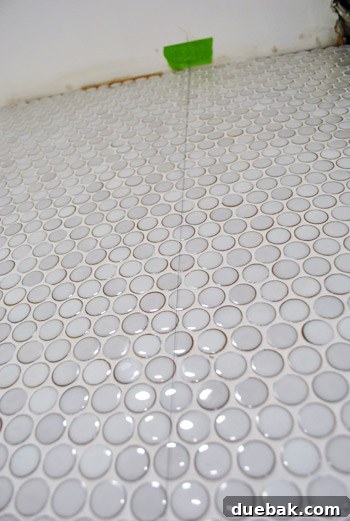
For those wondering about my method for accurately locating the studs behind the tile, it was thanks to Sherry’s foresight. Back when the wall was still open, she insisted I mark their positions before we tiled over everything. My solution was simple yet effective: I made small, discreet marks on the ceiling directly above each stud. Later, for this project, I taped a piece of thread to each ceiling mark, attaching a paper clip to the other end to act as a weight. This created a perfectly vertical plumb line, allowing me to accurately transfer the stud locations down the tiled wall. These small ceiling dots will eventually be concealed by crown molding, making them invisible once the kitchen is fully complete. This technique proved invaluable for precise mounting.
Conquering the Tile: Drilling and Secure Mounting
With all our guides meticulously marked, the moment arrived to install the first piece of our wooden mounting system. Here’s the rationale behind our wood panel approach: while the range hood itself was wide enough to theoretically span two studs, its internal notched hanging holes didn’t align with the studs. More importantly, I had reservations about the long-term stability of relying solely on those notches, even if they had aligned. Our solution involved screwing a slightly wider-than-the-hood wood plank directly into two studs, and then using a heavy-duty anchor in a third location for additional reinforcement. This solid wood foundation would then provide new, perfectly aligned attachment points for the range hood itself.
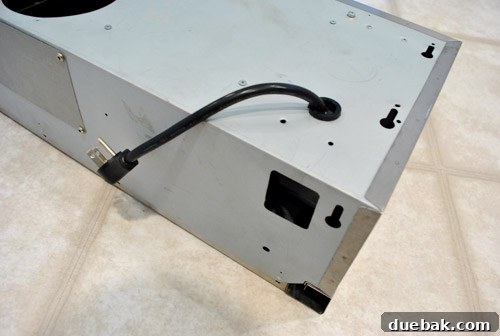
Before proceeding, we sought a contractor’s blessing for our plan, especially regarding drilling into our newly tiled wall. It felt essential to double-check our strategy with an expert. After that reassuring phone call, we took a few deep breaths and moved on to the next, somewhat nerve-wracking, phase: drilling into our pristine tile. GASP! The idea of creating holes in our carefully installed backsplash was daunting, but a necessary step for a truly secure installation.
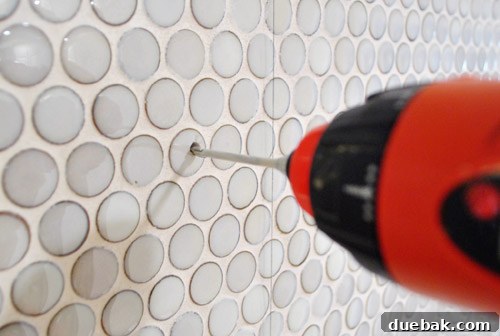
To minimize the risk of cracking, I invested in a specialized drill bit designed for glass and tile. It required consistent, firm pressure, but eventually, all the necessary holes were drilled successfully. I think both of us held our breath throughout the entire drilling process, silently freaking out with each new penetration into the tile.
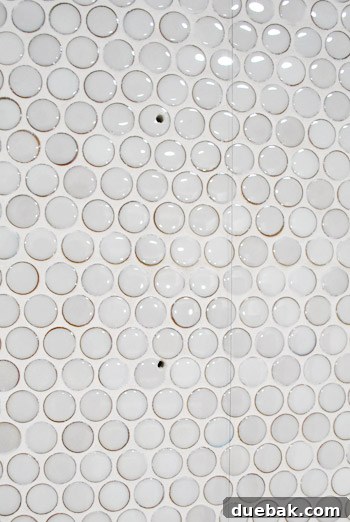
Once we overcame the initial shock of riddling our tile with holes (it was just six, thankfully!), I used robust 2.5-inch screws to firmly secure the chunky wood plank to the wall. Feeling those screws bite into the studs so tightly was incredibly confidence-inspiring. It gave a profound sense of security; I felt like I could almost hang my entire body weight from that board – if only my lanky fingers could grip the tiny ledge!
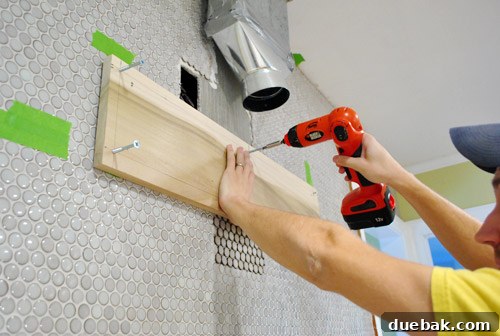
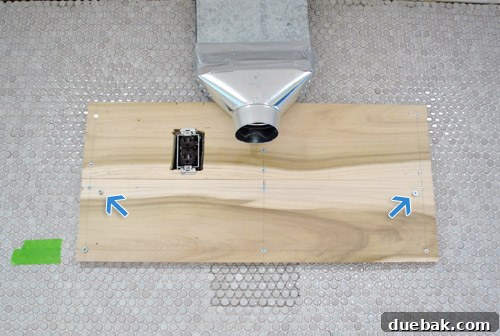
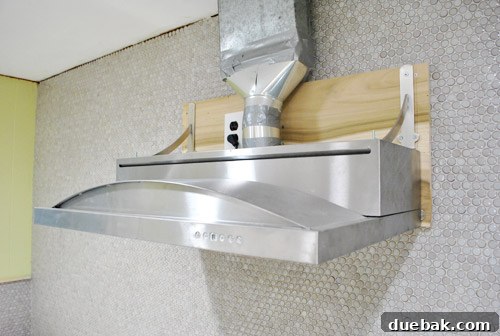
With the first board installed (which would primarily support the range hood), I then attached a second, smaller plank. This second piece was strategically positioned to provide a robust attachment point for the heavy-duty metal brackets, further reinforcing the entire structure. Like the first, it was secured with long screws driven into two studs, supplemented by a third set of screws into heavy-duty anchors. The resulting setup looked a bit like this. A quick note: the vent pipe appears slightly off-center in the photo, but rest assured, the wood boards are perfectly aligned. This minor aesthetic issue will be resolved once we construct the custom frame for the hood, ensuring everything appears perfectly centered. The blue arrows in the image indicate the two key screws from which the range hood itself will ultimately hang.
Lifting the Hood: Installation and Connections
We felt pretty good about our system, drawing comfort from the fact that most upper cabinets are simply held to studs with screws, then loaded with dishes and other items, often with a range hood mounted beneath them, and the entire assembly remains firmly in place. Our dual-plank, stud-anchored system felt even more robust for a single, albeit heavy, appliance.
Speaking of which, it was time for the main event: hoisting the range hood into position. This part, arguably, was even more nerve-wracking than drilling into the tile. We half-imagined the entire wall of tile suddenly detaching from the studs and collapsing. But, to our immense relief, it didn’t budge an inch. The hood went up, solid as a rock. This was fantastic news, primarily because it meant I could spend less time worrying about structural integrity and more time on, well, basic grooming…
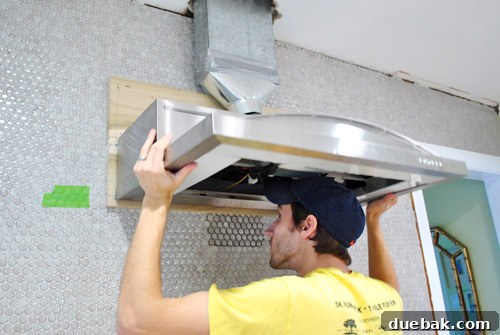
Anyway, back to the task at hand. Sherry, ever the supportive partner, provided invaluable assistance. Her height was perfectly suited for resting the hood on her head while standing on a small stepladder, providing crucial support from underneath. This allowed me to concentrate on attaching the metal brackets securely to the wooden mounting panel, and then into the range hood using the same slots originally intended for attachment to a wall cabinet. Her steady assistance was critical in ensuring a smooth and safe installation process, demonstrating the power of teamwork in DIY projects.
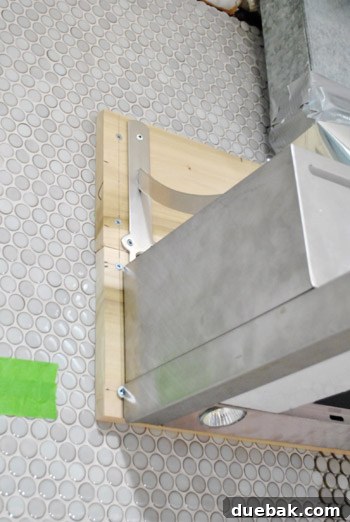
At this point, the range hood felt incredibly secure, so I relieved Sherry of her head-holding duties while I fastened the second bracket. She then skillfully captured more photos, documenting our progress and the satisfying solidity of the installation.
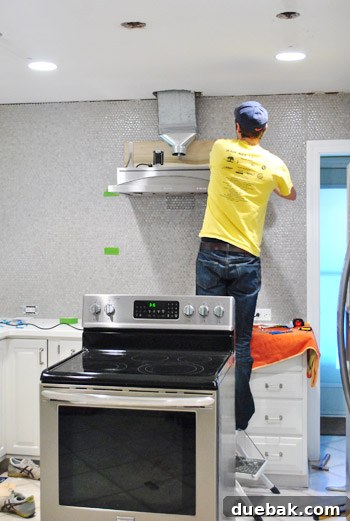
Once the hood was firmly anchored to the wall, I moved on to the essential finishing touches. This included securely attaching the vent pipe to the hood and plugging in the power cord. We were incredibly fortunate that the existing plug hole in the range hood aligned almost perfectly with our wall outlet, saving us another potential headache! With these connections made, we were officially in business. Phew! Update: We’ve since learned that metal foil tape, readily available at hardware stores, is far superior for sealing ductwork compared to standard duct tape (despite the latter’s misleading name – haha). We’ll be re-taping that vent with foil tape to ensure a robust and long-lasting seal. A big thank you to the helpful community for that valuable tip!
The Vision Unveiled: Beyond the Current Appearance
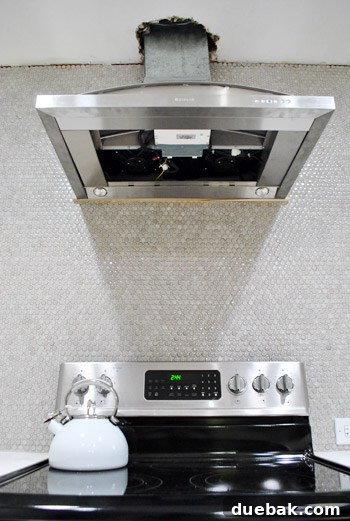
Okay, admittedly, its current appearance isn’t exactly showroom-ready. The exposed pipe, the raw wood, and the rather conspicuous hole in the ceiling aren’t particularly aesthetically pleasing, are they? This is merely the functional stage, a necessary transition before the final aesthetic transformation.
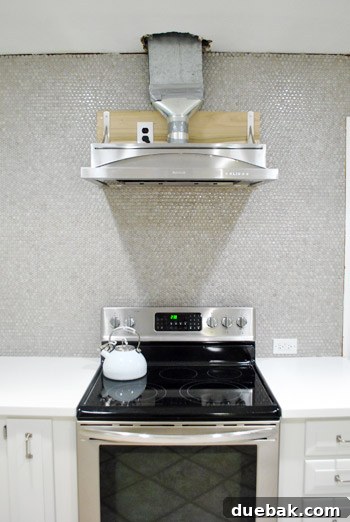
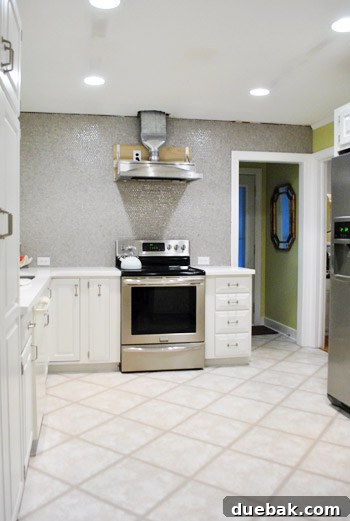
Despite its temporary unsightliness, this was a monumental step forward. Not only did we finally have a working range hood for the first time in over two months, but it was positioned at an optimal distance from the stove. Unlike our old microwave, which hung uncomfortably close, this hood is installed 34 inches from the countertop, placing it perfectly within the manufacturer’s recommended 30-36 inch range from the stovetop. This ensures efficient ventilation and a more comfortable cooking experience. Plus, this new hood boasts two fancy light settings – a delightful upgrade! Oooooh. Ahhhhh.
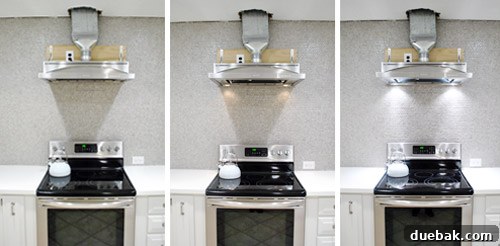
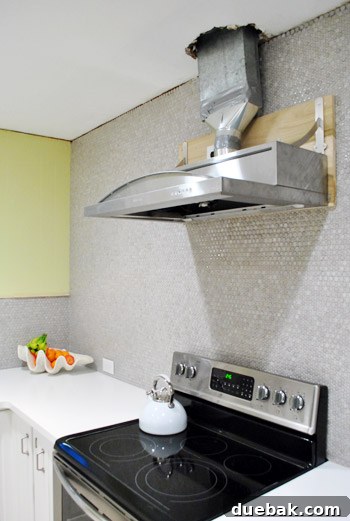
I understand that the exposed wood mounting panels look a bit peculiar, especially protruding about an inch on the sides. But please, bear with me for a little longer; this is all part of a larger, carefully considered plan. These wooden edges will serve as crucial attachment points for my homemade wood hood cover. In just a few days, this functional but industrial-looking setup will be transformed into a stylish, integrated design feature, perfectly complementing our kitchen aesthetic.
Oh, and please disregard this particular point of view for now; we hadn’t snapped the filters into place yet. Once those large, sleek stainless steel rectangles are in position, the view from below dramatically improves, presenting a much more finished and professional appearance. We’ll be sure to share updated photos very soon!
Project Success and Future Endeavors
Now, for anyone still harboring concerns about this entire contraption potentially crumbling down overnight (we certainly were – we even pulled the stove out the first night, “just in case!”), rest assured. The range hood has successfully endured several full days without so much as a creak or a shake. Without tempting fate, Sherry and I are confidently declaring this challenging hanging project a resounding success. All is good in the hood, as the saying goes. The combination of long screws driven firmly into the wall studs, coupled with the heavy-duty brackets providing additional top-down support, has made this range hood incredibly secure. After days of breath-holding and cautious optimism, Captain Careful can officially exhale.
Now for the truly fun part (or perhaps, the next challenging part): building that beautiful, custom wood cover to conceal the inner workings. Someone crank up my favorite jams! We’ll be back in just a few days with all the details of that exciting construction phase. In the meantime, we’re curious: what did you all accomplish this weekend? Any heavy-object hanging? Tile drilling? Or perhaps, did you find yourself using your head to support something in an unconventional DIY maneuver? Oh, and something absolutely crazy is unfolding in our house starting today, and it’s set to last for the next three weeks! We’ll be sure to fill you in on all those wild details tomorrow, once we’ve survived day one and have some initial photos to share.