
Embarking on a furniture refinishing project can transform tired, old pieces into stunning focal points for your home, all while saving you money and contributing to a more sustainable lifestyle. We recently undertook the rewarding task of refinishing two dining tables, bringing them back to life with diligent sanding and zero chemical strippers. This comprehensive guide will walk you through our process, demonstrating how straightforward it can be to revitalize old furniture, turning what some might consider junk into cherished treasures.
Why Restore a Wood Dining Table?
The decision to refinish not one, but two dining tables, arose from a practical need: our duplex rental property required distinct dining areas for each side. For one unit, we planned to utilize a Crate & Barrel table, a generous hand-me-down from a friend. While structurally sound and possessing excellent bones, its cherry finish was significantly marred by years of scratches and general wear. Our friend had candidly warned us about its condition, suggesting it needed refinishing at the time, but the project had always been postponed.

The second table was a charming farmhouse-style piece acquired from my sister just before she listed it on Facebook Marketplace. Its solid construction and ideal dimensions made it an irresistible addition, despite it also showing considerable signs of use and distress from years of family meals and daily life. Both of these tables were prime candidates for a refresh, largely due to a crucial characteristic: they were crafted from solid wood. This meant we could confidently sand away years of wear and tear, revealing the beautiful, untouched wood beneath. Furniture with laminate or wood veneer tops, while also refinishable, demands a much different and more delicate approach to avoid damaging the thin top layer. Given the already worn state of both tables, we approached the task with enthusiasm and without the usual anxiety of potentially damaging a pristine surface, ready to embark on our DIY furniture restoration journey.


Essential Tools and Materials for Wood Table Refinishing
Our preferred method for refinishing furniture avoids harsh chemical strippers whenever possible, relying instead on mechanical removal (sanding) to achieve a clean surface. Here’s a comprehensive list of what you’ll need for this effective and safer approach:
- Electric Sander: An essential tool. We recommend a corded random orbital sander for its efficiency in removing material and minimizing swirl marks, or a battery-operated palm sander for smaller, more intricate areas and cordless convenience.
- Sandpaper: A crucial supply. You’ll need coarse (80-grit) for initial finish removal and aggressive material shaping, and medium/fine (120-grit, or even 180-grit for a super smooth finish) for smoothing the surface before staining. Ensure you have plenty of each.
- Cleaning Cloths: Paper towels or a specialized tack cloth are essential for thoroughly removing sanding dust, ensuring a pristine surface for staining.
- Shop Vacuum: Highly recommended for quick and efficient cleanup of sawdust during and after sanding.
- Stain-Grade Paintbrushes: Essential for applying wood stain and polyurethane smoothly and evenly.
- Clean Rags: A generous supply of clean, lint-free rags is indispensable for wiping off excess stain and for general cleanup.
- Wood Stain: Choose colors that complement your existing decor. We experimented with Minwax Special Walnut and Minwax Classic Gray to achieve our desired looks. Always test your stain on an inconspicuous area first.
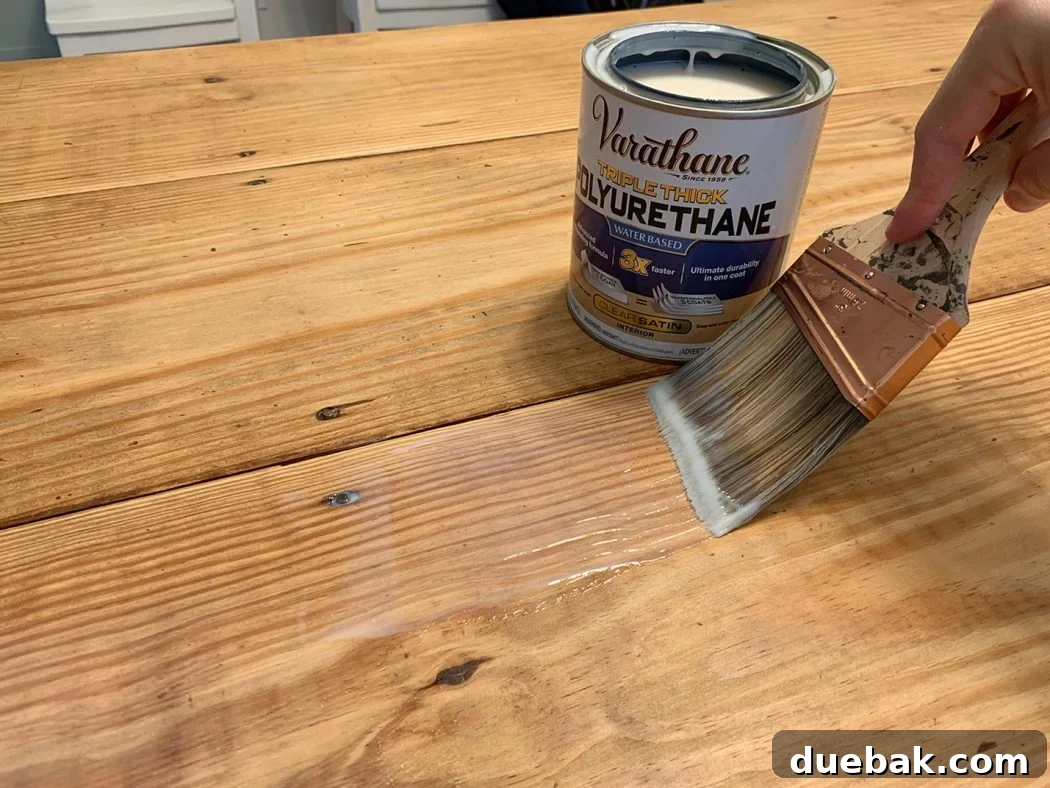
- Water-Based Polyurethane: Offers durable protection with easy cleanup and low odor. We used this “Triple Thick” version for enhanced durability and a beautiful satin finish.
- Mask: A dust mask or respirator is vital to protect your lungs from fine wood dust particles.
- Nitrile Gloves: Protect your hands from stains, sealers, and splinters, keeping them clean and safe throughout the project.
Investing in these safety items will ensure a more comfortable and secure refinishing experience.
Step 1: Conduct a Test Sand on an Inconspicuous Area
Approaching a beloved piece of furniture, especially one from a brand like Crate & Barrel, can be daunting. To alleviate any anxiety, we started cautiously by conducting a small test. We began by removing one of the table legs and sanding the top of it. This allowed us to assess how deep the existing stain penetrated the wood and, more importantly, to discover the type of wood hidden beneath. Should the results be undesirable, the small, hidden test area would be easily concealed. Fortunately, the test yielded beautifully promising results, serving as our green light to proceed with the full project. This initial step is invaluable, providing confidence and insights into the wood’s character.

Step 2: Thoroughly Sand Off the Old Finish
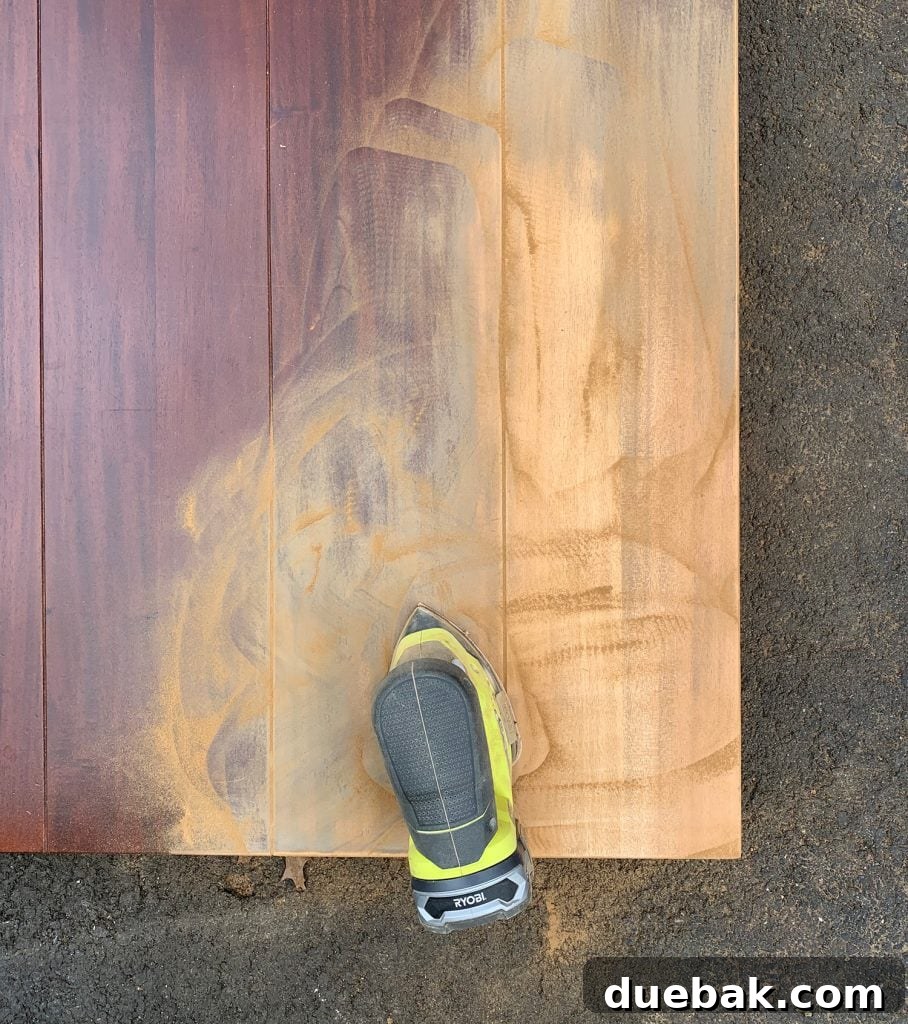
With a successful test under our belt, we began the main task of sanding all surfaces. We started with coarse 80-grit sandpaper on a battery-operated corner cat sander we already owned. Working in small, manageable sections, and always moving with the grain of the wood, we observed the old stain slowly giving way to reveal the lighter, natural wood underneath each table. This initial phase is often the most time-consuming but also the most satisfying as the original beauty of the wood begins to emerge.

While the battery-operated sander performed adequately, the process was slow. After about an hour of work, we decided to upgrade, purchasing a $79 corded random orbital sander. This decision was instantly validated; the increased power and efficiency of the corded sander delivered a cleaner and significantly faster result. This upgrade was undeniably worth every penny, drastically improving our workflow and the quality of the finish.
Step 3: Eliminate Scratches, Dents, and Imperfections
The true value of our new corded orbital sander shone particularly bright when tackling the stubborn scratches and marks embedded in the farmhouse table. As you can see in the comparison below, the left photo shows the table before the orbital sander, while the right illustrates the dramatically cleaner and smoother surface achieved with the orbital sander. This old farmhouse table presented some pretty significant gouges, and the more powerful sander proved instrumental in smoothing them out. Its efficiency also greatly accelerated the removal of the thick factory finish from the Crate & Barrel table. It was truly astonishing to witness the rich wood grain that had been hidden for years beneath that dark red stain, finally being revealed.

Step 4: Refine the Surface with Fine Grit Sandpaper
Once the old finish has been completely removed from all surfaces of the table – including the top, legs, and apron – it’s crucial to follow up with a finer grit sandpaper, such as 120-grit. This step is designed to smooth out any remaining imperfections and prepare the wood for staining, ensuring an even and professional-looking finish. This is especially important for the tabletop, where smoothness is paramount for both aesthetics and daily use. Work methodically, using light, even pressure and consistent overlapping passes, moving with the wood grain.

In total, sanding both tables, including all the intricate legs and aprons, took us approximately 2 to 3 hours. Discovering the new, heavier-duty sander significantly streamlined this process, and we were incredibly pleased with the smooth, pristine raw wood surfaces we achieved. The dedication to thorough sanding truly sets the foundation for a beautiful final result.
Step 5: Thoroughly Clean Off All Sanding Dust
With the most labor-intensive part behind you, the next crucial step is to meticulously remove all sanding dust and debris. Achieving a completely clean surface is paramount before applying any new stain or sealer. Residual dust can create imperfections, affecting the adhesion and appearance of your chosen finish. Since we were working outdoors, we efficiently used our leaf blower to clear away the majority of the dust. Alternatively, a shop vacuum works wonders for this task. For an even more thorough clean, follow up by wiping down all surfaces with a damp paper towel or a dedicated tack cloth. This ensures that no lingering sawdust particles compromise your beautiful new finish.
Step 6: Apply Your Chosen Stain and/or Sealer
We opted to transport our fully sanded tables to the duplex before applying stain and sealer. This allowed us to assess how the stain colors would appear in their intended environment, giving us the flexibility to make adjustments if the colors didn’t quite harmonize with the rooms’ aesthetics.
Initially, captivated by the natural beauty of the raw wood, we decided to test what a clear sealer alone would look like on both tables. Here’s an image of the clear sealer being applied to the farmhouse table from my sister:

We were delighted with the outcome on this dining table. The clear sealer subtly deepened the wood’s natural color without obscuring any of its beautiful grain. Sherry applied one coat of a basic water-based sealer, and for the second coat, we upgraded to this “Triple Thick” version. This choice provided enhanced protection and durability, a crucial factor for a dining table. It applied just as easily and resulted in a lovely satin finish that we highly recommend for its robust qualities and aesthetic appeal.
For a striking before-and-after comparison, here’s a reminder of what the top of this farmhouse table looked like prior to refinishing:
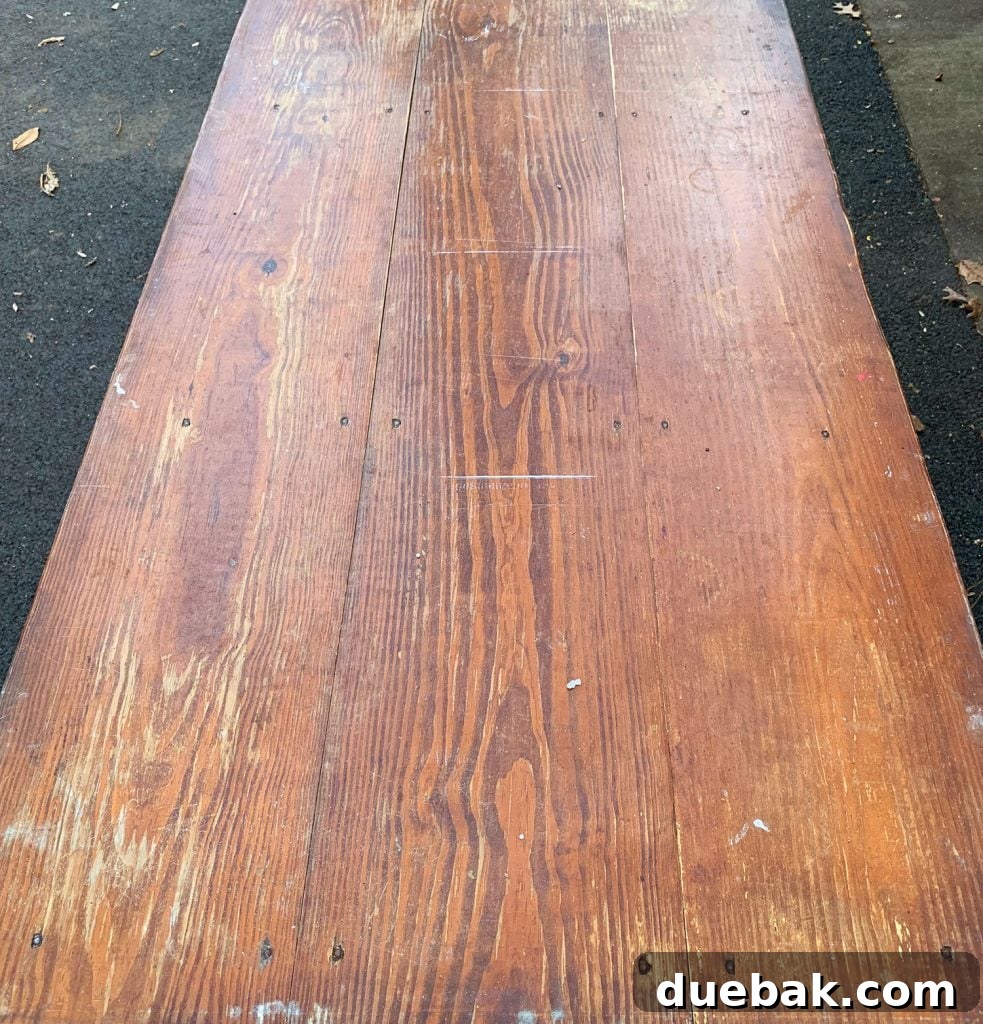
And here is the stunning transformation after we finished clear-sealing it:

Today, the room has evolved significantly, as has the kitchen visible behind it. This is the final result, showcasing how beautifully the refinished table ties into the wood door peeking out from the mudroom next to the kitchen, creating a cohesive and inviting dining space.

Step 7: Master the Art of Layering Stains for Custom Colors
When it came to the Crate & Barrel table, our clear sealer test unfortunately brought out strong red undertones in the wood as it dried – precisely what we aimed to avoid. To counteract this, we decided to apply a cooler brown stain. Our initial choice was Minwax Special Walnut, a color we successfully used on the duplex floors, giving us confidence in its rich tone. (You can see the before & afters of those here).

While the Special Walnut looked promising during application, it dried with more reddish tones than desired, almost as if the original red was slowly creeping back. Undeterred, we ventured to the hardware store and picked up a gray stain, specifically Classic Gray. Our plan was to apply a very light coat of this gray stain over the Special Walnut to neutralize the red undertones and achieve a more balanced, cooler brown.

This layering technique worked exactly as intended! We applied an extremely light coat of Classic Gray directly over the Special Walnut, and crucially, wiped it off almost immediately. While stain cans often advise waiting for a set period, not letting the gray stain soak in prevented the color from becoming too gray, allowing it to subtly cool down the underlying red. This combination created a nuanced, custom shade that beautifully complemented the room.

We were incredibly pleased that the natural variation in the wood tones still showed through these two layered stains. After the quick Classic Gray coat dried, we applied two coats of the same “Triple Thick” sealer we used on the farmhouse table. And just like that, both tables were beautifully finished and ready for their new life.

To remind you of the dramatic transformation, here’s how the red Crate & Barrel table originally looked:
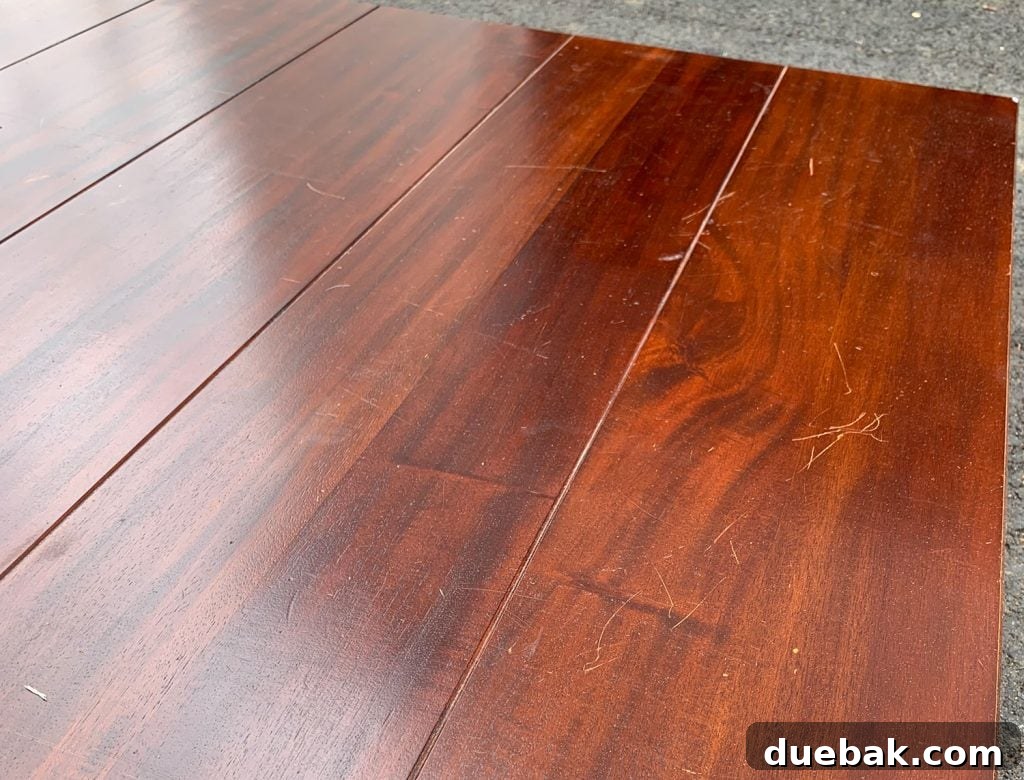
And here is the stunning final result, proudly featuring our tiered capiz chandelier in a sophisticated gold finish, beautifully suspended above the refinished table.

On the other side of the duplex, we paired the refinished farmhouse table with our mixed-finish wire globe light (also available in white + brass, or all bronze) and added the white dining chairs from our furniture line. Sherry humorously pointed out that between the table, the chairs, and the backsplash, we inadvertently incorporated “something old, something new, and something blue” into the space. Perhaps our duplex guests could even count as “something borrowed,” given their temporary stay? A bit of a stretch, but certainly charming!

In conclusion, neither of us truly knew what to expect from these extensive furniture refinishing escapades, but we are immensely relieved and thrilled with how successfully they turned out. Aside from the investment in a new sander, some stain and sealer, and the incredibly generous family rate my sister gave us for her table (a definite bonus!), we spent nowhere near the cost of purchasing two brand new dining tables. This project stands as a testament to the power of DIY furniture restoration and the significant value it can add to your home.
Alternate Finishes: How To Paint Furniture
Should your attempts to refinish a table by sanding and staining not align with your vision, or if you simply decide a painted look is more your style, we have fantastic alternative tutorials available. You can explore our comprehensive guide on how to paint furniture, which works exceptionally well on solid wood pieces. Furthermore, if your table isn’t entirely wood, we also offer valuable tips for painting laminate or veneer surfaces, ensuring you can achieve a beautiful finish regardless of the material.
P.S. For many more furniture makeovers, DIY projects, and home upgrade ideas, be sure to explore our dedicated Furniture Upgrades category.
*This post contains affiliate links, which means we may earn a small commission at no extra cost to you if you make a purchase through them. Your support helps us continue to create valuable content.*