
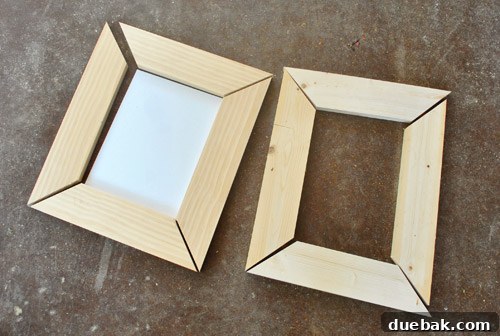
Craft Your Own Masterpiece: The Ultimate Guide to DIY Scrap Wood Picture Frames
Every piece of art, whether a cherished photograph, a child’s drawing, or a personal masterpiece, deserves to be displayed beautifully. Yet, finding the perfect frame can often be a frustrating and expensive endeavor. Custom framing comes with a hefty price tag, and off-the-shelf options rarely fit unique dimensions or personal aesthetics. But what if you could create stunning, custom frames using materials you already have, spending next to nothing? As we previously shared our creative journey with homemade artwork, it felt only natural to complement it with frames that were just as thoughtfully crafted and incredibly budget-friendly. This isn’t just about saving money; it’s about embracing a simple, sustainable approach to home decor and achieving a truly personalized touch. We challenged ourselves to build frames using only existing supplies, proving that high-impact decor doesn’t require a high budget or complex tools. Get ready to transform forgotten scraps into elegant display solutions!
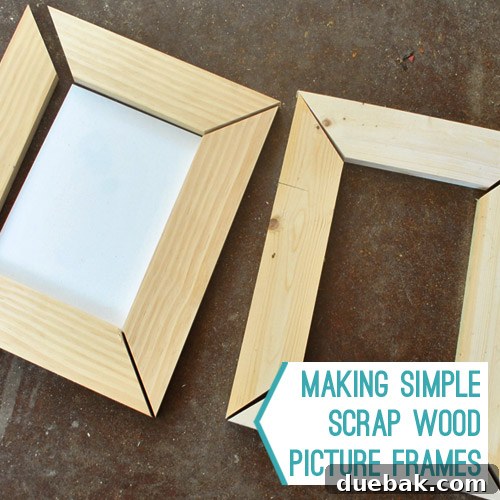
Why Choose DIY for Your Picture Frames?
The decision to build our own frames stemmed from a dual desire: to be economical and to push the boundaries of simplicity. Off-the-shelf frames often fall short in terms of quality, customization, or sheer cost. By opting for a DIY approach, you unlock a world of benefits:
- Unbeatable Affordability: By utilizing scrap wood and supplies you already own, the cost can be virtually zero, or at least significantly lower than buying new.
- Customization to Perfection: No more compromising on size, style, or finish. You can tailor every aspect of your frame to perfectly complement your artwork and your home’s aesthetic.
- Sustainability and Resourcefulness: Give new life to discarded wood, reducing waste and practicing sustainable crafting. It’s a fantastic way to empty that “junk pile” in your garage or basement.
- A Sense of Accomplishment: There’s immense satisfaction in displaying a piece of art within a frame you’ve crafted with your own hands. It adds an extra layer of personal connection to your home decor.
- Learning New Skills: Even simple woodworking projects can teach valuable skills, from measuring and cutting to assembly and finishing, making them perfect for beginners.
For this particular project, our challenge was to spend zero dollars, relying entirely on materials we had on hand. Here’s what we managed to round up:
- Leftover scrap wood (various types and sizes work!)
- Wood glue (any standard wood adhesive will do)
- A trusty staple gun (and staples)
- A hammer (for reinforcing staples)
- Sandpaper (for smooth, professional edges)
- A miter saw (power tool for efficiency, but alternatives are perfect)
- Duct tape (the unsung hero for securing artwork)
- Spray paint with built-in primer (for a quick, even finish)
Step-by-Step Guide to Crafting Your Cost-Effective Wood Frame
Embarking on this DIY journey begins with gathering your resources. We started by rummaging through my extensive basement collection of scrap wood, unearthing enough suitable pieces to construct our frames. To ensure precise sizing, we grabbed a spare canvas, still in its protective plastic, to serve as our template. This initial scavenging kept our project’s grand total firmly at “free” right from the start, setting the tone for a truly budget-conscious build.
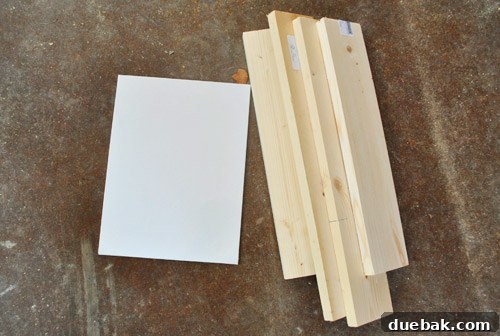
Step 1: Precision Cutting the Mitered Angles
The core of creating a professional-looking picture frame lies in making precise 45-degree mitered cuts for the corners. This technique ensures that when the four pieces are joined, they form perfect 90-degree angles, giving your frame a clean, seamless appearance. While I opted for the speed and accuracy of a power miter saw, don’t let a lack of specialized power tools deter you! If you’re aiming for ultimate simplicity and don’t own a saw, an inexpensive miter box paired with a hand saw will achieve the same results. It might take a little more time and elbow grease, but the outcome will be just as satisfying. To maximize efficiency and guarantee symmetrical frame sides, I cut two boards at a time, securing them tightly with a clamp before making each cut. This method not only saves time but also ensures that parallel sides of your frame will be perfectly equal in length, which is crucial for a square, stable frame.
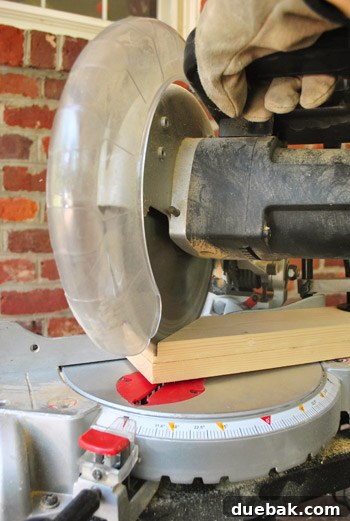
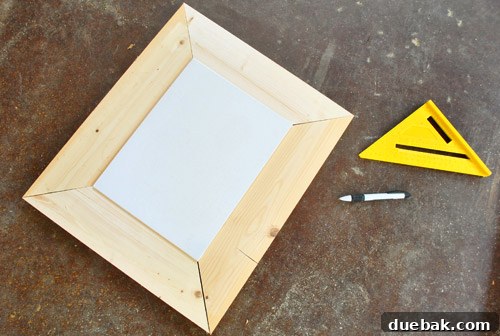
After making the first 45-degree cut on my stacked boards, I carefully placed them along the edge of the canvas template. This allowed me to accurately mark the exact point for the second cut. It’s important to remember to leave a slight overlap of the wood beyond the canvas edge. This small allowance provides a ledge for your artwork to rest on once the frame is fully assembled, preventing it from slipping through. Precision here ensures a snug fit for your canvas and a secure display for your art.
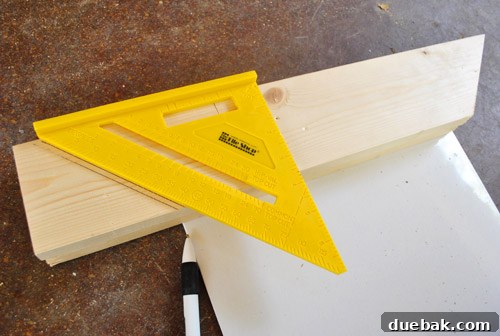
With the two boards still clamped together and perfectly aligned, I proceeded to make the second 45-degree cut, ensuring it was angled in the opposite direction from the first. This creates the ‘V’ shape needed for a miter joint. This step is critical for forming the corners of your frame. By cutting both boards simultaneously, you guarantee that they will be identical, contributing to the overall squareness and integrity of your finished frame. The entire cutting process for these first two longer sides took me a mere ten minutes – a testament to how quickly this project can come together!
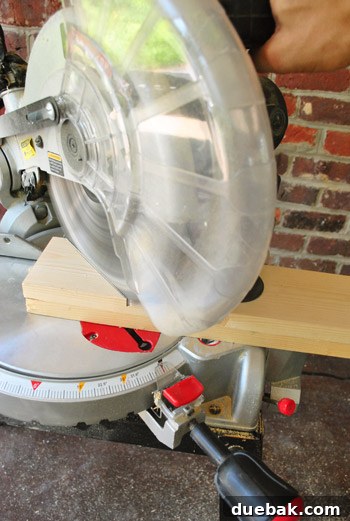
Having successfully cut the two longer sides of the frame, I moved on to the two shorter boards. The process for these was exactly the same: stack them, cut one end at a 45-degree angle, then lay them against the canvas to mark the opposite end, again allowing for that slight overlap. This consistent approach ensures all four sides of your frame will fit together seamlessly. Taking the time to measure carefully and make clean cuts now will save you a lot of trouble during assembly.
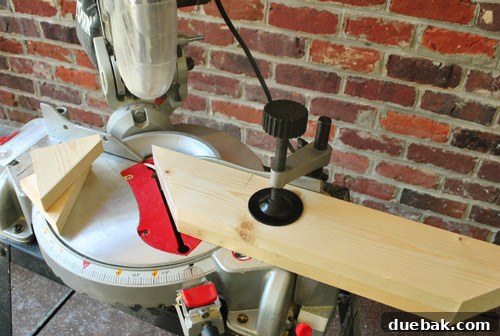
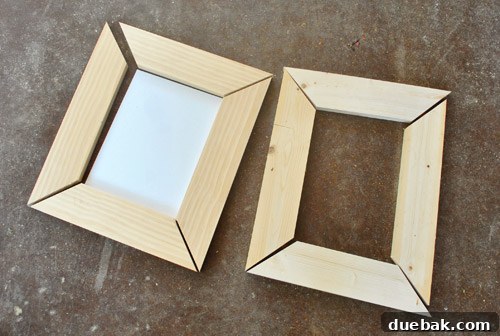
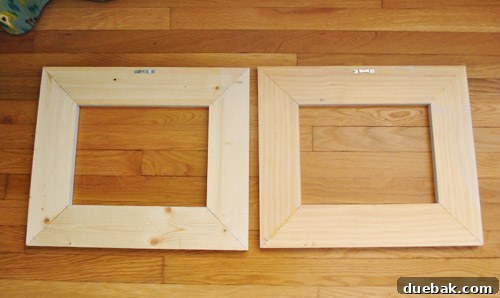
With all four pieces now perfectly cut, I had the complete set of sides for my simple wood frame. Laying them out, you could already see the frame taking shape, with the mitered corners ready to be joined. At this stage, nothing was secured, but the potential of the scrap wood was clear. Because Sherry had prepared two canvases, I repeated the entire cutting process with another piece of scrap wood to create a second frame. It happened to be a different type of wood—knottier and more rustic—but it was the same size, proving that varied wood types can still yield beautiful, complementary frames. We’re not sticklers for perfect matches; variety adds character!
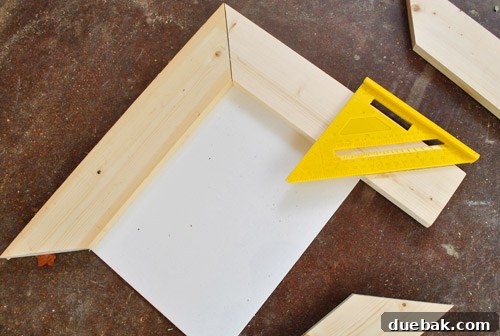
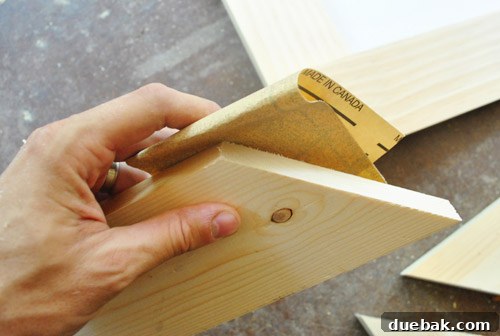
Before moving on to assembly, a crucial step for a professional finish is to sand all the edges. Even with precise cuts, wood can splinter slightly, and rough edges can make the frame feel less refined. A quick pass with sandpaper ensures all surfaces are smooth to the touch and ready for joining and painting. This minor detail significantly elevates the final look and feel of your DIY frame.
Step 2: Assembling the Frame with Care
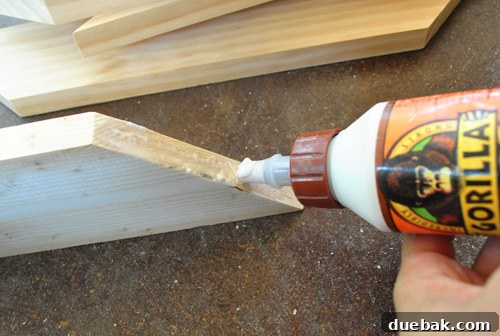
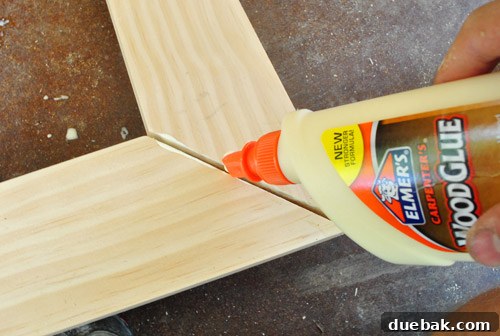
When it came to joining the frame sides, our commitment to simplicity and accessibility guided our choices. While I’m typically inclined towards more robust fastening methods like nails, screws, or even a Kreg jig for pocket holes, for this project, I stuck with wood glue. The idea was to demonstrate a method anyone could replicate at home without specialized tools. Applying a generous but even bead of wood glue to each mitered edge before pressing the pieces together is key. However, the waiting time for glue to dry can be a test of patience, and for many DIYers, ensuring a secure bond during this period is a challenge. It’s often where “simple” can become “fiddly.”
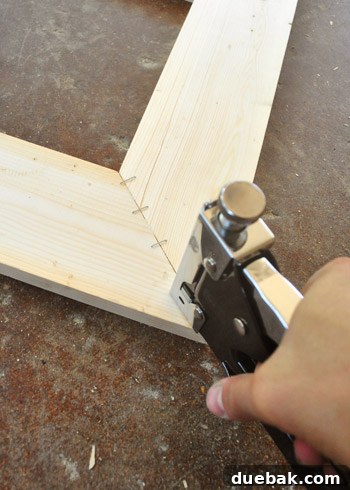
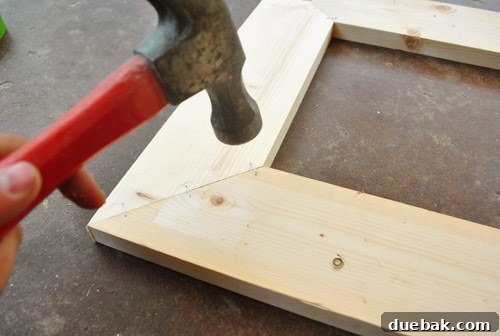
Fortunately, Sherry offered a brilliant suggestion that significantly improved the assembly process: using a staple gun on the backside of the frame corners. This was a game-changer! The staples act as temporary clamps, holding the glued edges firmly in place while the wood glue sets, providing much-needed confidence in the frame’s structural integrity. We used a standard upholstery staple gun, which had enough power to drive the staples into the wood. This step was not only fast but also incredibly effective. Even if the staple gun doesn’t drive the staples flush, a quick tap with a hammer ensures they are fully embedded and secure, preventing any snags or loose ends.
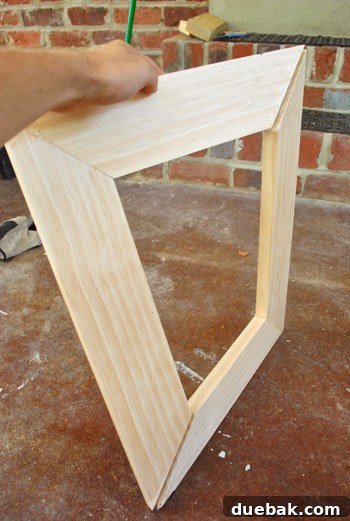
Upon initial assembly and stapling, I discovered that one corner was a bit “wonky” when viewed from the front, indicating a small gap despite the staples. This is a common occurrence in woodworking, especially with simple joining methods. My initial thought was to abandon the method, but instead, I decided to reinforce it. I applied more wood glue directly into the visible crack from the front. A fresh, strong wood glue is crucial here; if your glue is old or dried out, it won’t provide the necessary adhesion. After this additional application, I allowed both frames to sit for several hours, giving the glue ample time to dry completely. The results were fantastic: the frames were no longer wonky but incredibly solid and robust. This proved that a little reinforcement can go a long way!
Step 3: Finishing Touches – Sanding and Painting
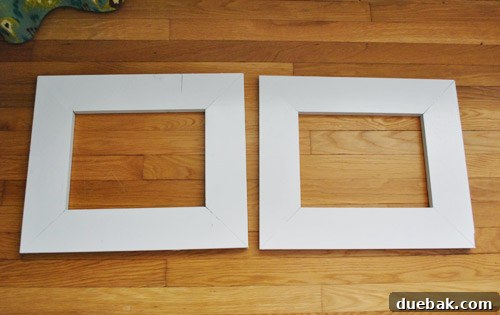
Once the frames were perfectly square and the glue had fully cured, it was time for the finishing touches. Sherry took charge of the painting process, whisking the frames to her impromptu spray-painting station. She applied a beautiful, even coat of Rustoleum’s paint-and-primer-in-one spray paint in a satin white finish. This choice was deliberate: the integrated primer saves an entire step, making the painting process significantly faster than traditional brush priming and painting. However, for those who prefer, brushing on a coat of primer followed by your chosen paint color works equally well and can achieve excellent results. Both methods have proven successful for us in the past, offering flexibility based on your preference and available supplies. The key is to apply thin, even coats to avoid drips and ensure a smooth, professional-looking surface.
Step 4: Securing Your Artwork and Hanging It Up
With the paint dry and the frames looking fantastic, the final steps involved preparing them for display. For hanging, we typically rely on simple sawtooth hangers. These are incredibly versatile and easy to install with a few taps of a hammer. Conveniently, we always seem to have a stash of these around, keeping our “free” streak miraculously intact. Installing two sawtooth hangers, spaced evenly on the top rail of the frame, provides better stability and ensures the frame hangs straight.
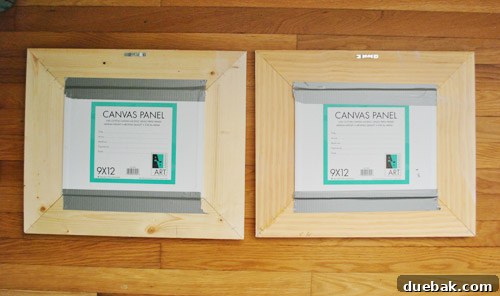
Now for securing the canvases within the frames. Our goal was speed, simplicity, and reversibility. The solution? Good old duct tape. While perhaps not the most elegant method, it’s undeniably effective, fast, and, crucially, free if you already have it. Taping the canvas firmly to the backside of the frame allows for easy removal and swapping of artwork down the line. If we had glued the canvases in place, it would have been a far more permanent commitment, limiting future flexibility. Duct tape offers a practical, temporary bond that works perfectly for lightweight art.
The Final Cost: Truly Budget-Friendly!
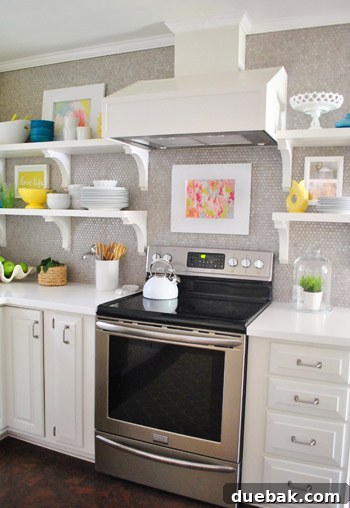
As for the grand finale, our frames ended up in the kitchen, not the office as originally planned. This shift meant a slight adjustment to our hanging strategy. Instead of the sawtooth hangers, we opted for 3M velcro-style picture hanging strips, especially for the frame positioned above the stove. These strips offer a strong hold without needing nails and are perfect for ensuring the art stays securely in place in a high-traffic area. While we had run out of these strips, necessitating a quick purchase, the total cost for this project still came in at a remarkable $3! Additionally, for the frame above the stove, we invested another $3 in a piece of plexiglass from Lowe’s. This was a smart move to protect the canvas from kitchen splatters and make it easily wipeable. Even with these minor purchases, the overall expense remained incredibly low, reinforcing the power of DIY and resourcefulness.
Have you ever tackled the challenge of DIYing cheap frames or found innovative ways to complete a project with minimal cost? Share your ingenious trips and tips with us! We love hearing about creative solutions and sustainable approaches to home decor. Whether it’s repurposing materials or discovering new, easy techniques, every idea helps inspire our community to make beautiful things on a budget. Don’t forget to check out our Shop Our House page to explore more of our home decor finds, furniture, and paint colors that complement our DIY projects!