
Transform Your Home: The Ultimate DIY Guide to Refinishing Door Hardware with Oil-Rubbed Bronze Spray Paint
Are your home’s door handles and fixtures looking a little worse for wear? Perhaps they’re a relic from a bygone era, sporting a dated finish that no longer complements your aesthetic. If you’re dreaming of a fresh, modern look without the hefty price tag of brand-new hardware, you’re in the right place! We embarked on an exciting journey to give our tired door hardware a dramatic transformation using the power of spray paint, specifically the ever-popular Oil-Rubbed Bronze finish.
This comprehensive guide will walk you through every step of our hardware makeover, from identifying the problem to achieving a beautifully updated result that looks professionally done. Get ready to revitalize your living space and add a touch of sophistication to your doors. It’s time to fasten your seat belts; this DIY adventure promises to be both rewarding and surprisingly simple!
The Unveiling: Before the Makeover
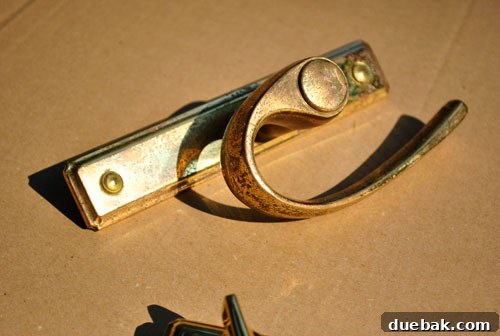
Every great “after” story begins with a compelling “before.” In our case, the hardware on our sliding doors in the living room was a prime candidate for an upgrade. It wasn’t just old; it was visibly past its prime. The original gold finish, once perhaps considered elegant, had succumbed to years of use and neglect. The swoopy handle design felt distinctly outdated, and upon closer inspection, it wasn’t even shiny and new-looking gold anymore. Instead, it was tarnished, rusted, and frankly, an eyesore.

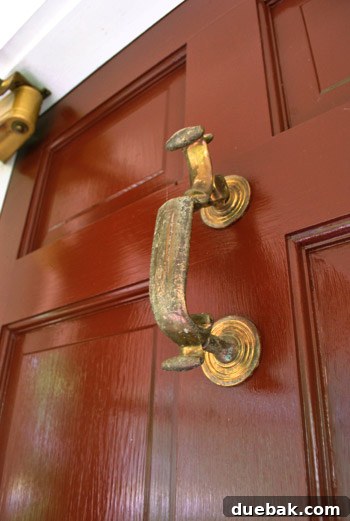
This wasn’t an isolated incident. The same dated and deteriorated finish plagued other key hardware elements throughout our home. The front door’s doorknob, deadbolt, and knocker all shared the same fate. They were crusty, neglected, and certainly not contributing positively to our home’s curb appeal or interior charm. It’s amazing how much old hardware can detract from an otherwise well-maintained space.
We knew something had to be done. Replacing all this hardware could easily run into hundreds of dollars, a budget strain we were keen to avoid if possible. This motivated us to explore the potential of a DIY refinishing project, hoping to breathe new life into these fixtures and achieve a cohesive, updated look for a fraction of the cost.
Step 1: The Art of Hardware Removal
The first crucial step in our hardware transformation was the careful removal of all the pieces slated for a makeover. This process was surprisingly quick and straightforward. My partner, John, and I tackled it simultaneously, making light work of what might seem like a daunting task. Within about five minutes, we had successfully stripped the hardware from both sliding doors.

Using a standard Philips head screwdriver, we simply unscrewed the visible fasteners on the front, back, and sides of the hardware to free each component. It’s always a good idea to keep a small container nearby for screws and other tiny parts to ensure nothing gets lost – a crucial tip for smooth reinstallation later on.
Once the sliding door hardware was off, we moved to the front door, where the doorknob, deadbolt, and that notoriously rusty old door knocker awaited their fate. These were also removed with a screwdriver; their exposed screws made the process equally simple. Taking photos during removal can also be helpful for remembering how everything goes back together, especially for more complex mechanisms.
For those interested in the broader door makeover, including preparing the door surfaces for painting, you can find more details in our dedicated door-painting post. That article covers important steps like sanding the paint around the removed hardware to ensure a smooth, seamless finish before applying fresh coats of paint.

With all the hardware successfully detached, we were left with a pile of old, gold-toned pieces, ready for their transformation. This collection included the sliding door hardware, along with the doorknob, deadbolt, and door knocker from the front door.
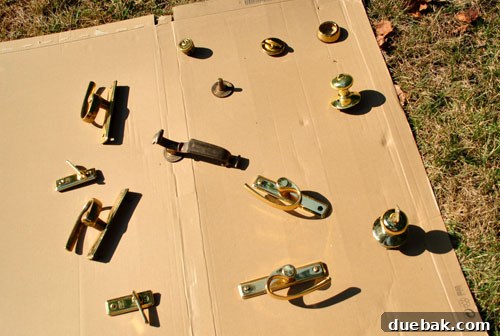
It was a nostalgic sight, like a “Where Are They Now?” special for forgotten home fixtures. Some pieces were more weathered than others, but collectively, they embodied a look that was decidedly past its prime and in dire need of a modern revival.
Research & Initial Strategy: Seeking Expert Advice
Before diving into any DIY project, especially one involving finishes and durability, thorough research is key. We spent a significant amount of time delving into online forums, blog posts, and most importantly, consulting with paint professionals at our local Lowe’s. We were fortunate to connect with an exceptionally knowledgeable woman in the paint department who provided invaluable insights.
Based on our research and expert advice, the most recommended method for refinishing hardware to achieve maximum durability and a long-lasting finish typically involved a four-step process:
- Sanding: Aggressively rough up the surface of the hardware using high-grit (200+) sandpaper. The idea is to create a mechanical bond for the new paint.
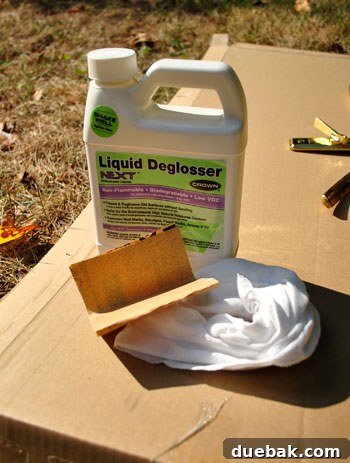
- Deglossing: Apply a liquid deglosser, such as this one, to effectively remove any residual oils, grime, and sanded particles from the hardware. This ensures a clean, receptive surface for spraying.
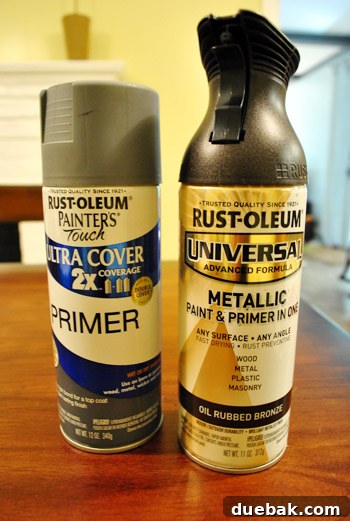
- Priming: Apply one thin, even coat of a high-quality spray primer specifically designed for metal surfaces. We initially considered Rustoleum Painter’s Touch Ultra Coverage Primer in gray, believing a gray base would blend more seamlessly than white under our chosen finish.
- Painting: Finish with two to three thin, even coats of high-quality spray paint meant for metal. Our desired finish, of course, was Rustoleum Universal Metallic All-Surface Spray Paint in Oil-Rubbed Bronze.
This seemed like a solid plan, a well-trodden path for hardware refinishing. However, as with many DIY projects, sometimes the best-laid plans need a bit of on-the-fly adjustment.
Pivoting the Plan: Learning from Experience (and a Walrus Scream)
Armed with my high-grit sandpaper, I enthusiastically embarked on the first recommended step: sanding. This, as it turned out, was a bad idea. The sandpaper, despite being high-grit, left immediate and obvious scratches in the delicate gold finish of the hardware. I instantly knew that these visible imperfections would not be adequately concealed by thin coats of primer and spray paint. The smooth, shiny surface of the original hardware simply wasn’t suited for abrasive sanding.
In my moment of panic, I failed to capture a photograph of the “ruined” side of the doorknob. My internal monologue, however, was vividly clear, probably resembling a walrus screaming as I dramatically tossed the sandpaper aside. I found myself cradling and apologizing to the doorknob, vowing never to inflict such damage again. Luckily, I realized that the damaged portion of the knob would be installed facing downwards, visible only to exceptionally observant, Clara-height children. A small victory amidst my self-inflicted crisis!
This experience served as a crucial lesson: always test your methods on an inconspicuous area first, especially when dealing with delicate finishes. While sanding can be beneficial for some surfaces, it’s not a universal solution for all hardware types.
Update from the comments: Several clever readers, perhaps smarter than my frantic walrus-self, suggested alternatives to standard sandpaper for roughing up slick surfaces. Options like steel wool or super high-grit automotive sandpaper (e.g., 600+ grit) might provide enough “tooth” for adhesion without creating visible scratches. I plan to explore these options for any future projects, offering extra “insurance” for the spray paint’s bond. Consider this tip if you’re looking for a slightly more abrasive prep!
Step 2: The Deglossing & Priming Revelation
With the sanding step firmly discarded, we moved directly to step two: deglossing. This part of the process was refreshingly straightforward and effective. Wearing a pair of rubber gloves to protect my hands, I applied the liquid deglosser using a clean rag. The deglosser works by chemically preparing the surface, removing any lingering oils, grime, and microscopic particles that could hinder paint adhesion. It creates a clean, slightly dulled surface that’s much more receptive to new paint without physically scratching it.
After a thorough application, I allowed the hardware to dry for a short while, ensuring it wasn’t soaking wet before proceeding. This brief drying time ensures the deglosser has done its job and evaporated, leaving behind a perfectly prepped surface.
As I reached for the spray primer, a serendipitous discovery occurred. Right on the label of the Oil-Rubbed Bronze (ORB) spray paint can, emblazoned in plain sight, were the magical words: “Paint & Primer in One.” A genuine ‘duh’ moment! This meant the separate priming step, which was initially part of our plan, was entirely unnecessary. The Rustoleum Universal Metallic All-Surface Spray Paint was designed to adhere directly to various surfaces, including metal, without a dedicated primer coat, simplifying the process considerably.
This revelation streamlined our process, reducing the number of steps and products needed. Relying on the trusted “paint & primer in one” formula, we were ready to apply the beautiful Oil-Rubbed Bronze finish directly.
Step 3: Mastering the Art of Spray Painting
With the hardware cleaned and the “paint & primer in one” solution in hand, it was time for the main event: spray painting. This step, while seemingly simple, requires precision and technique to achieve a flawless, durable finish.
Optimal Setup and Preparation:
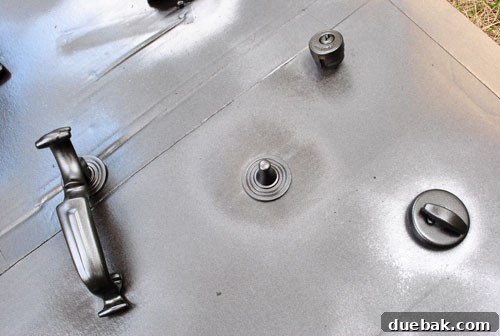
To ensure all exposed parts of the hardware received an even coat, I strategically arranged everything on a large piece of cardboard. For items like the sliding door hardware rods and screws, I pierced them through the cardboard so they stood upright. This ingenious method allowed me to spray them evenly from all angles without needing to touch or flip them constantly, minimizing smudges and ensuring complete coverage. Always work in a well-ventilated area, preferably outdoors on a calm, non-windy day, and consider wearing a mask and gloves for safety.
The Golden Rule: Thin and Even Coats
The absolute key to successful spray painting, especially for metal hardware, is to apply thin and even coats. This cannot be stressed enough. If you apply thick, heavy coats, the paint will likely become globby, drip, and take longer to cure, leading to an uneven, unprofessional finish prone to flaking and scratching. By applying multiple thin, uniform layers, the paint bonds and cures very strongly, creating a durable and smooth surface that stands up to daily wear and tear.

The Keyhole Secret: Protecting Internal Mechanisms
One clever trick for doorknobs and deadbolts involved a spare house key. To prevent spray paint from mucking up the internal locking mechanism, I inserted a key halfway into the keyhole. This blocked the spray from entering the lock cylinder while still allowing me full access to the metal facade around it. Pushing it in halfway was crucial; pushing it all the way in might have blocked the exterior part of the knob. After spraying one piece, I simply removed the key and used it to protect the deadbolt’s keyhole during its turn.
Ensuring Full Coverage: Screws and Moving Parts
Another important tip is to place all accompanying screws into the hardware (or pierce them through the cardboard) so their ends get sprayed to match the main hardware. This attention to detail ensures a cohesive look. Additionally, for hardware with moving parts like latches and toggles, it’s essential to manipulate them back and forth between coats. This ensures that every nook and cranny, including areas that might be hidden when stationary, receives paint coverage. This prevents visible unpainted spots and ensures the moving parts continue to function smoothly after drying.
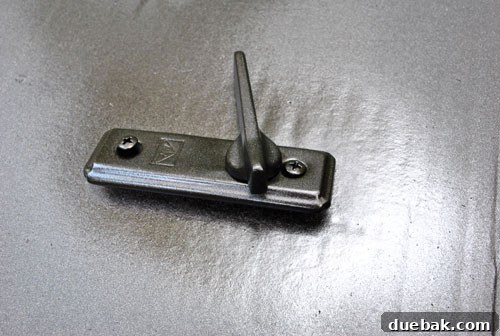
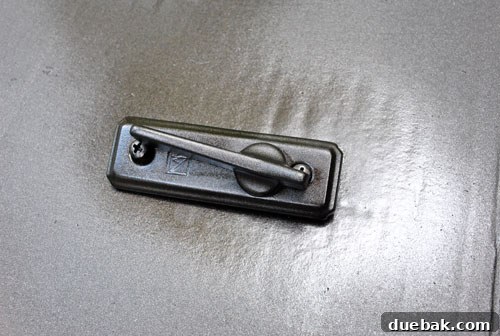
I applied three thin and even coats to all the hardware. I waited approximately 20 minutes between each coat, allowing ample time for the paint to tack up and partially cure before applying the next layer. This interval is critical for achieving a smooth finish and preventing drips. After the final coat, the hardware pieces were left to fully dry, transforming from dull gold to sophisticated Oil-Rubbed Bronze.
Curing and Reinstallation: The Final Steps
After applying the final coat of spray paint, patience becomes the most important tool in your arsenal. While the paint may feel dry to the touch within an hour, it needs significantly more time to fully cure and harden. To ensure maximum durability and prevent any scratches or dings during handling, I allowed the hardware to cure for a minimum of six full hours after the last coat. Ideally, leaving them overnight or for 24 hours provides even greater peace of mind, especially for high-traffic items.
Once fully cured, the reinstallation process was remarkably smooth. All the hardware pieces fit back perfectly onto their respective doors. Thanks to the careful application of thin coats and adequate curing time, there were no issues with the paint adhering, flaking, or smudging. Everything worked just as well as it had before the makeover, but now with a vastly improved aesthetic.
While I can’t speak to the long-term durability of this process yet – it’s only been about 48 hours since reinstallation – the initial results are incredibly promising. Nothing was even remotely marred or dinged during the process or in the couple of days since. These doors, especially the sliding ones, are used daily thanks to our dog’s frequent outdoor excursions, so they will certainly be put to the test. We’ll be sure to provide an update on how they hold up over the long haul.
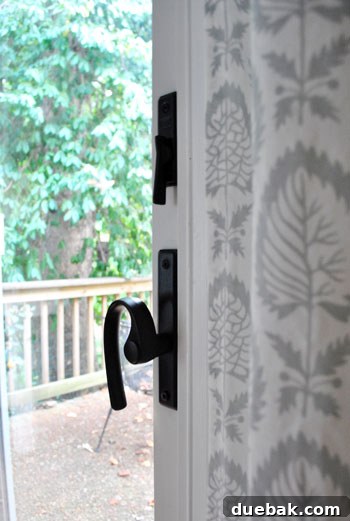
This DIY approach definitely beats the cost of buying all new hardware. We figured we had nothing to lose by attempting to revive the old pieces before resorting to trashing them and splurging on replacements. So far, so good, and the transformation is stunning.
The Big Reveal: A Stunning Transformation
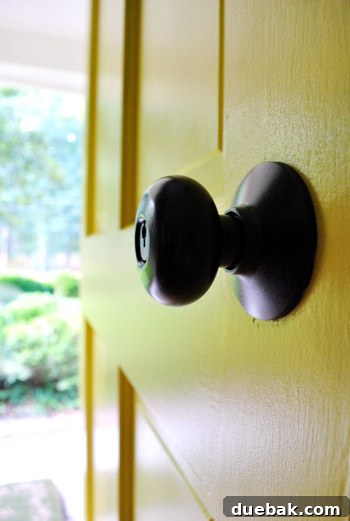
The impact of this hardware makeover is truly remarkable. While some of these photographs might show the Oil-Rubbed Bronze appearing almost black, it’s merely a trick of the light. ORB is a “mystical creature” in the world of finishes; its true color, a rich, metallic chocolate with subtle bronze undertones, is notoriously difficult to capture accurately on film. However, the exterior shots beautifully convey the authentic depth and warmth of the finish. The interior hardware looks just as captivating in real life, a testament to the transformative power of this particular spray paint.
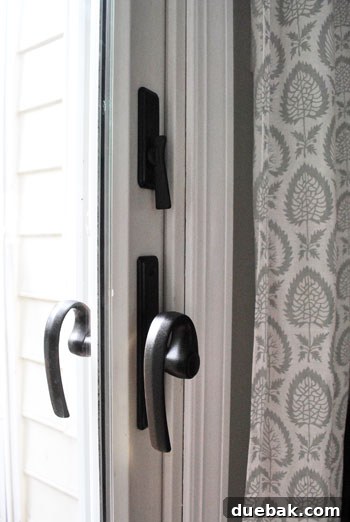
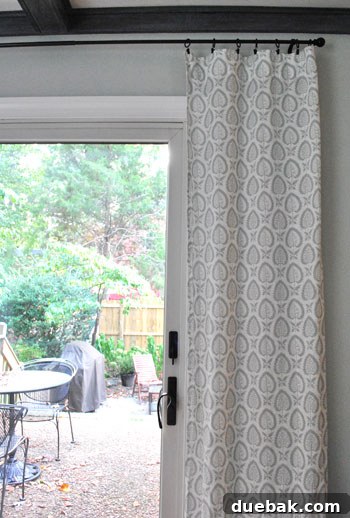
Perhaps the most exciting validation came from a style quiz I recently took. The quiz identified “my style” as featuring a white door with dark hardware – a look I’ve always admired. And now, thanks to this project, it’s mine! All mine! Mwahahaha! (Yes, that was my maniacal laugh escaping.)

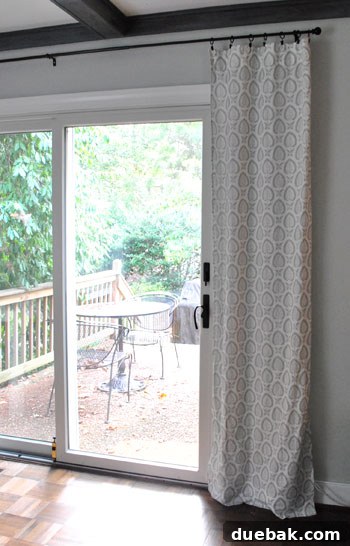
The newly refinished hardware looks utterly delicious (an adjective John might not use, but I certainly will!). It harmonizes beautifully with our existing oil-rubbed bronze curtain rods and the dark beams in the room, tying the entire space together with a sophisticated, cohesive feel. John, while not one for flowery descriptors, definitely “digs it.”
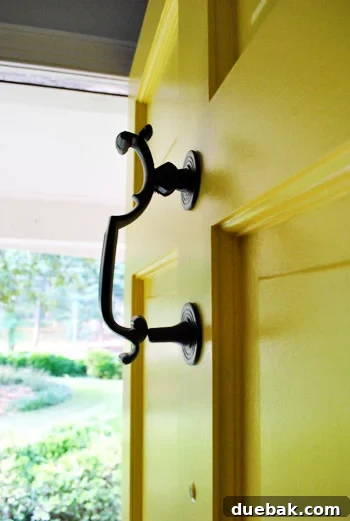
Me-ow, old sliding door friend! How you’ve matured. Or, at least, as much as a twisty-twirly old 80s knob can truly mature. The transformation from a rusty, dated gold to a chic, modern bronze is undeniable.
And while you’ve seen our freshly sprayed front door hardware in a previous post, it’s worth revisiting its elegant transformation:

Long-Term Durability & Cost-Effectiveness
Ultimately, we are incredibly pleased with our little, almost-foiled-by-the-sandpaper process. It was a learning curve, but the results speak for themselves. Interestingly, after I sprayed the underside of the doorknob where I had attempted sanding, the scratches were hardly noticeable. So, for those staunch rule-followers out there who aren’t prone to walrus-like panic (like me!), you might actually get away with a very gentle sanding step, perhaps with a super-fine grit or steel wool as suggested by others. Either way, I have high hopes that the deglosser and the integrated primer in our chosen spray paint will ensure excellent adhesion, especially since our old fixtures weren’t overly glossy or shiny to begin with.
As for the Oil-Rubbed Bronze finish itself: Hi, my name is Sherry, and I’m addicted to oil-rubbed bronze. They say you can’t help who you love, and honestly, it could be worse. At least I’m not addicted to sanding things, which would have been a cruel joke given that sandpaper was the kryptonite of this project! I’m still curious, though: Has anyone else successfully sanded their metal hardware before spraying it? Did it not get all scratched up? Perhaps it just created a “brushed” look in the end? I simply didn’t trust myself to maintain a consistent direction and avoid creating a hot mess that would be glaringly obvious after the spray job.
So, in summary, my refined, successful method was quite straightforward:
- Use a liquid deglosser (though I’ll also consider steel wool or extra high-grit sandpaper next time for added prep).
- Lay everything out meticulously on cardboard, standing up where possible, to allow even spraying from all angles.
- Utilize a half-inserted key to effectively block and protect any keyholes.
- Apply the paint thinly and evenly in three coats, allowing approximately 20 minutes of drying time between each.
- Remember to move toggles, latches, and other moving parts between coats to ensure all areas of the hardware receive complete coverage.
- Allow the hardware to cure for about 6 hours (or longer) before reinstalling it.
The total cost of this entire project was an astounding $6, which was just for the spray paint! I was able to return an unopened can of primer, and I already had the deglosser and that infamous sandpaper on hand. For someone needing to purchase deglosser, you might budget an additional four dollars, bringing the total to a still incredibly low $10. Considering that a new knob, deadbolt, knocker, two locks, and four handles for our sliding doors would likely cost upwards of $200, we got one heck of a deal. I’ll definitely keep you updated on their long-term performance. If they’re anything like our ORB-sprayed sofa legs (which we painted five months ago and still look mint), we’ll be doing bona fide jazz hands. It’s probably only a matter of time before I go completely nuts and tackle every last interior brass door hinge in the house. As I said, my name is Sherry, and I’m addicted to oil-rubbed bronze. Holla!
Update: Our handles are still holding steady and looking fantastic! Check out the long-term update post here for continued insights into their durability.
Wanna know where we got something in our house or what paint colors we used? Just click on this button:
*This post contains affiliate links to items we have purchased and loved, meaning we may earn a small commission if you make a purchase through these links, at no extra cost to you.*