
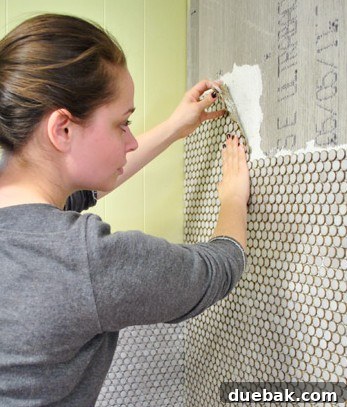
We did it! We successfully embarked on what we affectionately dubbed “Project Crazy” – transforming our kitchen’s back wall with a stunning, counter-to-ceiling penny tile backsplash. This ambitious DIY endeavor has completely reshaped the heart of our home, and we’re thrilled to share our journey, tips, and the striking results we’ve achieved so far.
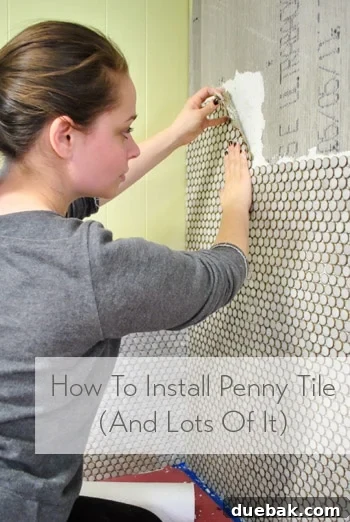
The Vision: A Grand Kitchen Transformation
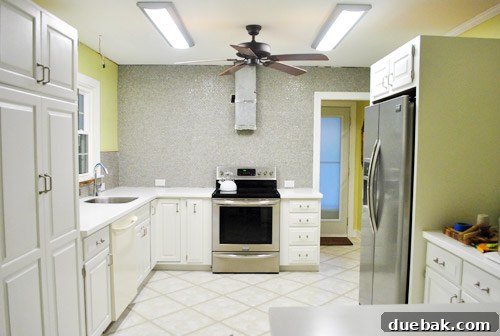
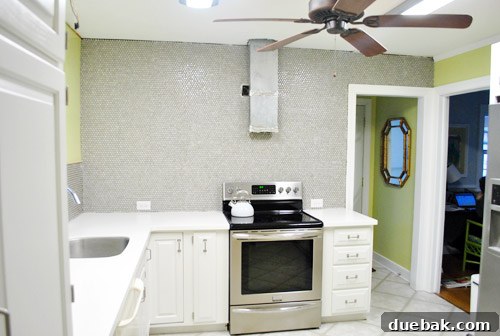
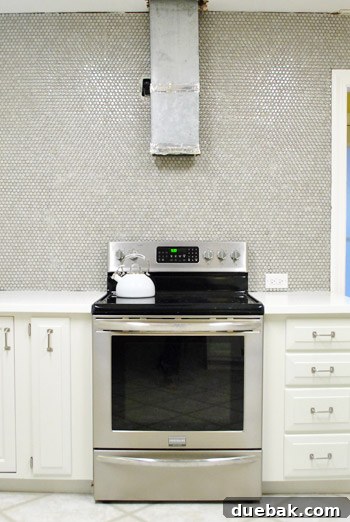
Our goal was to create a kitchen backsplash that wasn’t just functional but a true statement piece. The idea of extending the penny tiles from the countertop all the way to the ceiling was bold, a move that instantly elevates the room’s aesthetic, adding texture and depth. While the tiling itself is complete, our kitchen renovation journey is still unfolding. We’re envisioning the final touches that will bring this space to life: a robust industrial range hood, chunky open shelving that will beautifully punctuate the tiled wall, and fresh crown molding to frame it all. Even now, we can almost picture the seamless blend of modern industrial and warm, inviting design.
Refining the Edges: Crown Molding & Appliance Integration
One critical detail we’re addressing is the top seam where the tile gracefully meets the ceiling. Our plan involves reinstalling crown molding that currently runs around the entire room, save for a section we temporarily removed on the window wall. This decorative trim will provide a polished, finished look, beautifully concealing the tile’s upper edge and tying the entire room together.
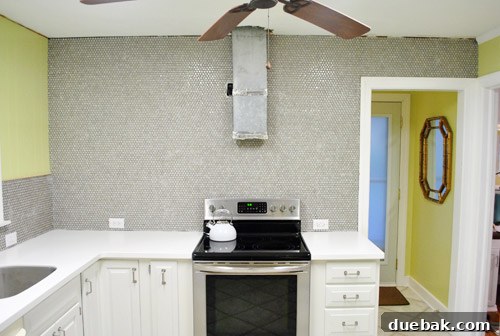
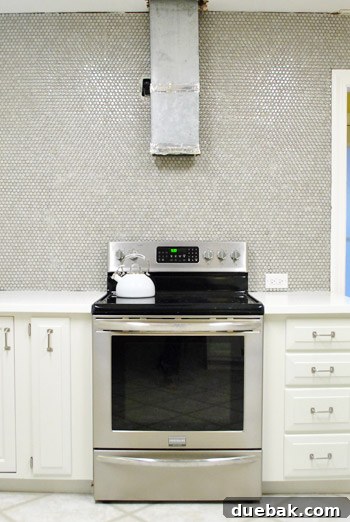
Adjacent to where our industrial range hood will reside, you’ll notice a black outlet box. This is specifically for the range hood’s power supply and will be completely hidden once our new hood is installed. We meticulously tiled a few inches behind the range hood duct, understanding that this area would ultimately be out of sight. This strategic approach allowed us to maintain a continuous tile pattern without unnecessary removal or interruption of the existing ductwork.
Achieving Visual Balance with Open Shelving
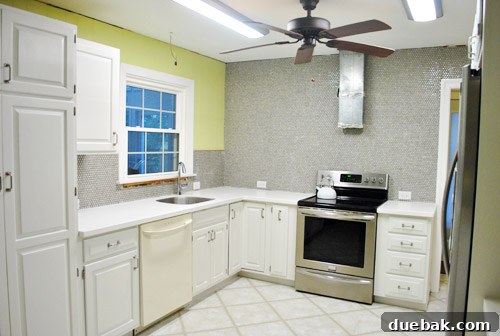
A key design element in our kitchen renovation is the addition of 12-inch deep floating shelves along the oven wall. This thoughtful detail isn’t just for aesthetics; it’s crucial for achieving visual balance. With these shelves in place, the space on either side of the window will measure a perfectly harmonious 14 inches. We’ve eagerly awaited this moment, as it will finally bring the entire layout into proportion and complete the planned symmetry. The anticipation for this specific transformation is immense, and we know it will be a game-changer for the room’s overall feel.
Our DIY Penny Tile Installation Journey: From Prep to Placement
Tackling an entire wall of penny tile might sound daunting, but it’s a completely achievable DIY kitchen backsplash project. The entire process, from initial prep to final tile placement on this expansive wall, took us approximately 14 hours. We broke this down into manageable 2-3 hour sessions, primarily in the evenings after our daughter, Clara, was asleep or during her weekend naps. This schedule makes it a realistic undertaking for anyone balancing a day job with a passion for home renovation.
A significant portion of that time, a few hours to be precise, was dedicated to mastering the art of cutting penny tile. This is a crucial skill for any tiling project, especially with small, circular tiles. We’ve distilled our learnings into a helpful video, offering practical demonstrations on achieving clean and precise cuts. For a deeper dive into the tools and techniques for cutting penny tile, you can find more detailed information here.
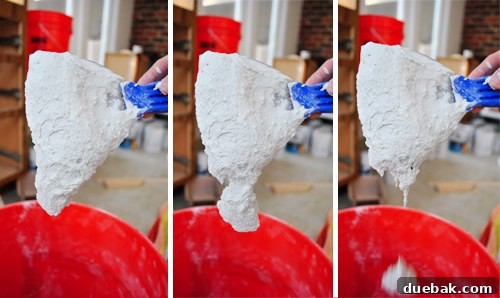
Before any tiles could be set, thorough preparation was key. We shared an in-progress post detailing how we prepped the room for tiling, precisely mixed the thinset, and began the intricate process of placing the penny tiles. If you’re at the initial stages of your own backsplash project and seeking some reassurance or guidance, that post here provides valuable insights into those critical foundational steps.
The Art of Seamless Penny Tile Placement
One of the most important aspects of penny tile installation is minimizing the visibility of sheet lines. Penny tiles typically come on mesh-backed sheets, and if not carefully placed, the grid lines where each sheet meets can become distracting. Our secret to a truly seamless result was employing a staggered pattern. This technique effectively camouflages the seams, preventing the eye from catching a continuous line across the entire wall. It’s a subtle yet impactful detail that significantly elevates the finished look of the penny tile backsplash.
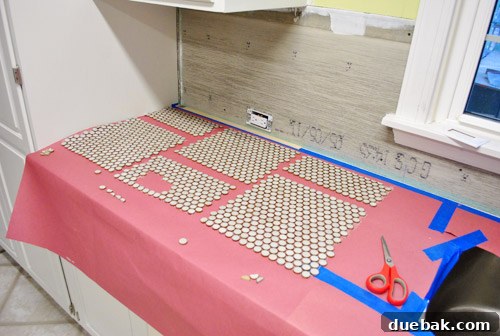
Further elaborating on minimizing those pesky seams, we found that a little manipulation went a long way. After gently pressing each sheet of tile into the thinset, we would lightly adjust and ‘scooch’ them a bit – either to the left or right, or slightly higher – while they were still pliable on their mesh backing. This allowed us to achieve perfectly even spacing and ensure the seams were virtually invisible. This meticulous approach, though time-consuming, is paramount for a professional-looking finish and is detailed further here.
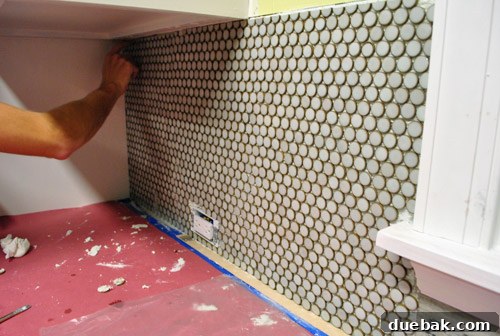
We wanted to recap these crucial tiling methods and provide all the relevant visuals and links in one comprehensive guide. When we last left you, we were just beginning the expansive back wall, anticipating it would be a tedious segment of the project. We’re thrilled to report that our initial fears were unfounded. Despite its size, we successfully completed the entire back wall without a single moment of regret – or, at least, not wanting to poke our eyes out with a penny tile (well, maybe just once!).
Efficiency and Organization: Tackling the Large Wall
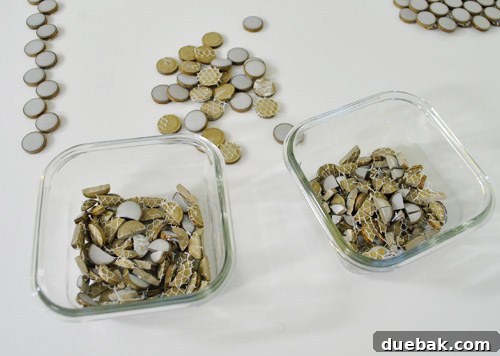
Fortunately, the sheer expanse of the back wall meant we could apply a significant number of full tile sheets, which drastically reduced the number of cuts required. While we took our time ensuring each sheet was perfectly placed to prevent visible seams, the process moved more swiftly than areas requiring intricate cuts. This section of the DIY penny tile installation consumed about three 2-3 hour sessions. To streamline our workflow, we utilized small glass dishes to categorize cut tiles: full tiles, half tiles, more-than-half tiles, and less-than-half tiles. This simple yet effective organizational strategy allowed us to quickly grab the exact size we needed for back-filling edges or smaller gaps, significantly boosting our efficiency.
For those eager to see the thinset application and tile placement in action, complete with techniques for back-filling and adjusting tiles for a seamless finish, we’ve created another detailed video. In this video, I might mistakenly refer to our staggered pattern as a “brick-layer’s pattern” while gesturing horizontally, but it’s important to clarify that our method is a vertical staggered pattern – essentially, two tiles stacked with a third staggered in the middle beside them. We hope this visual explanation clarifies our technique once you see it!
Step-by-Step Thinset Application and Tile Setting
Here are some snapshots illustrating our progress across the wall. John diligently applied the thinset using both a putty knife and, at times, a trowel. To prevent the thinset from drying prematurely, we mixed it in small batches, enough to set approximately four to six tile sheets at a time. The process of John applying the thinset is clearly visible in the video above, offering a practical demonstration for DIYers.
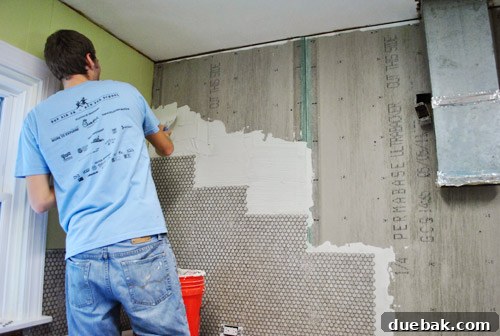
After applying the thinset, John meticulously scraped it with a 3/16th notched trowel. The purpose of this step is to create small, uniform ridges in the adhesive. These ridges are crucial for helping the thinset effectively grip the small penny tiles and ensure a strong, lasting bond. For such small tiles, smaller ridges are generally recommended for optimal adhesion, a technique also demonstrated in the video.
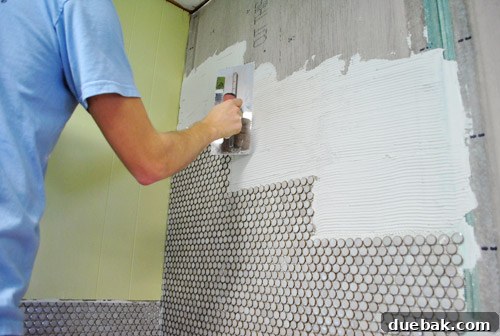
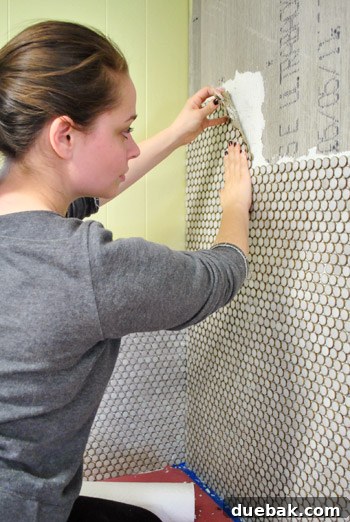
My role often involved placing the tiles, as seen here placing the top tile on the left side of the wall. Being part of “Team 5’2″,” I found I could comfortably stand on the counter without having to crouch, a small but welcome perk! We strategically worked from the bottom-left corner, moving upward and outward in a staggered, staircase-like pattern. This method allowed us to build the tile wall slowly and methodically, making it much easier to maintain a perfectly level installation. Each tile interlocked with the ones below it, preventing any skewing and ensuring the entire structure remained perfectly aligned.
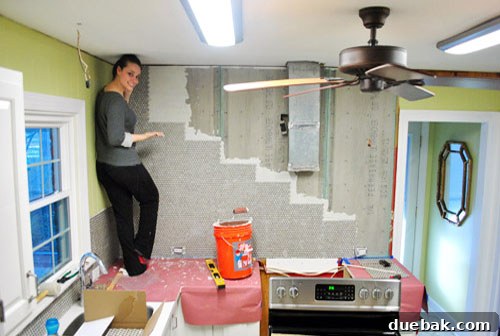
Day by day, inch by painstaking inch, our penny tile backsplash extended across the kitchen wall, transforming the space with each carefully placed sheet.
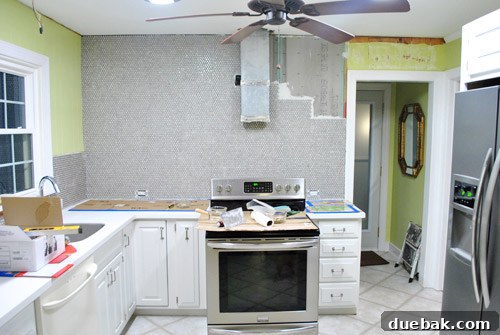
Here we are, nearing completion in the very last corner. During the tiling process, we carefully scooted the oven out to provide unobstructed access to the wall and to prevent any accidental thinset splatters. This small but important step ensures a cleaner, more efficient tiling experience.
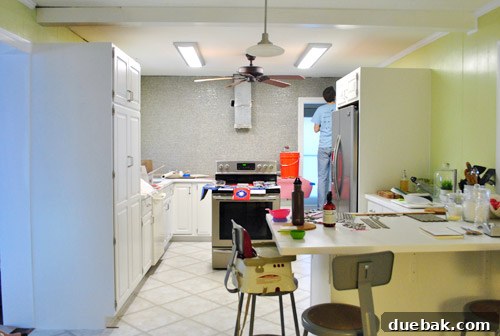
Detailing the Corners and Edges of the Penny Tile Backsplash
Many of you have inquired about how the penny tile backsplash seamlessly meets at the corners. The technique is quite straightforward: any tile that would extend beyond the end of one wall simply wraps around and continues onto the adjacent wall. While it may not be 100% flawless before grouting, we’re confident that once caulked and grouted, it will achieve a beautifully polished and integrated look. We’ll be sure to capture another photograph of the finished corner once those steps are complete.
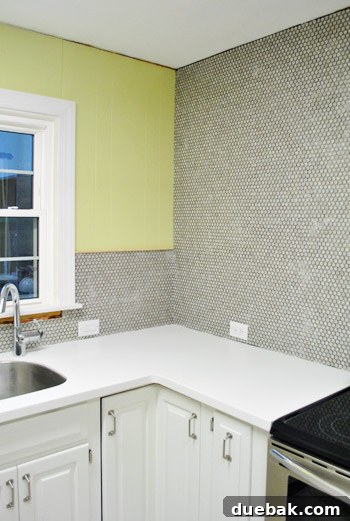
Let’s take an even closer look at this corner detail to truly appreciate the intricate pattern and how the tiles transition between walls.
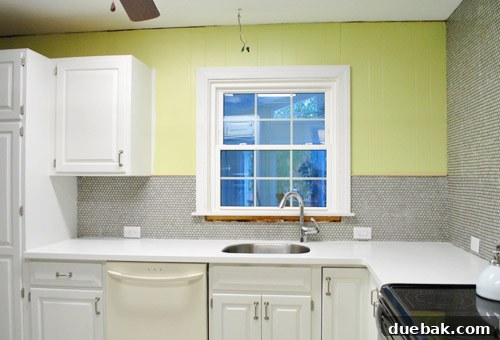
Another common question concerned “capping” the 14 inches of exposed tile on each side of the window wall. Initially, we experimented with thin glass tiles, hoping they would provide a clean finish. However, their slightly brownish tint subtly competed with the penny tile, creating an undesirable visual clash. Our refined solution involves using very thin pieces of craft wood to create simple, clean, and understated borders. These wood strips won’t compete for attention, instead providing a crisp demarcation for the tile. They’re currently only loosely secured, as we plan to remove them for painting (matching the room’s trim in white) after the grouting process, ensuring no paint accidentally marks our pristine new grout lines.
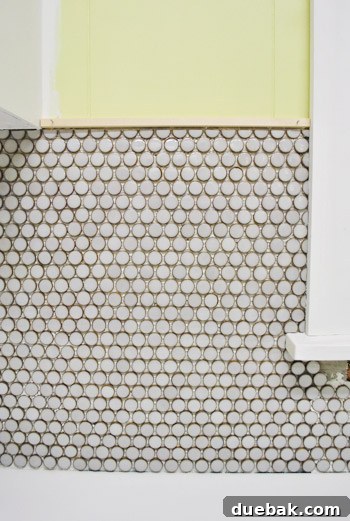
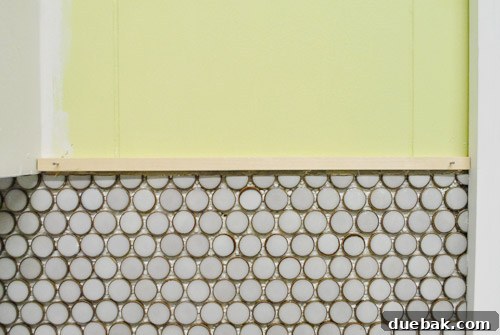
A quick note on color: The image above likely offers the most accurate representation of our wall color. In some wider shots, it might appear darker, greener, or brighter than it truly is. In person, it’s a soft avocado hue, though computer monitors can render it quite differently. For reference, here’s a link to it on BM’s site, as our kitchen’s current lighting hardly does it justice. We believe that once new lighting is installed, and we add our open shelving along with some vibrant, colorful accessories (both on the shelves and countertops), the entire kitchen will coalesce into a truly charming and cohesive space. Rest assured, we’ll be sharing those progress photos every step of the way!
The Next Big Step: Grouting Our Penny Tile Backsplash
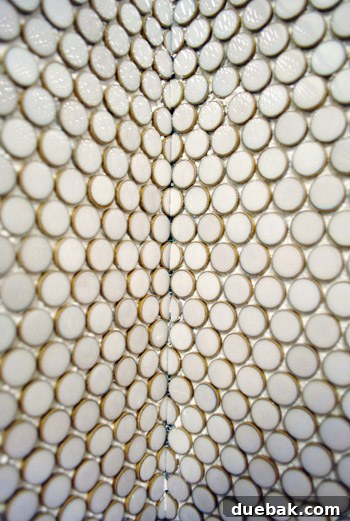
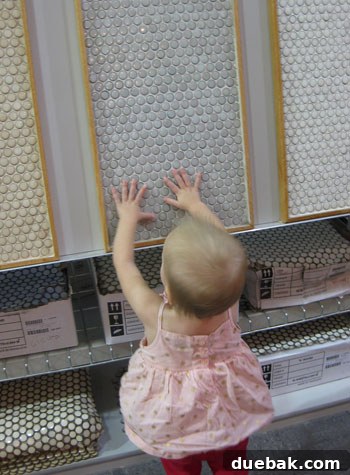
With all the tiles meticulously placed, the next crucial phase is grouting. We’re giving our arms a well-deserved day of rest before picking up the grout float again. For this backsplash, we’ve chosen a soft, creamy-gray grout, intentionally selected to be a subtle smidge lighter than the tile itself. This choice will help enhance the individual penny tiles without overpowering their delicate pattern. You can see a glimpse of our chosen grout color alongside the penny tile in this sample shot we took at the store when we were making our tile selections (more on that decision-making process here).
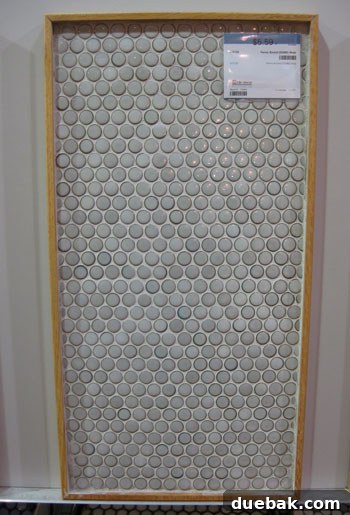
Looking at the sample image above, you might notice a faint horizontal grout line in the middle that appears slightly thicker or bolder. This subtly highlights the critical importance of careful tile placement and taking a step back to assess the overall look before moving on to the next section. We were incredibly meticulous about this during installation, constantly adjusting and manipulating the sheets. We’re so glad we invested the extra time to ensure everything was as evenly placed as possible, knowing it will pay off significantly in the final grouted appearance, minimizing any noticeable seams.
The Grand Finale: Remaining Kitchen Renovation Tasks
Now that the penny tile backsplash is proudly in place, our kitchen renovation checklist still has a few exciting items. Our immediate priority is grouting the entire wall, which we hope to knock out fairly quickly. Beyond that, we’re eagerly anticipating new lighting fixtures – finally replacing that old, unused fan that’s been hanging around for too long! We’ll also be re-adding the crown molding, installing some decorative treatment and a baseboard to the back of the peninsula, laying our beautiful cork floors, installing our brand-new dishwasher, and adding shoe molding around the entire room. There are probably a few other tasks our “tile-drunk” minds are temporarily forgetting, but rest assured, we’ll keep you updated on all the progress, starting with the grouting in the next few days. You never truly know what a DIY project entails until you’re knee-deep in it, but we’re ready for the challenge!
What exciting projects did you tackle this past weekend, or perhaps celebrate with a long weekend in honor of MLK Day?
Psst – For a bit of fun, there’s a hilarious Clara vs. Santa wrestling match happening over on Young House Life… you won’t want to miss it!