
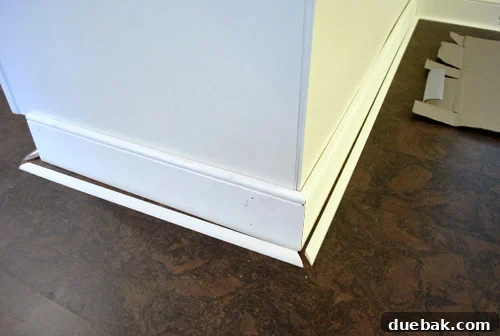
Mastering Your Kitchen Floors: A DIY Guide to Cork Flooring Finishes, Shoe Molding & Sealing
The journey to a beautifully finished kitchen often culminates with the floors. After weeks of hard work, our cork kitchen floors were laid, and while they looked impressive at a glance, they weren’t quite complete. True perfection lies in the details, and for us, that meant adding the essential finishing touches: elegant shoe molding, robust sealing for long-term durability, and seamless floor transitions. This guide will walk you through these crucial steps, sharing our experiences, the lessons we learned, and how you can achieve a professional-looking finish for your own flooring project.
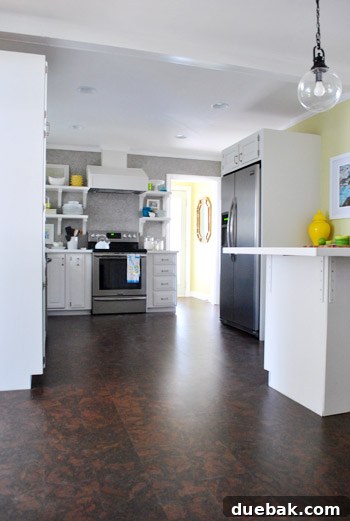
Upon closer inspection, the gaps around the edges of our newly installed cork planks were noticeable. These gaps are not a flaw but an intentional design feature, allowing the floor to expand and contract naturally with temperature changes. However, left exposed, they compromise both aesthetics and floor integrity. This is where shoe molding comes in, providing a clean, finished line while also protecting the floor’s edges. Beyond molding, proper sealing is paramount to keep moisture out of the seams and enhance the overall durability of the cork, ensuring your investment stands the test of time.
The Art of Shoe Molding Installation: Bridging the Gap
Shoe molding is a small but mighty detail that elevates the look of any flooring installation. Its primary role is to conceal the necessary expansion gaps left between the flooring and the baseboards, offering a polished transition and protecting the floor’s perimeter. This seemingly simple step makes a world of difference, transforming an “almost done” space into a truly finished one.
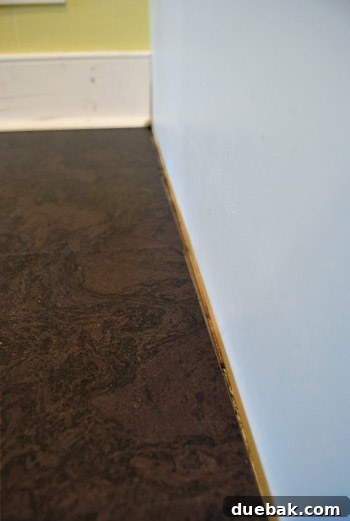
Observe the transformation: a visible gap, then a pristine, complete edge.
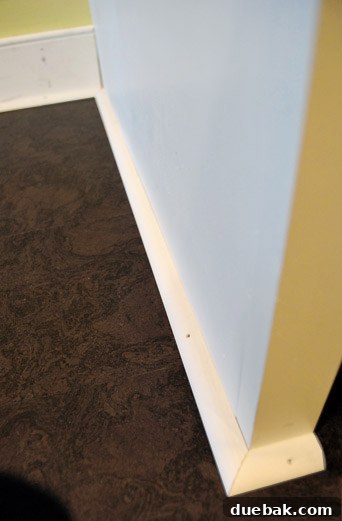
Of course, the process isn’t just about nailing wood. It involves meticulous caulking and painting to hide nail holes and seamlessly blend corners, creating an impeccable finish that speaks volumes about attention to detail.
To Reuse or Not to Reuse? Our Shoe Molding Dilemma
Our initial plan was to reuse the old shoe molding, which we had painstakingly removed and meticulously labeled weeks prior. We believed this would save time and effort, eliminating the need to re-cut pieces for each wall section.
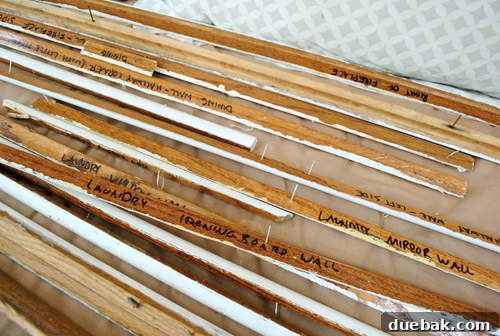
However, practical application revealed a significant flaw in our strategy. When we dry-fitted some of the old, painted pieces, they simply didn’t meet our standards. The existing paint job looked scruffy, and even with touch-ups, the edges lacked the crispness we desired. Given the high contrast between our new dark cork floors and the white trim, any imperfection would be glaringly obvious, undermining the fresh look of our new kitchen.
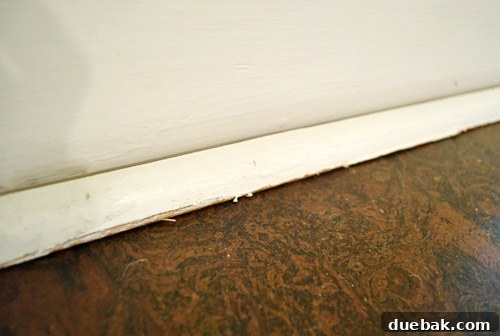
Ultimately, we decided against reusing the old molding. While the initial labeling effort was considerable, the desire for a flawless finish outweighed the perceived savings. We needed new shoe molding anyway for areas like the newly added peninsula, which had no existing trim. Investing approximately $35 in fresh shoe molding was a small price to pay for a “like new” aesthetic that truly complemented our beautiful cork floors.
Old-School Nailing Techniques: Precision Without Power Tools
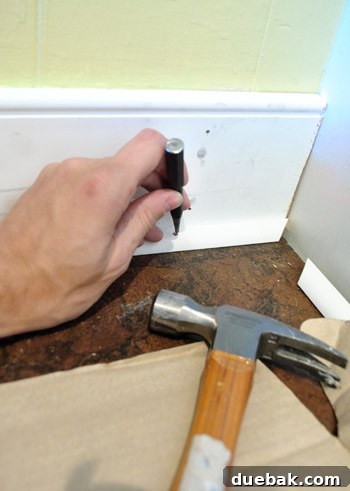
Lacking a pneumatic nail gun, we embraced traditional methods for installing the shoe molding. This “old-school” approach, while requiring more manual effort, allowed for greater control and precision. Our technique involved pre-hammering nails into each piece of molding against a scrap block of wood. This crucial step helped sink the nails partway, significantly reducing the amount of forceful hammering needed near our newly installed floors.
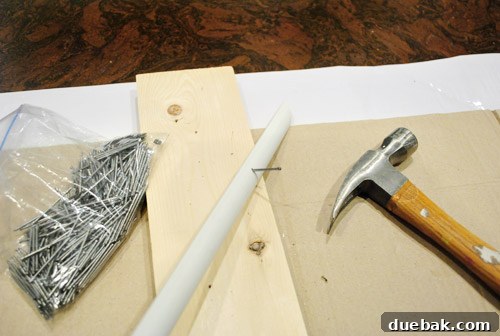
To further protect the cork floors from accidental dings or dents during installation, we placed a piece of cardboard under our work area. This simple precaution proved invaluable. You might notice a somewhat scuffed baseboard in the image; it was a new piece installed because our fridge and pantry locations changed, and it was still awaiting its final coat of paint after being pre-primed.
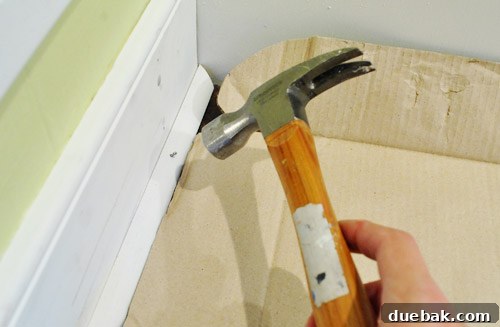
Once the nail was driven as far as possible with a hammer, we turned to our trusty manual nail punch. This indispensable tool, essentially a metal peg with a tiny head, allowed us to sink the nail just below the surface of the wood. This technique ensures a flush finish, preventing hammer marks and preserving the pristine appearance of the molding.
The Peninsula Transformation: A Small Detail, Big Impact
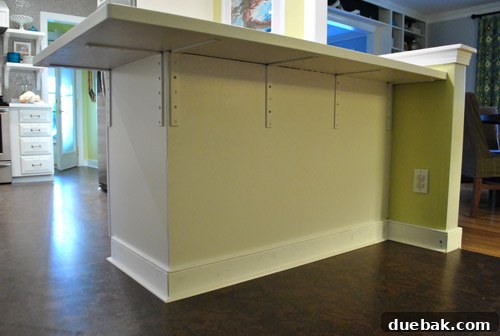
While the entire shoe molding installation significantly enhanced the kitchen’s aesthetic, the most dramatic transformation occurred around the peninsula. This area previously lacked both baseboard and shoe molding, appearing incomplete and stark.
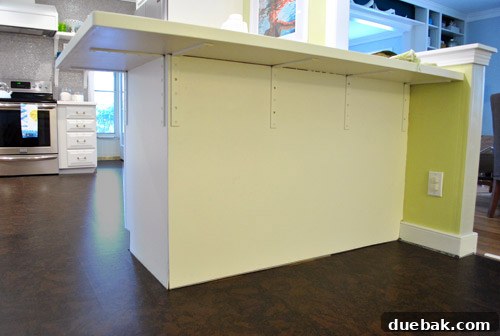
Adding the baseboard was a moment of pure satisfaction, finally giving this new feature a finished look. We had patiently waited until the new cork floor was installed to tackle this, knowing it would be the logical next step.
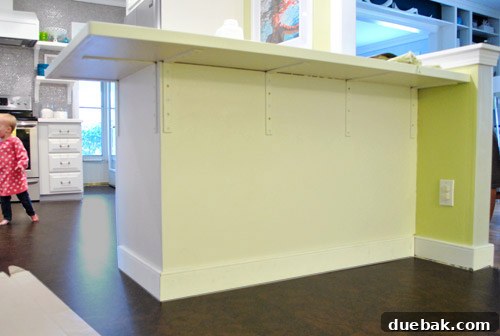
Following the baseboard, the shoe molding was carefully cut to fit, framing the base of the peninsula with precision.
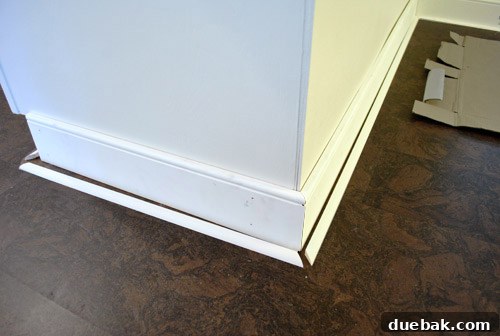
With the shoe molding hammered in, the area around the peninsula now looks significantly more polished. Although we still envision adding decorative wood molding in the future to conceal the metal brackets and add architectural interest, the current state is a vast improvement. When viewed from a standing height, the brackets are surprisingly unobtrusive, especially once the kitchen stools are in place.
The Sealing Power of Caulk: Achieving Seamless Perfection
After installing all the shoe molding, the next critical step for a truly professional finish is caulking. Applying a thin, even bead of caulk along all seams, including inner and outer corners, creates a smooth, continuous line, hiding imperfections and enhancing the overall polished appearance. This step effectively seals the gaps, preventing dust and debris from settling in and providing a cleaner look.
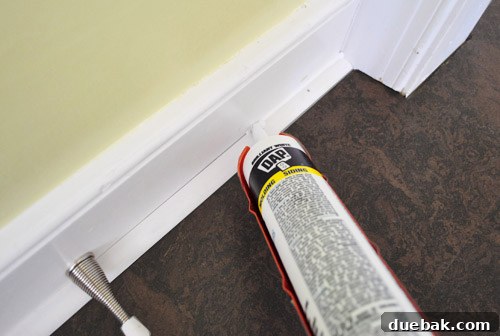
For smoothing the caulk, a simple trick we swear by is dipping a pointer finger in warm water. This technique helps the caulk glide smoothly, preventing it from sticking excessively to your skin and ensuring a clean, professional bead.
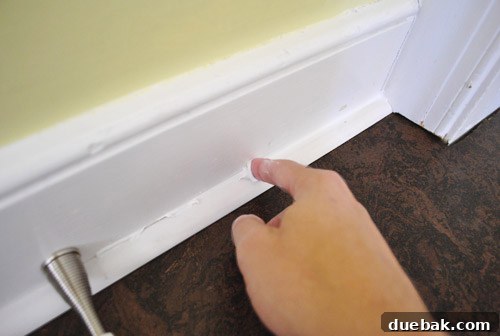
Once the caulk dries, the final touch for the molding is painting. We’re still completing this in a few spots, but the difference it makes in unifying the trim with the baseboards is remarkable.
Essential Cork Floor Sealing: Protecting Your Investment for Years
While our cork planks came pre-sealed, experts universally recommend applying three additional coats of water-based polyurethane after installation. This step is crucial for several reasons: it adds an extra layer of protection, effectively seals the subtle gaps between individual planks (which aren’t sealed by the pre-finish), and prevents dust and grime from accumulating in the seams. Proper sealing ensures your cork floors remain beautiful, smooth, and durable for the long haul.
Finding clear, consistent advice on sealing cork floors proved challenging. So, we reached out to Lumber Liquidators, where we purchased our Lisbon Cork, and spoke directly with one of their installers. He provided what seemed to be explicit instructions:
- Hand sand the entire floor with 100-150 grit sandpaper to rough up the existing finish. (He emphasized, “anything higher and you’re just polishing them”).
- Apply a layer of water-based polyurethane using a 3/8th nap roller.
- After the first coat dries (approximately four hours, according to the poly manufacturer’s label), repeat steps 1 & 2 twice more, for a total of three coats.
Testing the Expert Advice: Our Unexpected Detours
Despite the clear instructions, we decided to perform crucial tests on scrap pieces of cork before applying anything to our main floor. This decision proved invaluable, highlighting the importance of personal experimentation even when following expert advice. You invest so much in installing a floor; you want the final result to be stunning, not scratched or discolored.
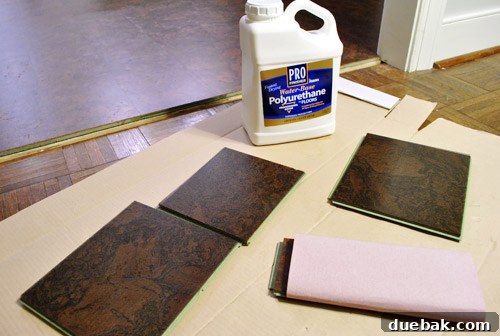
For our sealant, we chose PRO Water-Based Polyurethane from Home Depot, highly recommended for its durability and, crucially, its low odor. Having used oil-based poly in our previous home, which lingered for months, we deeply appreciated the quick-dissipating scent of the water-based option. Hooray for modern advancements!
Our first deviation from the expert’s instructions began with the sanding step. The idea of sanding our beautiful new floors made us nervous. So, we tested it. We meticulously replicated the installer’s recommended hand-sanding technique with the specified grit. The result? Obvious, ugly swirly scratches that even a coat of poly couldn’t disguise. A definite setback.
We then tried sanding in a straight motion, hoping for a better outcome. Unfortunately, it only produced a different kind of unsightly scrape. In person, the scratched surface was undeniable, even if a photo might make it resemble wood grain. Clearly, sanding was making things worse, not better.
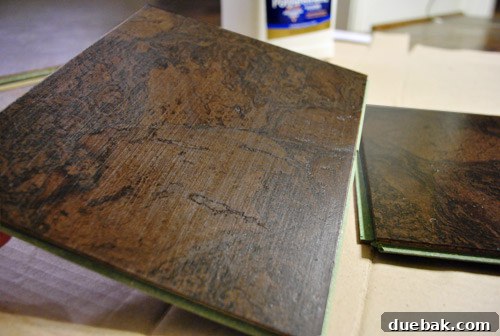
Since sanding seemed detrimental, we tested applying the poly without any initial sanding. Our fear was that it might bead up or not adhere properly without a roughened surface. To our relief, it worked perfectly! Not only did it apply smoothly, but it also made the natural color of the cork truly pop. This discovery led us to confidently skip the sanding step entirely for our main floor. Testing on scrap pieces truly saved us from a potentially disastrous outcome.
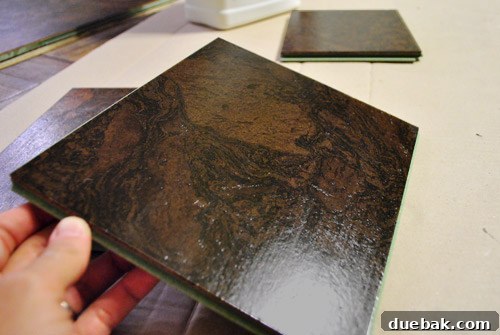
The Purple Haze & The Right Roller Choice
Having abandoned sanding, we moved on to the second instruction: applying the poly with a 3/8th nap roller. This led to “Yikes” moment number two. The result was an alarming purple haze, clearly not the desired effect.
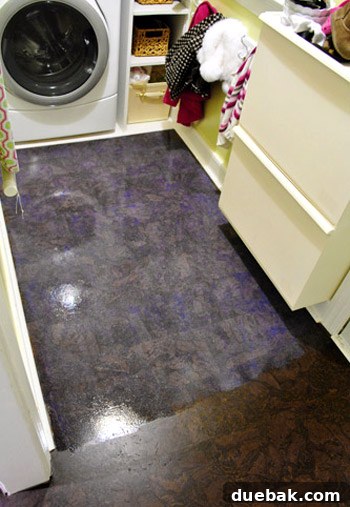
In a moment of sheer panic (and perhaps a little colorful language), we quickly wiped up the thick layer of poly left by the coarse roller with paper towels. It simply didn’t feel right. Our ingrained “thin and even coats” mantra, honed from years of polyurethaning furniture, screamed for a revision of this instruction. We switched to the least nappy rollers we had: ultra-smooth small foam rollers – the same ones we use for furniture. This decision was a game-changer.
The foam rollers worked like a charm. No more glowing purpley-blue haze; just nice, thin, and even coats that adhered perfectly, protecting and sealing our floors for the long term. This approach makes sense, as thin and even coats always adhere better and last longer, whether on furniture or floors. Thick applications risk cracking or peeling, so consistency is key. We were relieved to have found a method that worked beautifully, sans the purple drama.
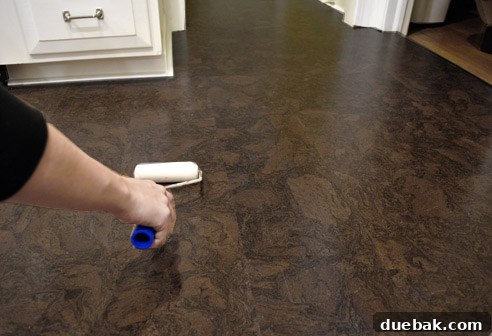
Our revised technique proved successful. It’s still a mystery why the installer’s specific recommendations didn’t work for us – perhaps he primarily works with lighter cork, where scratches or subtle discoloration might be less apparent. Regardless, our testing saved us from costly mistakes.
After three carefully applied coats (one Friday night, one Saturday night, and one Sunday night to minimize kitchen downtime), the cork retained its natural color and appeared perfectly sealed. While we didn’t deliberately spill water, several small, accidental spills (including boiling water!) were effortlessly wiped up, leaving no trace. Our toddler, Clara, and her dump trucks have also put the floor through its paces, and it’s holding up remarkably well so far.
Here are some “after-ish” photos of the trimmed and sealed floors, complete with Clara’s rigorous quality control inspection.
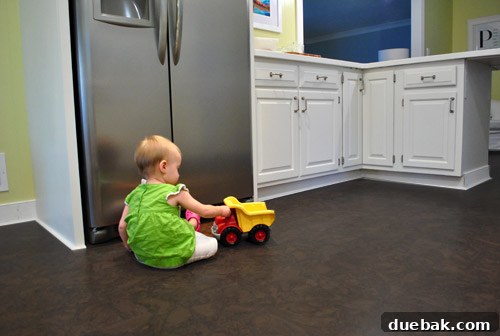
The resilience of cork flooring, even after sealing, continues to impress us. We even accidentally dropped a plate, which, miraculously, didn’t shatter thanks to the cork’s natural cushioning. There wasn’t even a ding or dent on the floor! Furthermore, our dog Burger’s nails leave no marks, confirming what we’d heard from other cork floor owners with large dogs – cork’s unique composition makes it surprisingly resistant to pet scratches.
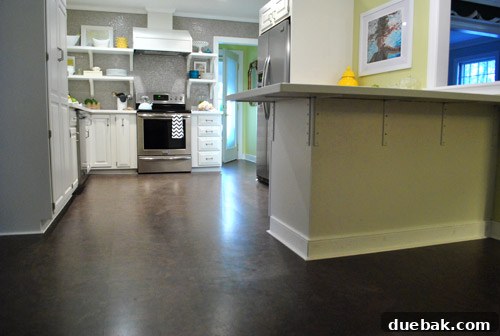
Seamless Transitions: Connecting Your Spaces
The final element to “finish” our kitchen floors was installing transitions. With four doorways in the room, each required a “reducer” – a specialized piece designed to smoothly join two rooms where one floor is slightly higher than the other. In our case, the kitchen floor sat about a half-inch higher due to an asbestos liner under the original vinyl tile, which meant we had to float the cork over it instead of removing the subfloor. To ensure durability in these high-traffic areas, the Lumber Liquidators expert recommended oak transitions, as cork, being a softer wood, could be more prone to wear and tear at an exposed edge. While LL sold transitions for around $45 each, we found comparable options at Home Depot for $29. After careful measurement, cutting, and nailing, our floors were officially transitioned. Well, *mostly* officially transitioned – we’re still awaiting two longer reducers via special order from Home Depot, bringing our total transition cost to approximately $140.
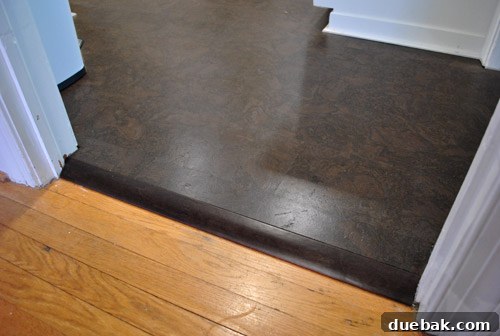
Looking ahead, our vision is to unify the aesthetic of our home by staining our other hardwood floors a darker shade. While the cork and hardwoods will never be identical, achieving a similar rich mocha tone will create a cohesive flow, making our rooms feel more connected and less disjointed. Ah, if only achieving such perfect floor refinishing were as simple as a few clicks in Photoshop!
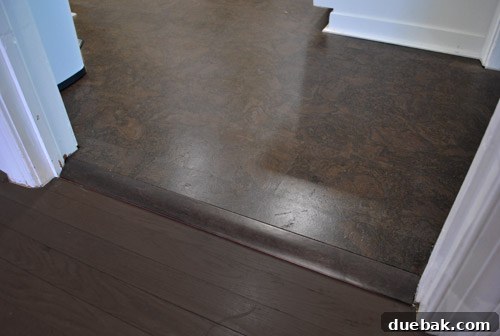
The Final Verdict: A Beautifully Finished Kitchen Floor
And with that, we’re calling the kitchen floor project a wrap! From carefully installed shoe molding to diligently sealed cork and seamless transitions, every detail contributes to a space that feels truly complete. Since this was the last major undertaking in our kitchen renovation, we owe you a comprehensive “after” reveal, complete with a full budget and time breakdown for the entire project. Mark your calendars for Wednesday – same time, same place – for all the final details. In the meantime, we’d love to hear about your weekend projects! Did you tackle any shoe molding installations or floor sealing adventures?