
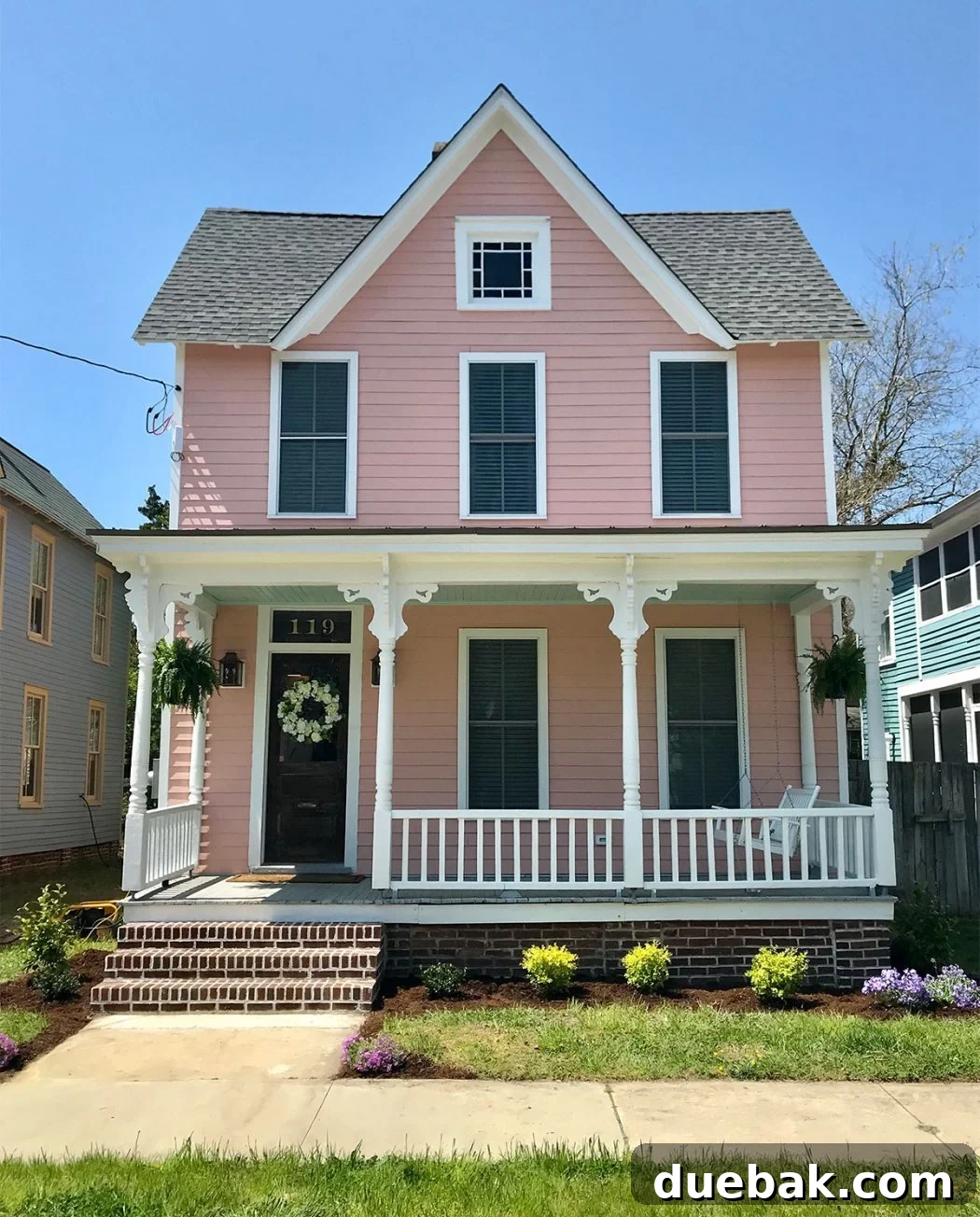
A few weeks ago, we shared a sneak peek on Instagram of our long-awaited front yard transformation at our Cape Charles beach house. The excitement was palpable, but we knew our community wanted more – the nitty-gritty details, the plant choices, the speedy execution, and a two-month update on how everything is thriving. This blog post aims to be that comprehensive guide, not only offering insights for fellow DIY enthusiasts but also serving as a delightful digital album for us to look back on as our coastal garden matures. With the beach house soaking up abundant sunshine, we’re thrilled to report that our new landscape is remarkably happy and flourishing.

We’ll be honest, confidence in the landscaping and gardening department isn’t always our strong suit. Our primary residence’s backyard, for example, saw us relying heavily on seasoned professionals to achieve its stunning look. However, the front yard of our Cape Charles getaway presented a unique, smaller-scale challenge that we believed even our modest green-thumb skills could dramatically improve. We envisioned a vibrant, welcoming space that reflected the relaxed charm of coastal living. To truly appreciate the journey, let’s take a look at the “before” – the state of its “landscaping” when we first acquired the property:

Even as recently as this past winter, the front yard retained a rather desolate appearance. While the house itself underwent a significant renovation, transforming from a fixer-upper to a charming retreat, the surrounding landscape remained stubbornly uninspired. Ignore the foreground’s massive tangle of vines in this particular photograph; it was taken just after our contractor diligently removed a rusted shed from the backyard and painstakingly cleared a rampant infestation of poison ivy. This post-demolition debris, awaiting curbside pickup, certainly added a unique “ambiance” to the scene – a touch of wild, untamed nature, perhaps even a “Maleficent” vibe, as we jokingly observed.

The turning point arrived in April with the exciting news that Virginia’s Historic Garden Week was making its way to Cape Charles. While our humble abode wasn’t slated to be part of the official tour, we knew a significant influx of visitors would be strolling right past our property – especially since a beautiful house just two doors down was a featured stop. This event provided the perfect, albeit self-imposed, deadline to finally address our front yard’s aesthetic shortcomings. We seized the opportunity, transforming a civic event into a personal motivation. Fortunately, the yard’s modest size worked in our favor, allowing us to complete the entire landscaping project in a single, focused morning.
Anticipating that the local Cape Charles nursery might still be closed for the winter season, we took a proactive approach. Before embarking on our 2.5-hour drive to the Eastern Shore, we made a strategic stop at our local Home Depot to stock up on an initial selection of plants. Our typical modus operandi when purchasing plants, particularly for a vacation property, involves a few key principles to ensure both visual appeal and long-term sustainability:
- Embrace Variety in Color and Texture: Even if limited to green foliage, we seek variations in shades and leaf textures to create visual interest and depth. A mix prevents the landscape from looking monotonous.
- Incorporate Different Heights and Layers: Strategic placement of plants with varying mature heights ensures a layered, dynamic look as they grow. This creates natural flow and prevents a flat, one-dimensional appearance.
- Always Check Plant Labels for Conditions: This is non-negotiable. Understanding whether a plant thrives in full sun, partial sun, or shade, along with its water requirements and hardiness zone, is crucial for its survival and success, especially in a sunny coastal environment like Cape Charles.
- Prioritize Perennials Over Annuals: Whenever possible, we opt for perennials. These plants return year after year, offering excellent value and reducing the need for annual replanting. This is especially important for a secondary residence where frequent maintenance isn’t feasible.
- Lean Towards Non-Deciduous Plants: Deciduous plants, which shed their leaves in winter, can leave beds looking barren and full of brown sticks for several months. Non-deciduous (evergreen) options provide year-round structure and greenery, maintaining curb appeal even in colder months.
With these guidelines in mind, we kept our initial plant selection straightforward and functional. Our Home Depot haul included the following:

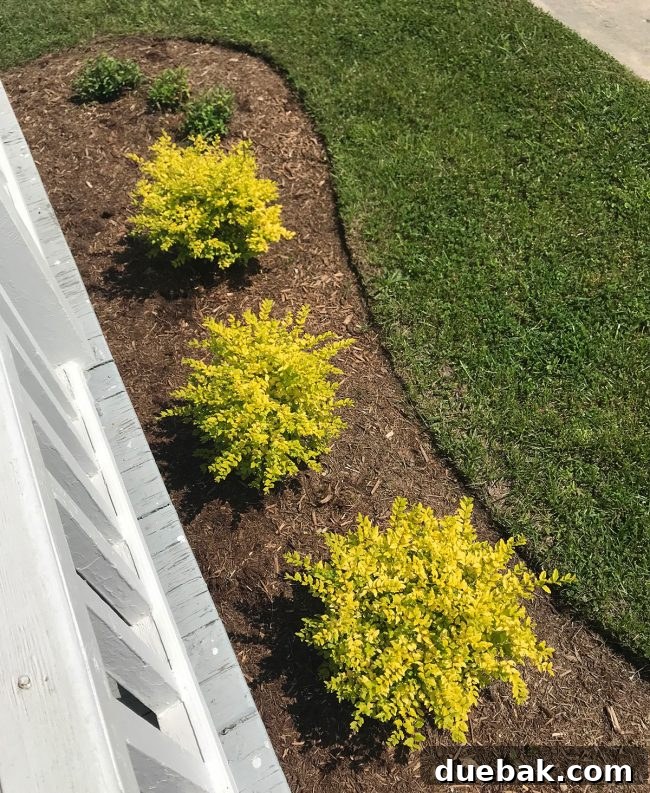
- Three Sunshine Ligustrum Bushes: These were chosen for their brilliant chartreuse-yellow foliage, which provides a fantastic pop of color. Crucially for a year-round presence, they are non-deciduous, ensuring vibrant greenery even in winter. They also tolerate full sun beautifully.
- Three Gardenia Bushes: Known for their glossy dark green leaves and exquisitely fragrant white blooms, gardenias add a touch of classic elegance. Like the ligustrum, they are non-deciduous, offering consistent visual appeal. Their heady scent will be a delightful bonus for porch sitting.
- Three Purple Flowering Phlox: A fantastic choice for ground cover, these phlox will spread to create a carpet of colorful blooms. While they are deciduous (dropping leaves in winter), their perennial nature means they’ll reliably return each spring, bursting with new life.
- Two Large Ferns for Porch Hangings: These provide immediate lushness and vertical interest to the porch area. As seasonal accents, they are the only items we anticipate replacing annually to maintain their fresh, verdant look.
The decision to purchase phlox was, surprisingly, quite invigorating. At our primary home, planting anything that flowers is practically an open invitation for deer, who seem to receive instant notifications on their “iDeer” devices whenever a blossom hits the soil. We love our local deer, but their voracious appetites can be a real buzzkill for aspiring flower gardeners. Fortunately, Cape Charles doesn’t suffer from the same pervasive deer problem, allowing us the freedom to experiment with blooming plants. We were particularly inspired by a neighbor’s thriving bed of creeping phlox just two doors down and envisioned how beautifully our chosen purple variety would complement our beach house’s charming pink exterior.
With our initial plant selection secured, we carefully loaded everything into the car, eager for the journey ahead, and hit the road the very next day, full of anticipation for our front yard transformation.

Despite our best intentions, neither of us managed to capture any photos of the actual planting process. This is a common occurrence when we’re racing against the clock, eager to complete a project and get back on the road before the kids are out of school. However, the process itself was straightforward yet transformative. I primarily used a shovel to artfully carve out swooping planting beds on either side of the porch, following the “sketches in the dirt” that Sherry and I had mentally designed. Our design aimed for organic curves that would soften the hard lines of the house and sidewalk, creating a more inviting entrance. A pleasant surprise awaited us: the local nursery in Cape Charles *was* indeed open for the season! This allowed us to expand our plant palette and add some crucial finishing touches:
- Two Taller Camellia Bushes: These beautiful, flowering, non-deciduous shrubs were ideal for anchoring each side of the house. Their substantial size provides immediate structure and their consistent greenery will offer year-round visual weight.
- Two More Creeping Phlox: Delighted by the success of our initial phlox, we decided to extend this vibrant ground cover to the ends of the sidewalk, ensuring a continuous burst of perennial color.
- Several Bags of Mulch: Essential for moisture retention, weed suppression, and a polished aesthetic, the mulch was the final layer needed to complete the project, giving the beds a neat and professional finish.

Admittedly, upon stepping back, we realized we weren’t entirely thrilled with the small, narrow slivers of mulch connecting the main beds to the front corners of the house. They looked a bit disjointed. However, given our tight schedule and the looming deadline of needing to depart, correcting these minor aesthetic imperfections simply wasn’t an option on this particular trip. Furthermore, our expectations for the phlox, in particular, were quite low. As a vacation home, we had no dedicated irrigation system for our new plantings, relying solely on Mother Nature to provide sustenance. Our primary hope was merely that the plants would survive the initial period, especially through the bustle of Historic Garden Week, providing a semblance of freshness for the incoming tourists.

Fast forward approximately two months, and we are absolutely delighted – and frankly, a little surprised – by the progress! Not only has everything survived its initial planting and the vagaries of absentee watering, but many of the plants have truly thrived. The front yard is burgeoning with life and color, a testament to the resilience of our chosen plants and perhaps a bit of luck from coastal rain showers. Even the color of the mulch has gracefully mellowed out, transitioning from its initial starkness to a more natural, subtle tone. Consequently, those “dinky slivers” along the sidewalk, which once concerned us, now blend much more harmoniously with the overall landscape, no longer standing out as an eyesore.

The Sunshine Ligustrum and Gardenia bushes have shown impressive growth, developing fuller forms and contributing significant structure and color to the beds. We’ve even enjoyed a couple of beautiful rounds of blooms from the Gardenias, thanks in no small part to the invaluable tips we received from our Instagram community about the importance of deadheading spent flowers to encourage continuous blossoming. The initial purple flowers on the phlox have withered as expected, and we’ve carefully clipped them off, optimistically anticipating a fresh flush of new growth and a second wave of vibrant color. This ongoing care, even from a distance, demonstrates our commitment to nurturing our beach house garden.
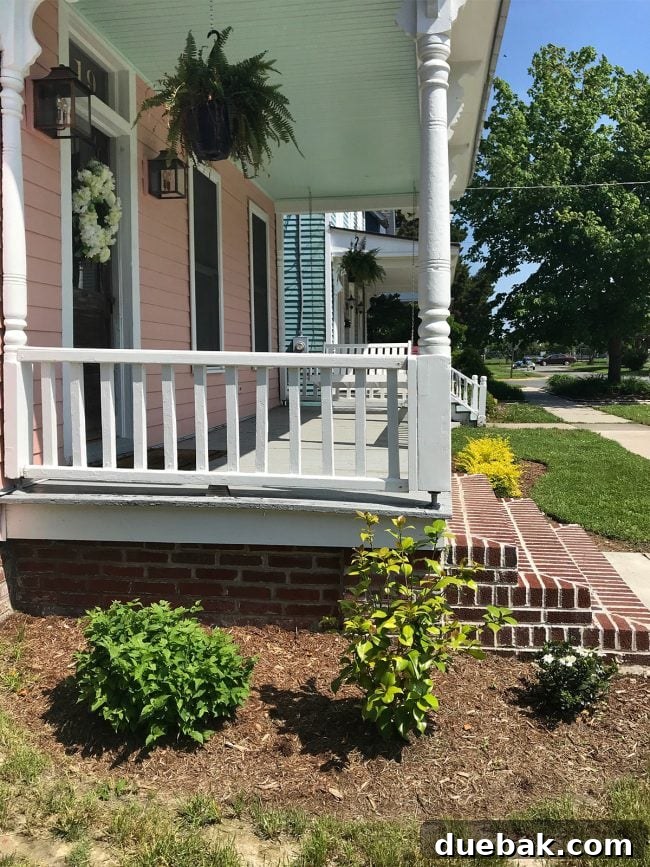
Perhaps the most exciting development, however, revolves around a particular mystery plant situated on the left side of the house. This resilient bush has staged an incredible comeback, returning with a remarkable vengeance! When we first purchased the house, this specimen was quite imposing, nearly as tall as the front door itself (you can scroll up to the initial “before” photos to see its former glory!). During the extensive renovation, it had to be significantly trimmed back to accommodate essential work, such as the installation of new siding and the repointing of the brick foundation. We worried we might lose it entirely.
Its ordeal didn’t end there. During the legendary “great water meter hunt of 2017,” it was unfortunately chopped down to a mere stump. We truly thought that was the end. Yet, against all odds, it’s making a swift and vigorous recovery, as evidenced by the lush growth on the far left of the image below. We envision it becoming a magnificent anchor plant, providing much-needed privacy on that side of the house once it reaches its full, impressive potential. We’ll certainly maintain a regular pruning schedule to ensure it never again dwarfs the front door, but discovering a “free” plant that regenerates so robustly from what seemed like its demise brings immense joy and unwavering confidence in its hardiness and suitability for our coastal landscape.
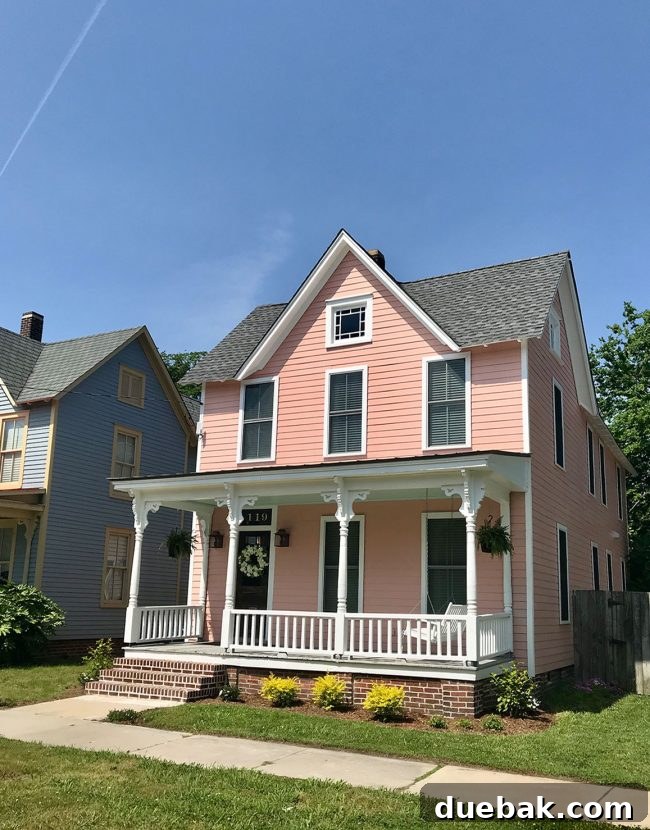
While the front yard’s transformation is a significant achievement, there remains an abundance of landscaping work to be tackled at this property, particularly around the side and back. However, these larger-scale projects are currently on hold, awaiting the installation of our new shed and patio. That, in turn, is contingent upon the progress of our duplex renovation, making the timetable for future landscaping somewhat unpredictable. Nevertheless, we are incredibly pleased that, in the interim, the front of the house looks infinitely more welcoming and vibrant, having shed its barren past. Adding to the excitement, our neighbor’s hydrangeas have burst into bloom, displaying giant, colorful blossoms. These magnificent plants, which would typically be devoured by deer like candy in Richmond, flourish unbothered here in Cape Charles. Inspired by their beauty, Sherry has launched a spirited campaign to incorporate some of these gorgeous hydrangeas not only into the planned side and back landscaping but potentially even integrate them into the newly established front beds. We’ll definitely keep you posted on her success!
For those seeking more inspiration for landscaping or boosting curb appeal, we’ve curated an extensive collection of Exterior Upgrades on our blog. Dive into our favorites to find your next DIY project:
- How to Carve Out Beautiful Mulch Beds for Your Garden
- A Step-by-Step Guide to Installing Your Own Landscape Lighting
- Revitalize Outdoor Furniture: Using A Pressure Washer for Cleaning
- DIY Yard Irrigation System: A Comprehensive Installation Guide