
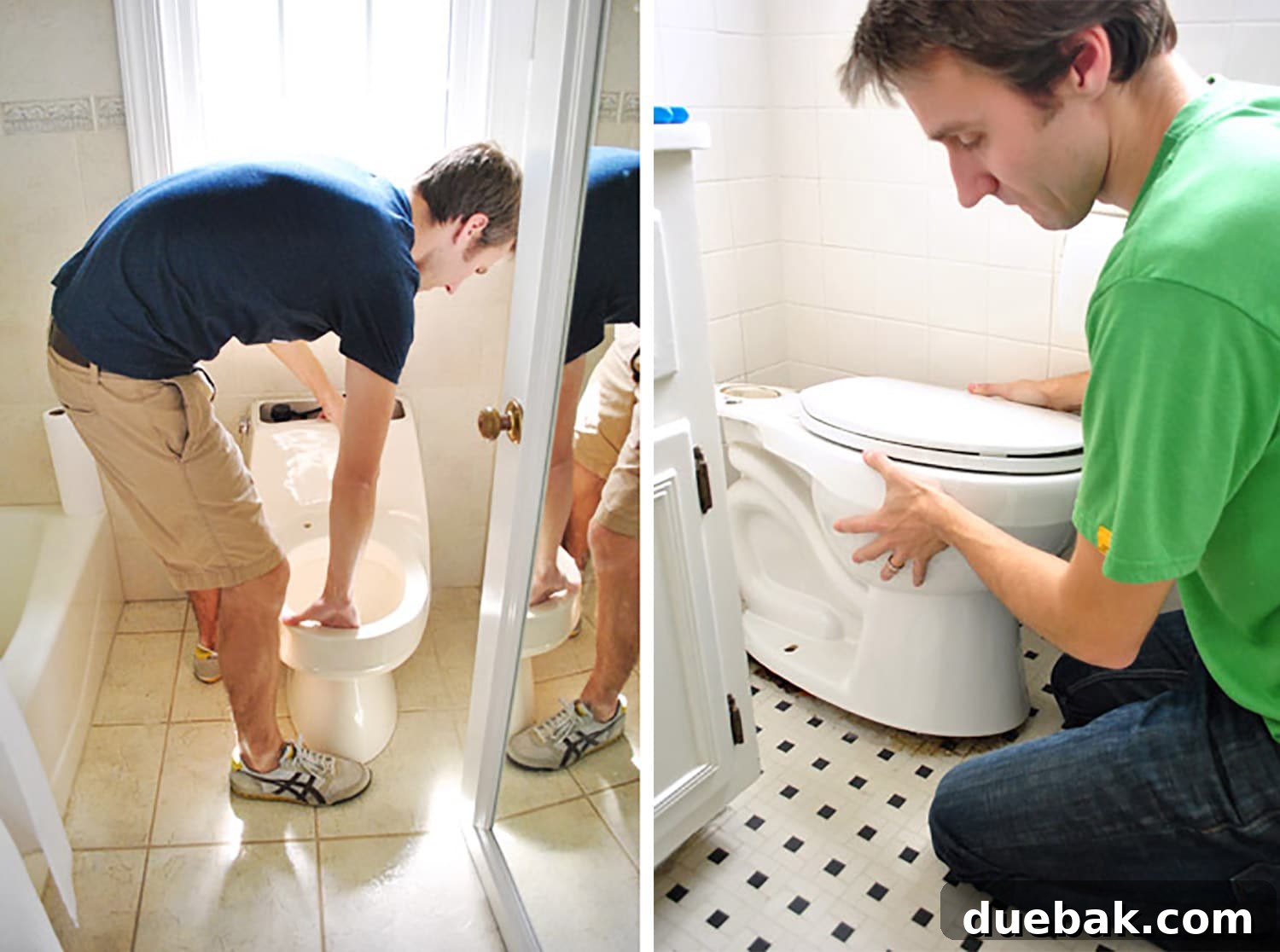
Embarking on a home improvement project can be both exciting and a little intimidating, especially when plumbing is involved. Among the most common yet often dreaded DIY tasks for homeowners is installing a new toilet or replacing an old one. Many first-time homeowners, ourselves included back in 2006, might shy away from this task, believing it requires specialized plumbing skills. However, after countless successful installations across various bathrooms over nearly two decades, we can confidently say that installing a toilet is a remarkably straightforward project that almost anyone can master.
This comprehensive guide will walk you through every step of the toilet installation process, transforming what might seem like a daunting challenge into an achievable DIY triumph. Whether you’re replacing a dated fixture, fixing a leaking or rocking toilet, or reinstalling an existing one as part of a bathroom remodel, these instructions will provide you with the knowledge and confidence to get the job done right. You’ll not only save money by avoiding a plumber but also gain valuable practical skills and immense satisfaction from enhancing your home.
Tools & Supplies Needed for Toilet Installation
Before you begin your toilet installation project, gathering all the necessary tools and supplies is crucial. While it doesn’t require an extensive arsenal of specialized equipment, having these key items handy will ensure a smooth and efficient process. Think of this as your checklist for a successful DIY toilet replacement:
- New Toilet*: Consider our favorite Kohler model for its reliability and design. If reinstalling your existing toilet, this isn’t needed.
- Measuring Tape: Essential for accurately determining your rough-in distance.
- Wax Ring Kit: Includes the wax ring, new bolts, nuts, and washers. We recommend having both a standard and an extra-thick wax ring kit on hand, as you won’t know which is best until the old toilet is removed.
- Adjustable Wrenches or Groove Joint Pliers: For tightening and loosening various nuts and bolts. Having two can be helpful.
- Flathead Screwdriver: Useful for holding bolts steady during tightening and removing old caulk.
- Utility Knife: For scoring old caulk and precise cuts.
- Hacksaw: To trim excess bolt length after securing the toilet.
- White Silicone Caulk: For sealing the base of the toilet to the floor, providing a clean and sanitary finish.
- Spare Rags & Towels/Blankets: To clean up spills, protect flooring, and cushion toilet parts.
- Sponge, Paper Towels, and/or Small Bowl: For removing residual water from the old toilet tank and bowl.
- Level (Optional but Recommended): To ensure your new toilet is perfectly level.
- Gloves (Optional but Recommended): For hygiene and comfort during the process.
*If you are simply reinstalling your existing toilet or a previously removed one, purchasing a new model isn’t necessary. We will incorporate steps below for reusing the same toilet, though you will still need a new wax ring and bolts.
Steps To Install A Toilet – A Comprehensive Guide
Before you roll up your sleeves and dive in, we highly recommend reading this entire tutorial. Understanding the full scope of the project and familiarizing yourself with each step will make the actual installation much smoother. Below is a detailed overview of the process, designed to guide you from start to finish with confidence.
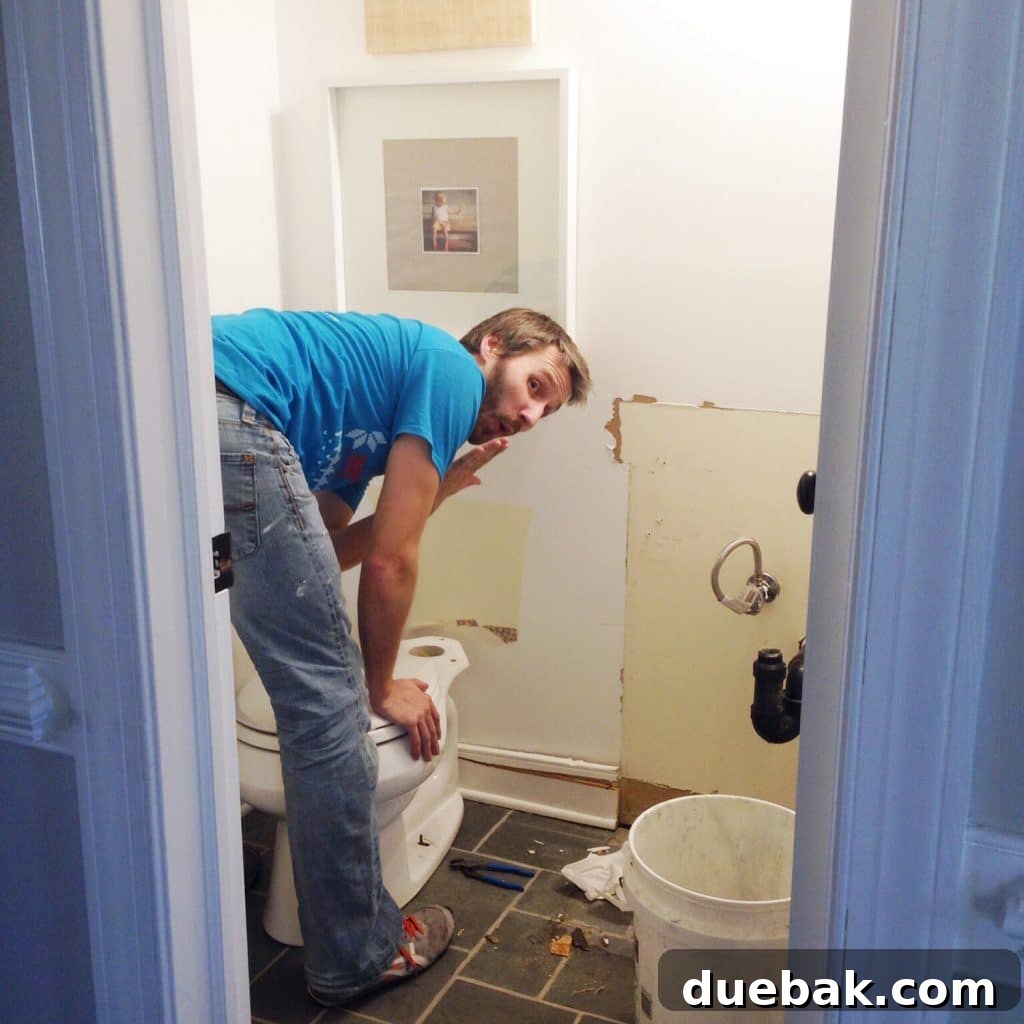
- Measure Your Rough-In*
- Purchase A New Toilet*
- Remove Your Old Toilet
- Prepare The Floor & Flange
- Add The Wax Ring
- Place The Toilet Bowl
- Bolt The Toilet Bowl
- Install The Toilet Tank
- Connect The Water Line
- Finish The Toilet Installation
*Note: Some steps, particularly those related to purchasing a new toilet, are optional if you are reusing your existing toilet. However, a new wax ring and bolts are always recommended for a secure, leak-free installation.
Step 1: Measure Your Rough-In Distance
The “rough-in” distance is a critical measurement that determines the size and type of toilet you can install. This refers to the distance from the finished back wall to the center of the toilet’s floor bolts (or the center of the waste pipe opening if the bolts aren’t yet installed). Accuracy here is paramount, as an incorrect measurement can lead to a toilet that doesn’t fit properly, leaving unsightly gaps or preventing installation altogether.
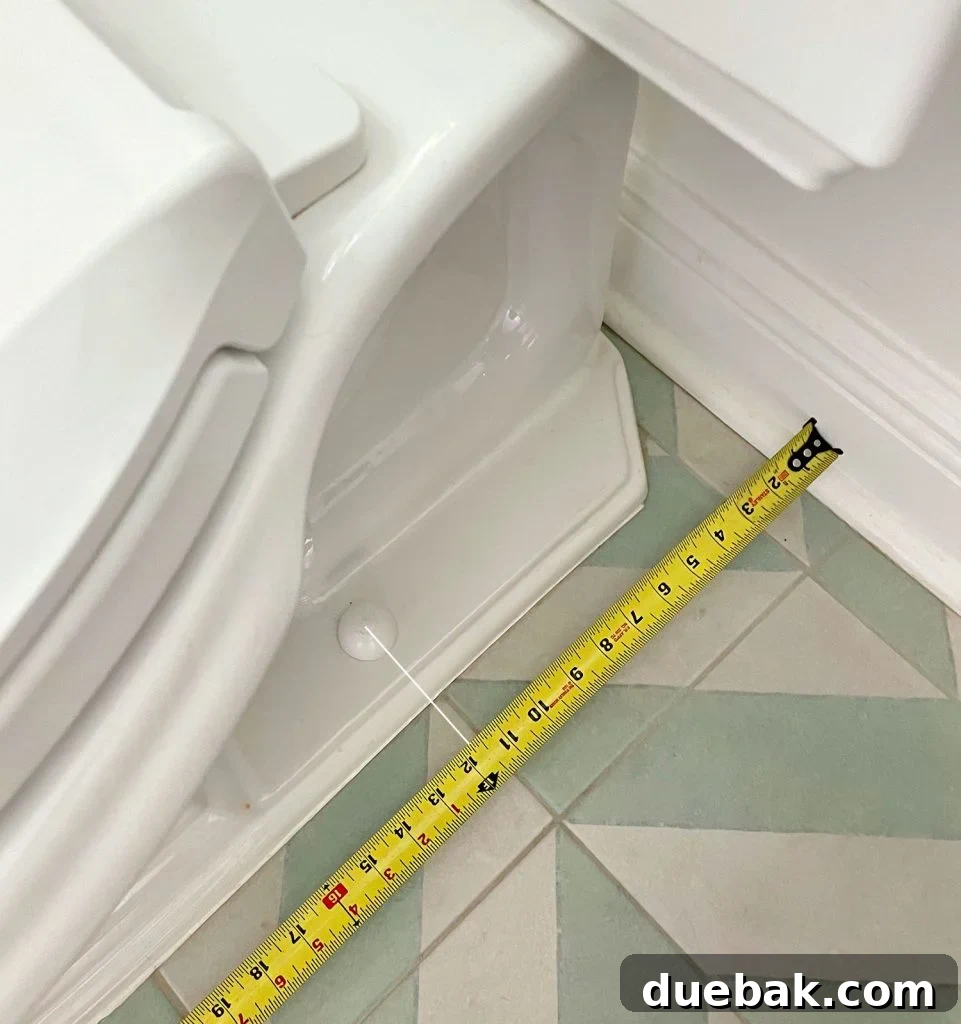
To measure, use a tape measure to find the distance from the center of the two bolts on the floor to the back wall. Standard toilets are typically designed for a 12-inch rough-in. Therefore, you need at least 12 inches of space. If your bathroom is older or smaller, you might find a rough-in of 10 inches, which would require a compact toilet specifically designed for these tighter spaces. There are also 14-inch rough-ins, though they are less common.
An important detail to remember is to measure to the *finished* wall, not just the baseboard. Most toilets, unless they are “skirted” (which have a smooth, seamless base), come closest to the wall at the height of the tank, which is usually well above the baseboard. So, don’t be alarmed if the distance between the bolts and the baseboard is slightly less than 12 inches, as long as the measurement to the actual finished wall is sufficient.
Step 2: Purchase Your New Toilet
Once you’ve accurately measured your rough-in distance, it’s time to choose your new toilet. Beyond the rough-in, there are several key factors and design options to consider that impact both comfort and aesthetics. Understanding these terms will help you select the perfect fixture for your bathroom and ensure a successful toilet installation.
- Round vs. Elongated Bowl: Elongated bowls, typically about 2 inches longer than round bowls, are generally considered more comfortable and ergonomic. However, round bowls have a more classic look, take up less space, and are often a better fit for smaller bathrooms or powder rooms where every inch counts.
- Chair/Comfort vs. Standard Height: Standard height toilets usually measure about 14-15 inches from the floor to the rim (excluding the seat). Chair height, comfort height, or tall height toilets are typically closer to 17-19 inches. Many people, especially taller individuals or those with mobility issues, find the higher seating position much easier and more comfortable to use.
- One- vs. Two-Piece Toilets: Two-piece toilets, consisting of a separate bowl and tank, are generally easier to install. Each component is lighter and less cumbersome to lift and maneuver, making them ideal for DIYers. One-piece toilets, on the other hand, offer a seamless, sleeker look that is easier to clean, but their combined weight can make installation more challenging, often requiring two people.
- Single- vs. Dual-Flush Systems: Dual-flush toilets are gaining popularity due to their eco-friendliness. They provide two flushing options: a lower volume flush for liquid waste and a higher volume flush for solid waste, significantly reducing water consumption. You can also retrofit many existing toilets with a dual-flush conversion kit.
Beyond these primary considerations, you might also think about smaller design choices like color, style, and functional features such as flush strength, noise level, and lever location. Unique options like wall-mounted toilets, square bowl designs, or even composting toilets also exist for specific needs. If you’re looking for a reliable, well-designed standard option, the Kohler Memoirs has been our long-standing favorite. Remember to check for WaterSense certification for water efficiency and reviews for flushing power.
Step 3: Remove Your Old Toilet
Before you can enjoy your new toilet, the old one needs to go. This step is a fantastic way to familiarize yourself with the mechanics of a toilet, essentially performing the installation process in reverse. Taking your time here will make the reassembly process much clearer.
- Turn off & empty water
- Disconnect the water line
- Unscrew & remove the tank (for two-piece toilets)
- Unscrew & remove the bowl
- Plug flange with rag
Turn off & empty water
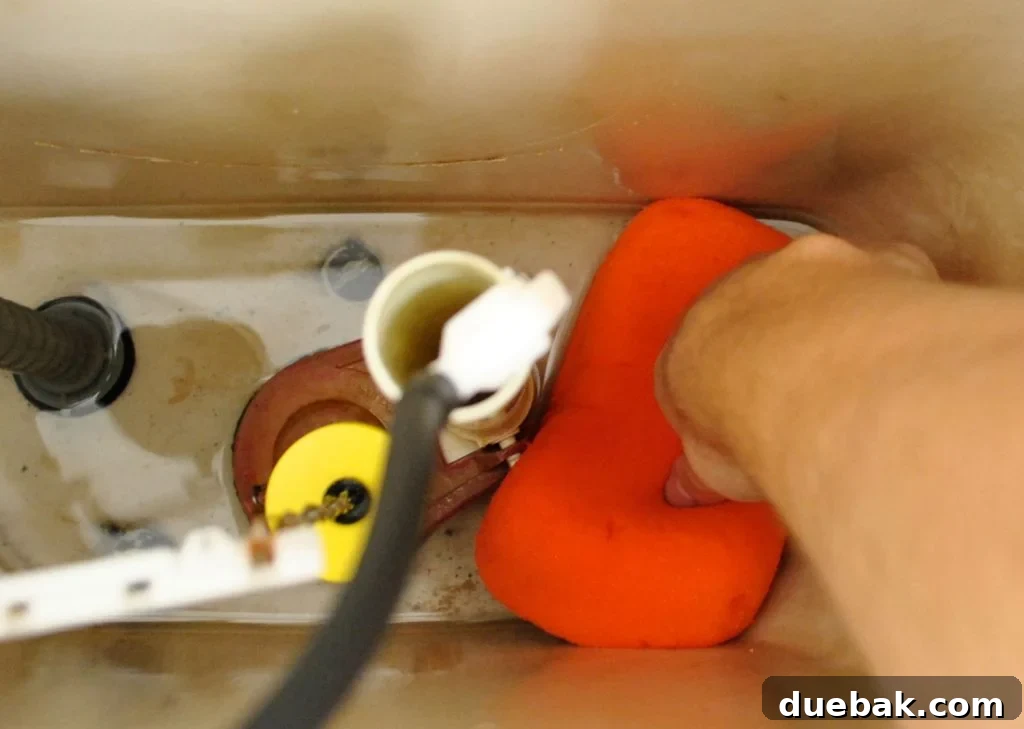
Your first crucial step is to cut off the water supply to the toilet. Locate the shut-off valve, typically found on the wall or floor behind your toilet tank. Turn the valve clockwise until it stops. This should be done by hand. If the valve is stiff or difficult to turn, try spraying it with a penetrating lubricant like WD-40. Avoid forcing it with a wrench, as this could damage the valve and lead to a significant leak or even flooding. Once the water is off, flush the toilet to empty the tank and bowl as much as possible. Use a sponge, small bowl, or cup to remove any remaining water from both the tank and the bowl. This minimizes spills and makes the toilet lighter and less messy to handle.
Disconnect the water supply line
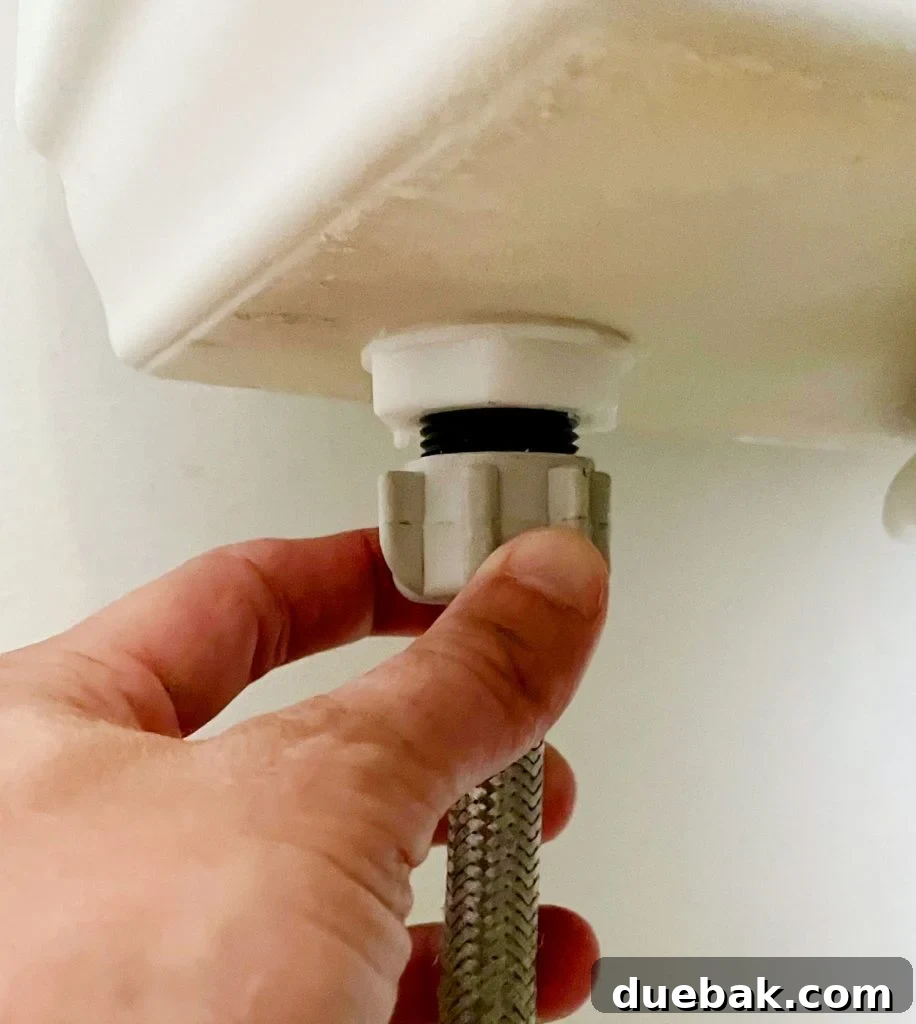
With the water supply off and the toilet emptied, disconnect the flexible water supply line from the bottom of the toilet tank. Turn the connector counterclockwise by hand. If it’s too tight, use an adjustable wrench. Be prepared with a small bowl or some paper towels, as some residual water from the supply line will likely spill out. You can leave the supply line connected to the wall unless it’s old, damaged, or you plan to replace it as part of your new toilet installation.
Unscrew & remove the tank
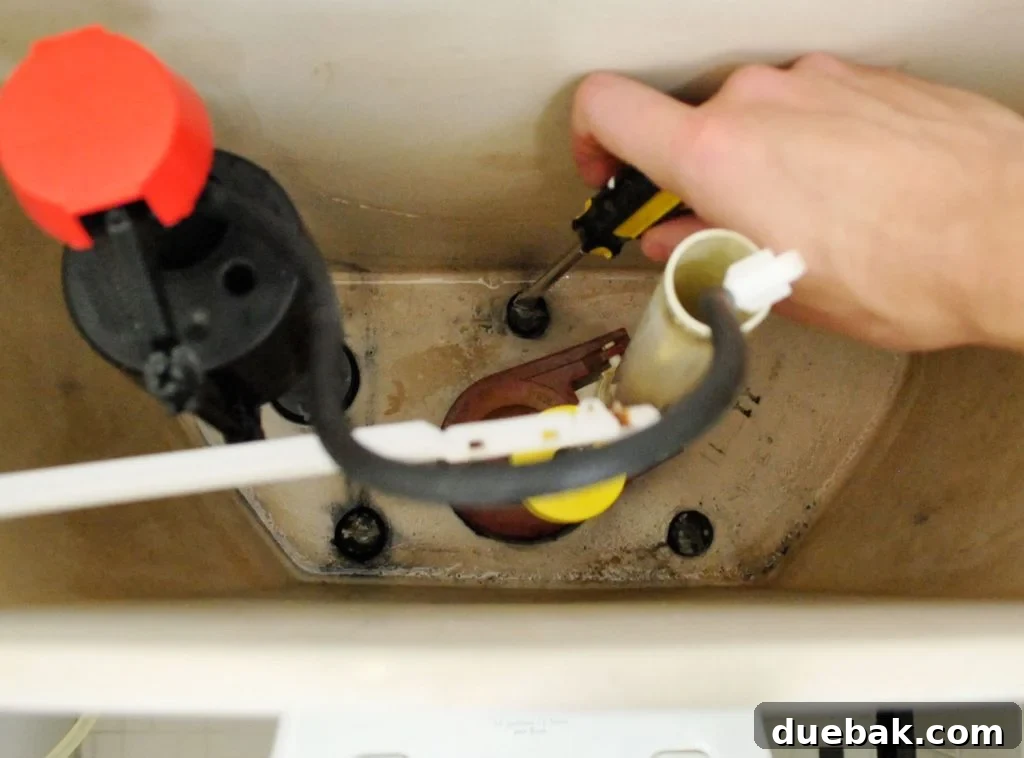
If you’re working with a two-piece toilet, separating the tank from the bowl makes the removal much easier and safer, as each component becomes lighter and less awkward to handle. The tank is usually secured to the bowl by two or three bolts passing through the bottom of the tank. Locate the nuts on the underside of the toilet bowl where these bolts emerge. Use a wrench to unscrew these nuts counterclockwise. You may need to use a flathead screwdriver inside the tank to hold the bolt head steady, preventing it from spinning as you loosen the nut below. Once the bolts are removed, carefully lift the tank straight up and set it aside on an old towel or soft blanket to prevent accidental chipping or cracking on a hard floor.
Unscrew & remove the toilet bowl
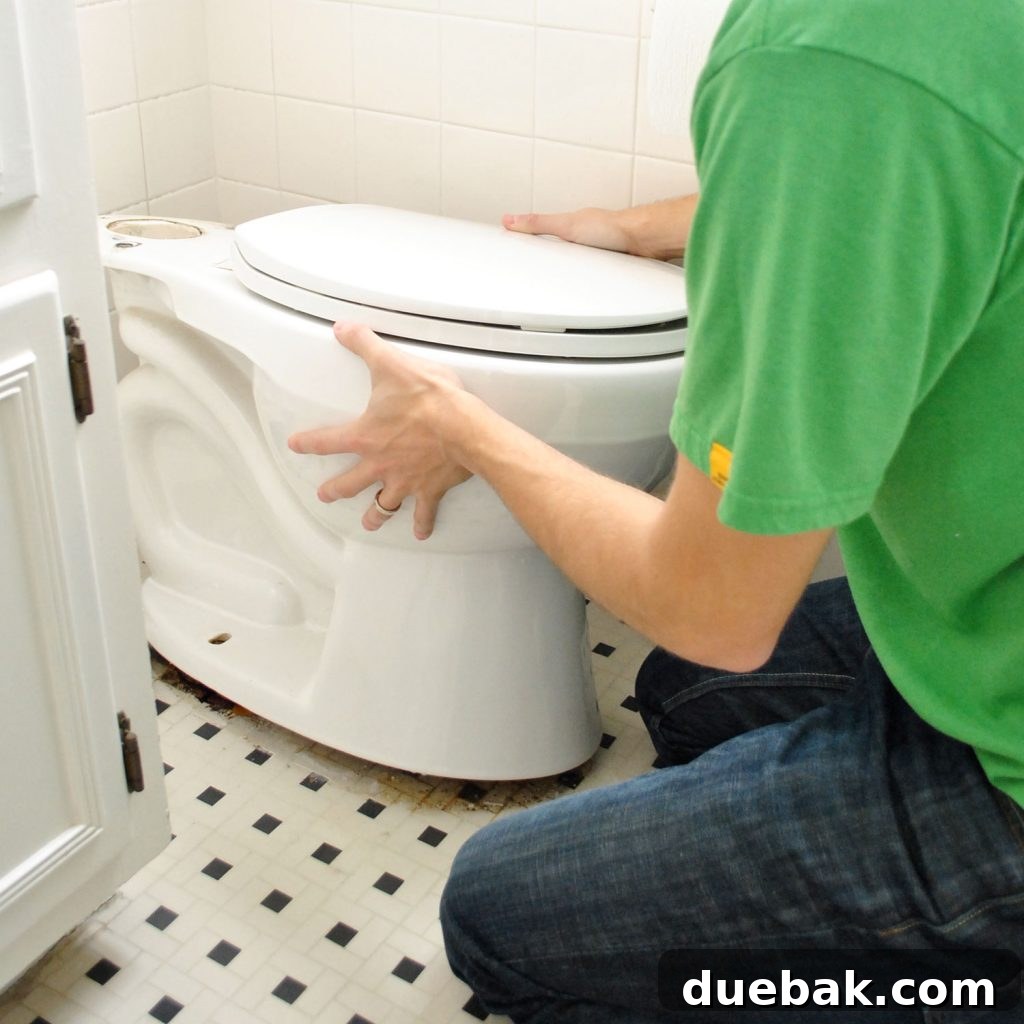
The toilet bowl is secured to the floor by two bolts, one on each side, which pass through the toilet flange. These bolts are often hidden beneath decorative plastic caps. Pop off these caps to expose the nuts. Using your wrench or pliers, turn each nut counterclockwise until it’s completely loose. If your toilet has been caulked around its base, use a utility knife to carefully score along the caulk line. This will break the seal and make removal much easier. To detach the bowl from the floor, gently rock it from side to side. This motion helps to break the seal of the old wax ring. Once you feel it loosen, carefully lift the bowl straight up and off the bolts. Place it on its side or upside down on an old towel or blanket to prevent any sticky wax residue from getting on your floor or furniture.
Plug the flange hole
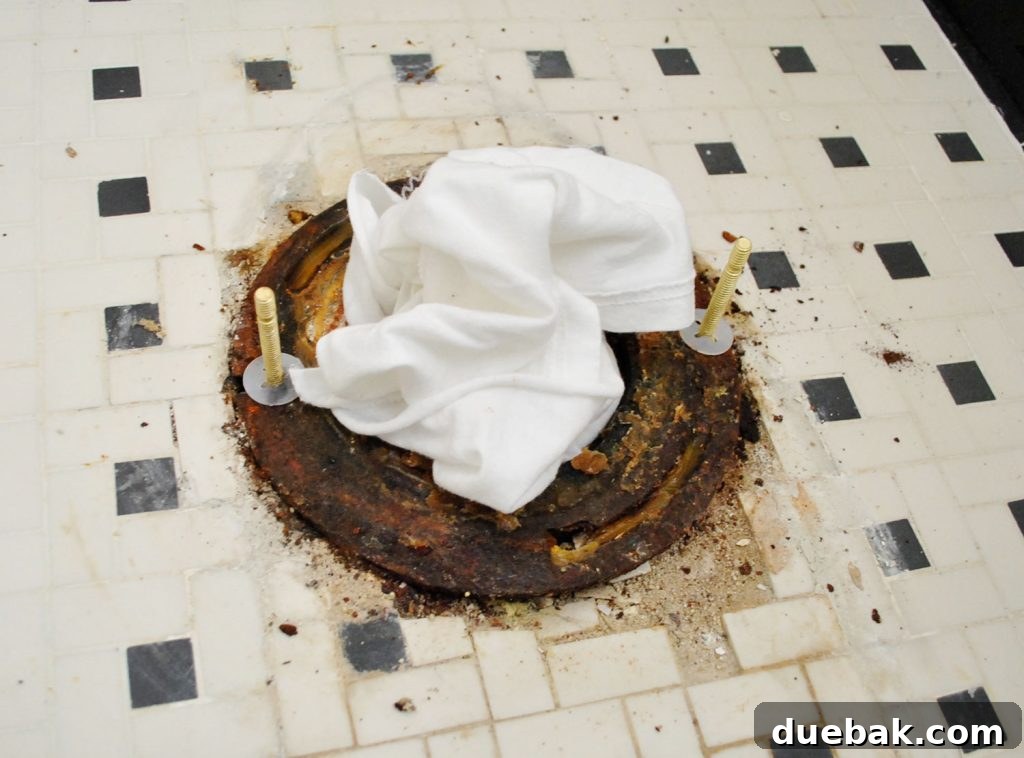
Immediately after lifting the toilet bowl, you’ll see an open drain pipe in the floor. This is your toilet flange (or closet flange). To prevent unpleasant sewer gases from entering your home and to stop anything from accidentally falling into the pipe, stuff a spare rag or an old hand towel into the opening. Just be sure to remove it before you begin the new toilet installation!
Step 4: Prepare The Floor & Flange
With the old toilet removed, this is your chance to prepare a clean, secure foundation for your new installation. Proper preparation of the floor and flange is crucial for a leak-free and stable toilet. Start by thoroughly cleaning the area. Remove all traces of the old wax ring, caulk, and any other debris from around the flange. A utility knife, flathead screwdriver, or putty knife can be used to scrape away the sticky wax. Don’t forget to remove the old rubber gasket (horn) if your wax ring had one.
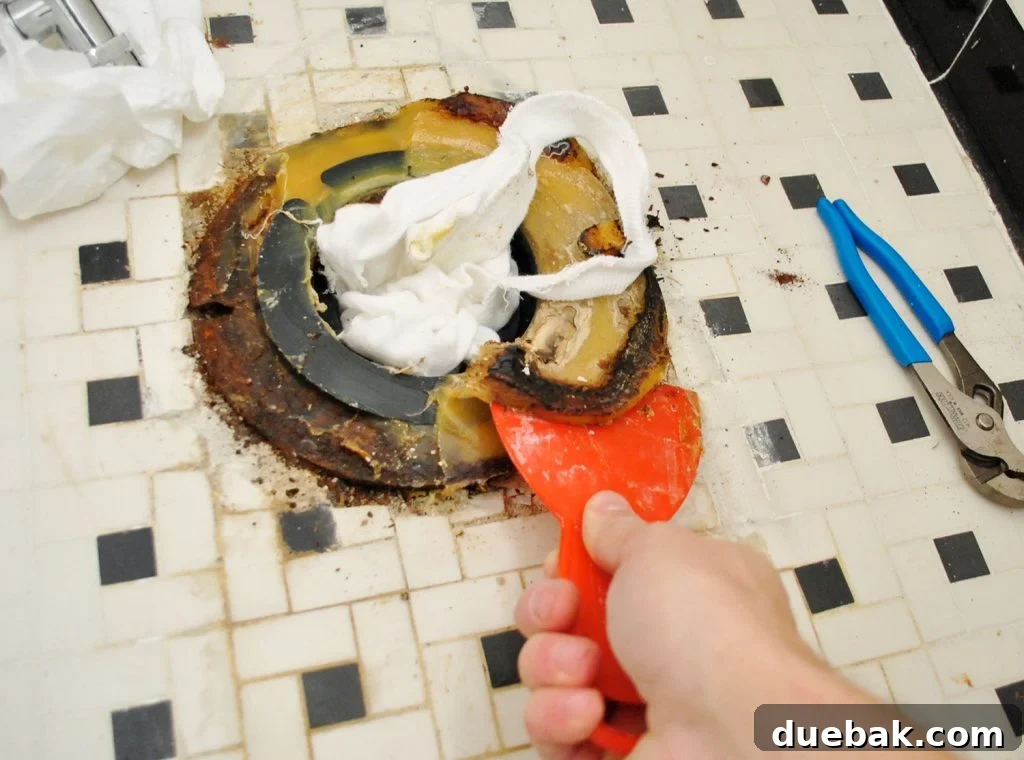
The toilet flange itself – the large metal or PVC ring bolted to your floor – typically doesn’t need to be replaced unless it’s visibly broken, cracked, or severely corroded. However, it’s always recommended to replace the old toilet bolts with the new ones provided in your wax ring kit. These bolts should easily slide out from the keyhole slots in the flange. Once cleared, slide the new bolts into their designated slots, ensuring they are properly centered and upright. Many kits come with plastic clips or washers to help hold them in position. If you are reusing your existing toilet, take the time to scrape off any old wax from the underside of the toilet bowl’s drain opening as well.
Step 5: Add The Wax Ring
The wax ring is a crucial component that creates a watertight and airtight seal between your toilet and the flange, preventing leaks and blocking sewer gases. While the concept is simple, proper placement is key for a successful toilet installation. Most wax ring kits come with a reinforced rubber gasket (horn) for added sealing power. It’s a good idea to have both a standard and an extra-thick wax ring kit on hand, as the depth of your flange or tile thickness can vary, and you won’t know which is ideal until you’ve removed the old toilet. Extra-thick rings are great for flanges that sit below the finished floor level.
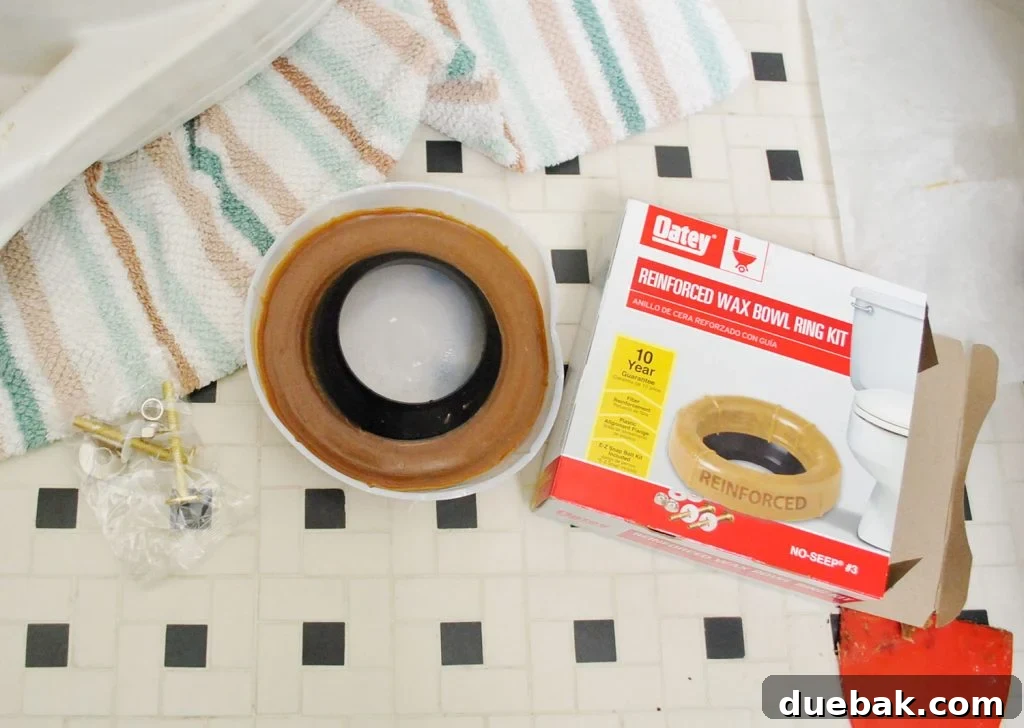
While some plumbers prefer to place the wax ring directly onto the flange, we recommend sticking it to the underside of the toilet bowl. This method often ensures more accurate placement and reduces the risk of the ring shifting as you maneuver the heavy bowl. To do this, lay your new toilet bowl on its side or upside down on an old towel or soft blanket to protect its finish. Carefully center the wax ring over the toilet’s drain opening, with the wax side facing the toilet. Give it a gentle press to ensure it adheres securely to the porcelain. This slight adhesion will help it stay in place as you lift and position the toilet.
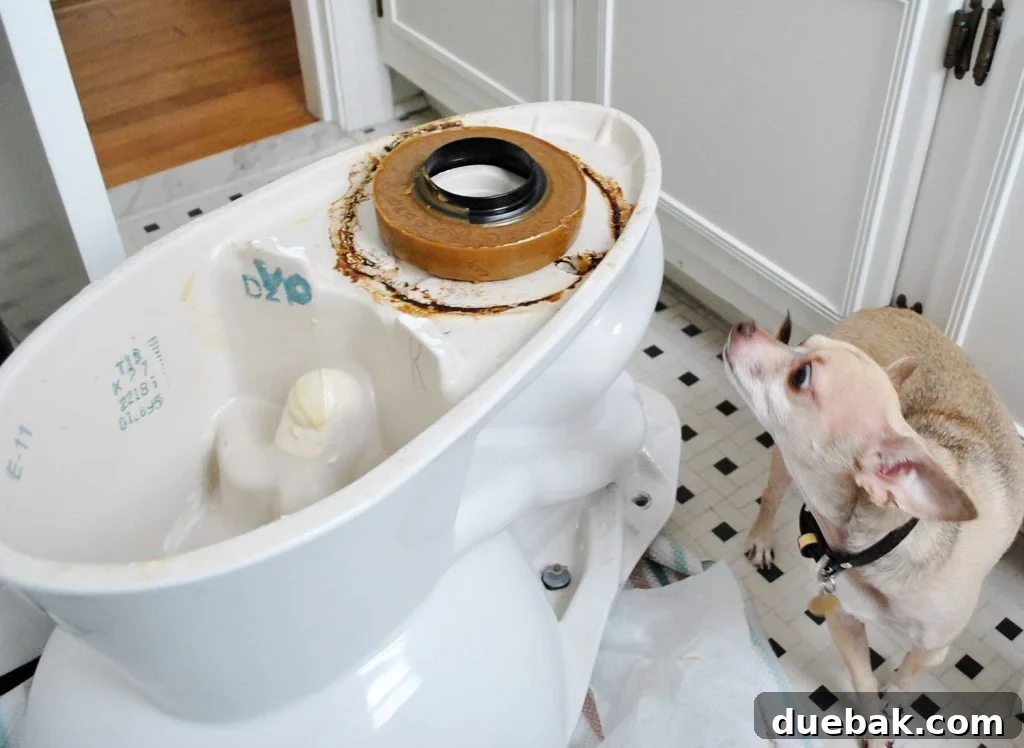
And yes, feel free to let your furry friend conduct a thorough quality control inspection – they might just be your most diligent assistant!
Step 6: Place The Toilet Bowl
This is arguably the most critical and potentially tricky part of the toilet installation process. With the wax ring securely attached to the bottom of the bowl, carefully lift the toilet bowl and lower it straight down over the flange. The goal is to align the bolt holes in the toilet base with the bolts sticking up from the flange. Take your time and, if the bowl is heavy or awkward, enlist a helper to assist with lifting and guiding it. A misaligned placement can deform the wax ring and compromise the seal.
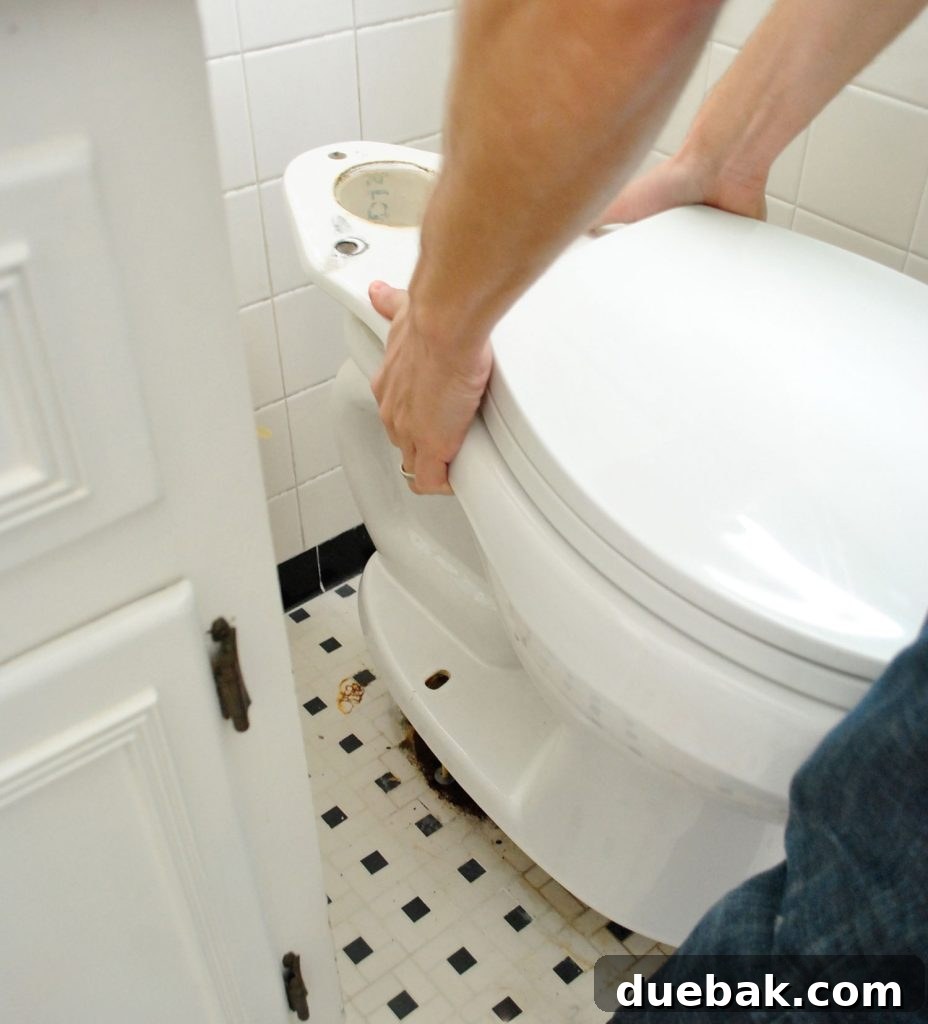
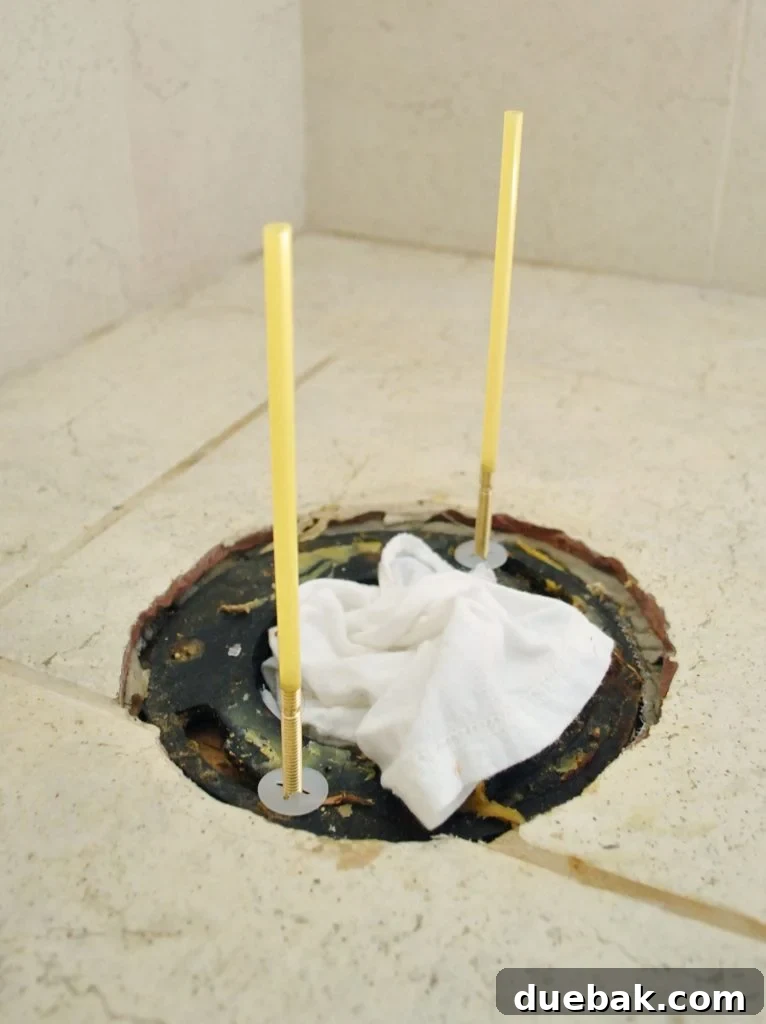
A highly recommended trick to aid in alignment: place drinking straws over each of the flange bolts. These will act as visual guides, making it significantly easier to line up the bolt holes on the toilet base. Remember, *before* you lower the toilet, ensure you have removed the rag that was plugging the drain hole!
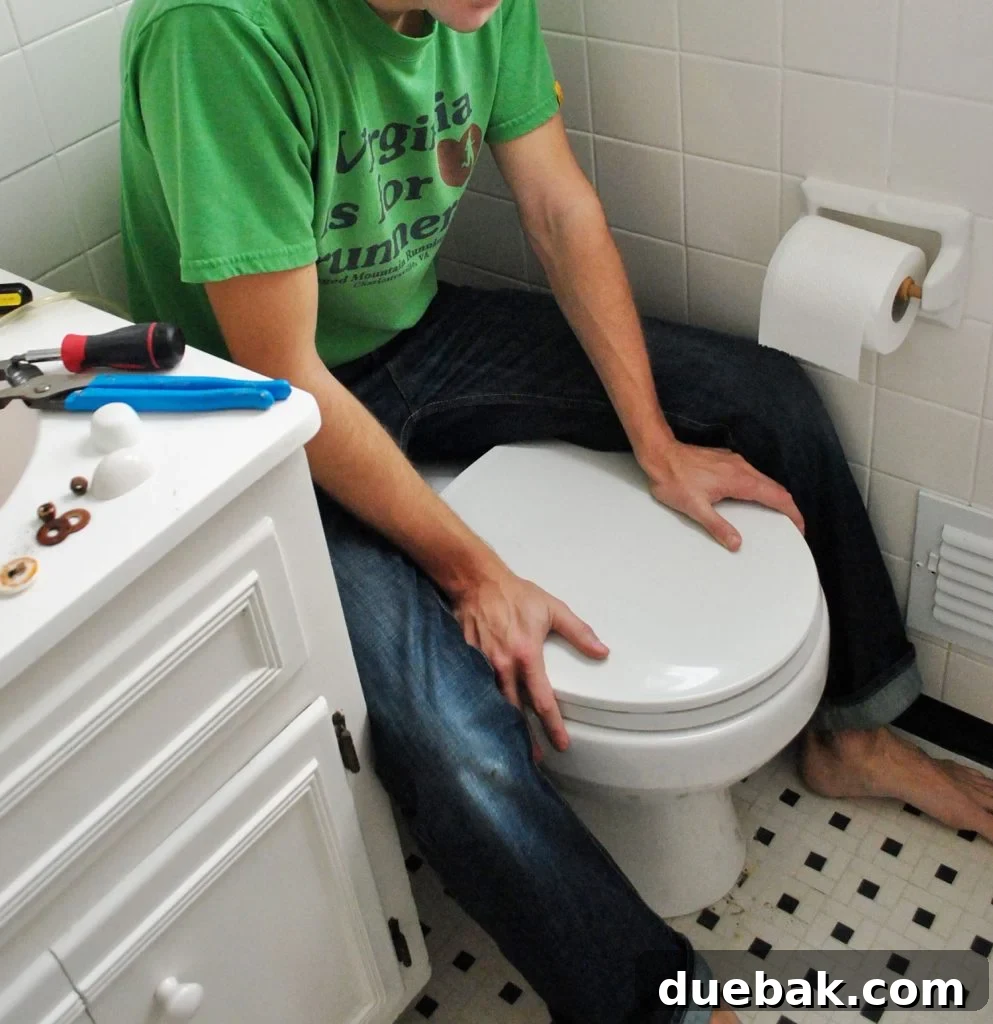
Once you’ve successfully placed the bowl over the bolts, gently but firmly press down on the bowl. This action helps to compress the wax ring, creating a tight seal with the flange. For an even tighter seal, and if you’re confident in your placement, you can carefully sit on the bowl. Your body weight will provide additional downward pressure, ensuring the wax ring fully conforms and seals. After pressing, ensure the toilet is level; use a level tool if desired and make minor adjustments by shifting the toilet slightly before the wax fully sets.
Troubleshooting Placement Problems
It’s common to encounter issues during this step, especially for first-timers or when dealing with a heavy toilet bowl. Bolts can get knocked askew, the bowl might land crooked, or the wax ring could fall off mid-air. The most important rule to remember is: once a wax ring is smooshed, compressed, or deformed in any way, it cannot be reused. Attempting to twist, lift, or shift a misplaced bowl into its correct position will compromise the seal and almost guarantee a leak. If you find yourself in this situation, remove the bowl, discard the old wax ring, grab a fresh one (this is why having a backup is invaluable!), and try again. Patience is key here; a few extra minutes now can save you from a major leak and re-do later.
Step 7: Bolt The Toilet Bowl To The Floor
With the toilet bowl perfectly positioned and the wax ring compressed, it’s time to secure the bowl firmly to the floor. This prevents any future rocking and ensures the wax seal remains intact. Take the provided washers and nuts from your wax ring kit. Place a washer over each bolt, followed by a nut. If your kit includes white plastic washers that connect to the bolt covers, slide those on as well. Start by hand-tightening each nut as far as you can. This initial tightening helps hold the bowl in place without putting too much stress on the porcelain.
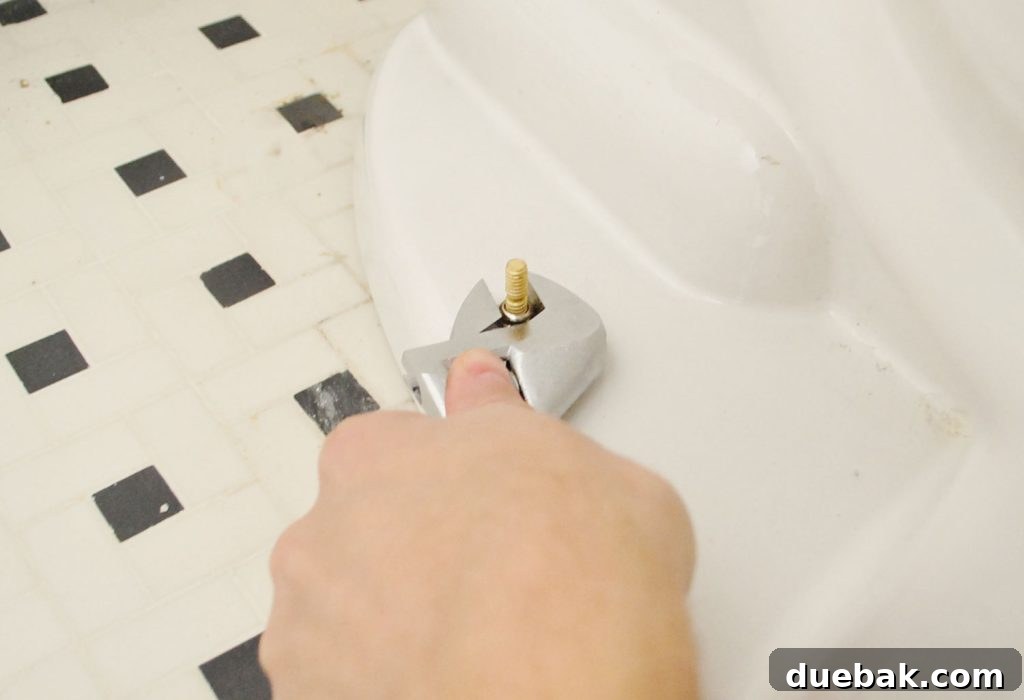
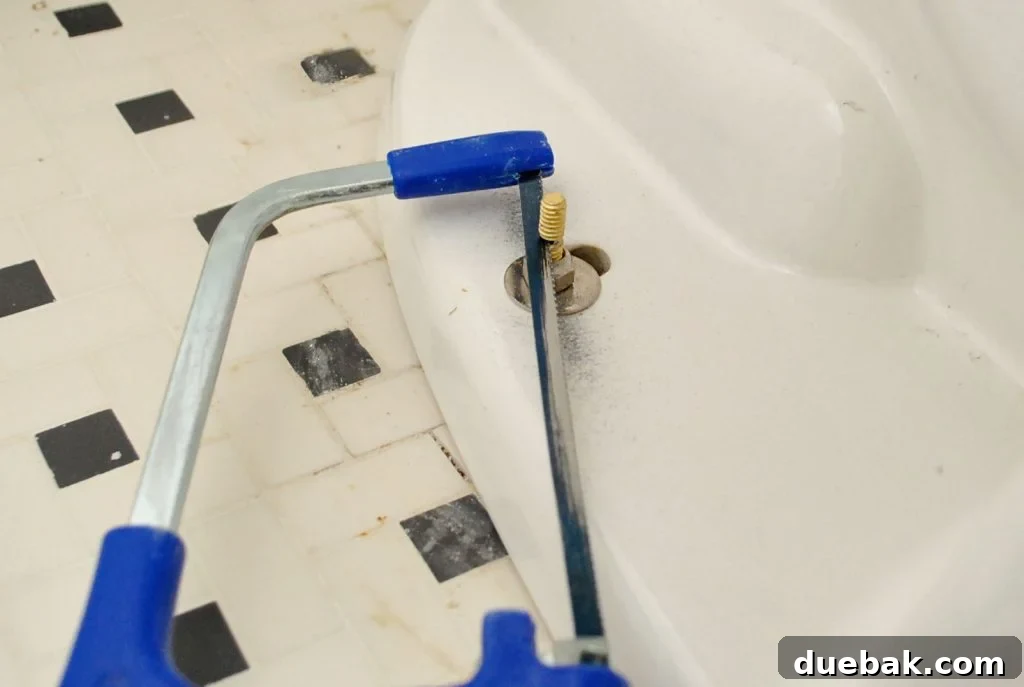
Next, use your wrench to tighten each nut further. The key here is to go slowly and alternate between the two bolts, tightening each one a bit at a time. This method ensures even pressure and prevents cracking the porcelain. You want the nuts to be snug, but *never* overtighten, as porcelain is brittle and can easily crack under excessive force. The toilet should feel stable and not rock. Once the bolts are tightened, use a hacksaw to carefully cut off any excess bolt length that protrudes significantly above the nut. This allows you to snap on the plastic bolt covers, which improve the aesthetic and prevent dirt accumulation.
Step 8: Install The Toilet Tank
If you opted for a two-piece toilet, the next step in your toilet installation is to attach the tank to the bowl. If your tank components (flush valve, fill valve, tank-to-bowl gasket) came disassembled, follow your toilet’s manufacturer instructions to install them first. Once assembled, carefully lift the tank into place. The large rubber gasket on the underside of the tank should align perfectly with the hole at the back of the toilet bowl. Position the tank bolts through the corresponding holes in the bowl.
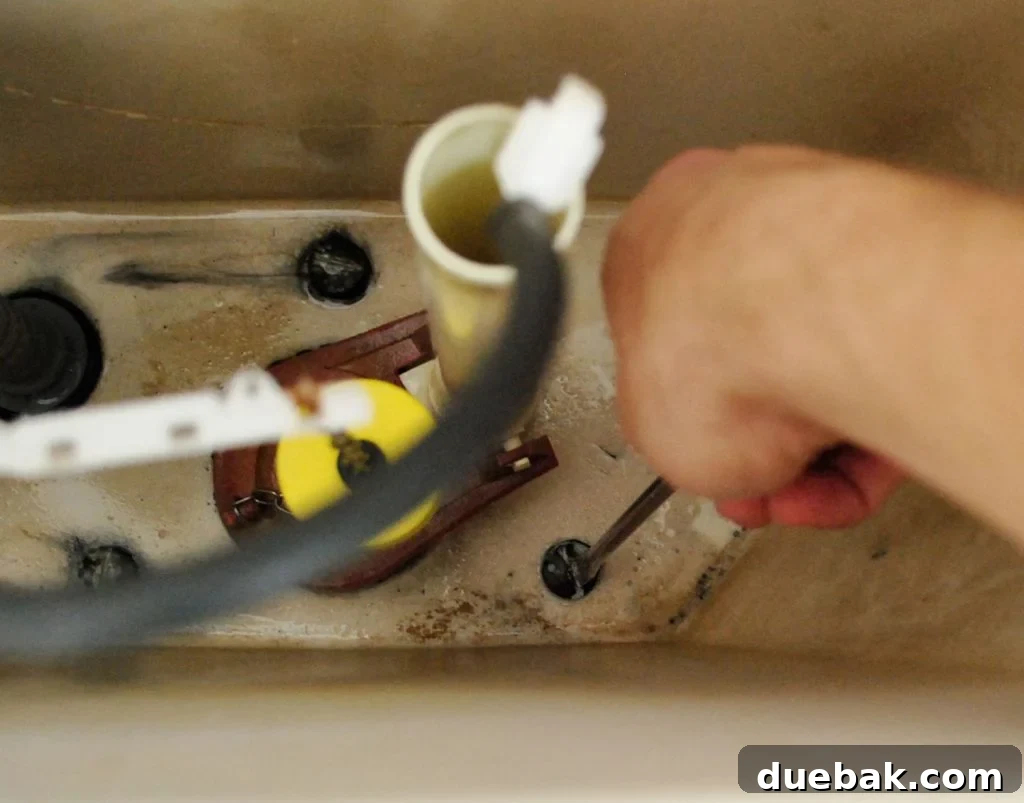
On the underside of the bowl, where the tank bolts protrude, place the provided washers and hand-tighten the nuts as far as possible. Then, using your wrench and a flathead screwdriver (to hold the bolt head inside the tank steady), gradually tighten each nut. Similar to bolting the bowl, it’s crucial to alternate tightening each of the three bolts bit by bit. This ensures even compression of the tank-to-bowl gasket and prevents stressing the porcelain, which could lead to cracks or leaks. You want the tank to be snug and stable, without any wobbling. Many DIYers find it easier to hold the nut stationery under the tank and twist the bolt from above with a screwdriver. Use a level on the tank to confirm it sits evenly on the bowl, adjusting as needed with careful tightening.
Step 9: Connect The Water Line
You’re almost there! The next crucial step in your toilet installation is reconnecting the water supply. Take your flexible water supply line and hand-tighten it onto the bottom of the toilet tank’s fill valve. For an extra layer of leak protection, you can wrap a small amount of plumber’s tape (Teflon tape) clockwise around the threads before connecting the line. Once hand-tight, give it a quarter-turn with your wrench – avoid overtightening, as this can damage the plastic threads.
Now, slowly and carefully turn on the main water supply valve behind the toilet. Listen for the sound of water filling the tank. Once the tank is full, flush the toilet a couple of times. This helps to check the flushing mechanism and, most importantly, allows you to meticulously inspect for any leaks. Leaks can appear in several common locations:
- Where the water supply line meets the tank: If you see drips here, try tightening the connection slightly more with your wrench.
- At the bolts or rubber gaskets between the tank and bowl: If water seeps from these points, gently tighten the tank bolts a little further, alternating between them. If the leak persists, you might need to empty the tank and inspect or replace the rubber washers/gaskets inside.
- Underneath the bowl, around the wax ring: This is the most serious type of leak. To check for it, slide a paper towel or a dry rag under the edge of the toilet base. If it comes back wet, it means your wax ring seal is compromised. Unfortunately, a leak here requires you to remove the toilet, replace the wax ring with a new one, and reinstall it.
Early detection of leaks is key. Don’t hesitate to spend a few minutes observing after the water is turned on and after a couple of flushes. A small leak ignored now can lead to significant water damage later.
Step 10: Finish The Toilet Installation
With the water connected and no leaks detected, you’re on the home stretch! The final steps involve adding the finishing touches that make your new toilet fully functional and aesthetically pleasing. First, install the toilet seat. Most toilet seats come with simple bolt-and-nut attachments that secure through holes at the back of the bowl. Follow the manufacturer’s instructions, as designs can vary.
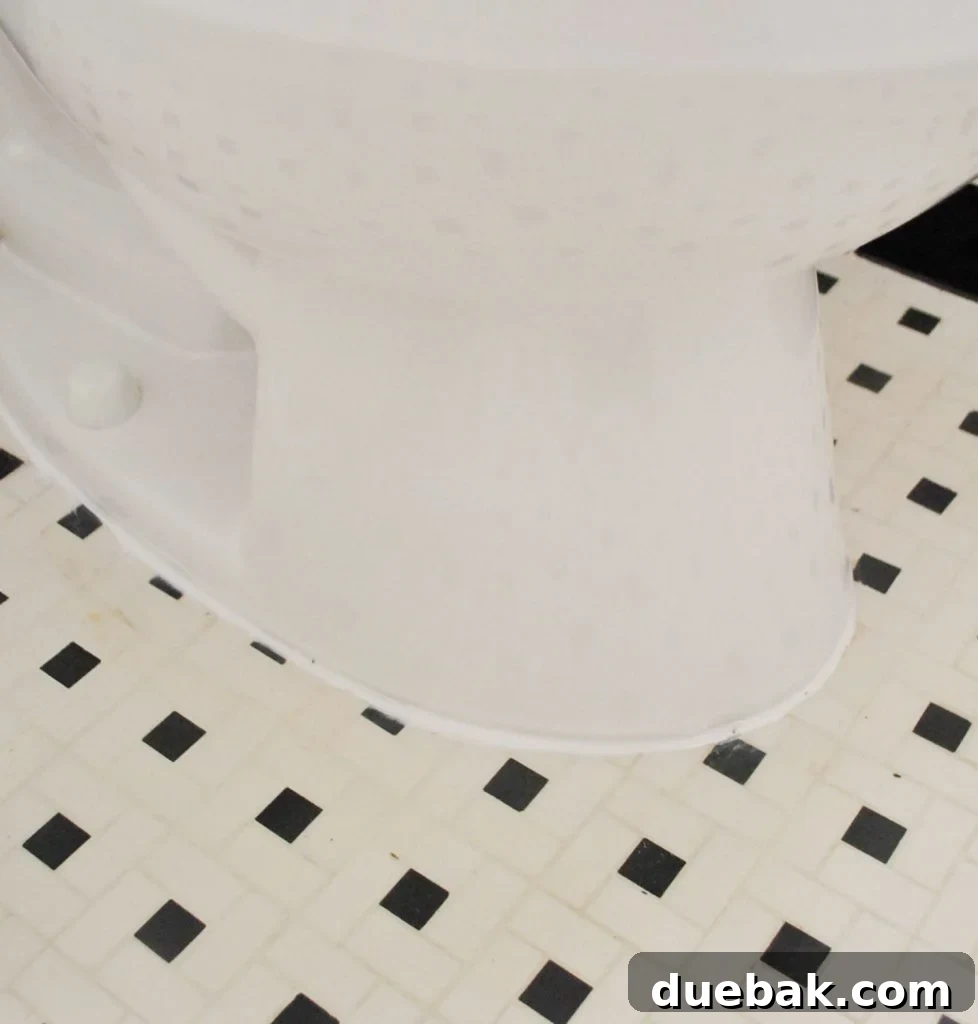
Next, you might want to make minor adjustments to the flushing mechanism inside the tank. Most modern toilets allow for adjustments to the float or chain length to fine-tune water usage and flush power. Consult your toilet’s manual for specific instructions. Finally, and highly recommended for both hygiene and stability, apply a bead of white silicone caulk around the base of the toilet where it meets the floor. This not only gives a clean, finished look but also seals off any crevices where dirt, spills (like those from potty training), or moisture could accumulate. This barrier helps prevent mold and mildew growth and can even contribute to preventing the toilet from rocking over time. Use painter’s tape to create clean lines for caulking, if desired, and smooth the bead with a wet finger or caulking tool.
Bonus Step: Get Rid Of Your Old Toilet
Congratulations, your new toilet is perfectly installed! But now you’re left with the old one. Don’t just toss it in the regular trash, as most landfills have restrictions on large ceramic items. Instead, consider more environmentally friendly and resourceful options. If your old toilet is still in decent, usable condition (even if it’s just a bit dated), consider donating it. Organizations like Habitat for Humanity ReStores are often happy to accept old toilets after a thorough cleaning, giving them a second life and supporting a good cause. We once even managed to sell an old toilet on Craigslist for about $80! This is a great way to recoup a small part of your new toilet’s cost. Alternatively, check with your local waste management services for ceramic recycling programs or special bulk pick-up days. Always ensure any old toilet is cleaned and sanitized before donation or disposal.
Toilet Installation FAQs
Can I install a toilet myself?
Absolutely! Installing a toilet is a very beginner-friendly plumbing DIY project. While a toilet bowl can be heavy (ranging from 80 to 120 lbs for a complete unit), opting for a two-piece toilet significantly eases the process, as the bowl and tank can be handled separately. While it’s achievable solo, having a helper to assist with lifting and guiding the heavier components often makes the process smoother, safer, and less strenuous. Many homeowners successfully tackle this project themselves, saving on professional plumbing fees.
Do I need a plumber to install a toilet?
Not necessarily! If you can patiently follow directions, are comfortable with basic tools, and can handle the lifting requirements, you can definitely install a toilet yourself. We’ve done several DIY toilet installations, even as brand-new homeowners with minimal experience. However, if any of the steps or tools described feel beyond your comfort or skill level, or if you encounter unexpected plumbing issues (like a broken flange or old, corroded pipes), don’t hesitate to call a professional plumber. Your safety and peace of mind are paramount.
Do I need to caulk around my toilet?
Yes, caulking around the base of your toilet is highly recommended. While not always mandatory for the toilet’s primary function, it offers multiple benefits. A neat bead of silicone caulk improves aesthetics by hiding any gaps between the toilet and the floor. More importantly, it creates a sanitary seal, preventing dirty water, urine, or spills from seeping underneath the toilet, which can lead to unpleasant odors, mold, and mildew growth. Caulking also helps to stabilize the toilet, preventing it from rocking over time, which can ultimately compromise the wax ring seal. Leave a small gap (about an inch) at the very back of the toilet uncaulked, which allows for any internal leaks to become visible, indicating a problem before it can cause extensive damage.
Other Toilet How-Tos & Bathroom Renovation Tips
Now that you’ve mastered the art of toilet installation, you might be interested in exploring other related tutorials and information to further enhance your bathroom or tackle more DIY challenges. Here are some resources to keep your plumbing knowledge flowing:
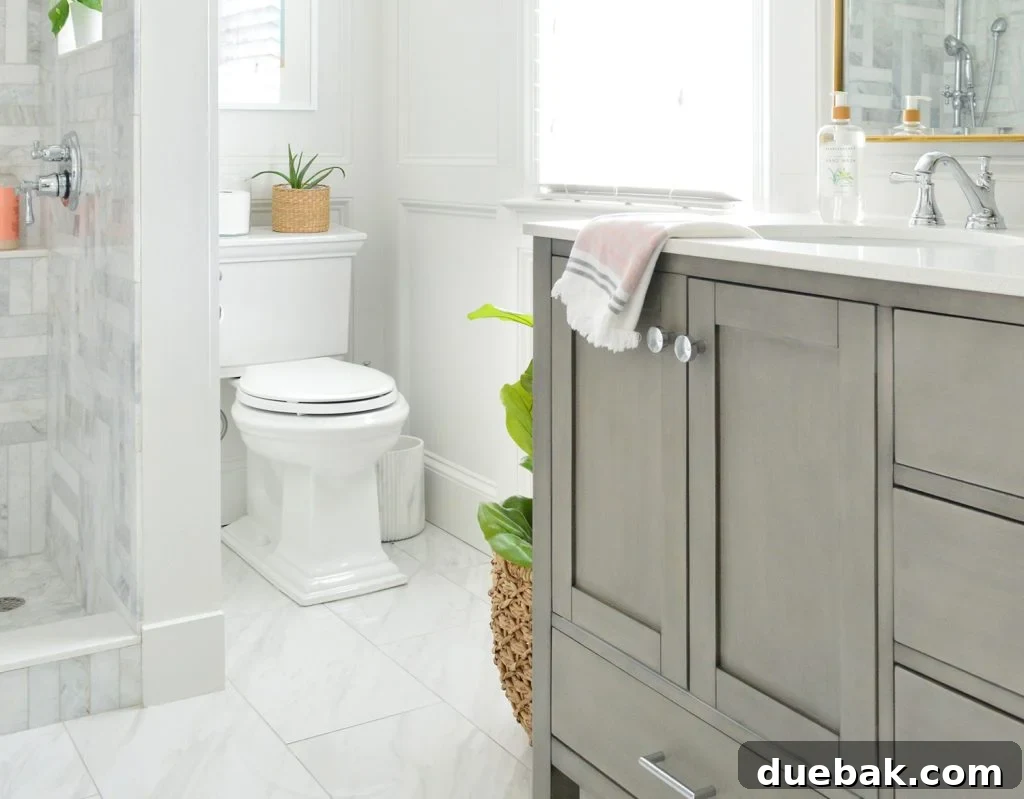
- Our Favorite Toilet Model (Discover why this specific Kohler is our top pick for performance and style).
- How to Fix A Rocking Toilet (If your toilet is wobbly, learn the simple steps to stabilize it without a full replacement).
- How To Unclog A Bathtub Drain Without Harsh Chemicals (Eco-friendly solutions for common drain issues).
- Convert A Toilet To Dual Flush (Upgrade your existing toilet for better water efficiency).
- Fixing A Backed Up Toilet Line (Troubleshooting and solutions for more complex toilet clogs).
*This post contains affiliate links, so we may earn a small commission when you make a purchase through links on our site at no additional cost to you.