
Unearthing History: A 1950s Kenmore Dryer Manual and the Evolution of Home Appliances
Every spring, the ritual of tidying and decluttering offers a fresh start, a chance to clear out the old to make way for the new. But sometimes, what begins as a simple spring clean can transform into something far more intriguing—an unexpected journey into the past. This was precisely our experience when, amidst a pile of forgotten documents, an extraordinary piece of history surfaced, turning a mundane task into an archaeological adventure right in our own filing cabinet.
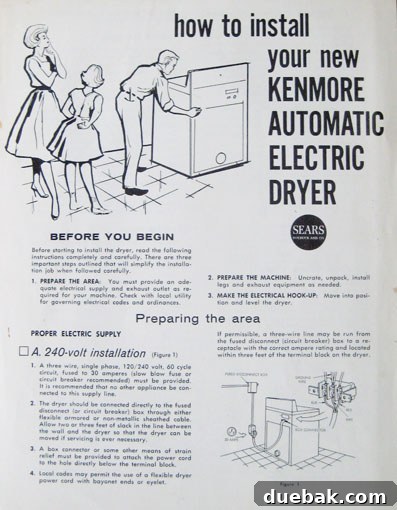
While certainly not a dinosaur bone or a forgotten ancient artifact, the discovery was, in its own way, remarkable. What we unearthed was the pristine, albeit yellowed, installation manual for our former dryer – a truly antique appliance that had long since been retired. This relic had somehow evaded our initial sweeps through the files we inherited with our home, a testament to its quiet persistence nestled amongst more contemporary papers. Its presence was a delightful surprise, prompting immediate curiosity about its origins and the appliance it once accompanied.
A Blast From The Past: Decoding the Vintage Dryer Manual
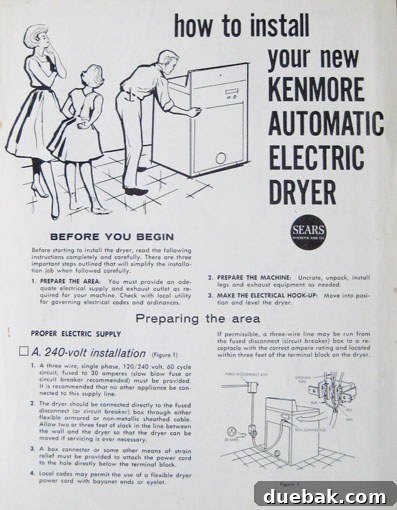
The manual itself was a captivating artifact. Its pages, brittle with age, bore the unmistakable hallmarks of mid-20th-century design. Vintage illustrations, a charming blend of technical precision and artistic flair, detailed assembly instructions and operational guidelines in a style rarely seen today. But the most significant clue to its age was the prominent logo: the iconic Sears, Roebuck and Co., a retail giant that once dominated American commerce. This, combined with the classic typography and simple, direct language, strongly indicated that we were holding a piece of the 1950s.
Based on these visual cues, we confidently dated the manual, and consequently, our old Kenmore dryer, to the mid-1950s. This revelation struck us with a moment of profound realization: our former laundry appliances were likely original to our 1956 house! It’s a common fantasy for homeowners to imagine their house’s original features, but rarely do such venerable appliances remain in place, let alone function, for so long. This discovery added a layer of historical depth to our home, connecting us more intimately to its past and the lives of its previous occupants.
The Enduring Legacy of Sears, Roebuck and Co. and Kenmore Appliances
The presence of the Sears, Roebuck and Co. logo instantly transports one back to an era when American households relied heavily on this retail behemoth for everything from clothing to home appliances. Sears, through its popular Kenmore brand, became synonymous with reliable, affordable, and durable home goods. The fact that a Kenmore dryer from the 1950s was still in service in the 21st century speaks volumes about the manufacturing quality and consumer expectations of that time. Appliances were built to last, often for decades, unlike many modern counterparts designed with a shorter lifespan in mind. This manual wasn’t just instructions; it was a tangible link to a different philosophy of consumption and engineering, where longevity was a core value.
Our Beloved, Archaic Kenmore Dryer: A True Household Relic
While the manual was an interesting find, the dryer it described was even more legendary in our household. We had, for years, marveled at its sheer endurance, if not its efficiency or aesthetic appeal. The decision to finally replace it was not taken lightly, but rather a concession to the inexorable march of technological progress and the desire for more modern conveniences. The old Kenmore, though a faithful servant, was admittedly an eyesore, a hulking metallic beast that seemed to defy modern design sensibilities. Its functionality was rudimentary by today’s standards, often requiring multiple cycles to achieve adequately dry clothes and producing a symphony of clunks and whirs that could rival a small construction site.
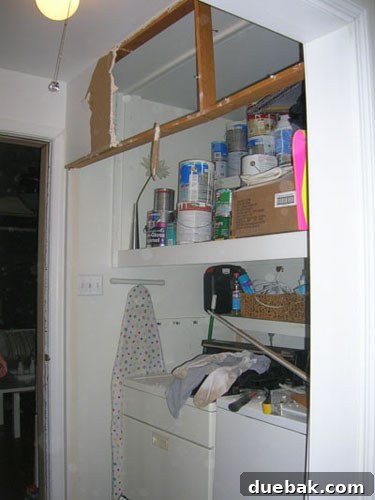
Our final interaction with this venerable machine provided yet another unforgettable anecdote. As Lowe’s technicians arrived to haul it away for donation, one of the movers was visibly astonished. He recounted how, in all his years of appliance removal, he had never encountered anything quite like it. His amazement stemmed from the discovery of actual cinder blocks built directly into the base of the dryer. These weren’t merely external weights; they were integral to the appliance’s foundational structure, designed to prevent the massive machine from scooting around during its notoriously vigorous spin cycles. This ingenious, albeit crude, engineering solution further cemented our dryer’s status as a genuine relic, a testament to 1950s ingenuity in solving practical household problems.
The Quirks of Vintage Appliance Engineering: Cinder Blocks and Longevity
The use of cinder blocks in the dryer’s base is a fascinating peek into the engineering practices of the mid-20th century. In an era before advanced vibration dampening technology or lightweight, high-strength materials were commonplace, manufacturers had to find practical solutions to common issues like appliance instability. Cinder blocks, heavy and readily available, provided the necessary ballast to anchor the dryer firmly to the floor, preventing it from “walking” across the laundry room during operation. This robust, almost over-engineered approach contributed significantly to the appliance’s incredible longevity. While modern dryers achieve stability through sophisticated suspension systems and precision balancing, our old Kenmore relied on sheer mass. This anecdote not only highlights the stark contrast between past and present appliance design but also evokes a sense of nostalgia for a time when products were built with an uncompromising focus on durability and mechanical robustness.
Embracing the Modern: A New Era of Laundry Convenience
Admittedly, there’s a certain pang of guilt that accompanies the letting go of such an “antique,” especially one with so many stories to tell. The Kenmore dryer represented not just an appliance, but a piece of our home’s history, a tangible link to generations past. However, practicality, efficiency, and comfort ultimately won out. The last half-century has seen exponential developments in home appliance technology, and we were eager to embrace them.
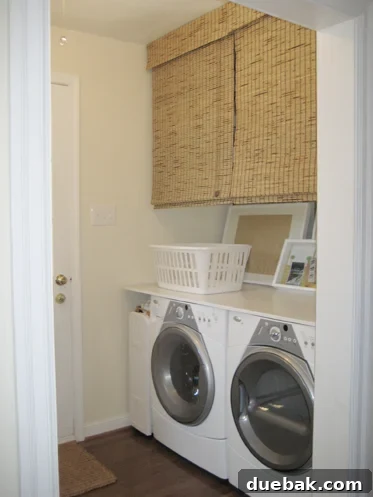
Our new front-loading dryer, alongside its matching washing machine, represents the pinnacle of modern laundry convenience. The transformation in our laundry routine has been nothing short of revolutionary. We now clean our clothes in significantly less time, a precious commodity in our busy lives. The deafening roar of the old machine has been replaced by a quiet hum, allowing us to run laundry without disturbing the household. Perhaps most importantly, the energy efficiency of these new appliances translates into noticeable savings on our electricity bill, a welcome bonus in an era of rising utility costs. The advanced sensor technology ensures clothes are dried perfectly, preventing over-drying and preserving fabric quality. Furthermore, the sleek, contemporary design of the new front-loaders is a far cry from the utilitarian bulk of their predecessor, offering a much more aesthetically pleasing addition to our home.
Beyond Aesthetics: The Practical Advantages of Modern Front-Loaders
The benefits of upgrading to a modern front-loading dryer extend far beyond mere aesthetics. Today’s dryers offer a suite of features that significantly enhance the user experience and garment care. Sensor drying, for instance, automatically detects moisture levels and stops the cycle when clothes are dry, preventing damage from over-drying and conserving energy. Steam functions help de-wrinkle clothes and sanitize items, reducing the need for ironing and offering a deeper clean. Larger capacities mean fewer loads, saving time and water. The ergonomic design of front-loaders, with their eye-level controls and often stackable configuration, can also make them more user-friendly for individuals with mobility challenges or those looking to maximize laundry room space. The integration of smart technology in many new models allows for remote control and monitoring via smartphones, adding an unparalleled level of convenience to everyday chores. These advancements collectively underscore just how far laundry appliance technology has evolved from the cinder-block-stabilized machines of the 1950s.
Reflecting on Progress: A Balanced View of Old and New
While a part of us will always fondly remember the charmingly antiquated Kenmore dryer and its manual, the practical benefits of modern technology are undeniable. Our journey from uncovering a vintage instruction manual to embracing the latest in laundry innovation has been a vivid reminder of how dramatically our homes and the appliances within them have transformed over the decades. It’s a testament to human ingenuity and the relentless pursuit of efficiency, convenience, and sustainability.
This experience wasn’t just about replacing an old appliance; it was about connecting with history, understanding the evolution of domestic technology, and appreciating the incredible progress made in making our daily lives easier, more efficient, and more enjoyable. So, while we may feel a tiny pang of guilt for letting go of a true antique, we can certainly appreciate the significant strides that have been made in the last half-century, ensuring our clothes are cleaned and dried with less time, less noise, less electricity, and a whole lot more style.