
Transform Your Laundry Room: A DIY Guide to Custom Shelving, Waterfall Edges, and Smart Appliance Installation
Embarking on a laundry room renovation can be one of the most rewarding home improvement projects. It’s a space that combines functionality with the potential for stunning design. Our recent DIY journey through our laundry room transformation showcases how thoughtful planning and hands-on effort can yield impressive results, from a stylish custom shelf with a sleek waterfall edge to crucial appliance installation details that often get overlooked. Join us as we dive into the specifics of crafting a beautiful and efficient laundry space.
Crafting a Custom Laundry Room Shelf: Design, Construction, and the Signature Waterfall Edge
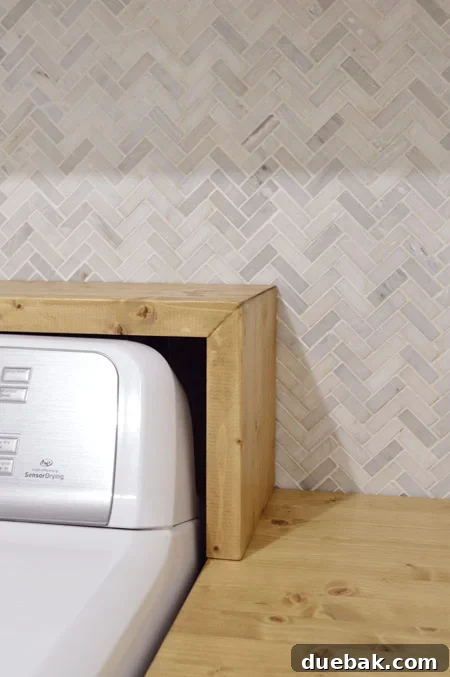
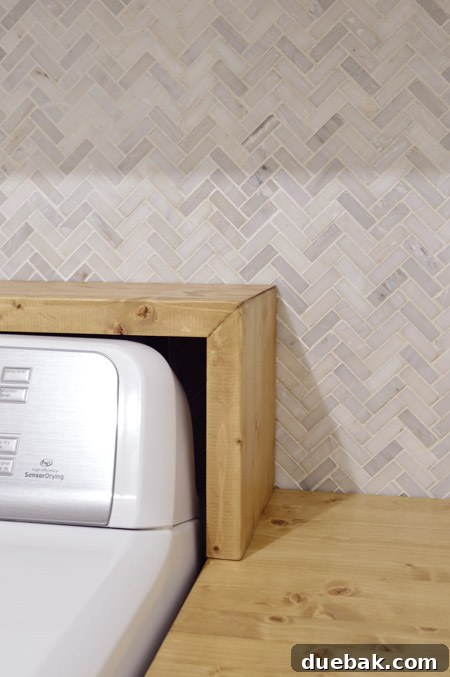
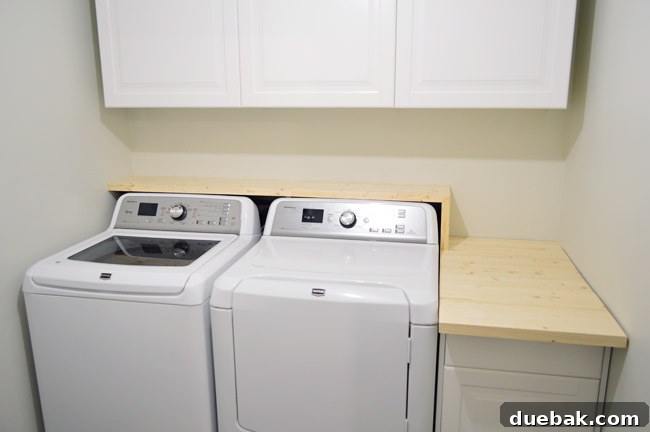
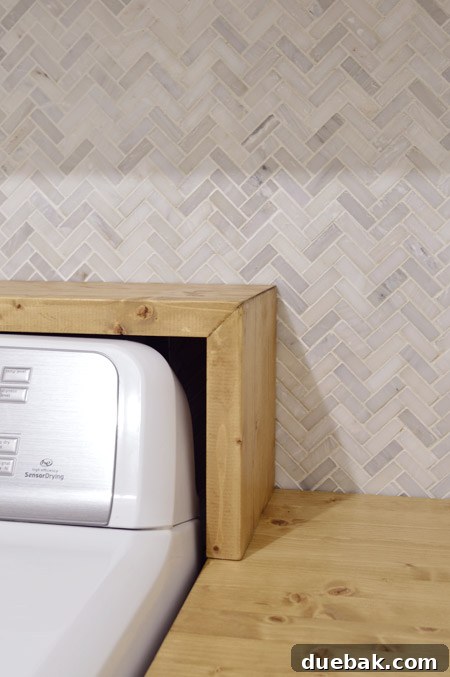
The centerpiece of our laundry room makeover is undoubtedly the custom shelf. Unlike many conventional shelving units, ours features a elegant waterfall edge and a light, natural stain, giving it a modern yet warm butcher block aesthetic. This project was a straightforward DIY endeavor, primarily involving carefully selected wood and a quality stain/sealer. The result is not just a functional storage solution but a significant design element that elevates the entire room.
Inspiration Behind the Natural Wood Aesthetic
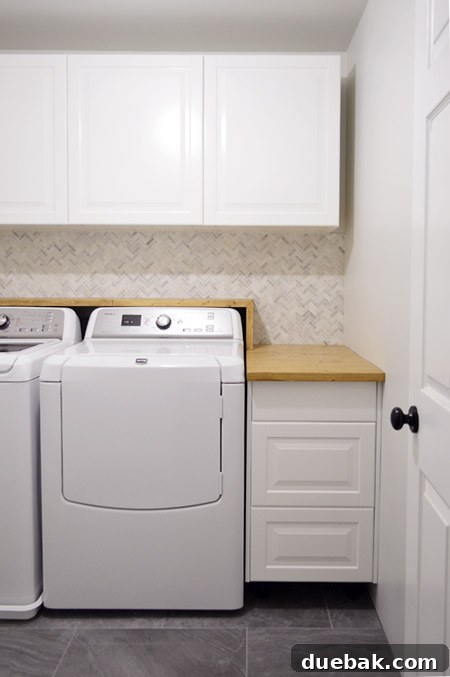
For this project, we intentionally steered away from our usual darker mocha stain preferences. Our inspiration stemmed from numerous modern interiors we’d admired, which expertly blended light-colored cabinets and tiles with natural wood accents. This combination introduces texture and a comforting warmth that prevents the space from feeling too sterile or monochromatic. The contrast creates visual interest and depth, making the laundry room feel more inviting. We believe this choice perfectly complements the bright foundation of the room, allowing us to layer in additional decor and functionality over time. While the room still awaits some finishing touches like crown molding, baseboards, and hardware, the vision for a bright, organic, and highly functional space is clearly taking shape.
Essential Appliance Installation: Navigating the Washer Pan and Dryer Vent Challenges
Before we delve deeper into the shelf construction, it’s crucial to discuss a critical, often-overlooked aspect of laundry room renovations: appliance installation, particularly the integration of a washer pan and overflow drain. We wanted to share our process, as detailed tutorials on this specific step were surprisingly scarce during our research.
Understanding the Vital Role of a Washer Pan and Overflow Drain
For those unfamiliar, a washer pan is a shallow tray typically placed beneath a washing machine, especially when installed on an upper floor. Its primary purpose is to contain any leaks from the washer, preventing water damage from potentially flooding your home, rotting floors, or causing structural issues. While this might sound like a worst-case scenario straight out of a cartoon, the potential for significant damage makes it a crucial consideration for any homeowner. The peace of mind alone makes it a worthwhile addition.
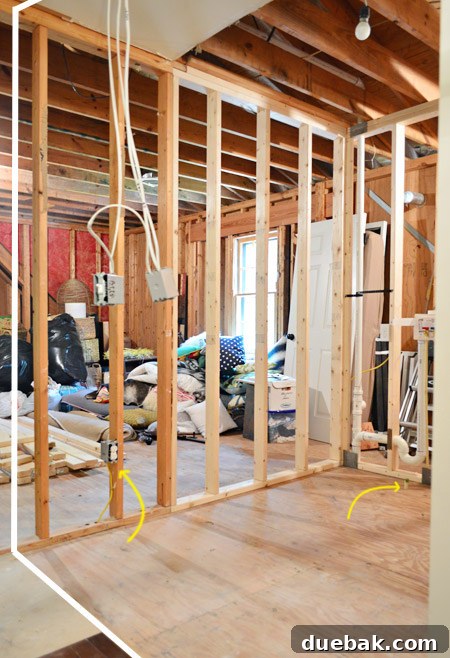
Interestingly, when consulting with various contractors and plumbers, we received mixed opinions on the necessity of a washer pan and an overflow drain. In our area, there’s no specific building code mandating its installation. Some professionals even suggested it might not make a significant difference in the event of a major leak. However, others strongly advocated for it, emphasizing its ability to save considerable trouble from slow, often unnoticed leaks that could otherwise cause extensive damage over time. Prioritizing prevention over potential disaster, we opted for a washer pan and had our plumbers install the overflow drain when they were already on-site reconfiguring the other plumbing hook-ups. This relatively small investment (included in our $375 plumbing fee) offers invaluable protection for our home. Note: For those curious about the electrical setup, this shot also reveals the additional outlets we strategically added to the room, enhancing its functionality.
Seamless Integration with Flooring: The Adjustable Drain Pipe
Eagle-eyed readers might have noticed the overflow drain pipe peeking through various stages of our flooring installation. For instance, it’s visible in this thinset shot from our floor tiling post. A key design feature was the drain’s adjustable nature, allowing us to gently raise or lower the pipe from the garage ceiling below. This flexibility proved incredibly convenient during the flooring process, preventing us from constantly tripping over it and ensuring a clean finish around the drain opening.
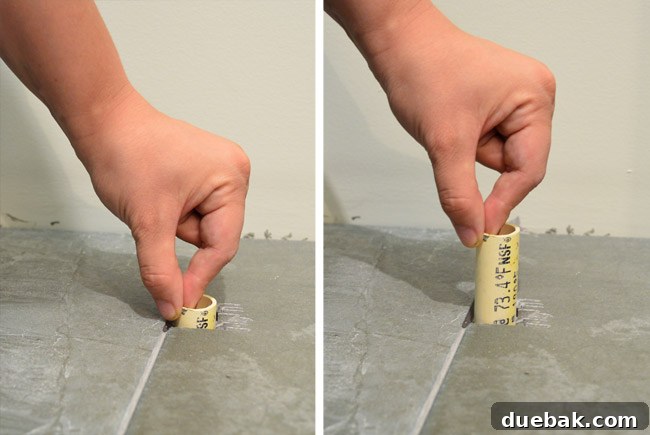
Precise Appliance Placement: A Critical First Step
After the plumber provided instructions for attaching the washer pan, our first task was to meticulously determine the exact placement of both the washer and dryer. This crucial step ensured the pan would be precisely positioned. While the washer could sit almost flush against the back wall, the dryer presented a unique challenge. Best practice for dryer installation recommends leaving some excess semi-rigid ducting behind the unit. This allows the dryer to be easily pulled away from the wall for maintenance without damaging the vent connection. This ducting inevitably occupies a significant amount of space, pushing the dryer out roughly 8 inches from the back wall, even when nested as compactly as possible.
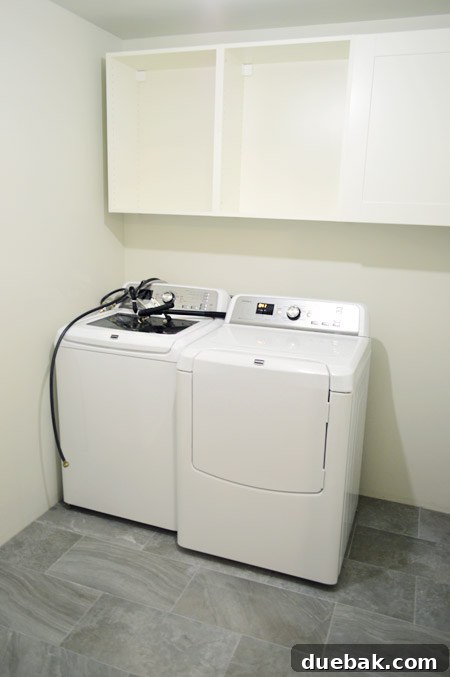
Note: While there are systems available to recess the ducting within wall studs, they typically require a vent that goes up to the ceiling. Our dryer vent, however, routes straight out under the attic stairs (more details on our vent system can be found here), rendering these recessed systems incompatible for our setup.
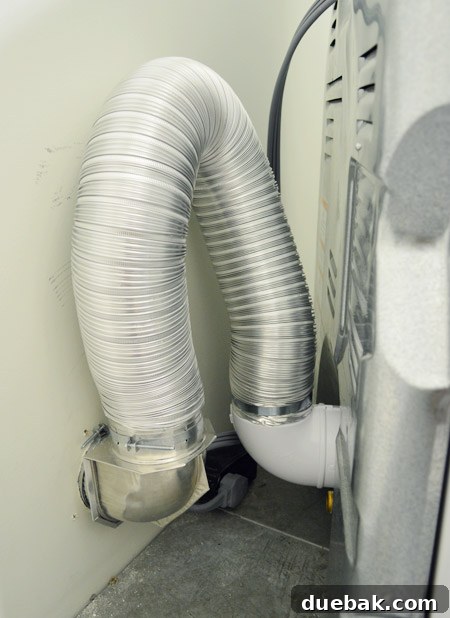
Fortunately, the space required for the dryer vent wasn’t an issue for our design, as we had anticipated it and factored it into our shelf plans. Once the dryer’s final placement was confirmed, we could then precisely determine where the washer needed to sit to match that depth, ensuring the washer pan wouldn’t protrude too far or be recessed too deeply. We carefully marked this critical line on the floor with tape, providing an exact guide for pan placement once the washer was temporarily moved out of the way.
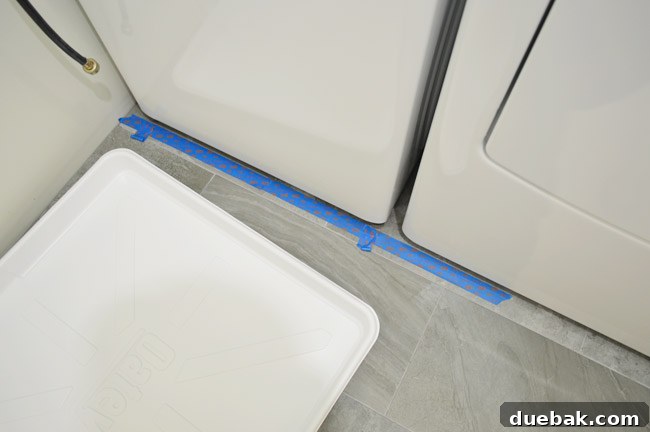
The “Super Scientific” Method for Cutting the Pan Hole
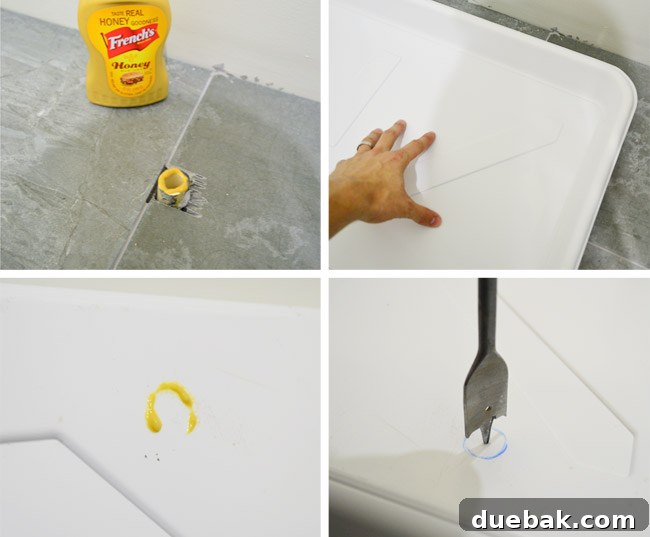
To cut the necessary hole in the washer pan for the drain pipe, our plumber recommended a surprisingly ingenious — albeit unconventional — method involving mustard. The technique was simple yet effective: squirt a small amount of mustard onto the drain pipe, then carefully press the washer pan onto it, using the tape markers on the floor as a guide for correct alignment. The mustard leaves a precise mark on the pan, indicating where to drill. To make the mark more visible and durable, I traced over our mustard circle with a Sharpie, as the lingering scent of mustard, while nostalgic, wasn’t ideal without a hot dog accompaniment.
Ensuring a Watertight Seal: Epoxy and Silicone Caulk
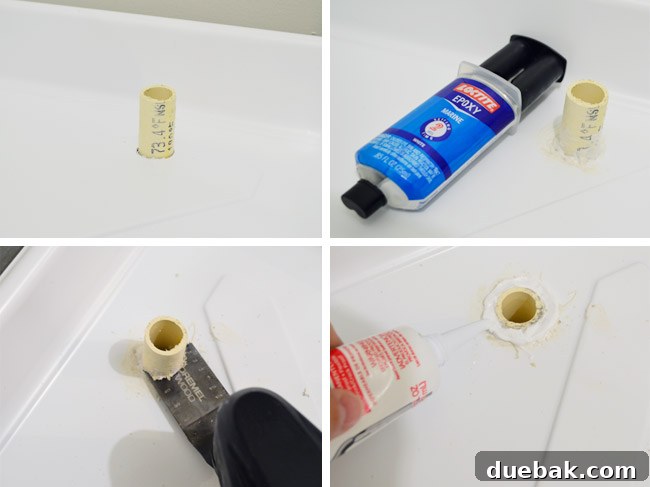
With the drain pipe inserted into the pan, the plumber’s initial instruction was to “silicone caulk the heck out of it.” However, I felt a single layer of caulk might not provide adequate long-term security. Silicone caulk offers flexibility, and I worried that the sheer weight and vibration of a running washing machine might compromise the seal over time. To ensure maximum durability and watertight integrity, I consulted another plumbing professional and an expert at Home Depot. Both independently recommended using an epoxy adhesive for initial bonding, specifically a marine-grade option like Loctite Marine Epoxy, known for its exceptional waterproof properties.
So, our revised and robust approach involved first gluing the drain pipe and pan together with the marine epoxy, allowing it to cure overnight for optimal strength. After curing, I used a Dremel tool to carefully trim any excess pipe flush with the pan’s surface, ensuring unimpeded water drainage. Only then did I apply a generous amount of silicone caulk around the joint as an added layer of protection and seal. This dual-layer approach provides both rigid adhesion and flexible waterproofing, offering superior protection against leaks.
The Final Push: Positioning the Appliances
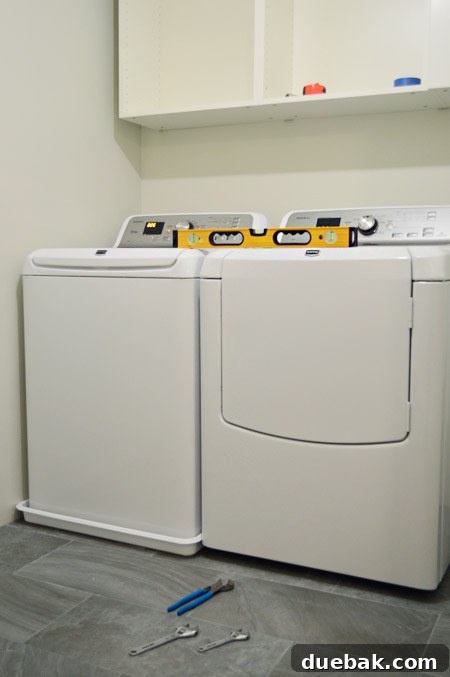
The moment of truth arrived when it was time to hoist the washer over the lip of the pan and into its designated spot. While we have no photographic evidence of the strenuous effort, I can assure you our faces were a picture of determination, likely a shade of red and certainly extra veiny. Following the washer, we meticulously adjusted the dryer’s feet to ensure it was perfectly level with the washer. Our goal was not only for the fronts of both appliances to align seamlessly but also for their tops to be at the exact same height. This attention to detail contributes significantly to the room’s aesthetic appeal and functionality. The moment everything finally lined up was akin to hitting the jackpot, prompting a small celebration. Having a fully installed and functional washer and dryer again was a major milestone in our renovation journey.
A Quick Detour: Ikea Cabinet Upgrades
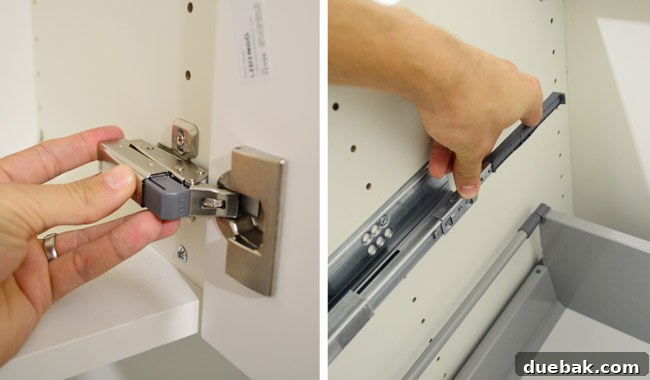
Speaking of small but impactful adjustments, following our post on the Ikea cabinets, several readers wisely recommended adding the soft-close drawer and door mechanisms. We had planned to pick these up on our next trip to Ikea. To our pleasant surprise, a mere 12 hours later, we discovered the Ikea associate had already included them in our order, tucked away with the under-cabinet lighting. This unexpected upgrade proved invaluable; we’d estimate our drawers and doors are now approximately 35 times less prone to slamming, a definite improvement well worth the minimal added cost.
Constructing the Custom Laundry Room Shelf: Step-by-Step Guide
Now, let’s circle back to the star of the show: our custom laundry room shelf. You may recall that we strategically built and installed the shelf before tiling. This sequence was intentional, ensuring we had precise measurements for the tile layout and a perfect fit for the shelf.
Selecting and Preparing the Wood Panels
The foundation of our shelf and counter unit consists of two solid 2 x 4-foot panels sourced from Lowe’s. We chose these specific panels for their substantial 1.5-inch thickness, which provided a robust feel, and their inherent butcher-block aesthetic, which perfectly aligned with our desired look. This choice ensured both durability and a natural, appealing finish.
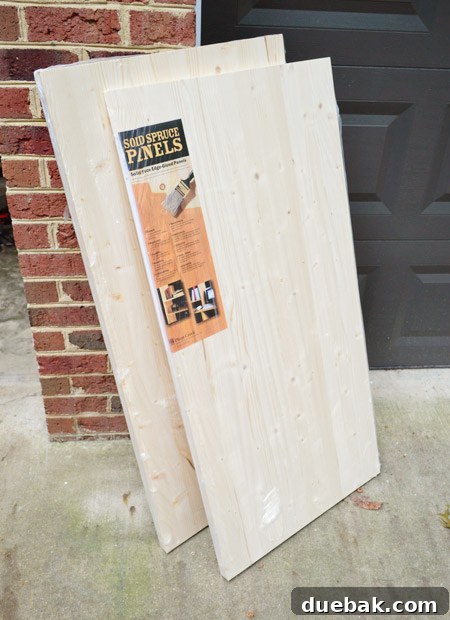
We allocated one panel for the main shelf and the other for the counter beneath. For the upper shelf, I precisely cut one panel into two 9-inch wide boards. These two pieces were then joined together using a Kreg jig, creating one continuous, long shelf. The Kreg jig system allows for strong, concealed pocket-hole joints, essential for a clean and sturdy structure. The counter below was constructed by cutting the second panel into two 18-inch wide pieces and similarly jigging them together. A strategic decision was to postpone cutting the excess counter length until after the tile installation. This allowed us to ensure a perfect overhang and flush alignment with the newly tiled surface, as visibly evident in this picture where it’s still intentionally extended.
Achieving the Signature Waterfall Edge
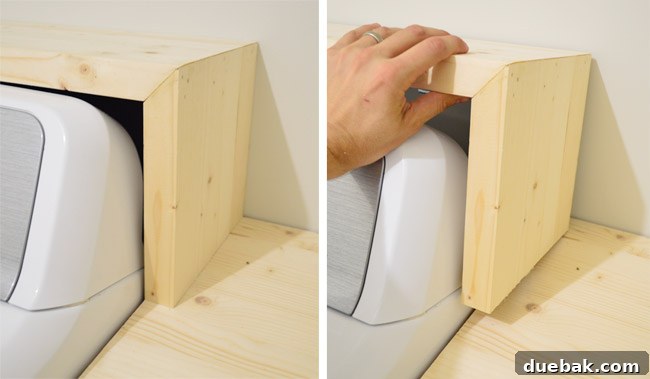
The elegant waterfall edge, a key design feature, was created by cutting the end of the shelf at a precise 45-degree angle. This cut piece was then glued and secured with a nail gun back onto the main shelf at a right angle, creating the seamless, flowing look characteristic of a waterfall design. Crucially, the entire shelf unit was designed to be removable, providing easy access to the appliance hookups when maintenance or replacement is needed. To achieve the illusion of a single, continuous piece resting on the counter, I carefully measured to ensure the waterfall edge would align perfectly with the left edge of the counter below. It’s important to note that the top of the shelf doesn’t rest on the appliances themselves but is securely supported by four heavy-duty brackets mounted above them. Three of these brackets were anchored directly into wall studs for maximum strength and stability, a detail you can observe more clearly in this previous post. This robust mounting prevents any vibrations from the washing machine from affecting the shelf and potentially dislodging items. After several large loads of laundry, we can confidently say the system is performing flawlessly.
Choosing the Perfect Natural Stain and Sealer
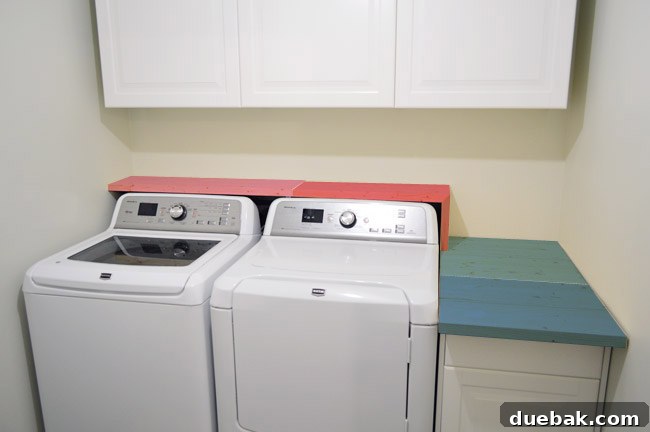
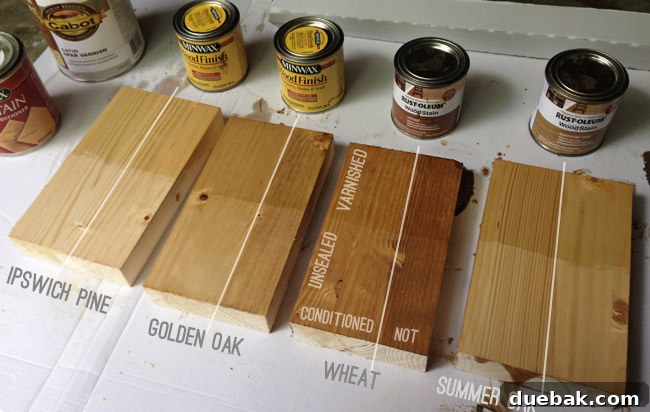
Since we didn’t have a pre-existing preference for a lighter wood stain, we undertook a thorough testing process. We applied various options to scrap pieces leftover from the shelf and counter construction. Sherry meticulously pre-stained/conditioned half of each test block, then applied one of four different stain colors (two from Minwax, two from Rustoleum) to the entire block. Once dried, we also tested a varnish on the top half of each sample. However, the varnish imparted an undesirable yellow tint, leading us to quickly dismiss it. While the subtle differences are more apparent in person, we found Ipswich Pine and Summer Oak to be slightly too light, and Wheat a touch too dark or reddish for our desired aesthetic. Ultimately, Golden Oak emerged as the clear and easy choice, striking the perfect balance of warmth and lightness.
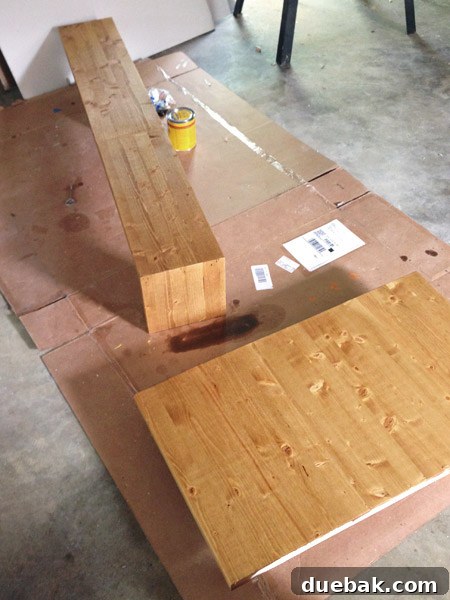
After selecting our stain, we applied a single coat of Golden Oak, followed by three protective coats of Safecoat Acrylaq. This particular sealer was our go-to choice because we had previously used it to seal the wood vanity top in our first home’s bathroom. Its exceptional performance and resistance to water in that high-moisture environment gave us complete confidence that it would be an ideal, durable finish for a hardworking laundry room shelf and counter.
Looking Ahead: Finishing Touches and Future Laundry Room Enhancements
We are absolutely thrilled with how the custom shelf and counter have turned out. It feels like the exact element the room needed, adding character and warmth to the bright and clean foundation laid by the cabinets and tile. While the shelf currently looks a little sparse, this is just the beginning of layering in decorative and functional items. We’re excited to bring this vision to full fruition.
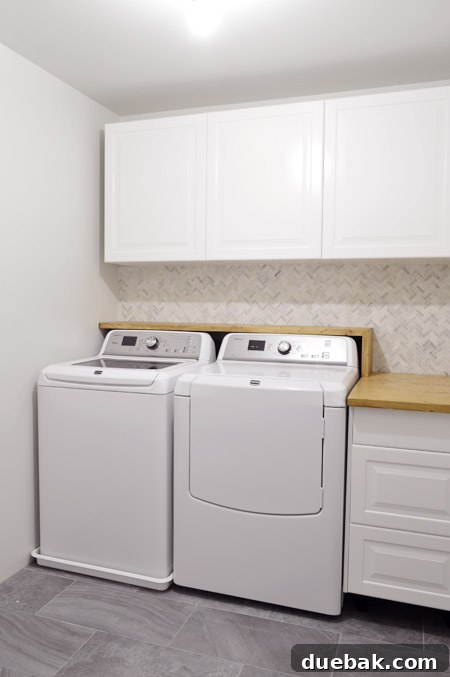
There are still a few loose ends to tie up on this particular wall, but we’re making consistent progress. On a positive note, we successfully hung the main laundry room door! This marks another significant step towards completing the space.
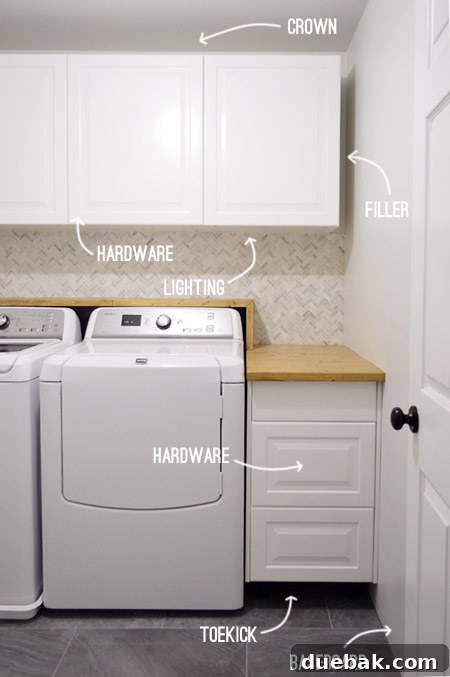
Work is also underway on the elegant glass door that will lead to the future bunk-room, and we anticipate sharing those exciting details with you next week. Beyond these structural elements, we have plans to integrate various organizational solutions on other walls of the room. These include a practical laundry sorter, a convenient pull-out drying rack, and a space-saving wall-mounted ironing board. Expect more exciting updates on these additions soon, as we strive to maximize both the functionality and aesthetic appeal of our transformed laundry space.
Decoding the Laundry Room Renovation Budget: Costs, Savings, and Smart Upgrades
This feels like an opportune moment for a comprehensive budget update. Here’s a detailed breakdown of our expenditures so far:
- Framing (labor & materials): $360
- Electric (labor & materials): $400
- Plumbing (labor & materials): $375
- New dryer vent: $87
- New HVAC vent: $59
- Drywall & insulation: $298
- Drywall mudding: $84
- Sub-floor materials: $30
- Tiled floor: $451
- Ikea cabinets & under-cabinet lighting: $862
- Appliance re-install: $15
- Tiled marble accent wall: $281
- Shelf & counter (including stain testers & stain): $97
- TOTAL: $3,399
It’s incredibly reassuring to review these figures. Our initial contractor estimates for just the framing, electrical, plumbing, and drywall alone ranged from $3,250 to $5,000. To find ourselves still at the lower end of that range, even after incorporating significant upgrades like a stunning marble backsplash, durable tiled floors, custom cabinetry, and our bespoke shelf and counter (not to mention enhancements like soft-close doors and under-cabinet lighting), is a testament to careful planning and strategic DIY efforts. We’re particularly proud of the value we’ve managed to achieve.
That being said, our total expenses have almost exactly doubled since our last budget check-in. This was anticipated, as we’ve now tackled the major “big-ticket” items such as the extensive tiling and the cabinetry. However, we’re optimistic that once we complete the door and trim/crown molding installations, we’ll be past the majority of our significant expenditures. Dare I even suggest that this entire new laundry room (and the reconfigured bunk-room entry) might just come in under the impressive $4,000 mark? That sounds almost too good to be true, a thought that immediately brings with it a sense of superstition.
Perhaps playing it safer with predictions is a better approach. I am, however, absolutely certain that we will comfortably remain under the $100,000 mark. Now, I truly hope I haven’t jinxed myself with that statement! This DIY journey continues to be an adventure in design, construction, and mindful budgeting, proving that a dream laundry room is within reach with the right approach.