
Illuminate Your Space: A Comprehensive DIY Guide to Under Cabinet Lighting
Under cabinet lighting is one of those home enhancements that truly transforms a space, offering both aesthetic appeal and practical functionality. While it might not be a feature we’ve integrated into every recent kitchen remodel, its impact in our laundry room has been nothing short of remarkable. It provides essential task lighting exactly where needed and adds a warm, inviting glow that elevates the entire room’s ambiance. We recently rediscovered a collection of installation photos from 2014, and it’s the perfect opportunity to share this straightforward process. Whether you’re seeking to brighten a kitchen countertop, enhance a laundry area, or add a sophisticated touch to a home office, installing under cabinet lighting is an accessible DIY project that promises significant returns.
Why Under Cabinet Lighting is an Essential Home Upgrade
Beyond simply adding light, under cabinet systems offer a multitude of benefits that make them a worthwhile investment for any homeowner:
- Superior Task Lighting: Overhead lights often cast shadows over work surfaces. Under cabinet lighting directly illuminates countertops, making tasks like meal prep in the kitchen or folding laundry significantly easier and safer.
- Enhanced Ambiance and Aesthetics: These lights add a soft, layered glow that can dramatically improve the mood and visual appeal of a room. They create depth, highlight backsplashes, and contribute to a sophisticated design scheme.
- Increased Property Value: Modern and functional lighting solutions are highly desirable features that can subtly boost your home’s appeal to potential buyers.
- Energy Efficiency: Contemporary LED under cabinet systems consume very little power, offering a cost-effective and environmentally friendly way to illuminate your spaces.
- Versatile Application: Ideal not only for kitchens and laundry rooms but also for workshops, home bars, display cabinets, and any area where focused light or an accent glow is desired.
The beauty of tackling this project yourself lies in its relative simplicity and the immediate, noticeable upgrade it brings to your living environment.
Selecting Your Lighting System: The IKEA Evolution
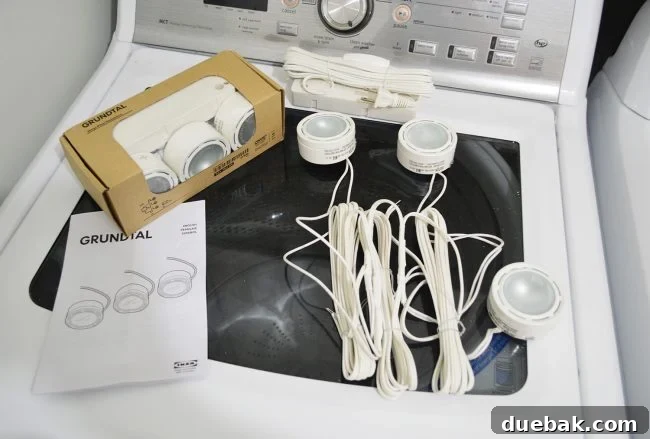
When we embarked on our laundry room project, IKEA’s GRUNDTAL spotlights were our chosen solution. While this particular model has since been discontinued, IKEA has continuously innovated its lighting range. Their current OMLOPP spotlight system represents an excellent, even improved, successor. Key advantages of the OMLOPP series include:
- Advanced LED Technology: The OMLOPP spotlights utilize energy-efficient LEDs, providing bright, consistent light with a remarkably long lifespan and reduced energy consumption.
- Sleek, Low-Profile Design: Designed to be less noticeable, the slimmer profile of the OMLOPP units integrates seamlessly beneath cabinets for a cleaner, more modern aesthetic.
- Integrated Cord Management: A significant improvement is the inclusion of cord management covers, which greatly simplify the process of neatly tucking away wires, contributing to a professional finish.
Crucially, despite these product enhancements, the core installation methodology remains largely consistent. This means the step-by-step instructions detailed below are fully applicable to the newer, more efficient OMLOPP system, ensuring you can achieve similar fantastic results with today’s technology.
Strategic Placement: Crafting a Continuous Light Effect
While many choose to install a single spotlight per cabinet section, our aim was to create the illusion of a continuous bar of light, rather than distinct pools under each unit. To achieve this seamless effect with the GRUNDTAL system, which was sold in 3-packs, we opted for six spotlights. Depending on the length of your cabinets and the desired light intensity, you might find that four or five OMLOPP spotlights provide ample, even illumination. Before committing to screws, it’s always wise to temporarily hold or tape the lights in place to visualize the coverage and ensure your preferred aesthetic.
Step-by-Step DIY Installation: Bringing Your Cabinets to Life
This project is highly approachable for beginners and requires only basic tools. Here’s a detailed breakdown of each step:
1. Initial Preparation: Unpacking and Disassembling Spotlights
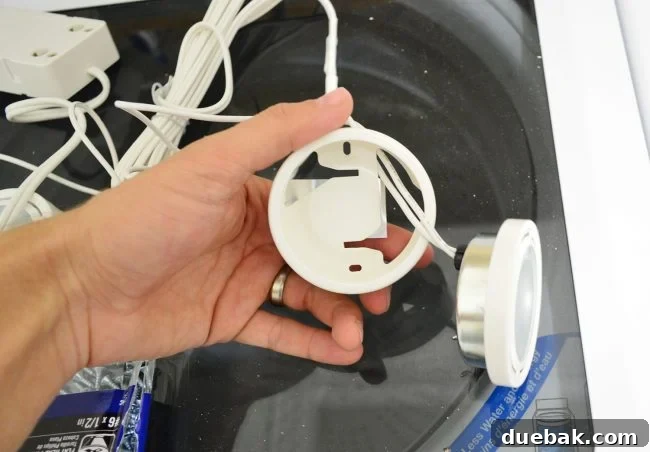
Begin by carefully unboxing your under cabinet lighting kit. For both the older GRUNDTAL and newer OMLOPP systems, the first step involves separating the lightbulb component from its main casing. This action typically reveals the pre-drilled screw holes necessary for mounting. Exercise care to ensure that the internal wiring remains connected and undamaged throughout this process.
2. Precision Mounting: Securing Lights Beneath Your Cabinets
Accuracy in placement is paramount for both optimal light distribution and a neat appearance. Start by carefully measuring and marking the exact positions for each spotlight on the underside of your cabinet. For balanced illumination, aim to center each spotlight from front-to-back on the cabinet. For side-to-side spacing, ensure equal distances between each unit; we found approximately 10 inches apart provided excellent, continuous coverage. Utilize short screws, ideally 1/2 inch in length, to prevent them from penetrating through the cabinet interior. Once securely fastened, simply snap the light portion back into its casing until it’s firmly seated. A quick check will confirm each light is robustly attached.
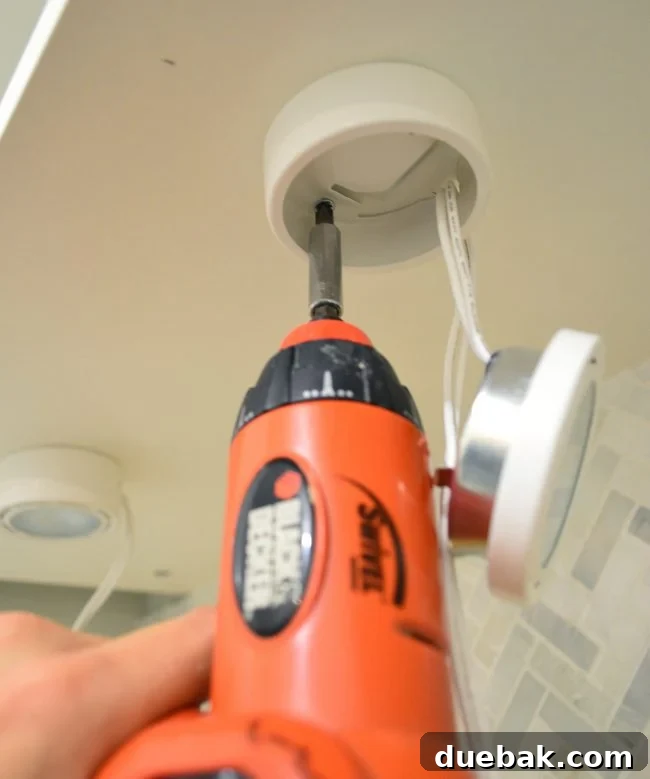
3. Wiring Connections: Linking to the Transformer Box
With all spotlights mounted, the next critical step is to connect them to the system’s central power unit: the transformer box. It’s crucial to understand that with IKEA’s modern OMLOPP system, both the transformer and power cord are typically sold as separate components. This modular approach offers flexibility, allowing you to tailor the number of transformers and cords to your specific installation requirements (e.g., one transformer can power up to 9 spotlights, and a single power cord can support up to 10 transformer boxes). While our original GRUNDTAL setup involved slightly more intricate wiring, the current OMLOPP systems are designed for extreme user-friendliness, often simplifying connections to a plug-and-play experience akin to charging a mobile phone. Always refer to the specific instruction manual provided with your IKEA products for precise wiring guidance.
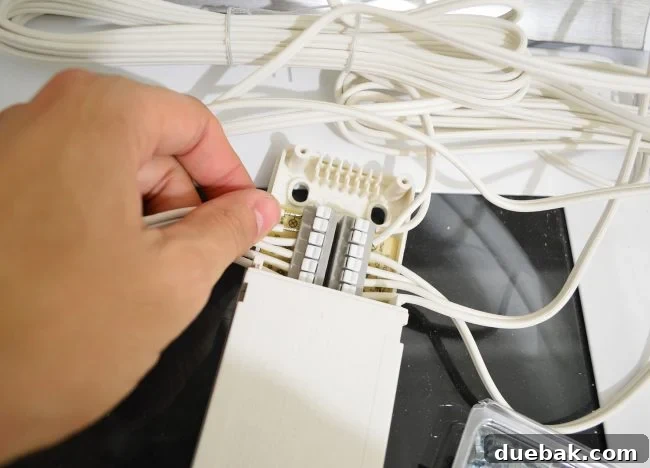
4. The Essential Test: Verifying All Connections
Before proceeding with any cord management, a crucial interim step is to test your entire lighting setup. At this point, the wiring might appear somewhat untidy, but confirming functionality is paramount. Simply plug the transformer into any standard wall outlet. Many IKEA power cords come equipped with a convenient in-line toggle switch, allowing you to activate your new lighting system without needing an electrician at this stage. Within moments, your under cabinet lights should illuminate, signifying a successful installation and proper connections.
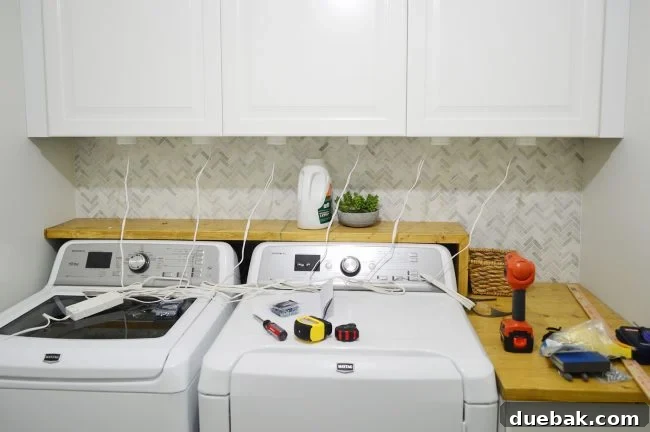
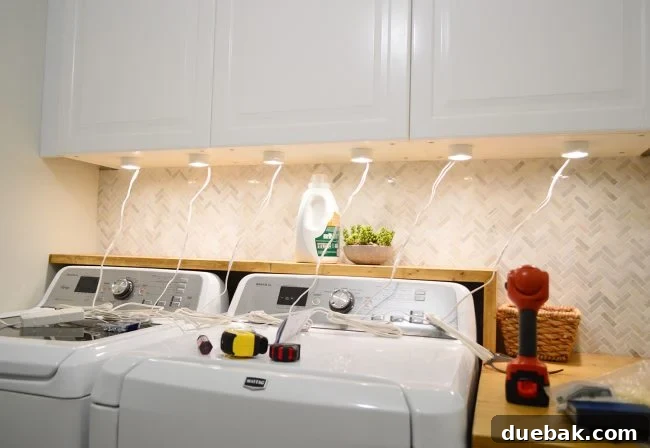
5. Masterful Cord Management: Achieving a Seamless Finish
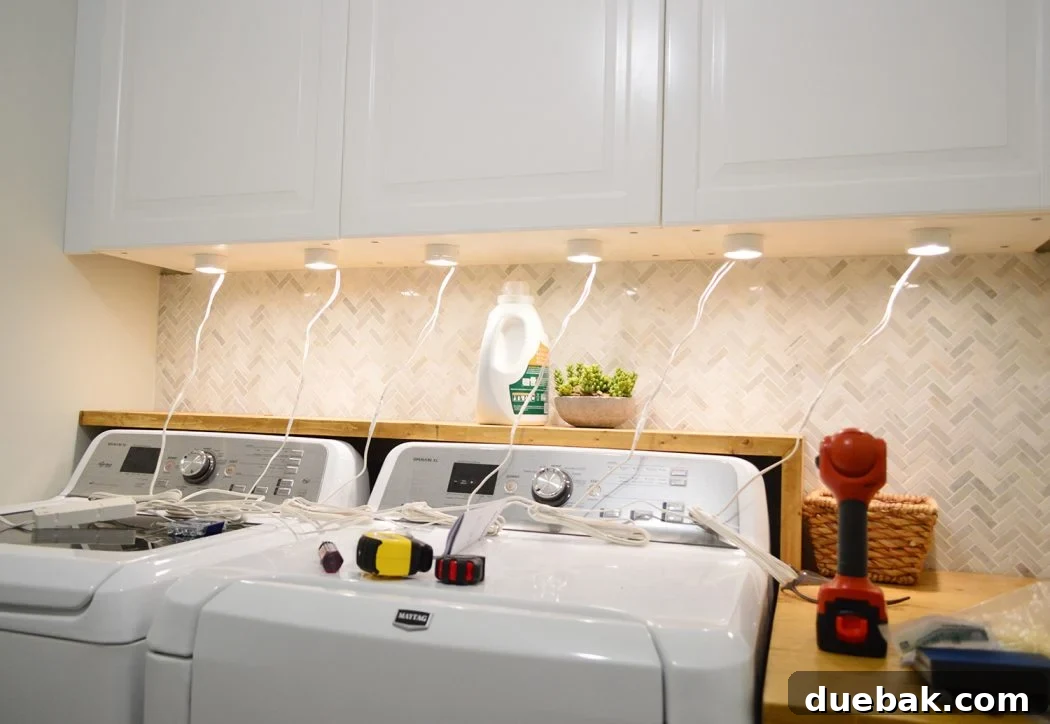
The hallmark of a truly professional lighting installation is how effectively its wiring is concealed. While the newer OMLOPP spotlights often include dedicated cord covers for neat runs along the cabinet bottom, you’ll still likely encounter excess cabling between individual spotlights and the transformer. Innovative solutions are your best friend here. We found mounting ties (essentially zip ties with screw holes) and wire staples to be indispensable. Use mounting ties to bundle and secure longer sections of redundant wire, screwing them firmly into the cabinet underside. For shorter, exposed runs, wire staples can neatly secure cables flush against the cabinet bottom. Always verify screw or nail length to prevent piercing the cabinet interior. The objective is to render all wiring virtually invisible, ensuring the focus remains purely on the radiant light.
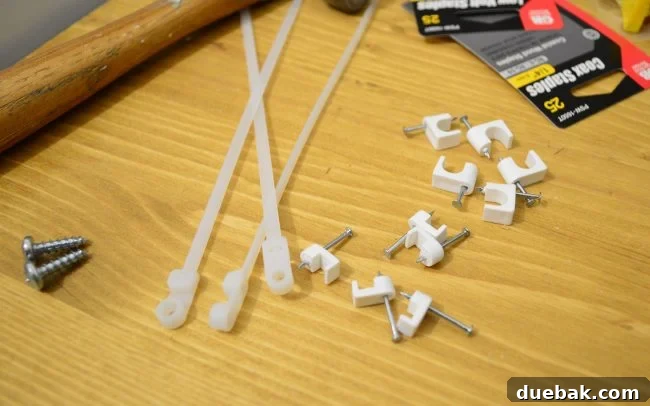
Even with older, more challenging systems, meticulous routing and securing of wires can achieve an impressively tidy result. You’ll be surprised at the dramatic improvement in your installation’s appearance once cables are expertly tucked away. This attention to detail in cord management ensures the beautiful illumination remains the star, free from distracting visual clutter.
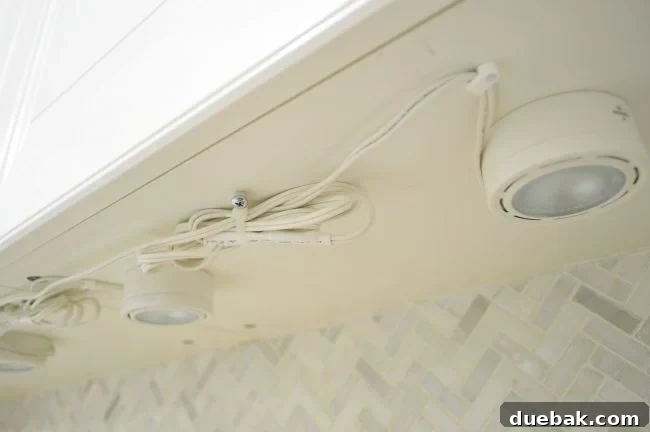
Ultimately, a cleverly installed cover piece will cleverly obscure virtually all of this intricate work, making the wiring chaos an almost impossible discovery for anyone not actively seeking it out.
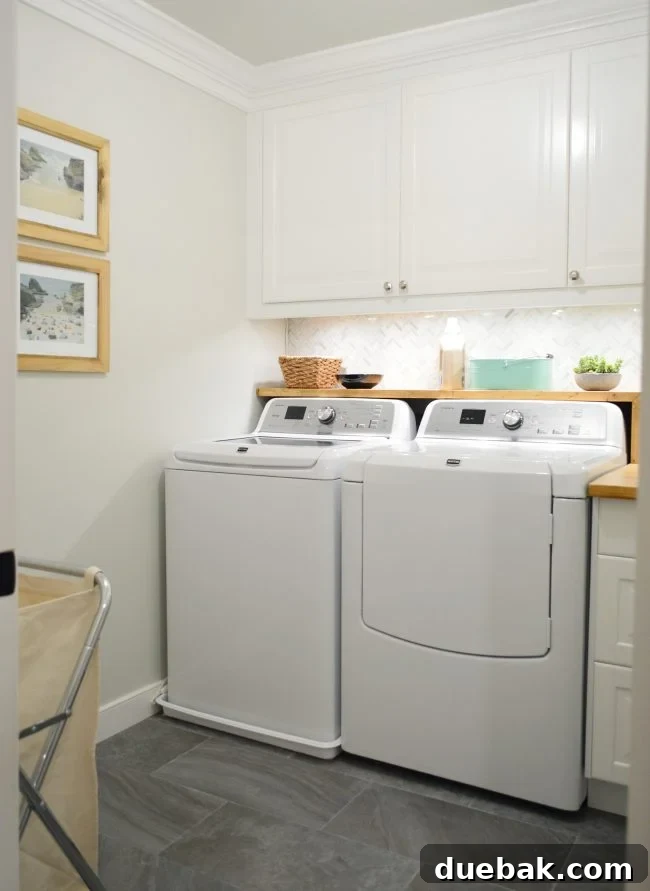
6. Strategic Concealment: Hiding the Transformer Box
The transformer box, while essential, isn’t designed for display. Finding an unobtrusive location for it is crucial for a polished look. We successfully mounted ours within a cleverly utilized gap on the side of a cabinet, which was then elegantly disguised by a decorative filler piece. Most transformer boxes come equipped with pre-drilled holes for effortless screw mounting. This strategic positioning also allowed the power cord to gracefully follow the cabinet’s corner, discreetly snaking down to the nearest electrical outlet without being an eyesore.

An equally popular and often recommended location for the transformer box is atop your upper cabinets. This method keeps the entire system entirely out of view, though it may necessitate installing a dedicated electrical outlet in that area if one isn’t already present. For enhanced convenience, IKEA also offers a remote control option for their lighting systems, providing effortless control to switch your lights on and off without needing to access a power cord switch or a wall switch.
7. Advanced Control: Hardwiring for Seamless Integration
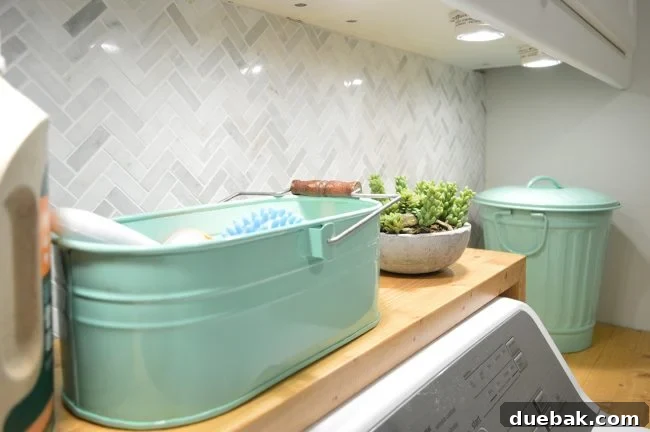
While the initial plug-and-play setup with its integrated toggle switch offers immediate functionality, many homeowners eventually opt for a more permanent and aesthetically integrated solution. A couple of years after our initial DIY installation, we engaged an electrician to hardwire the power cord directly to a wall switch. This upgrade delivers unparalleled convenience, allowing you to control your under cabinet lighting with the simple flick of a switch, mirroring the operation of any other room light. Even prior to this professional enhancement, with the power cord neatly secured along the corner, the visual impact was minimal, as beautifully illustrated in the photograph below.
8. The Final Polish: Installing a Cover Strip for a Flawless Look
To truly complete the professional aesthetic and fully conceal the lighting units and their associated wiring, the final step involves installing a cover strip along the bottom edge of your cabinetry. For IKEA cabinets, a spare filler piece often serves this purpose perfectly. These strips are easily mounted using small L-brackets, ensuring a flush and secure fit. Once in position, applying a fine bead of caulk along any seams creates a seamless, finished appearance, elevating your under cabinet lighting to an integrated, high-end design feature rather than a visible add-on.
Design Considerations: The Evolving IKEA System
While we highly value the effectiveness and affordability of IKEA’s lighting systems, one design characteristic worth noting is that IKEA cabinets typically feature completely flat bottoms. This differs from many custom or higher-end cabinetry lines, which often incorporate a slightly recessed area specifically engineered for discreetly tucking away lighting fixtures and their wiring. This inherent design difference likely prompted IKEA to continuously refine its newer systems, leading to the introduction of slimmer profiles and integrated cord management covers. These thoughtful advancements significantly enhance the overall aesthetic appeal and simplify the installation process, even for cabinets without dedicated recesses.

Cost-Effectiveness and Enduring Value
One of the most compelling aspects of embarking on a DIY under cabinet lighting project, especially with IKEA products, is its remarkable affordability. While our original project receipts are long gone, a comparable setup using the contemporary OMLOPP system would cost approximately $75. Should you desire the added convenience of a remote control, the total investment might be around $90. For those with a more constrained budget or shorter cabinet runs, opting for just three lights and utilizing a smaller transformer could reduce the cost to an exceptionally low $45. Considering the profound enhancement to your home’s functionality, ambiance, and potential resale value, this project represents an outstanding return on a minimal investment.
Embracing Your Brighter, More Functional Space
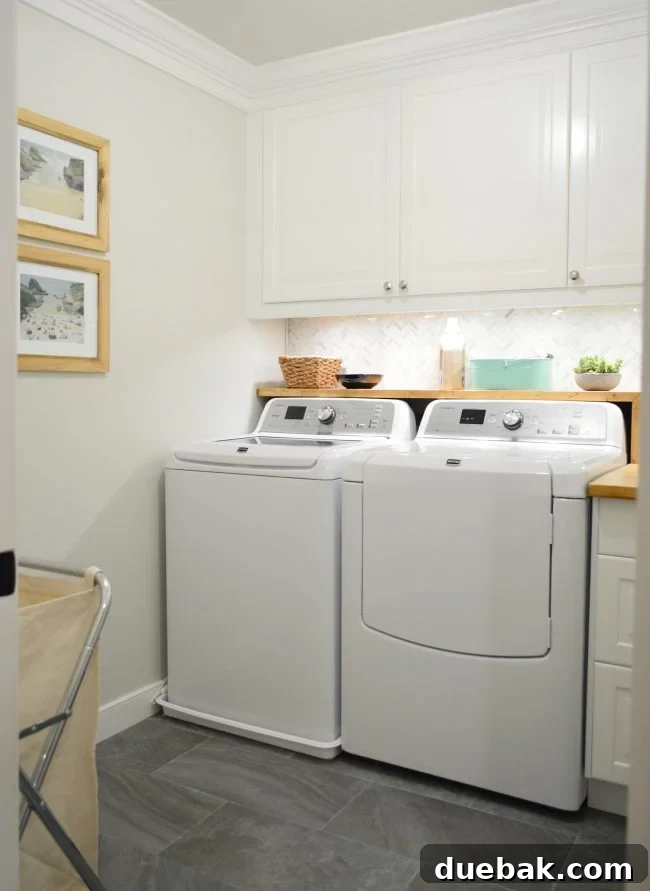
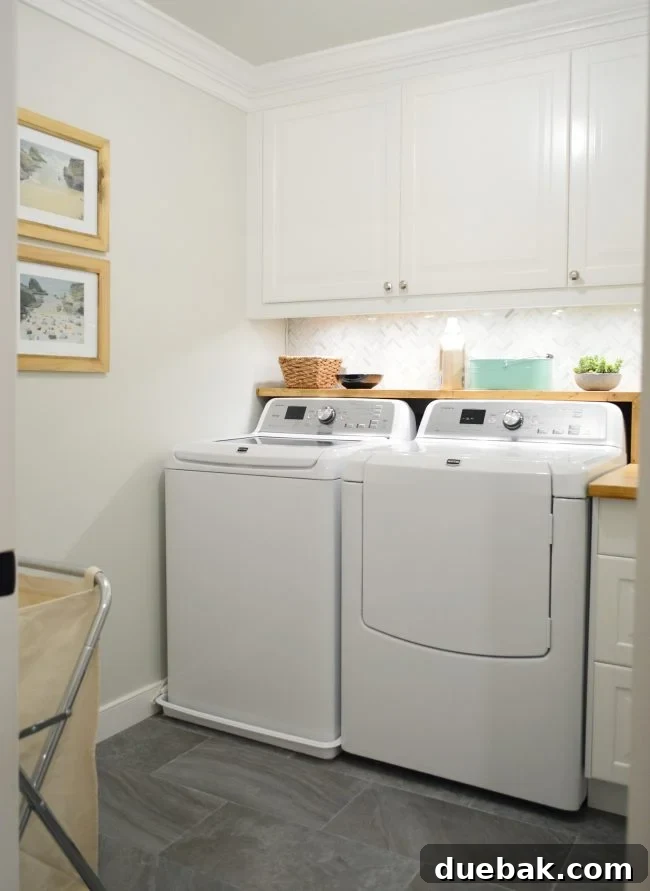
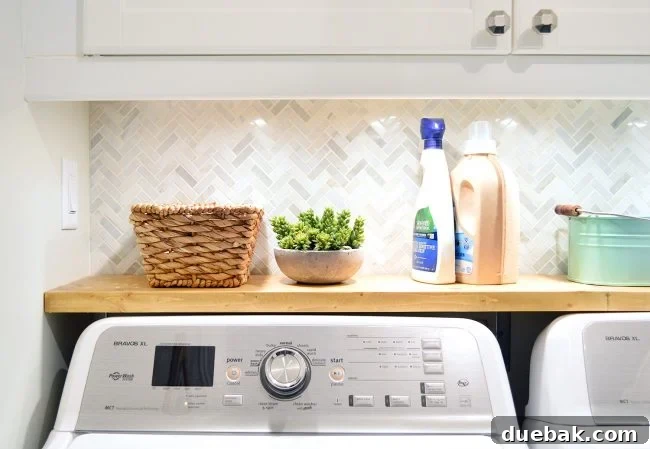
Even in a compact area like our laundry room, where the overhead ceiling light provides adequate general illumination, our under cabinet lights remain a cherished feature. We estimate using them approximately 50% of the time, often simply for the pleasant, soft glow they provide or when we require that extra layer of focused light for specific tasks. They are unequivocally a “nice to have” upgrade that subtly yet significantly elevates the entire room’s functionality and atmosphere. If you have any area in your home that feels under-lit or could benefit from an additional touch of warm, practical illumination, this project is tailor-made for you.
Conclusion: Effortlessly Enhance Your Home with DIY Lighting
If you’ve been considering adding under cabinet lighting but were deterred by the perceived complexity or potential expense, we sincerely hope this comprehensive guide has “illuminated” the fact that it is a remarkably achievable and budget-friendly DIY endeavor. It demands no specialized skills and offers an immediate, tangible improvement to your living space. So, don’t hesitate! Gather your IKEA OMLOPP system, and prepare to transform your ordinary cabinets into brilliantly lit focal points. Any beginner can confidently undertake this project and revel in the bright, beautiful results!
P.S. For a complete deep dive into our entire laundry room makeover, including a full budget breakdown and design insights, be sure to explore it here. If you’re on the hunt for specific source lists—such as paint colors used or where to find those charming green tins—all the details are conveniently located here.
*This post contains affiliate links, which means we may earn a small commission if you make a purchase through them, at no extra cost to you. We only recommend products we genuinely use and love.*