
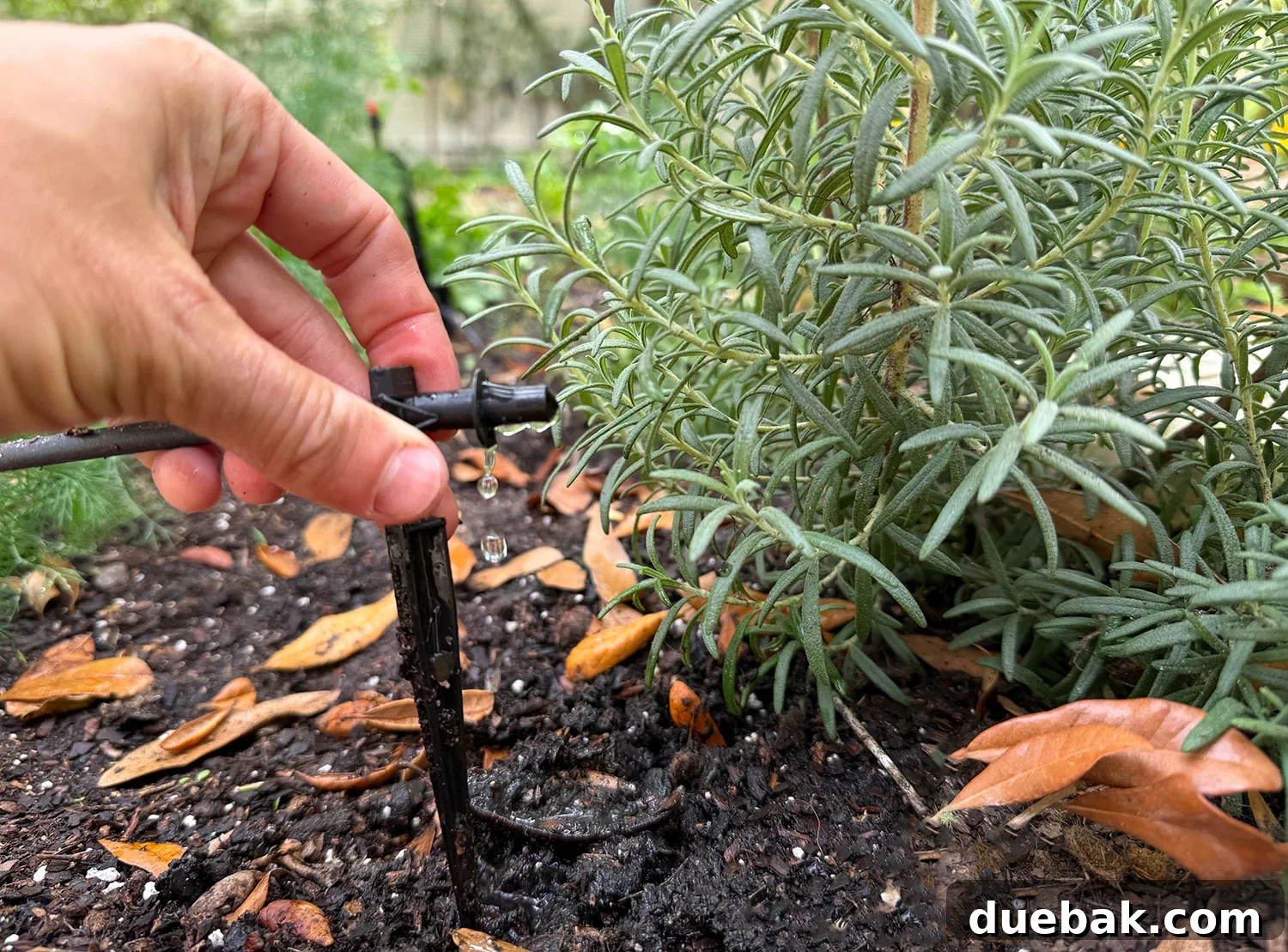
Our neighbor recently asked for help installing a drip irrigation system in their new garden. My previous experience with a full DIY irrigation setup felt overwhelming, so I approached this one cautiously. It turned out to be the complete opposite—simple, affordable, and quick. The whole install cost roughly $75 and took only a few hours. Drip systems also use water far more efficiently than traditional sprinklers, reducing waste and focusing moisture where plants need it most.
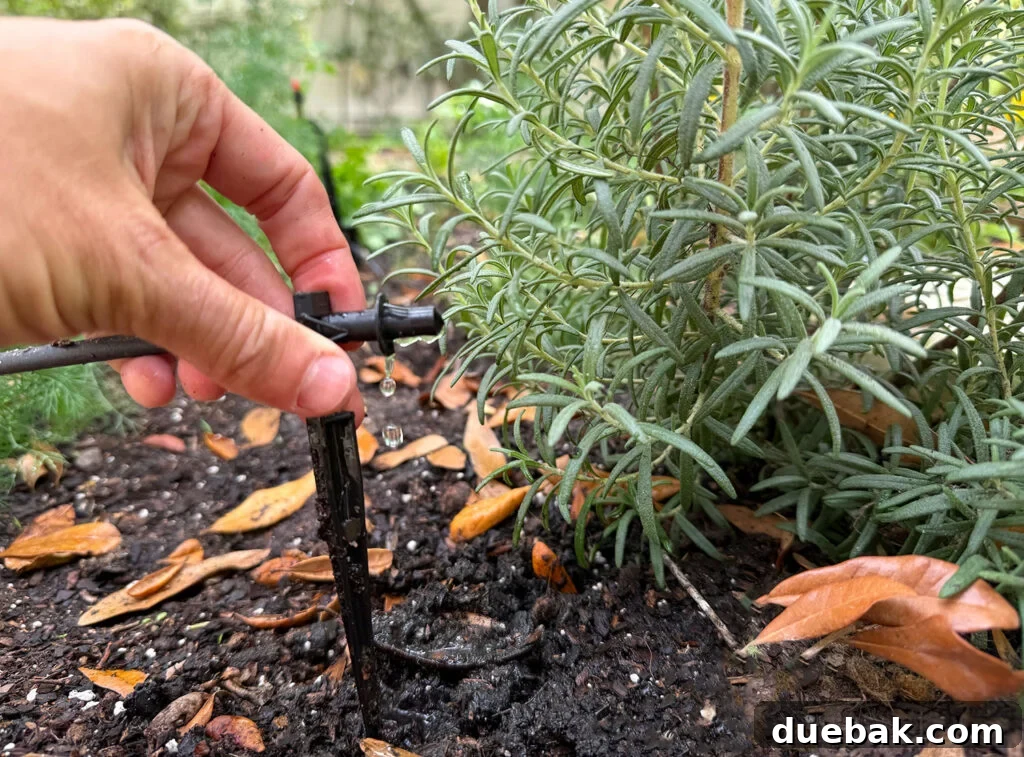
Drip irrigation connects directly to a standard outdoor spigot, so you don’t need specialized plumbing skills. These systems work well for flower beds, vegetable gardens, shrubs, and even trees because you can control exactly how much water each plant receives.
What is Drip Irrigation?
Drip irrigation delivers water slowly and directly to the soil at the base of plants using low-pressure hoses, emitters, and tubing. Unlike sprinklers—which spray over a wide area and are suited to lawns—drip systems concentrate water at the root zone. That brings several benefits:
- Less wasteful: Less water is lost to evaporation, overspray, and runoff compared with sprinklers. Drip systems can use significantly less water.
- More efficient: Targeted watering shortens run times while getting water where roots can use it.
- Highly customizable: Flexible tubing and a variety of emitters let you tailor water flow for each plant.
- Easy to install: No special tools or plumbing knowledge required—many installs take only a couple of hours.
- Affordable: A basic kit and a hose timer provide everything you need for a low-cost, effective system.
Compared with soaker hoses, drip systems are more targeted and longer lasting. Soaker hoses can be useful for temporary setups, but they often deteriorate faster than a proper drip system.
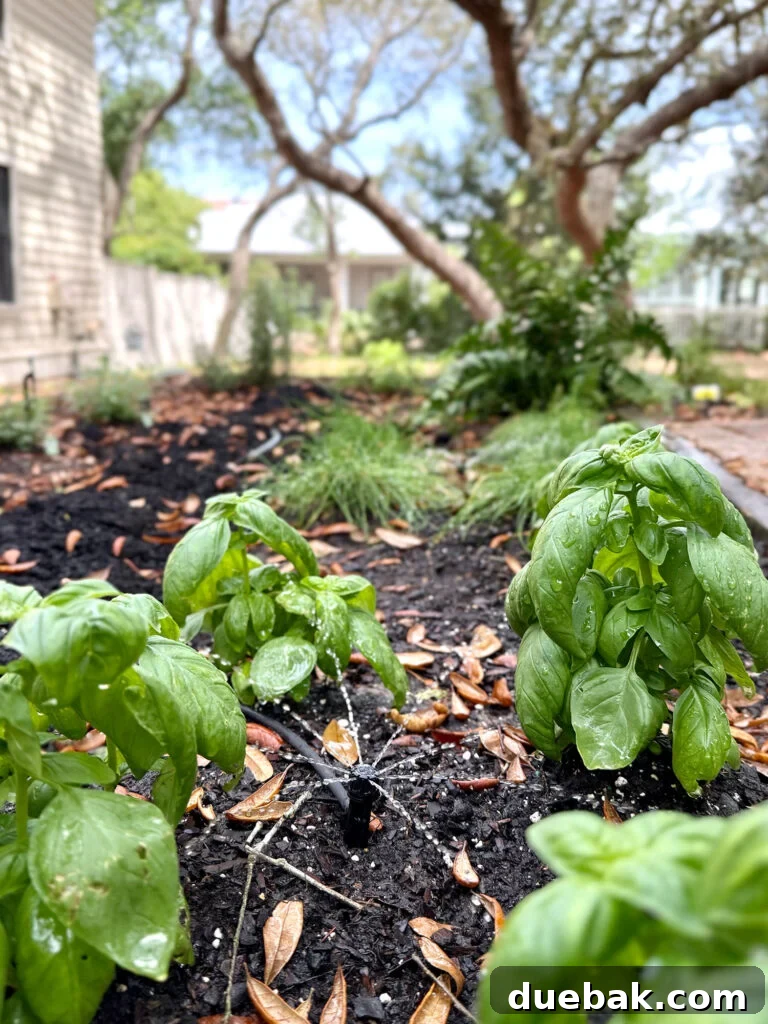
If you’ve been putting off adding drip irrigation, consider this your sign to try it. I’m adding a system at my house after seeing how straightforward and efficient it was on my neighbor’s garden.
How Does A Drip Irrigation System Work?
Drip systems use hoses, tubing, connectors, and emitters to transport a slow flow of water to plants. Instead of high-pressure sprinklers, a drip system drips water directly into the soil. Key components typically include a timer, backflow preventer with filter, pressure regulator, a drip adapter for the spigot, mainline tubing, distribution tubing, connectors, and emitters. Most basic kits include these parts, while a simple hose timer automates the schedule.
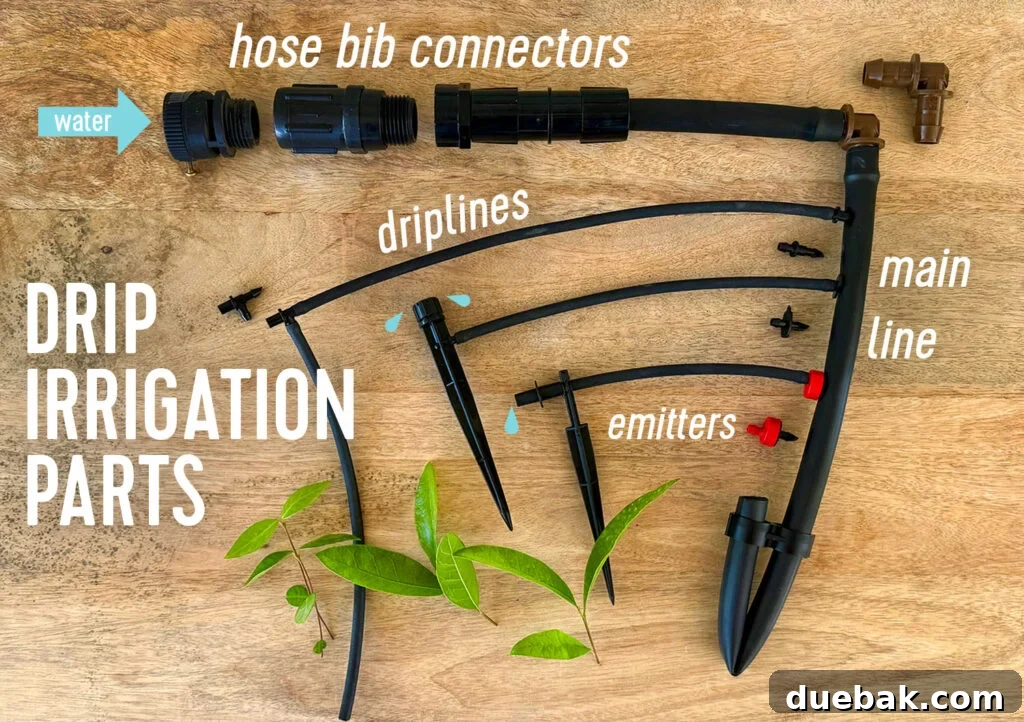
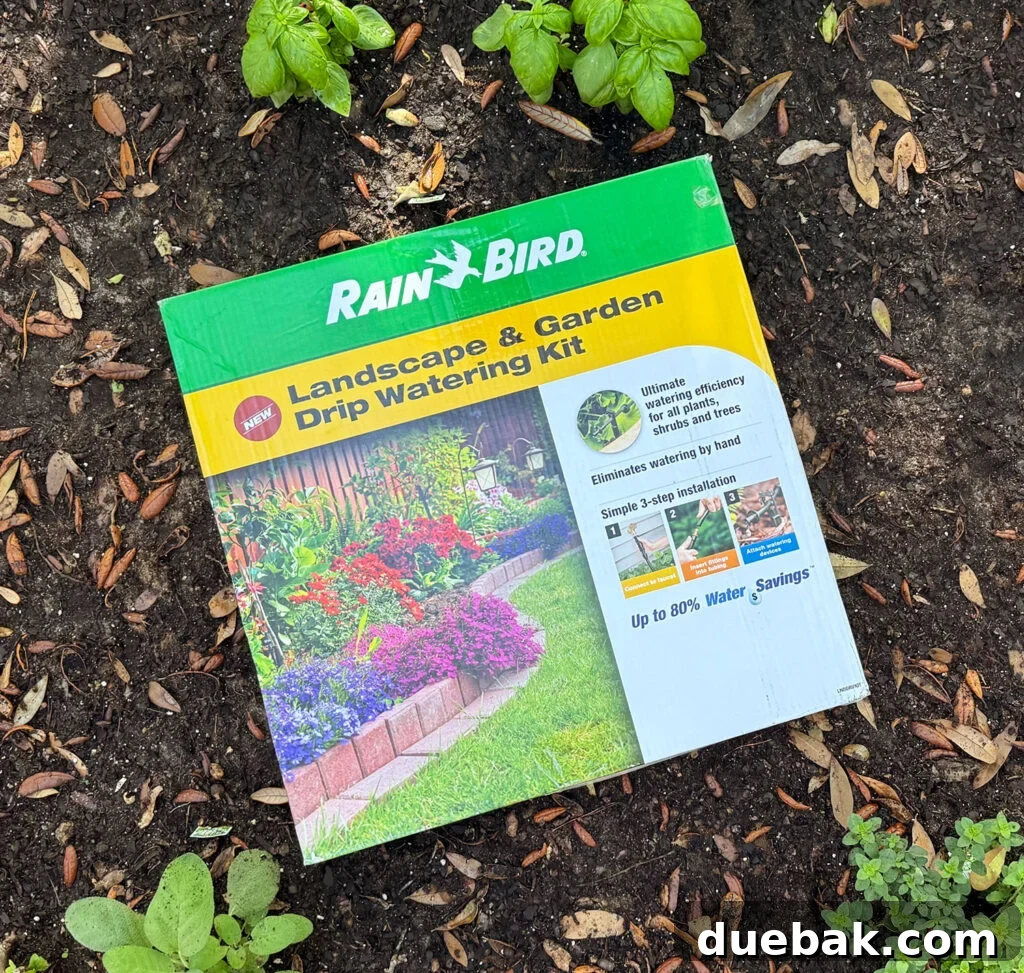
This post reflects our experience using an inexpensive kit that covered most items needed for a single-zone garden. Adding a hose timer lets the system run automatically and still keeps the overall cost low.
Drip Irrigation Tutorial Video
We walk through the parts and assembly in the video that accompanies this guide. Below the video are written instructions you can follow at your own pace.
Hose Bib Connectors
To connect a drip system to an outdoor spigot you’ll typically use a timer, backflow preventer with filter, pressure regulator, and a drip adapter to attach the mainline tubing. Many kits include these items except the timer, so assembling a single-zone system is straightforward.
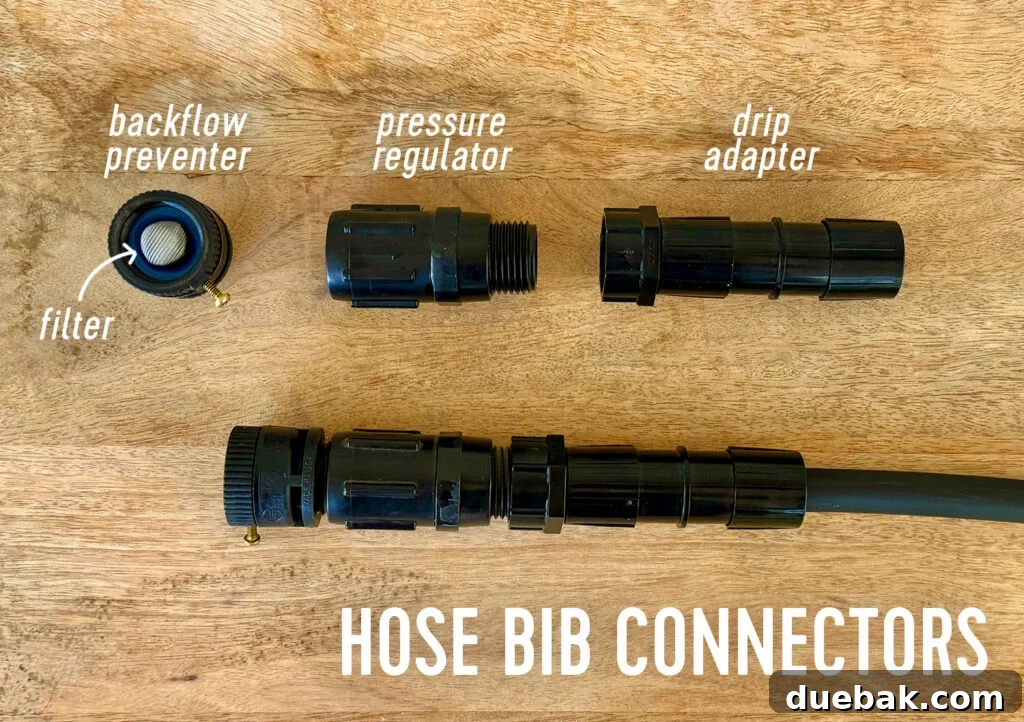
- Timer: Automates watering schedules. Single-zone timers work well for one garden; multi-zone timers control several areas independently.
- Backflow preventer: Stops irrigation water from flowing back into the main water supply and typically includes a small filter to catch debris.
- Filter: Keeps sand, rust, and other particles from clogging the system.
- Pressure regulator: Lowers and stabilizes water pressure for consistent drip flow.
- Drip adapter: Connects your 1/2″ or 5/8″ irrigation tubing to a standard 3/4″ hose bib.
The kit we used included all of these pieces except the timer. If you plan multiple zones, you can add additional connection kits for each zone.
Main Line
The main line is 1/2″ flexible tubing that carries water from the spigot through the garden. It doesn’t deliver water directly to each plant but routes water to the areas where smaller driplines branch off.
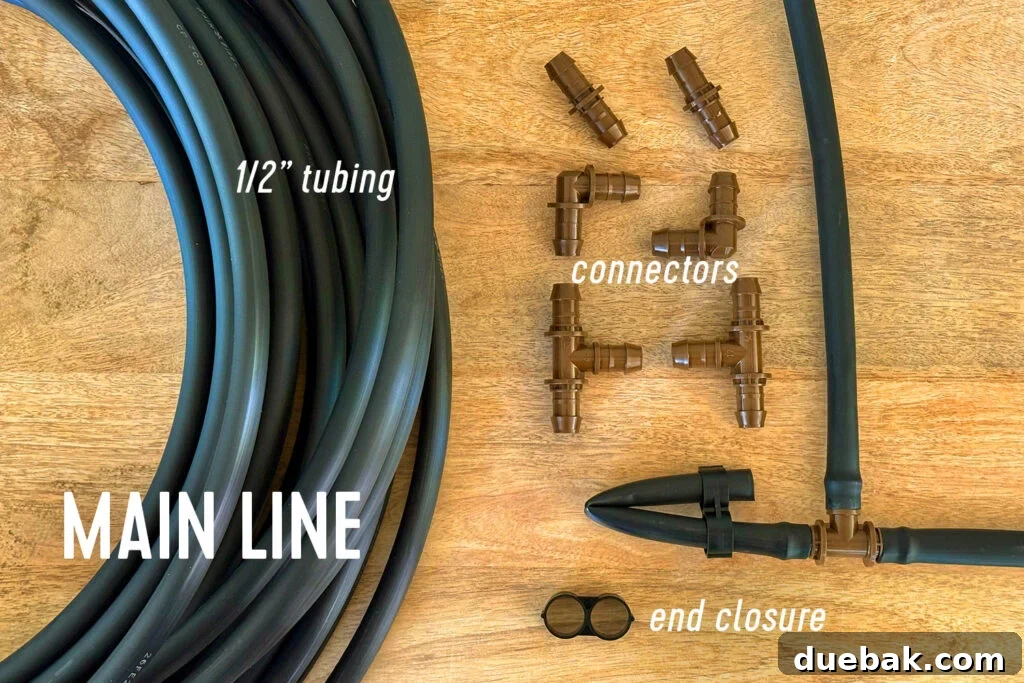
- 1/2″ tubing: Polyethylene tubing that can be cut to length with scissors.
- 1/2″ connectors: Tees, elbows, and couplings connect and shape the main line.
- End closures: Rings or caps pinch the open ends of the main line closed.
Driplines
Smaller 1/4″ distribution tubing—often called “spaghetti” tubing—branches off the main line to reach individual plants. These lines connect using barbed 1/4″ connectors and can be cut and routed as needed.
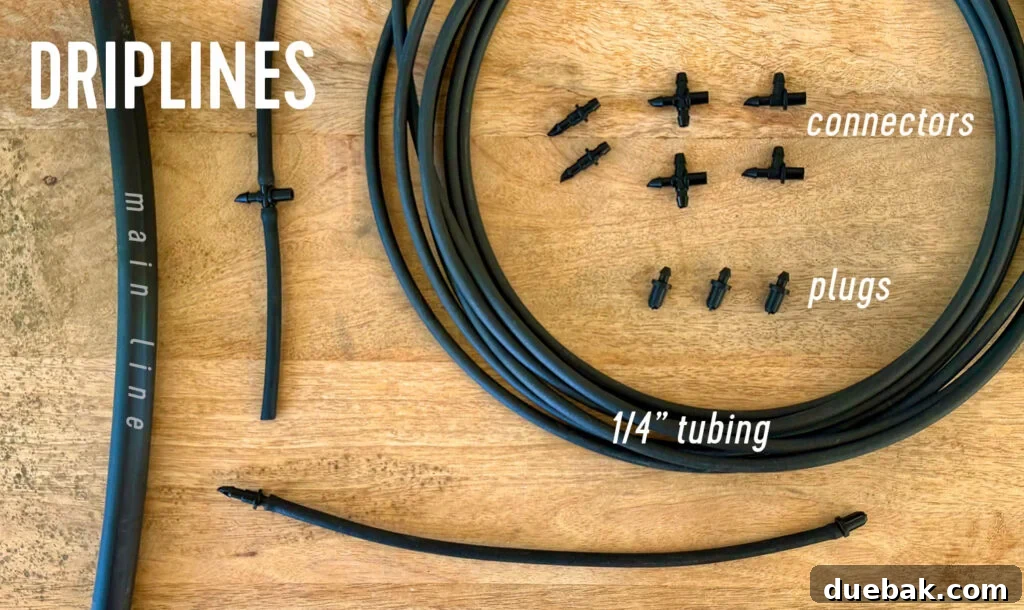
- 1/4″ tubing: Flexible distribution tubing for individual plant lines.
- 1/4″ connectors: Barbed fittings that join driplines to the main line.
- Goof plugs: Small caps to seal unintended holes or unused tubing ends.
Emitters
Emitters control how water is released at each plant. Choosing the right emitter type and flow rate ensures plants receive appropriate moisture.
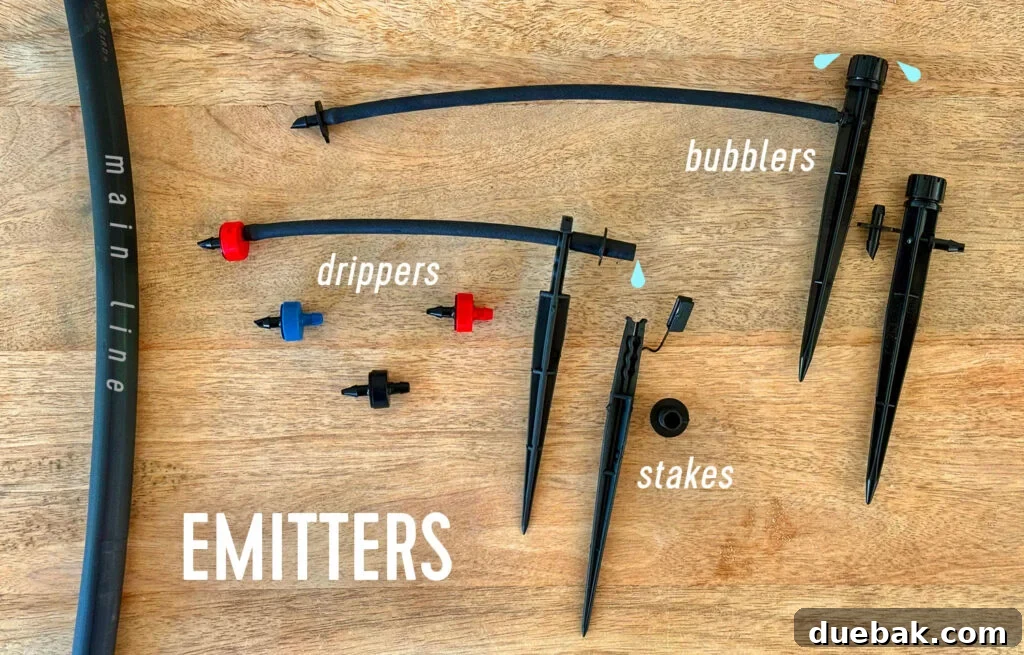
Common emitter types:
- Drippers: Provide a steady, measured drip. Color-coded drippers indicate flow rates (e.g., 0.5, 1, 2, or 4 GPH).
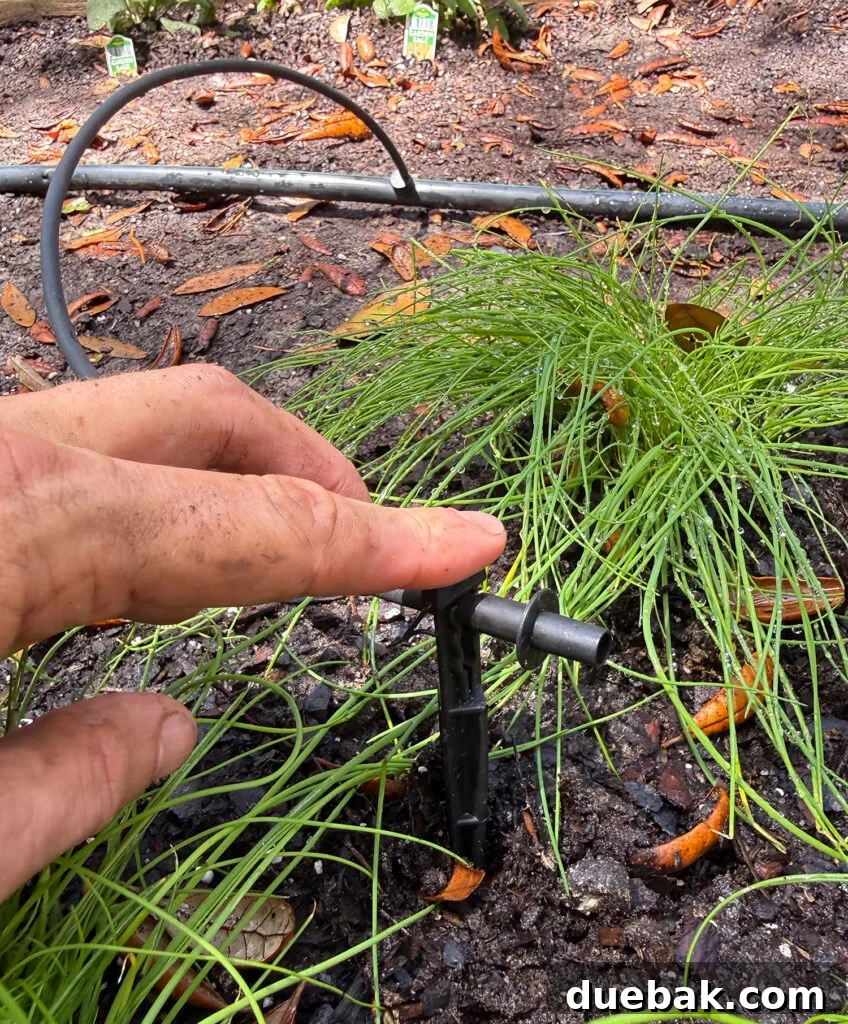
- Tubing stakes: Hold driplines and emitters in place near plants.
- Bubblers: Emit multiple small streams to cover a cluster of plants.
- Sprayers: Produce a spray pattern similar to a sprinkler and are available in full, half, and quarter-circle patterns.
These components are the basics for a DIY drip irrigation system.
Steps To Install A Drip Irrigation System
With the parts defined, assembling a drip system is straightforward. The main steps are:
- Plan your layout
- Gather supplies
- Warm and layout tubing in the sun
- Attach timer and hose connectors
- Run the main line
- Connect driplines and install emitters
- Test the system and program the timer
Step 1: Plan Your Layout
Start by mapping your garden and noting the water source, obstacles, number of plants, and whether some plants require more water than others. Decide how many zones you need if you plan to use a multi-zone timer.
- Location of water source
- Number of timer zones
- Obstacles like sidewalks, decks, or fences
- Plant count and placement
- Varying water needs among plants
- Preferred emitter types
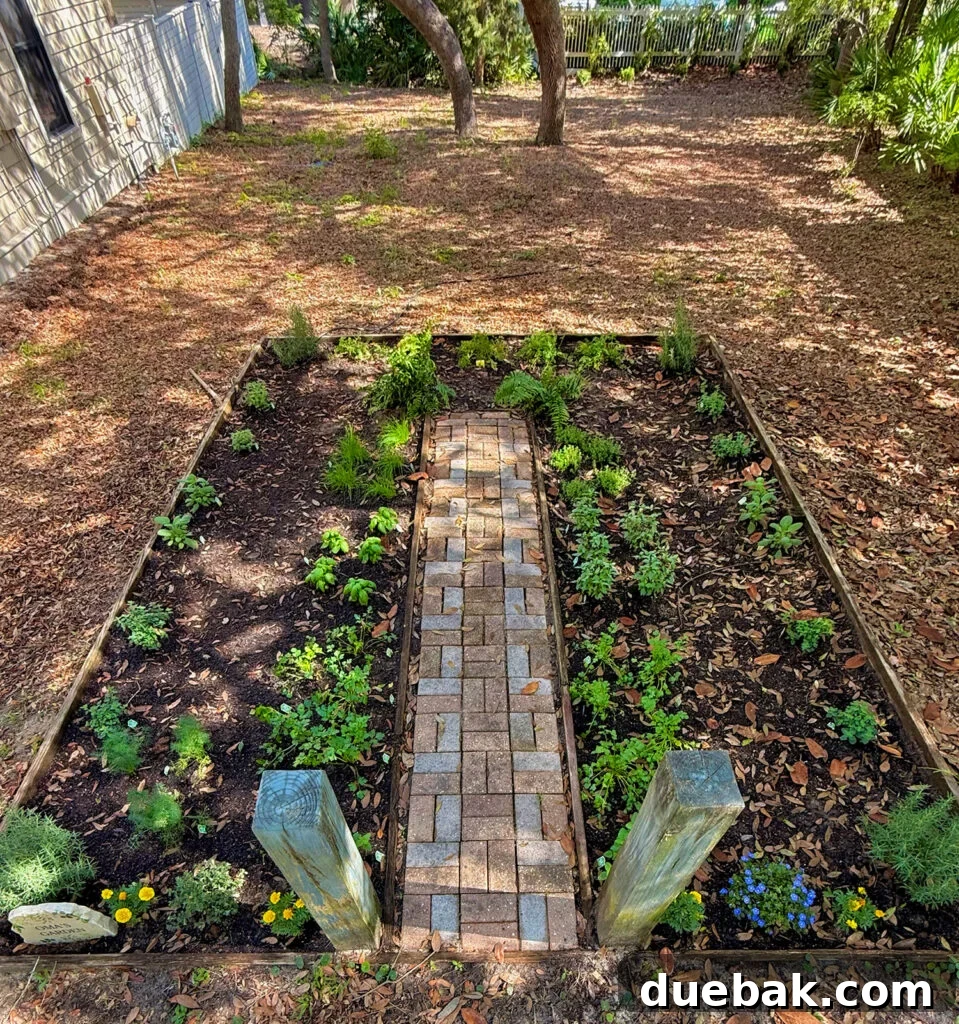
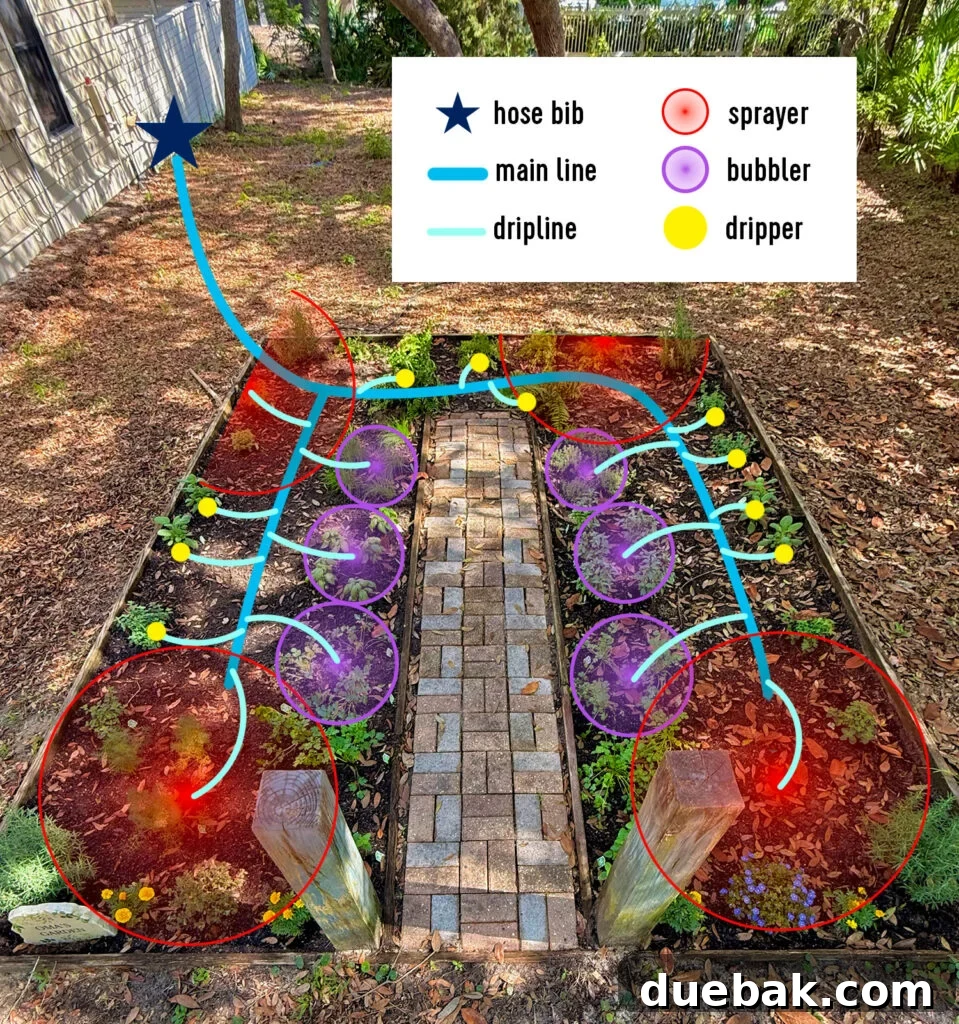
We used a simple layout for an herb garden, combining bubblers and sprayers for coverage and drippers where precise delivery was needed. Kits often include sample layout guides and recommended run times.
Step 2: Gather Supplies
A basic kit and a hose timer may provide everything you need for a single-zone installation. Consider additional items if:
- You need multiple zones—additional backflow preventers, pressure regulators, and connectors may be required for each zone.
- Your water source is far from planting areas—additional mainline tubing may be necessary.
- You have many plants—extra 1/4″ tubing, emitters, and stakes could be helpful.
- You want more or different emitters than the kit provides—emitters are inexpensive and easy to add.
The most costly component is often a multi-zone timer, but a single-zone hose timer is affordable and perfect for one garden area.
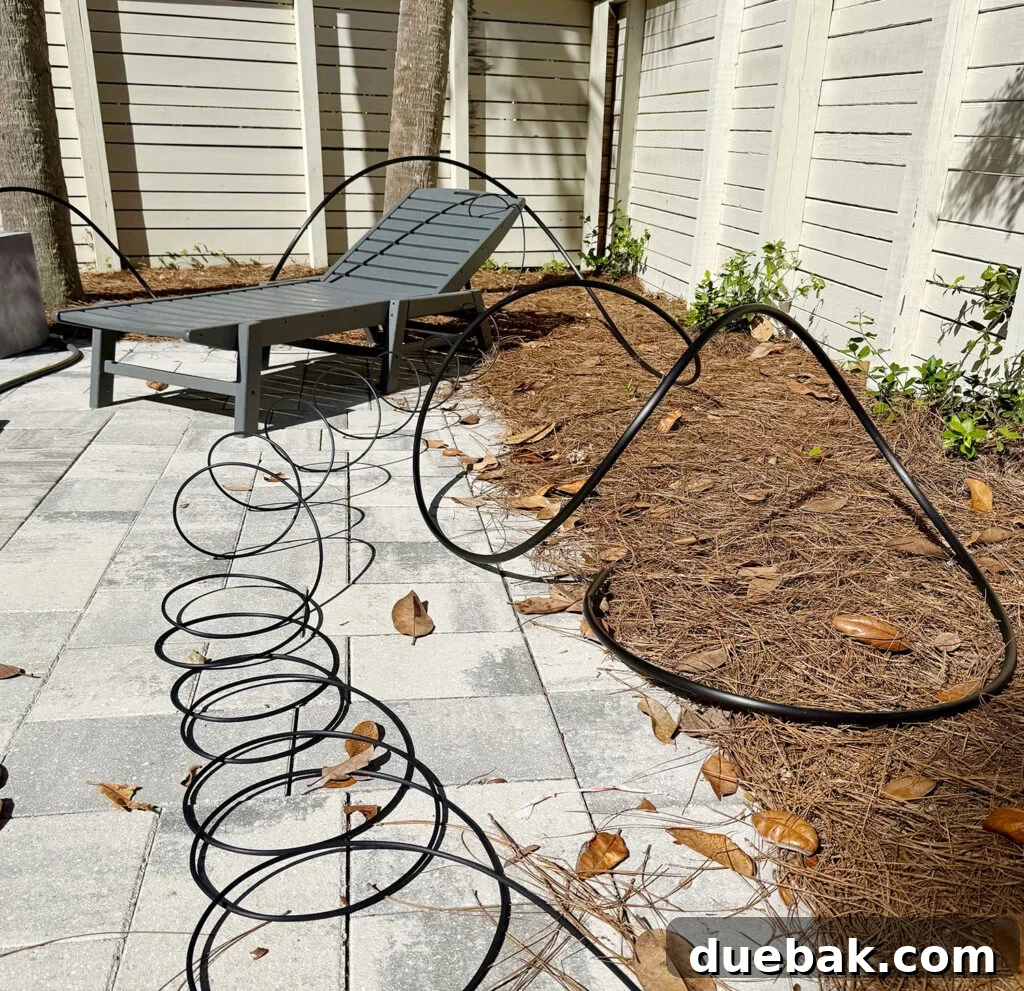
Step 3: Give Your Tubes Some Sun
Lay your tubing in the sun for about an hour before assembly. Warm tubing becomes more flexible, making it easier to push onto barbed fittings and work with by hand. This is also a good time to lay out emitters and prepare planting areas.
Step 4: Attach Timer & Hose Connectors
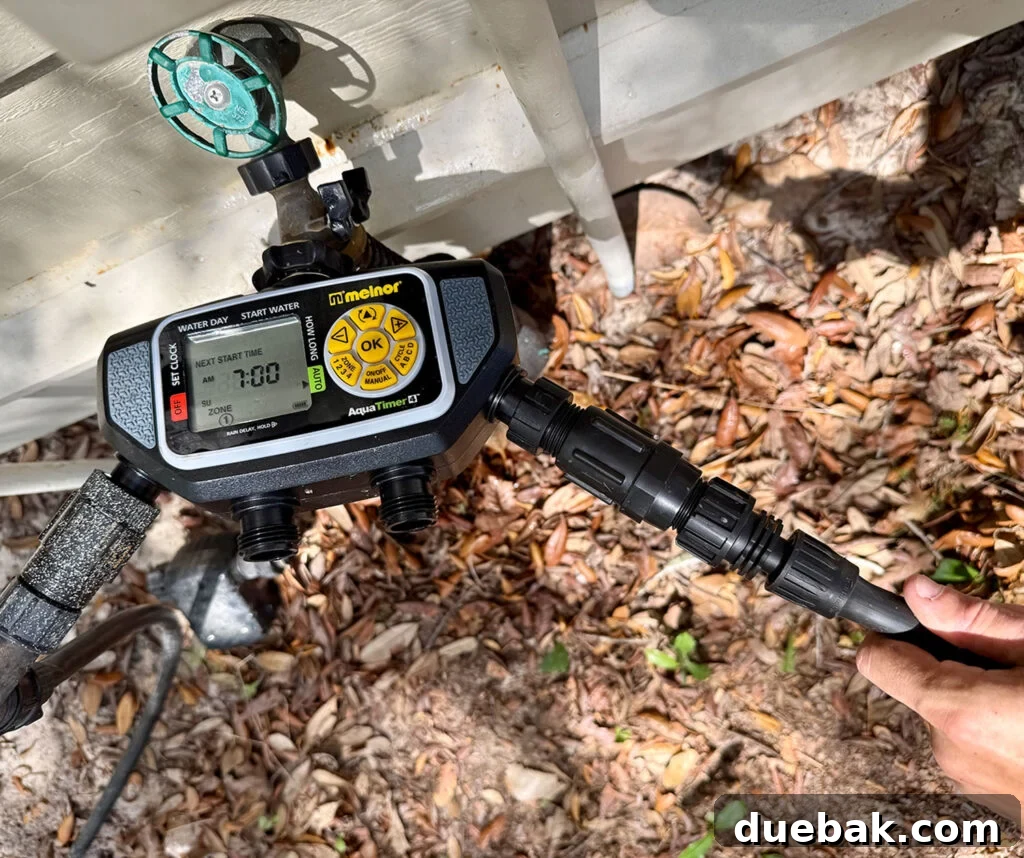
Assemble the timer, backflow preventer (with filter), pressure regulator, and drip adapter onto the spigot. Hand-tighten each threaded connection. When everything is connected, attach the 1/2″ mainline to the drip adapter—usually with a push and small twist to secure.
Step 5: Run The Main Line
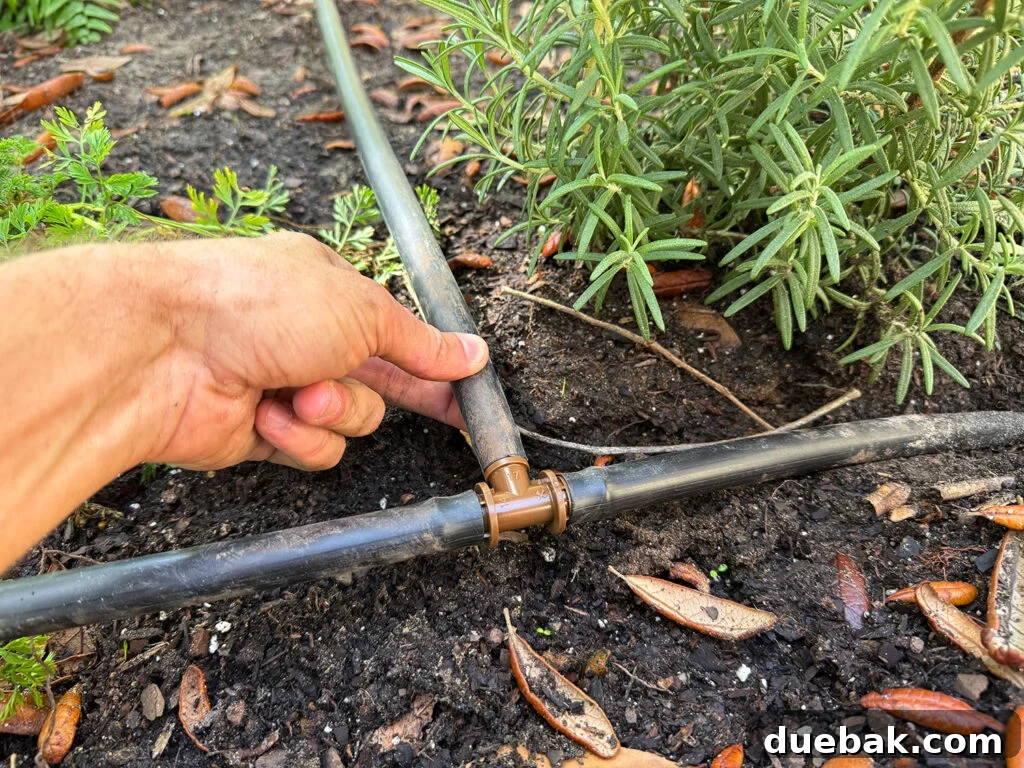
Run 1/2″ tubing from the water source through the areas you plan to water. The main line only needs to be within a few feet of plants. Use barbed tees and elbows to branch and route the line; simply push tubing onto the barbed fittings. Close open ends with ring closures and cut excess tubing with scissors or a tube cutter.
Step 6: Connect Driplines & Emitters
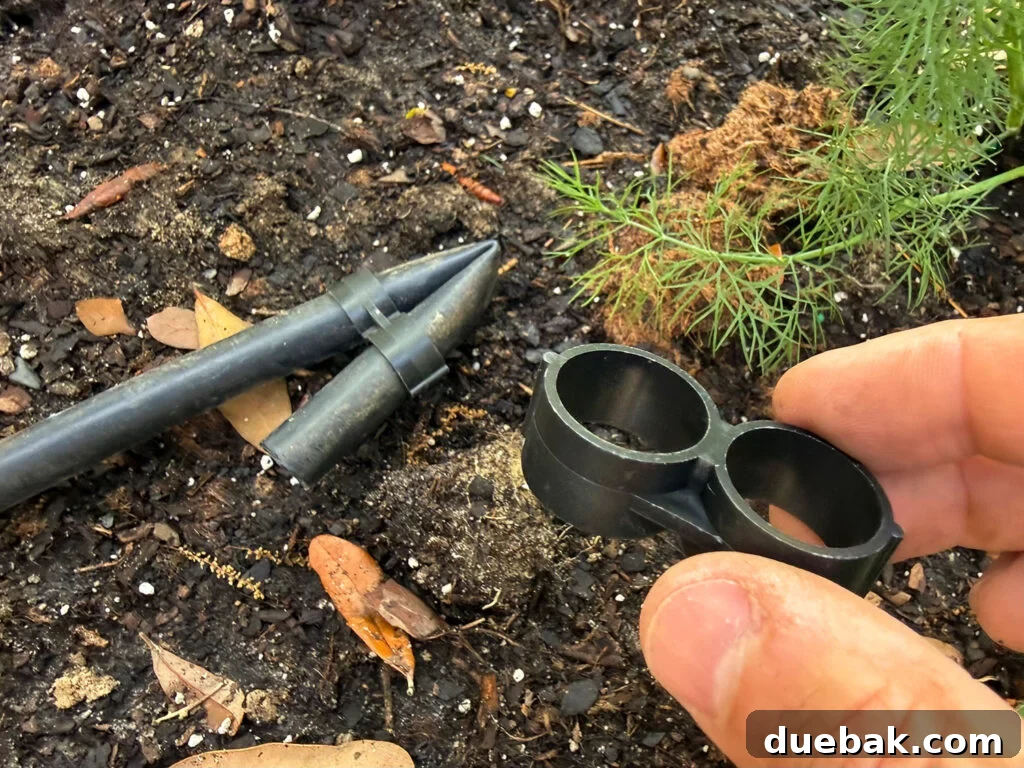
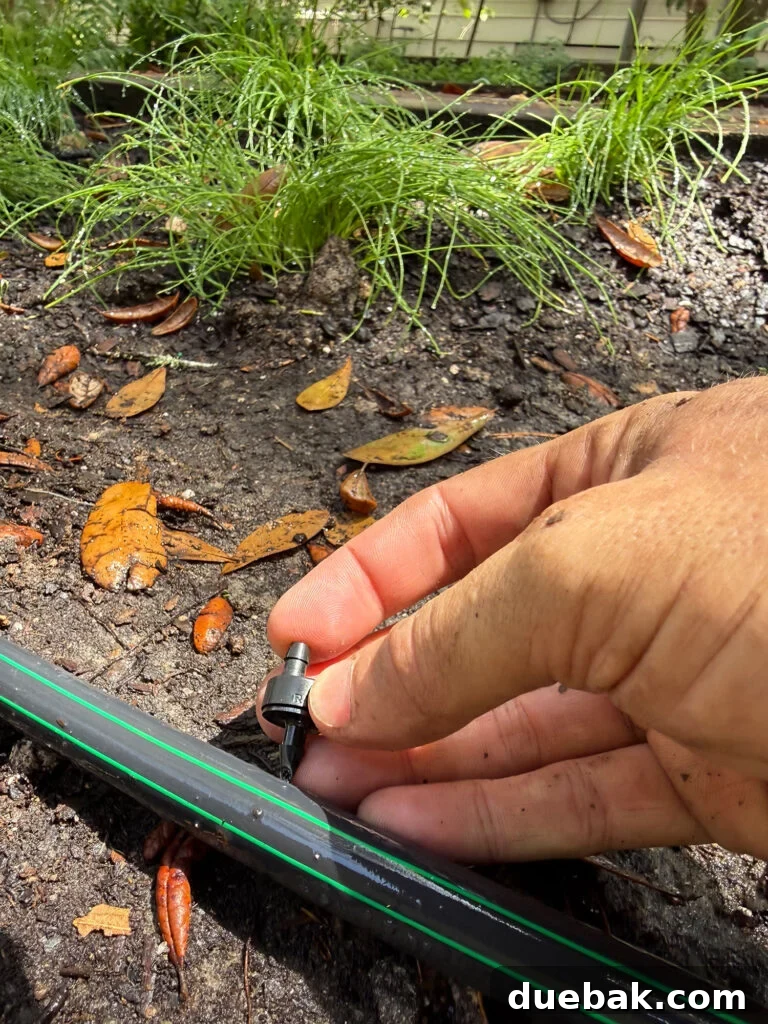
Install 1/4″ driplines by puncturing or inserting barbed connectors into the side of the 1/2″ main line near each plant. Some emitters are pushed directly into the main line and then connected to a short length of 1/4″ tubing, while others are installed inline within a dripline. Use stakes to hold tubing and emitters in place.
How To Correct Mistakes
If you puncture the wrong spot, use goof plugs to seal small holes. For larger mistakes, cut out the damaged section and replace it with a coupling and short hose segment. Barbed fittings can be difficult to remove once inserted, so often cutting and replacing the short section is easiest. Mistakes are normal—after a few hours you’ll have a working system.
Step 7: Test & Program Timer
Turn the water on and inspect the system. During testing:
- Check for leaks at the spigot and along tubing; tighten or reseat fittings as needed.
- Confirm emitters are flowing properly. Some sprayers and bubblers require twisting to open.
- Adjust placements and spray patterns so water reaches intended areas without overspray onto sidewalks or structures.
Once satisfied, program the timer. In general, fewer longer waterings per week encourage deeper roots and greater drought tolerance compared with short daily waterings.
Step 8: Dig In or Mulch Over (Optional)
You can leave tubing exposed, cover it with a thin layer of mulch for a cleaner look, or bury lines slightly. Mulch protects tubing and improves aesthetics, but buried lines can be harder to inspect and are more at risk from burrowing animals. A light layer of mulch is a common compromise.
More Garden DIY Projects
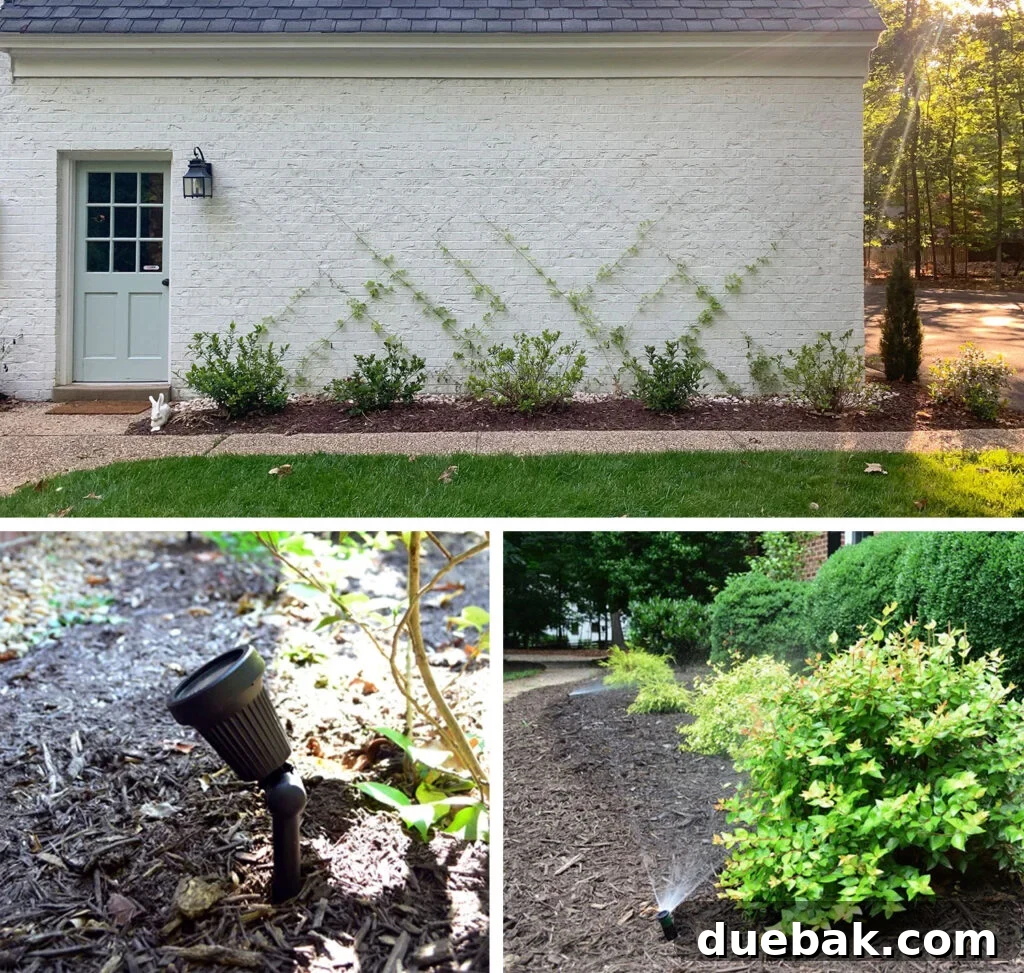
If you’re looking for more outdoor project ideas, consider irrigation for lawns, DIY trellises, landscape lighting, pressure washing, or deck restoration. These projects can further improve the look and function of your yard.
*This article may reference commonly available kits and supplies. No external links were added beyond the images and embedded video metadata.