
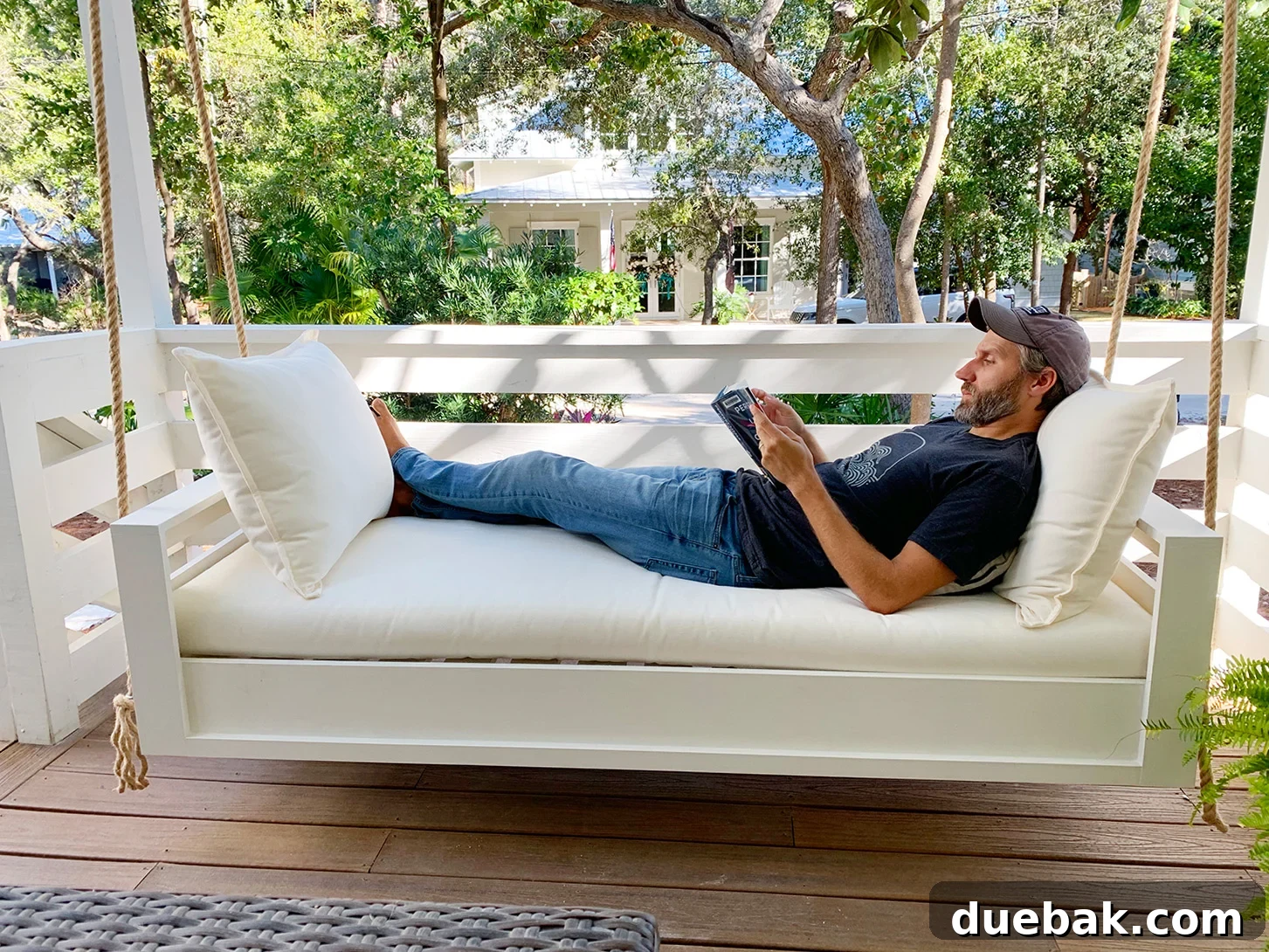
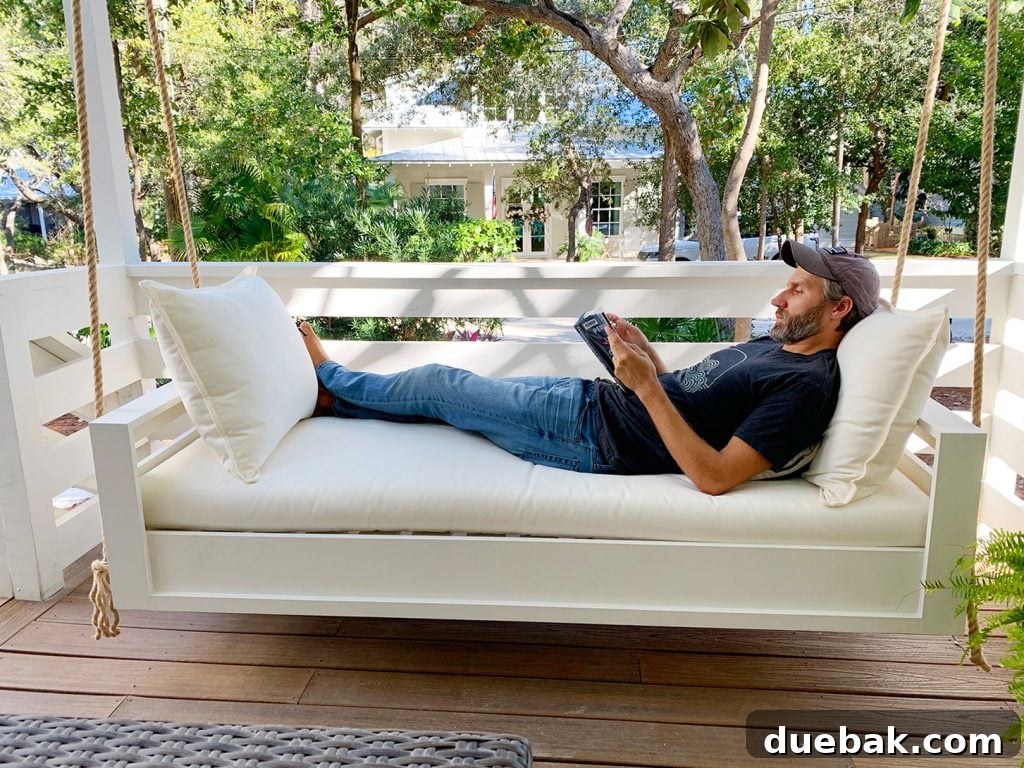
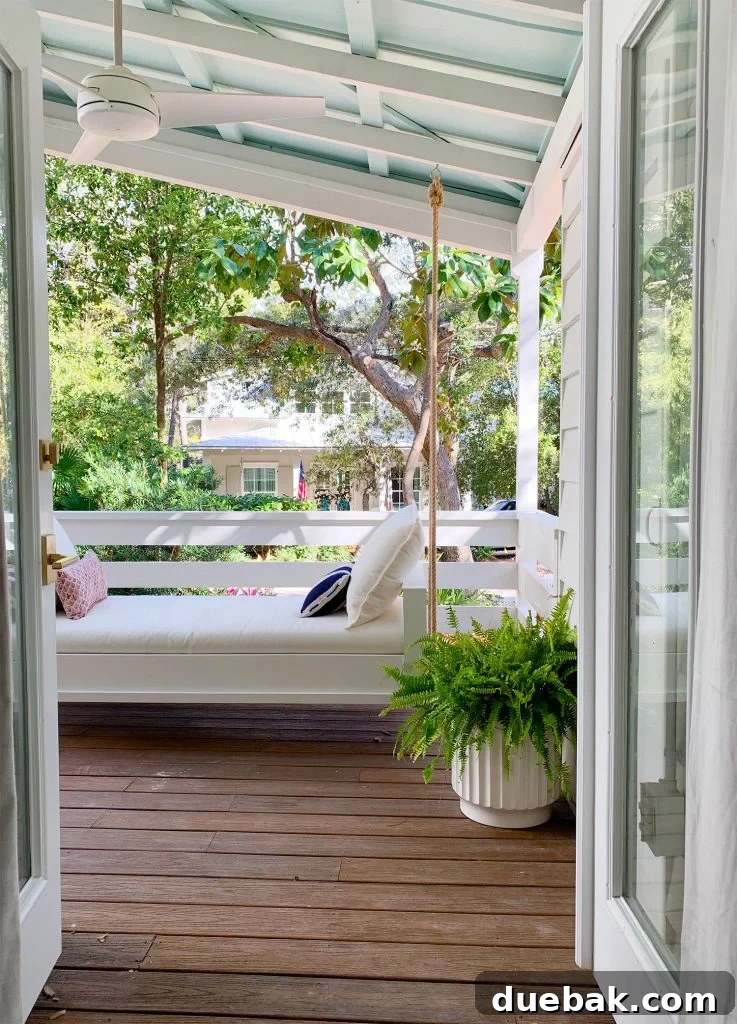
Back in October we mentioned our plans to add a hanging daybed to the covered portion of our front porch, and our whole family is thrilled that it’s finally complete.
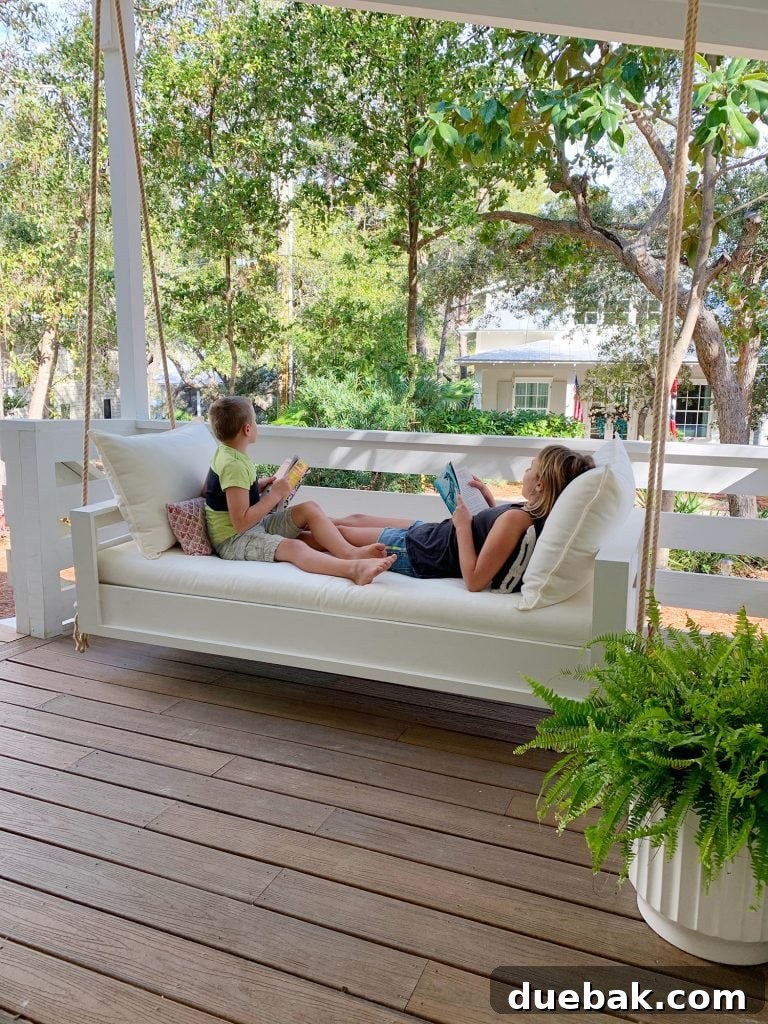
Hanging daybeds are very popular around here, and we’ve always loved the idea. There’s something wonderful about reading or napping outside on a slow Saturday afternoon.
During a stay at an Airbnb in Costa Rica last January we fell even more in love with the concept. Sherry and our daughter spent hours leaning on the daybed’s side arms with their legs extended toward each other — reading, chatting, and swaying. It felt like the ideal outdoor lounge spot.
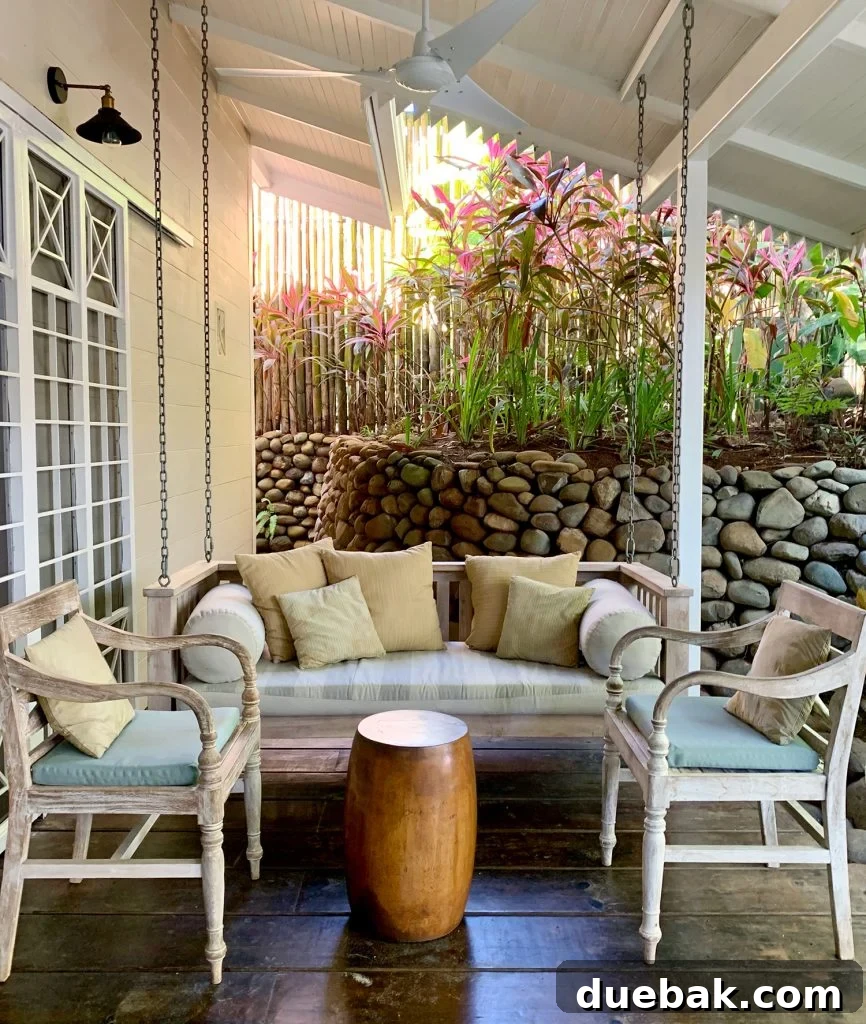
We realized our front porch would be a great place for one. The porch is covered, protecting the bed from rain and harsh sun, and it has sturdy exposed beams to hang it from. There’s also a ceiling fan right above to keep things cool.
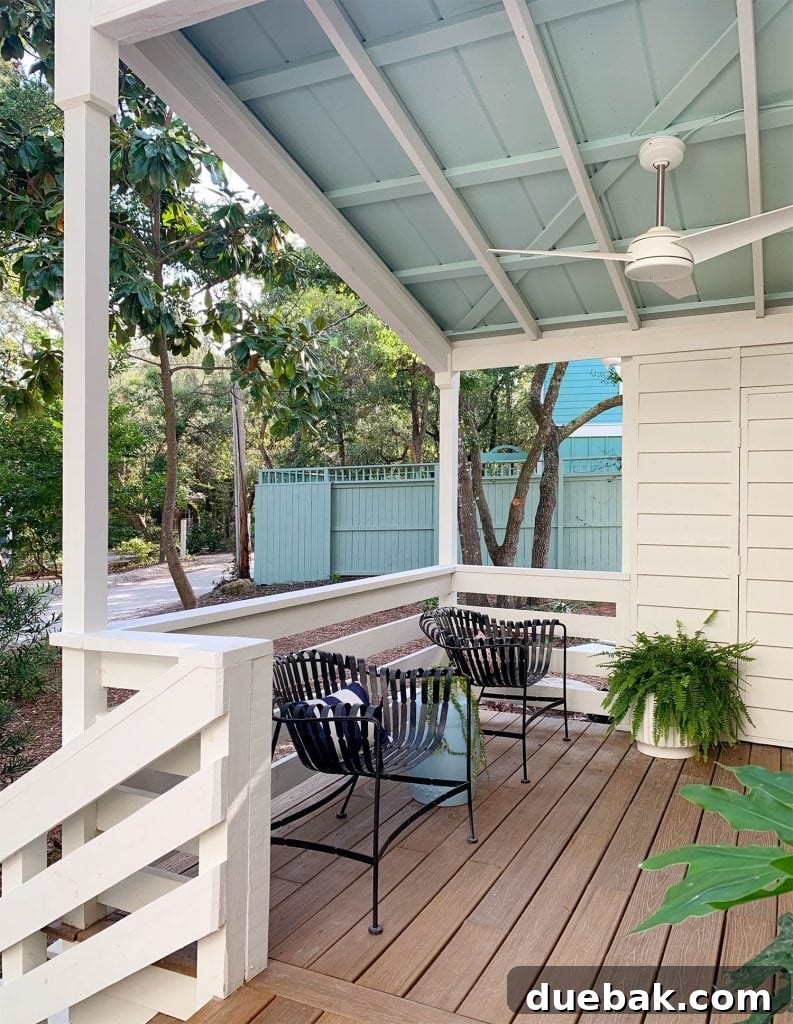
The spot wasn’t perfectly deep enough for a full twin-mattress-sized daybed without blocking the path to our outdoor shower or making it harder to access the wicker bin where we store beach chairs. We needed enough clearance for everyday use.
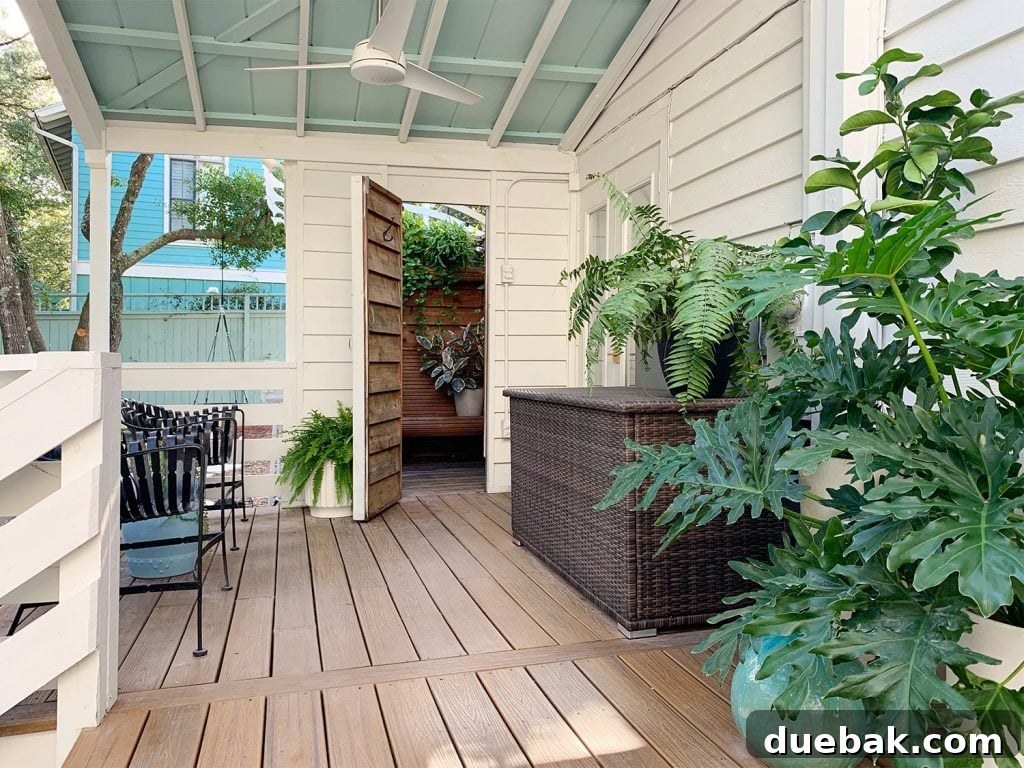
We settled on a cushion that’s three inches shorter than a twin mattress (6′ long) and 10″ less deep — about 28″ deep overall, which is similar to a typical sofa cushion and still very comfortable. That size gave us plenty of clearance to move through the porch and access the shower and storage without feeling cramped.
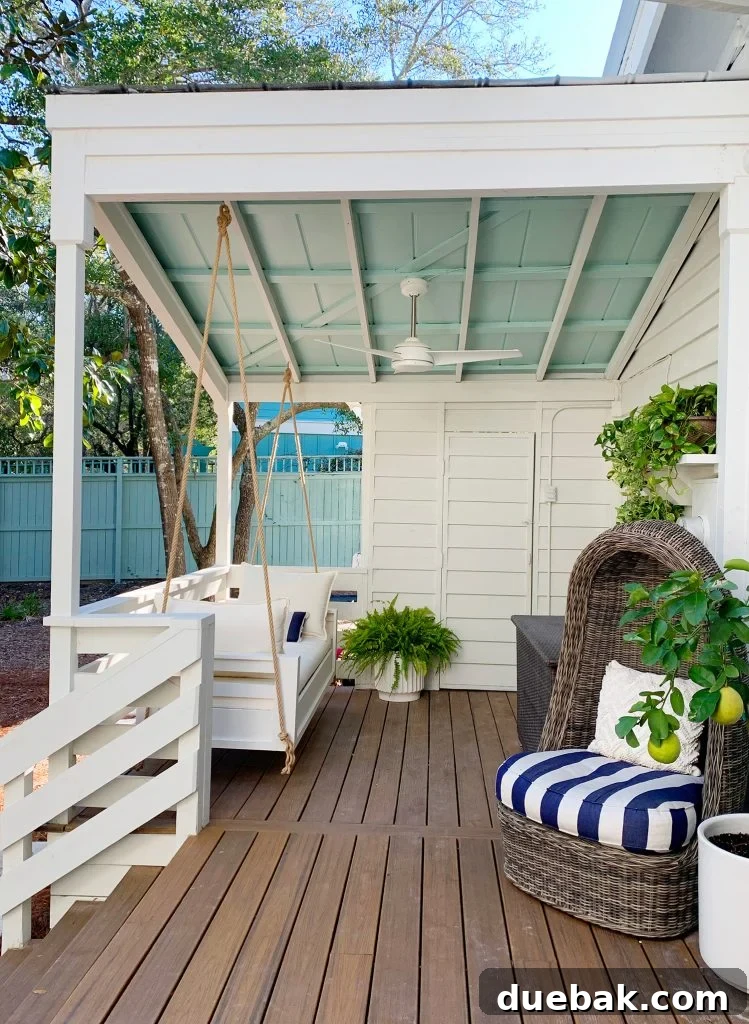
That nearby egg chair swivels, so whoever’s sitting there can turn to face anyone on the daybed. But the key challenge was finding the right outdoor cushion for our space.
Finding An Outdoor Daybed Cushion
Even though the cushion would be under the porch, we wanted something made for outdoor use. Some people use a regular twin mattress inside a waterproof cover and then sew or order an outdoor cover. We considered a custom-cut mildew-resistant foam pad wrapped in outdoor fabric, but that option was getting costly and would likely be heavy and awkward to move.
Instead, we looked for an off-the-shelf outdoor replacement cushion sized for outdoor sofas and found one made for the Pottery Barn Cammeray Outdoor Sofa that matched our needs — size, color, and durability. Buying a factory-made outdoor cushion meant it was built to handle the elements, was lightweight, quick-drying, and easier and cheaper than a custom option.
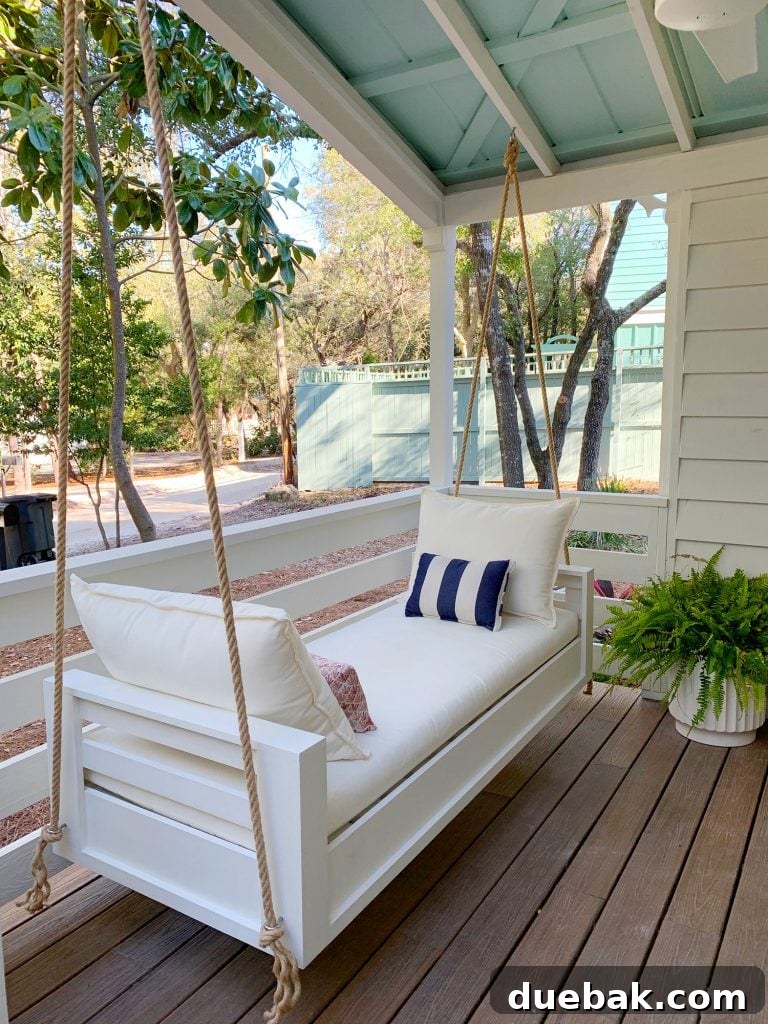
We ordered the cushion set during an end-of-summer sale: the bottom cushion plus three large back pillows for $399. They were back-ordered and took a while to arrive, but they’ve proven to be lightweight, fast-drying, and easy to clean. After exposure to rain, sun, and child-related spills, they’ve held up well.
Materials
Besides your cushion or mattress, here’s what we used to build our hanging daybed. Quantities match our cushion size (28″ x 72″), so adjust if you use a standard twin mattress (38″ x 75″). If you plan to stain instead of paint, don’t buy pre-primed wood.
- Three 8′ 2×4 boards (frame)
- Four 8′ 1×4 boards (slats)
- Three 8′ 1×8 primed boards
- Three 8′ 1×4 primed boards
- Two 8′ 1×3 primed boards
- Three 8′ 1×2 primed boards
- Box of 2″ exterior screws
- Exterior-grade wood glue
- Four 5-gallon buckets
- Eight screw eye hooks (for ceiling and bed)
- 3/4″ natural hemp rope (we used 48′ length)
- Outdoor-rated paint and primer (semi-gloss exterior)
Building The Daybed Platform
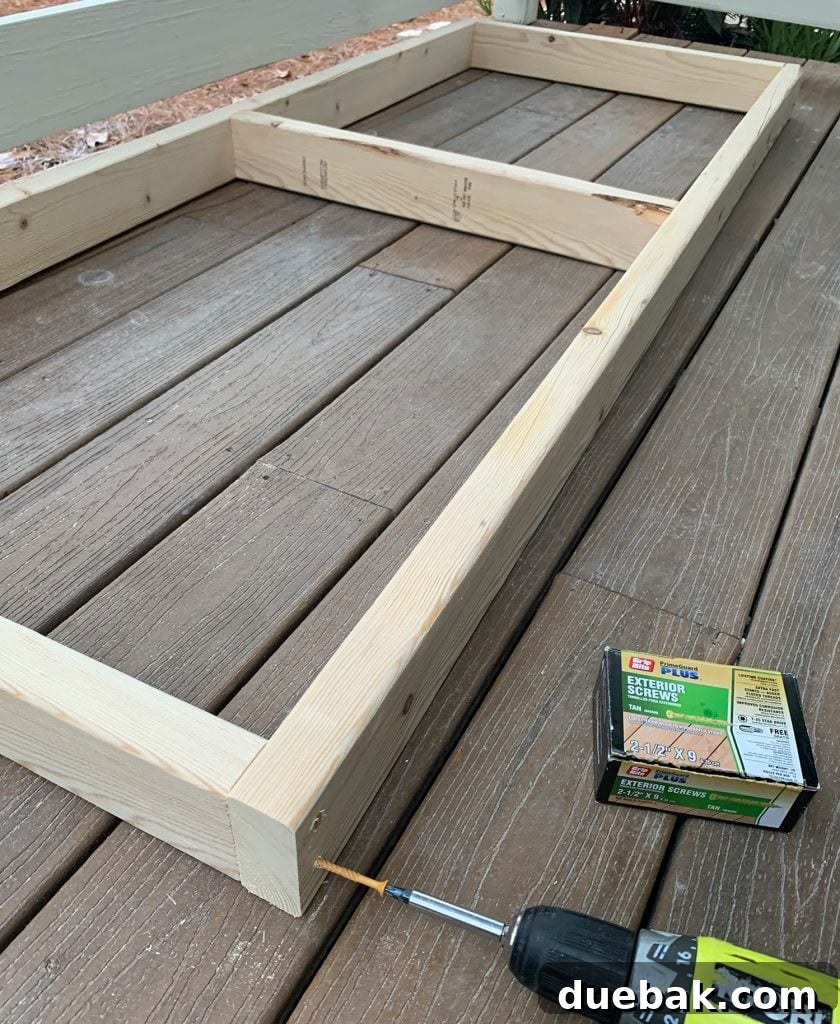
Building the hanging bed was straightforward. We combined lessons from building bunk beds with a Plank & Pillow tutorial to design a platform that fits our cushion. The structural core is a simple 2×4 frame built to the cushion’s exact dimensions and connected with exterior screws — this supports the cushion and receives the hanging hardware.
To improve the look and add substance, we wrapped the 2×4 frame with 1×8 boards. Before attaching those boards, we propped the frame on scrap wood to determine how much of the cushion we wanted recessed by the lip of the frame. We accounted for the slats in this measurement so the finished cushion fit comfortably without scraping against the frame.
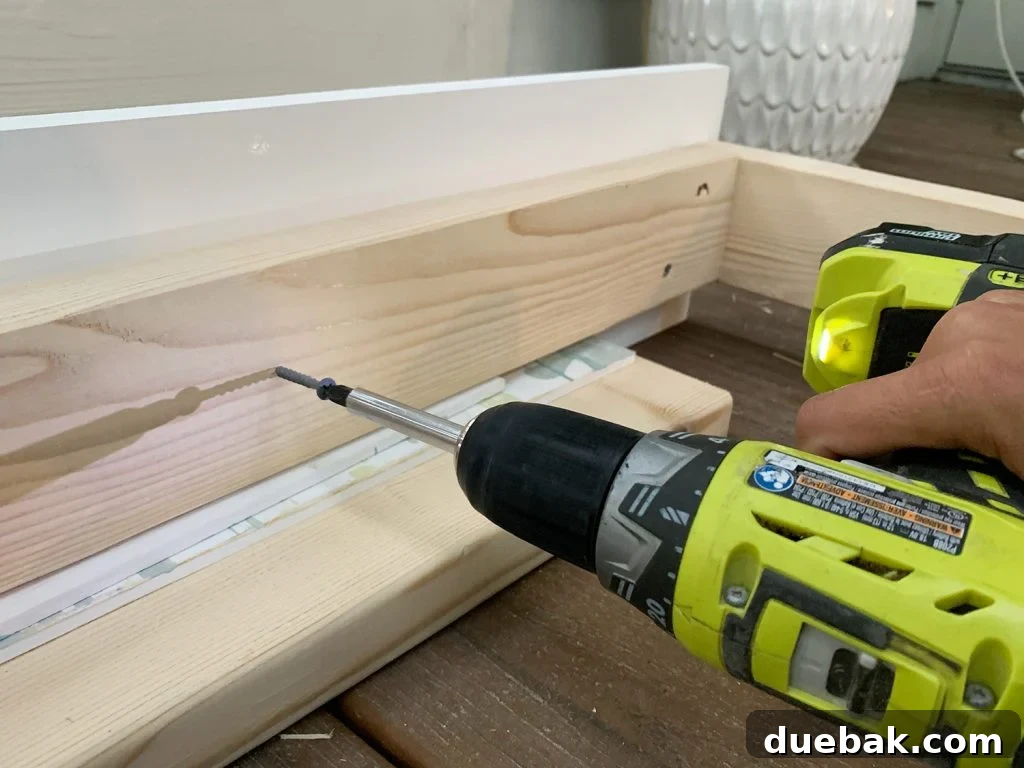
After screwing the 1×8 trim onto the frame from the inside (so the exterior stayed clean), we added 1×4 slats across the top to form the platform. We primed and painted the entire assembly with the same exterior paint we used on our outdoor trim (Moderne White by Sherwin Williams) to protect the wood from the elements. We propped the frame on 5-gallon buckets during these steps to help with alignment and assembly.
Building The Daybed Arms
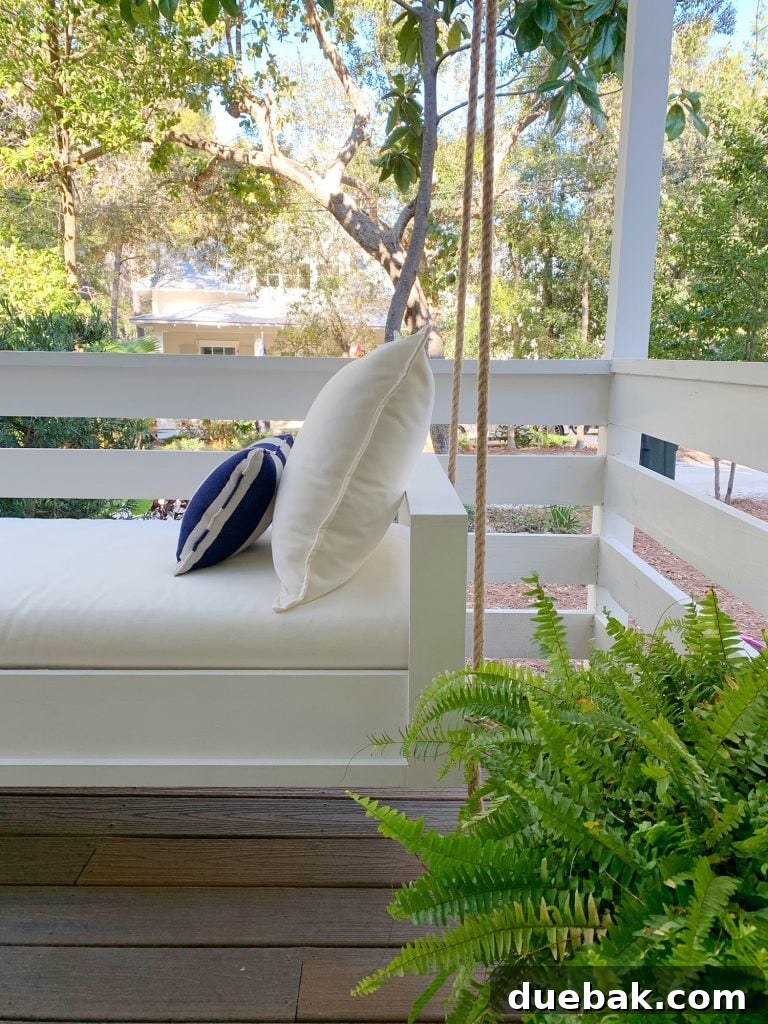
The arms and side rails are largely a matter of taste. We chose a horizontal railing style to match other railings around our house and opted not to add a back rail so the daybed invitations facing outward toward the yard rather than turning to watch the house. We can always add a back later if we decide we want one.
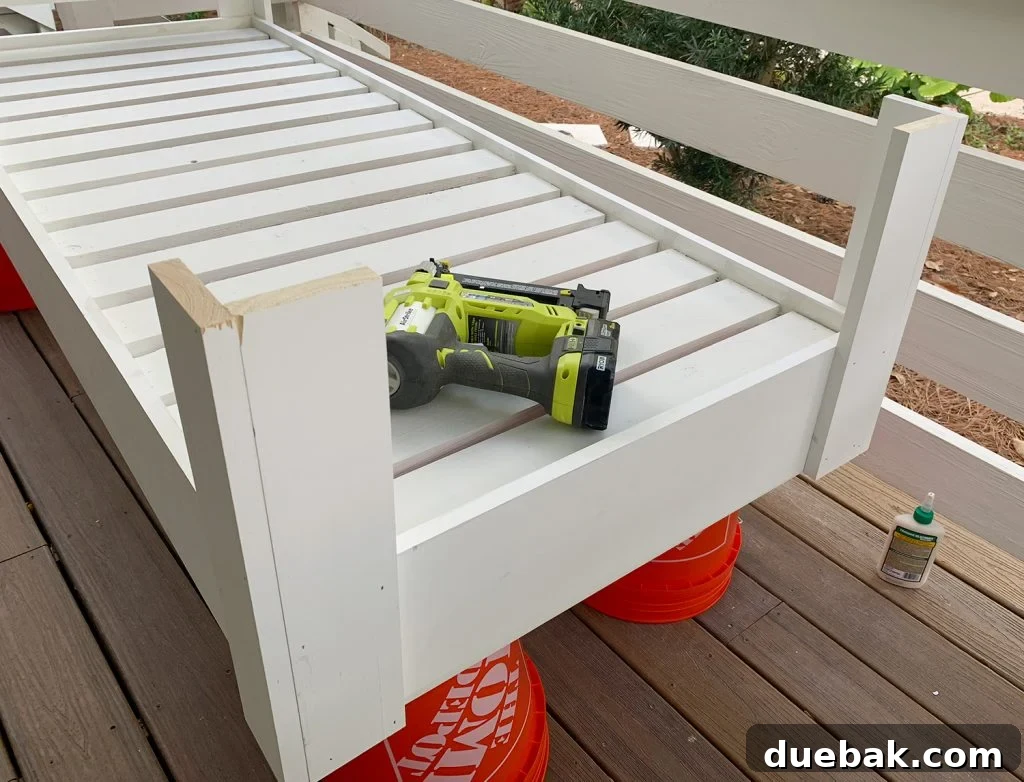
Start this step by adding corner posts at all four corners of the base. Our posts were made from two 1×4 boards joined at right angles and set to about 17.25″ tall. We attached pieces with exterior wood glue and brad nails — the nails keep everything in place while the glue ensures a strong, lasting bond. After securing vertical posts, we added upper and lower horizontal rails (1x3s) using small scrap spacers to keep everything level, then capped the arms with a 1×4 top piece for a flat armrest.
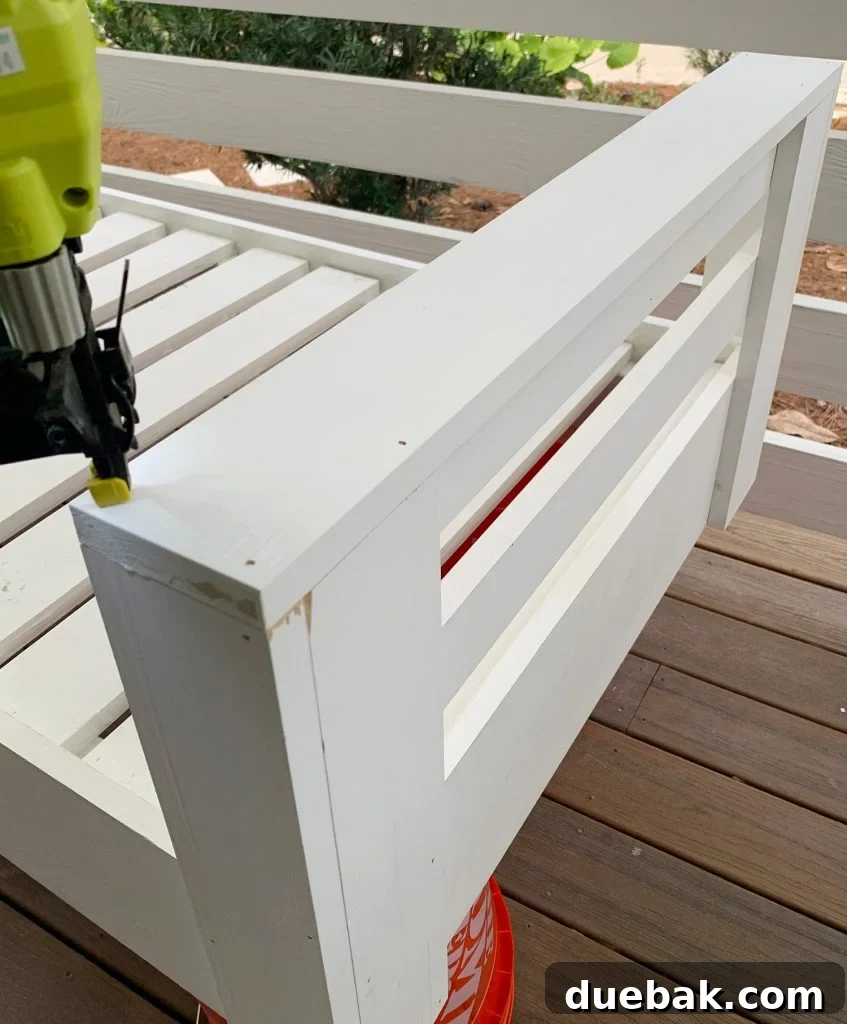
We finished the look with a 1×2 trim piece along the bottom edge between the corner posts for a clean, finished edge. Once assembled, we filled nail holes, sanded, caulked seams, and painted everything with exterior paint. After it all dried, the platform was ready to hang.
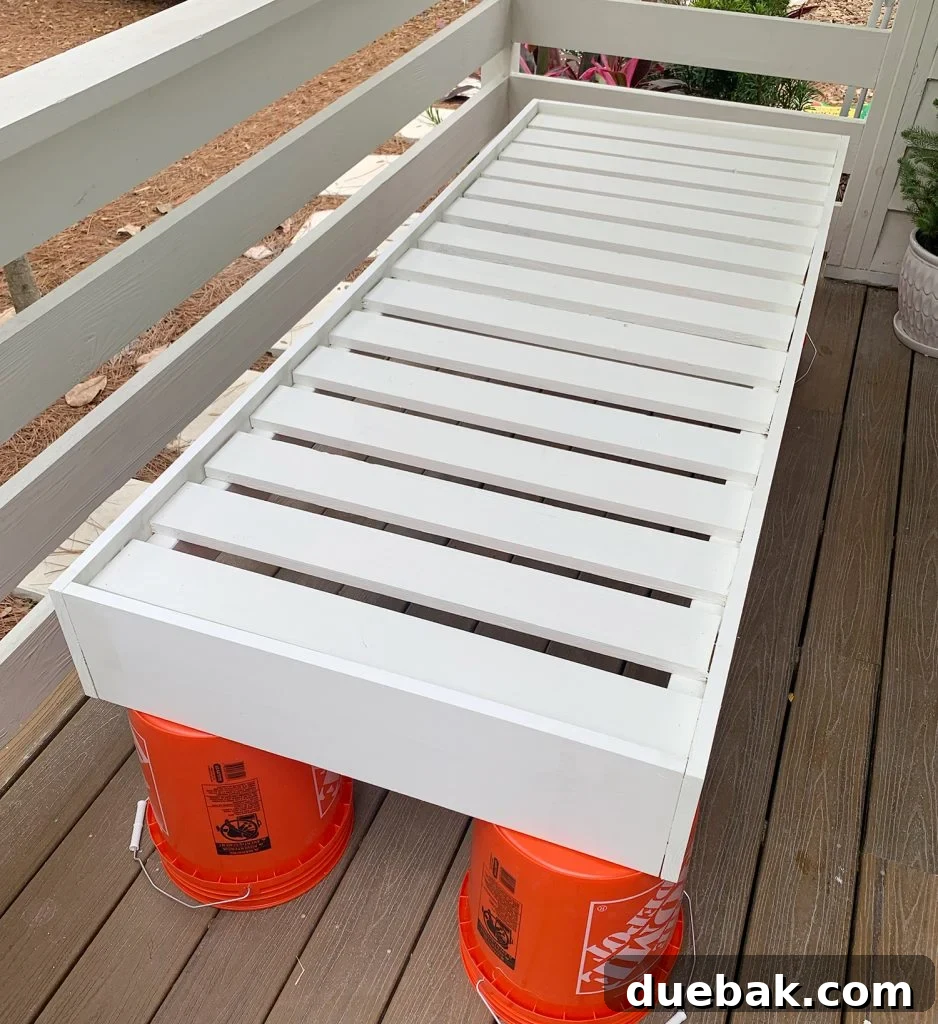
Hanging The Outdoor Daybed
We experimented with several hanging methods and will share a follow-up post detailing what worked best. In short, we tried hanging from two anchor points and later switched to four anchor points, which offered notable benefits. We used 3/4″ natural hemp rope, heavy-duty eye hooks in the ceiling, eye hooks in the bed, and basic knots. The rope cuts easily with regular scissors and will stretch a bit under load; propping the daybed on 5-gallon buckets during setup keeps it level for placement and makes final adjustments easier.
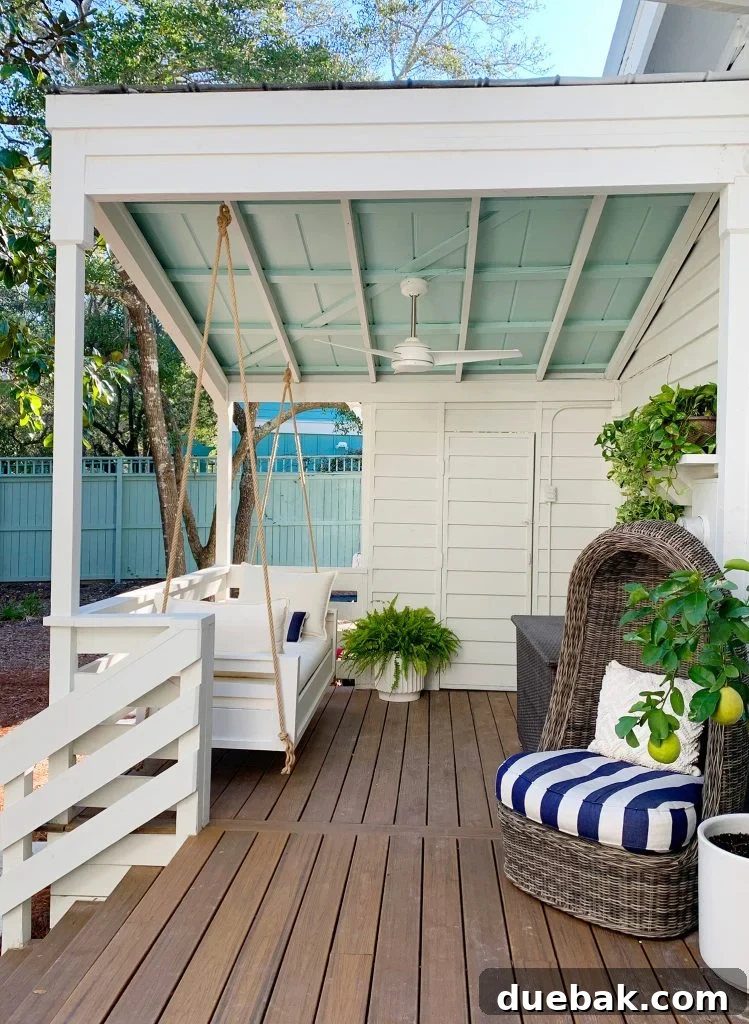
Most importantly, identify solid joists or strong anchor points in your porch ceiling. Our exposed ceiling made it easy to find safe spots for mounting hardware. Once rehung using our preferred method, the daybed became one of our favorite lounging spots. We’ve enjoyed a number of warm days relaxing there already.
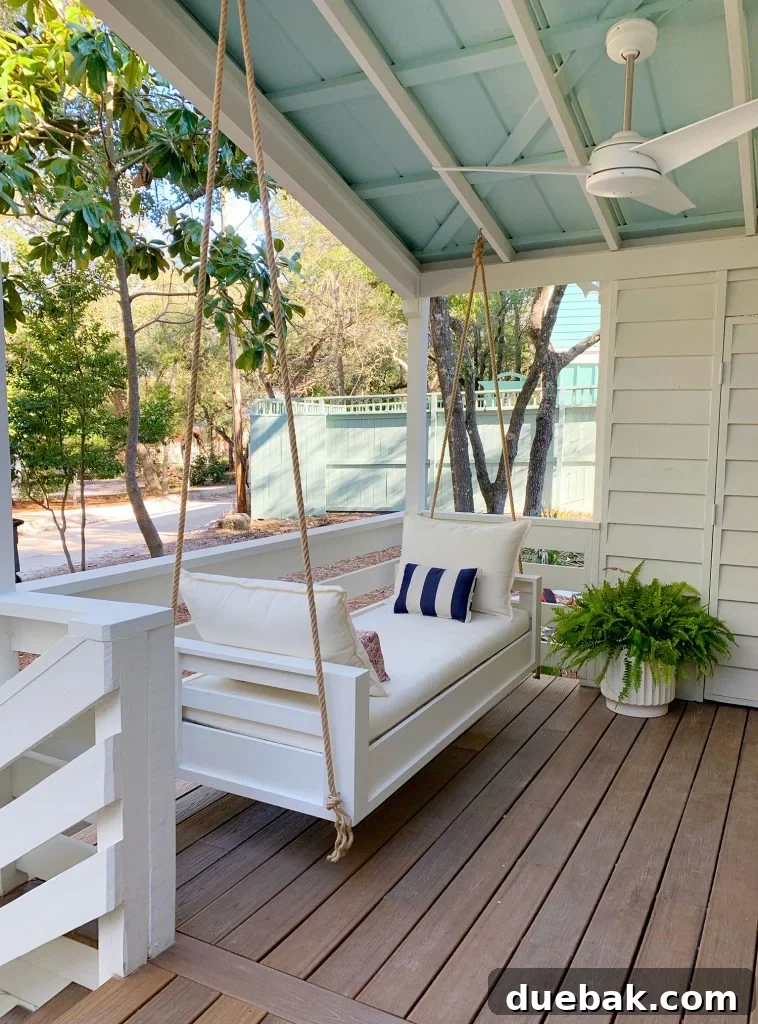
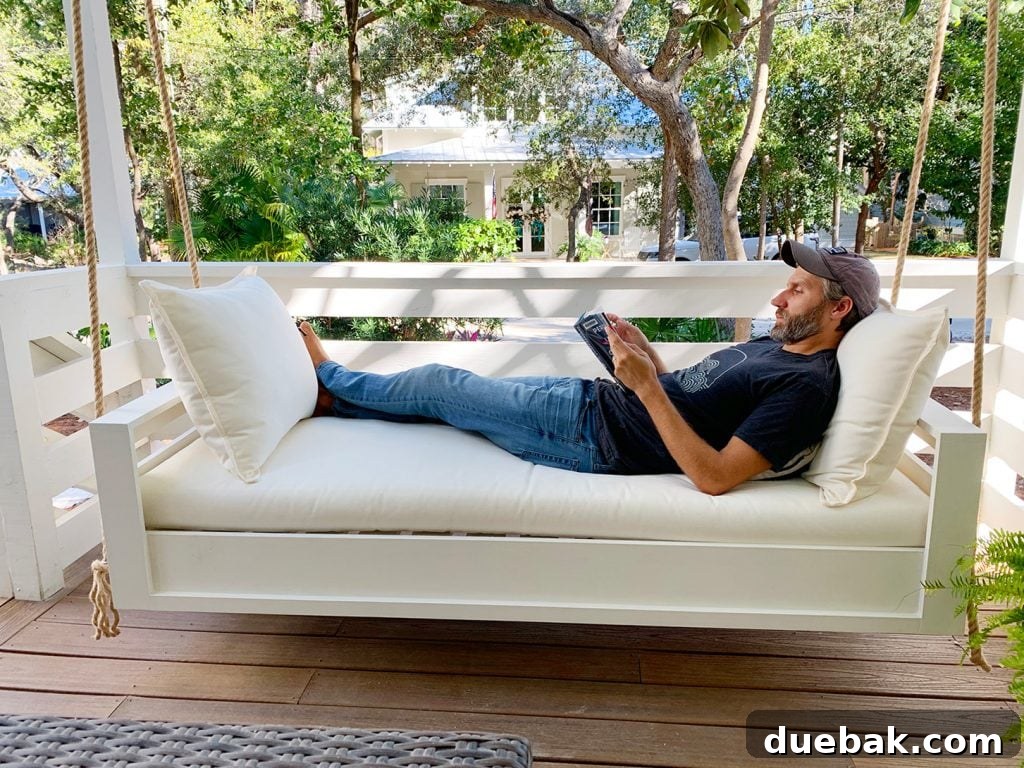
Our 6′ cushion accommodates two people sitting upright at either end or one person stretched out comfortably. It’s big enough for a 6′ tall adult to sprawl out and still be comfortable.
Budget
Aside from the cushion, the build was affordable. The cushion set and pillows were $399, and other materials added up as follows:
- Wood: $150
- Buckets: $14
- Eye hooks: $25
- Rope: $28
- TOTAL: $217
With the cushion added, the project totaled $616. While not cheap, it’s a fraction of the cost of many custom-made hanging daybeds, which often range from about $1,000 to $2,400.
We’ll post more details about the hanging methods and the knots we used, plus a video showing what worked and what didn’t (full disclosure: the first take was a long string of outtakes). For now, we’re enjoying a new favorite spot on the porch — quiet, comfortable, and perfect for lazy afternoons.
Want to browse more building projects and furniture upgrades? Check the archive dedicated to those projects or see the collection of updates for our Florida house.
*This post contains affiliate links, so we may earn a small commission when you make a purchase through links on our site at no additional cost to you.