
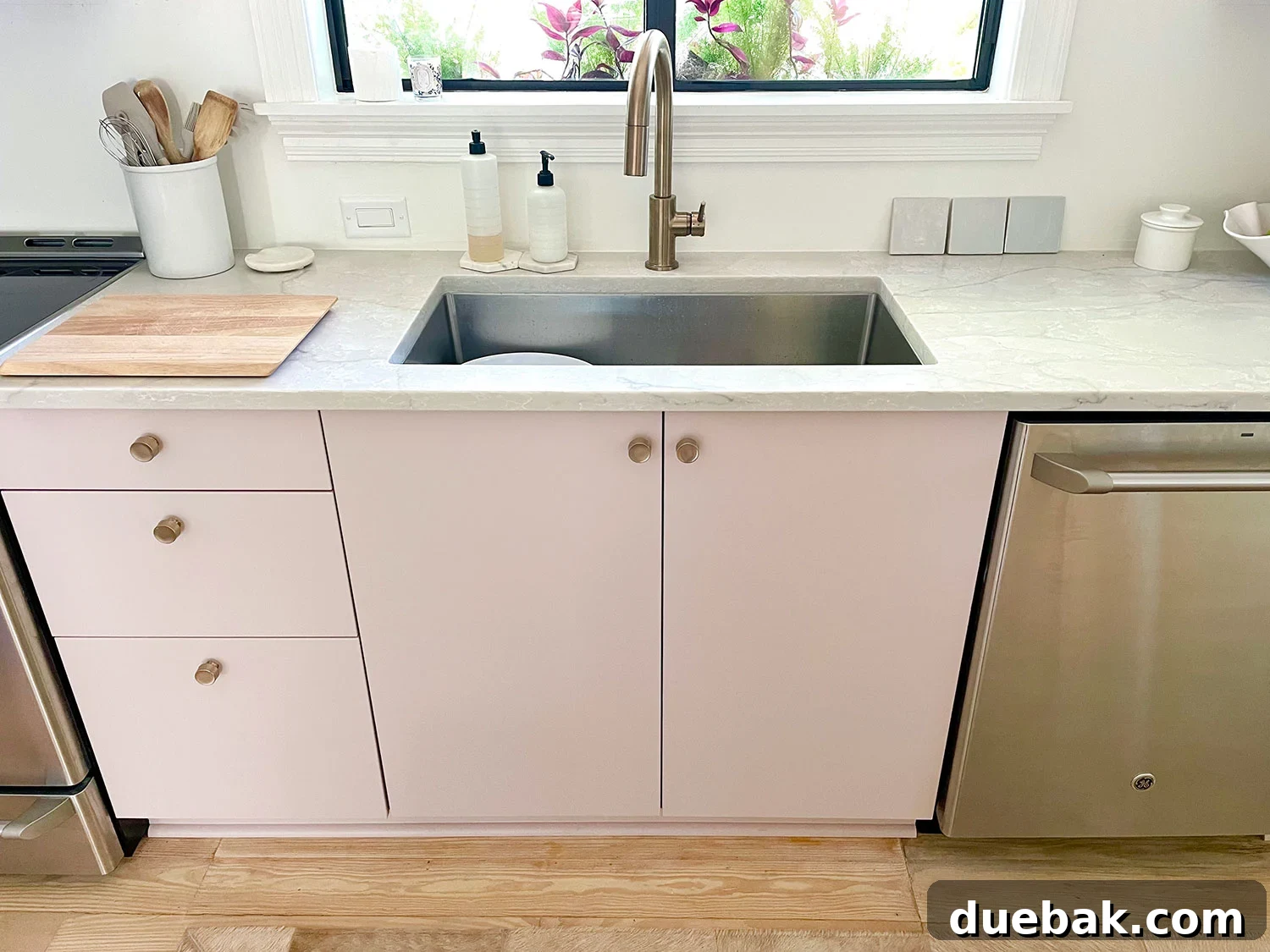
We’ve painted kitchen cabinets before and installed Ikea kitchens before, but painting Ikea kitchen cabinets was a new combination for us. Despite initial doubts about painting a slick, factory-finished surface, we’re very pleased with the result. It turned out to be easier than expected — no paint sprayer or specialized gear required — and the finish has held up well to daily family life.
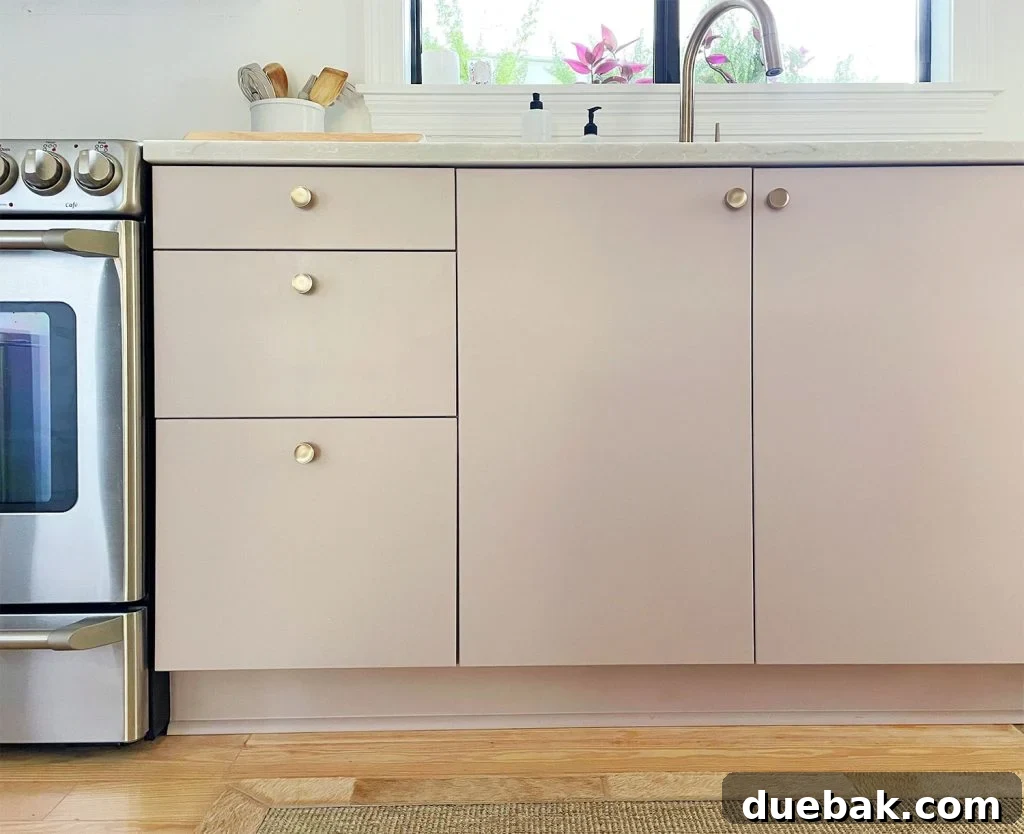
After about a month of everyday use, the painted doors are standing up beautifully. They’ve been scratched, scrubbed, and used by two kids without any noticeable scrapes, dents, or chips. The finish looks as smooth as factory-made cabinetry, and we’ll explain how we achieved such even coverage.
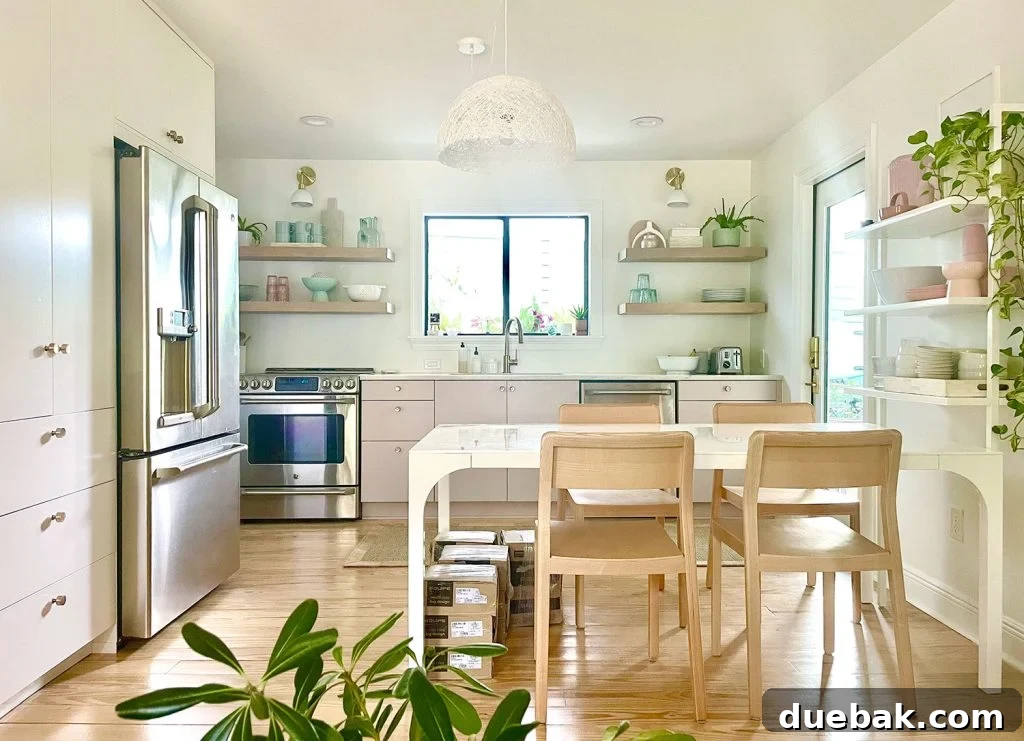
Before the step-by-step instructions, here’s some context about why we chose Ikea cabinets and why we decided to paint them.
Why Did We Redo Our Kitchen With Ikea Cabinets?
We wanted to replace our old cabinets to maximize storage along the back wall. It’s a small kitchen and, although we had organized it to function, the previous cabinets had thick frames that wasted space and made drawers and doors feel cramped. For example, a very narrow drawer barely fit an olive oil bottle. By switching to Ikea fronts and cabinet boxes, we gained much more usable depth and width, which made drawers far more practical for everyday items.
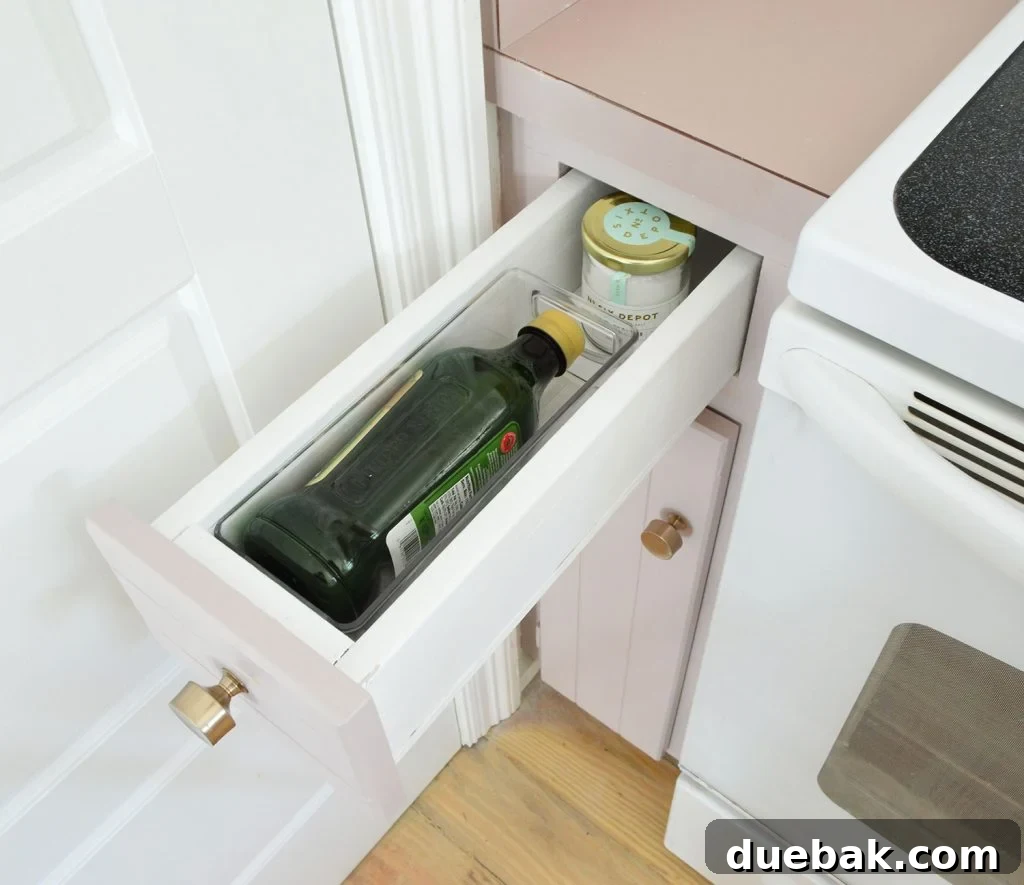
The new Ikea setup reduced unnecessary framing and improved the layout. We also shifted the stove slightly, which further increased the usefulness of some drawers. Ikea’s modular systems let you add organizational features — hidden drawers, custom caddies, and other inserts — that dramatically increased our kitchen’s efficiency. We’ll share details about our organization in a future post. For now, here’s how we took Ikea white doors and turned them into a custom mauve color.
Why Paint The Ikea Cabinets?
We loved the mauve color we used on our previous cabinets (Artsy Pink by Sherwin-Williams) and wanted to carry that playful yet warm tone into this kitchen. Ikea doesn’t offer doors in that color, and custom paintable doors from other suppliers were significantly more expensive. The Ikea VEDDIGNE flat slab fronts gave us a good base at a reasonable price, and painting them let us achieve the exact shade we wanted without a big added cost.
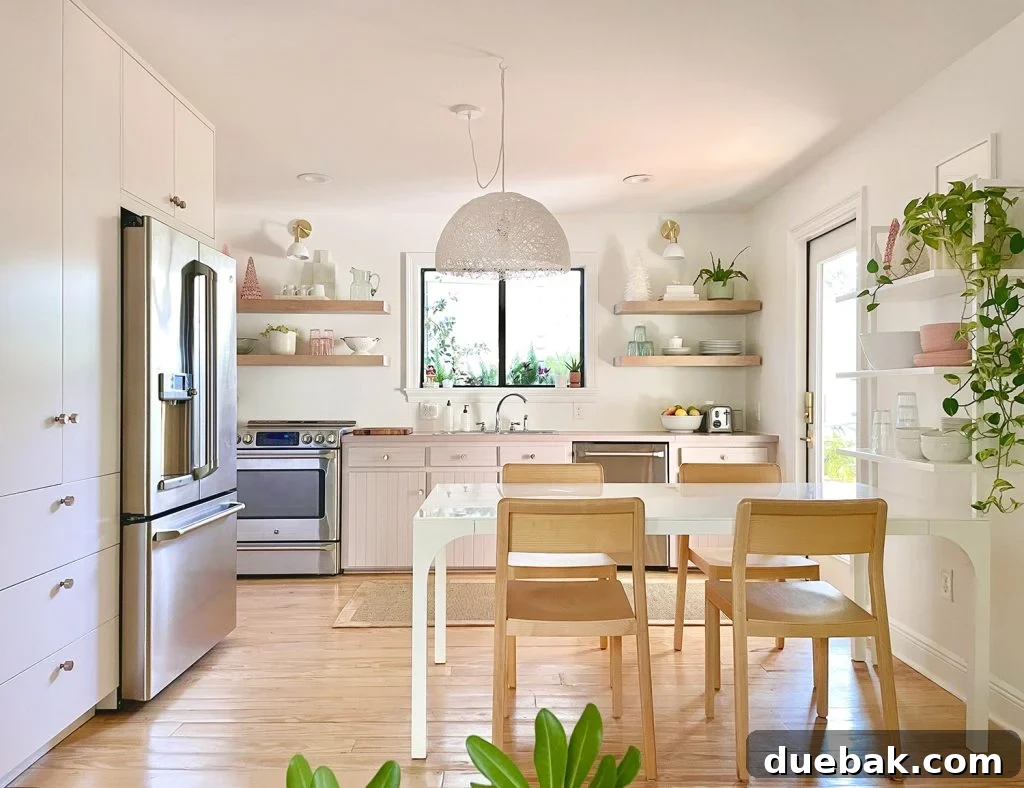
Although painting lacquered or laminated surfaces can be tricky, modern primers and paints bond much better than before, often without oil-based products. Below is what we used and how we approached the job.
Tools & Materials For Painting Ikea Cabinets
We used a low-tech, low-mess method — no sprayer. For a larger kitchen a sprayer might save time, but hand-rolling and brushing let us be deliberate and careful. We painted Ikea VEDDIGNE doors and used the following supplies:
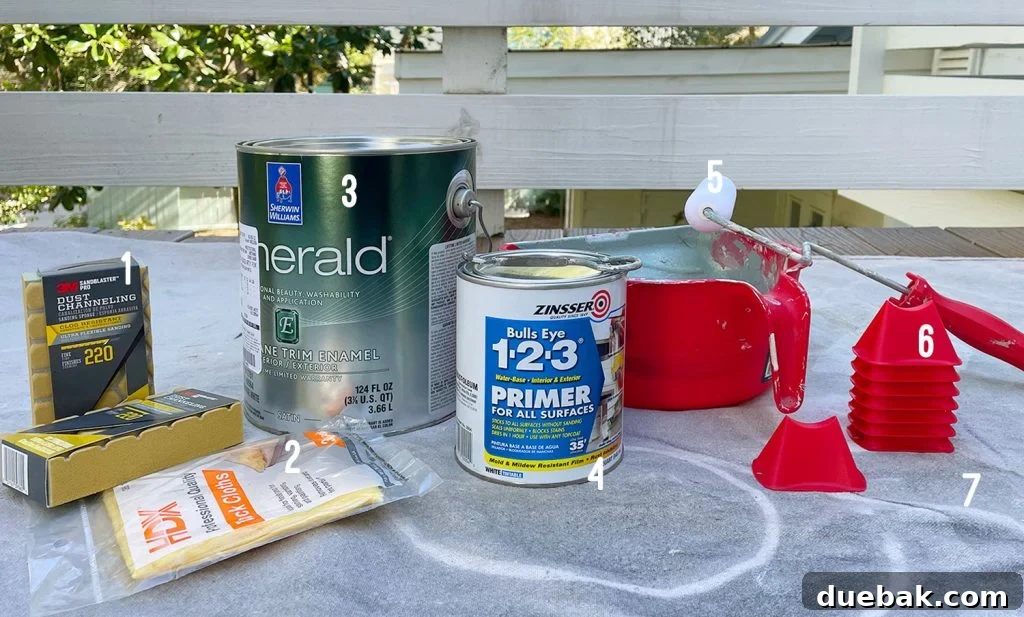
- Sandpaper or a sanding block (120–220 grit)
- Tack cloths to remove fine dust
- Paint: we used Sherwin-Williams Emerald Urethane Trim Enamel in satin
- Primer: Zinsser Bulls Eye 1-2-3 for All Surfaces (a quart was enough)
- Small 4″ or 6″ foam rollers, a roller tray, and a small angled brush
- Painter stands or tripods to elevate the doors while painting
- Dropcloth to protect your work surface
- Your cabinet fronts (we used Ikea VEDDIGNE doors)
- Optional: painter’s tape
- Optional: liquid deglosser for a grease-free surface
You can use an electric sander for speed, but take care around edges and corners to avoid sanding through the thin finish.
How To Paint Ikea Cabinets: A Quick Video!
We made a short video covering the process for anyone who prefers a quick visual summary. For a full walkthrough and more detailed tips, we also recorded a longer tutorial later in the post.
Step 1: Prepare Your Cabinets
If you’re painting before assembly, unbox the doors and lay them out on a dropcloth. If you’re repainting installed doors, remove all doors and drawer fronts first. Clean surfaces well — a liquid deglosser helps remove grease and oils before sanding and priming.
Step 2: Rough Them Up With Sandpaper
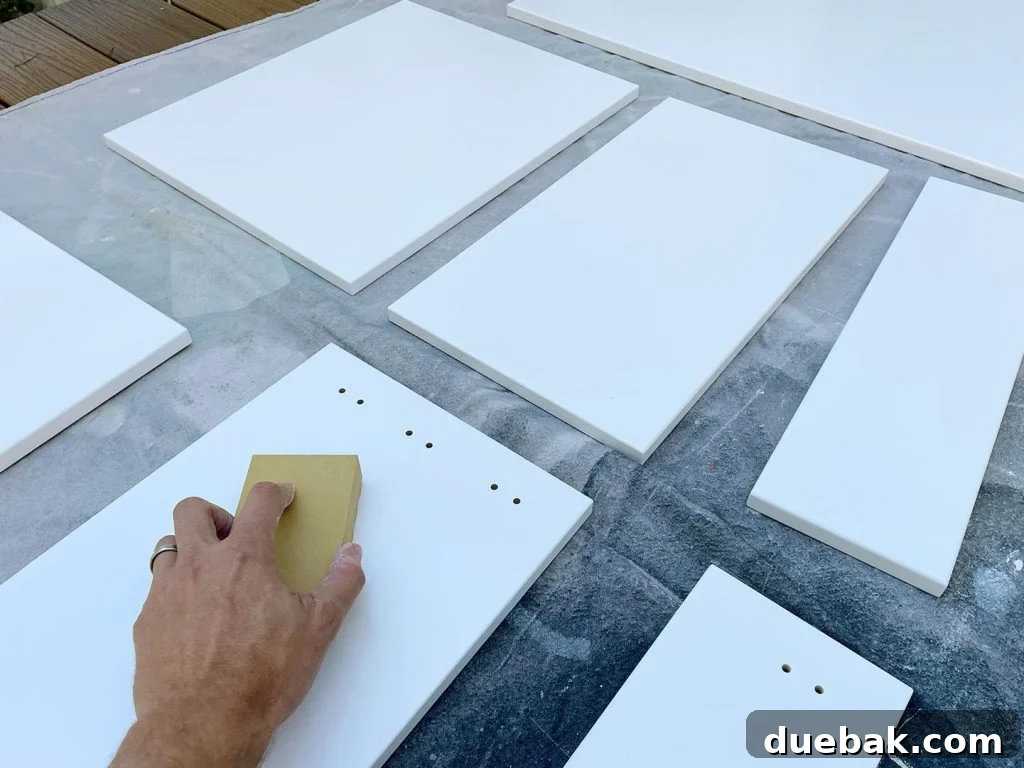
Rough the surface with sandpaper to promote adhesion. Don’t sand through the white factory finish — it protects the MDF underneath. Start with a fine 220 grit and, if needed, move to a coarser 120 grit for stubborn spots. If you use a power sander, be cautious on edges and corners.
Step 3: Fully Remove Your Sanding Dust
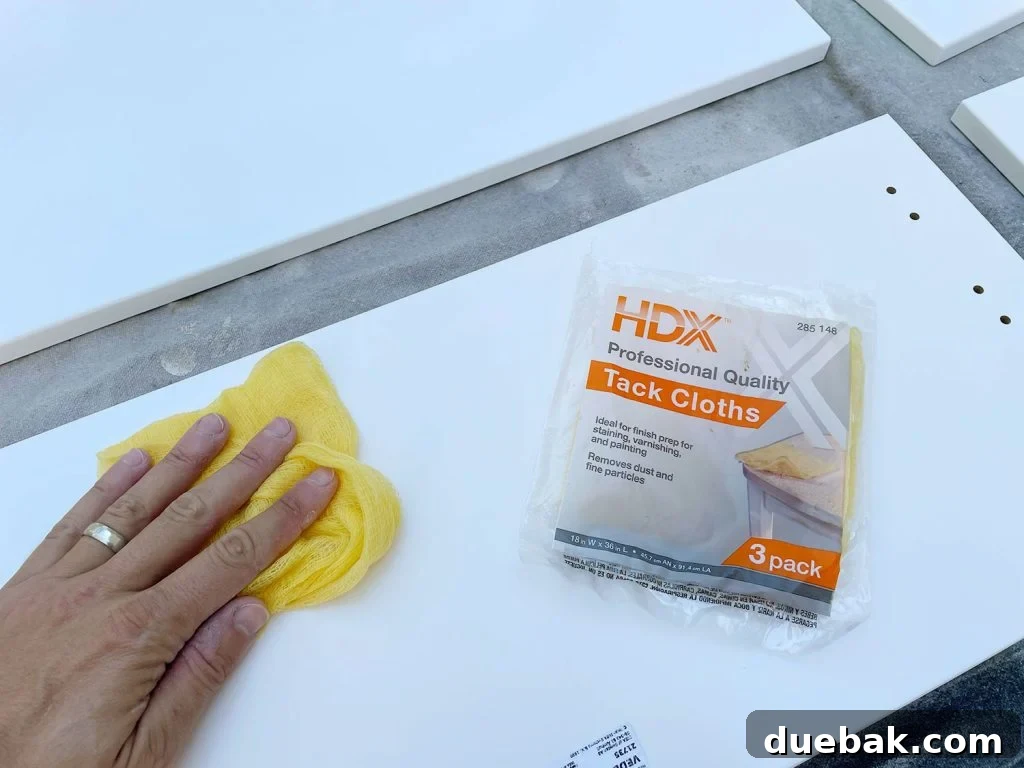
Remove dust with a damp paper towel followed by a tack cloth to pick up fine particles. Make sure to clean all sides so primer adheres to the door surface, not to dust.
Step 4: Prime the BACKS
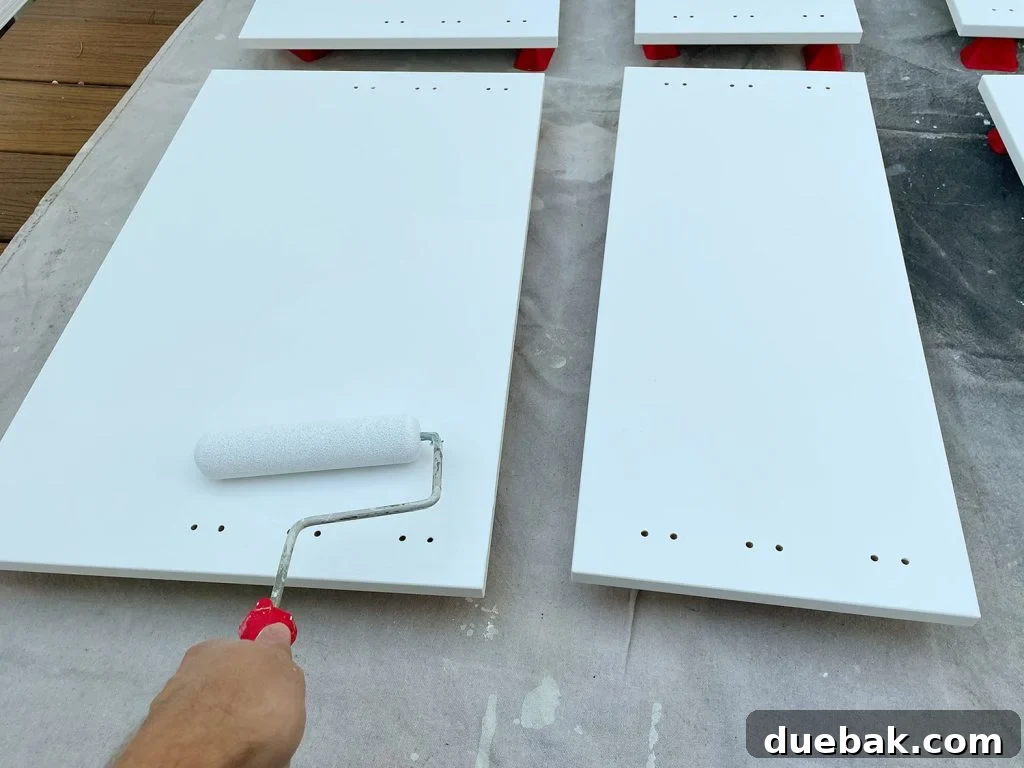
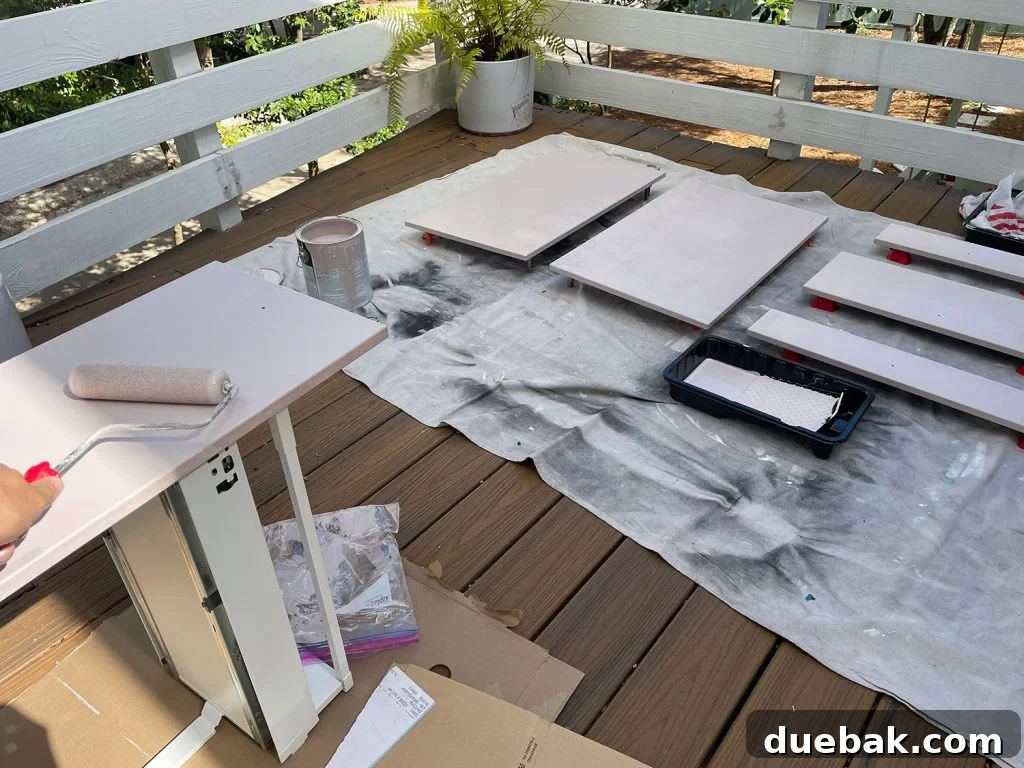
We propped up doors on painter stands and primed the backs first so we wouldn’t risk marks from the stands on the painted fronts. Use a small foam roller to apply a thin, even coat of Zinsser Bulls Eye 1-2-3 and let it dry fully — about four hours. Store wet rollers in a sealed bag to reuse.
Step 5: Paint The Backs
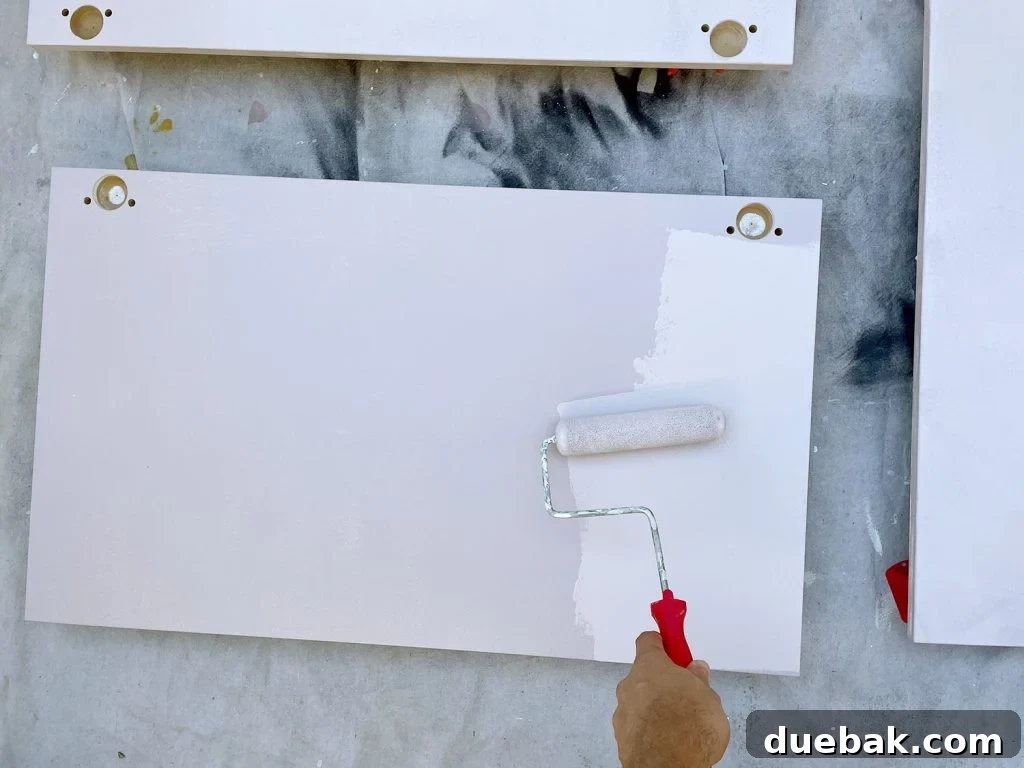
After primer cures, apply two thin, even coats of paint with a fresh roller. We used Sherwin-Williams Emerald Urethane Trim Enamel in satin for a low-sheen, durable finish. If you select a higher gloss, consider a sprayer to minimize visible brush or roller marks. When painting each door back, follow this sequence:
- Roll paint across the flat surface
- Gently roll the vertical sides to catch drips
- Roll the flat surface again using overlapping parallel strokes
Step 6: Repeat — Apply A Second Coat of Paint
Two thin coats produce a much more consistent, durable finish than one thick coat. Let the first coat dry completely (we let ours dry overnight) and then roll on a second coat. While painting the backs, we intentionally left some edge coverage lighter to avoid paint buildup that could create a ridge when flipped later.
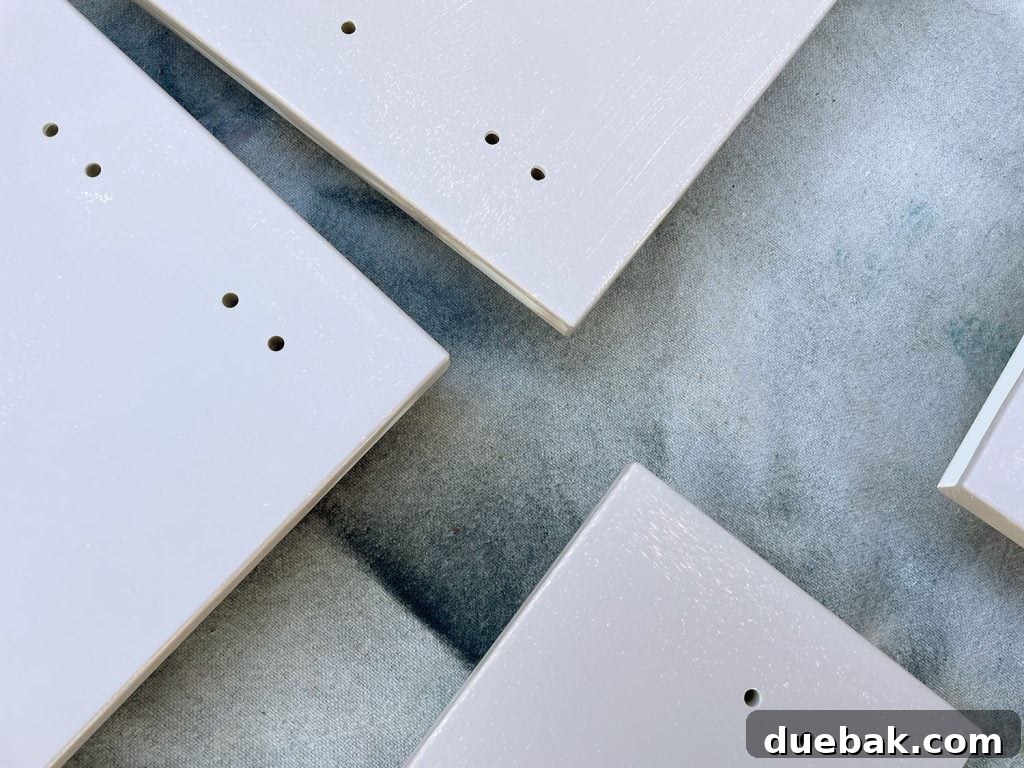
Leaving edges light during the back coats reduces the chance of paint collecting and forming a bead on the front once you flip the door. We completed edge coverage while painting the fronts.
Step 7: Flip Over & Repeat Steps 4, 5 & 6
After giving the backs at least 24 hours to cure, flip the doors and repeat the primer and paint sequence on the fronts, again applying two thin coats. Be methodical and patient — adequate curing time prevents dings and ensures a long-lasting finish.
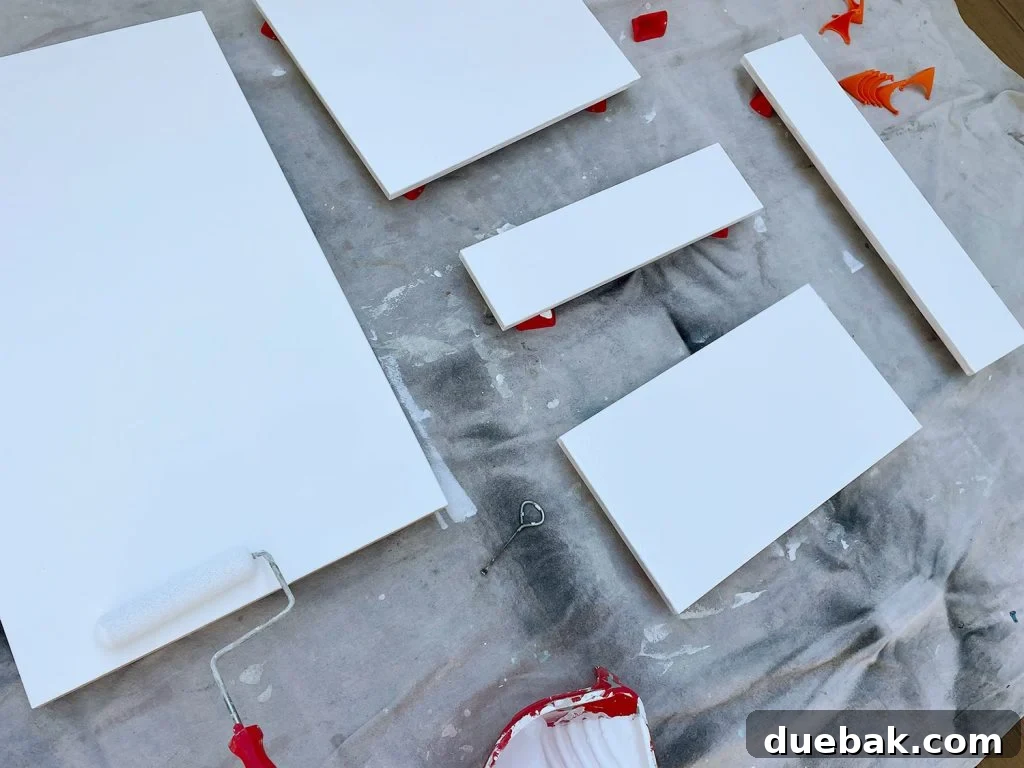
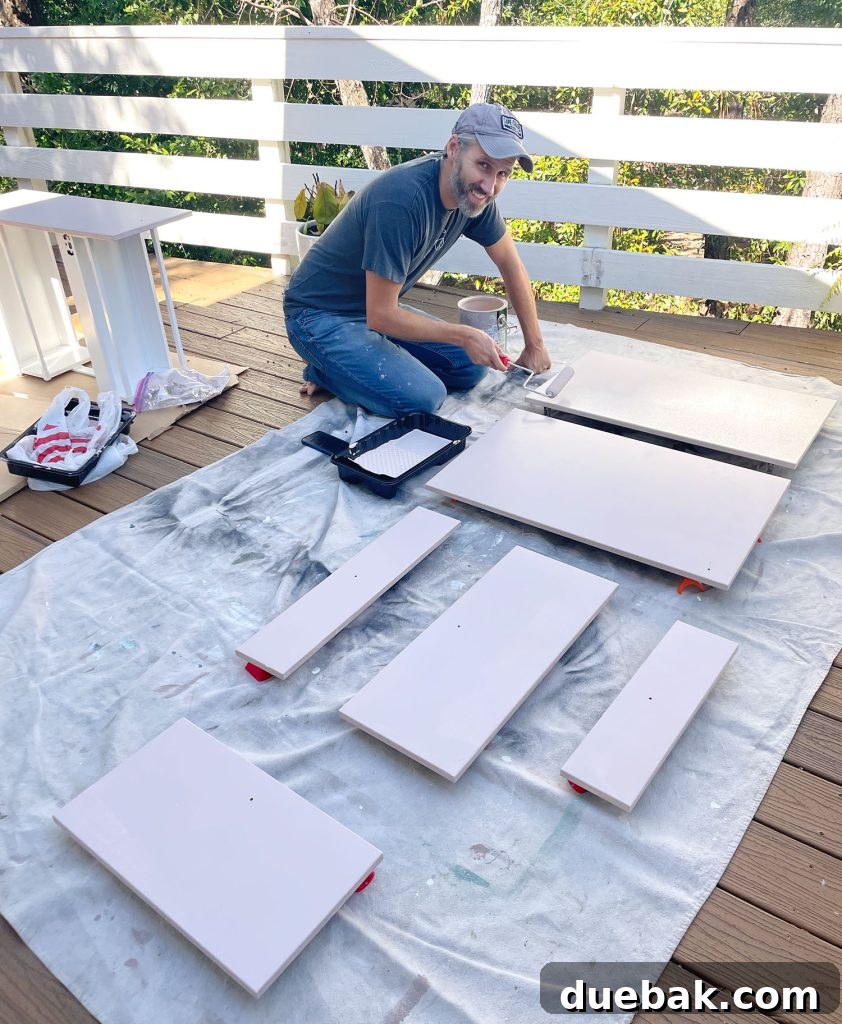
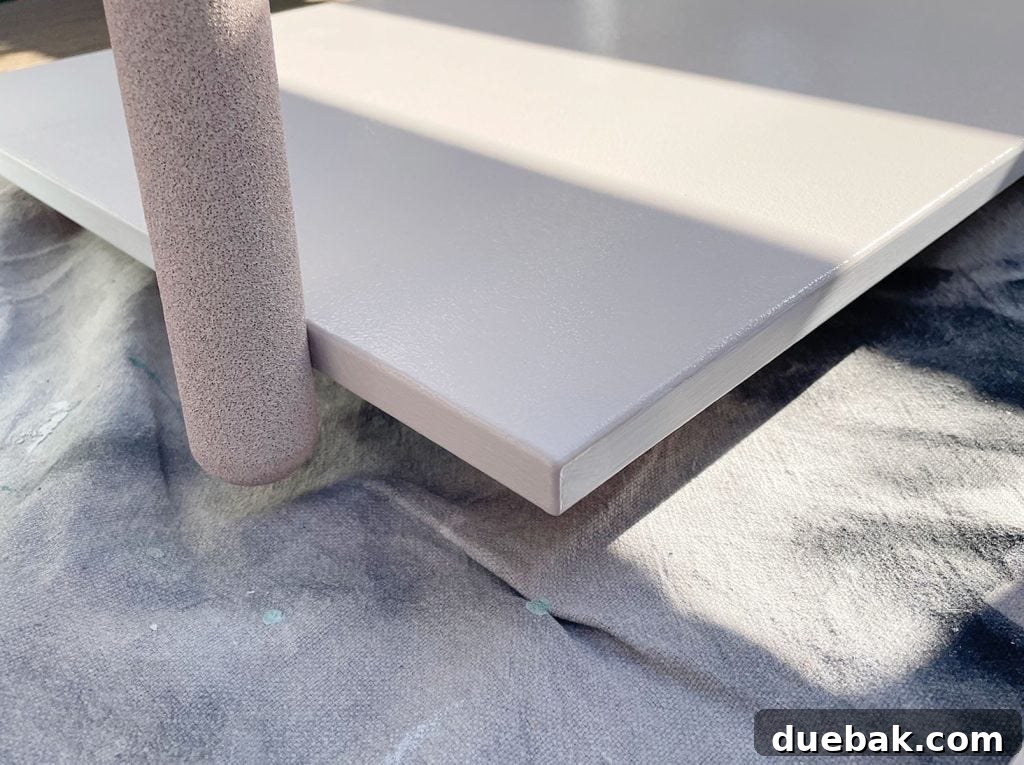
After the second coat on the fronts and edges, let everything cure for at least 24 hours (48 is better) before handling or installing. Many cabinet paint jobs fail because of poor prep or insufficient curing time.
Step 8: Don’t Forget To Paint The Cabinet Boxes
Use the same sand/prime/paint techniques on any visible parts of the cabinet boxes: filler pieces, toe kicks, and the front faces of frames. We left the insides white. A small foam roller will give the smoothest finish for larger visible surfaces; use a short-handled brush or painter’s tape where needed for edges and tight spots.
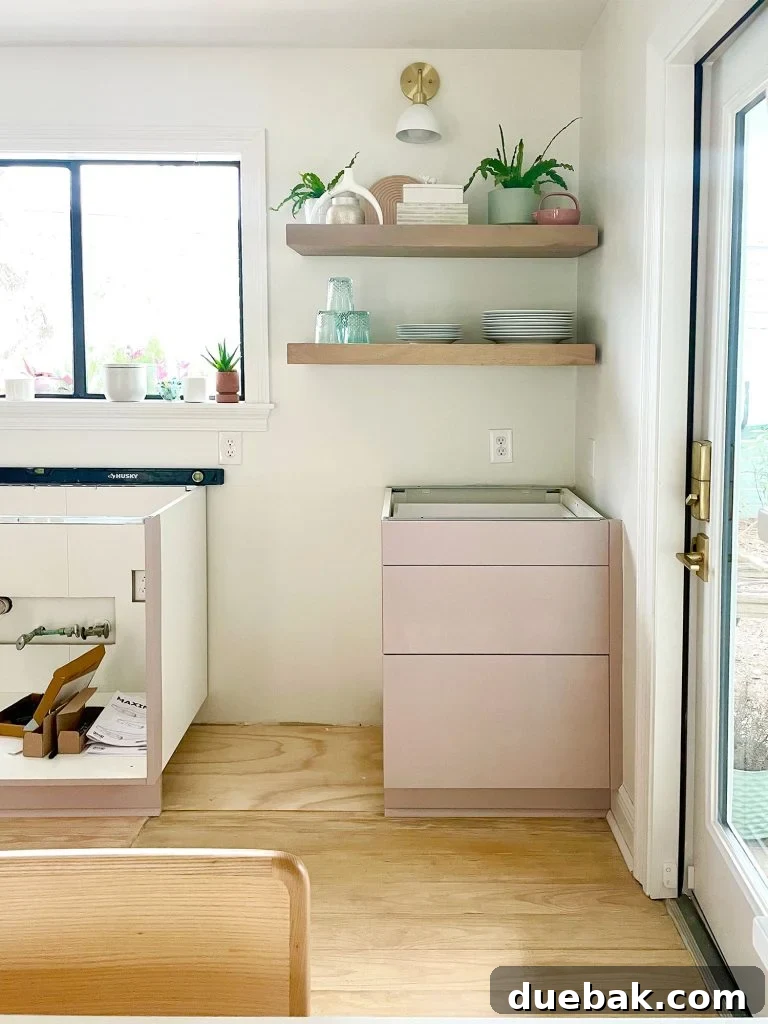
We painted slightly around the side edge of a cabinet near the dishwasher so you wouldn’t see flashes of white when the dishwasher door is open.
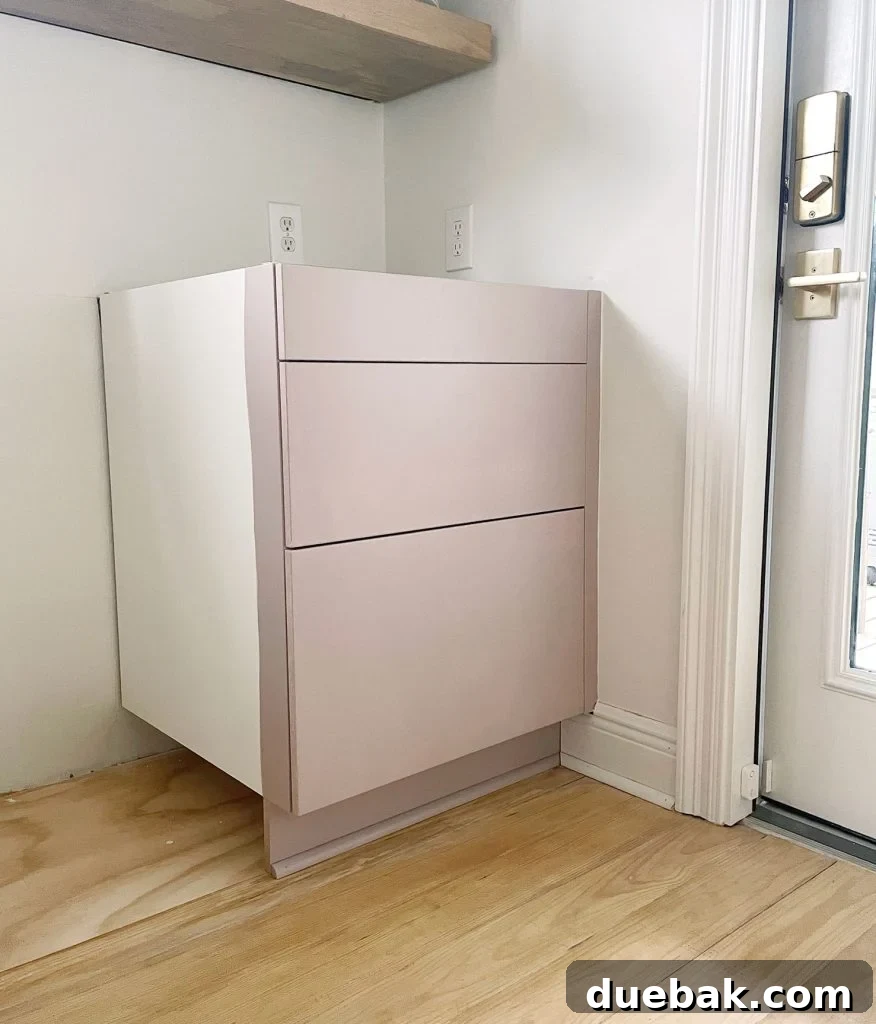
TIP: Consider Making Hardware Holes Earlier
We temporarily installed the doors with only one coat on the fronts so the countertop templater could measure accurately. While they were hung, we drilled our hardware holes. Doing this before the final coat gave us flexibility: if the drill slipped or a template scuffed the surface, we could address it with the final paint coat. It also allowed the last coat to cure without heavy handling after hardware installation.
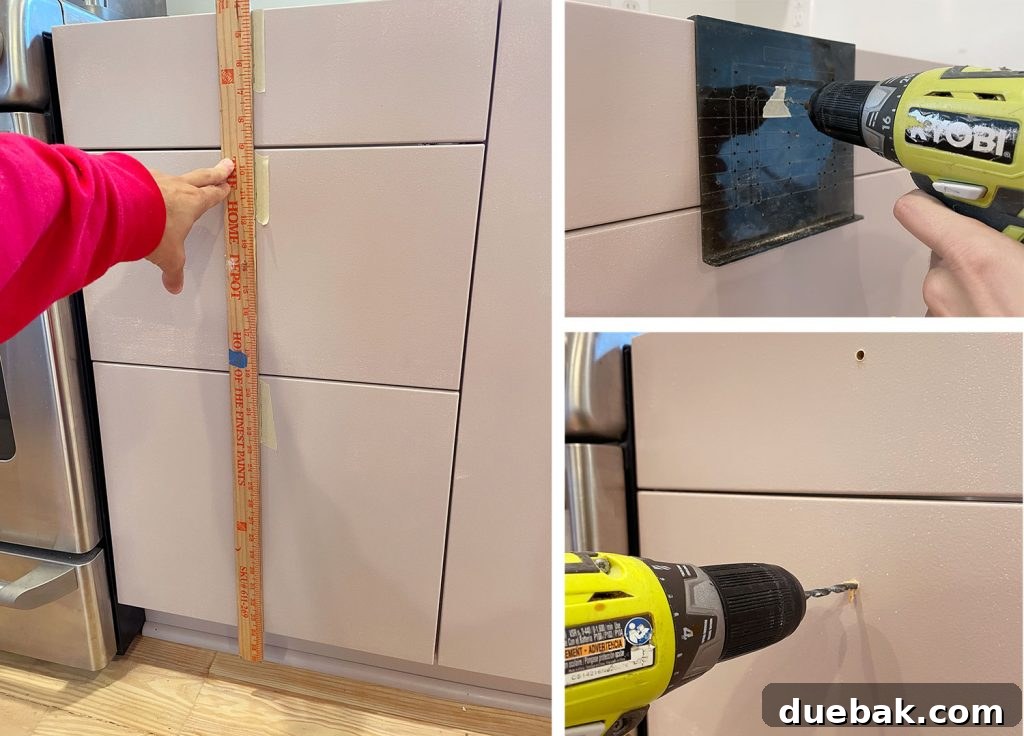
It’s not necessary to drill holes between coats, but that timing worked well for our schedule and reduced handling after the final coat cured.
Step 9: Install Everything & Enjoy!
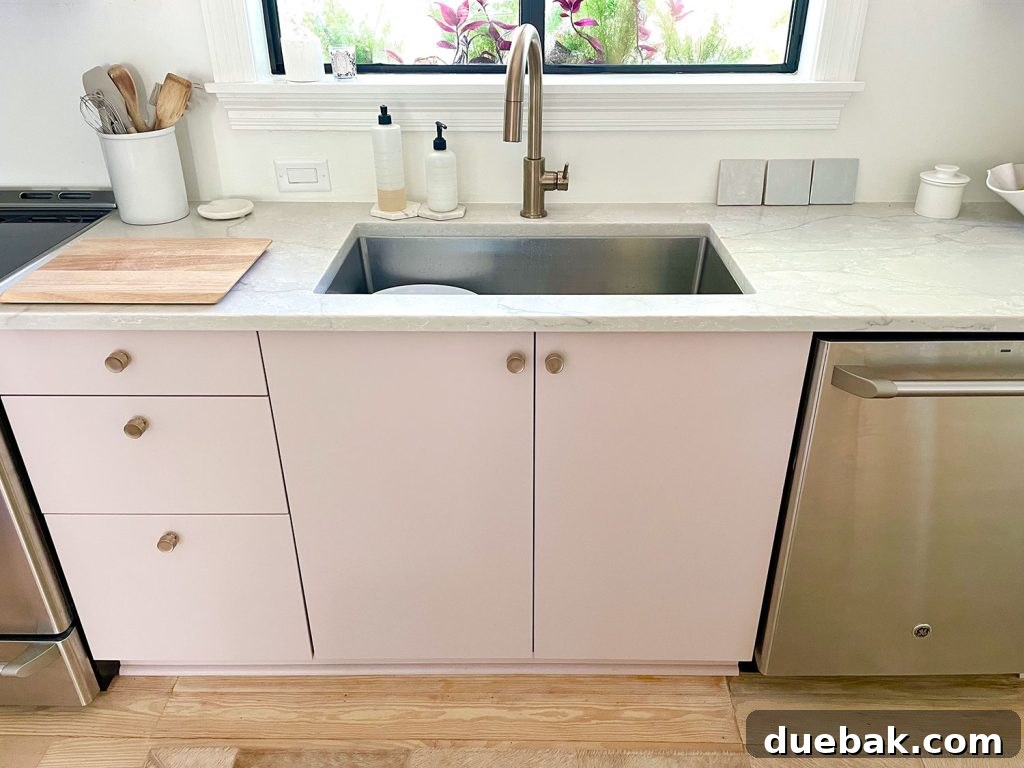
Once installed, the cabinets proved durable in regular daily use. So far there have been no issues with dings or chipping. The key is thorough prep and letting paint fully cure before heavy use. Our week-long, careful process paid off versus a rushed, quick job. If dings do appear over the years, the advantage of painted cabinetry is that you can touch up or recoat a door yourself.
Step-By-Step Video
We also filmed a longer, more detailed video that walks through each step slowly and clearly. It’s a great resource if you prefer a full visual guide rather than a quick summary.
We’ll update this post over time about how the finish holds up with months and years of use. Painted cabinets inevitably show wear over time, but they can be refreshed more easily than factory-finished units.
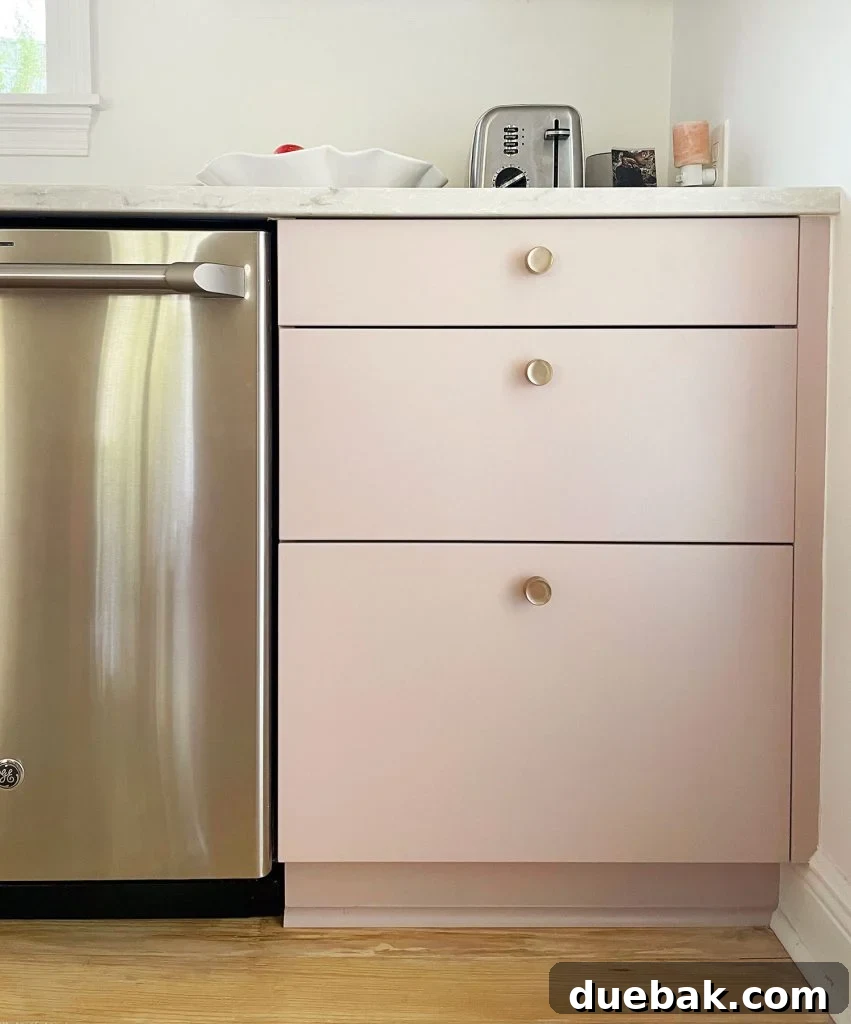
Encouraged by how this project went, we decided to add upper cabinets as well and plan to use the same painting method for those. When they’re finished we’ll share another photo-filled post.
If you enjoy painting projects, we’ve documented other favorites in separate posts, including how to paint a front door, paint trim like a pro, and prep and paint a brick fireplace.
*This post contains affiliate links, so we may earn a small commission when you make a purchase through links on our site at no additional cost to you.