
Mastering the Art of Drilling Through Tile: A Comprehensive DIY Guide for Floating Shelves and Beyond
Embarking on a home improvement project like building stylish floating shelves in your duplex kitchen can bring immense satisfaction. However, a common hurdle that gives many DIY enthusiasts pause is the prospect of drilling into a pristine tile backsplash. After investing considerable time and resources into installing beautiful tile work, the last thing anyone wants is to damage it with a misplaced or poorly executed drill hole. The initial thought can be intimidating, even scary. Yet, with the right tools, techniques, and a healthy dose of patience, successfully drilling through tile is not only possible but entirely achievable for anyone willing to learn. This guide will walk you through every step of the process, ensuring your tile remains intact and your project looks professionally finished.
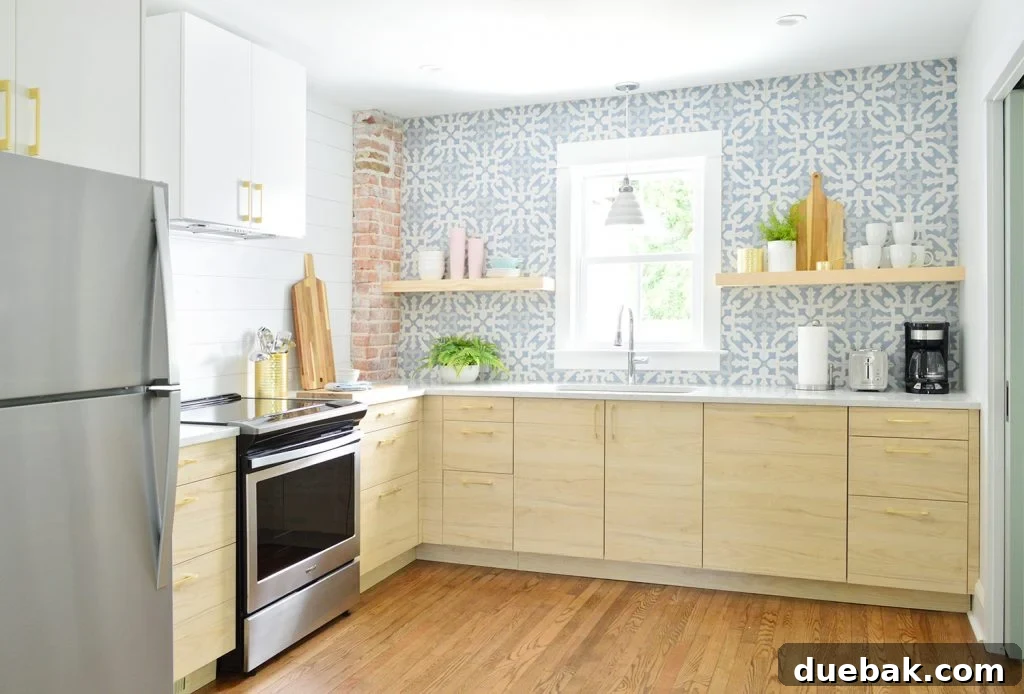
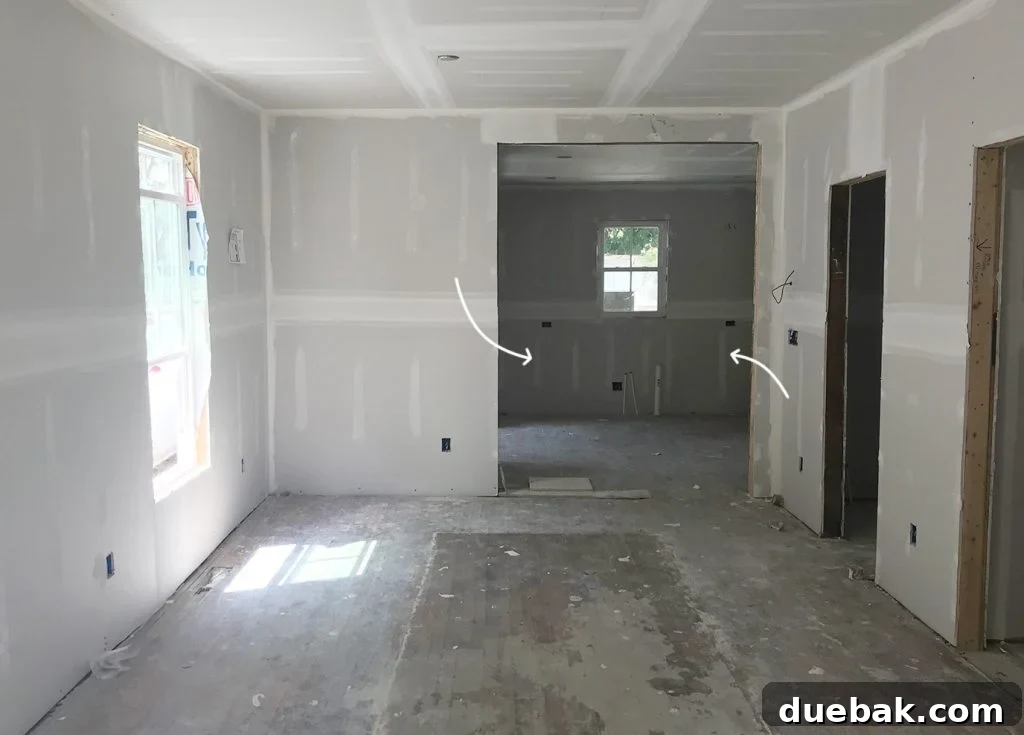
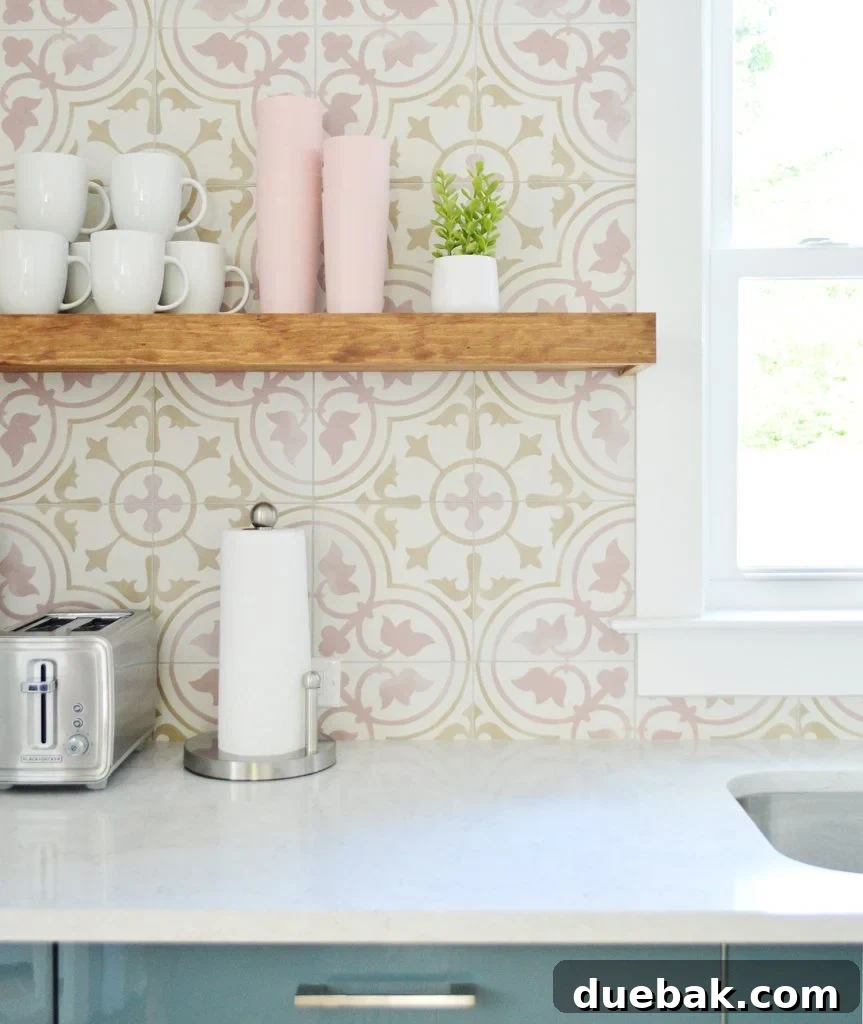
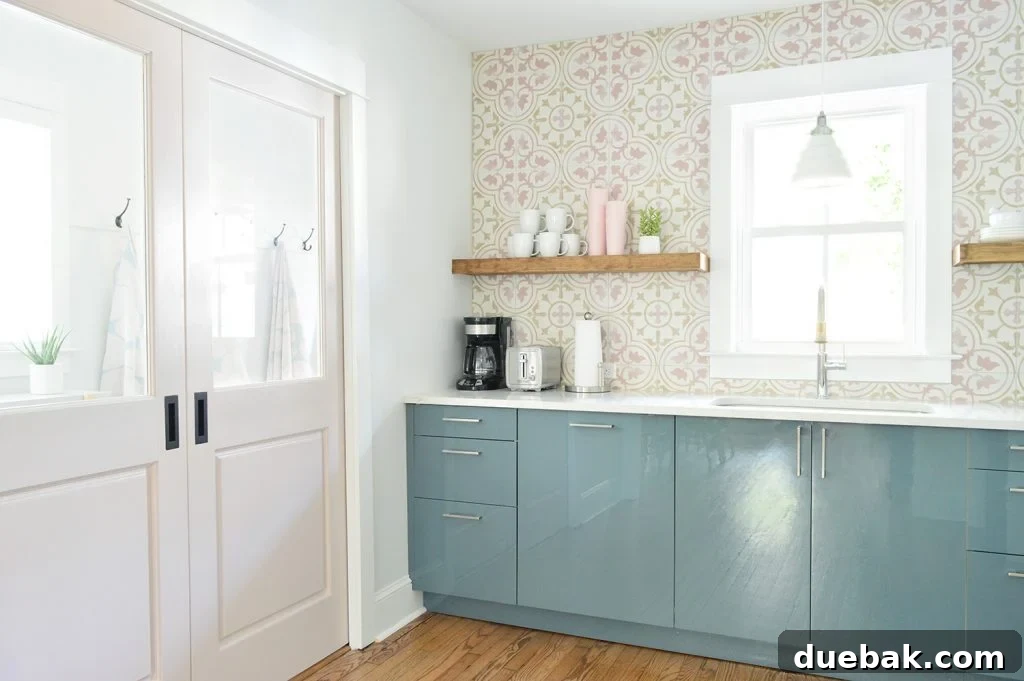
Ideally, the installation of shelf supports would precede tiling. However, in our experience, design decisions often evolve, leading to situations where elements like floating shelves are considered after the backsplash is already in place. This was precisely our scenario in the duplex kitchens. We faced a brief stalemate regarding the placement—or even the necessity—of shelves. Fortunately, this minor design disagreement was resolved shortly after the tiling was completed, leading us to proceed with installing a sturdier version of these popular DIY floating shelves we previously constructed for our bonus room. This unexpected timeline meant we had to tackle the challenge of drilling through already installed tile. It’s a common predicament, and one that, with the right approach, can be overcome without a hitch.
Essential Tools and Materials for Flawless Tile Drilling
To successfully drill through your delicate tile backsplash without causing damage, you’ll need more than just a standard drill. Specialized equipment and a few crucial supplies are key to a smooth and effective process. Here’s a comprehensive list of what you should have on hand before you begin:
- Power Drill: A reliable corded or cordless drill with adjustable speed settings is essential. Lower speeds are crucial for drilling tile to prevent overheating and cracking.
- Various Sizes of Tile Drill Bits: This is arguably the most critical tool. Unlike standard bits for wood or metal, tile bits are designed to grind rather than bore. Look for diamond-tipped bits for harder materials like porcelain or glass, and carbide-tipped bits for ceramic. Having a range of sizes, including a smaller one for pilot holes and the final size for your fasteners, is advisable.
- Water Delivery System Guide (Optional but Recommended): These guides suction to the tile and provide a reservoir for water, helping to cool the bit and suppress dust. While some systems may not drip perfectly, their ability to hold the bit steady is invaluable, especially when starting a hole.
- Water Cup or Spray Bottle: If a dedicated water delivery system isn’t effective, a simple cup of cool water or a spray bottle is vital for cooling your drill bit manually. This prevents overheating, which can dull the bit quickly and potentially crack the tile.
- Painter’s Tape: This serves multiple purposes: it helps mark your drilling locations clearly, prevents the drill bit from “walking” or slipping on the slick tile surface when you start, and can protect the surrounding tile from minor chips.
- Paper Towels or a Rag: Essential for cleaning up water and tile dust, maintaining a clear workspace, and wiping down your drill bit.
- Spare Tile (Optional but Highly Recommended): If you have an extra tile from your installation, it’s invaluable for practicing your drilling technique. This allows you to get a feel for the process and test your bits without risking your finished backsplash.
- Safety Glasses: Drilling generates fine dust and potential tile fragments. Always wear safety glasses to protect your eyes.
- Work Gloves: Protect your hands from abrasive dust and potential cuts.
And our most significant piece of advice for this entire project: take your time! Drilling through tile is a slow, methodical process that does not reward rushing. Impatience can lead to cracked tiles, dulled bits, and unnecessary frustration. Consider “patience” the unlisted but indispensable item on your supply list.
Step 1: Precise Placement – Marking Your Drill Points
Before any drilling begins, meticulous preparation is non-negotiable. This isn’t technically part of the drilling itself, but it is the most vital foundational step. Since drilling a single hole in tile can take several minutes (often 5-7 minutes per hole in our experience), ensuring you’re working in the exact right spot from the outset will save you significant time and potential headaches. For our floating storage shelves, this meant accurately locating the wall studs behind our newly tiled backsplash.
Locating studs through a thick material like porcelain tile can be a challenge, as conventional stud finders often struggle to penetrate such density. This required a bit of “detective work” on our part. We relied heavily on reference photos taken during the renovation phase when the walls were exposed, allowing us to triangulate stud positions. Careful measuring from known fixed points, such as electrical outlets or window frames, also proved invaluable. Furthermore, subtle clues like drywall mud marks or nail pops from the pre-tiled wall can sometimes offer hints about stud locations.
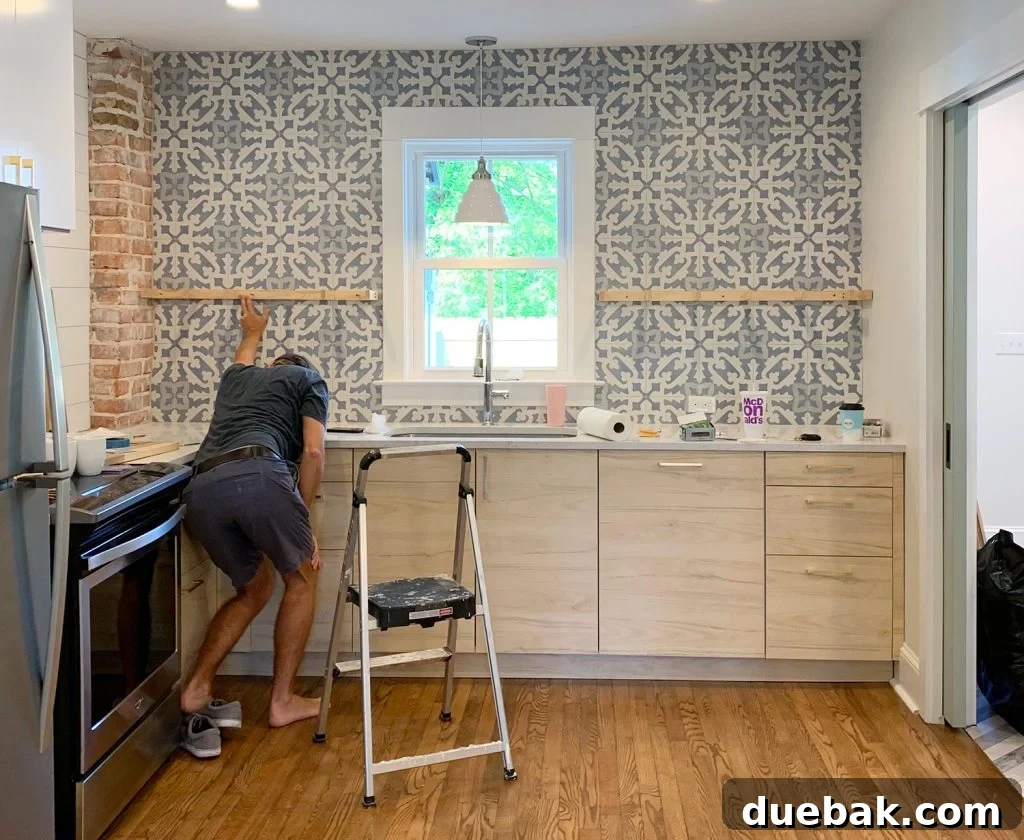
Beyond identifying studs, determining the ideal shelf height was equally crucial. We physically held up the shelf supports, experimenting with various positions (which involved a fair amount of awkward squatting and stretching!) until we achieved an aesthetic and functional placement we were happy with. It’s important to consider what you’ll be storing on the shelves and how they relate to other kitchen elements like countertops and upper cabinets.
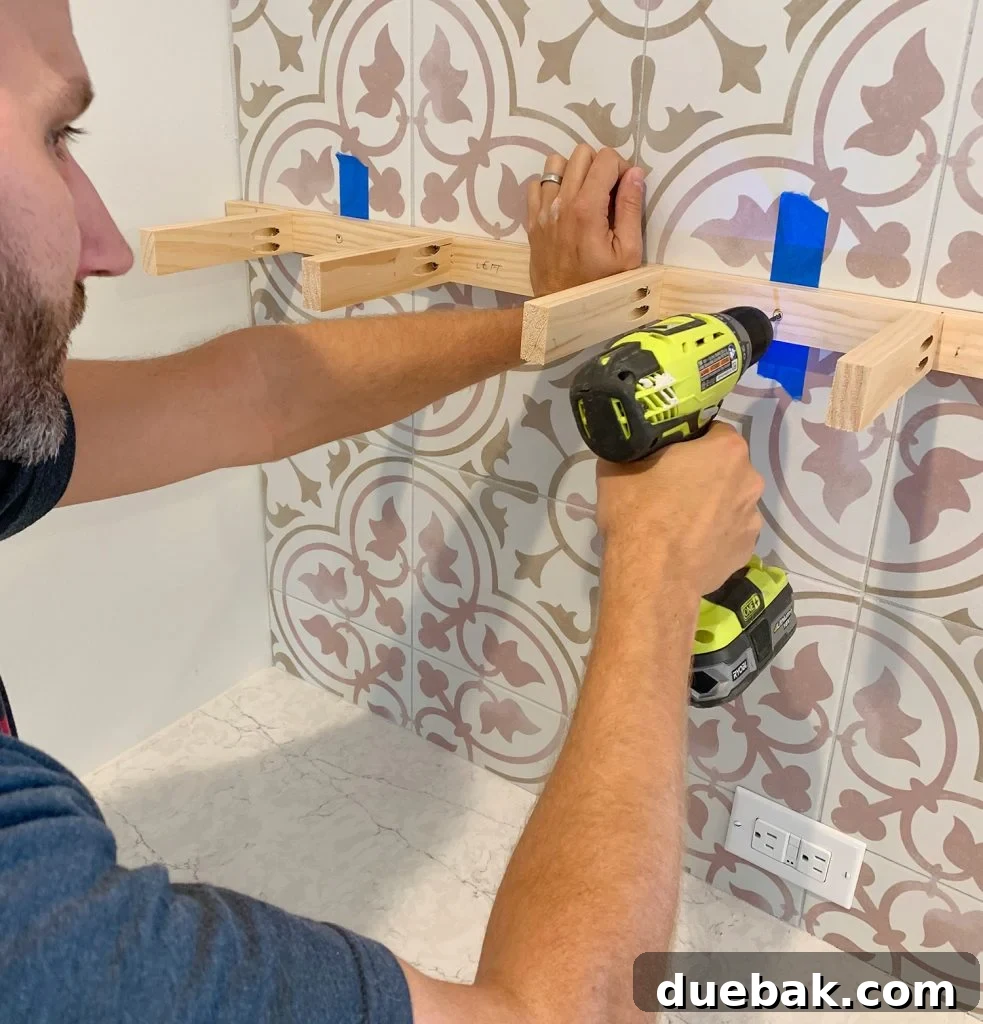
Once the general height was established and confirmed to be perfectly level, we marked the precise drilling locations. This was done in two steps: (1) we applied blue painter’s tape directly over each stud, covering the exact areas where the holes would be drilled, and (2) we held our shelf bracket firmly in place and used a small, standard drill bit to lightly drill *through* the bracket itself, creating a tiny indentation on the painter’s tape underneath. This technique provides an exact template for your future tile holes.
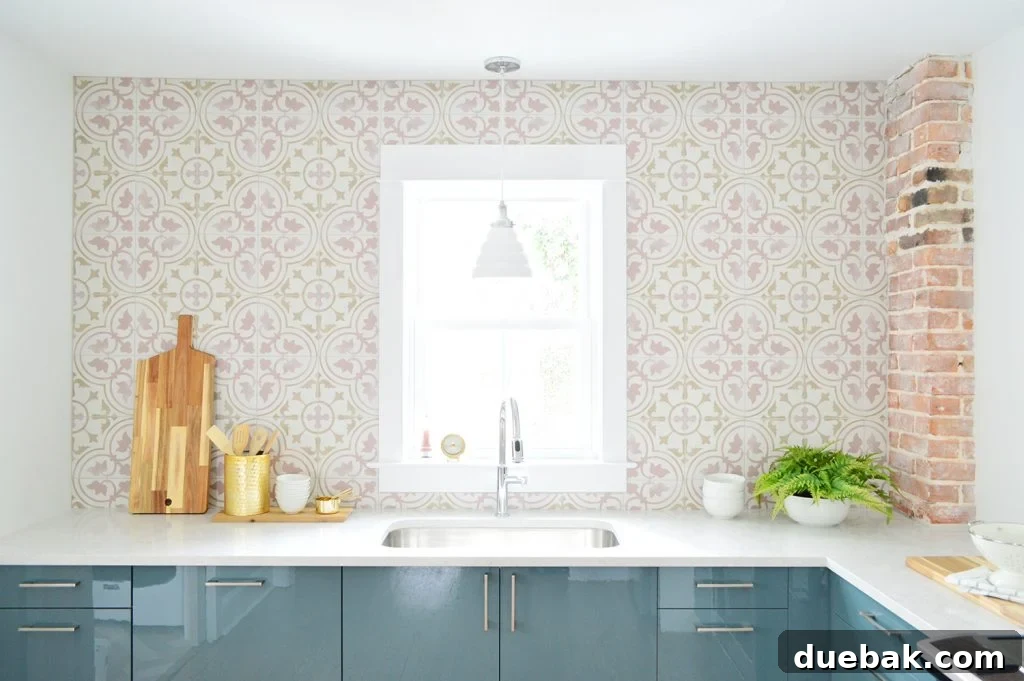
The small mark left on the tape precisely indicated where our pilot holes should be drilled into the tile. (Please excuse the occasional change in tile color in some images; we performed this installation process in both of our duplex kitchens, so photos may transition between the two.)
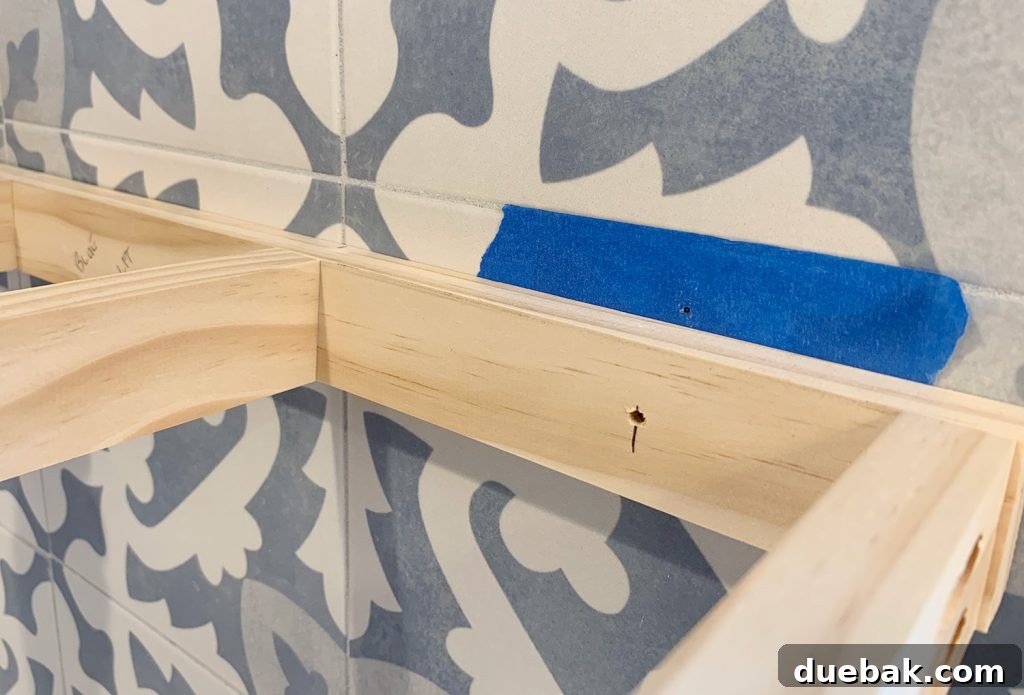
With our drilling locations accurately marked and confirmed, we were ready to confidently move forward to the next crucial step of selecting the correct tools.
Step 2: Selecting the Right Drill Bit for Tile
The success of your tile drilling project hinges significantly on using the correct drill bit. Unlike traditional drill bits designed to cut or stab through softer materials like wood, plaster, or metal, tile requires a specialized bit that grinds its way through the hard, brittle surface. These bits are typically made with diamond or carbide tips.
For exceptionally hard materials like porcelain, granite, or glass, diamond drill bits are the superior choice. They feature diamond particles embedded on the cutting edge, which slowly abrade and grind away the tile material as the bit spins. For softer tiles, such as standard ceramic or cement, carbide-tipped glass and tile bits can also be effective. Always double-check the packaging to ensure the bit is rated for your specific tile material.
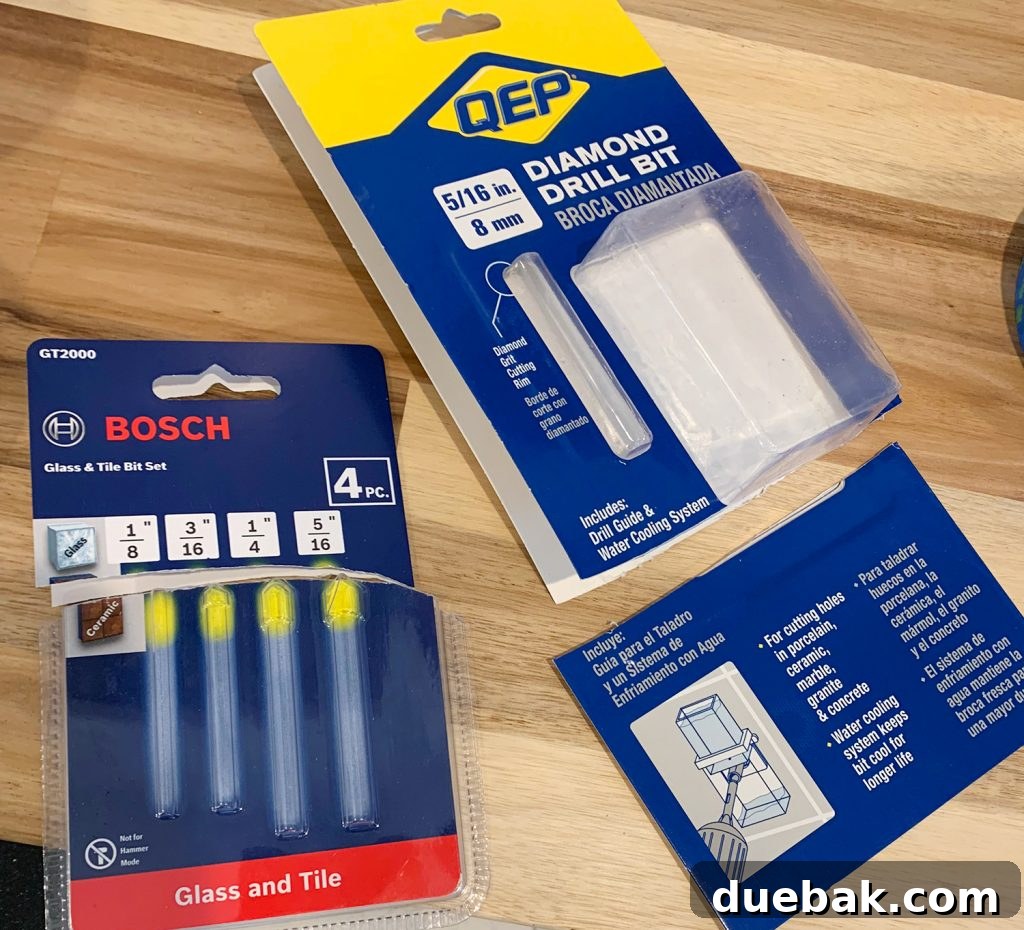
For our project, we purchased both this diamond drill bit kit and these carbide glass & tile bits. We ended up utilizing a combination of both types, so having a variety on hand proved to be beneficial. It’s worth noting that diamond and carbide bits, especially when used on hard materials, can wear down relatively quickly. If you anticipate drilling numerous holes or working on multiple projects, consider purchasing a few extra bits as spares. A dull bit will not only make the job harder but can also increase the risk of cracking your tile.
Step 3: The Practice Run – Testing on a Spare Tile (Highly Recommended)
Before you even think about touching your beautifully installed tile backsplash, a crucial step—and one we highly recommend—is to make a practice hole. If you have a spare tile leftover from your installation, this is the perfect opportunity to test your drill bits and technique. This step serves as invaluable reassurance and can prevent costly mistakes on your finished surface.
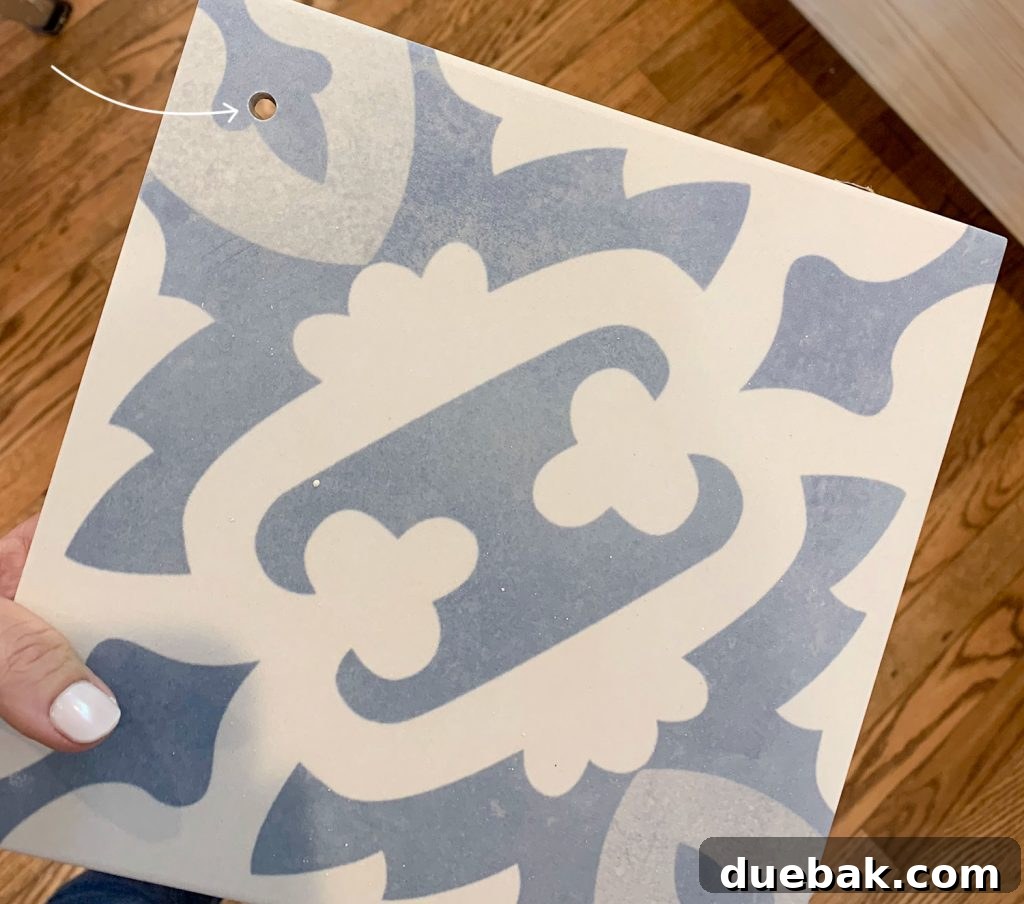
During your practice run, pay close attention to the following:
- Bit Performance: How easily does the bit start? Does it wander? Does it feel like it’s grinding effectively?
- Pressure: Experiment with minimal pressure. You should feel the bit working, but not forcing it.
- Speed: Keep the drill speed low and consistent.
- Cooling: Practice your water application method. Does the bit stay cool?
- Tile Integrity: Most importantly, does the tile crack or chip? A successful practice hole should be clean with no visible damage.
In our test, both types of bits worked perfectly, with no cracking – a huge relief! This confidence boost made all the difference when moving to the actual backsplash. If you don’t have a spare tile readily available, you can often purchase a single tile (or one made from a similar material) at your local home improvement store just for this purpose. It’s a small investment that can save you from a much larger repair job.
Step 4: Creating Your Initial Pilot Dent
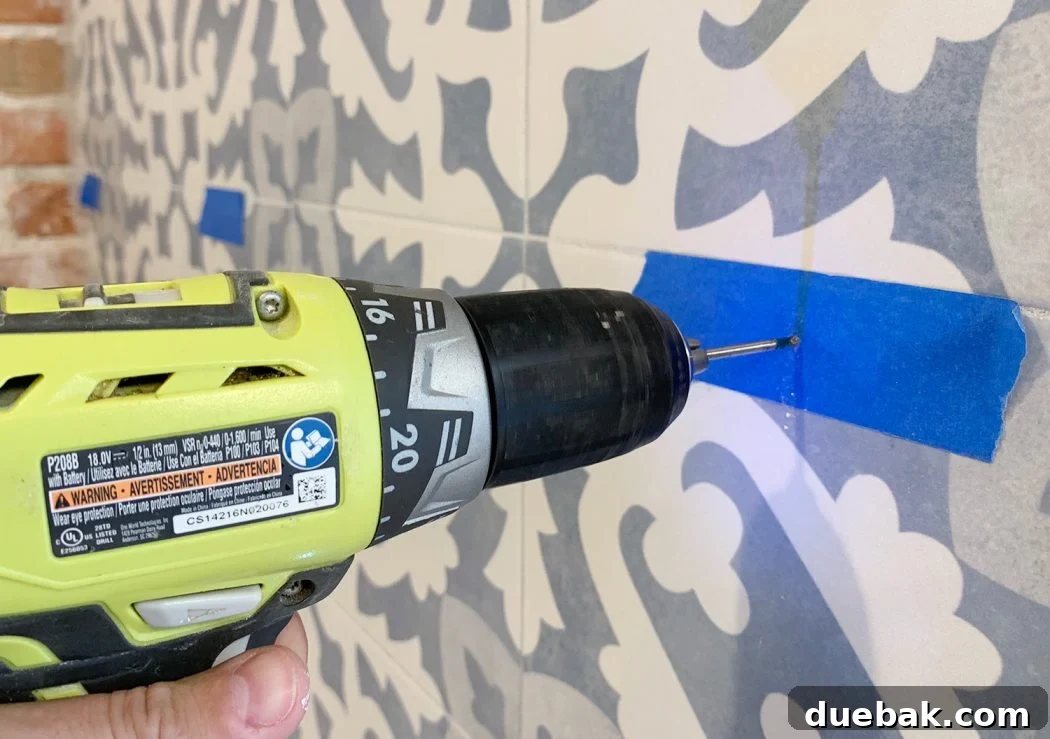
Even with painter’s tape marking your precise location, a drill bit can sometimes “walk” or slip across the slick surface of the tile, especially when starting a new hole. To prevent this, our next step was to create a tiny, initial dent or pilot mark. This essentially creates a small divot that will guide your larger drill bit and keep it from wandering off course.
Using the smallest carbide bit we had, we carefully aligned it with the mark we previously made on the painter’s tape. With very minimal pressure and at a slow speed, we began to drill. The goal here is not to drill through the tile, but merely to penetrate the tape and create a small, shallow indentation on the tile’s surface. We were truly aiming for just a superficial mark.
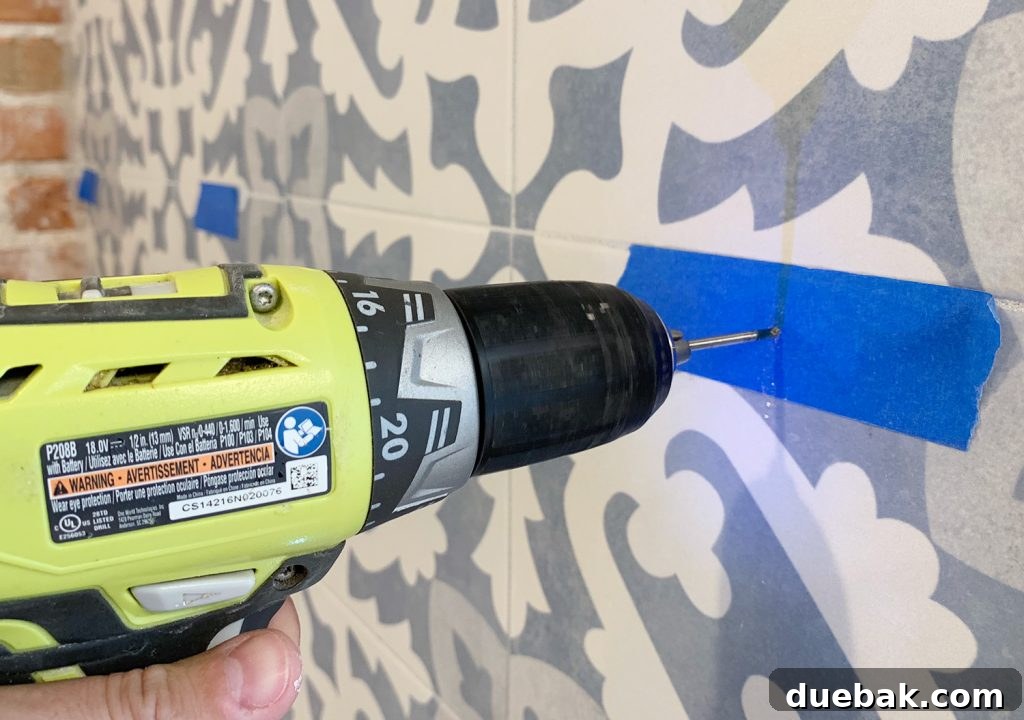
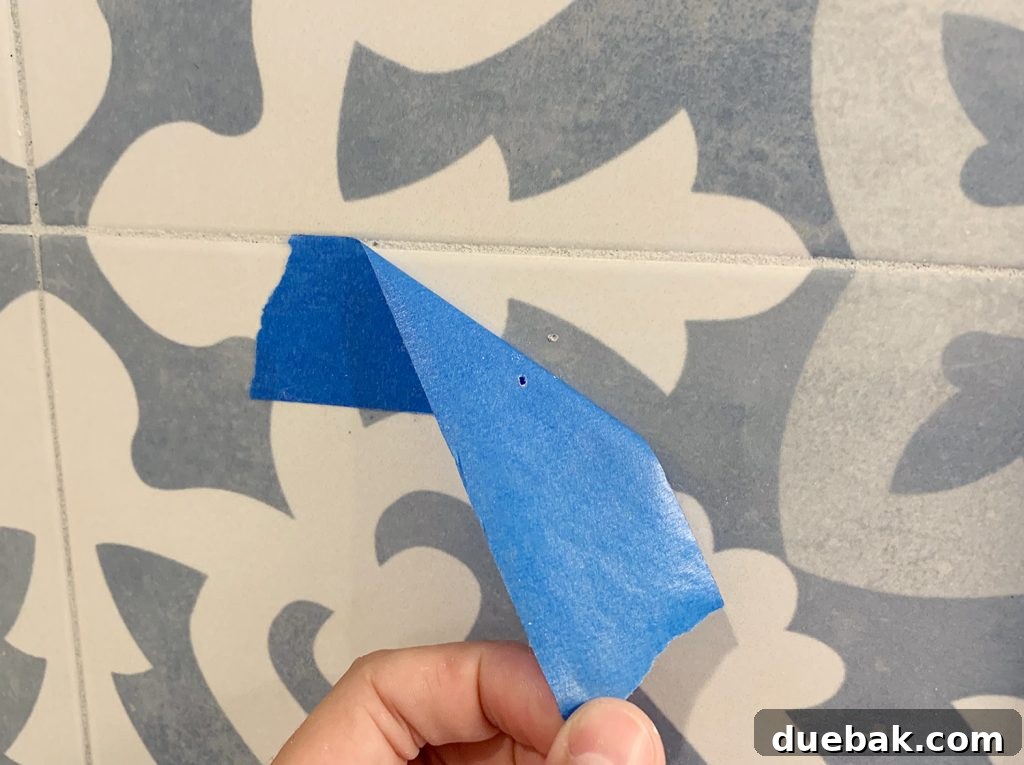
As mentioned, this initial mark was incredibly subtle – barely more than a scratch on the tile. However, this small but critical dent was enough to serve as a reliable guide. Once these small pilot marks were established at all drilling points, we were able to carefully remove the painter’s tape. This left us with clear, precise starting points on the tile itself, eliminating the risk of the drill bit slipping and causing unsightly damage or misaligned holes. Now, we were ready to move on to the actual drilling with larger bits.
Step 5: The Cooling Factor – Using a Water Delivery System
Water is more than just an aid in this process; it’s a key ingredient for successful tile drilling. The grinding action of a tile drill bit generates significant friction, which rapidly produces heat and fine dust. This heat can be detrimental to both your drill bit, causing it to dull prematurely, and to your tile, potentially leading to stress fractures or cracks. Water serves two vital functions: it helps control the dust, keeping your workspace cleaner, and, most importantly, it cools down the drill bit and the tile surface, preserving their integrity.
For this project, we initially had high hopes for a specialized water delivery system contraption we purchased. This system typically involves plastic boxes that suction onto the tile, with a top reservoir designed to slowly drip water onto the diamond bit as you drill, collecting in a bottom box. The idea is to provide continuous cooling and dust control.
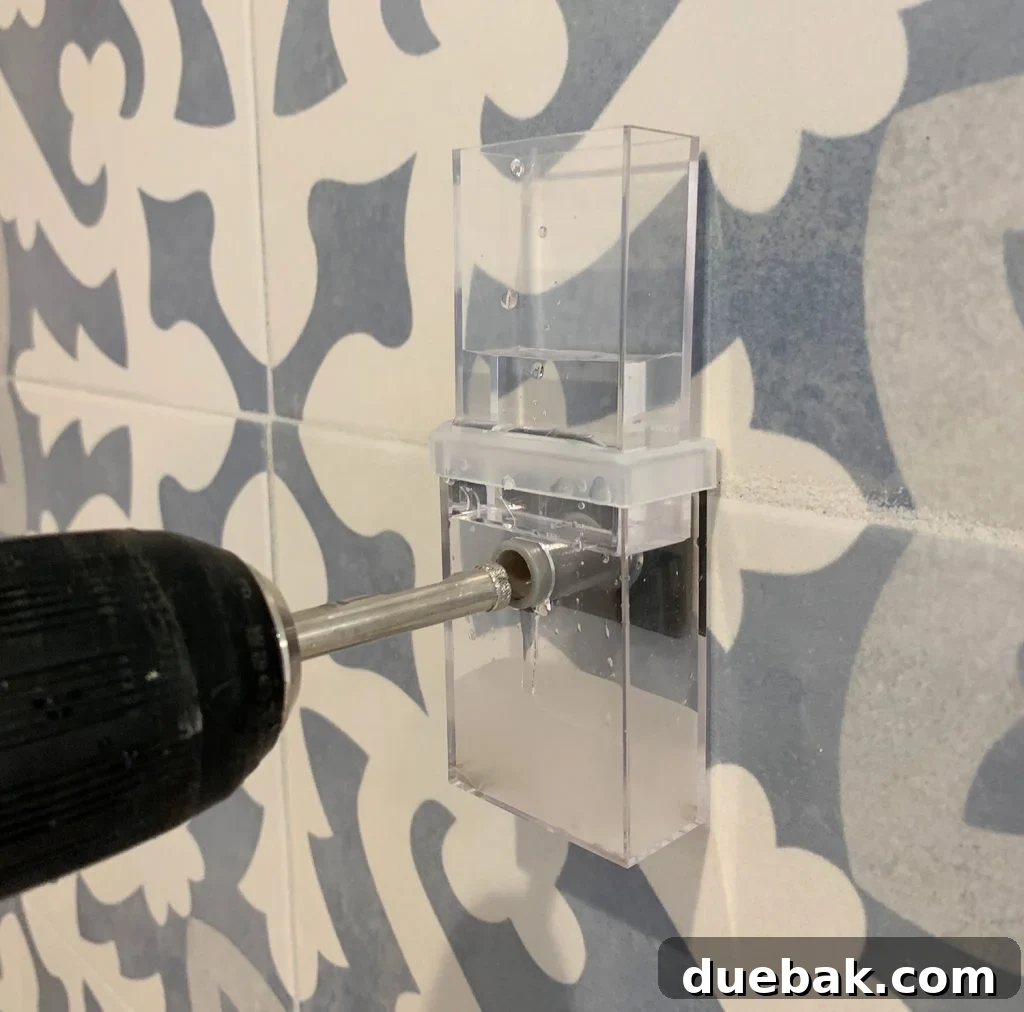
While the concept is excellent, our particular experience with this system was less than ideal. The water tended to drain almost instantly into the lower collection box, rather than providing the promised “slow cooling drip.” (Although, as online reviews suggest, this isn’t an isolated issue with some models.)
Despite its shortcomings as a water dispenser, the kit still proved valuable. The plastic boxes acted as a stable and accurate guide, helping to keep our drill bit perfectly aligned and preventing it from slipping, especially when starting the initial grind. Once we had established a good, clean start to the hole, we found it more practical to remove the contraption and switch to our own manual “water delivery system.”
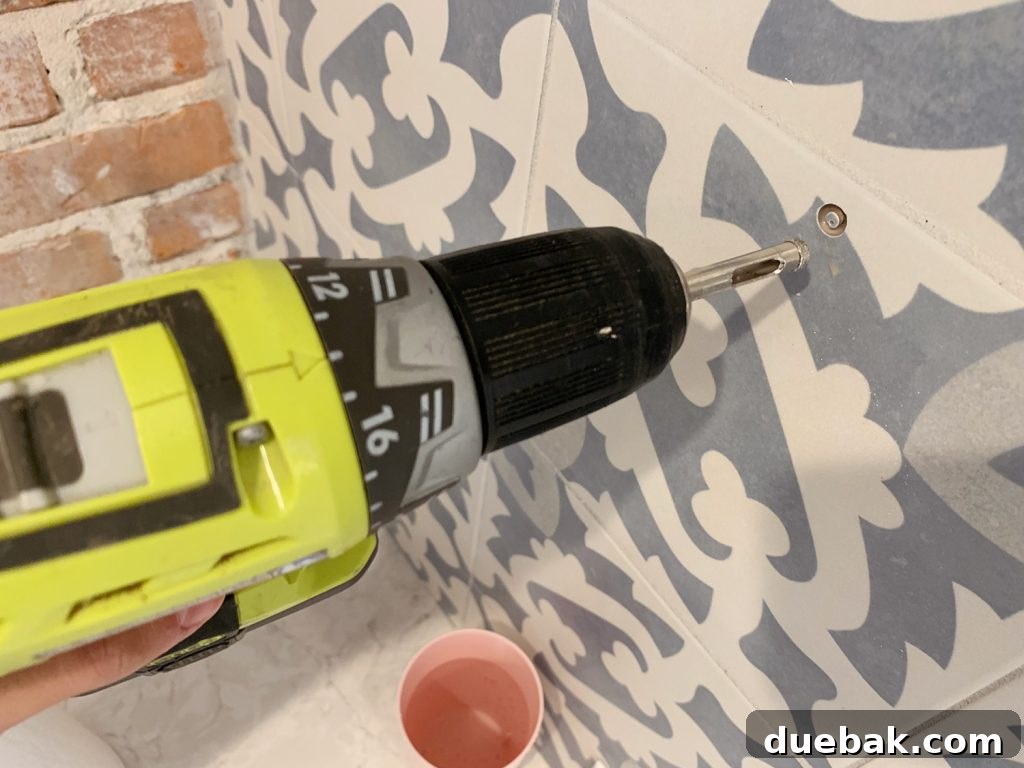
Our manual system was refreshingly simple: a regular cup of cool water. We would dip the drill bit into the cup every 15-20 seconds or whenever we noticed it getting warm. This method, while not as automated, was incredibly effective at keeping the bit cool and the drilling process smooth. Always wear safety glasses when doing this to prevent splashing and potential eye irritation from tile dust.
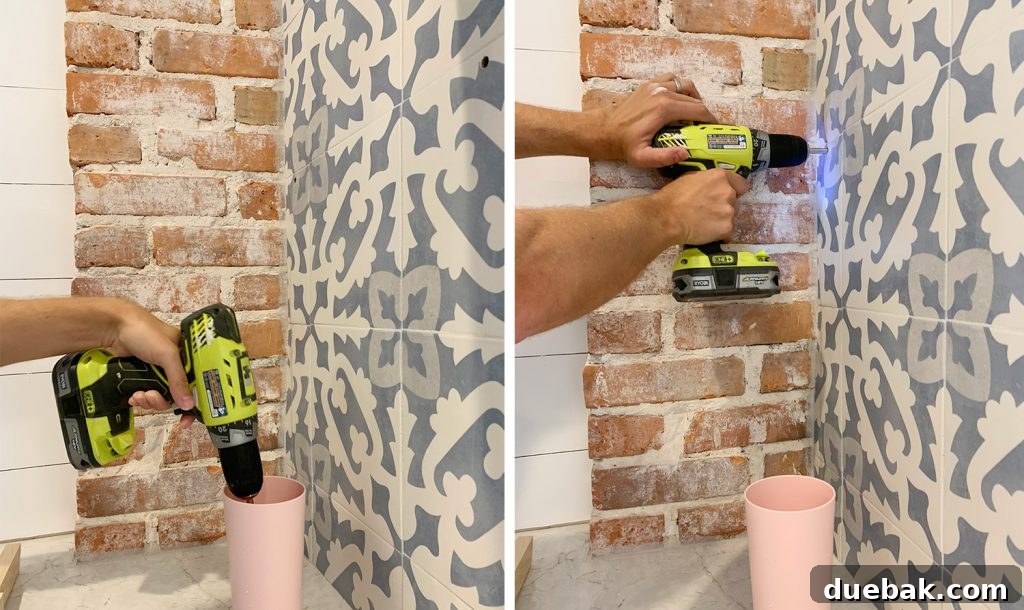
It might not have been the fanciest setup, but it certainly did the trick, ensuring our bits stayed sharp and our tiles remained unharmed.
Step 6: The Art of Patience and Precision – Drilling Through the Tile
We cannot emphasize this enough: patience is your most valuable tool when drilling through tile. The grinding process is inherently slow and requires a light, steady hand, not brute force. Maintain a low drill speed and apply minimal, consistent pressure. You should feel the bit working, but never feel like you’re pushing hard. Forcing the drill can easily overheat the bit, chip the tile, or even cause a crack. In our experience, each hole took approximately 5-7 minutes to drill, equating to over an hour of dedicated drilling for all our shelf supports. This might seem like a long time, but our mindset was clear: spending extra time being careful during drilling was far better than the monumental task and expense of replacing a broken tile or repairing damaged grout.
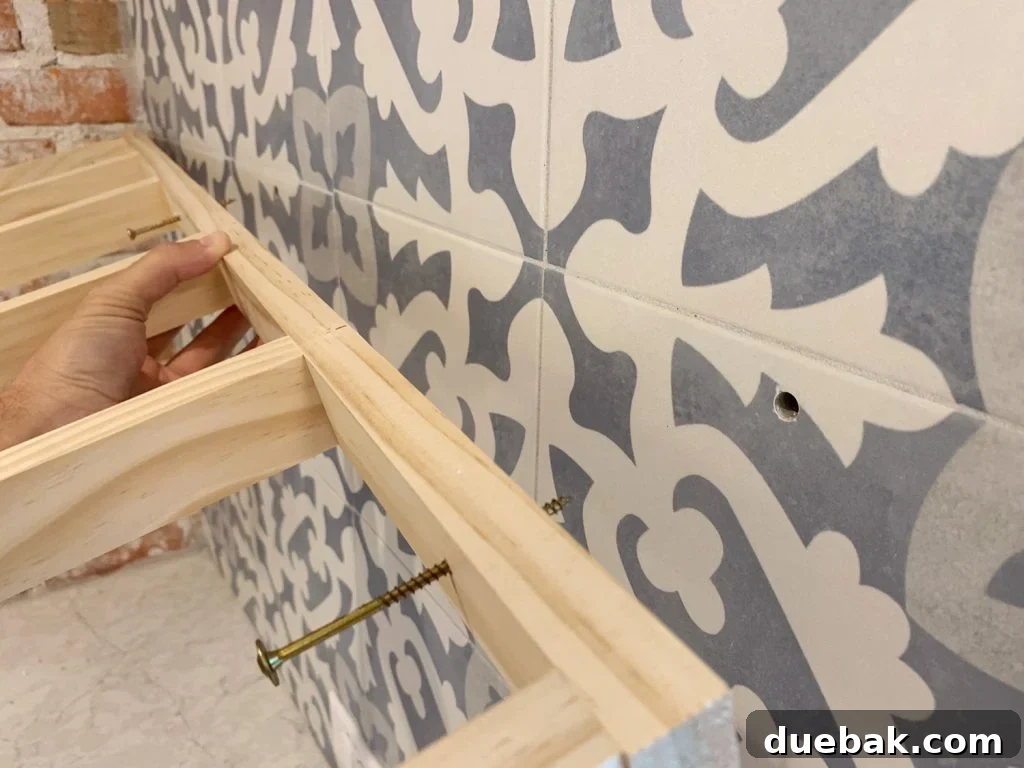
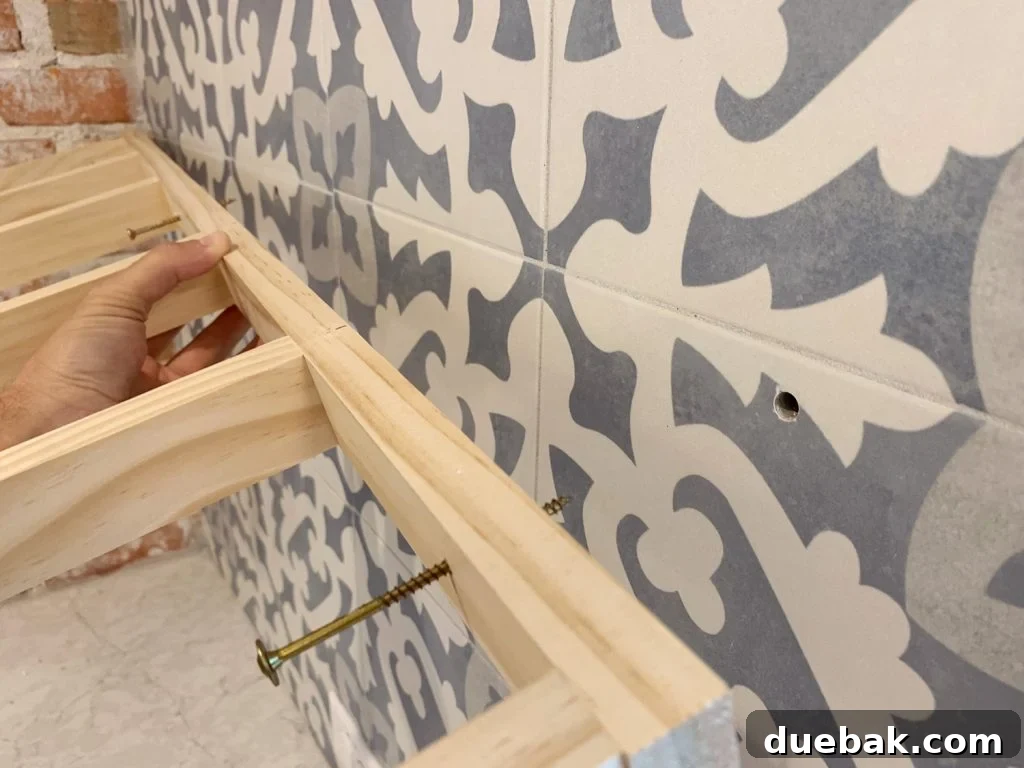
As you drill, ensure you periodically remove the bit from the hole and dip it in water to cool it down, as described in the previous step. This constant cooling is crucial for both the longevity of your drill bit and the integrity of your tile. Listen to the sound of the drill; if it sounds strained or you see excessive dust and steam, ease up on the pressure and cool the bit more frequently. Our meticulous approach paid off, and we were incredibly grateful to finish the project without any cracked or broken tiles. With our holes perfectly drilled, we proceeded to securely build and hang our floating kitchen shelves, achieving a beautiful and functional result.
Beyond Shelves: Applying Tile Drilling Techniques to Other Projects
While our specific project involved drilling small 5/16″ holes for floating shelf supports, the techniques and principles outlined in this guide are universally applicable to a wide array of tile-drilling tasks. Whether you’re installing new bathroom plumbing fixtures that require larger diameter holes, mounting towel bars, toilet paper holders, or even grab bars for accessibility, the process remains fundamentally the same. The key is to adapt your tools to the specific job at hand.
When tackling projects that demand larger holes, be sure to purchase the appropriate size tile drill bit. Many larger tile hole saws even come with their own integrated water delivery systems, designed to simplify the cooling process. Regardless of the size of the hole or the type of fixture you’re installing, the ultimate mantra remains consistent: take your time. Approach each drilling task with patience, precision, and the right tools, and you’ll achieve professional-looking results without the fear of damaging your beautiful tile work.
*This post contains affiliate links, so we may earn a small commission when you make a purchase through links on our site at no additional cost to you.