
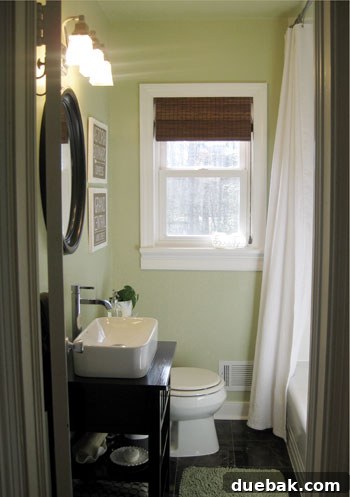
It’s incredibly satisfying to look at a newly completed bathroom renovation, a testament to hard work and vision. Our recent project was no exception, culminating in a beautiful transformation that we proudly unveiled (check out the full reveal and all the cost details right here). What often goes unseen, however, are the countless small battles fought and won behind the scenes – the unexpected hurdles that inevitably arise in any major home improvement endeavor.
While you, our dedicated readers, followed along with nearly every major step of our bathroom overhaul, we kept a few minor “speedbumps” to ourselves. But in the spirit of transparency and reminding everyone that DIY projects are rarely without their quirks, we’re now pulling back the curtain to share five behind-the-scenes challenges our bathroom renovation threw our way. Thankfully, each problem presented an opportunity for creative problem-solving, and none proved too difficult to overcome in the end. Dear bathroom, thanks for keeping us on our toes and teaching us a few new tricks!
Challenge #1: The Mysterious Screeching Exhaust Fan
The Unexpected Noise and Initial Alarm
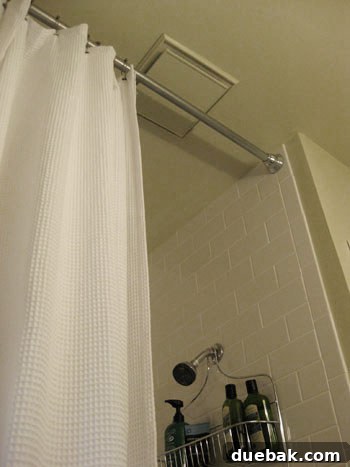
As our renovated bathroom slowly but surely came back together, we reached a pivotal moment: testing the exhaust fan. To our dismay, flipping the switch unleashed not the gentle hum of efficient ventilation, but a terrible, ear-piercing screeching whine. Adding to the concern, it wasn’t drawing much air at all. A properly functioning exhaust fan is critical for moisture control and air quality in a bathroom, so this malfunction was a significant concern.
Diagnosing the Problem and Considering Replacement
We initially speculated that the fan’s motor might have been damaged. Our best guess was that it somehow got accidentally turned on during the demolition phase while it was taped over with a plastic bag (a necessary step to prevent demo dust from infiltrating the vents). Whatever the cause, the motor sounded distressed, leading us to believe we were in for the costly and inconvenient task of replacing the entire unit. Given its age and non-standard size, a replacement would likely involve cutting into and patching drywall, a job we were eager to avoid.
Our DIY Solution: WD-40 and a Bit of Elbow Grease
The thought of a full replacement lingered, but before committing, I decided to make one last-ditch effort to salvage the existing fan. With about zero formal knowledge of motor repair, my approach was rudimentary but hopeful: clean out as much accumulated dust and debris as possible, then let WD-40 work its magic. After all, isn’t that the universal remedy for all things squeaky and sticky? Crucially, I ensured the power was completely off before attempting any work.
I meticulously cleaned the visible parts of the motor, shaking out loose particles and wiping down any accessible surfaces. Then, following common wisdom, I applied a generous spray of WD-40. To our immense relief, this simple strategy worked like a charm! After two or three rounds of cleaning, shaking, and lubricating, the whiny noise vanished completely. We also observed a remarkable increase in the fan’s intake, indicating improved airflow. Not only was our fan back to 100% operational capacity, but our impromptu “tune-up” likely left it performing better than it had before the renovation even began. Insert a big sigh of relief here for a budget-friendly fix!
Challenge #2: The Elusive Plumbing Leak Under the Vanity
The “Paper Towel Test”: Our Go-To Leak Detection Method
When installing new plumbing, especially under a vanity, we employ a highly technical and remarkably effective technique: the “paper towel test.” This involves simply placing paper towels under freshly installed pipes and connections and then running water, diligently checking for any tell-tale droplets. This ensures our plumbing is watertight and leak-free from day one. During our vanity installation process, we were meticulous, but even the best plans can encounter unexpected issues.
Identifying the Culprit: An Old, Stubborn Leak
What we didn’t fully detail in our vanity-building breakdown was that one of our pipes unfortunately failed the initial paper towel test. The leak wasn’t from our newly installed connections, which were perfectly sealed. Instead, it originated right next to the wall, where two old pipes had been permanently welded together. These were existing pipes we hadn’t touched or disconnected, merely taped over during the messy demolition phase. We suspect that the vibrations and general jostling from removing the old vanity and clearing out the bathroom must have disturbed this old, fused joint, leading to a painfully slow drip. Boo.
The Dilemma: To Replace or Repair an Unconventional Leak
Our usual go-to plumbing tricks, such as tightening connections or applying plumber’s tape, were impossible in this scenario. Since the pipes were fused, they couldn’t be disconnected or screwed more securely. We seriously debated replacing the entire section, but that would mean dismantling the rest of our newly installed vanity piping, which was otherwise performing flawlessly. Considering the leak was incredibly slow – literally one tiny drop every ten minutes of running water – we decided to research alternative, less intrusive solutions.
Innovative Fix: Loctite Putty to the Rescue
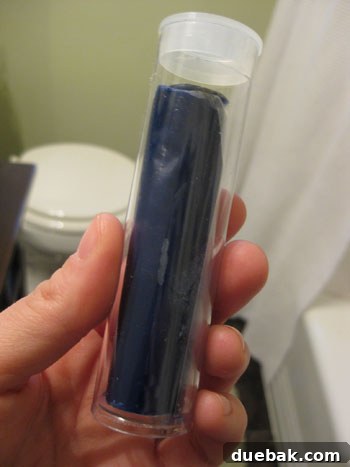
After a bit of online research and a trip to the home improvement store, we opted for a product called “Loctite” putty. It had a familiar consistency, reminding me a bit of the “Mighty Putty” infomercial product, though this version was distinctly blue. I’ll admit, I was skeptical, but the store associate assured us it would do the trick for a slow weep. And, drumroll please… it did! The application was straightforward: we kneaded the two-part putty together until it turned from blue to white, indicating activation, and then firmly pressed it around the leaky joint. It took just a few minutes to apply, and a short while longer to dry and cure. To be absolutely safe, we didn’t run any water through the sink until the next morning. Since then, we’ve been enjoying completely leak-free sink usage.
Note: We want to emphasize that this method is best suited for excruciatingly slow, oozing leaks. We would not recommend Loctite putty for anything that drips more quickly or consistently, as its long-term effectiveness in more severe situations is questionable. Always consult a professional for significant plumbing issues.
Challenge #3: Customizing the “Standard” Towel Bar
The Quest for the Perfect Fit
When planning our bathroom layout, we knew a towel bar positioned to the left of the sink would be ideal for convenient hand-drying. It seemed like a simple purchase. We headed to Target, confident that a standard retail store would offer a range of sizes. We picked up what appeared to be the shortest towel bar available – a 20-inch model that perfectly matched the style of our new toilet paper holder. Mission accomplished, or so we thought.
Target Run and the Realization of a Mismatch
Upon returning home and holding the towel bar in its intended spot, our enthusiasm quickly deflated. The 20-inch bar was, annoyingly, far too long for the allocated space. We really needed something in the 15-inch range to fit comfortably without obstructing movement or looking out of place. This meant a trip back to Target to return it, with the optimistic assumption that “they must have a smaller version.” To our disappointment, they didn’t. Darn. It was clear that a standard off-the-shelf solution wouldn’t work for our specific dimensions.
The Creative Solution: The Hacksaw Heroics
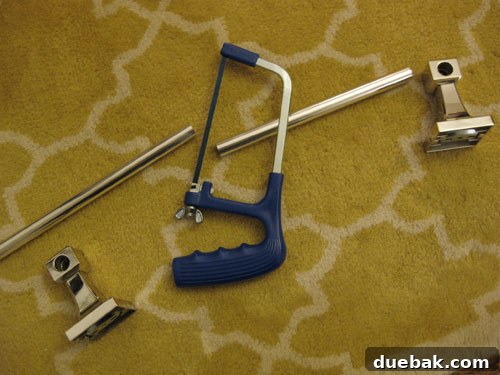
Faced with limited options, it was time to improvise. As we examined the towel bar more closely, we had an “aha!” moment. The bar wasn’t a solid piece; it was cleverly designed as three components: two end brackets and a hollow metal rod that slid between them. This modular design immediately sparked an idea: we could easily cut the rod to whatever custom length we desired. I retrieved our trusty hacksaw, and in a matter of seconds, I had cleanly cut through the metal rod, yielding the perfectly “custom” sized towel bar we needed.
Seamless Integration and a Hidden Secret
The beauty of this solution was its seamless appearance. The cut ends of the rod simply slipped back into the decorative end brackets, completely concealing the modification. No one would ever suspect we had shaved off a few inches to achieve the perfect fit. Well, no one except for the entire internet, as we’ve just revealed our little secret right here! This experience reinforced the idea that sometimes, a little ingenuity and a basic tool can transform a standard item into a perfectly tailored solution.
Challenge #4: Replacing the Demolished Bathroom Threshold
The Unsalvageable Original and Its Demise
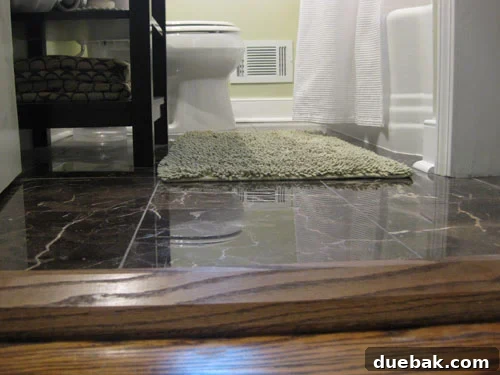
In every demolition project, there’s always the hope of salvaging some original architectural elements. Just as I had attempted, largely in vain, to save as much trim as possible (total trim saved = none), we also desperately tried to preserve and reuse the original wooden threshold at the bathroom door. However, the old threshold proved to be a formidable opponent. It was nailed and glued with such tenacity that salvage became an impossible dream. It took almost an hour of meticulous prying, only for it to come out in over ten fragmented pieces. Its unfortunate demise left a noticeable void.
The Unfinished Edge: More Than Just Aesthetics
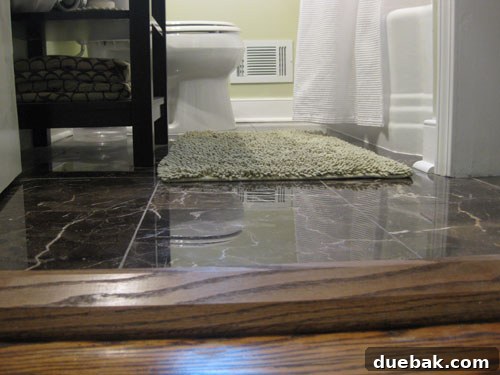
The missing threshold presented several issues. Functionally, it exposed a less-than-attractive portion of the hardwood subfloor beneath it. Aesthetically, it drew attention to the slightly unfinished edge of our newly laid bathroom tile. Furthermore, it highlighted an existing structural reality: our bathroom floor was approximately a half-inch taller than the adjacent hallway floor. This isn’t ideal, obviously, but it was how the old floor was constructed, and for reasons we won’t bore you with, addressing this height difference entirely wasn’t feasible during this renovation phase. A new threshold was essential to bridge this gap and create a polished transition.
Selecting and Crafting the New Threshold
To replace the lost original, we headed to Lowe’s, where they offer a wide array of unfinished oak thresholds in various sizes. We selected a simple, solid oak piece that fit the general dimensions. Back home, we used a circular saw to precisely cut the new threshold to fit perfectly into our doorway, measuring just under 24 inches wide. This precise cut was crucial for a snug, professional-looking fit.
Finishing Touches: Staining and Sealing for Durability
Once we confirmed the perfect fit, it was time to finish the wood. We knew that achieving an exact match to the custom stain color of our refinished floors wasn’t a realistic goal. So, we opted for a standard stain color, “Dark Walnut,” which was the closest match to a small scrap of the old threshold we had saved. After the stain had dried, we applied two thin, even coats of polyurethane to seal and protect the wood, enhancing its durability and resistance to moisture. To avoid lingering fumes inside, we left the piece outside to dry thoroughly. The next morning, the new threshold was easily nailed into place using the same finishing nails we used on all of the bathroom trim. The final result was remarkable; it looked as if the new threshold had been an integral part of the house all along, providing a seamless and professional transition.
Challenge #5: The Disappearing Light Fixture Screws
Precautionary Measures Gone Wrong
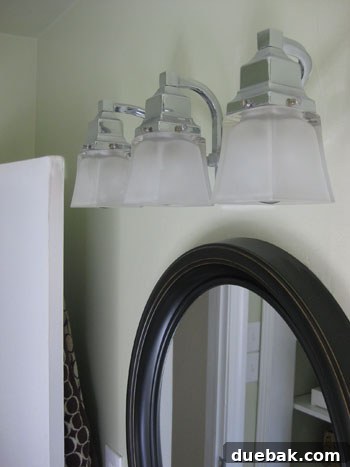
Before the chaos of demolition began, we took what we thought was a very smart precautionary step: we carefully removed all three delicate glass covers from our bathroom light fixture. Our intention was to protect them from accidental breakage during the demolition phase, where swinging tools and falling debris are common. To keep the small, flat screws that hold these covers in place from getting lost, I brilliantly decided to leave them loosely threaded into the fixture itself. This seemed like a genius move at the time – they’d be right where we needed them when it was time for reinstallation.
The Mystery of the Missing Hardware
What I failed to foresee was the sheer disruptive power of demolition. All that shaking, banging, and general vibration, which seemed minor at the time, somehow managed to slowly and stealthily unscrew 7 of the 12 screws directly out of the light fixture. Unbeknownst to me, they vibrated their way into the growing pile of rubble beneath, destined for the trash heap. So, when the time finally came to simply reinstall the glass covers and complete the lighting, we barely had enough screws to secure even one of them properly. Oops. This was a classic “penny wise, pound foolish” moment.
The Panic and the Practicality
My immediate reaction was pure “Debbie Downer” pessimism. I was convinced that we’d have to replace the entire light fixture, imagining a frustrating search for a compatible model and another unexpected expense. My wife, Sherry, ever the optimist, was confident that a home improvement store would surely sell replacement screws. Fortunately, my wife is often right (how many points do I get for that public admission?).
A Simple Fix, A Big Relief, and a Crucial Lesson
True to her word, a quick trip to the lighting section of our local home improvement store yielded exactly what we needed: two packs of replacement screws for under $3. Disaster averted! With the new screws, those glass shades are now held securely in place, and the light fixture looks complete. This minor setback taught us a valuable, if slightly embarrassing, lesson for future projects. Next time, I’ll know better: all small, critical hardware will be meticulously removed and stored securely in a labeled Ziploc bag, or perhaps even taped directly to the larger component it belongs to. Careful organization during demolition isn’t just about efficiency; it’s about preventing headaches and unexpected costs down the line.
Conclusion: Embracing the Renovation Journey, Imperfections and All
So, there you have it – five of the little curveballs that our bathroom renovation project pitched our way. These “speedbumps,” while frustrating in the moment, are an inherent part of the DIY journey. They force you to think creatively, learn new skills, and appreciate the satisfaction of finding solutions to unexpected problems. Each minor hiccup ultimately added to our experience and made the final reveal even more rewarding. These forgotten details are often part of the project’s true story, and we wanted to share ours not just for the sake of honesty, but also as a reminder to ourselves of what we did, should these issues ever resurface in a future home improvement undertaking.
What about you? Have you ever dealt with any of these little issues during a renovation? Have you experienced any other minor hiccups during a recent project that led to a creative solution or an important lesson learned? Share your stories in the comments below – we’d love to hear how you tackled your own unexpected challenges!
Wanna read each detailed post about the big bathroom makeover from start to finish? Check out Chapter One (Planning), Chapter Two (Demo), Chapter Three (Wall Reconstruction), a little teaser post, Chapter Four (Tiling), Chapter Five (Grouting), Chapter Six(Trim), Chapter Seven (Building The Vanity) and the big reveal right here. Happy renovating!