
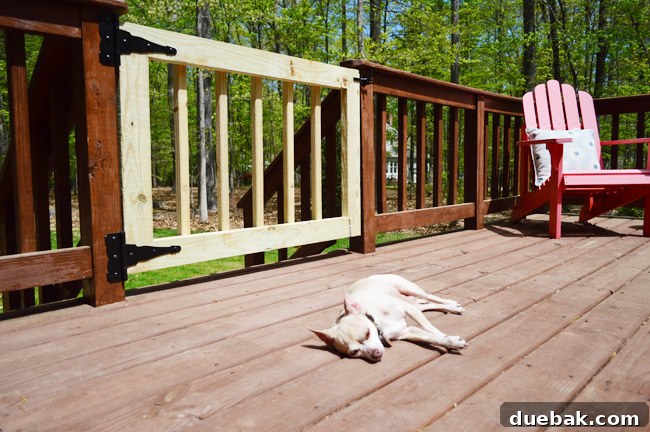
Ensuring the safety of your loved ones, both two-legged and four-legged, is a top priority for any homeowner. For those with a beautiful deck, the challenge often lies in creating a secure boundary without sacrificing aesthetics or breaking the bank. Today, we’re thrilled to share our detailed guide on how we engineered a super simple, yet incredibly effective, DIY deck gate. This project was primarily born out of a need to keep our adventurous Chihuahua, Burger, safely contained while he enjoys his favorite sunbathing spot on the deck. However, its benefits quickly extended to providing an added layer of peace of mind for our growing family, including a newborn and a curious toddler. The best part? This robust and attractive solution came together in just a couple of hours and cost us less than $30!
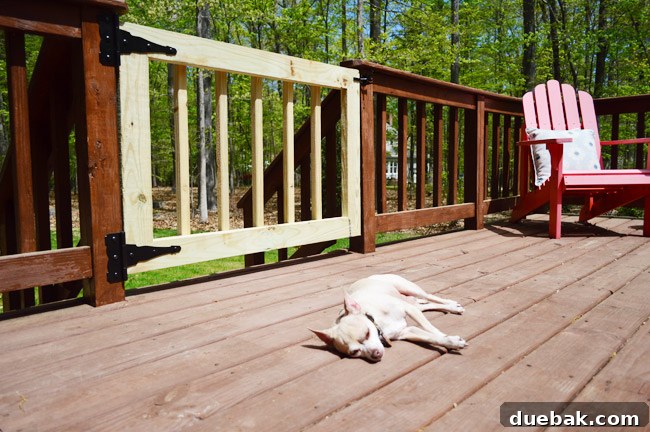
Living without a perimeter fence means our beloved Burger has, on occasion, been tempted to explore beyond our property lines, sometimes venturing a little too close to the neighbor’s yard. Our initial, rather unglamorous, solution involved leaning flimsy plywood boards against the deck opening. While surprisingly effective at first glance, this temporary measure was far from ideal. It was aesthetically unpleasing, constantly prone to falling over, and certainly didn’t offer the robust security we needed for a spirited dog or, more critically, our expanding family.
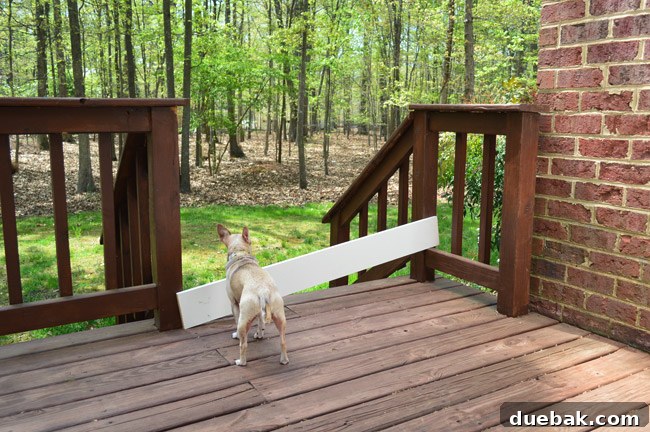
While the market offers a variety of pre-made, freestanding pet gates, we envisioned something more integrated and permanent. We wanted a deck safety gate that seamlessly blended with our existing deck structure, offering both superior functionality and a polished appearance. A DIY approach allowed us to customize the gate to our exact specifications, ensuring a perfect fit and a cohesive look that store-bought options simply couldn’t provide. Moreover, building it ourselves offered significant cost savings, making it an incredibly budget-friendly home improvement project.
Essential Materials & Supply List for Your DIY Deck Gate
Before diving into the build, thorough preparation is key. We spent some time researching various deck gate tutorials online, drawing inspiration and practical tips from helpful guides such as this one. After carefully taking measurements of our deck openings and sketching out a modified game plan that suited our specific needs, it was time for a trip to Home Depot. Here’s a comprehensive list of what we gathered to construct our durable and attractive deck gate:
- 2×4″ Pressure-Treated Boards: These will form the main frame of your gate. Pressure-treated wood is crucial for outdoor projects as it’s designed to resist rot, decay, and insect infestation, ensuring your gate lasts for years in various weather conditions.
- 2×2″ Pressure-Treated Balusters: Used to create the vertical slats, mimicking the look of your existing deck railing. This ensures a consistent and appealing aesthetic.
- Gate Hinge and Latch Set: Opt for a sturdy, outdoor-rated hardware kit that includes two T-hinges and a reliable latch mechanism. Stainless steel or powder-coated options are ideal for weather resistance.
- Miter Saw: Essential for making precise, angled cuts, especially if you opt for mitered corners for a cleaner finish. A circular saw or handsaw can work, but a miter saw offers unparalleled accuracy and ease.
- Cordless Drill/Driver: For quickly and securely fastening screws.
- 2″ Deck Screws: Specifically designed for outdoor use, these screws are coated to resist corrosion and provide strong holding power in treated lumber. Ensure you have plenty on hand.
- Measuring Tape: Accuracy is paramount in woodworking, so a reliable measuring tape is indispensable.
- Wood Clamps: Crucial for holding boards securely in place while cutting, drilling, and assembling, ensuring stability and safety.
- Pocket Hole Jig (Optional but Highly Recommended): Tools like a Kreg Jig create strong, concealed joints, resulting in a cleaner look and a more robust frame.
- Carpenter Square (Optional but Highly Recommended): Absolutely vital for ensuring all your cuts and assemblies are perfectly square, which is critical for a gate that hangs and swings correctly.
- Safety Glasses and Gloves: Always wear appropriate personal protective equipment when working with power tools and wood.
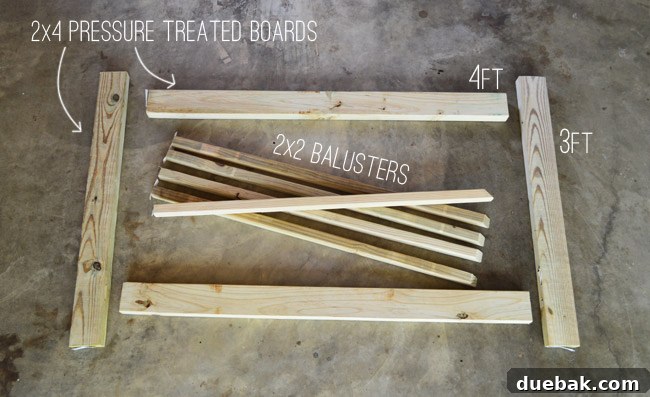
As you can see from the image above, the basic arrangement for our DIY deck gate construction is quite straightforward. To maximize efficiency and save a bit on lumber costs, we purchased longer 10-foot boards. Many home improvement stores offer a cutting service, so we had them cut down to more manageable lengths that would fit in our vehicle – a small but helpful tip for transport. It’s worth noting that we were building two gates, so our material quantity was double what’s depicted in the single photo. Always double-check your measurements and estimate your lumber needs based on the number and size of gates you plan to build.
Step 1: Precision Measuring & Cutting Your Lumber
The foundation of a functional and good-looking gate lies in precise measurements and accurate cuts. Begin by measuring the width of the opening where your deck gate will be installed. A crucial tip for smooth operation is to make your gate 1 inch shorter than the total width of the opening. This vital gap provides sufficient clearance for the gate to swing freely without binding against the posts or railing, accommodating for hinge placement and any slight expansion of the wood due to weather. For the height, aim to match your existing deck railing for a cohesive and integrated appearance. Our specific gate measured 44 inches wide and 29 inches tall, perfectly aligning with our deck’s dimensions. While not strictly necessary for functionality, we opted to miter the corners of our gate frame at 45 degrees for a cleaner, more professional finish, enhancing the gate’s overall aesthetic appeal. This choice is entirely up to your personal preference and desired look.
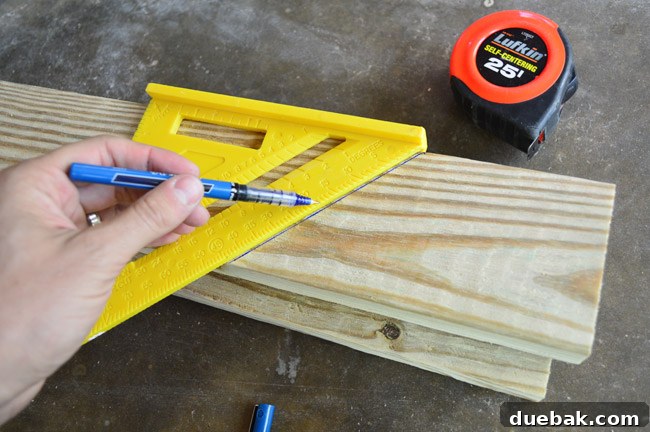
Achieving the most precise cuts, especially for those mitered corners, is significantly easier with the aid of a carpenter’s square. This tool allows you to accurately mark your 45-degree angles before cutting. For optimal consistency, we highly recommend cutting your boards in pairs. Cut the top and bottom horizontal frame pieces together, and then cut the two vertical side pieces together. By clamping them securely and cutting them simultaneously, you ensure that each pair has identical lengths. This technique is instrumental in helping your finished gate remain perfectly square, which is essential for proper hanging and long-term durability. Using a miter saw also significantly boosts accuracy and makes the process much quicker.
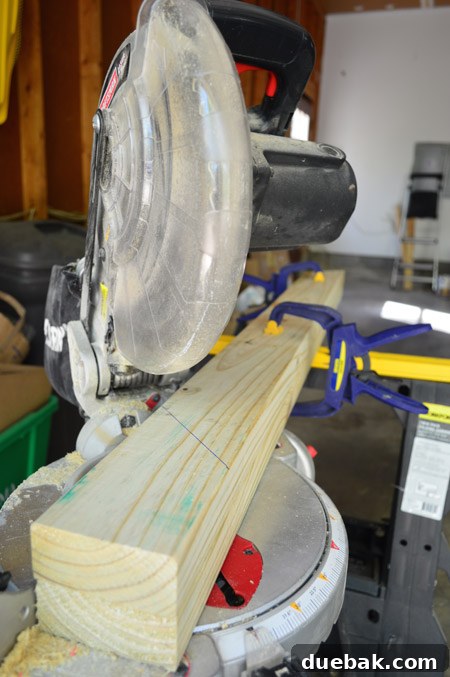
As you can observe in the photograph, we employed clamps to hold the boards firmly together while making our cuts on the miter saw. This simple step prevents movement, ensures alignment, and ultimately contributes to more accurate and safer cuts. Always double-check your measurements before making any final cuts, as the old adage “measure twice, cut once” truly applies here.
Step 2: Assembling Your Deck Gate Frame with Precision
Once all your pieces are accurately cut, it’s time to assemble the robust frame of your deck gate. We utilized a Kreg Jig, a fantastic tool for creating strong and discreet pocket holes. For our gate, we drilled two pocket holes into each cut end of the two vertical boards. While you could technically opt to create pocket holes on the horizontal boards instead, there’s no need to do all four ends; focusing on one set of opposing ends is sufficient for a sturdy frame. These pocket holes are later filled with wood putty for a smooth finish, making the fasteners virtually invisible.
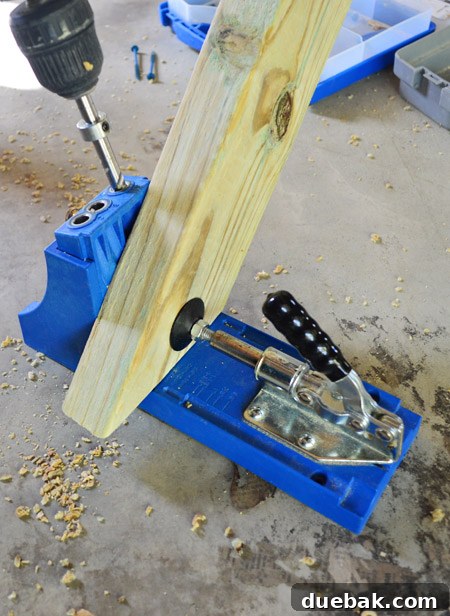
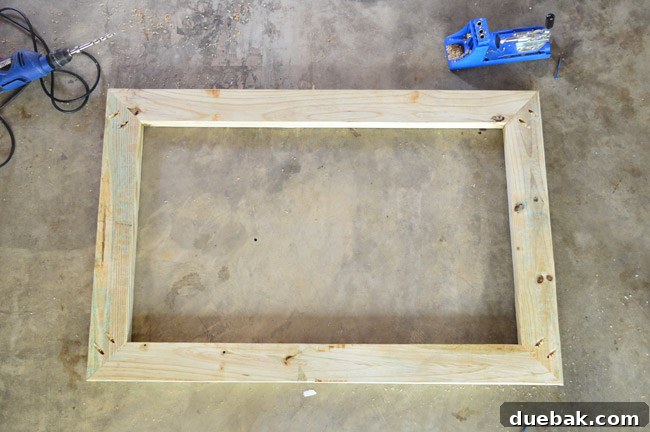
If you don’t own a pocket hole jig, don’t worry! You can still achieve a strong joint by simply driving long deck screws directly through the sides of the horizontal boards into the ends of the vertical boards. Ensure these screws are long enough to penetrate deeply into the adjoining piece for maximum hold. However, we’ve found that the pocket hole system generally offers a tighter, more precise, and aesthetically superior joint, as the screws pull the pieces together very tightly. After carefully assembling all the pieces, using durable 2-inch deck screws, our rectangular frame was complete and impressively rigid. Always ensure your frame remains square during assembly by periodically checking it with your carpenter’s square.
Step 3: Integrating Balusters for Safety and Style
With the main frame of your DIY deck gate constructed, the next step is to add the vertical balusters. These 2×2-inch pressure-treated balusters are crucial for both safety and aesthetics, as they help to mimic the look of your existing deck railing, ensuring a seamless integration. Begin by measuring the spacing between the balusters on your current deck railing. This will help you determine how many balusters you can fit into your gate frame while maintaining a consistent and safe gap. For our gate, we calculated that we had enough space for five balusters. After cutting them to the appropriate length to fit snugly between the top and bottom rails of your gate frame, begin attachment.
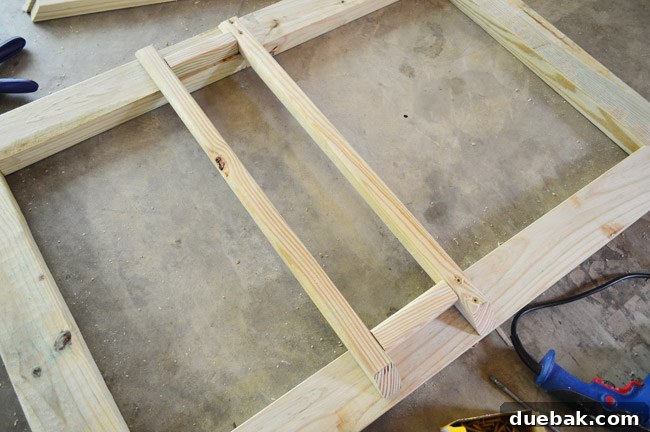
To ensure perfectly even spacing between each baluster – a critical detail for both safety (preventing small children or pets from squeezing through) and visual appeal – we highly recommend creating a simple spacer out of scrap wood. Simply cut a piece of wood to the desired gap width you’ve determined. You can see our custom spacer in action in the photo above. Start by attaching the first baluster at the precise center point of your gate, securing it to both the top and bottom frame pieces using two 2-inch decking screws for each connection point. Then, use your custom spacer to position subsequent balusters, working outwards from the center. This method guarantees uniformity and saves a significant amount of measuring time. Continue this process until all your balusters are securely fastened, creating a sturdy and aesthetically pleasing barrier.
Step 4: Hanging Your DIY Deck Gate with Hardware
With the gate itself fully constructed, the final structural step is to attach it to your deck. We found a convenient and affordable $15 hardware kit at Home Depot, which typically includes two robust T-hinges and a reliable latch mechanism. When selecting hinges, a good rule of thumb is that the hinge should stretch approximately one-fifth of the length of your gate for optimal support and stability. Our 8-inch T-hinges were just about perfect for the dimensions of our project, providing ample strength without being overly cumbersome.
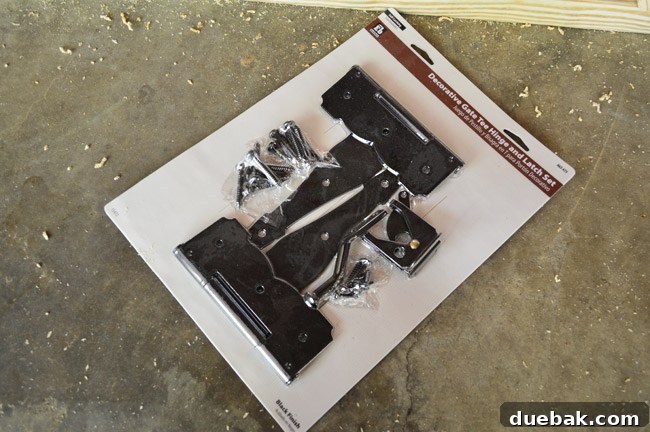
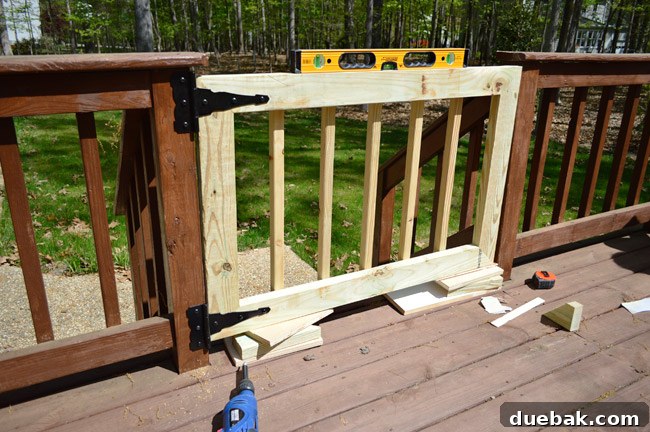
To successfully hang the gate, a little ingenuity and an extra pair of hands (thanks, Sherry!) go a long way. We used various pieces of scrap wood to prop the gate perfectly in place within its opening, ensuring it was level and had the correct 1-inch clearance gap mentioned earlier. With the gate held securely in position, we carefully determined the best spots to attach the hinges to both the gate frame and the existing deck post or railing. It’s common to encounter minor challenges; for instance, our top hinge couldn’t be perfectly centered due to the existing deck railing, so it rides a little lower than ideal. However, once the raw wood is stained to match the rest of the deck, we anticipate this slight offset will be barely noticeable. After securing the hinges with the provided screws, we then attached the latching mechanism to the opposite side, ensuring a secure closure. And just like that, our deck safety gate was in business, ready to keep Burger and our little ones safe!
For larger or heavier gates, some people opt to install an anti-sag kit to help keep the gate perfectly square and prevent it from drooping over time. These kits typically involve a cable and turnbuckle system that runs diagonally across the gate. At this point, we decided against an anti-sag kit for our gates, primarily because we preferred the cleaner, uncluttered look. Additionally, our gates are relatively small and lightweight, so sag is less of a concern. It’s always an option we can easily add later if we notice any issues. The peace of mind and functionality provided by our new DIY gate were immediate and immense.
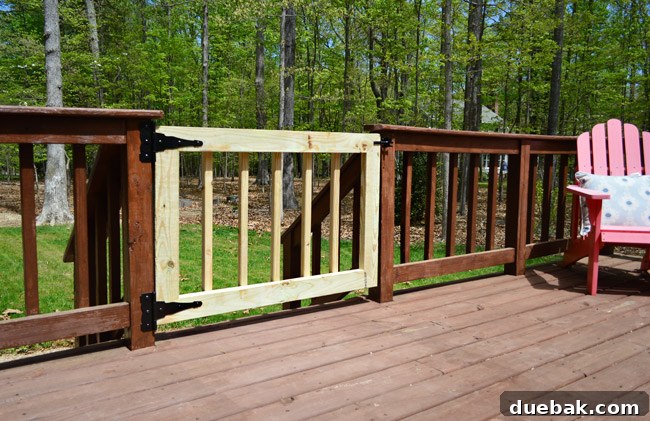
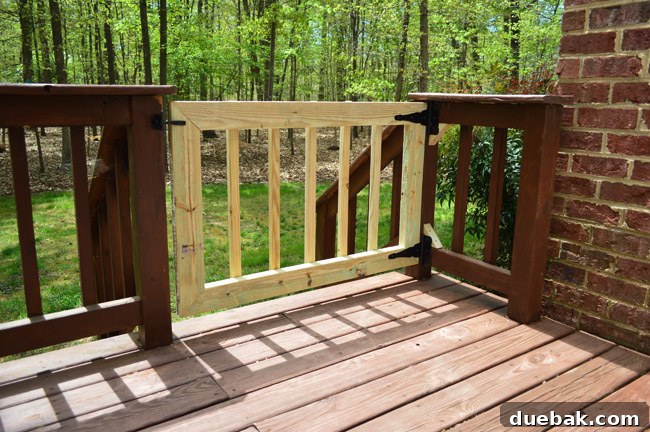
Building a gate for a standard opening is one thing, but attaching one at a deck corner presents its own unique set of challenges. This was precisely the scenario for our second deck gate, as shown above. Since we couldn’t directly screw into the main corner post without compromising its integrity or interfering with existing structures, we had to get creative. Our solution involved attaching the hinges to the horizontal railing pieces instead. The T-hinges, however, were a bit too tall to fit entirely on a single rail, which meant finding a secure mounting point required an extra step. To resolve this, we ingeniously used some scrap wood blocks – specifically, the initial mitered corners that we had sawed off earlier – to create secure attachment points for the hinges. These blocks were firmly screwed into the horizontal rails, providing a solid, extended surface where the hinges could be properly fastened. This clever adaptation ensured that even challenging corner installations could be completed successfully.
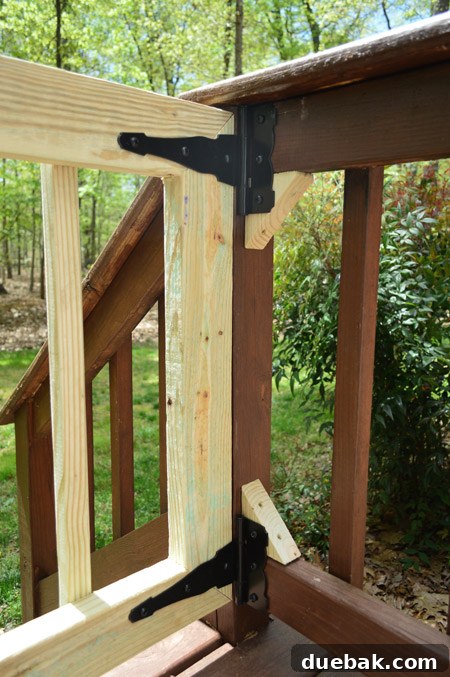
The beauty of this solution is that once the entire deck, including these newly added blocks, is stained, they will blend in seamlessly with the rest of the structure. The goal is always to create a functional element that looks as if it were part of the original design, rather than an afterthought. This careful planning and execution ensure a polished and professional finish for your DIY deck gate, even in tricky spots.
Step 5: Protecting Your Investment – Stain and/or Seal Your Gate
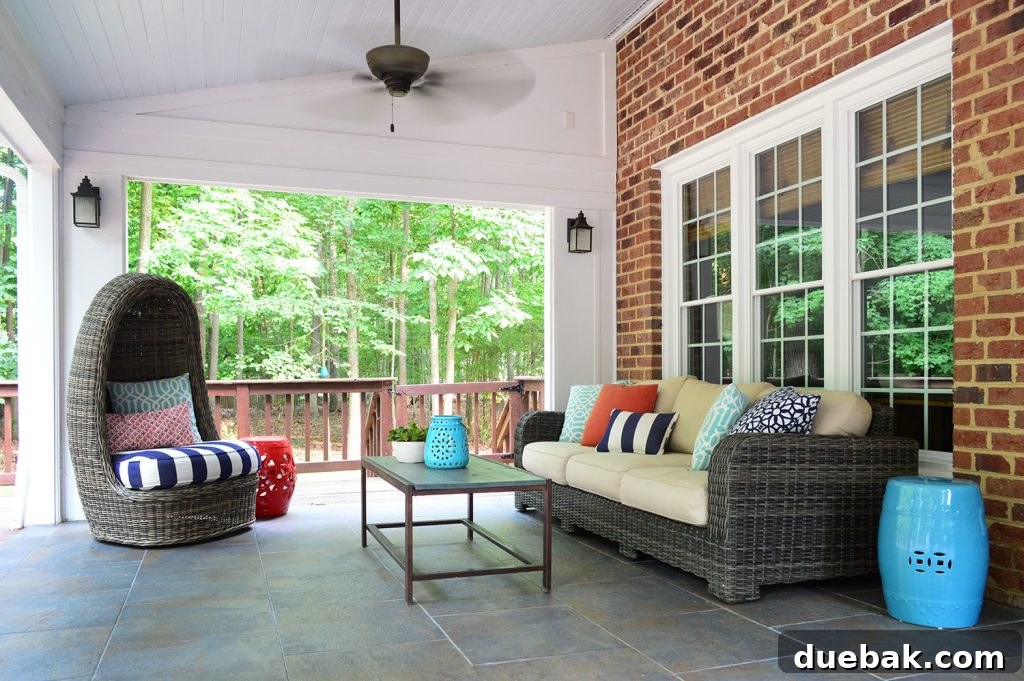
After all the construction and installation work, the final crucial step for your new deck gate is to protect it from the elements and enhance its longevity. Depending on the desired aesthetic and level of protection, you’ll want to either stain, seal, or do both. However, patience is key here: it is absolutely essential to wait approximately 2-3 weeks to allow your pressure-treated wood to thoroughly dry out. If you rush the process and seal or stain it too quickly, the chemicals used in the pressure-treatment process can react negatively, potentially causing bubbling, peeling, or an uneven finish. Allowing the wood to “cure” properly ensures maximum adhesion and a flawless, long-lasting result. For our project, we used the exact same stain and sealant product that we had applied months prior to stain and seal our entire deck. This approach guarantees a perfectly matched finish and a unified look across all our deck elements. You can catch a glimpse of one of our beautifully finished gates in the background of this photo, perfectly complementing our outdoor space.
The entire project, from initial measurements to final installation (excluding staining wait time), took us just about three hours to complete both deck gates. The total material cost was an incredibly affordable $53 – a mere $23 for the pressure-treated lumber and $30 for the essential hardware. This DIY deck gate has been an absolutely huge help in keeping our little Burger safely on the deck. While technically, his small chihuahua body *could* probably squeeze through if he were truly determined, he’s simply not that adventurous. Remember, this is the same charming pup who was previously deterred by a simple sheet of plywood!
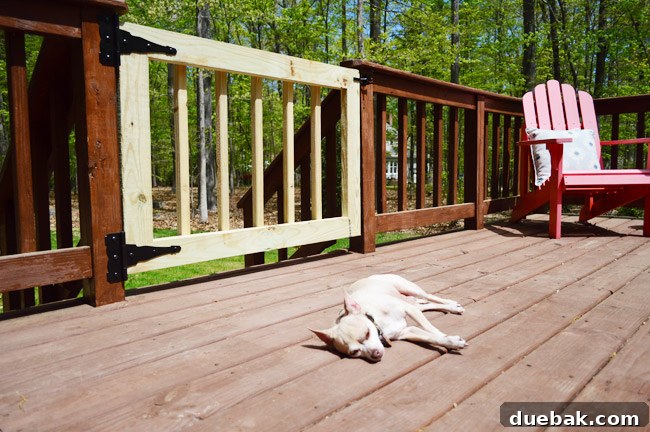
Beyond pet containment, the benefits of these DIY deck safety gates extend significantly to child safety. While our children don’t currently play unsupervised on the deck, we have absolute confidence that these gates will be an invaluable asset in preventing accidental falls down the stairs. This peace of mind will become especially critical once our newborn reaches the curious, learning-to-walk age. A simple, affordable DIY project like this provides significant security, enhancing the enjoyment and safety of your outdoor living space for every member of the family.
Want More Deck DIY Projects and Home Improvement Ideas?
Over the years, our journey as homeowners has included tackling numerous builds and home improvement projects on our various decks. If you’re looking to enhance your outdoor living space even further or are planning your next deck-related DIY adventure, be sure to explore these other helpful posts from our archives. They’re packed with practical advice and step-by-step guides to help you achieve your home improvement goals.
- How to Strip & Clean A Deck
- How to Patch A Hole In A Deck
- How To Stain & Seal A Deck
- How To Build A Deck