

It’s hard to believe nearly a year has passed since that unforgettable day. In just a few short weeks, I’ll be celebrating my daughter Clara’s first birthday. The delay in sharing her birth story isn’t due to forgetfulness, but rather a profound lingering fear. Even after almost twelve months, thinking about, typing about, or even speaking about the day Clara entered the world still sends shivers down my spine. It was a dramatic entrance, to say the very least.
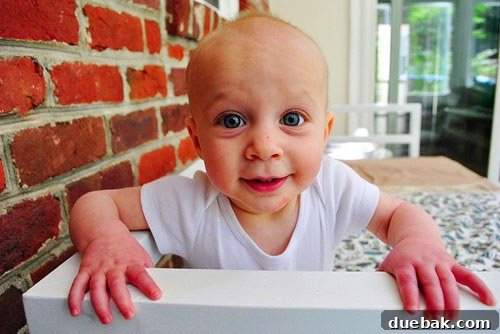
Indeed, the day Clara was born was undeniably the most amazing and life-altering experience of my existence, but it was also, without a doubt, the single most terrifying. I’ve touched upon some details in comments on other posts about Clara, as many readers expressed an immediate desire to know all about our little bean’s arrival. But now, with her approaching her first birthday, I feel I’ve had enough time to truly process that day and share its full account with the world wide web. I am by no means “over it” – I don’t know if I ever will be – but I can now talk about it without breaking down in tears. And for me, that’s a significant step. Several friends have actually encouraged me to write this post as part of my personal healing journey. Many of the things we write on this blog are, in fact, for our own benefit, serving as an online diary to document our lives for our own somewhat selfish purposes. So, it felt right to put this out there.
I know that the harrowing circumstances of Clara’s birth will inevitably influence any future pregnancies, making me more nervous, anxious, wary, and perhaps even afraid should similar complications arise again. Perhaps by articulating it, by laying bare the raw emotions and the medical complexities after almost a year of internal reflection, I can come to terms with it a little more. So, here it goes. Deep breaths, deep breaths.
My pregnancy with Clara was, by all accounts, amazing, low-risk, and truly fabulous. I experienced no high blood pressure, no unusual pains, just a persistent morning sickness that lasted over 100 days (yes, I counted!). But that, I was told, was to be expected, or at least tolerated, in the grand endeavor of baking a human being. Beyond that initial hurdle, and once the nausea subsided, it was, as my idol Bethenny Frankel would say, “amazeballs.” I felt fantastic. I absolutely cherished feeling my little bean kicking and moving inside me. I revelled in the unique glow of being pregnant, and I even confidently told my husband, John, that I could easily do it ten more times. Life, in those blissful nine months, was profoundly good, filled with hope and dreams for our growing family.
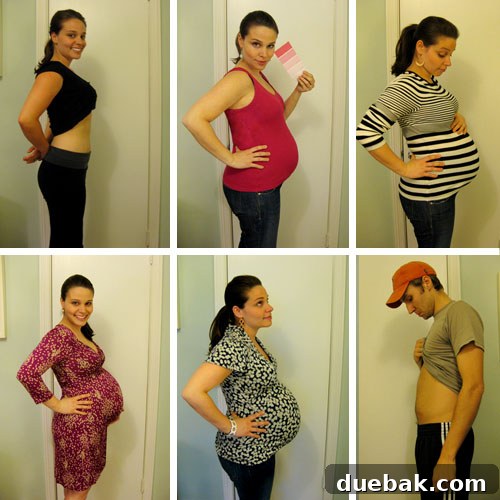
My tiny mother, who stands at just 4’11”, had two natural and remarkably fast childbirths. This family history led me to harbor high hopes for a normal, perhaps even rapidly progressing, delivery. I wasn’t rigid about my birth plan; I was open to having drugs or going without them. I approached it without any strong preconceived notions, but I had taken several pain management classes and studied The Bradley Method, which left me feeling incredibly prepared and eager to face whatever came. My mantra became: “In the end, the baby will be out, and I’ll finally get to meet her. So, fear is simply not an option. It’s going to be a happy day, with or without medication. No pressure. Just try to go with the flow and relax.” I had been given strict instructions by my doctor to “run, not walk” to the hospital at the first signs of labor, given my family’s history of incredibly quick deliveries – my mother had me in four hours and my brother in just two. This certainly put me a little on edge, but my primary concern was simply delivering the baby at home or in the car due to the fear that everything would happen too fast, a trait that clearly ran in the family.
At that time, John was working downtown, and I was at home without our car. We were a one-car family, so he would take it during the day, and we’d run any errands I needed once he returned home. Admittingly, being at home without immediate transportation was a bit daunting, but I knew at least fifty generous neighbors who had volunteered to drive me to the hospital if things escalated and John couldn’t make it home in time. The humorous detail was that John had been answering his cell phone on the first half-ring for the last two weeks of my pregnancy, a clear sign he was on high alert, and I was confident he’d hightail it home when the moment arrived, as his commute was only a fifteen-minute drive.
Throughout my entire pregnancy, I never felt a single contraction, not even Braxton Hicks. Yet, at 39 weeks, I was already dilated to 3.5 centimeters. Yes, I walked around at 3.5 cm with my first child without going into active labor, which I’ve since heard is quite uncommon. Clara must have been clinging tightly to her cozy abode within. So, despite still being about a week “early” by some measures, my doctor confidently told me I was going to have the baby “any second.” Hence, John’s heightened state of readiness. Oh, and my belly looked like this – I was officially ready to pop!
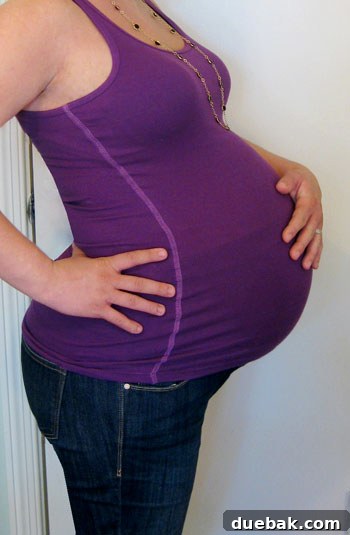
On the morning of May 14th, a Friday, I noticed the onset of some rather intense contractions. These were my very first contractions, at least the first ones I actually felt. Initially, they were oddly irregular, leading me to believe it was just pre-labor. I didn’t even tell John at first, as I didn’t want him to get worked up and rush home for what might turn out to be a false alarm. However, they slowly began to establish a consistent pattern, and by the time I started timing them, they were a mere four minutes apart. The pain, I can only describe as an 11 on a scale of 1 to 10. It felt as though my insides were being torn apart, and my back was excruciating. I called John, who was out to lunch with all his coworkers, celebrating his very last day at the office – he was resigning to come on full-time as a dad and blogger. I told him, in no uncertain terms, to get home immediately. He chuckled, commenting on my impeccable timing, as he was just finishing his burrito. But then, a groan-cry escaped me in the middle of a searing contraction, and he instantly knew I meant business. So, home he flew, not just came.
By the time we arrived at the hospital, my contractions were already a terrifying two minutes apart. I distinctly remember the immense difficulty I had simply walking from the car to the entrance; the contractions were relentless, coming non-stop, each one bringing me to my knees in agony. A fleeting thought crossed my mind that I might end up delivering our baby right there in the parking lot. They immediately ushered me into labor and delivery. As we waited for the doctor to arrive and assess my progress, my water broke in the hospital bed. But instead of the clear fluid I expected, it was startlingly red. So much blood. It was an incredibly frightening sight. I, thankfully, didn’t see most of it due to my expansive belly and the sheet covering my lower half, but John did, along with my OB who happened to be in the room. John’s face instantly drained of color, and my OB snapped into hyperdrive, her calm demeanor replaced by intense urgency.
Within seconds, the room filled with a flurry of frenzied nurses and doctors. They quickly explained that I was experiencing a placental abruption, a condition where the placenta inexplicably detaches from the uterine wall before the baby is born. This is grave news. It also vividly explained the excruciating “feels-like-my-body-is-ripping-apart” pain I had been enduring. Placental abruption is an extremely dangerous complication for the baby, as they receive their vital nourishment and oxygen from the placenta and can quickly go into shock and die. For the mother, there’s a severe risk of hemorrhage, which in extreme cases of blood loss, can also be fatal. It was, in every sense, a dire situation, though nobody explicitly stopped to explain the full gravity of it; the panicked expressions on the faces of the doctors and nurses communicated everything.
With astonishing speed, within about a minute, they had me in the operating room. And in an incredible feat of medical urgency, within three minutes, sweet baby Clara was delivered via an emergency C-section. Their remarkably swift actions saved her life. The entire experience was a blur of frantic motion and overwhelming sensations. All I truly remember is the gurney rattling against the hallway walls as they made sharp turns, rushing me towards an operating room as fast as humanly possible. The medical staff looked visibly panicked, and their fear terrified me to my core. In that moment, I had no concern for myself or my body; my only thought, my singular focus, was the baby. I remember screaming inside my head, a silent, internal plea: “Just cut her out of me! Cut! I don’t care if I feel pain, or if I get hurt, or if I have scars all over my body. Just save her. Do it right here in the hallway if you have to!” Of course, my lips weren’t moving. It was one of those out-of-body, mind-shattering screams that no one else could possibly hear.
Suddenly, John was no longer by my side. They had simply left him behind, continuing to rush me down the hall while calling out for emergency doctors and nurses to be on standby, as the main operating room was already occupied with a scheduled C-section. I recall people popping out of doorways, exclaiming, “I’ll help!” and joining the frenzied mob, rattling off my vital statistics – blood type, number of weeks pregnant, and so on – while uttering chilling phrases like “baby in distress” and “profuse bleeding.” Even if I had tried, I couldn’t have conjured a scarier nightmare scenario in my wildest imagination. Scores of people swarmed into the makeshift operating room in the next thirty seconds. But still, no John. I could barely breathe at the terrifying thought of something going so catastrophically wrong without him by my side. Once they had me fully prepped for surgery, which happened in less than a minute with their astonishing efficiency, someone must have rushed off to retrieve him.
I wish I could claim it was my calling out for him that brought him back, but I was in such profound shock that I couldn’t speak or even move. I was utterly frozen, feeling as if I wasn’t even there, watching the entire horrific scene unfold for someone else on a television screen. John later recounted standing in the hallway, utterly freaked out and completely alone, as everyone rushed away with me. Just waiting. The image of him there, isolated and terrified, still brings tears to my eyes when I think about it. I didn’t realize it at the time, given the overwhelming chaos, but someone had tossed scrubs at him as I was being wheeled away – he would need them for the sterile environment of the C-section. So, he just stood there in the hallway, clad in his scrubs, waiting. And, he says, going completely crazy with worry. Finally, someone came to get him, and he was allowed to come hold my hand just as they began the incision. I simply stared at him, still frozen, unable to cry or speak, utterly consumed by the shock of how rapidly everything was transpiring.
Once they opened me up, they discovered that not only was Clara in severe distress from the placental abruption, but the umbilical cord had somehow become pinched, a critical condition known as “cord prolapse.” This meant she was effectively without oxygen, fighting for her life while simultaneously struggling through the abruption. I distinctly heard them utter the words “cord prolapse” – they had no time to explain the full implications then, so I learned the details later. But in my odd state of panic and shock, I mistakenly thought they were talking about someone else. *I* was the one with a placental abruption, the most terrifying page in my at-home birth book, the one I hadn’t even read because “it wouldn’t happen to me” since I had no high blood pressure or any other risk factors. My baby couldn’t also be dealing with a cord prolapse. How could that be? Who could be so incredibly unlucky to face both? Then, I heard them say, “She’s not going to cry, okay? Don’t wait for her to cry, just try to stay calm and breathe slowly.” That was the moment my heart shattered into a million pieces, and I finally started to cry. I guess I was crying for her.
I couldn’t see anything, shielded by the screen they had quickly erected before the incision, but they were correct. She didn’t cry when they pulled her out with all their might. All I remember was an extreme pressure, but no physical pain. The emotional pain, however, was off the charts. NICU specialists were standing by, and hearing them say “NICU” aloud was the first time the terrifying thought truly struck me: “What if this doesn’t end the way I always imagined it would? What if all those pep talks I gave myself about it being a ‘happy day because drugs or no drugs, I would get to meet my sweet baby girl’ weren’t going to come true?”
John later confessed that this terrifying thought had hit him much earlier than it hit me. He said he knew something was gravely wrong the moment he saw all the blood before they whisked me away. And when he was standing alone in that hallway after I had been wheeled off to the OR, he genuinely wondered if things were about to end badly. Do you see why that visual of him in the hall still makes me cry? It was so surreal and utterly terrifying. John later confessed that once he was allowed into the OR to hold my hand, he couldn’t actually watch as they pulled her out of me, even though he was much taller than the screen they had set up to block my view. It wasn’t because he was afraid of the blood or of passing out, but because he couldn’t bear the thought of seeing our baby “not make it.”
But after what felt like an eternity – in reality, just about one minute – they managed to get her to moan. It was a soft, weak sound, almost like a tiny kitten meowing, and it was utterly heartbreaking. I remember thinking, “I want her to cry so I know she’s okay, but I don’t want to hear her if she’s not going to be okay, because I’m already falling so deeply in love. I can’t hear her moan and then fall silent – she has to start wailing. Right now!” But no such luck. The silence, I remember thinking, felt deafening, as I listened so desperately for any sign of a cry. Clara scored a 4 on her initial Apgar test, which we later learned is typically the lowest score one can receive before permanent brain damage, if conditions don’t significantly improve by the five-minute Apgar retest. They didn’t announce her time of birth or her weight loudly, nor did they say anything like you see in movies, you know, like “It’s a girl!” or “Happy birthday!” or “What’s her name?” And she certainly wasn’t placed on my chest for immediate skin-to-skin contact. I still couldn’t even see her, thanks to the screen blocking the surgery. They were all just working intensely on this baby that I couldn’t even glimpse – *my* baby. I simply stared at John in a silent freeze, tears welling in my eyes, but nothing escaping my lips. At some point, after they had begun closing me up, the doctor suddenly exclaimed, “She’s bleeding – she reopened, get over here!” And half of the medical team immediately rushed back to work on me. My incision, which had just been sewn and stapled shut, had reopened, and from the doctor’s urgent tone, I could tell it was far from an ideal situation. Yet, even then, I wasn’t scared for myself. In any other scenario, it would have been intensely alarming, but my mind was singularly focused: the baby. I wanted to hear the baby cry.
It felt as though five years went by, though in reality, it was less than five minutes. But slowly, the number of people working on me thinned out, and the medical staff attending to Clara seemed to start moving more casually, at a slower pace. As if the extreme emergency was finally abating. I remember thinking, “This is either a very good sign or a very bad one.” Thankfully, by the time of her five-minute Apgar test, she had pinked up, let out a glorious and spirited cry, and achieved an Apgar score of 9. We later learned that the five-minute Apgar retest is the most crucial and revealing one. They told us that a 9 was as close to perfect as it gets, and that even super healthy children rarely score a perfect 10. And they assured us that her remarkable rebound and fantastic appearance were incredibly positive signs. She was a true fighter, indeed. They even allowed John to go over and see her, while I, still strapped down, had to wait patiently.
She wasn’t entirely out of the woods yet, but we didn’t know that at the time, so we began to rejoice. John even managed to capture some video on his iPhone to bring back and show me, since I hadn’t even laid eyes on her yet. We were incredibly fortunate that his iPhone happened to be in his pocket before all hell broke loose; otherwise, we wouldn’t have any documentation of Clara’s tumultuous birth. We later learned that they were meticulously testing her cord blood to determine if she had been without oxygen for so long that she might have sustained permanent brain damage. It was only when the test results came back completely clear, indicating no worries on that front, that the nurses and doctors truly seemed to relax.
Apparently, infants who survive a placental abruption face a 40-50% chance of developing complications, ranging from mild to severe. And sometimes, mothers who survive such severe hemorrhaging end up requiring a hysterectomy. It was only then that the full weight of how incredibly lucky we had been, and what a profound miracle our baby girl truly was, began to sink in.
Finally, after what literally felt like days, they meticulously wrapped her up and gently brought her over to me. My arms were still strapped down from the surgery, so John tenderly held her right near my head, and I just stared at her in utter disbelief. I was still in a state of profound shock, my body bloated with IV fluids, mingled with overwhelming fear, disbelief, and an instantaneous, unconditional love that surged through me.
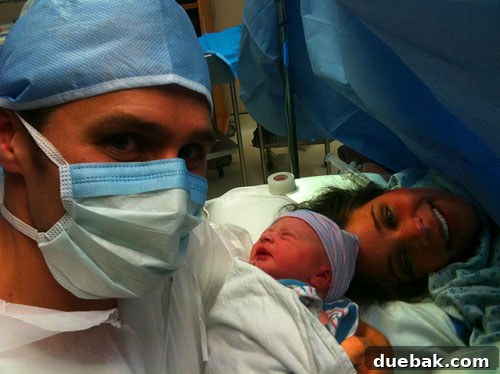
What had I done to deserve such a happy ending? How would I have possibly survived coming home empty-handed to a beautiful nursery that I had shared with the world, so confident that I was guaranteed a cute little baby to place in that crib? It was, unequivocally, the scariest day of our lives, and I still grapple with the “why.” Why me, in that annoying “poor me” sense, and why me, in the profound “why-was-I-so-lucky-she-was-spared” way? But above all, the overwhelming emotion I feel is fullness. Fullness of relief. Fullness of profound gratitude. And an immeasurable love for my fierce little fighter, my miraculous little girl. I am SO incredibly thankful that the doctors and nurses worked with such unparalleled speed and precision to come to her rescue, and mine. I’ll never know for sure, but I can’t help but wonder if another medical team had been on duty, whether we would have had the same miraculous outcome. They were just so “on it,” so deeply invested, and utterly amazing. And I can’t even begin to fathom what could have happened if I hadn’t been in the hospital the moment I started bleeding.
Other nurses and doctors throughout the hospital dropped in to see us for days, simply to tell us how incredibly lucky we were. News of our complex complications had apparently become the talk of the entire hospital. We even had a friend on another floor – coincidentally, she was there on the same day I went into labor for a pre-term labor scare – who had overheard nurses and doctors discussing “that woman who had both a cord prolapse and a placental abruption at the same time, but the baby actually survived.” Only later did she discover that they had been talking about me. I still get chills when I recall that. How immensely lucky we were. How terrifying it all was. And how utterly gorgeous and amazing that tiny little girl in my arms was, and still is.
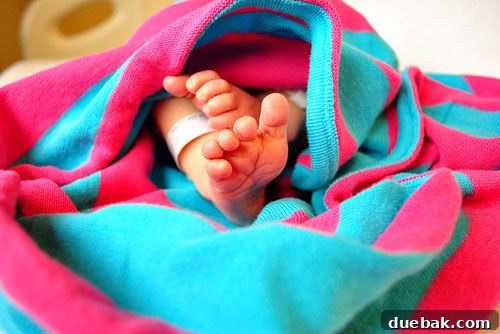
So, that is the harrowing yet ultimately triumphant story of the scariest, and simultaneously best, day of our lives. Whew. No wonder we are so utterly obsessed with this incredible little girl.
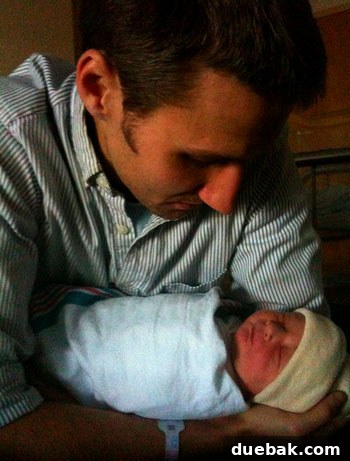
Regarding the likelihood of these complications recurring in subsequent pregnancies: cord prolapse is considered entirely random and can happen to anyone, so it doesn’t become more probable if you’ve experienced it before. In fact, it’s quite rare, so if you’re pregnant and reading this story, please understand that my specific combination of complications was about as likely as winning the lottery. However, placental abruption, unfortunately, is more likely to reoccur, affecting about one in four women again. What’s particularly terrifying is that it can happen as early as around twenty weeks into a pregnancy, a stage when the baby isn’t yet viable, meaning the baby wouldn’t survive. This potential for early recurrence makes future pregnancies a devastating and scary prospect. I have received strict orders from my doctors to wait at least two full years between pregnancies to allow everything to heal up properly and strongly. This likely means over three years will pass between Clara and her potential younger brother or sister, assuming all goes well. I am perfectly fine with this waiting period; I am happy to simply enjoy Clara for a while, to take that essential time to continue processing the entirety of her birth experience, and to build up my courage. But I am absolutely certain that when I do become pregnant again, I will be far less happy-go-lucky about it.
Which, in itself, is truly sad. John continuously pleads with me to allow it to be the same joyful and unabashedly exciting time it was before. But I know myself. And I know I will be on high alert, meticulously searching for any minuscule signs or symptoms that something might be wrong. I will be scared, even if there are no apparent signs of trouble, because there were no warning signs before I started feeling contractions with Clara – it all simply came out of nowhere. I’m even scared that I might be afraid to get a nursery ready, as if doing so might jinx things. So, my plan is to acknowledge and accept my fear. But I will do my absolute best to enjoy the pregnancy as much as I can, reminding myself that I now intimately know what an abruption feels like, so I should be able to identify it instantly. Furthermore, I now possess more crucial information than I had with Clara, and importantly, my doctors are now fully aware of my history. So, I will hopefully have just as good of an outcome should it reoccur, as long as it doesn’t happen before the baby is developed enough to be delivered safely.
But I’m not going to lie. I am going to be petrified.
I also understand that I might be considered a “high-risk” pregnancy next time, potentially without any chance of natural labor. If signs of another abruption occur, they will rush me into a C-section if the baby is old enough to survive outside the womb. And I am entirely okay with that. Anything, absolutely anything, for a healthy baby. Now, I am not only open to the idea of drugs or no drugs, but I am also completely at peace with a C-section. Slice and dice, baby. Whatever it takes.