
DIY Bathroom Renovation: Turning a Towel Bar Blunder into a Design Triumph
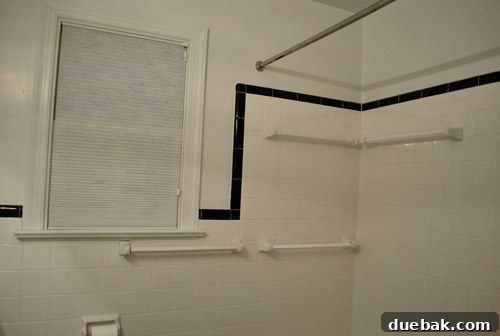
Sometimes, the spark of a home improvement project ignites not from careful planning, but from a sudden, almost impulsive realization that something in your space has simply *got* to go. This was precisely the case for me and our hall bathroom. After countless moments spent staring at the baffling array of towel racks, a particular frustration reached its peak. It wasn’t just a minor design flaw; it felt like a direct challenge to logic and aesthetics. The sheer number of towel bars was excessive, creating visual clutter in an already compact space. But more egregious was the placement of one specific bar—the one positioned so awkwardly off-center beneath the window, extending halfway into the shower curtain’s path. It was a perpetual eyesore, a testament to questionable design choices, especially when there was perfectly viable, untiled wall space next to the sink, ideal for a neat hand towel ring.
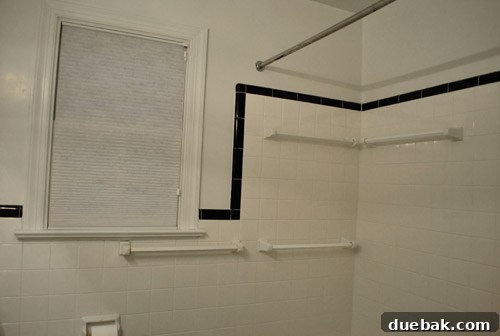
My patience had worn thin; the annoyance became unbearable. It was time for decisive action. Armed with a hammer and a newfound resolve, I decided to tackle this bathroom design enigma head-on. Who, after all, truly needs that many towel bars in one small bathroom? And who decided to position a towel bar so profoundly off-kilter, directly beneath a window, creating an obstacle for the shower curtain and generally disrupting the visual harmony? The more I pondered it, the more personal the affront felt. This wonky, half-under-the-window towel bar wasn’t just an inconvenience; it was a daily irritation, a glaring flaw demanding immediate rectification. The vision of a charming, well-placed hand towel ring by the sink, utilizing the untouched wall space, contrasted sharply with the chaotic reality of the existing setup. It became clear that this particular element of our bathroom’s decor needed to be permanently retired.
The Demolition Dream and an Unexpected Tile Nightmare
My initial assessment provided a glimmer of hope. Upon closer inspection of all the towel rods, particularly those within the shower area, I concluded they weren’t entirely problematic, given they’d be largely concealed by a shower curtain most of the time. Crucially, I observed what appeared to be their installation *on top* of the existing tile, rather than *inset* into it. This detail fueled my optimism; if they were merely surface-mounted, I theorized that careful chiseling could remove them without damaging the underlying tile, leaving a pristine, seamless surface. With this promising (and ultimately misguided) hypothesis, I targeted the most offensive culprit first: that annoyingly off-centered bar beneath the window. It was, without a doubt, my least favorite towel bar in the entire universe, and its removal felt like a necessary first step towards bathroom liberation. I envisioned a quick, clean removal, paving the way for a more thoughtfully designed space.
With a delicate touch and a flat-head screwdriver, coupled with a trusty hammer, I began the meticulous process of chiseling. Each gentle tap was accompanied by a mental image of a perfectly intact tile surface emerging beneath the bracket. I proceeded with utmost care, listening intently for any signs of resistance or unexpected crumbling, fully expecting to unveil a smooth, undamaged surface. Tap… tap…
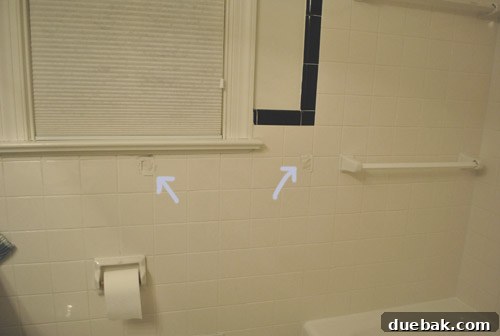
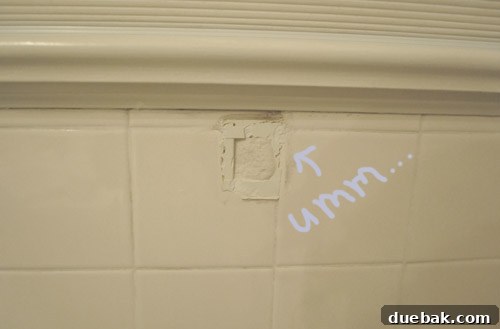
…and then, reality hit. Hard. While the bar holders indeed came off with relative ease, my hopeful assumption about them being surface-mounted proved entirely false. They were, in fact, deeply inset into the tile. The disappointment was immediate and profound. Instead of a smooth, unblemished surface, I was left with two highly visible, unsightly boo-boos: distinct holes where the tile had been meticulously cut to accommodate the brackets. My heart sank as I stared at the undeniable evidence of my miscalculation, realizing the repair would be far more complicated than initially envisioned. The initial joy of demolition quickly turned into a wave of regret and a sudden, urgent need for a new plan.
Panic, Potatoes, and the Power of Observation
A wave of genuine nausea washed over me. The stark reality of the situation began to sink in, amplified by the fact that my husband, John, was completely unaware of my ambitious (and now disastrous) solo project. My grand vision had been a triumphant “look what I did – doesn’t it look so much better?” reveal, met with admiration and praise for my ingenuity. Instead, I was now facing the grim prospect of an “oops, I might have just ruined the original 60s tile that we had definitely planned to work with” confession. The thought alone was enough to make me feel queasy. In that moment of intense panic, my mind bizarrely conjured images of baked potatoes – an eccentric anti-nausea technique I had perfected during 100 consecutive days of morning sickness while pregnant with our daughter, Clara. It was a strange, yet momentarily effective, mental escape from the immediate DIY crisis. I desperately needed a distraction, a coping mechanism, anything to stave off the rising dread and find a viable path forward.
Despite the initial panic, a sliver of practical thinking began to emerge. I tried to reassure myself that we could probably, with some effort, track down two matching replacement tiles and carefully use a Dremel tool to cut out the ruined sections, achieving a relatively flawless repair. This felt like a plausible, if somewhat daunting, path forward, requiring patience and a bit of luck in finding vintage tiles. However, the longer I stood there, staring at the visible scars on the tile, the more my eyes were drawn to the window itself. A new realization began to dawn on me, suggesting a potentially far simpler and more elegant solution to at least one of the holes. It was a subtle detail, something I had overlooked countless times in the past, but now, in the crucible of a DIY crisis, it seemed to offer a beacon of hope. A closer look at the window revealed a curious anomaly – an asymmetry that, once noticed, couldn’t be unseen. The key to one of my problems might just lie in addressing this long-standing design oversight, turning a mistake into an opportunity for improvement.
Two Ingenious Solutions for One Big Blunder
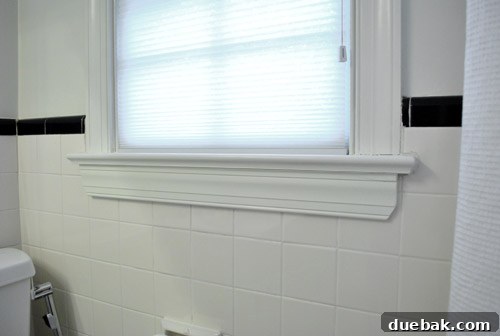
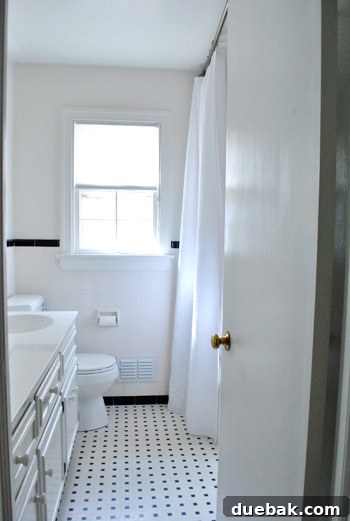
The “oddity” was glaringly obvious once I truly focused on it: the window had elegant trim framing its sides and top, but inexplicably, nothing along the bottom. This aesthetic imbalance had always been subtly jarring, creating a visual disconnect that I had unconsciously accepted. But now, in the context of my tile predicament, it presented a magnificent opportunity. Adding some simple white wood trim along the bottom wouldn’t just make the window look significantly more balanced and complete, integrating it seamlessly into the bathroom’s design; it would also perfectly conceal one of my two glaringly obvious tile gaffes. This was a true win-win scenario, a stroke of genius born from the urgency of desperation! It would elevate the bathroom’s aesthetic while simultaneously solving a critical problem with minimal fuss.
Simultaneously, we had been intending to hang the shower rod much higher, closer to the ceiling, to accommodate one of our favorite super-long 95-inch waffle shower curtains. This taller curtain, when hung, would naturally drape right in front of the second tile hole (yes, “tile hole” is now a technical term in my DIY vocabulary), effectively obscuring it completely. This strategic placement offered a clever, if temporary, solution. Whether the curtain was open or closed, the strategically chosen length and placement would ensure my dirty little tile secret remained hidden. When open, we typically push the curtain towards the window, so even then, it would continue to provide perfect camouflage. While this shower curtain solution wasn’t a permanent structural fix like adding trim, it was a perfectly viable “will-do-until-we-find-a-matching-tile-later” solution, buying us precious time, alleviating immediate stress, and allowing us to enjoy a more aesthetically pleasing bathroom in the interim.
Enlisting Help: A Collaborative Comeback
Mustering all my courage, I sheepishly padded down the hall, adopting my most innocent “oops-I-went-a-little-crazy” expression, humming Britney Spears’ “Oops!… I Did It Again” for added effect to soften the blow. My mission: to gently request John’s help in adding “a tiny bit of trim” and “re-hanging the shower rod at ceiling height” so I could finally string up our new 95-inch curtain, which we’d purchased from Amazon a while back but hadn’t yet installed. John, being the incredible man he is, listened patiently. His quiet demeanor was a sure sign that he wasn’t exactly ecstatic about the unexpected turn of events, but thankfully, he didn’t give me the dreaded stink eye or launch into a lecture. Instead, with a commendable lack of judgment, he simply got to work fixing my unforeseen mess. I hovered in the background, holding our baby Clara, showering him with what I hoped were effective, if not entirely truthful, compliments: “You look absolutely great in that hat,” and “Nobody hangs trim like you, babe.” I even managed to elicit a small smirk with that last one, which I considered a major victory in my campaign of distraction and flattery, and a sign that all was not lost.
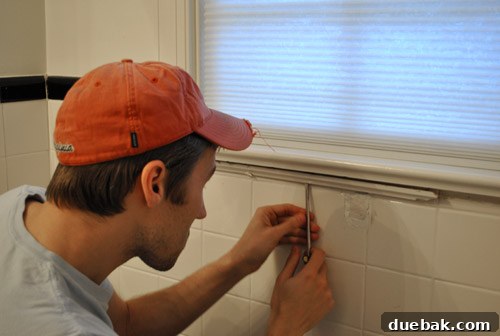
John’s methodical approach began with removing the tiny piece of faux trim that had previously resided under the windowsill, resembling a simple shoe molding. Using a flat-head screwdriver (a mini crowbar would have worked just as well, had one been immediately at hand), he carefully pried it away, ensuring no further damage to the surrounding area. This cleared the canvas for the real transformation and allowed for the installation of proper, aesthetically pleasing trim. The precision he employed, even in this initial removal step, demonstrated his expertise and attention to detail, a comforting thought after my earlier DIY mishap.
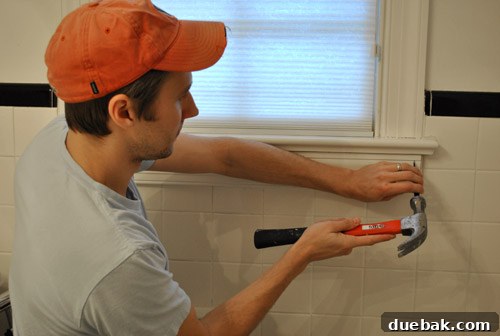
Next, he selected a piece of trim from our existing scrap pile, a testament to prudent DIYers always saving remnants for future projects. To ensure a perfect match with the house’s other windows, he meticulously studied their profiles, mimicking the shape for the new piece. This involved precise straight cuts on each side and a small, crisp 45-degree diagonal cut at the bottom corner, expertly executed with a miter box. This invaluable tool is indispensable for achieving clean, professional-looking angled cuts in molding and trim, ensuring tight, seamless joints. Once cut, he attached the new trim using small finish nails, hammering them in at a slight angle towards the sill for maximum hold and minimal visibility. To prevent any unsightly dents or marks on the freshly cut trim, he employed a small metal nail punch, a simple yet effective tool that drives the nail heads just below the surface, leaving a smooth, paint-ready finish. This attention to detail ensured the new trim seamlessly integrated into the existing window frame, appearing as though it had always been there and enhancing the overall architectural detail of the room.
The Final Reveal: Beauty Born from Mistakes
Remarkably, within about twenty minutes and with zero additional cost (thanks to our well-stocked scrap pile and fortuitously discovered leftover paint), any evidence of my moment of spontaneous, slightly chaotic demolition was completely eradicated. The transformation was swift, incredibly satisfying, and frankly, a huge relief. We were left with a beautifully finished window that finally looked complete, and I even managed to paint the new trim piece with leftover trim paint I fortuitously discovered in the basement, courtesy of the previous owners. It’s truly amazing how a small, deliberate addition can so profoundly enhance the overall appearance of a space, turning what initially seemed like a disastrous misstep into a definite design upgrade and a source of unexpected pride. The bathroom immediately felt more polished and thoughtfully designed, a testament to creative problem-solving.

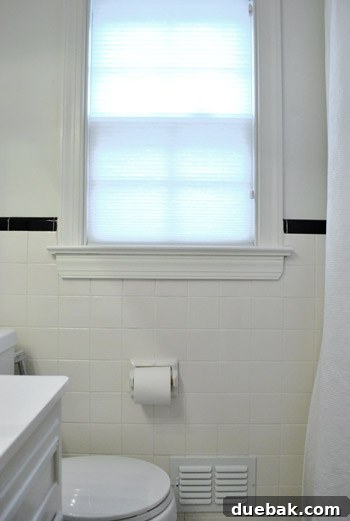
Oh, and if you’re wondering why the next picture appears so pristine and brilliantly white, that’s because John took it. He, unlike me, remembered the crucial step of white balancing the camera first. See, sometimes when I’m in the throes of “demo mania” – a state characterized by an intense focus on the physical task at hand – my attention to capturing the moment overrides technical camera settings. I contend this is an honest mistake, a side effect of adrenaline and a desire for immediate progress. I mean, in a state of adrenaline-fueled demolition, one can hardly be expected to remember the intricacies of complicated camera functions, can they? In reality, our shower curtain and the surrounding tile are pure white, along with the walls, the sink, and the toilet. So, this particular shot’s coloring is the most true-to-life representation of our freshly updated bathroom space, reflecting its clean and bright aesthetic.
Reflecting on the Renovation Journey
I know it might seem like a stretch, perhaps even a touch of denial, to suggest that my “big tile incident” ultimately led to a positive outcome. But truthfully, I genuinely believe the window looks immensely better with that newly added trim along the bottom. This aesthetic improvement is significant enough that it will definitely remain a permanent feature in our bathroom, a lasting enhancement that resulted directly from an initial misstep. And while the strategy of “hiding the other tile hole with a shower curtain” isn’t the ultimate, forever solution, it’s a perfectly functional and visually pleasing temporary fix that serves its purpose effectively. Once we successfully hunt down a matching replacement tile – a quest that might take some time given the age of the original tiles – that last little imperfection will be addressed for good, completing the transformation.
Best of all, our bathroom is finally free from that crazy, off-centered towel bar that had annoyed me every single time I walked by the hallway. Its removal has dramatically improved the flow and visual spaciousness of the room. And let’s be honest, who would want their hand towel constantly grazing the toilet paper dispenser anyway? The entire saga, from initial frustration to accidental damage to creative problem-solving, has undeniably elevated both the functionality and aesthetics of our hall bathroom. It’s a powerful reminder that sometimes, those spontaneous, slightly chaotic decisions in home improvement, when approached with a willingness to adapt and innovate, truly do lead to unexpectedly delightful and superior results. This experience reinforced the value of embracing the unpredictable journey of DIY projects.
I rest my case. Hooray for embracing the unpredictable chaos of DIY! Hooray for finding beauty and improved design born from unexpected challenges. Hooray, crazy ideas that turn into brilliant solutions!