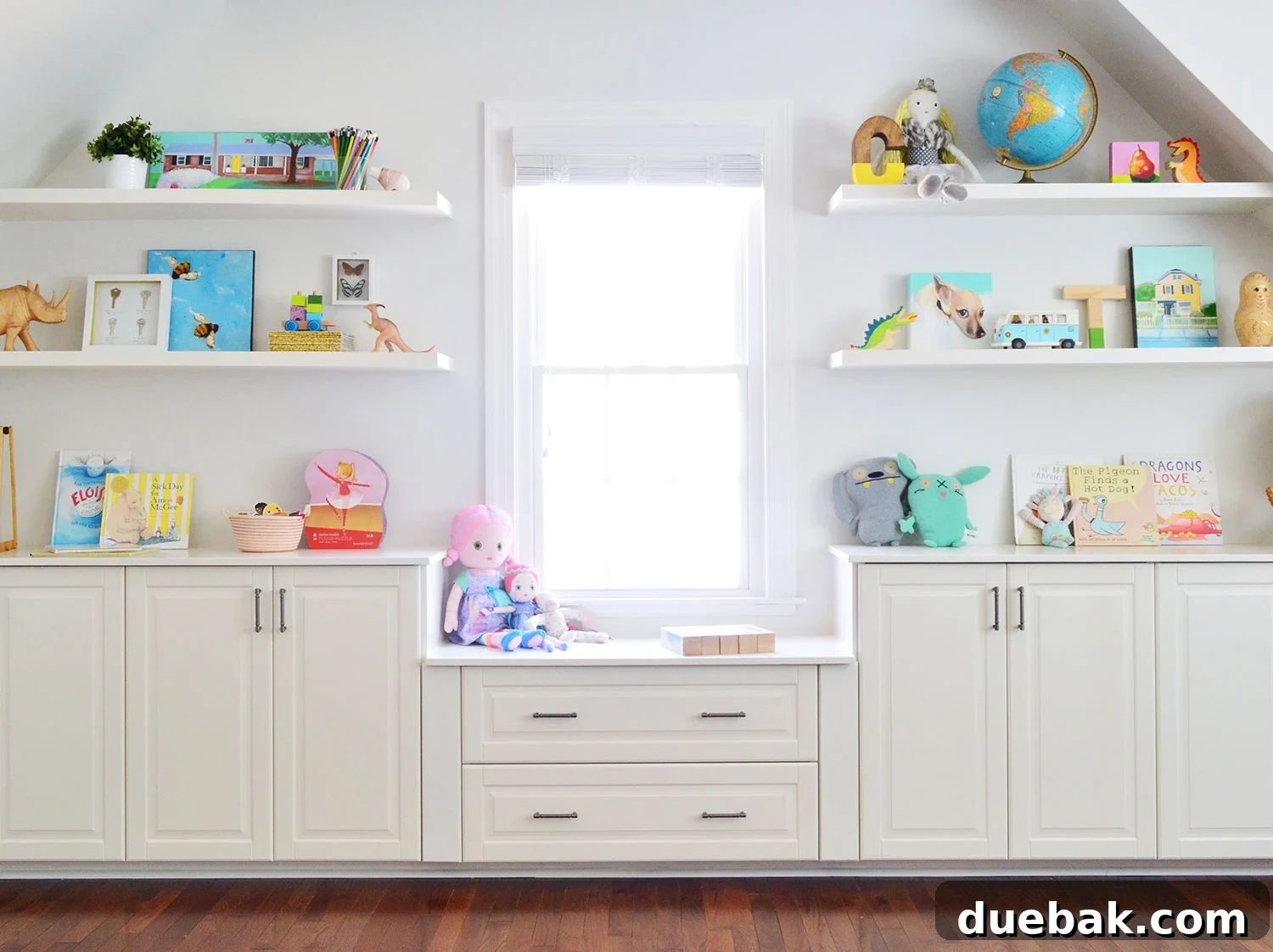
Transforming an ordinary space into a highly functional and aesthetically pleasing area often requires creative storage solutions. There’s truly no storage quite as effective and integrated as built-in storage, especially when meticulously designed to complement a room’s existing architecture. When we undertook the exciting project of converting our attic into a vibrant bonus room, we immediately recognized the immense potential of the recessed niche surrounding the window. This unique architectural feature presented a fantastic opportunity to implement custom storage that would not only maximize utility but also enhance the room’s character.
Today, we’re thrilled to guide you through our process of designing and installing elegant, wall-to-wall built-in cabinets within this window niche. Our secret? An ingenious Ikea hack that proves you don’t need expensive custom carpentry to achieve a high-end, integrated look. Get ready to discover how readily available stock cabinets can be transformed into bespoke storage tailored perfectly to your space.
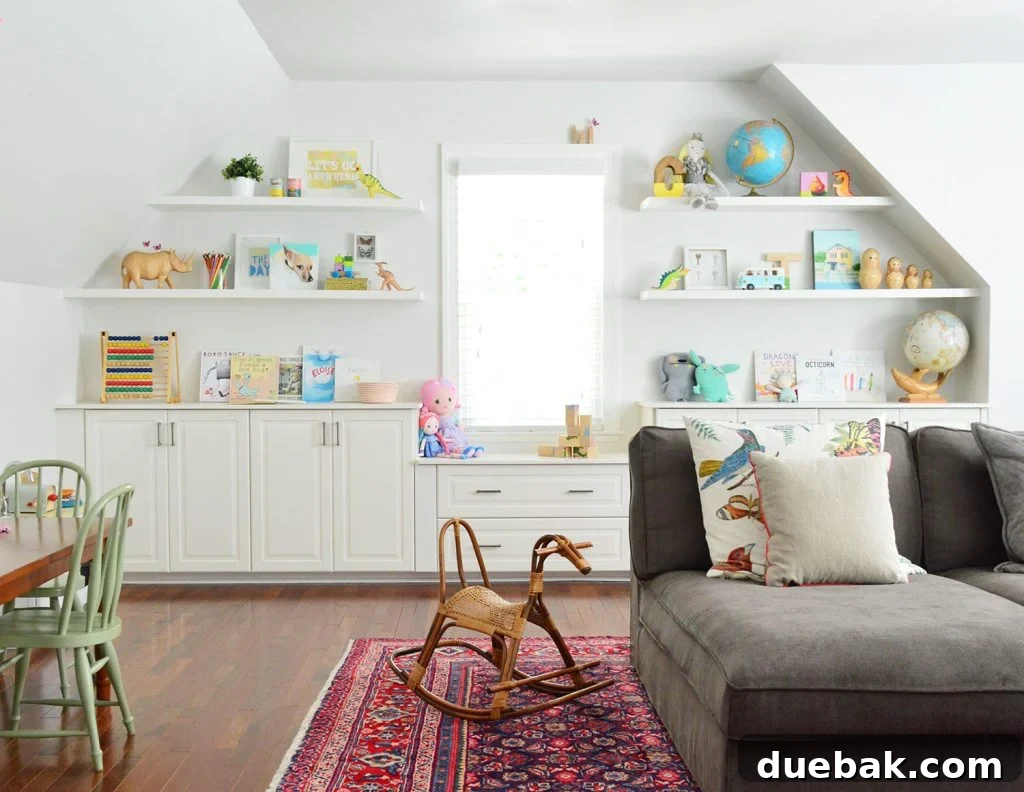
This comprehensive guide focuses specifically on the installation of the wall-to-wall built-in cabinets, demonstrating how we achieved a seamless, custom appearance using an Ikea base. However, for those looking to complete the entire look, we also have a detailed tutorial on how we meticulously built the DIY floating shelves that perfectly integrate above these cabinets. Together, these two elements forge a cohesive and highly functional feature wall, but covering both in a single tutorial would be a bit too extensive! Let’s dive into the cabinet installation first.
Step 1: Plan Your Built-Ins
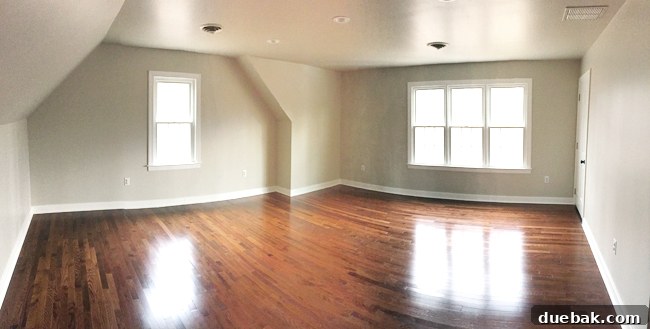
The journey to creating truly custom storage begins with meticulous planning. Our attic bonus room presented a unique challenge: a recessed portion around the window that was only 17 inches deep. This narrow depth, coupled with an off-center placement and not one, but two, sloped ceilings, initially felt like a design puzzle for symmetry enthusiasts like us. However, it was precisely this “curveball” of narrow depth that sparked the idea for a bespoke built-in solution.
We recognized that this expansive, blank wall would immensely benefit from added storage and visual interest. Built-ins offered the perfect opportunity to maximize every inch of the available space, transforming an awkward nook into a purposeful and beautiful focal point. The goal was not just to add cabinets, but to create a seamless, integrated piece of furniture that looked as though it was always meant to be there.
Having recently utilized Ikea’s kitchen planner for our laundry room cabinets with great success, we knew it would be an invaluable tool for this project. We experimented with various cabinet configurations within the planner, visualizing different layouts. To further refine our vision, we even Photoshopped some rough shelf ideas onto these digital mock-ups, allowing us to see how the entire feature wall would come together.
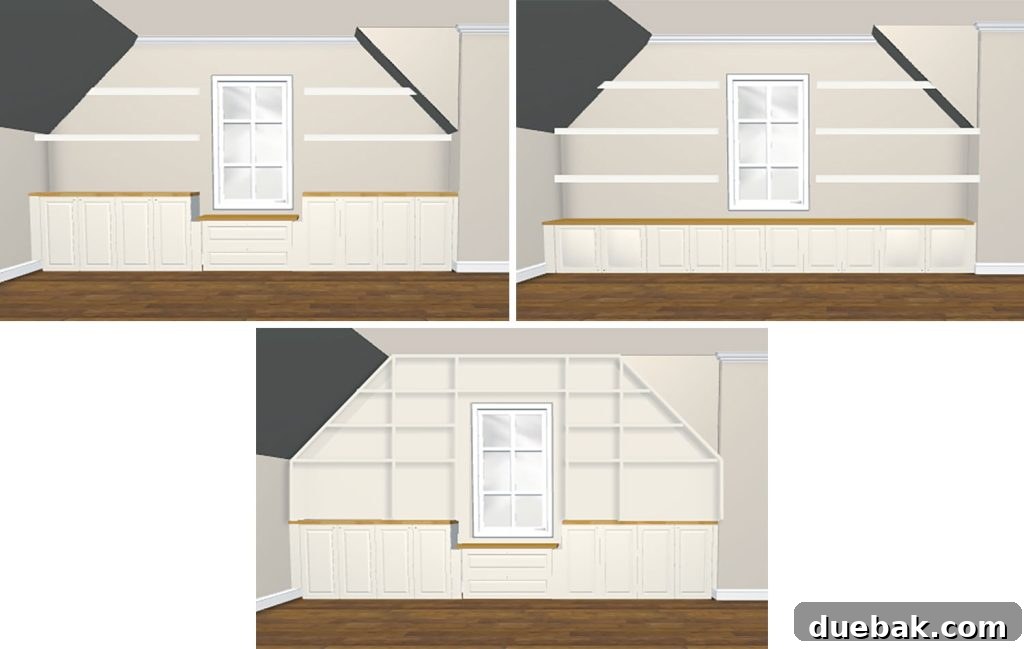
Our final design incorporated four standard 30-inch tall base cabinets spanning the bottom, with a single 20-inch drawer base meticulously centered directly under the window. This specific arrangement created a charming “window seat” effect in the middle, which we absolutely loved. The proportions felt balanced and right for the space, offering both ample storage and a cozy aesthetic. A significant advantage of using Ikea’s planning tool was its ability to automatically generate a detailed shopping list, making the procurement of all necessary components incredibly straightforward and efficient.
Step 2: Assemble Your Ikea Cabinets
With our plan firmly established and our shopping list in hand, the next phase involved assembling all the Ikea cabinet boxes. While the assembly process for Ikea furniture is generally straightforward, it can be time-consuming. We won’t delve into every minute detail here, but for those seeking an edge, we’ve compiled tons of valuable tricks and tips for installing Ikea kitchen cabinets that can significantly streamline the process. A key tip for this specific built-in project is to assemble only the cabinet boxes at this stage; there’s no need to attach the doors or drawer fronts just yet, as they will be added later in the process.
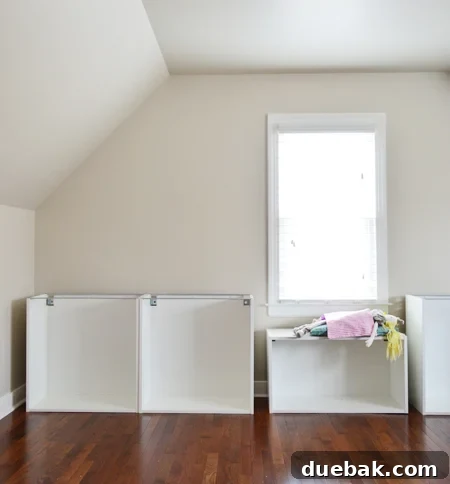
This stage also serves as a crucial checkpoint. Before proceeding further, take a moment to double-check your assembled boxes against your original plan. Place them loosely in the niche to ensure the layout is shaping up exactly as you envisioned. This early verification can save significant time and effort down the line, allowing for any last-minute adjustments before permanent installation begins.
Step 3: Build Custom Cabinet Bases
One of the initial hurdles in achieving a truly custom built-in look with stock Ikea cabinets was the height of their standard legs. In our specific window niche, the standard Ikea cabinet legs were simply too tall, preventing the cabinets from fitting perfectly under the window sill and achieving the desired integrated aesthetic. To overcome this, we opted to build our own custom bases.
We constructed these sturdy bases using a combination of stacked 2×4-inch and 1×4-inch boards. This layered approach allowed us to precisely achieve the exact height required for our cabinets to sit perfectly within the niche. While these bases provide a solid foundation, their primary function isn’t solely structural support for the cabinets themselves. More importantly, they offer a solid and convenient surface to which we could later attach our toe kicks or baseboards, creating that seamless, finished appearance at the bottom of the built-ins. Though not strictly necessary for structural integrity given the wall-mounted rail system (which we’ll cover next), having these custom bases underneath added an extra layer of peace of mind, especially considering the potential for playful children to interact with the finished piece.
Step 4: Attach Cabinets To The Wall
Ikea’s cabinet installation system is renowned for its efficiency and strength, primarily utilizing a metal rail system to securely hang cabinets on the walls. The process involves attaching a robust metal rail directly to the wall studs, from which the assembled cabinet boxes then hang using integrated metal clips. The detailed Ikea instructions provide precise guidance on determining the correct height for your rail, ensuring a level and perfectly positioned installation. For maximum security and a professional finish, it is absolutely essential to use a reliable stud finder to locate wall studs and a level to guarantee the rail is perfectly straight before securing it in place.
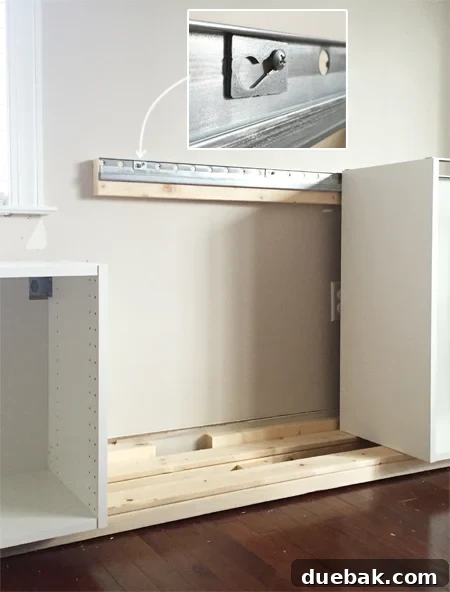
Here’s a crucial step that transforms standard Ikea cabinets into true built-ins for a shallow niche: before installing the metal rail, we first screwed a 2×4-inch piece of lumber horizontally into the wall studs, positioned directly behind where the rail would eventually sit. This simple yet effective modification was key to our project. Standard Ikea base cabinets are typically 12 inches deep, but our recessed niche was 17 inches deep. By adding this 2×4 blocking (which measures 1.5 inches deep), we brought our cabinets further out from the wall, effectively increasing their perceived depth and allowing them to fill the 17-inch space much more completely. This clever trick provides a more substantial and built-in appearance, ensuring the cabinets integrate seamlessly with the wall structure rather than appearing set back or shallow.
Step 5: Add Initial Filler Pieces
Achieving a truly custom, built-in appearance often hinges on addressing the gaps between individual cabinet boxes and the surrounding walls. With each cabinet box now securely hung on the rail (but not yet fully locked into its final position), our attention turned to adding the crucial first layer of filler pieces. These pieces are essential for making separate cabinet units appear as one cohesive, custom-built furniture piece.
Due to the specific dimensions of our space and the slightly off-center window, we found ourselves with some larger-than-normal gaps that required careful filling. You can either use pieces of pre-primed wood, which can be cut to size, or purchase Ikea’s dedicated filler pieces. We meticulously cut these filler strips to the precise dimensions needed using a table saw, ensuring a snug fit. Once cut, we used clamps to hold them firmly in place while we secured them. We then screwed them together from the inside of each cabinet box, creating a rigid and unified structure. This method ensures a strong connection and conceals the fasteners, contributing to the clean finish.
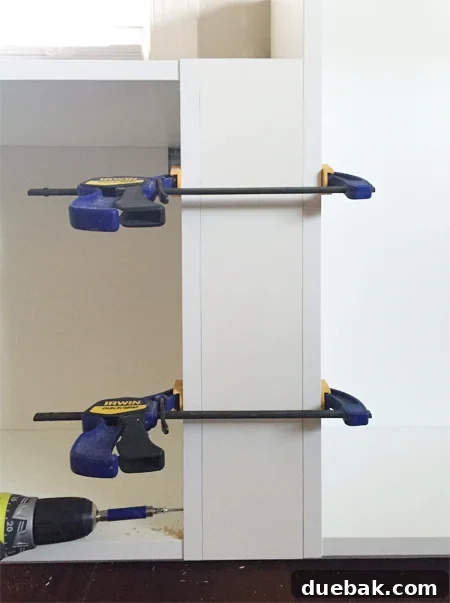
Beyond filling the gaps between cabinets, it was also critical to add a filler piece on either side of the window. Without these, the metal rail system and the exposed sides of the cabinet boxes would be visible, undermining the custom aesthetic. We were fortunate that a helpful Ikea associate, upon reviewing our plan, suggested we purchase two extra filler pieces, which proved invaluable for this exact purpose. While you might feel a sense of accomplishment at this point, remember, you actually have a second, equally important layer of filler pieces to add next!
Step 6: Add Second Layer of Filler Pieces
While the first layer of filler pieces effectively closed the gaps between the cabinet boxes, those pieces were flush with the cabinet frames themselves, not with the cabinet doors. This distinction is crucial, as the doors and drawer fronts protrude slightly from the cabinet boxes. To achieve the truly custom, high-end built-in look we desired, where the entire unit appears to be a single, cohesive piece of furniture, a second layer of filler pieces was absolutely necessary.
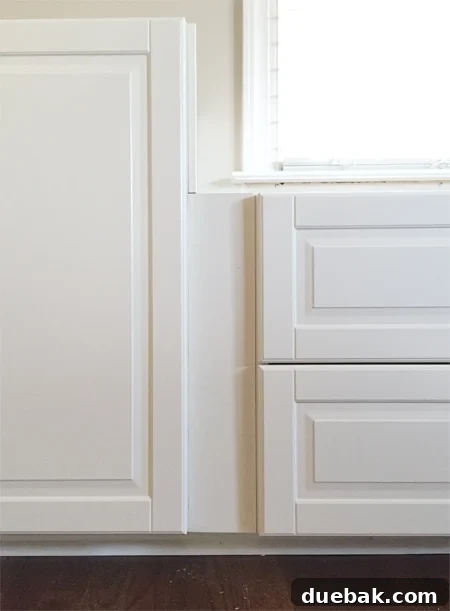
This second layer of wood pieces is designed to mimic the profile and projection of the cabinet doors. This step can be a bit more intricate, depending on the specific style of your cabinet doors. For our BODBYN doors from Ikea, which feature a subtle bevel on their edges, we used a sander to create a similar beveled effect on the edges of our wooden filler pieces. This attention to detail ensures that the filler pieces don’t just bridge gaps, but visually integrate with the doors themselves, enhancing the bespoke feel.
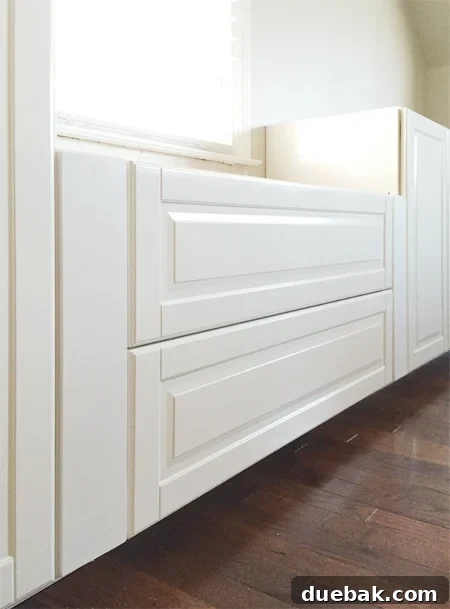
We carefully glued these precisely cut and profiled pieces into place. Alternatively, one could nail them in and then fill the nail holes for a similarly seamless finish. Once all the filler pieces were securely attached, the entire built-in unit was ready for its final transformation through paint. We chose Valspar’s “Soft Wood” at Ace Hardware, a shade we discovered via Pinterest to be an incredibly close match to the specific white used on these Ikea BODBYN doors. This meticulous painting step ensures that the filler pieces disappear, making the entire built-in truly look like one custom-fabricated unit.
Step 7: Add Toekick or Baseboard
With the cabinet boxes and filler pieces firmly in place, the next step involves finishing the base of the built-in unit. While it might be challenging to fully appreciate this detail in our photos due to the relatively low height of our cabinets (a direct result of the low window sill we were working with), adding a toekick or baseboard is a critical step for a polished, integrated look.
We opted to install a baseboard directly under the cabinets. This piece not only conceals the custom-built bases (constructed from 2x4s in Step #3) but also ties the built-ins seamlessly into the existing trimwork of the room. The 2x4s we used for the custom bases provided a perfect, sturdy surface for nailing the baseboard securely. In our specific case, the low height necessitated ripping the baseboard a bit narrower on our table saw to achieve the correct proportion. However, if your cabinets are installed at a more standard height, this extra step of narrowing the baseboard likely won’t be necessary, and you can simply install a standard-sized toekick or baseboard directly.
Step 8: Add Custom Counters
The countertop is the crowning jewel of any cabinet installation, and for our built-in unit, it was essential to choose a material and finish that would enhance the custom aesthetic. We initially considered various options, including stained wood counters, as depicted in our Photoshopped renderings during the planning phase. However, after careful deliberation, we decided that maintaining an all-white scheme would best contribute to the airy, seamless, and integrated feel we were aiming for in the bonus room.
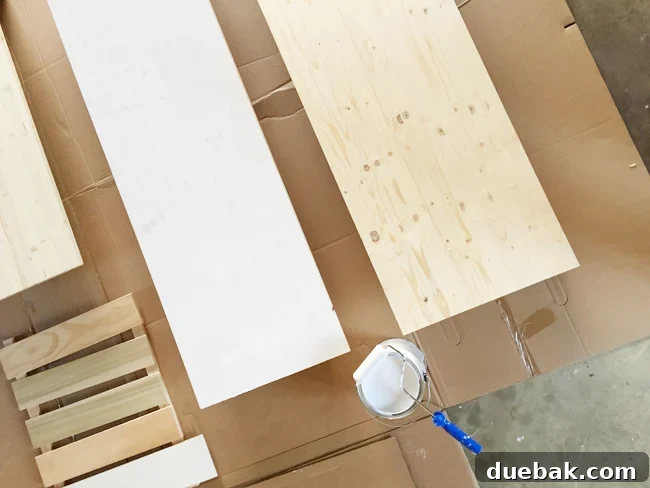
To create our custom countertops, we sourced durable wood project panels from Lowe’s. These panels were specifically chosen for their adequate depth and width, ensuring they would fully cover each section of our cabinets and provide a substantial, finished surface. Once cut to size, we meticulously primed each panel to ensure optimal paint adhesion and then applied multiple coats of “Soft Wool” paint. This ensured the counters perfectly matched the custom-painted filler pieces and integrated flawlessly with the white Ikea cabinet doors, creating a cohesive and polished look throughout the built-in unit.
After allowing the painted counters to fully dry and cure – a crucial step for durability – we securely fastened them in place. This was achieved by screwing them from the inside, through the top supports of each cabinet box, ensuring a strong and invisible attachment. For longevity and to prevent any premature marks or damage, we strongly advise letting your newly installed and painted counters cure for a few days before placing any heavy objects or engaging in regular use.
Step 9: Add Cabinet Hardware (Optional)
The final touch that truly elevates the built-in cabinets from functional storage to a statement piece is the addition of carefully selected hardware. While optional, cabinet pulls and knobs can dramatically enhance the aesthetic appeal and usability of your new storage unit. For our project, we chose matching pulls for each door and drawer, adding a sophisticated and consistent finish.
If you’re looking for guidance on this step, we have a detailed tutorial on installing cabinet hardware, complete with a video demonstration, to help you achieve perfectly aligned and functional pulls or knobs.
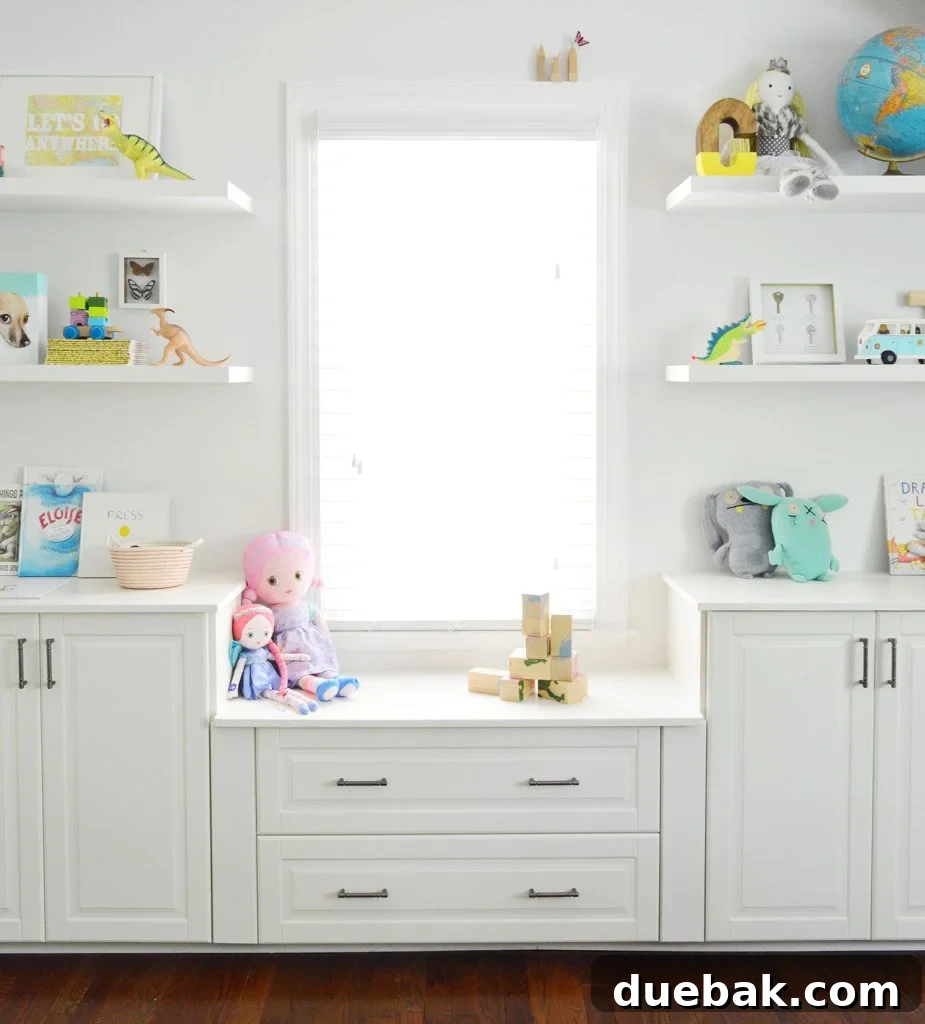
With the built-in cabinets now fully complete and gleaming, our attention naturally shifted to the finishing touches that would tie the entire window niche together. The DIY floating shelves, which perfectly complement the lower cabinets, were the final elements needed to call this impressive feature wall truly finished! The combination of custom-looking cabinets and integrated shelving creates a cohesive, functional, and visually stunning focal point in our bonus room.
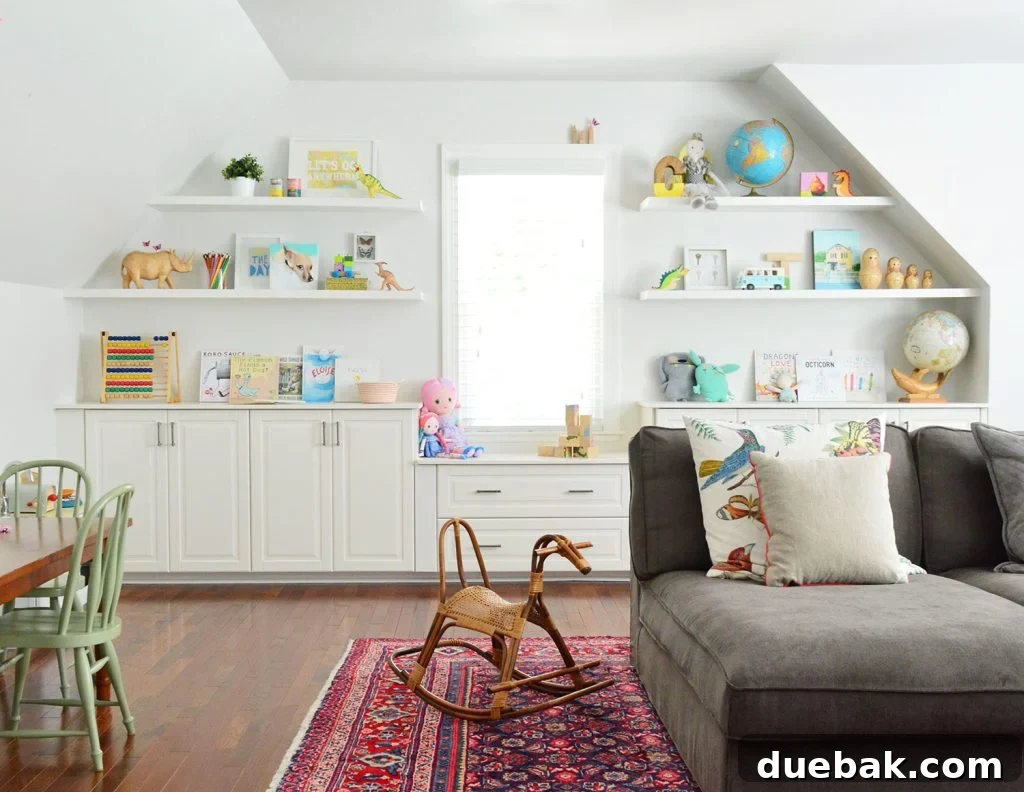
For a complete overview of how this entire space came together, including all the exciting before and after photos of our transformed bonus room, be sure to explore our dedicated post on the full room renovation. You’ll see how built-in storage played a pivotal role in creating a highly organized, beautiful, and inviting new area in our home.
More Built-In Cabinet Inspiration
The beauty of the “built-in” approach is its versatility and the incredible impact it can have on any room. We’ve applied similar cabinet transformation techniques in a variety of spaces throughout our home, proving that with a little creativity and strategic use of stock cabinets, truly custom storage is within reach for anyone. If you’re eager for more ideas and inspiration to tackle your own built-in projects, we encourage you to explore some of our other successful transformations below:
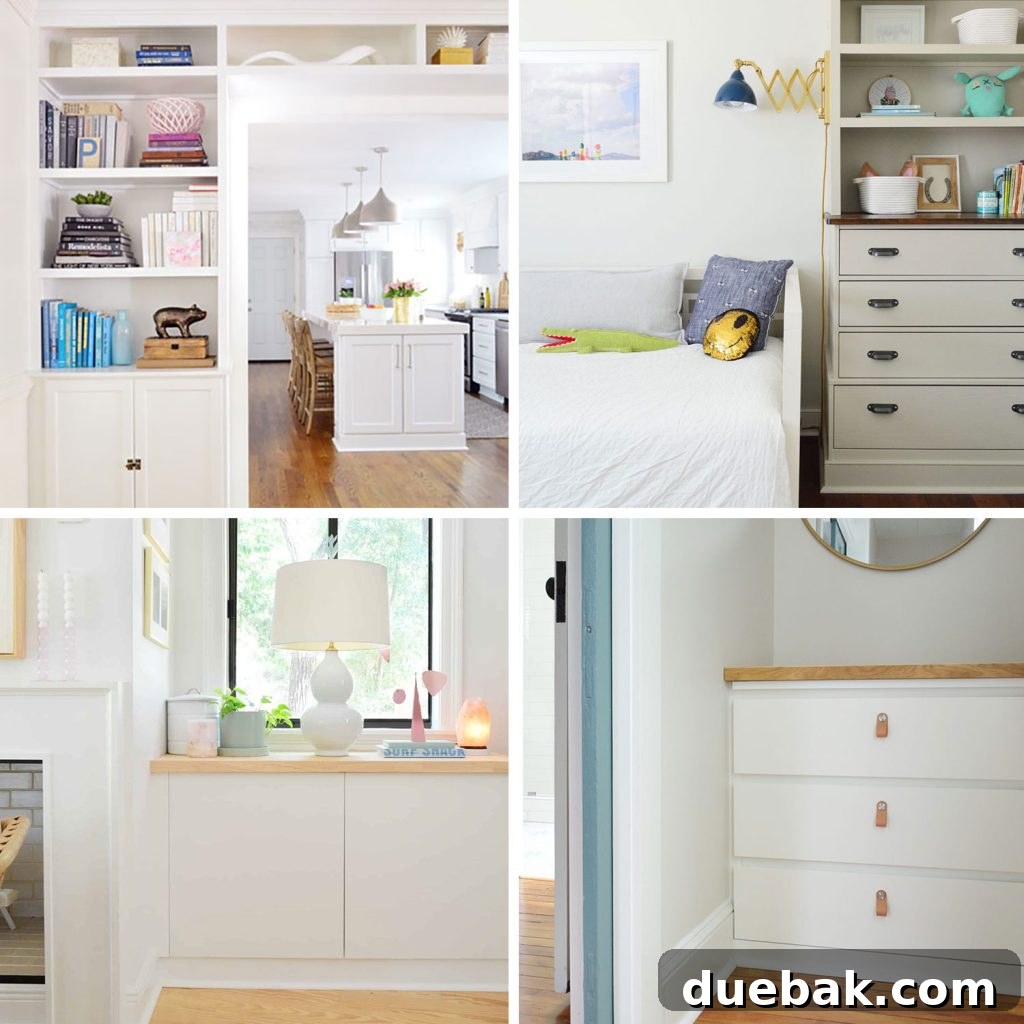
- Ikea Besta Hack Into Built-In Cabinets: Discover how to transform standard Besta units into sleek, custom-looking wall storage.
- Built-In Bookshelves Using Stock Cabinets: Learn to create impressive, library-style bookshelves that frame a doorway, using readily available components.
- Turning Ikea Dressers Into Bookshelf Bases: See how ordinary Ikea dressers can become sturdy, integrated bases for custom shelving units.
- Built-In Dresser Out Of An Ikea Malm: A clever hack to integrate an Ikea Malm dresser seamlessly into a wall, creating a custom storage solution.
- How to Make Ikea Pax Wardrobes Look Built-In: Master the techniques to give Ikea Pax wardrobe systems the appearance of expensive, custom-designed closets.
*This post contains affiliate links, so we may earn a small commission when you make a purchase at no additional cost to you.