

Designing the Dream: Planning Our Beach House Kitchen Renovation for Style and Function
Embarking on a kitchen renovation is always an exciting, albeit sometimes daunting, journey. For us, the beach house kitchen represents our seventh such project, building on a wealth of experience gained from transforming three of our own homes (including our personal favorite bright white kitchen remodel), a 2014 showhouse, a spec house in 2016 (where we absolutely adored the blue tile), and a recent local teachers’ lounge makeover. Despite this extensive portfolio, the sheer volume of decisions involved in a kitchen remodel—from optimal layout and storage to lighting choices and budget adherence—can still feel overwhelming. Yet, it’s a challenge we embrace, knowing that a well-designed kitchen can be one of the most impactful improvements to any home.

As we draw closer to the highly anticipated installation of our beach house kitchen, a significant milestone that feels like the light at the end of a long tunnel, we wanted to share the comprehensive steps and invaluable kitchen planning tools that guided our design process. This renovation is not just about aesthetics; it’s about crafting a space that is both beautiful and highly functional for a weekly vacation rental, balancing durability with a welcoming, relaxed atmosphere. The journey from initial concept to a near-finished space has been filled with thoughtful choices, countless revisions, and a consistent focus on creating a memorable experience for future guests.
From Demolition to Dream: The Evolution of Our Beach House Kitchen Space
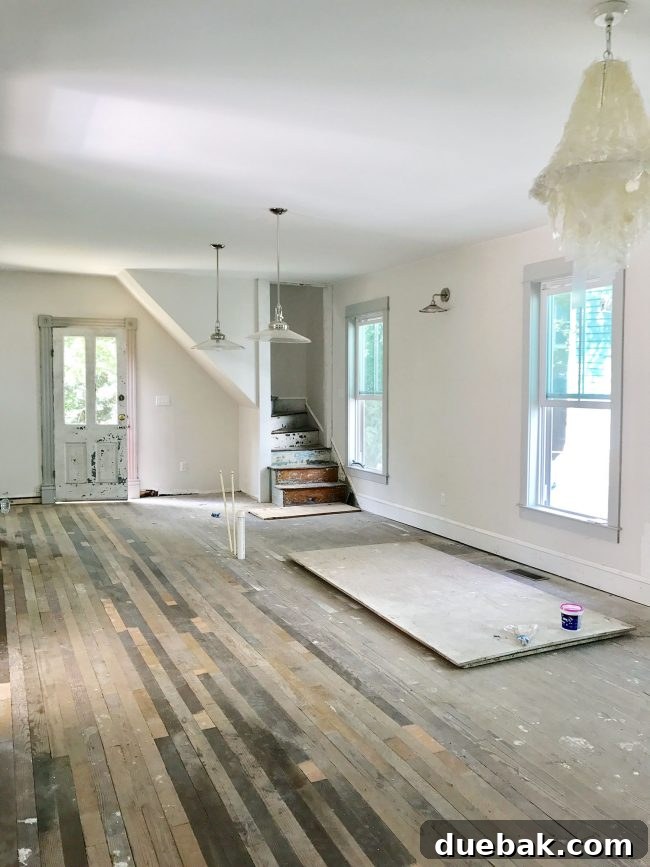
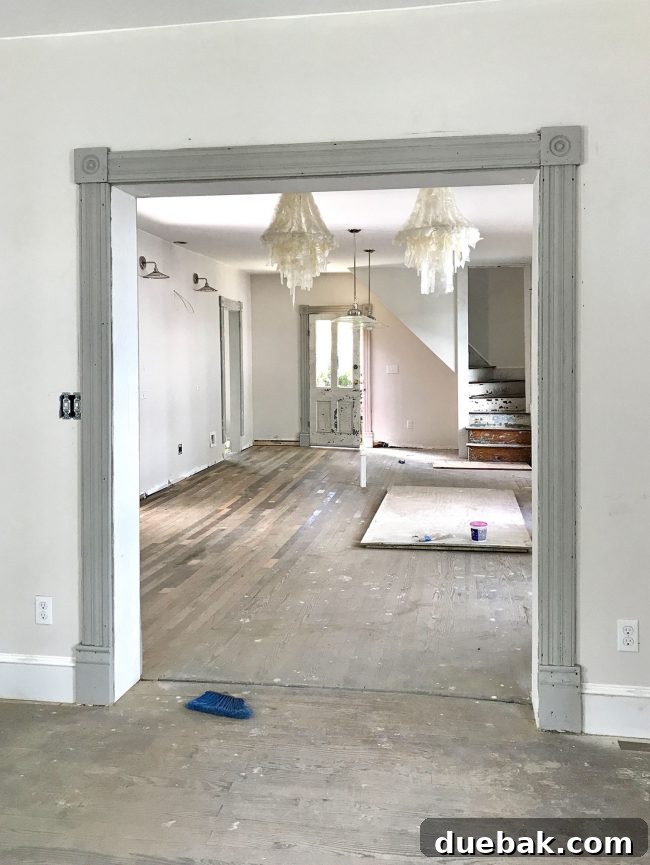
Just last week, the space began to truly take shape. The lights are now expertly hung, fresh paint is being applied to the trim, and the original floor holes have been meticulously patched with matching reclaimed pine. Soon, after sanding and sealing, we’ll be ready to commence the much-awaited kitchen installation. The transformation is striking, a testament to the detailed planning that began last year, far removed from its initial state.

The earliest stages involved significant structural changes, as captured in this striking “before” photo:

While we won’t revisit every detail of our extensive floor planning—which involved tearing down and repositioning walls for optimal flow—the resulting layout is where our kitchen design truly began. You can see the culmination of our efforts in the schematics below, with the kitchen prominently positioned in the upper left. This initial vision, though sketched in Photoshop and not precisely to scale, laid the critical groundwork for ordering cabinetry and shaping the heart of our beach house.

Harnessing IKEA’s 3D Kitchen Planner for Precision Design
Once the foundational layout was established, our next crucial step was to transition from rough sketches to precise measurements. Given our decision to source cabinetry from IKEA, their free 3D kitchen planning software became our indispensable tool. While it may not boast the most intuitive interface (as explored in detail in this earlier post), it is unparalleled for accurately planning and ordering specific IKEA products. We’d previously leveraged it for our laundry room cabinets and bonus room built-ins (shown below), both of which yielded highly satisfactory results. This track record made IKEA a clear choice for achieving a stylish yet cost-effective kitchen in our beach house.


The software allowed us to experiment with various ideas and layouts, most notably the debate between incorporating upper cabinets or opting for open shelving. Ultimately, we decided against upper cabinets. We’re strong advocates for the visual appeal of open shelving, and the rendered design with traditional uppers, even in white, felt overly heavy. Our goal for this beach house kitchen is balance and an airy, welcoming feel, avoiding a sense of being “left-heavy” with too much visual clutter on one wall. Furthermore, as a vacation rental, the kitchen wouldn’t be subject to months of continuous living, meaning ample storage for vacationers could be achieved with base cabinets and additional units flanking the back door, without the need for uppers. The rendering below showcases this decision, though it’s important to remember the IKEA software doesn’t allow for non-IKEA products, so our specific appliances and custom shelves aren’t depicted perfectly here.
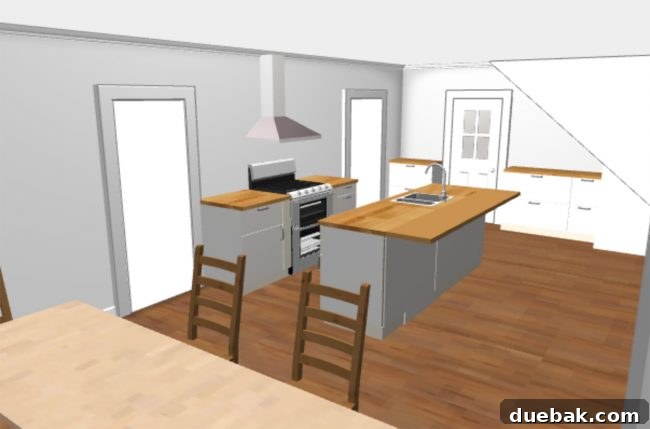
One inherent challenge with the IKEA software is its limitation to proprietary products. This meant we couldn’t accurately render our specific 40-inch pink vintage stove or the precise dimensions of our chosen refrigerator. Similarly, achieving the desired look for open shelving within the tool proved difficult. These minor imperfections in the renderings serve as a reminder that a tool like Google SketchUp, which allows for greater customization, might be worth revisiting. Despite these small compromises, the renderings were invaluable for visualizing the overall cabinet layout and flow, providing a solid foundation before committing to an order.
From Virtual to Reality: Confirming the Layout and Finalizing Finishes
Before placing our order, we took a crucial step: mapping out the kitchen elements loosely in real life. This involved using stand-ins for key pieces, like simple wood scraps on the floor to represent the island. This hands-on approach allowed us to physically verify clearances and ensure the planned layout felt comfortable and functional within the actual space. Sometimes, what looks good on a screen needs a real-world confirmation.

Given the limitations of digital renderings in conveying true finishes, we created detailed mood boards to solidify our aesthetic direction. This visual collation of materials, colors, and textures was essential to ensure all elements harmonized beautifully. The final mood board, which we’ll break down further, reflects our commitment to a casual, unfussy, and relaxed beach house vibe. Our initial inspiration, particularly the image of flat-fronted cabinets (similar to #7 below), guided us towards a look that felt distinctly “chill” yet refined, moving away from overly formal or uptight aesthetics often found in more traditional kitchens.
1. Vintage Pink Stove / 2. Modern Faucet / 3. Stainless Steel Hood / 4. Elegant Sconces / 5. Island Pendants / 6. IKEA Oak Countertop (Inspiration Pic) / 7. VEDDINGE Cabinet Doors / 8. LG Bottom Freezer Fridge (Inspiration Pic)
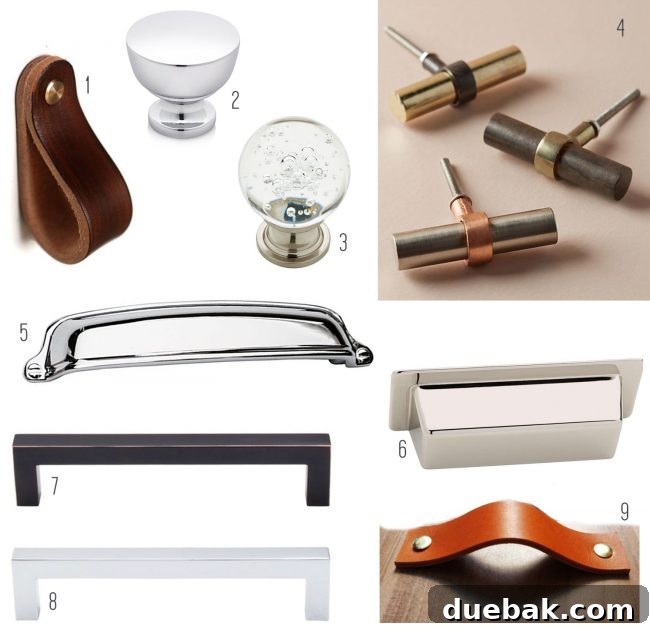
The flat-fronted cabinets were a revelation. Initially, we associated them with overly modern or even commercial aesthetics, evoking memories of 90s school cafeterias. However, after extensive research and inspiration-hunting on Pinterest, we became firm converts for the beach house. This style perfectly aligns with the clean lines and understated elegance we envisioned. Notably, four out of five of our initial inspiration photos also featured kitchens without upper cabinets, further reinforcing our inclination towards an open, visually expansive design. Hardware selection is still pending, awaiting the full installation to ensure the perfect complement. We’re considering options ranging from stylish leather pulls, which are trending with flat-front designs, to classic wood knobs that would echo the home’s existing vintage charm. Holding samples in the finished space will undoubtedly clarify the best choice. Here are a few contenders:
Our inspiration also heavily drew from Orlando’s kitchen reveal on Emily Henderson’s blog. Its timing was perfect, helping us finalize our decision to use butcher block countertops. In fact, we switched our plans last minute to secure the exact IKEA oak veneer butcher block he chose, even ordering extra to craft matching floating shelves. Butcher block for a rental property often sparks debate, but its affordability—a fraction of the cost of stone—and the ability to sand and refinish any wear and tear were compelling advantages. Unlike expensive stone slabs that can permanently crack or scratch, butcher block offers a forgiving and repairable surface, which is ideal for a high-traffic rental. We’ve gathered invaluable advice from our community on sealing and treating butcher block for longevity, which we look forward to sharing, along with honest updates on its performance over time.
Orlando’s kitchen also alleviated our concerns about the chosen refrigerator, an LG 10 cu. ft. bottom freezer model. With limited space, we worried a smaller fridge might appear cheap, but seeing it beautifully integrated in his design confirmed it was the perfect fit.
Budget-Conscious Design: Saving Big with IKEA’s Kitchen Event
Many of these pivotal decisions were locked in around April, serendipitously coinciding with IKEA’s semi-annual Kitchen Event Sale. This timing proved incredibly advantageous, as detailed in podcast episode #52. The total cost for our cabinets and countertops would have originally been around $3200, but a generous 20% discount on the entire order saved us approximately $600, bringing the grand total closer to $2,600. This impressive saving included not just the cabinetry, but also the sink, soft-close drawers/doors, and even a convenient pull-out trash can – a significant win for our budget-friendly approach.
Illuminating the Space: Our Strategic Kitchen Lighting Choices
Even with major items secured, the lighting scheme required meticulous consideration. As a self-proclaimed lighting “over-thinker,” John Petersik was determined to achieve both optimal brightness and a cohesive aesthetic. Our first decision was to forgo recessed can lighting. While practical in many modern homes, we felt it would detract from the authentic, 100-year-old character of the house, appearing too “new.” The expansive kitchen and dining room ceiling, a beautiful architectural feature, called for lighting that would enhance its charm rather than puncturing it with numerous glowing circles. In past kitchens, recessed lights often provided the primary functional illumination, with pendants offering task and accent lighting. However, for the beach house, our chosen fixtures—two island pendants, three sconces, and two dining table lights—would need to fulfill all lighting roles. This led to a critical rule: eliminate anything with a solid shade. Every bulb needed to cast light in all directions, avoiding downward-only illumination. This immediately ruled out styles like the pendants in our primary residence, which, while beautiful, wouldn’t meet the beach house’s specific requirements.
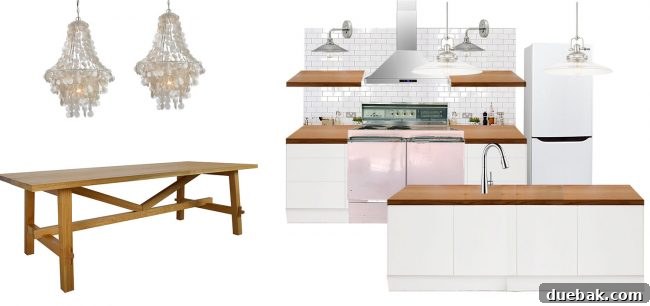
Even with the “no solid shades” rule, a multitude of options remained. To narrow our choices, we created mock-ups, integrating potential lights with the kitchen’s other elements. The initial graphic (below), featuring sconces and pendants with solid shades, was an early discarded idea, but invaluable for visualization. The subway tile backsplash in the mockup served as a neutral backdrop, allowing us to focus solely on the lighting’s impact.
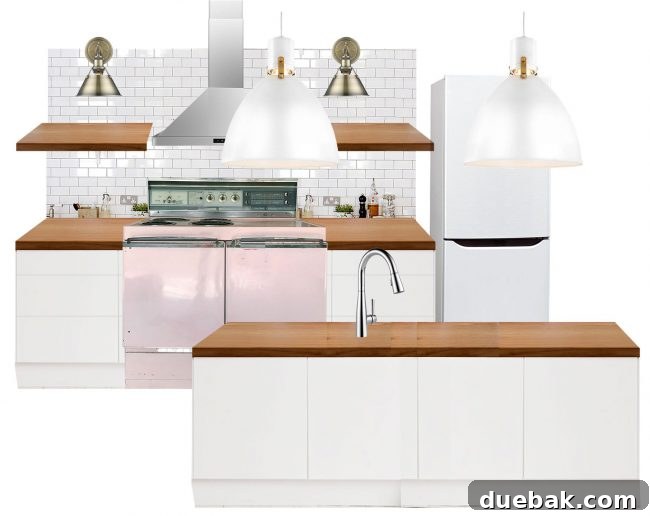
We explored various multi-light pendants, but many were eliminated for being stylistically incongruent (e.g., these felt too modern) or disproportionately large, dwarfing the island or exceeding our budget. Lights we might typically adore, such as those from Ballard Designs, felt too traditional once mocked up alongside our vintage pink stove, which dictates a more casual, fun aesthetic.

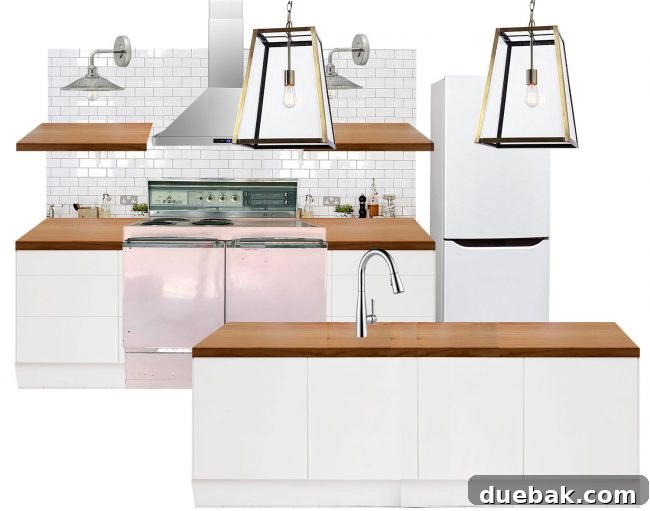
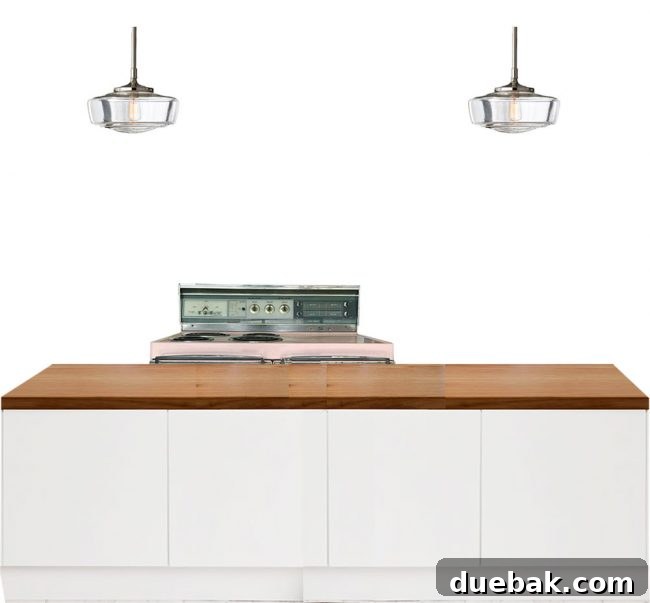
Scale proved to be another critical factor. We initially fell for these beautiful schoolhouse-style lights, drawn by their glass shades, vintage appeal, and finish.

However, a 6-inch measurement in the description, even for the larger option, raised alarms. My initial rendering was not to scale, so I created a new version to accurately represent the lights’ size in proportion to the eight-foot island. This exercise (pun intended) illuminated the problem: they were undeniably too small.
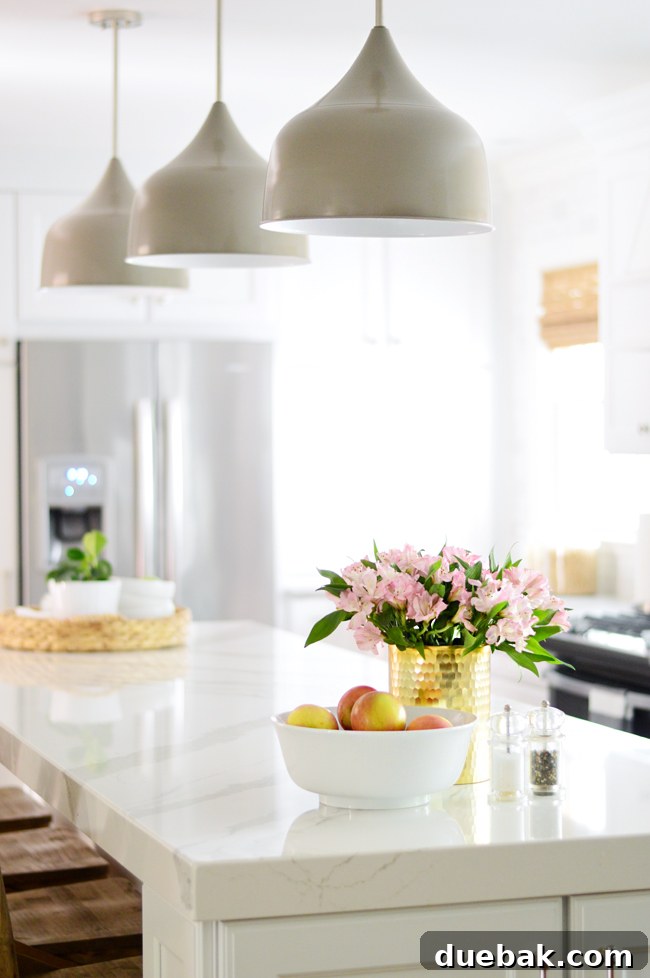
Ultimately, we chose the lighting you saw in our main mood board. The 15-inch wide pendants, with their clear glass shades, fulfill our requirement to cast light in every direction. They provide a significant visual presence without feeling heavy, instantly bringing the room closer to completion. They almost seem to anticipate the island, cabinets, and appliances yet to come.
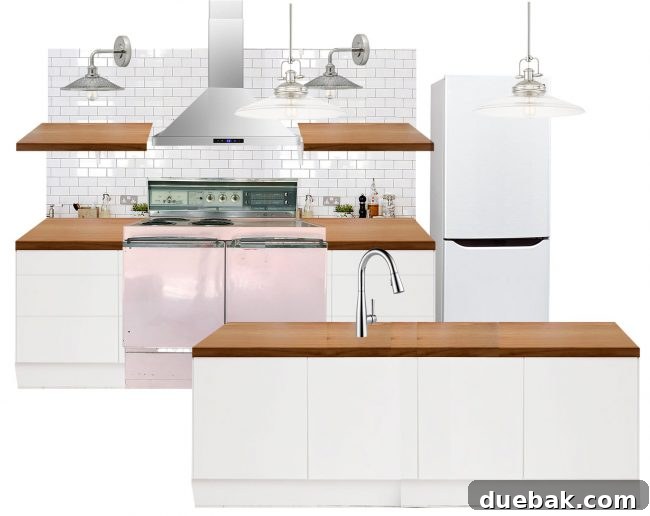

The sconces feature wire mesh shades, allowing light to diffuse beautifully, exactly as we envisioned. We recently saw them illuminated in a showhouse and were thrilled with their effect. This detail, visible in the accompanying image, confirms their perfect fit for our design (with one more sconce positioned across the room, as seen in the second photo of this post).

Extending the Design: Dining Area Lighting and Final Touches
Our mock-ups also extended to the adjacent dining area, ensuring visual harmony with the kitchen. Naturally, it had to include a pair of capiz pendants – after all, a beach house wouldn’t be complete without Sherry’s favorite material. We opted for two smaller lights over the dining table instead of a single large chandelier to avoid an awkward intersection with the kitchen lights when viewed from the living room couch. This choice also offered a playful departure from a traditional, singular fixture. Currently, these capiz pendants are still wrapped in their protective plastic, awaiting their grand unveiling and final adjustment to their intended height, once the dining table is in place.
We’re now in the final stages, heading back to the beach house to complete the restoration of the upstairs tub and oversee a few last floor repairs. With only minor items left on the to-do list, such as finishing a railing for the back stairs, the crucial floor sanding and sealing can soon begin. Following that, the exciting process of bringing this thoughtfully planned kitchen to life will finally commence. And frankly, we’re just as eager to clear those IKEA boxes out of our garage!
Psst- You can read all about our past progress at the beach house by clicking into Our Beach House category.
*This post contains affiliate links