
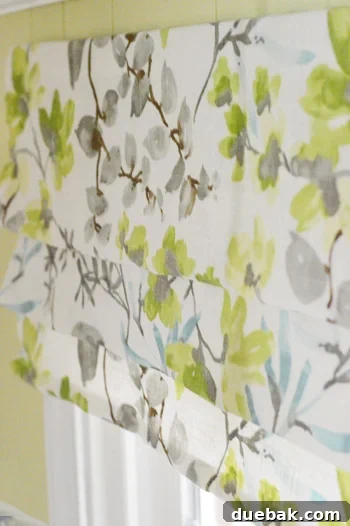
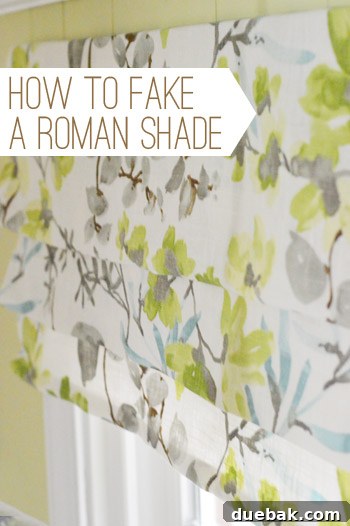
DIY Faux Roman Shade: Transform Your Kitchen Window with an Easy No-Sew Method
Are you dreaming of adding a touch of elegance and warmth to your windows without the hassle of complicated sewing or the need for functional blinds? If so, you’re in for a treat! We’re diving into the simple yet incredibly effective world of faux roman shades – a fantastic DIY project that delivers maximum style with minimal effort. Whether you have a bare window begging for some fabric love or simply want to enhance your existing decor, this no-sew approach to creating a fixed roman shade is perfect for anyone looking to elevate their home’s aesthetic on a budget.
I, like many of you, have a profound appreciation for the transformative power of fabric. Yet, I realized a significant gap in my DIY repertoire: I had never tackled a roman shade project. The idea of a fixed, decorative roman shade, specifically designed to add visual appeal without the need to open or close, was incredibly appealing for a particular spot in my home. This tutorial will walk you through how I achieved this sophisticated look, completely custom-made, and surprisingly easy to execute.
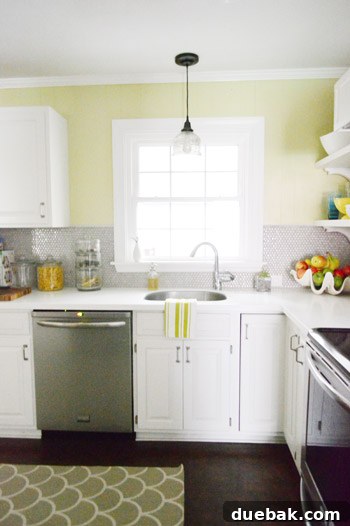
Consider this kitchen window: wide open, inviting light, but undeniably bare. It screamed for a decorative element. This particular window connects our kitchen to the sunroom, meaning there was no functional requirement for a shade that needed to be drawn up or down. This made it an ideal candidate for a faux roman shade. If you’re someone who appreciates natural light and rarely adjusts your blinds – as was the case with all the bamboo blinds in our previous home which always remained open – then a fixed, decorative shade could be the perfect solution for any room, offering style without compromising light.
Crafting Your Custom Faux Roman Shade: A Step-by-Step Guide
This project was a journey of creative improvisation, as I didn’t follow a specific tutorial but rather made it up as I went along. The result, however, was a perfectly tailored and stylish window treatment. Here’s a detailed breakdown of how you can create your own.
Step 1: Precise Measurements and Fabric Cutting
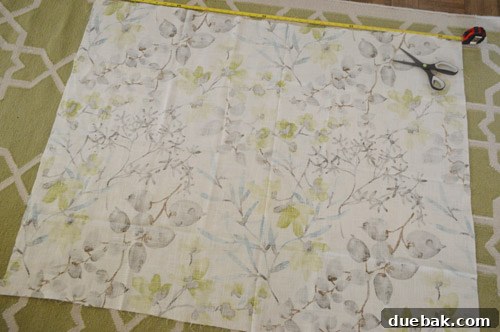
The first crucial step is to accurately measure your window. For my kitchen window, I aimed for a finished shade that was approximately 47 inches wide by 18 inches long. To account for hems and the characteristic looping folds of a roman shade, I cut a rectangle of fabric that was 49 inches wide (allowing an extra inch on each side for hemming) and a generous 30 inches long. The additional length is vital for creating the elegant, billowed folds that give a faux roman shade its distinct look. Remember, it’s always better to have a little extra fabric than not enough!
Choosing Your Fabric: Style Meets Function
For this project, we selected ‘Gazebo Cloud’ by Braemore, a fabric that you might recognize from other decor pieces in our home. We fell in love with its pattern and texture, finding it perfectly suited for the kitchen’s aesthetic. We sourced an extra yard of this beautiful fabric from U-Fab in Richmond for just $16 during a store-expansion sale – a fantastic deal! For those not local, a similar fabric can often be found online. The choice of fabric is paramount; consider patterns and colors that complement your existing decor and material durability, especially for a kitchen environment where spills can happen.
Step 2: Effortless No-Sew Hemming
Once your fabric is cut, it’s time to hem all four sides for a clean, finished edge. I opted for a no-sew method using heavy-duty Heat N Bond iron-on tape, which is readily available at craft stores like Michaels for just a few dollars. This iron-on tape creates a strong, durable bond without the need for a sewing machine, making the project accessible to everyone regardless of their sewing skills. Simply follow the instructions on your chosen tape, pressing firmly with an iron to secure the hems. For a visual guide on using no-sew tape, many online tutorials offer excellent demonstrations. This step ensures your shade looks professional and prevents fraying over time.
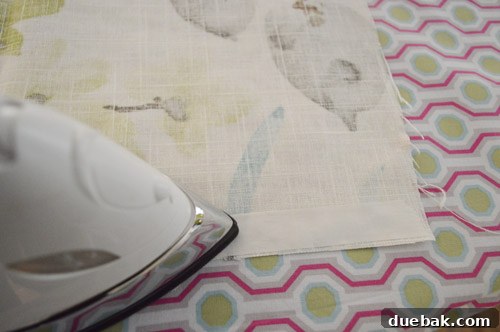
Step 3: Preparing the Wood Header for Hanging
To effectively hang the shade, you’ll need a piece of wood as a header. I cut a 1×2 inch scrap piece of wood to the exact finished width of the fabric (47 inches). If you don’t have a saw or prefer not to use one, most hardware stores like Home Depot will cut wood to your desired dimensions for a small fee. Remember, safety first if you’re sawing yourself! A good tune can help pass the time – I personally enjoy the MacGruber theme song.
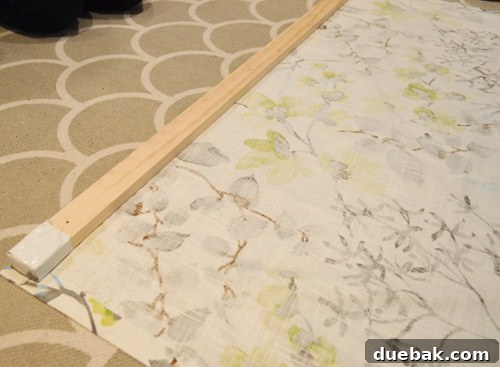
To ensure a polished look, I wrapped scrap pieces of the same fabric around each end of the wooden header and secured them tightly with white duct tape. This crucial step prevents the raw wood from being visible from the sides once the shade is installed, contributing to a truly custom and professional finish.
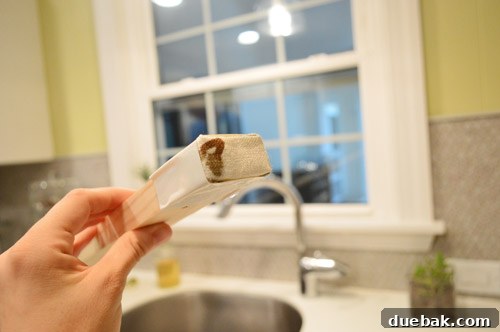
Step 4: Attaching the Fabric to the Wood Header
Next, carefully roll the top edge of your hemmed fabric around the prepared wood piece. Secure the fabric to the wood using more white duct tape, ensuring that the tape is applied to the back and bottom surfaces of the wood. This strategic placement means the tape will be completely hidden from view once the shade is hanging, maintaining a clean aesthetic. The flat, 2-inch wide side of the board that faces upwards in the photo will be the side directly screwed into the wall, further ensuring no visible hardware from the front or top.
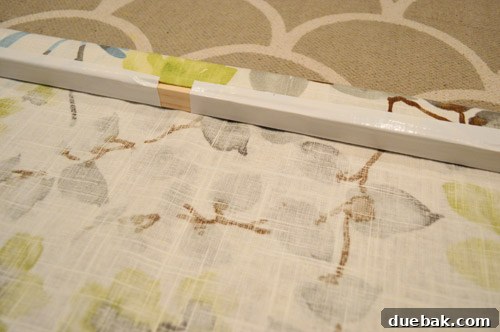
Step 5: Creating the Iconic Roman Shade Folds
This is where the magic of the roman shade aesthetic truly comes to life. Creating the characteristic fabric loops is largely an exercise in careful “eyeballing” combined with strategic use of a ruler to maintain straight lines. Laying your fabric flat on the floor, ideally lined up with a straight edge like an area rug, can provide an excellent reference point and help you keep things even.
For my shade, I created approximately 5-inch deep loops, which would form the visible folds on the front. To secure these, I folded the fabric back on itself to create the loop, then pinned it in place from the back of the shade. Notice in the photo how the fabric folds back to a point in the corner – this is where the first pin goes. Continue along this line across the entire back of the shade, placing pins to hold the loop securely. The key is to keep the loops and the corresponding pin line consistently distanced from the top wood piece to ensure a uniform and professional appearance.
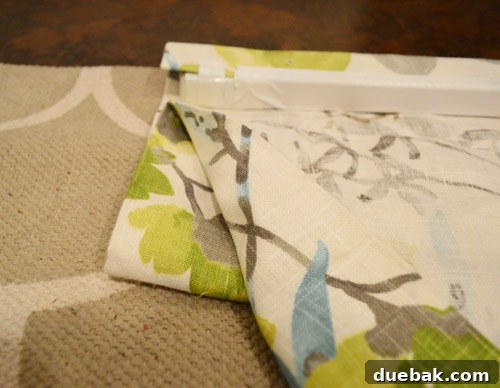
When pinning, aim to grab a substantial amount of fabric from the back (where the pins will be invisible) but only a tiny, almost imperceptible sliver of fabric from the front. This technique prevents the pins from being overtly noticeable, maintaining the illusion of continuous fabric.
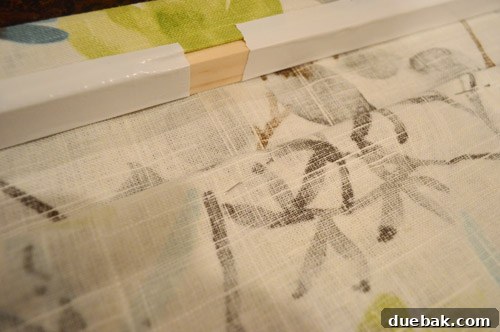
I utilized rows of pins to create two distinct folds, each roughly 5 inches apart. Additionally, I pinned the bottom of the shade to encourage it to roll up and billow out, completing the classic roman shade silhouette. This part of the process definitely involved some “noodling” – adjusting and re-pinning as I surveyed the shade from various angles. Sometimes a fold would appear uneven at one end, requiring a quick adjustment. While the cutting and hemming took about twenty minutes, the pinning and refining of the folds was the most time-consuming part, roughly forty minutes. It wasn’t an instant fix, but with a bit of patience and persistence, I achieved a perfectly lined-up and aesthetically pleasing result. The initial stress of getting it just right quickly faded as the vision came to life!
A Note on Pinning vs. Tacking
Initially, I considered “tacking” each pinned fold, which involves a few manual stitches to permanently secure the fabric. However, I worried that tacking might introduce unwanted puckering or bumps, detracting from the smooth finish. Given how securely the pins held the fabric and how robust the structure felt, I decided to leave the pins in place. This simplified the project significantly, and the result was perfectly solid and aesthetically pleasing. There’s a certain satisfaction in knowing when to call a project “done”!
Step 6: Flawless Installation and Hanging
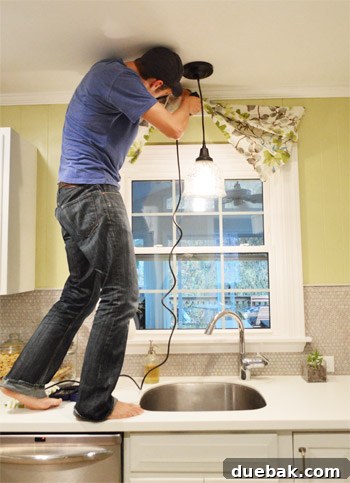
Hanging the faux roman shade is straightforward and designed to conceal all hardware. We pre-drilled three evenly spaced holes through the wooden header. The shade is then mounted to the wall using screws. The clever part is that the fabric itself is not drilled; instead, it is gently pulled aside to expose the wood, allowing the screws to directly secure the wooden header to the wall. Once the screws are in place, the fabric is released, draping elegantly over the wood and completely hiding the mounting hardware.
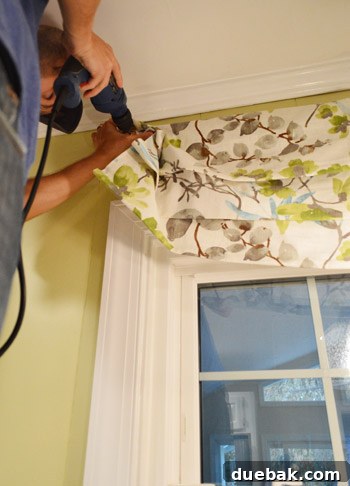
This image illustrates the process clearly: my partner, John, is lifting the fabric to expose the wood, allowing him to drill directly into the wall. Once secured, the fabric falls back into position, concealing the screws and the wooden header. This method ensures a seamless, professional finish.
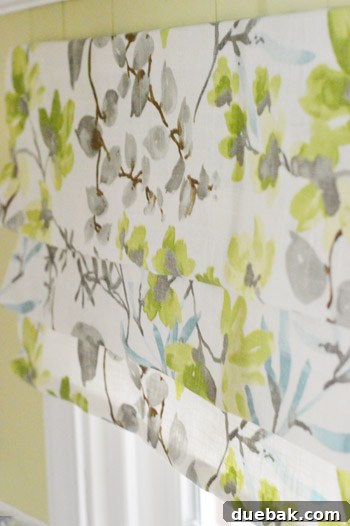
The result looks something like this:
The Impact: A Transformed Kitchen Aesthetic
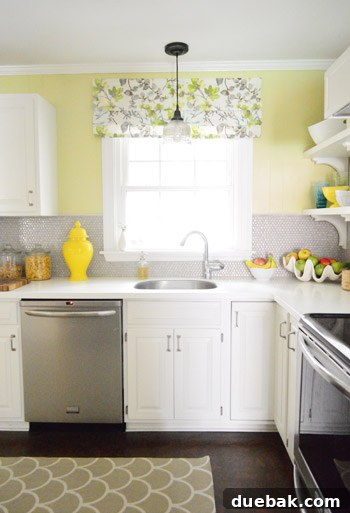
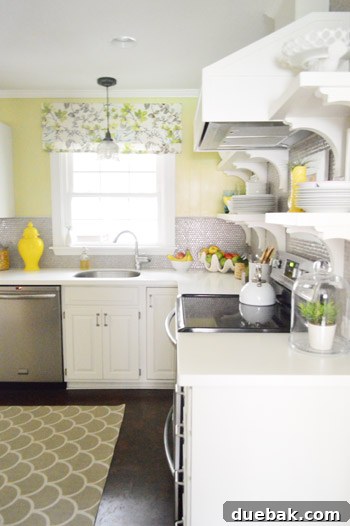
The addition of this faux roman shade undeniably completes the formerly naked window. It infuses the space with much-needed color and pattern, creating a focal point that balances other elements in the room, such as the range hood. The chosen fabric, ‘Gazebo Cloud’, is particularly effective as it masterfully ties the soft avocado wall color into the gray tile backsplash, acting as a visual bridge between the shiny penny tile, the gray rugs, and the warmer wall tones. It’s truly amazing how a simple fabric treatment can harmonize disparate elements within a room.
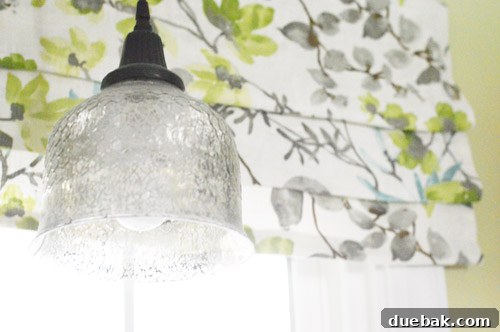
Take a closer look at this detail shot. You’ll notice there are no visible puckers, lumps, or even obvious pins. This was my main concern with tacking, and by opting for carefully placed pins, I achieved a perfectly smooth and tailored appearance. However, I’m always eager to learn from fellow DIY enthusiasts! If you’ve created a faux roman shade using a different method that yielded fantastic results, I’d love to hear about your experience in the comments.
Conclusion: An Hour, $16, and a Stunning Transformation
In summary, I am absolutely thrilled with how this project turned out. The faux roman shade makes the window feel taller, adds significant visual interest, and completely transforms the previously bare opening without blocking any precious natural light. For approximately an hour of my time and a mere $16 investment in fabric, this DIY window treatment was an incredibly worthwhile endeavor. It’s a testament to how simple, thoughtful additions can dramatically enhance the comfort and style of your home.
What home decor illusions are you currently creating around your house? Are you bringing in faux plants for greenery, styling with faux fruit, or perhaps implementing your own faux shades? Or maybe, like me, you practice “faux cleanliness” – the art of quickly stashing clutter into baskets and closets to create the illusion of pristine order amidst delightful chaos. Haha! It’s all about making your space feel inviting and beautiful, even if some of it is pure magic.
Psst- Curious about other items in our home or the specific paint colors we’ve used? Discover more by clicking the button below!