
Historic Duplex Exterior Transformation: A Deep Dive into Shutters, Doors, Awnings & More
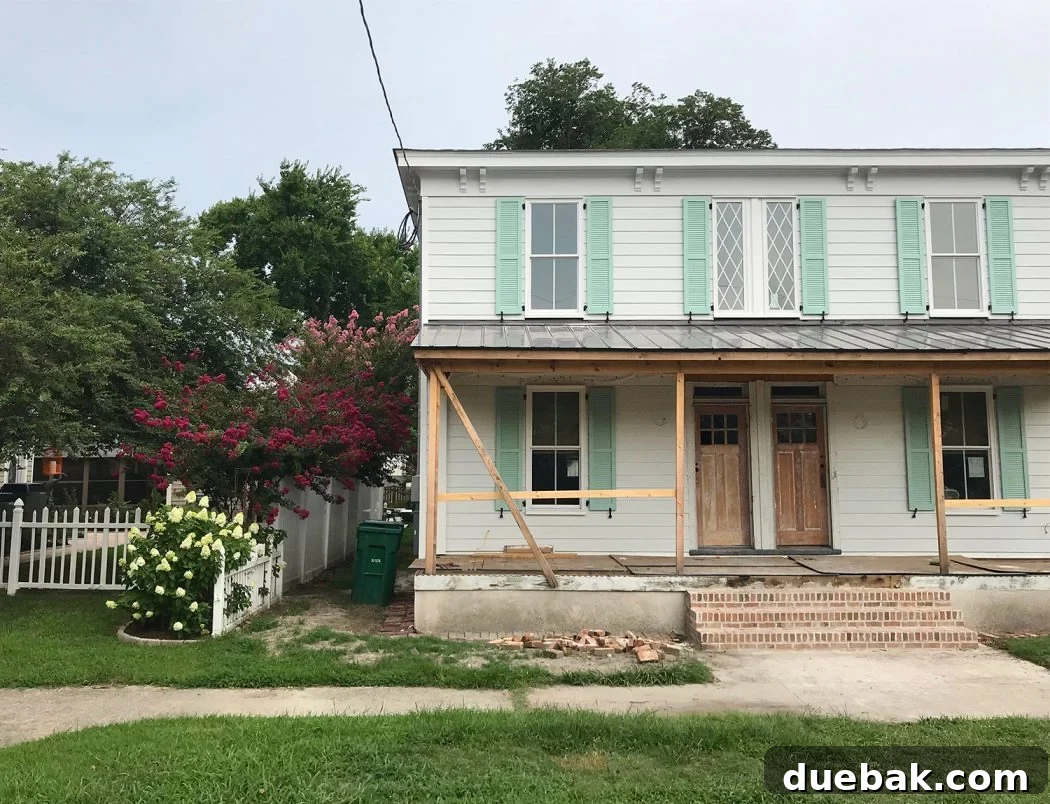
Welcome back to the blog, where we’re pulling back the curtain on the significant progress made on our duplex’s exterior. You might have caught glimpses on social media, but here, we’re delving into the intricate details and answering many of your pressing questions. Join us as we explore the journey of selecting and installing shutters, meticulously crafting new steps, incorporating stylish metal awnings, and unraveling the captivating story behind the diamond doors, among other exciting developments.

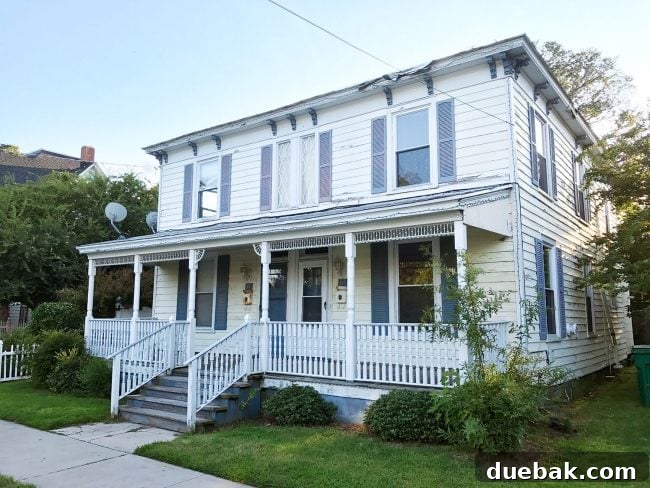
For those new to our project or simply needing a reminder, this image illustrates the initial state of the duplex before our renovation efforts began. It’s a striking contrast to its current transformation.
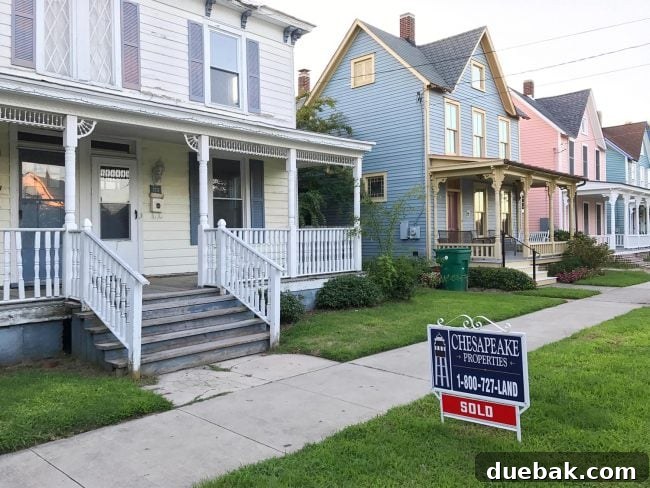
Our duplex, nestled within a town rich in history, is subject to strict historic mandates. These regulations necessitate the preservation of the home’s fundamental architectural elements: the original front doors, the precise positioning of windows, the integrity of the roofline (a significant undertaking, as we’ve previously discussed here), and the distinctive corbels adorning the roofline.
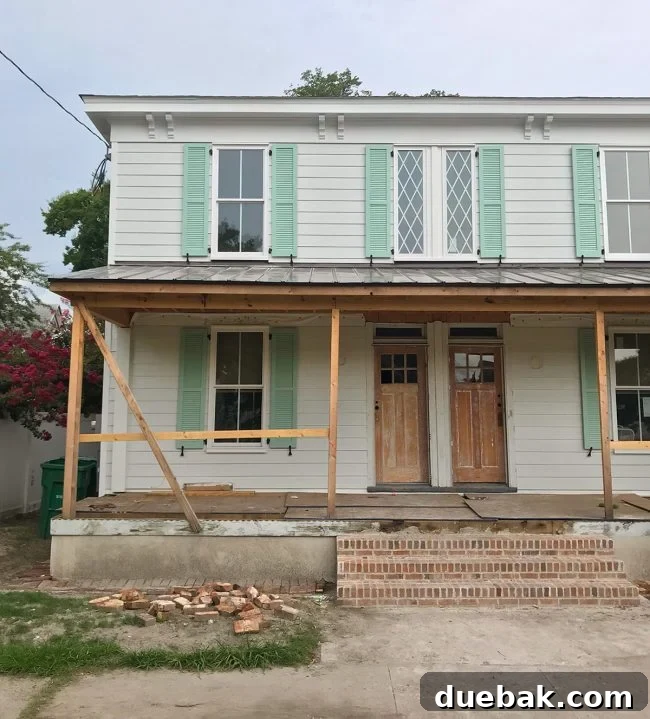
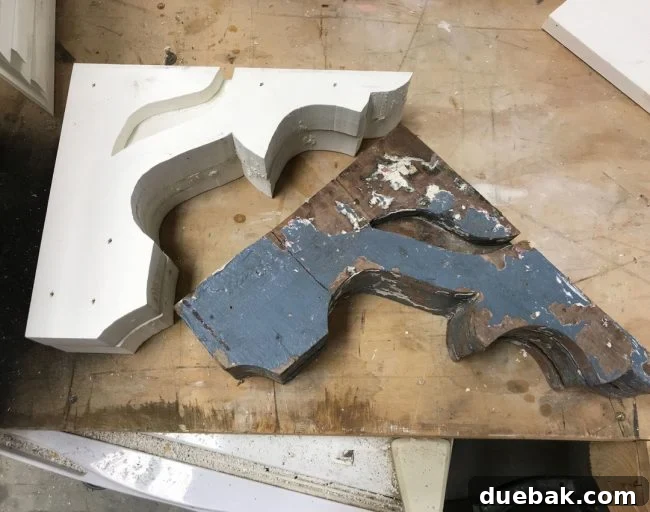
Fortunately, the historic review board granted us a crucial allowance: we could adjust the spacing of the corbels. This decision enabled us to extend them around the entire perimeter of the house, saving us from the costly and labor-intensive task of recreating numerous corbels that had deteriorated beyond repair. A fun fact from the “before” era: the duplex came equipped with not one, not two, but three satellite dishes – a true reflection of its past!
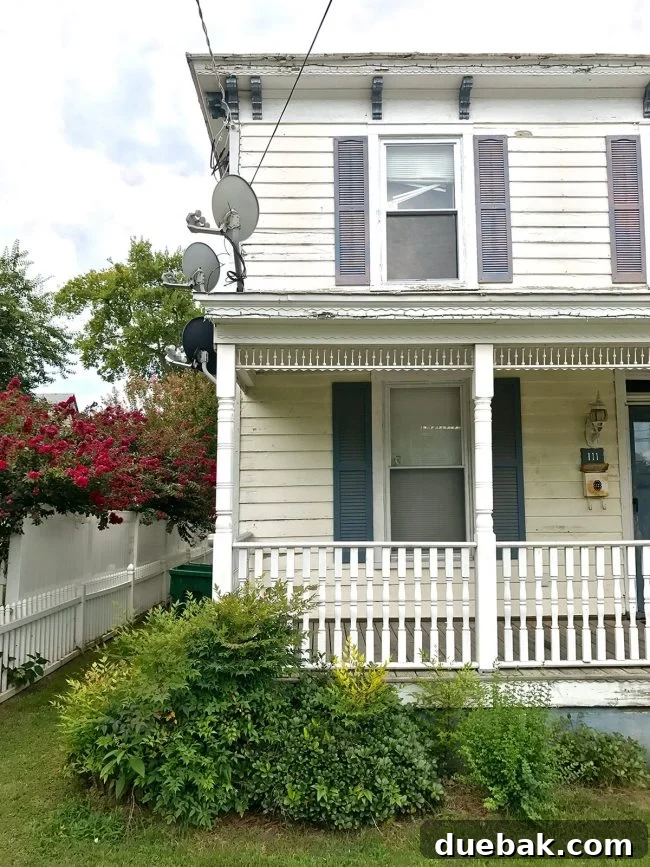
Adding to the initial charm, remnants of regular silver duct tape were visible near the roofline on the right side. More surprisingly, the beautiful diamond-paned windows, a potential source of abundant natural light, were entirely concealed by drywall within the walls on both sides of the house. Clearly, our curb appeal transformation project faced substantial initial hurdles, demanding extensive restoration and creative solutions to reveal the home’s true potential.
Many of the original exterior components of this century-old residence, such as the severely rotted siding, degraded roofing, and collapsing porch, required complete replacement. Our goal was to upgrade these elements with new, durable materials designed for longevity. We opted for HardiePlank cement board siding, renowned for its resilience and low maintenance. Furthermore, we even reconstructed several corbels using composite materials instead of wood, ensuring they would withstand the elements for generations to come. This approach was vital for pieces that were too far gone to salvage.
The very essence of the Historic Review Board, which meticulously scrutinizes nearly every exterior update, is to ensure these venerable homes become more durable and sustainable. This proactive approach prevents our charming town from succumbing to the slow decay often seen in areas with aging architecture. Virtually every house here boasts a history of over 100 years. Consequently, every renovator must meticulously adhere to the original look, style, and shape of their home, ensuring that this captivating old downtown area retains its authentic historic character and “original” feel.
Since you last saw the exterior stripped bare back in April, the transformation has been remarkable. The exterior is now nearing completion, with only the new porch floor and columns awaiting installation. However, the roofing, siding, windows, and shutters are all expertly finished, and we couldn’t be more delighted with the cohesive result. Sherry, initially skeptical of this house’s potential, now frequently expresses her admiration. I’ve even overheard her suggest that she might come to prefer the duplex’s exterior over our beloved pink house, a sentiment I never imagined hearing!
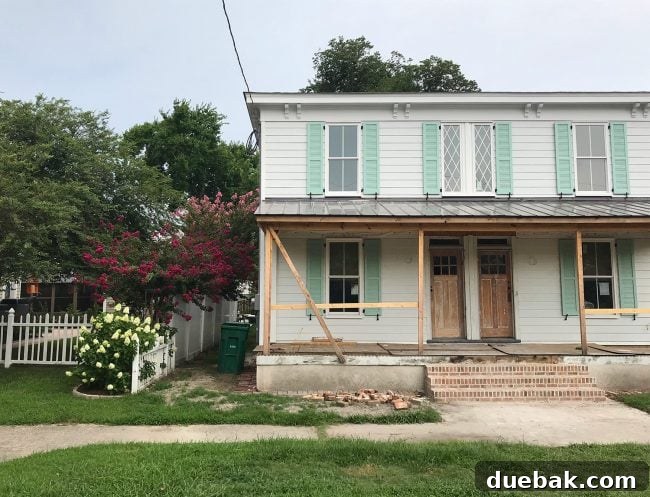
The Quest for Authentic Operable Shutters
The journey to find the perfect shutters proved to be a more involved process than we initially anticipated. Current historic mandates stipulate that shutters must *appear* to be operable. This crucial distinction meant that readily available vinyl shutters, typically priced around $60 per pair and designed for direct screwing into siding, were simply not an option. The core of this requirement lies in maintaining an authentic historic aesthetic, not in functional utility. In reality, very few homeowners in the area actually close their shutters during storms. Many houses, including our own pink house, don’t even feature shutters at all! Those that do often have non-operable vinyl shutters installed prior to the mandate, much like the periwinkle blue ones that once adorned this duplex. Ironically, we experience more severe storms in Richmond, where our own home also lacks operable shutters.
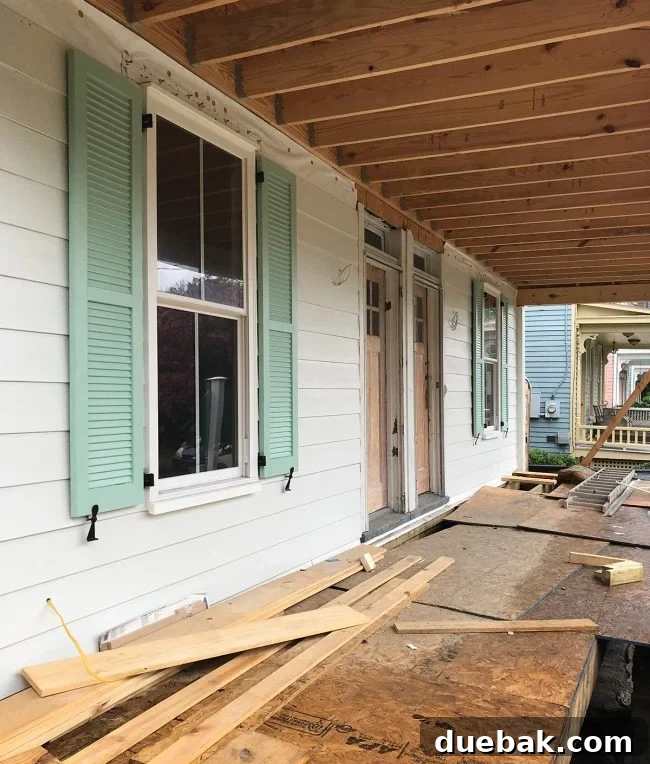
Upon receiving quotes for custom-made operable shutters from several companies, our jaws quite literally dropped. The estimates soared to approximately $1,000 PER PAIR, translating to a staggering five thousand dollars just for the front of the house. I remember needing to take several deep breaths into a paper bag after each phone call, trying to process the exorbitant cost.
For a time, we felt trapped by this seemingly unavoidable expense, given the historic mandate. Just as we were steeling ourselves to proceed, Sherry discovered these pre-primed composite shutters on Wayfair for an astonishing $250 per pair. While they required us to source hardware and undertake the painting ourselves, this price point was infinitely more palatable. In fact, our total expenditure for ten pairs, enough to adorn the entire front facade, was only slightly more than the cost of just ONE SET from the custom companies we initially contacted! It was a true moment of relief and celebration.
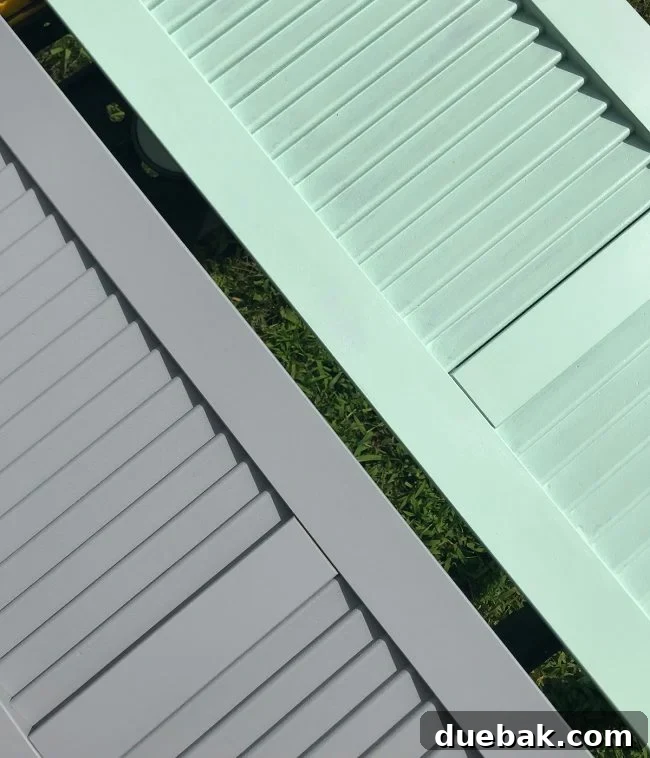
These shutters are available in a variety of sizes, and we found a size that was *nearly* perfect for our needs – specifically, the 68.5-inch tall by 15-inch wide option. They were a mere two inches narrower than what would be required for them to fully close, but we constantly reminded ourselves that the mandate only required them to *appear* operable. This wasn’t about actual functionality; it was about preserving a historic aesthetic. Indeed, very few of these historic homes have functional shutters that are ever closed by residents.
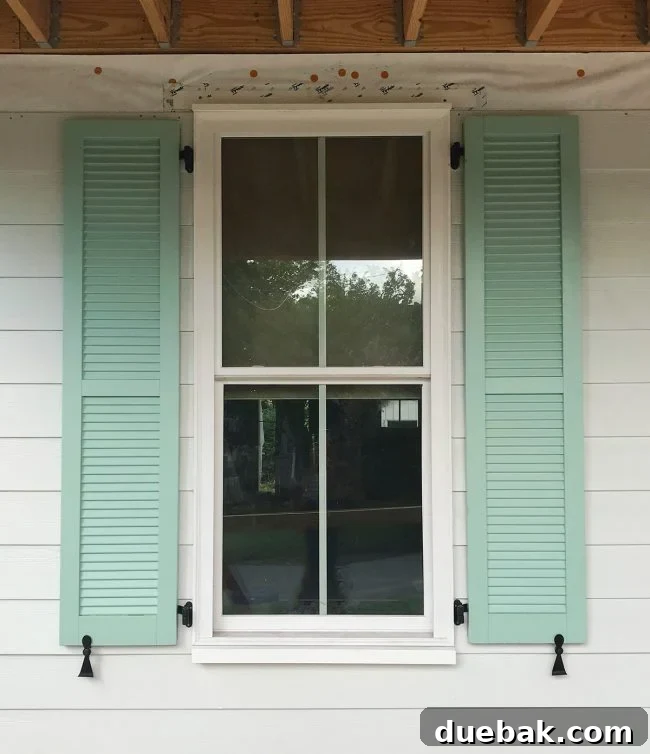
The image below provides a glimpse of what the shutters look like when closed, though we still need to paint their backs. Realistically, there’s no practical scenario where you’d see them in this position other than for demonstration photos like this one, but many of you specifically requested this view. It’s worth noting that if your primary need is for storm protection, requiring shutters that fully board up your windows, you would undoubtedly need them to be the exact width of your windows, and unfortunately, those pricier custom shutters might be your only recourse.
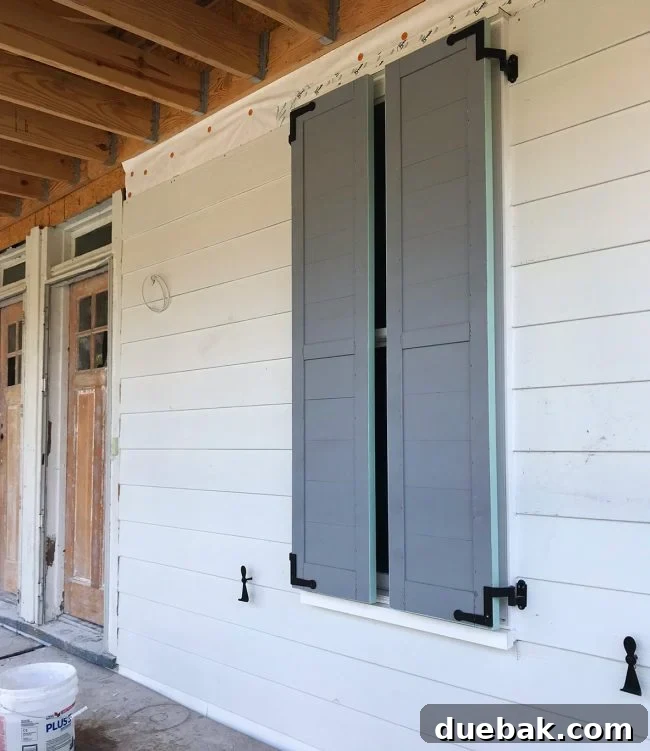
With our shutters secured, the final missing piece was the hardware. This proved to be an overwhelming task, with countless options available. Navigating the choices to ensure the hinges operated smoothly without scraping against the house, and that the swing depth prevented bumping into the window, was a head-spinning challenge.
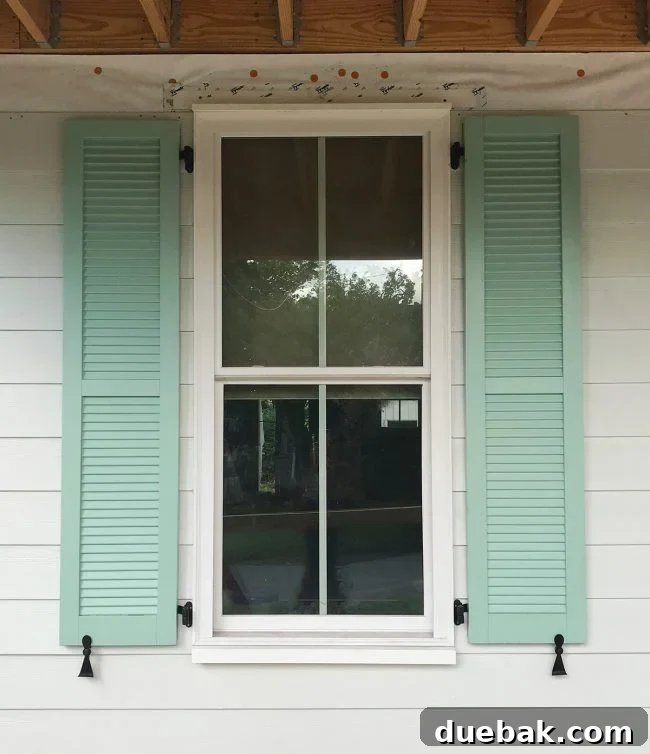
These seemingly small hardware components can significantly escalate the overall cost of your shutters. To keep our budget in check, we opted for a relatively simple approach, sourcing these specific hinges and these decorative shutter dogs, which serve to hold the shutters open. The total for all the hardware amounted to an additional $380, bringing our grand total for ten sets of these operable-looking shutters to approximately $1650. This figure excludes installation, which was part of our broader construction contract with Sean. Our decision to paint them ourselves also contributed to significant savings. This was a fantastic outcome, especially when compared to the $5000-plus we would have incurred for custom alternatives. Budget crisis successfully averted!
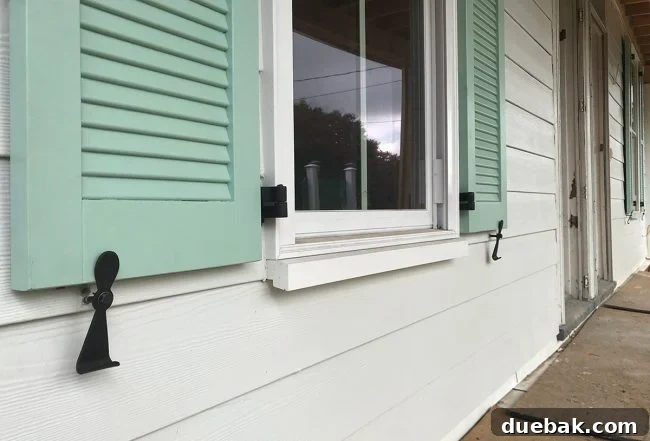
A minor installation challenge arose from the fact that operable shutters are traditionally designed to screw directly into historic wood windows, not modern vinyl ones like ours. A previous owner had already replaced the original wood windows. Drilling the hinges into the vinyl frames would have voided their warranty and compromised their energy efficiency. Consequently, we had to strategically place the hinges outside the window frame, which, thankfully, resulted in an aesthetically pleasing look.

Selecting the Perfect Shutter Paint Color
Sherry has long envisioned mint green shutters adorning a crisp white house, a concept you might recall from our duplex style inspiration post. Our deliberate approach focused on finding the exact shade of mint. Lacking a mint coffee cup for immediate inspiration (if that reference is new to you, here’s the explanation), we turned to another local source of charm: a historic Pure Oil gas station located prominently at the town’s entrance.

The lighting in the photograph above doesn’t quite do it justice, but this quaint building and its cheerful color palette have always captivated us. A few months ago, armed with a paint deck, we visited the site to identify similar hues. While we aimed for a slightly lighter tone than their door, we also recognized that exterior colors tend to appear lighter in natural light (and conversely, darker indoors). To accurately assess our options, we utilized removable paint decals to test five different colors on various sections of the house. Clockwise from the top right, our selections included: Pale Patina, Rice Terrace, Mist on the Moors, Salt Marshes, and Aloe, all from Sherwin Williams.

Many often inquire why we consistently opt for Sherwin Williams for exterior painting projects. The simple answer is that most professional exterior painters exclusively use Sherwin Williams. This held true for the trim and siding on our Richmond home, as well as when we painted the entire pink house. If it’s the brand of choice for industry professionals for outdoor applications, it seems prudent for us to follow suit. They offer a reliable warranty, excellent customer service, and their products have demonstrated impressive durability on our Richmond house’s siding and trim over the past five years.
As we deliberated between the five paint samples in the photo above, one of our favorites, Pale Patina, made a surprising reappearance: it was precisely the color of the stair risers found beneath the rotting old steps we were standing on! It felt like an unmistakable sign, as if the house itself was endorsing Pale Patina. This unexpected discovery brought to mind a similar retrospective finding at the pink house, where we later realized the kitchen once featured pink wainscoting.

Given that the shutters were crafted from composite (ensuring no future rot!) and arrived pre-primed (eliminating a step!), we acquired a gallon of this Weathershield exterior paint. Over several days, we meticulously applied two coats of paint to all ten shutters. The process was somewhat intermittent due to limited space; without a garage, we couldn’t spread them all out at once, managing to paint only three or four at a time.
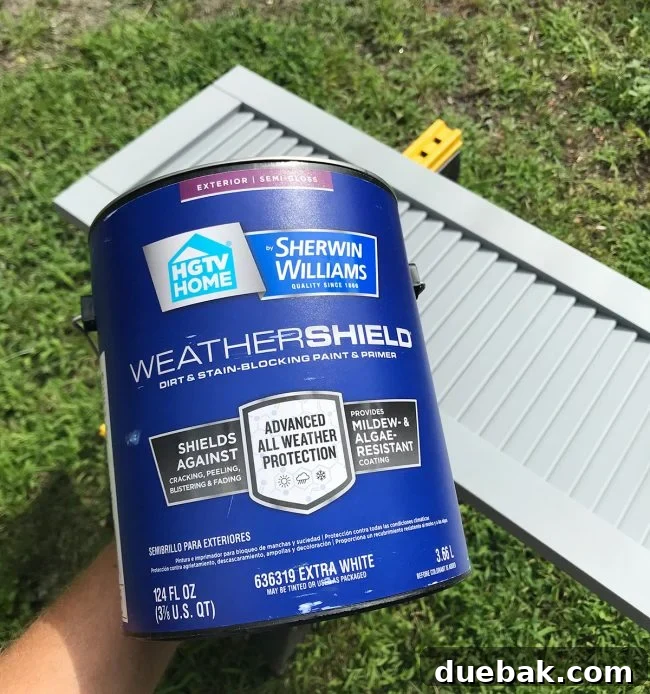
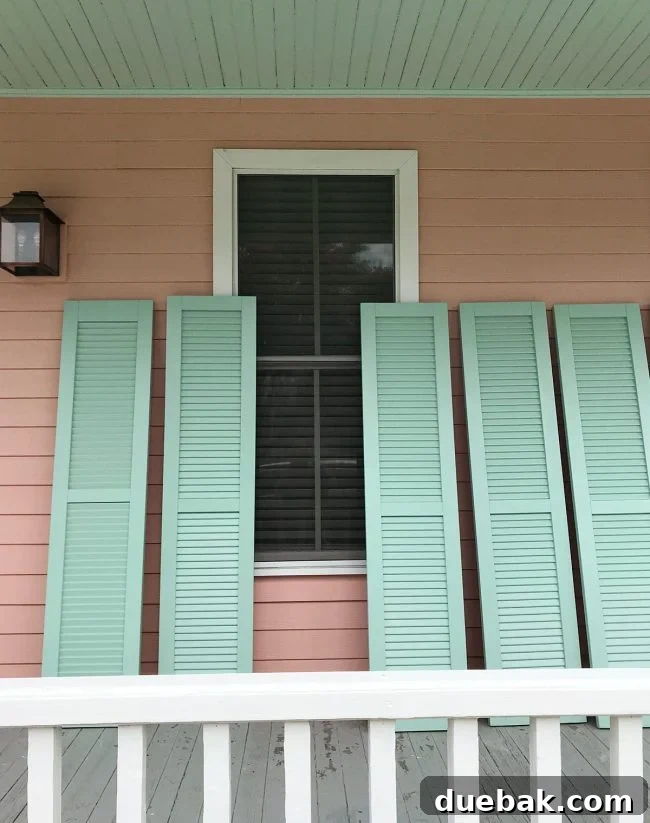
However, we completed the task just in the nick of time – literally, the night before Sean’s crew was scheduled for installation. We carefully arranged them on our porch, ready for transport to the duplex. An amusing realization dawned on us: Pale Patina bears an uncanny resemblance to the color we painted the ceiling at the pink house (SW Breaktime). It makes us wonder if our pink house is subtly flirting with the duplex!
Addressing the Front Doors: Originality vs. Transformation
You might have followed Sherry’s quest for a pair of diamond-paned doors on social media (for those who missed it, more details are in podcast Episode #100 and Episode #109). Many have inquired why these distinctive doors aren’t gracing the front facade. The historical mandates dictate that we must retain the original front doors, so the diamond doors were always destined for the REAR of the house.
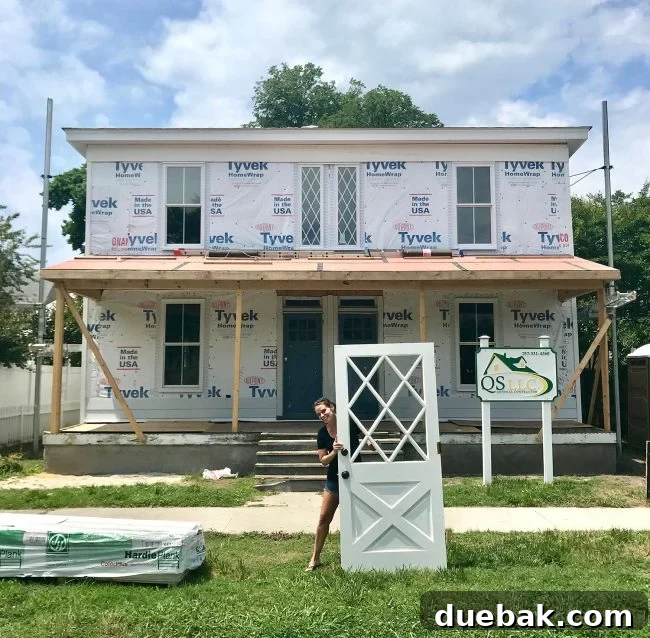
We may have inadvertently caused some confusion with images like the one above, but rest assured, those original front doors will indeed remain. The exciting news is our enthusiasm for the diamond doors at the rear of the house. They will introduce a similar diamond-paned aesthetic, mirroring the front’s diamond windows, creating a harmonious balance across both sides of the property. Below, you can see them already hung, though still awaiting their final coat of paint.
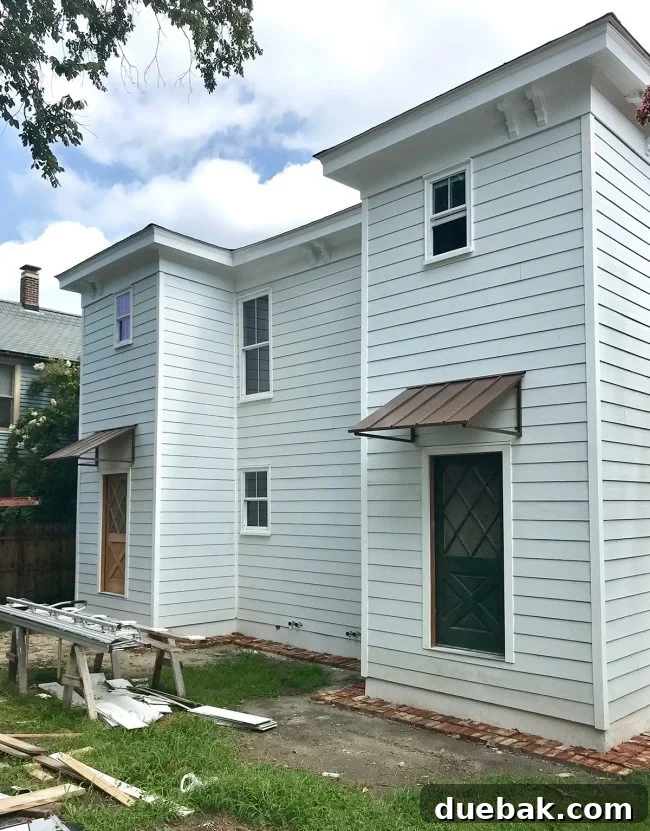
While some might find it melancholic that these beautiful doors are “relegated” to the backyard, we are, in fact, incredibly excited about the complete transformation of that side of the house. Every detail, from extending the corbels around to the back to installing elegant metal awnings (we chose the 44-inch by 36-inch bronze option), and even bumping out the second floor on both sides (thereby gaining two additional bathrooms!), has made an immense difference. Here’s a “before” shot for comparison:
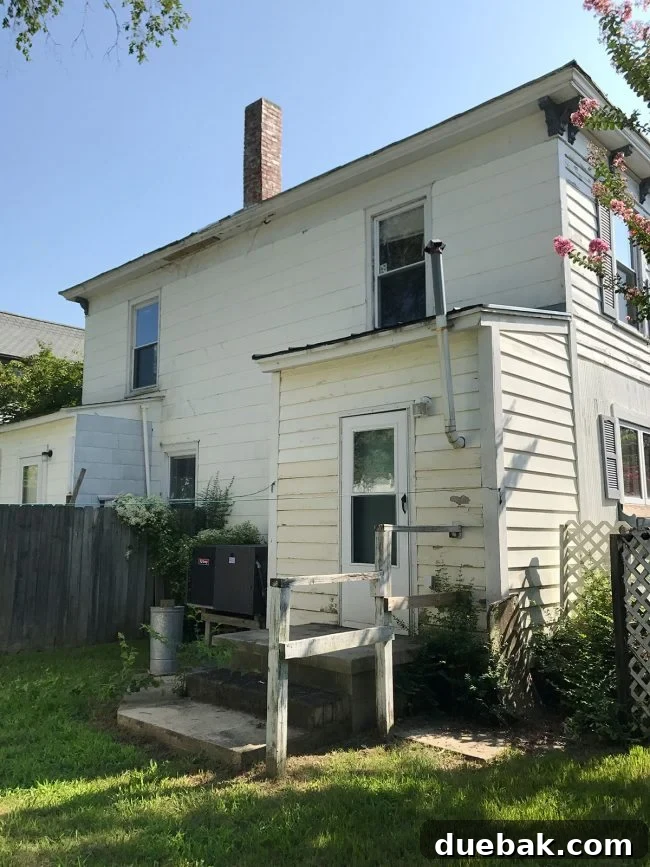
Quite the transformation, isn’t it? All of these significant changes, including adding windows and expanding the upper floor, required approval from the architectural review board. Thankfully, every proposal passed successfully. What a relief!
Circling back to those metal awnings, we initially received quotes for custom fabrication that ranged from $1500 to $2000 per awning. However, Sherry’s diligent search led her to discover these online options, which were dramatically more affordable – literally about a quarter of the custom price for each one! This incredible find allowed us to confidently move forward with the purchase. Furthermore, their dark bronze finish perfectly complements the tin roof at the front of the house, ensuring a cohesive exterior design.
We received several inquiries regarding our decision on the metal awnings’ installation height, with some wondering why we didn’t mount them lower. We actually experimented with a lower placement and were on the verge of securing them until I realized that from inside the house, they significantly obstructed both the view and natural light! We’re incredibly glad we caught this oversight and subsequently raised them. Now, the view from the door is unimpeded, and the mudroom is bathed in as much natural light as possible. A valuable lesson learned: always assess the interior view before installing any exterior elements that could potentially interfere with visibility or incoming light!
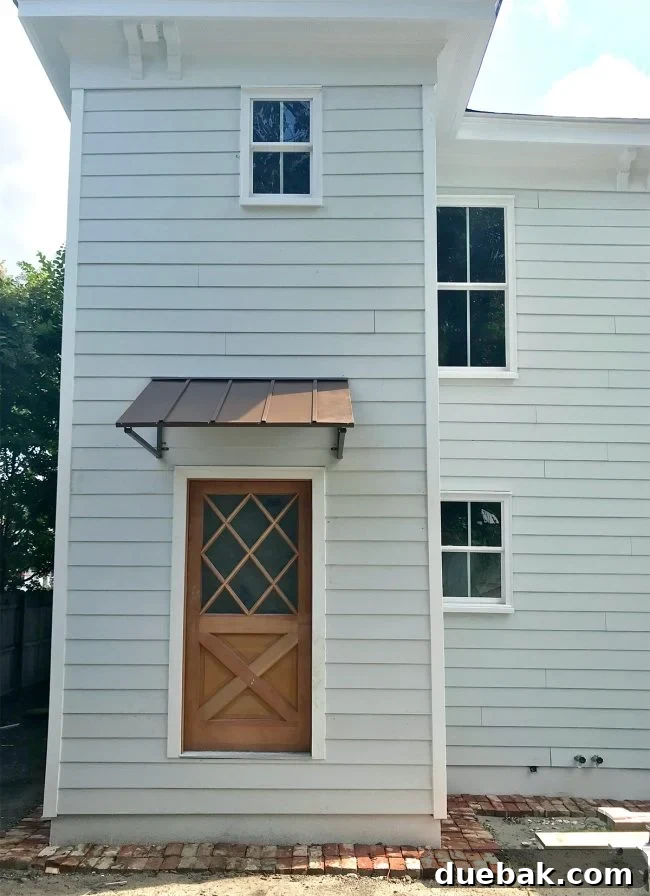
While the current spacing of the awnings might appear somewhat arbitrary, we anticipate a more balanced aesthetic once the lanterns are hung and the new steps are installed. These additional elements, positioned with similar spacing, will enhance the overall visual harmony. Beyond the porch lanterns and stairs, our plans for the backyard also include building outdoor showers and a privacy fence. This fence will be designed to open, allowing both sides of the duplex to merge into a single expansive area if a family rents both units. And of course, no outdoor space would be complete without some charming string lights! We genuinely believe the backyard has the potential to become the most captivating area of the entire house. Sherry even insists it’s going to be “lit.” You have full permission to roll your eyes at that one.
But let’s briefly revisit the front doors. As you saw earlier, we tested our mint paint swatches using decals placed directly on the duplex’s front doors, which were originally a deep blue and hidden behind dilapidated storm doors. Our initial intention was to paint them the same mint color as the shutters. However, after stripping away the old paint, we found ourselves quite enamored with the raw wood look. *Note: For anyone considering stripping old painted doors, always test for lead first. If they are lead-free, products like CitreStrip combined with a spackle knife can be effectively used for scraping.*

The primary concern with retaining the natural wood finish, a point I frequently emphasize to Sherry, is their current rough condition. Beyond a persistent, albeit somewhat charming, haze of white paint (which could likely be sanded away), the more pressing issue lies with the doorknob situation. The existing holes are oddly placed, at varying heights, and completely misaligned. Concealing any patching we do will be significantly more challenging if we keep them wood, as paint offers a much more forgiving camouflage for repairs.
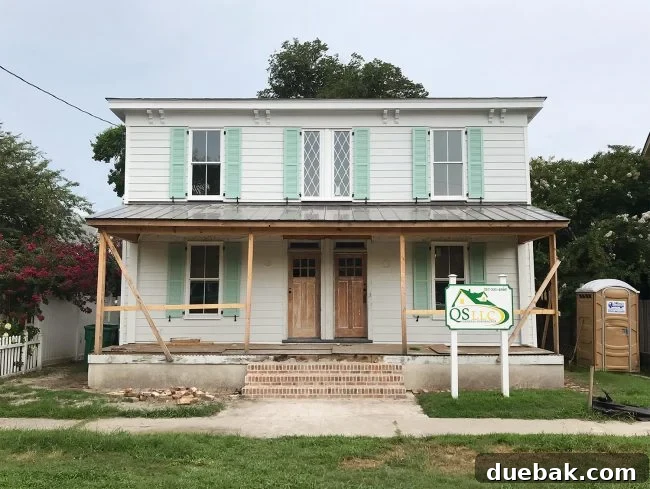
Despite these challenges, Sherry remains quite resolute about preserving their natural wood tone. Her plan involves meticulously patching the holes and then sourcing doorknobs with generously long backplates to effectively conceal the repairs. Following this, we intend to sand and seal them to achieve a richer, more vibrant wood tone. They undoubtedly complement the warmth of the brick steps beautifully, and Sherry plans to introduce additional wood accents, such as benches on either side of the porch. Given her vision, I can’t truly argue against keeping them wood, provided we can achieve a secure and aesthetically pleasing finish. Your crossed fingers for our success would be much appreciated!
The Grand Finale: Elegant Brick Steps
You’ve likely never encountered anyone more enthusiastic about brick steps than Sherry Petersik! We knew the old wooden steps desperately needed replacing, and while wood or composite might seem the obvious choices, our deep affection for the brick steps at the pink house (and, serendipitously, our admiration for the talented local mason who installed them) guided our decision. Opting for brick steps at the duplex simply felt like the unequivocally right call.
Not only did our mason recently complete our impressive 10-foot-wide steps, incorporating the same elegant mitered corner detail we cherish from the pink house, but we also engaged him to completely redo the concrete pad beneath them. This underlying structure was severely cracked and degrading, making its replacement essential for the long-term integrity of our new steps.
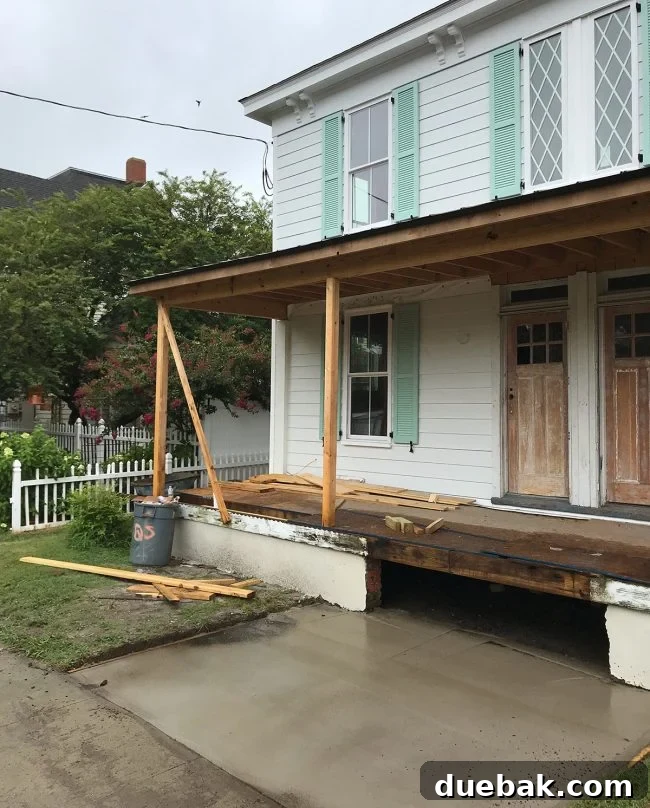
Unfortunately, we don’t have many high-quality photographs documenting their installation process, as intermittent rain often required them to work under a protective tent. Similarly, we likely won’t capture truly pristine images until all the construction dust has settled. Nevertheless, we are absolutely delighted with the expansive and welcoming feel these steps impart.
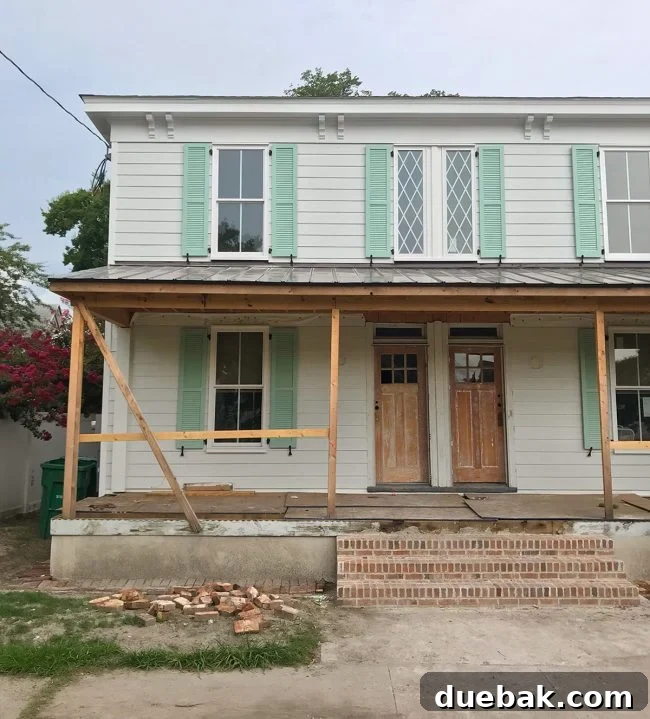
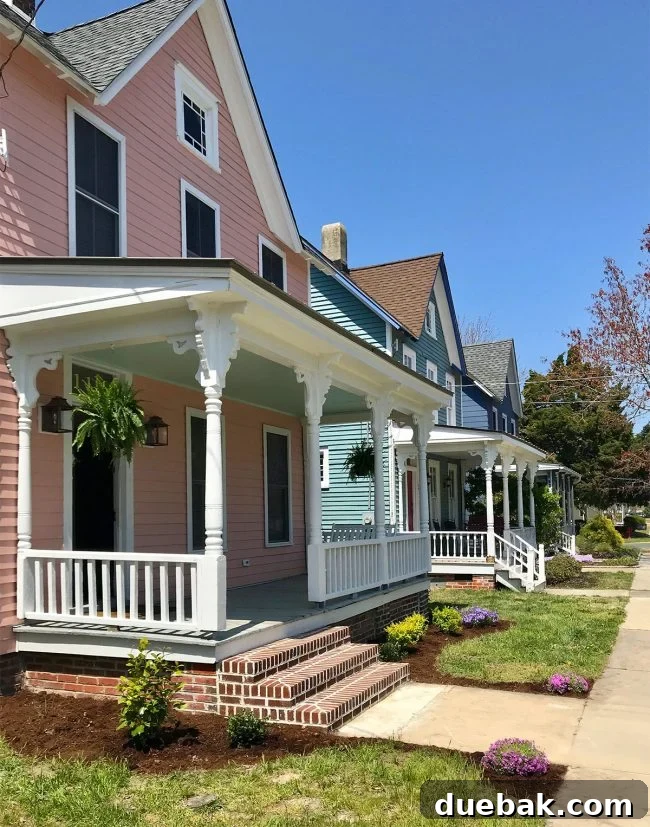
Regarding the porch and stair railings, these elements will be added at a later stage, once the porch structure is further developed. Our vision is for a historically inspired design: white railings with classic vertical pickets. We’ve drawn inspiration from this house, which also features wide brick steps, and we hope it helps you envision the final aesthetic.
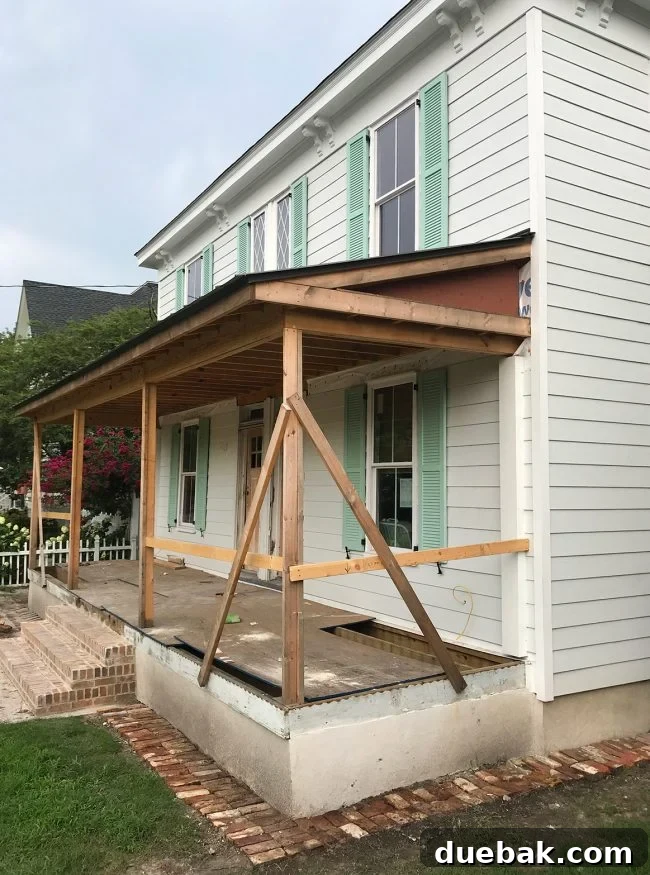
One final, yet significant, detail to mention is the brick border along the perimeter of the house. We observed that rain splash-back was rapidly dirtying the foundation, which had been skim-coated with a white plaster-like material (as seen above). Following our mason’s recommendation, we had him install this brick border. It serves as an elegant upgrade to the traditional pea gravel or rock foundations often used to minimize splash-back. While we still need to hose off the skim-coated area, we expect it to remain significantly cleaner now.
While the brick border may become less prominent once the landscaping is complete, we appreciate the opportunity to incorporate this brick texture. It harmonizes beautifully with the brick foundations prevalent throughout the rest of the street, giving our little duplex a subtle connection to its surroundings that it previously lacked.

We believe this comprehensive update brings you fully up to speed on the current state of the duplex’s exterior. Inside, the drywall installation is now complete (a major milestone!), meaning the next steps involve primer and paint, followed by interior trim and doors. Simultaneously, work is commencing on rebuilding the porch. This represents a tremendous amount of progress, which we eagerly anticipate sharing with you all over the coming month or so. Stay tuned for more exciting reveals! And trust us, the day the Port-O-Potty finally departs will be a day we celebrate by dancing on those wide brick steps as if no one is watching.
P.S. Eager to follow the entire journey of rebuilding this duplex from day one? We’ve curated a dedicated category filled with duplex posts for you to explore at your leisure. Additionally, we have a detailed podcast episode explaining how we managed to afford the duplex in the midst of renovating our pink house (including insights into the costs of both the beach house and the duplex).
*This post contains affiliate links*