

Transforming Your Sectional: A DIY Guide to Oil-Rubbed Bronze Legs
Every home deserves a touch of elegance, and sometimes, that transformation begins with the smallest details. Our beloved sectional, affectionately named Karl, was a comfortable centerpiece in our living room. Yet, its pale, unassuming birch legs always felt a little out of place, lacking the depth and character we envisioned for our space. They were functional, certainly, but they didn’t contribute to the aesthetic appeal we were striving for. This realization sparked an idea: what if we could elevate their appearance, giving them a subtle sheen and dimension that plain brown paint or stain simply couldn’t offer? The answer, we decided, lay in the sophisticated finish of oil-rubbed bronze spray paint.
This wasn’t just about changing a color; it was about injecting a sense of understated luxury into our everyday furniture. We aimed to deepen the legs’ hue, adding a metallic luster that would catch the light and add visual interest, making Karl feel more intentional and high-end. The project, while requiring a bit of initial effort – namely, the temporary disassembly of our sturdy sectional – proved to be an incredibly rewarding and surprisingly straightforward DIY endeavor. Poor Karl had to endure a brief separation from his foundational supports, but the end result was well worth the minor inconvenience.
The Crucial First Step: Preparation and Sanding for Superior Adhesion
Once all twelve of Karl’s legs were carefully detached, the real work began with an essential preparatory step: sanding. This isn’t a step to be skipped; proper surface preparation is the cornerstone of any successful painting project, especially when aiming for long-term durability and a professional finish. Although the birch legs appeared untreated, they actually boasted a clear protective finish. This existing coat, while offering some protection, would hinder the adhesion of our new spray paint, potentially leading to chipping or peeling down the line.

Our goal was to create a “gritty” and “grippy” surface, providing the perfect canvas for the paint to bond. To achieve this, I opted for a low-grit sandpaper, specifically 60-grit, which I had on hand. This coarse grit is ideal for removing existing finishes and roughing up smooth surfaces without damaging the underlying wood. Hand-sanding each leg allowed for meticulous control, ensuring every inch was properly prepped. The physical act of sanding was simple yet impactful, transforming the slick surface into one ready to accept its new metallic skin.

Observing the legs before and after sanding revealed a subtle yet significant difference. Before sanding, the clear coat gave them a slight sheen. After, that shine was gone, replaced by a duller, rougher texture, indicating that the sandpaper had effectively stripped away the existing finish. This raw, exposed wood surface is precisely what spray paint adheres to best, ensuring a strong, lasting bond and a finish that stands the test of time. After sanding, a thorough wipe-down with a tack cloth or a damp cloth followed by dry cloth is essential to remove all sanding dust, as any residual particles can compromise paint adhesion and create an uneven finish.

Prepping for Paint: Protecting the Floor Pads
Before moving on to the exciting part of applying the paint, there was one more small but important preparation step: removing the little furry floor-protecting pads on the bottom of each leg. These pads, designed to prevent scratches on our floors, were definitely not meant to be painted. Getting them gunked up with spray paint would not only make them ineffective but also look unsightly. Luckily, they peeled off quite easily. Their adhesive backing was still sufficiently sticky, allowing us to confidently reattach them securely once the painting and curing process was complete. This attention to detail ensures that every aspect of the leg, from its new metallic finish to its functional floor protection, remains pristine.

Choosing the Right Paint and Prioritizing Safety
With the legs fully prepared, it was time for their dramatic makeover. The star of this transformation was Rustoleum Universal Metallic spray paint in “oil-rubbed bronze,” enhanced with a trigger spray nozzle for comfortable and consistent application. This particular brand and finish were chosen not just for their aesthetic appeal but also for their reputation for quality and durability. Oil-rubbed bronze offers a rich, deep brown with subtle metallic undertones that mimic aged metal, providing a sophisticated alternative to a flat paint or stain. The metallic flakes in the paint would give our legs that sought-after glimmer and dimension, elevating them beyond simple wood.
You can find this specific paint on Amazon if you’re looking to replicate this project. It’s worth investing a bit more in a quality spray paint like this, as cheaper alternatives often result in uneven coverage, drips, and a less durable finish. The integrated primer in many of Rustoleum’s Universal line also simplifies the process, making a separate priming step unnecessary for most applications.
Given the nature of spray paint fumes, safety was paramount. I set up a designated spraying area outside, laying down cardboard to protect the ground from overspray. Wearing a proper mask was non-negotiable – not just a dust mask, but one designed to filter out paint VOCs (volatile organic compounds). While I may have looked a bit unusual to the neighborhood squirrels, their curious stares were a small price to pay for protecting my respiratory health. Always ensure ample ventilation when spray painting, and if working indoors, use a well-ventilated space with open windows and fans, although outdoor application is always preferred.

Mastering the Art of Spray Painting: Achieving a Flawless Finish
The application itself is an art form that, once mastered, yields professional-looking results. My technique involved applying three thin, even coats to each of Karl’s legs. This multi-coat approach is crucial for achieving super even coverage without any unsightly drips or heavy patches. Think of it as building up the color gradually rather than trying to achieve full opacity in one go.

For those eager to tackle their own spray painting projects, here are some expanded tips to guide you:
- Invest in Quality Paint: Skip the budget-friendly $2 cans in favor of premium options costing $7 or more. Higher-quality paints, like Rustoleum’s trigger spray nozzle varieties, offer better pigment, smoother application, and superior durability. The trigger nozzle also provides a finer, more controlled mist and keeps your fingers clean, preventing the dreaded “spray paint finger.”
- Constant Motion is Key: Always keep the can moving across your workpiece. If your arm isn’t swaying, you’re likely holding the can stationary for too long, which is a common cause of drips and uneven spots. A steady, sweeping motion ensures an even, consistent layer.
- Maintain Optimal Distance: Hold the nozzle approximately 8-10 inches away from the surface you’re painting. Too close, and you risk pooling and drips; too far, and you’ll get a dusty, uneven coat with poor adhesion due to the paint drying mid-air before it reaches the surface.
- Aim for a Fine Mist: Your goal is to apply a light, even mist, not a heavy, wet coating. Each pass should deposit a fine layer of paint. You shouldn’t see visible wetness or pooling after a single pass.
- Layer Thin Coats: Patience is a virtue in spray painting. Three thin, even coats are infinitely better than a single thick, drippy one. Thin coats dry faster, adhere better, and are less prone to imperfections. Allow adequate drying time between coats, typically 10-15 minutes, or as recommended by the manufacturer.
- Prioritize Ventilation and Curing: Spray paint contains VOCs, so always apply it outside or in a very well-ventilated area while wearing a mask. Proper curing is critical. While dry to the touch might happen in an hour, full cure for maximum hardness and durability usually takes 24-48 hours, sometimes longer depending on humidity and temperature. I always try to double the manufacturer’s recommended cure time, especially for high-traffic items, just to be extra safe and ensure minimal off-gassing once brought indoors.
- Consider Sealing for VOC Reduction: If you’re particularly sensitive to off-gassing or want an extra layer of protection, you can “seal” any spray-painted item. Apply two thin coats of a low-VOC, non-toxic clear sealer like Safecoat Acrylacq. This helps to lock in any remaining VOCs and provides an additional durable topcoat.
The Curing Process: Patience is a Virtue
After applying three meticulously thin coats of the oil-rubbed bronze spray paint, the legs embarked on their final, crucial stage: curing. I allowed them to “cure” outside for a full 48 hours. This extensive drying time is essential, as “dry to the touch” doesn’t mean “fully cured.” A fully cured finish is hard, durable, and significantly less likely to scratch or chip, and it ensures that the majority of volatile organic compounds (VOCs) have dissipated, making the furniture safer to bring back indoors.
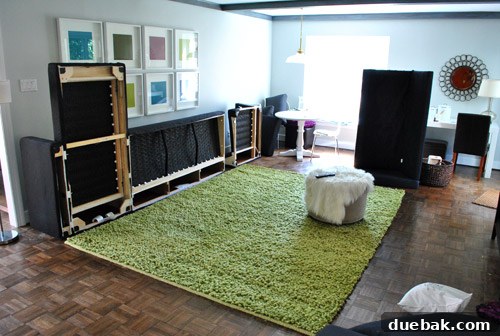
During these 48 hours, I strategically placed the legs. They enjoyed about 12 hours of direct sunlight, which helps accelerate the curing process. For the remaining 36 hours, I moved them to our carport to protect them from potential rain or heavy dew, which could ruin the freshly painted surface. Meanwhile, our living room took on a rather unusual appearance, as Karl sat low and legless.
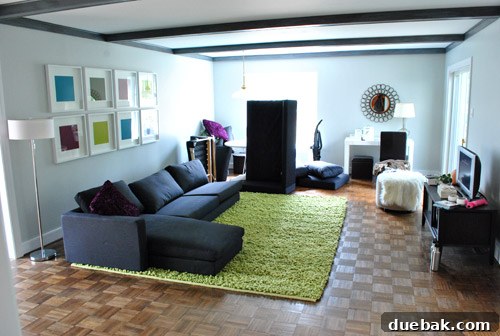
For two days, this was our living room’s quirky new look. It was surprisingly fun to lounge on our super-low sofa, offering a novel perspective on the space. Our daughter, Clara, absolutely loved it, turning the sectional into a mini climbing gym, a feat she couldn’t manage when it was elevated on legs. There was almost a pang of regret at having to put the legs back on! However, the living room did look a bit chaotic, and trying to hoist a 20-pound baby girl off such a low sofa was, admittedly, not the most enjoyable experience. Functionality eventually had to win out over novelty.
Reassembly and the Grand Reveal
Thanks to the extensive two-day outdoor drying and curing time, by the time I brought our newly bronzed legs inside, they were perfectly hard and dry. The oil-rubbed bronze paint had created a sleek, almost coin-like finish, both smooth and resilient. While photographs struggle to capture its full beauty, in person, the legs possess a lovely metal-like sheen that shifts and glimmers as light hits them from different angles, reflecting almost like glass. Crucially, after 48 hours outside, there was absolutely no lingering “spray-paint-y” smell, even when I indulged my weird habit of sniffing them up close. Had there been any odor, I would have certainly applied those two thin coats of Safecoat Acrylacq, as recommended earlier, for ultimate peace of mind.
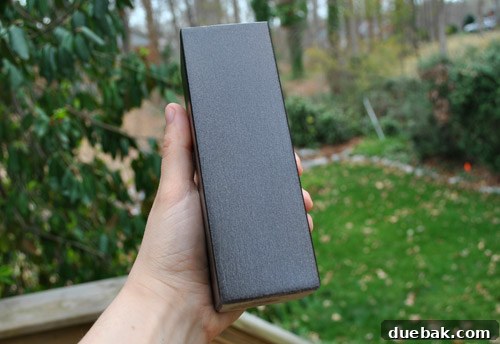
The final step was simple yet satisfying: reattaching those furry floor-protecting pads to the bottom of each leg. They adhered perfectly, just as securely as before. Then, it was John’s turn to shine, as he masterfully screwed the legs back into place. He’s truly the Allen wrench ninja of our household, making quick work of the reassembly. Bam! Karl was back to his old self, but with a distinct upgrade – slightly more handsome, undeniably dapper, and exuding a renewed sense of style. The sheer joy of having our living room put back together again, transformed by such a small detail, was immeasurable.
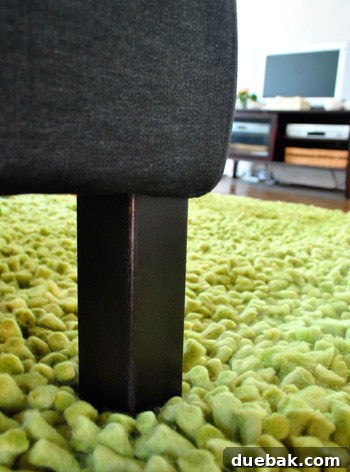
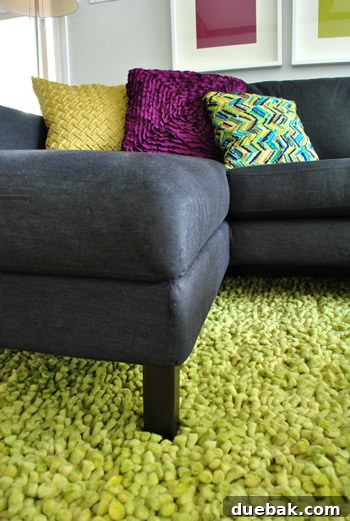
Notice how the side of this leg seems to glimmer in the picture above? That captivating effect is precisely the difference between opting for a metallic oil-rubbed spray paint and a conventional deep brown paint or stain. That subtle touch of glitz and sophistication truly makes a statement for me. Of course, a traditional stain or paint could also have worked beautifully, but it simply wouldn’t have offered the unique, multi-dimensional luster that the metallic finish provides. Ultimately, the choice depends entirely on your personal aesthetic preference and the specific look you aim to achieve.
Interestingly, from certain angles and in softer lighting conditions, particularly at night, the oil-rubbed bronze can take on the appearance of a rich chocolate wood stain. This chameleon-like quality adds another layer of appeal, offering versatility in how the legs present themselves depending on the ambient light. It’s a delightful unexpected bonus that we certainly don’t mind.
Before & After: A Visual Testimony to Transformation
To truly appreciate the impact of this DIY furniture makeover, let’s take a quick look back at Karl’s legs in their original state – pale, plain, and distinctly birch-y. They were functional, yes, but lacked any particular character or visual weight within the room’s decor.
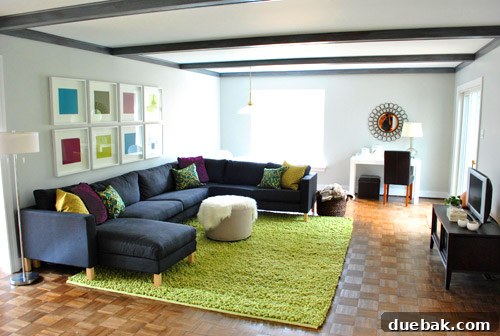
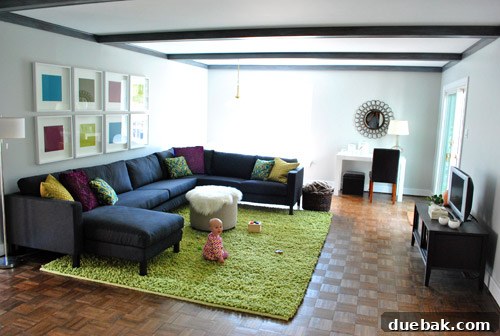
And here he is now, the man of the house, regal and refined! The difference, while not a heart-stopping, jaw-dropping overhaul of the entire room, is significant in the details. It’s definitely a step up from the “look at my squat little birch legs” vibe of the original. This subtle enhancement elevates the entire sectional, making it feel more custom and luxurious. Even Beansie, our furry family member, seems thrilled with the change, though she’s probably just ecstatic to be on her favorite rug ever, surrounded by her toys. Oh, to be a baby again, enjoying life’s simple pleasures!
Beyond the Legs: Integrating the New Look into Our Home
This simple upgrade to Karl’s legs is just one piece of a larger puzzle in our ongoing home improvement journey. We envision an even more cohesive and sophisticated aesthetic once we add oil-rubbed bronze curtain rods to the windows and sliders, tying in this elegant metallic finish throughout the space. There are other cravings too, like a grand console table positioned behind Karl and a larger, more balanced entertainment unit, all of which will contribute to a more finished and harmonious living room.
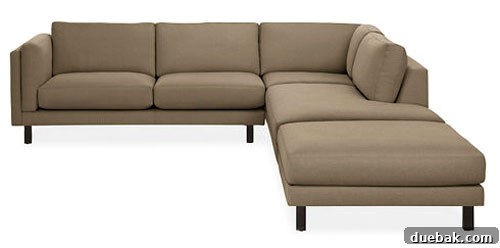
But for now, we are absolutely smitten with how our giant, affordable $1,248 sectional now looks strikingly similar to the aspirational, too-rich-for-our-blood $4,496 version from Room & Board that we originally fell in love with a while back. This transformation proves that with a little creativity, some elbow grease, and the right materials, you can achieve a high-end look without the exorbitant price tag.
Conclusion: An Affordable Luxury Achieved
Yay for a little sectional-elevating sandpaper and spray paint adventure! This project wasn’t just about changing the color of some wooden legs; it was about realizing the potential for significant aesthetic impact through a small, budget-friendly DIY. It transformed a piece of furniture we already loved into something even more special, a true focal point that radiates understated luxury. If only my blindingly pale leg problem was that easy to solve with a can of spray paint… but alas, some transformations require a different kind of effort!
Psst- Check out the weirdest baby toy that we’ve ever seen (p.s. Clara adores it) right here on BabyCenter.